
For families in our service areas
For families in our service areas, this guide explains companion care and how non-medical in-home caregiving can support care planning in East Idaho, Treasure Valley & Magic Valley, Northern Wasatch, North Central West Virginia, and Northeast Ohio.
Why Why a Companion for Elderly Enhances Matters
The emotional landscape of aging often reveals a troubling problem: loneliness and isolation. Many elderly individuals grapple with feelings of despair, which can significantly impact their quality of life. Statistics show that a staggering number of seniors are affected by social isolation, highlighting the urgency of addressing this issue.
Companionship emerges as a powerful solution. It offers not just social interaction but also a pathway to enhanced well-being and independence. By fostering connections, caregivers can help seniors build emotional resilience and regain a sense of autonomy. The simple act of companionship can transform lives, making it a crucial focus for those caring for the elderly.
Enhance Emotional Well-Being Through Companionship
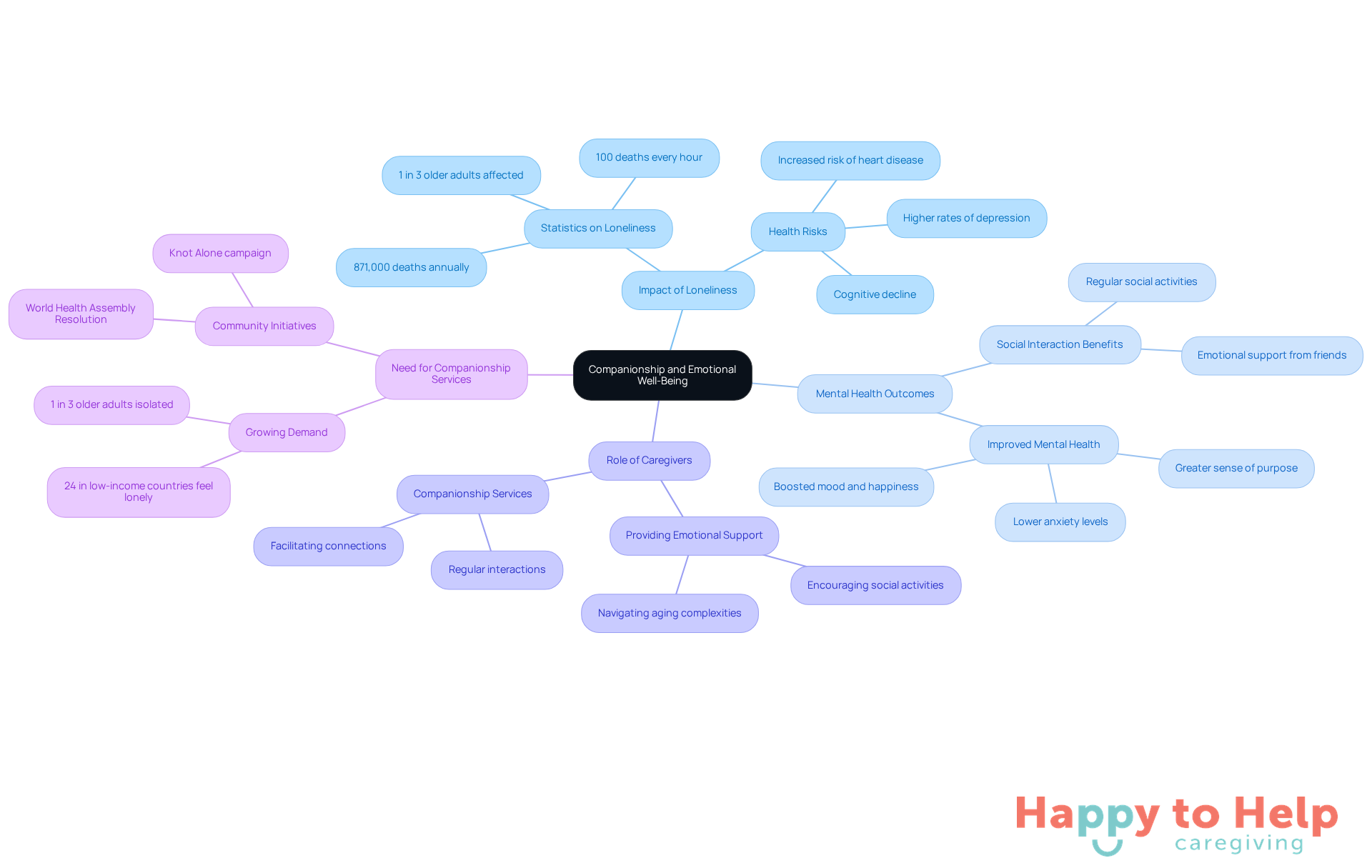
Having a companion for elderly individuals plays a vital role in enhancing their emotional well-being. Loneliness is a significant issue, with studies showing that regular interaction with a companion can alleviate feelings of isolation and reduce the risk of depression. For instance, a report from the National Institute on Aging indicates that older adults who engage in social activities experience improved mental health outcomes, including lower levels of anxiety and a greater sense of purpose.
The implications of loneliness are severe. The presence of a companion promotes a feeling of safety and connection, which is crucial for older adults who may feel isolated due to mobility challenges or the loss of friends and family. Notably, loneliness accounts for more than 871,000 deaths annually, underscoring the critical nature of companionship in preventing loneliness and its consequences.
Caregivers can play a pivotal role in addressing this issue. By providing emotional support and companionship, they help seniors navigate the complexities of aging, ultimately leading to a more fulfilling life. The World Health Assembly's inaugural resolution on community connection in May 2025 emphasizes the increasing acknowledgment of the significance of connections for mental well-being.
With 1 in 3 older adults estimated to be affected by social isolation, the need for companionship services is more pressing than ever. Caregivers should consider implementing regular social activities and fostering connections to combat loneliness effectively.
Support Daily Activities and Independence
Companion for elderly services address a significant problem: nearly 18 million senior citizens need assistance with everyday tasks, which is crucial for maintaining their autonomy. This need highlights the extensive demand for such services, as many older adults struggle with daily activities that can impact their quality of life.
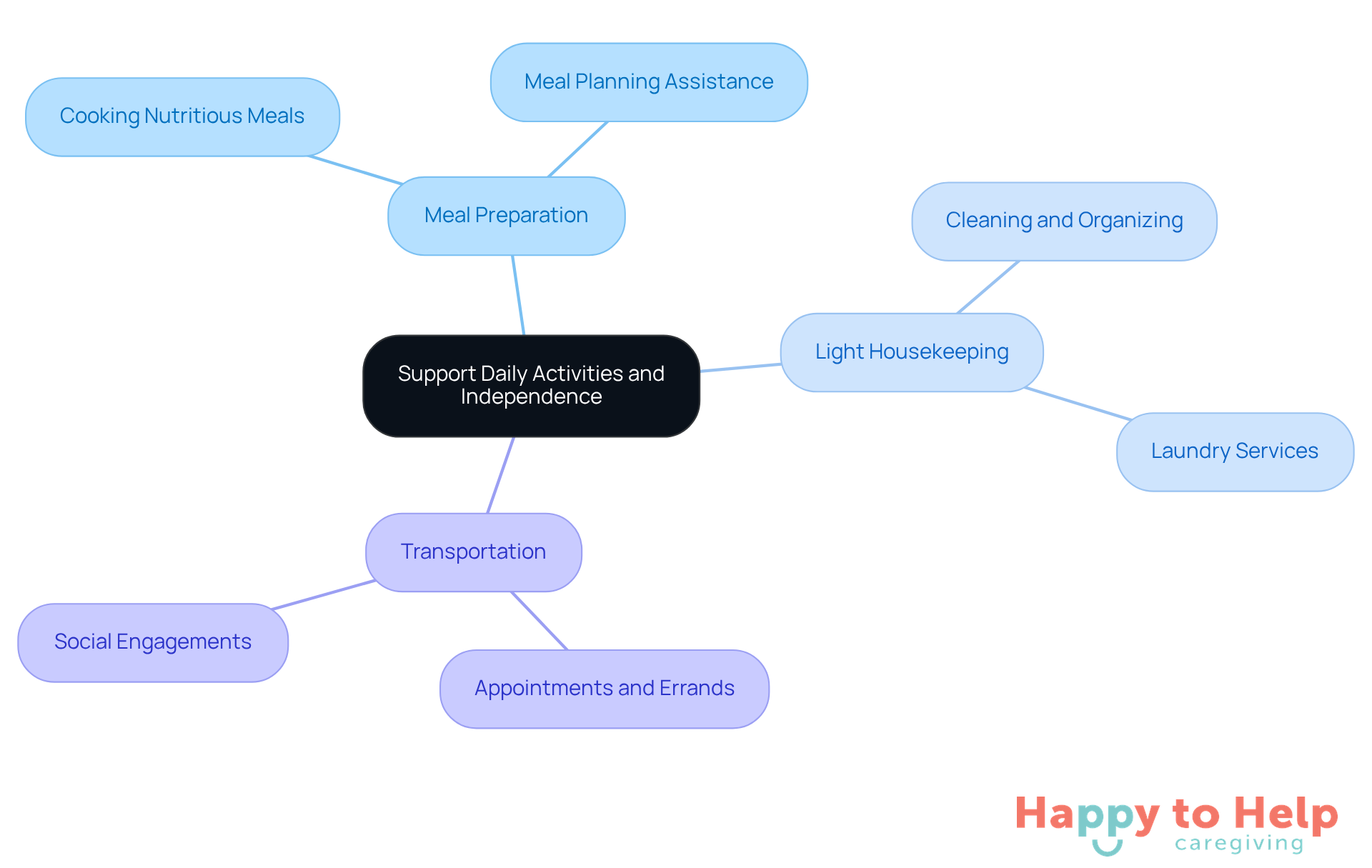
The implications of this issue are profound. Caregivers play a vital role in helping seniors with:
- Meal preparation
- Light housekeeping
- Transportation to appointments
Studies published in the Journal of Gerontology indicate that older adults receiving assistance with daily tasks are more likely to remain in their homes longer and enjoy a better quality of life. This support not only helps them manage their routines but also encourages participation in enjoyable activities, fostering independence and self-esteem.
To address these challenges, services that provide a companion for elderly individuals empower older adults to live independently while ensuring their safety and overall well-being. As Debra Sullivan emphasizes, maintaining independence for as long as possible is crucial in the aging process. Furthermore, the Aging Brain Care model offers a beneficial approach for at-home dementia support, illustrating how a companion for elderly can be integrated into holistic care methods for older adults.
Combat Loneliness and Foster Social Connections
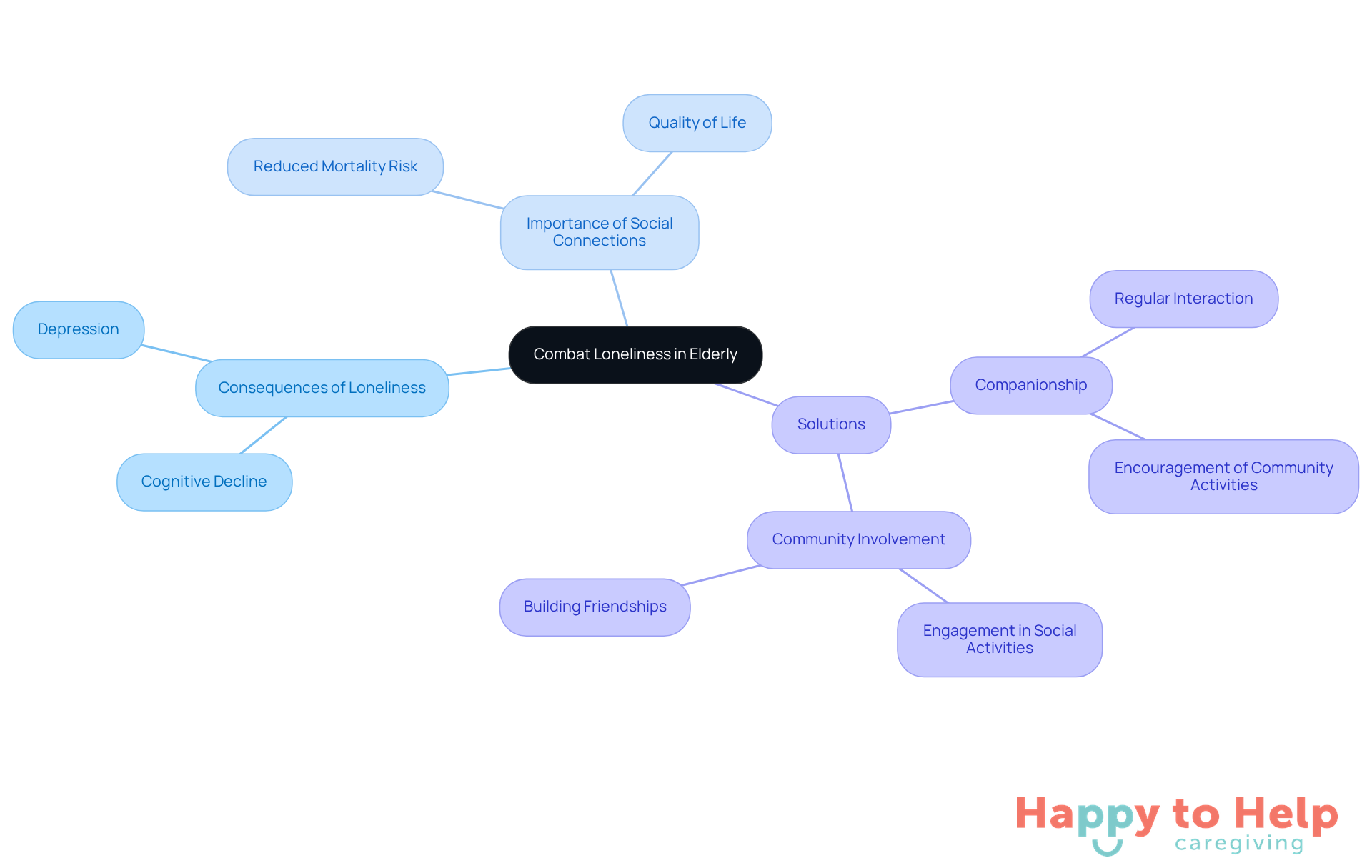
Loneliness poses a significant challenge for many elderly individuals, often resulting in serious health consequences. This isolation can lead to cognitive decline and depression, making it crucial to address the issue effectively.
Research indicates that older adults who maintain social connections are less likely to experience these negative outcomes. For example, a study published in the American Journal of Public Health found that community involvement can significantly reduce the risk of mortality among seniors.
Companion for elderly care emerges as a practical solution to address loneliness. By providing regular interpersonal interaction, companions for elderly not only offer conversation and companionship but also encourage participation in community activities. This engagement helps seniors build and sustain friendships, creating a vital social support network.
Such connections are essential for enhancing the quality of life for elderly individuals, ensuring they feel valued and connected. Caregivers can implement strategies for companion for elderly care to foster these relationships, ultimately improving the well-being of those they support.
Alleviate Caregiver Stress and Strengthen Family Bonds
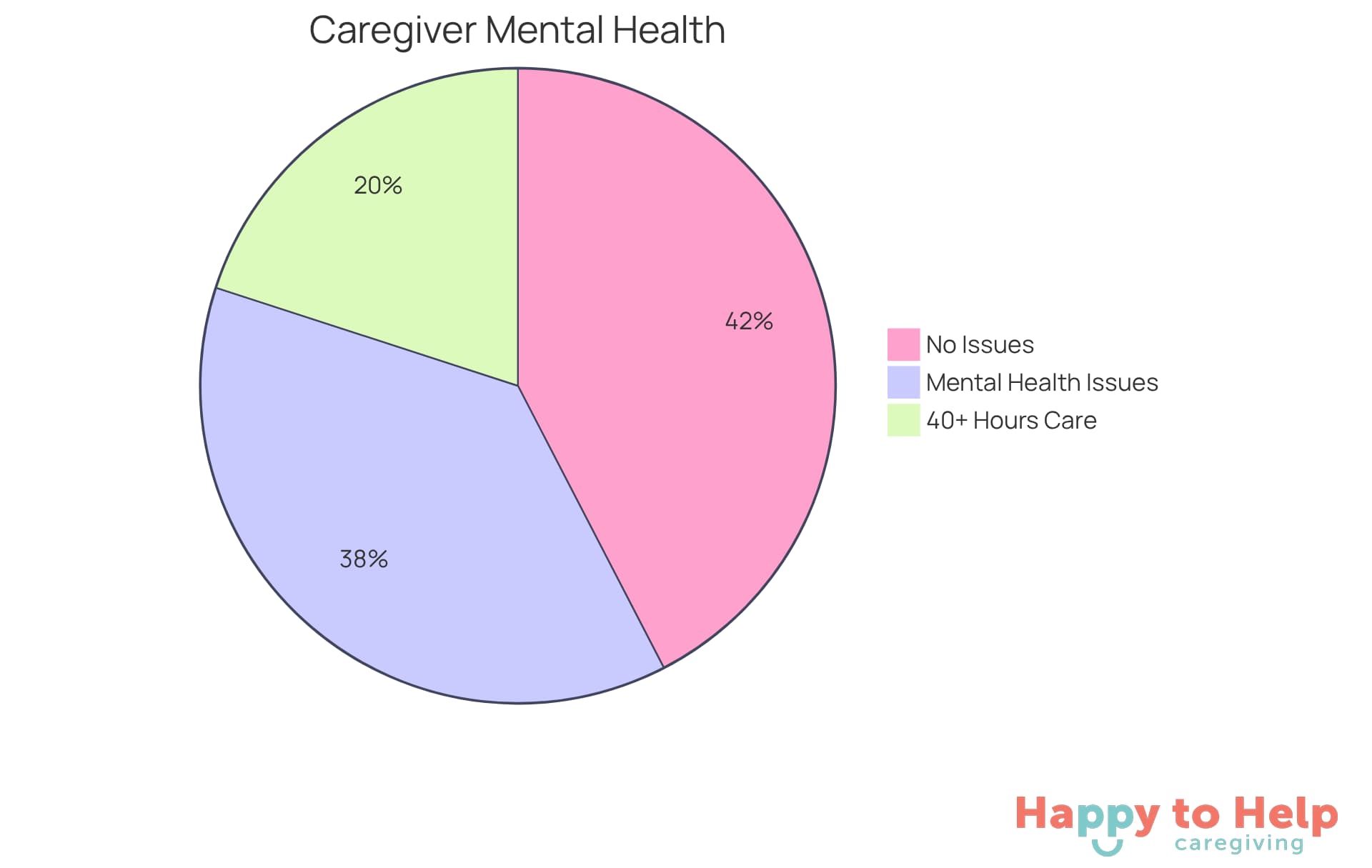
Companion assistance addresses a significant problem: the stress that family caregivers often endure. Many families feel overwhelmed by the demands of caring for elderly loved ones, leading to burnout and emotional strain. In fact, nearly half of family supporters (47%) report experiencing anxiety, depression, and other mental health issues in the past year, according to Debra Barrett.
This emotional toll can be profound. Caregivers frequently struggle to balance their responsibilities, which can negatively impact their well-being. Research from the Family Caregiver Alliance shows that those who seek support report lower stress levels and improved mental health outcomes. Moreover, almost 1 in 4 caregivers provide over 40 hours of assistance each week, underscoring the significant time commitment involved.
So, what can be done? Companion care services offer vital relief by providing a companion for elderly, allowing family members to take necessary breaks and prioritize their own well-being. By distributing caregiving responsibilities to a companion for elderly, families can enhance the quality of care while also strengthening their relationships. This collaborative approach fosters more meaningful interactions with loved ones, creating a nurturing environment where both seniors and caregivers can thrive.
Your Path Forward
Companionship for elderly individuals presents a significant problem: loneliness. This issue not only affects their emotional well-being but also undermines their independence. As highlighted in the article, the implications of loneliness extend beyond mere feelings of isolation; it can lead to deteriorating mental health and a diminished sense of purpose among older adults.
The multifaceted benefits of companionship are crucial in addressing this problem. Regular interactions can combat loneliness, support daily activities, and alleviate caregiver stress. For instance, emotional support from companions encourages seniors to engage in community activities and helps them manage daily tasks. This ultimately leads to an improved quality of life. Moreover, sharing caregiving responsibilities fosters stronger family bonds and enhances the overall caregiving experience.
Recognizing the importance of companionship is essential for promoting health and happiness among the elderly. Caregivers, families, and communities must prioritize companionship services as a vital resource. By fostering connections and ensuring that older adults receive the support they need, society can effectively combat loneliness, enhance independence, and create a nurturing environment where both seniors and caregivers thrive.
In conclusion, embracing the role of companionship can lead to a more vibrant, engaged, and healthier life for elderly individuals. This makes companionship a crucial aspect of holistic care, ensuring that seniors can enjoy fulfilling lives while receiving the support they deserve.
https://iframe.tely.ai/cta/eyJhcnRpY2xlX2lkIjogIjY5MmY5MTkyY2E4MDg5MWIwMmZiMDBlMSIsICJjb21wYW55X2lkIjogIjY4ZWU1ZGNhNzMxNzYyNTU3ZjNjOTVjMSIsICJpbmRleCI6IG51bGwsICJ0eXBlIjogImFydGljbGUifQ==Frequently Asked Questions
Why is companionship important for elderly individuals?
Companionship is vital for elderly individuals as it enhances their emotional well-being, alleviates feelings of isolation, and reduces the risk of depression.
What impact does loneliness have on older adults?
Loneliness can lead to severe implications, including increased anxiety, a diminished sense of purpose, and it accounts for more than 871,000 deaths annually.
How does regular interaction with a companion affect mental health?
Regular interaction with a companion improves mental health outcomes for older adults, leading to lower levels of anxiety and a greater sense of purpose.
What role do caregivers play in combating loneliness among seniors?
Caregivers provide emotional support and companionship, helping seniors navigate the complexities of aging and leading to a more fulfilling life.
What recent acknowledgment has been made regarding community connections and mental well-being?
The World Health Assembly's inaugural resolution on community connection in May 2025 emphasizes the importance of connections for mental well-being.
How prevalent is social isolation among older adults?
It is estimated that 1 in 3 older adults are affected by social isolation, highlighting the pressing need for companionship services.
What can caregivers do to help combat loneliness in seniors?
Caregivers can implement regular social activities and foster connections to effectively combat loneliness among seniors.
List of Sources
- Enhance Emotional Well-Being Through Companionship
- Social connection linked to improved health and reduced risk of early death (https://who.int/news/item/30-06-2025-social-connection-linked-to-improved-heath-and-reduced-risk-of-early-death)
- Friendships Are Especially Powerful Late in Life, Poll Says (https://usnews.com/news/health-news/articles/2024-12-16/friendships-are-especially-powerful-late-in-life-poll-says)
- The Emotional Benefits of Companion Care for Seniors (https://comfortkeepers.com/offices/texas/round-rock/resources/news/the-emotional-benefits-of-companion-care-for-seniors)
- New initiative aims to reduce loneliness among older adults in Louisville (https://news.louisville.edu/news/new-initiative-aims-reduce-loneliness-among-older-adults-louisville)
- Older adults find support through health care companions (https://news-medical.net/news/20250924/Older-adults-find-support-through-health-care-companions.aspx)
- Support Daily Activities and Independence
- Without support, seniors aging in place may elect facility-based care, study finds (https://mcknights.com/news/without-support-seniors-aging-in-place-may-elect-facility-based-care-study-finds)
- Independence and older adults: Importance and promoting it (https://medicalnewstoday.com/articles/independence-and-the-elderly)
- CDC: More than 20% of 85+ adults need ADL assistance (https://mcknightsseniorliving.com/news/cdc-more-than-20-of-85-adults-need-adl-assistance)
- Nearly Half of All Seniors Need Help With Daily Activities, Far More Than We Thought (https://forbes.com/sites/howardgleckman/2014/10/08/nearly-half-of-all-seniors-need-help-with-daily-activities-far-more-than-we-thought)
- Elderly Care Statistics (https://rosewood-nursing.com/post/elderly-care-statistics)
- Combat Loneliness and Foster Social Connections
- Social engagement cuts death risk by 42 percent in older adults, study finds (https://mcknights.com/news/social-engagement-cuts-death-risk-by-42-percent-in-older-adults-study-finds)
- Can engaging in social activities prolong life? (https://newsroom.wiley.com/press-releases/press-release-details/2025/Can-engaging-in-social-activities-prolong-life/default.aspx)
- Social engagement helps older adults feel younger, live longer: study (https://mcknightsseniorliving.com/news/social-engagement-helps-older-adults-feel-younger-live-longer-study)
- 1 in 3 older adults still experience loneliness and isolation (https://michiganmedicine.org/health-lab/1-3-older-adults-still-experience-loneliness-and-isolation)
- Social isolation, loneliness in older people pose health risks | Alzheimers.gov (https://alzheimers.gov/news/social-isolation-loneliness-older-people-pose-health-risks)
- Alleviate Caregiver Stress and Strengthen Family Bonds
- The Power of Community in Supporting Family Caregivers (https://acadia.com/en-us/media/perspectives/acadia-stories/the-power-of-community-in-supporting-family-caregivers)
- Caregiving’s Mental Health Crisis (https://forbes.com/sites/otsuka/2025/10/02/caregivings-mental-health-crisis)
- As Family Caregiving Grows, So Does the Need for Reform - Medicare Rights Center (https://medicarerights.org/medicare-watch/2025/08/14/as-family-caregiving-grows-so-does-the-need-for-reform)
- Location, individual circumstances impact caregiver well-being, researchers find | Penn State University (https://psu.edu/news/research/story/location-individual-circumstances-impact-caregiver-well-being-researchers-find)
- New Report Reveals Crisis Point for America’s 63 million Family Caregivers (https://press.aarp.org/2025-07-24-New-Report-Reveals-Crisis-Point-for-Americas-63-million-Family-Caregivers)