
The Importance of Why Care Companions Are Essential
Companionship plays a pivotal role in enhancing the quality of life for seniors. However, many elderly individuals grapple with the debilitating effects of loneliness. This isolation not only diminishes their emotional well-being but also poses serious health risks, including increased rates of depression and cognitive decline.
The implications of this loneliness are profound. Seniors often experience a decline in their overall health, leading to a vicious cycle of isolation and worsening conditions. By exploring the essential role of care companions, we can see how these dedicated individuals provide vital support to both seniors and their family caregivers. They alleviate stress and foster a sense of connection, which is crucial for emotional and physical well-being.
So, what strategies can caregivers employ to harness the benefits of companionship? Here are some actionable tips:
- Encourage regular social interactions, whether through family visits or community activities.
- Consider hiring a care companion who can engage seniors in meaningful conversations and activities.
- Utilize technology to facilitate virtual connections with friends and family.
By implementing these strategies, caregivers can help their loved ones thrive emotionally and physically.
Enhance Quality of Life Through Companionship
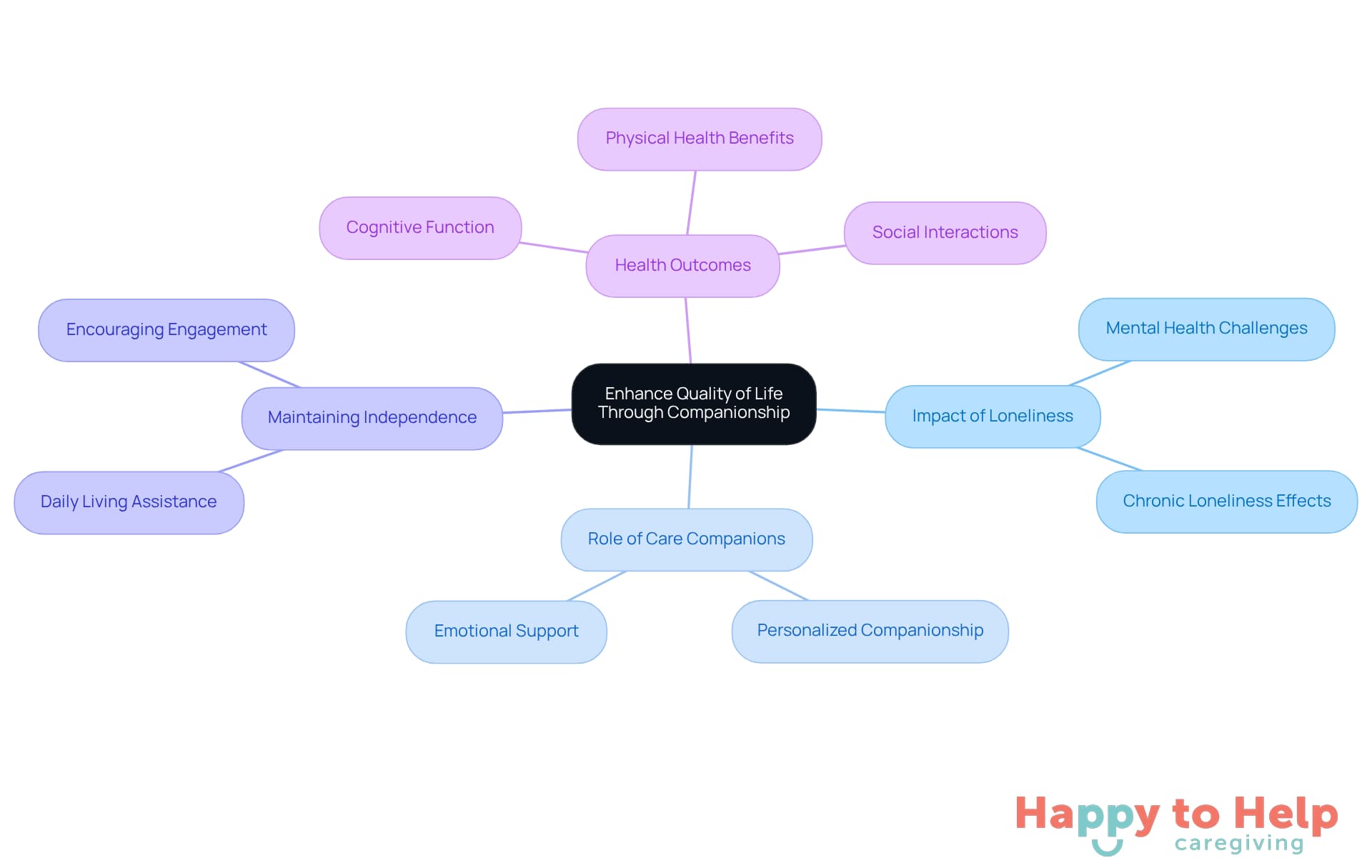
Companionship is crucial for enhancing the quality of life for seniors. Loneliness can lead to significant mental and physical health challenges, making regular social interaction essential. Studies indicate that engaging in meaningful conversations and activities can stimulate cognitive function and emotional well-being, helping to combat feelings of isolation.
To address this issue, care companions can provide personalized companionship. This approach not only fosters a sense of purpose and belonging but also helps elderly individuals maintain their independence. By ensuring that seniors feel appreciated and understood in their daily lives, care companions play a vital role in promoting a fulfilling lifestyle, especially for those aging in place.
Incorporating regular social interactions into care routines can significantly improve health outcomes. Caregivers should focus on creating opportunities for engagement, whether through shared activities or simply being present for conversation. This holistic approach is essential for nurturing both the emotional and physical well-being of seniors.
Combat Loneliness and Foster Emotional Well-Being
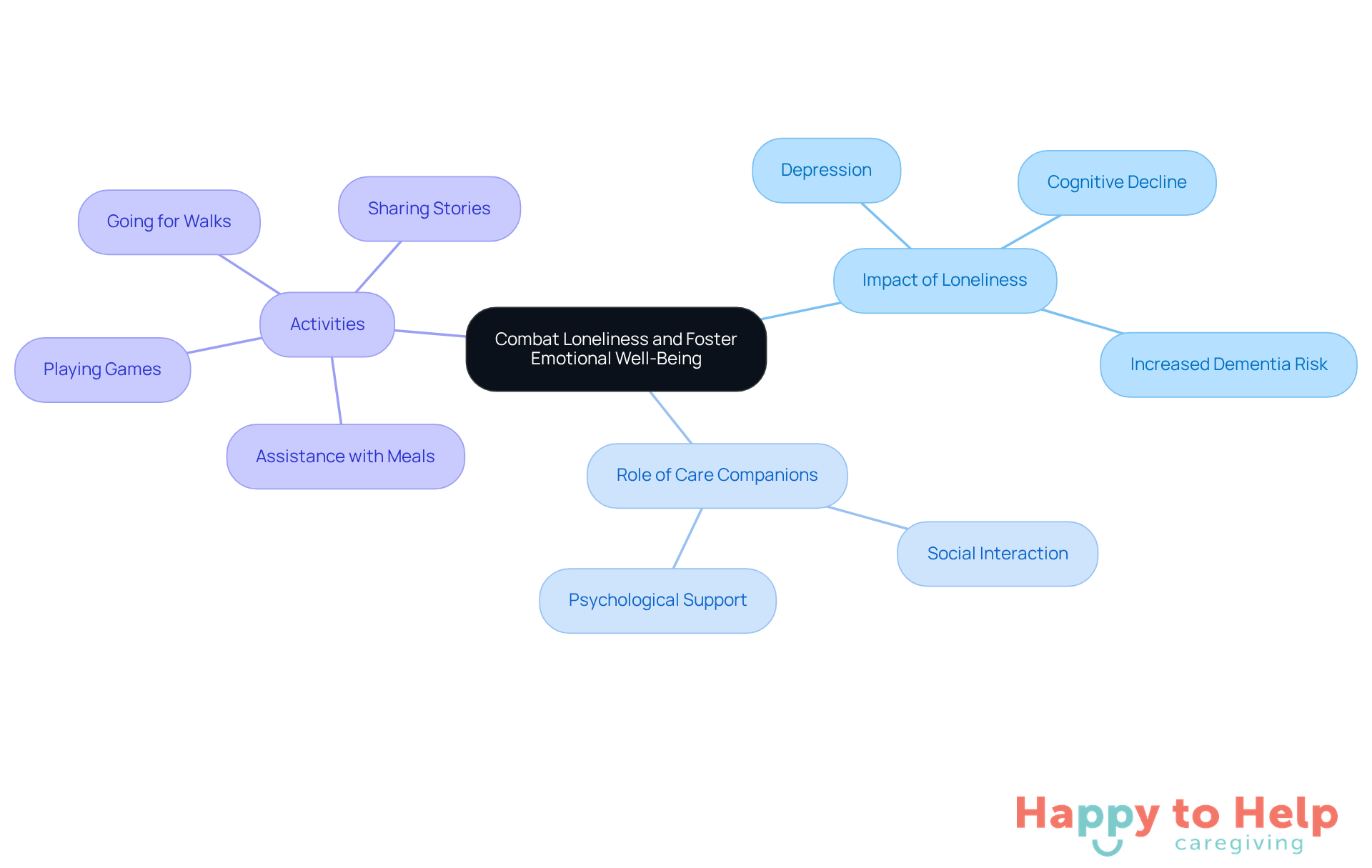
Loneliness is a significant issue among the elderly, often leading to depression and cognitive decline. This problem not only affects their mental health but also increases the risk of dementia by 50%. The implications of chronic loneliness are profound, highlighting the urgent need for effective solutions.
Care companions aim to combat this loneliness by providing regular social interaction and psychological support. Care companions engage older adults in enjoyable activities, including:
- Playing games
- Going for walks
- Sharing stories
- Providing assistance with meal preparation and light housekeeping
This consistent interaction alleviates feelings of isolation and enhances overall well-being.
Studies indicate that older adults with regular companionship experience lower levels of anxiety and depression, underscoring the importance of emotional support in maintaining mental health. By fostering these relationships, care companions play a crucial role in helping older adults feel more connected to their surroundings.
As Honor emphasizes, stable support relationships are vital for improving the quality of life for elderly individuals. Caregivers can implement these services to ensure that their loved ones receive the companionship they need, ultimately enhancing their mental and emotional health.
Support Daily Living Activities for Independence
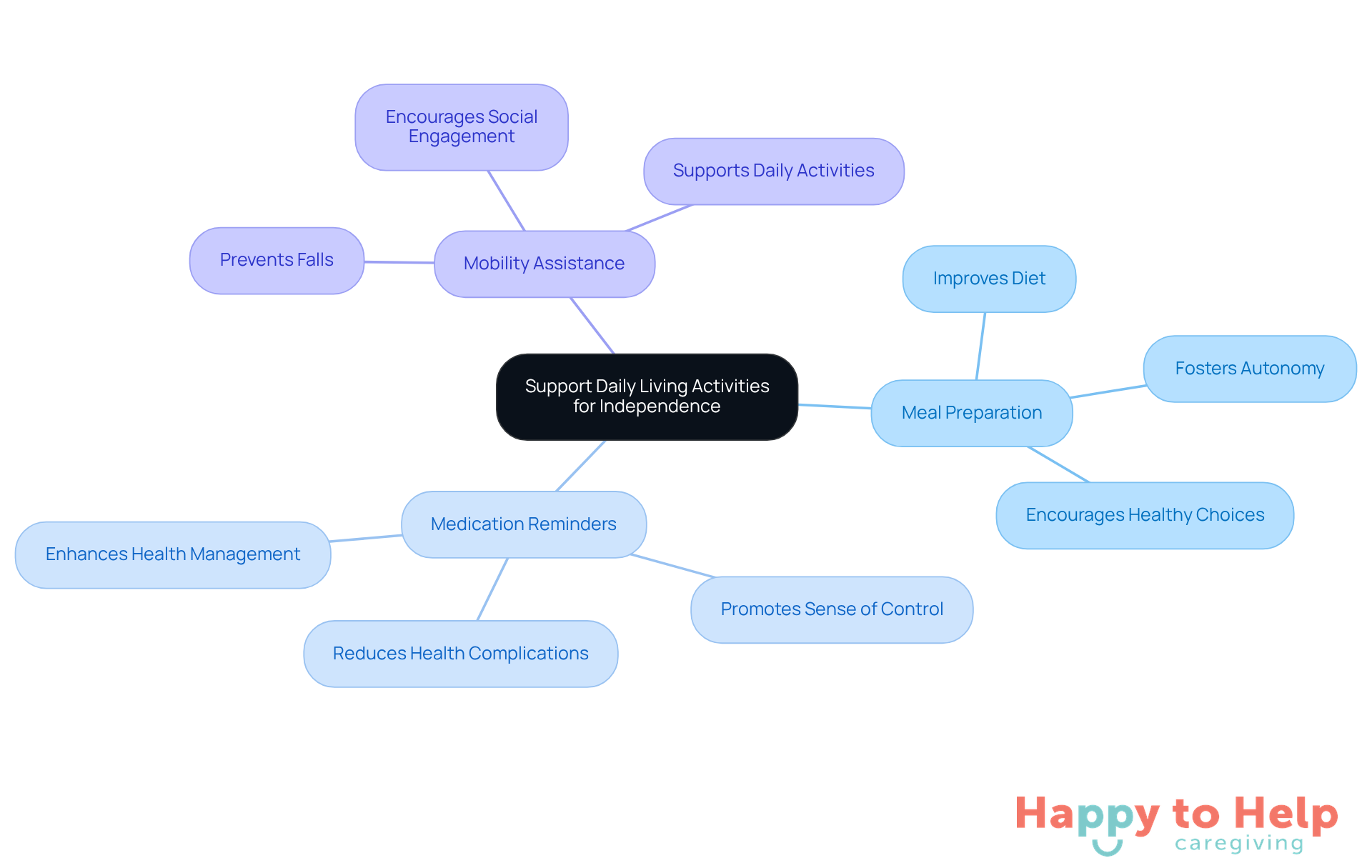
Care companions play a crucial role in supporting older adults, particularly in daily living activities that help maintain their independence. The problem arises from chronic loneliness, which can severely impact the health and well-being of seniors. Research indicates that isolated elderly individuals are twice as likely to experience depression, highlighting the urgent need for assistance.
By providing help with tasks such as:
- Meal preparation
- Medication reminders
- Mobility assistance
caregivers not only enhance the quality of life for their clients but also empower them to retain their independence. For example, a caregiver might assist an elderly person with grocery shopping, allowing them to choose their own meals and adhere to their dietary preferences. This support fosters a sense of autonomy while ensuring that older adults have the necessary help to thrive at home.
Moreover, studies show that older adults who engage in meal planning and preparation are more likely to maintain a balanced diet, which is vital for their overall health. Medication reminders also play a significant role in ensuring that seniors follow their prescribed regimens, reducing the risk of health complications and promoting a sense of control over their health management.
Ultimately, the presence of care companions alleviates the burden on family members and significantly enhances the mental and physical health of seniors, enabling them to flourish in their own homes. Notably, 85% of family support providers reported feeling more competent in their roles when utilizing respite services from companion aides, underscoring the benefits of support for caregivers.
Relieve Family Caregiver Burdens and Stress
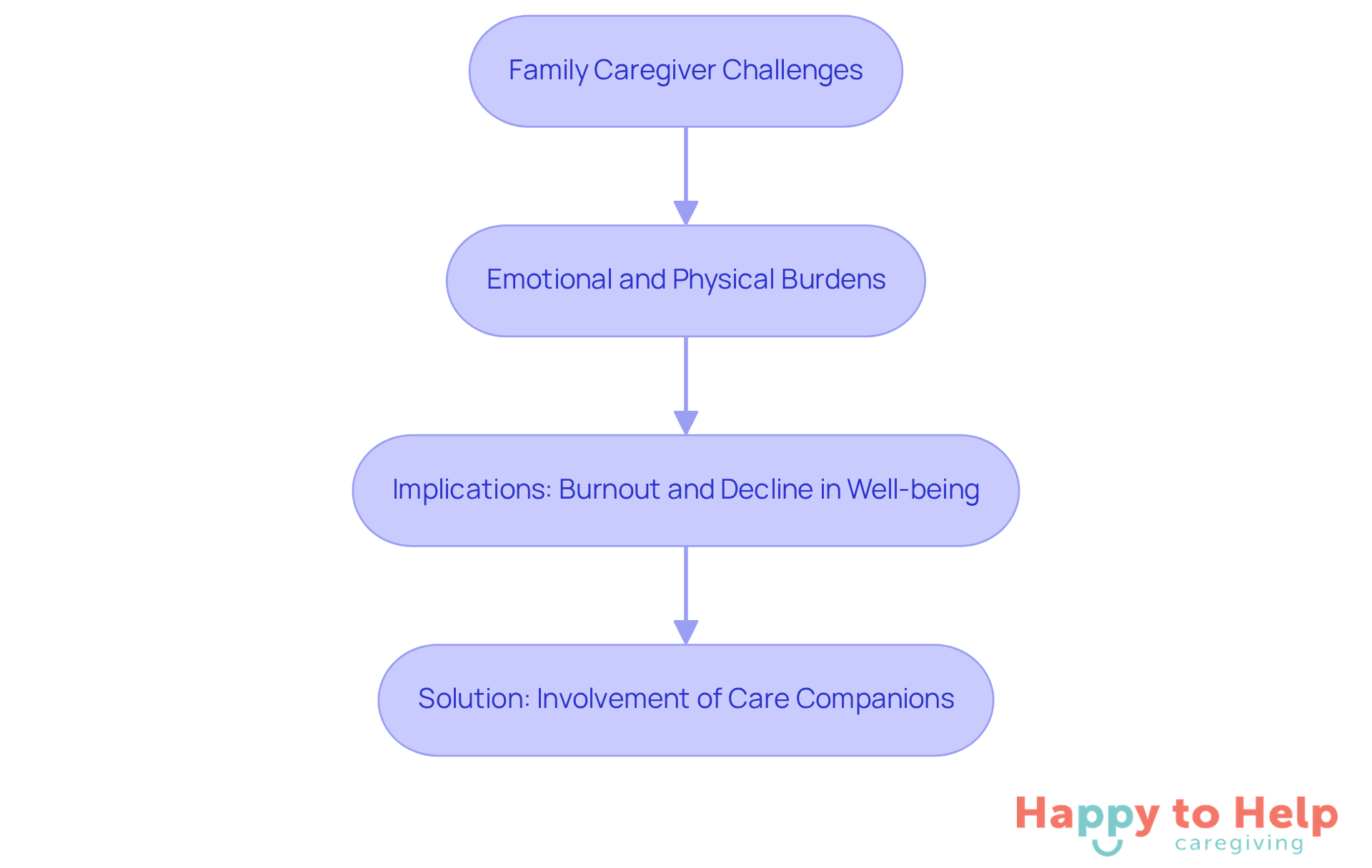
Family supporters often face significant emotional and physical challenges while caring for their loved ones. This pressure can lead to burnout, stress, and a decline in the caregiver's own well-being.
The implications of these challenges are serious. When caregivers are overwhelmed, the quality of care for their loved ones may suffer, and their own health can deteriorate.
Care companions provide essential relief for family members, enabling them to take necessary breaks and focus on their own well-being. By sharing caregiving responsibilities, families can ensure that their loved ones receive the attention they need while also preserving their own health.
For example, when care companions assist with daily tasks, family members can prioritize their personal needs - whether that means taking time for self-care or managing other responsibilities. This collaborative approach not only enhances the quality of care for seniors but also fosters healthier family relationships.
Taking the Next Steps
The essential role of care companions in supporting family caregivers is a pressing issue that deserves attention. Caregivers often face significant stress and emotional strain while trying to provide the best care for their loved ones. This burden can lead to burnout, impacting both the caregiver's and the senior's quality of life.
Care companions offer a vital solution to this problem. By providing companionship and assistance, they not only enhance the quality of life for seniors but also alleviate the pressures faced by family members. Their presence fosters emotional well-being in elderly individuals, combating loneliness and promoting independence. This support ultimately leads to a more fulfilling life at home.
Recognizing the significance of care companions is crucial for families navigating the challenges of caregiving. By prioritizing companionship and support, caregivers can ensure their loved ones thrive while also taking care of their own health and happiness. Embracing the value of care companions enriches the lives of seniors and strengthens family bonds, making it a worthy consideration for any family facing the complexities of elder care.
https://iframe.tely.ai/cta/eyJhcnRpY2xlX2lkIjogIjY5MjdhNWNmYWYxNTM5YTI1OGI1M2I4NCIsICJjb21wYW55X2lkIjogIjY4ZWU1ZGNhNzMxNzYyNTU3ZjNjOTVjMSIsICJpbmRleCI6IG51bGwsICJ0eXBlIjogImFydGljbGUifQ==Frequently Asked Questions
Why is companionship important for seniors?
Companionship is crucial for enhancing the quality of life for seniors as it helps combat loneliness, which can lead to significant mental and physical health challenges.
How does loneliness affect seniors?
Loneliness can lead to various mental and physical health issues, making regular social interaction essential for seniors.
What benefits does engaging in social interactions provide for seniors?
Engaging in meaningful conversations and activities can stimulate cognitive function and emotional well-being, helping to alleviate feelings of isolation.
What role do care companions play in the lives of seniors?
Care companions provide personalized companionship that fosters a sense of purpose and belonging, helping seniors maintain their independence and feel appreciated in their daily lives.
How can caregivers improve the health outcomes of seniors?
Caregivers can improve health outcomes by incorporating regular social interactions into care routines, focusing on creating opportunities for engagement through shared activities or conversations.
What is a holistic approach to senior care?
A holistic approach to senior care involves nurturing both the emotional and physical well-being of seniors, ensuring they have regular social interactions and feel connected.
List of Sources
- Enhance Quality of Life Through Companionship
- Embracing Companionship to Enhance Senior Well-Being | Amada (https://amadaseniorcare.com/2024/02/embracing-companionship-to-enhance-senior-well-being)
- Social interaction in aging linked to cognitive health, emotional well-being (https://mcknights.com/news/social-interaction-in-aging-linked-to-cognitive-health-emotional-well-being)
- Older adults find support through health care companions (https://news-medical.net/news/20250924/Older-adults-find-support-through-health-care-companions.aspx)
- The Value of Companion Care for Seniors- Home Care Powered By AUAF (https://homecare-aid.com/the-value-of-companion-care-for-seniors)
- 10 Ways Companion Caregivers Enhance Seniors' Quality of Life - Happy To Help (https://happytohelpcaregiving.com/10-ways-companion-caregivers-enhance-seniors-quality-of-life)
- Combat Loneliness and Foster Emotional Well-Being
- Loneliness More Common Among Middle-Aged In U.S. (https://usnews.com/news/health-news/articles/2025-04-22/loneliness-more-common-among-middle-aged-in-u-s)
- Combat Loneliness: The Benefits of Companion Care for Seniors (https://allheartcare.com/more-than-just-company-the-vital-role-of-companion-care-for-seniors)
- The Silent Epidemic of Senior Loneliness (https://honorcare.com/news/silent-epidemic-of-senior-loneliness)
- The Emotional Benefits of Companion Care for Seniors (https://comfortkeepers.com/offices/texas/round-rock/resources/news/the-emotional-benefits-of-companion-care-for-seniors)
- Loneliness and isolation: Back to pre-pandemic levels, but still high, for older adults (https://ihpi.umich.edu/news-events/news/loneliness-and-isolation-back-pre-pandemic-levels-still-high-older-adults)
- Support Daily Living Activities for Independence
- 10 Ways Companion Caregivers Enhance Seniors' Quality of Life - Happy To Help (https://happytohelpcaregiving.com/10-ways-companion-caregivers-enhance-seniors-quality-of-life)
- How Senior In-Home Care Promotes Independence in San Antonio, TX (https://news10.com/business/press-releases/ein-presswire/866935491/how-senior-in-home-care-promotes-independence-in-san-antonio-tx)
- Advocating for Older Adults in 2025—Health and Long-Term Services & Supports - Justice in Aging (https://justiceinaging.org/advocating-for-older-adults-in-2025-health-and-long-term-services-supports)
- Honoring America’s Family Caregivers, the Unseen Workforce Behind Our Health System - Medicare Rights Center (https://medicarerights.org/medicare-watch/2025/11/25/honoring-americas-family-caregivers-the-unseen-workforce-behind-our-health-system)
- How Caregivers Promote Senior Independence - UDS Foundation (https://udservices.org/how-caregivers-promote-senior-independence)
- Relieve Family Caregiver Burdens and Stress
- What Is the Caregiver Crisis? | Johns Hopkins Bloomberg School of Public Health (https://publichealth.jhu.edu/2025/what-is-the-caregiver-crisis)
- New Report Reveals Crisis Point for America’s 63 million Family Caregivers (https://press.aarp.org/2025-07-24-New-Report-Reveals-Crisis-Point-for-Americas-63-million-Family-Caregivers)
- As Family Caregiving Grows, So Does the Need for Reform - Medicare Rights Center (https://medicarerights.org/medicare-watch/2025/08/14/as-family-caregiving-grows-so-does-the-need-for-reform)
- Improving Support for Family Caregivers (https://nationalacademies.org/news/2025/07/improving-support-for-family-caregivers)
- News & Success Stories | Live Well San Diego (https://livewellsd.org/Home/Components/News/News/513/153)