What You Need to Know About Why Companion Care Enhances Seniors
Companion care stands out as a crucial support system for seniors facing the significant challenges of loneliness and isolation. This issue is not just a matter of feeling alone; studies show a direct correlation between companionship and improved mental health. The implications are profound: without adequate support, seniors may experience diminished emotional well-being and cognitive decline.
So, how can caregivers effectively address this pressing issue? The solution lies in tailoring their support to meet the unique needs of each individual. By understanding the specific preferences and requirements of older adults, caregivers can provide companionship that genuinely enriches their lives. This approach not only fosters emotional connections but also promotes cognitive stimulation, leading to a more fulfilling life for seniors.
Enhance Quality of Life Through Companionship
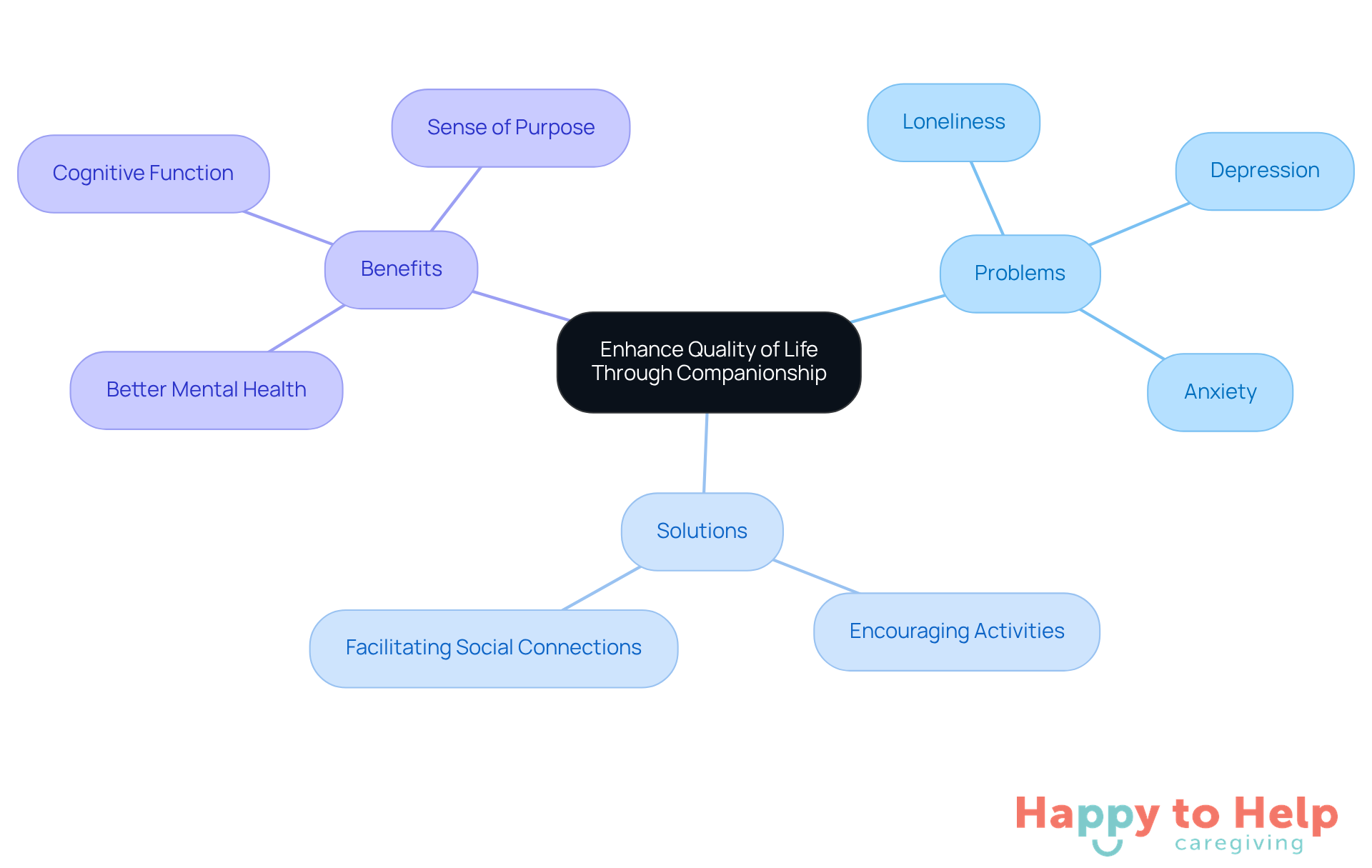
Companion care effectively addresses a significant problem faced by older adults: loneliness and its impact on mental health. Many seniors experience feelings of isolation, leading to increased levels of depression and anxiety. This emotional distress can severely affect their overall well-being and quality of life.
Research shows that older adults receiving companion care enjoy lower levels of depression and anxiety, which translates into better mental health outcomes. For instance, engaging in hobbies or simply having someone to talk to can stimulate cognitive function and provide a sense of purpose. This highlights the importance of fostering social interaction and emotional support in caregiving.
To combat these challenges, caregivers can implement practical solutions:
- Encouraging participation in meaningful activities
- Facilitating social connections
These actions can significantly enhance the lives of older adults. Gerontologists emphasize that strong social ties are crucial for mental health, as they can slow the aging process and reduce the risk of cognitive decline.
In summary, the emotional assistance provided through companion care is essential for maintaining mental acuity and overall wellness. By prioritizing social engagement and emotional support, caregivers can help older adults thrive in the comfort of their own homes.
Tailor Care Plans to Individual Needs
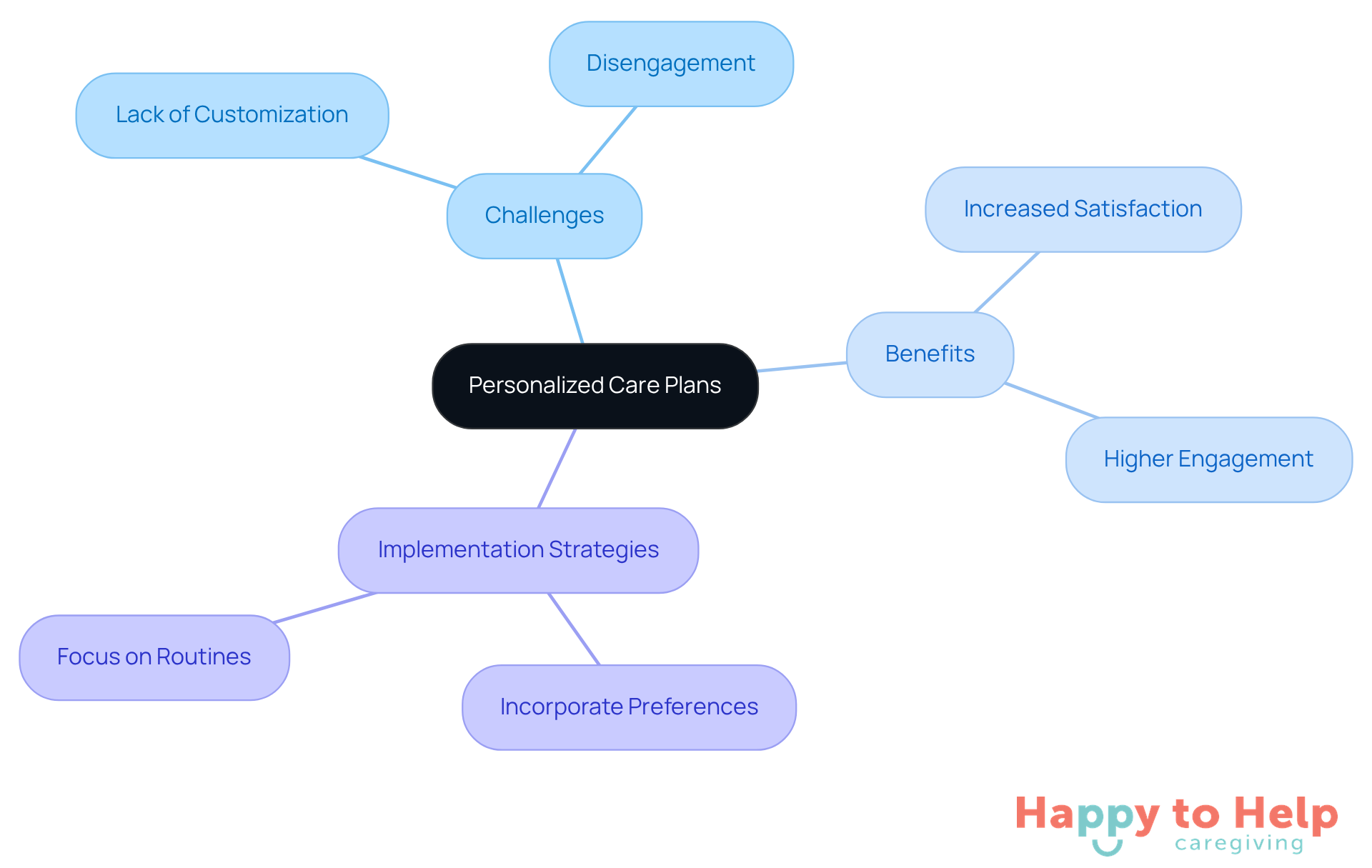
Personalized care plans pose a significant challenge in companion care, as many elderly individuals do not receive the tailored support necessary for their needs. This lack of customization can lead to disengagement and dissatisfaction, as care often fails to consider unique medical conditions, daily routines, and personal interests.
For instance, when caregivers overlook an elderly person's favorite activities, they miss an opportunity to enhance engagement and enjoyment in daily life. Research indicates that personalized care not only boosts adherence to care plans but also elevates overall satisfaction and well-being. In fact, a study found that older adults receiving customized care reported being involved in their care decisions nearly 2.5 times more than those under standard care.
To address these challenges, caregivers should prioritize the development of personalized care plans. This involves actively incorporating the individual preferences and routines of elderly clients into their care. By doing so, caregivers can significantly improve the quality of life for those they support, making personalized care plans a fundamental aspect of effective companion care.
Ensure Safety and Security at Home
Companion care tackles a significant issue: ensuring the safety and security of elderly individuals in their homes. Hazards like loose rugs and inadequate lighting can lead to serious falls, putting seniors at risk. This issue not only affects their physical well-being but also raises concerns for families who worry about their loved ones being alone.
To mitigate these risks, caregivers play a vital role. They are trained to identify potential hazards and provide assistance with daily tasks, such as:
- Medication management
- Transportation
This proactive approach not only reduces the likelihood of accidents but also offers families peace of mind, knowing that their loved ones have someone to respond to emergencies.
Ultimately, the presence of a caregiver enhances the overall quality of life for older adults. Companion care is an essential strategy for safety by enabling individuals to maintain their independence in a secure environment.
Combat Loneliness with Emotional Support
Loneliness poses a significant challenge for older adults, leading to serious mental and physical health issues. In fact, research indicates that 53% of older adults with fair or poor physical health reported feeling lonely in 2024. This isolation can increase the risk of depression and anxiety, making it crucial for caregivers to address this problem effectively.
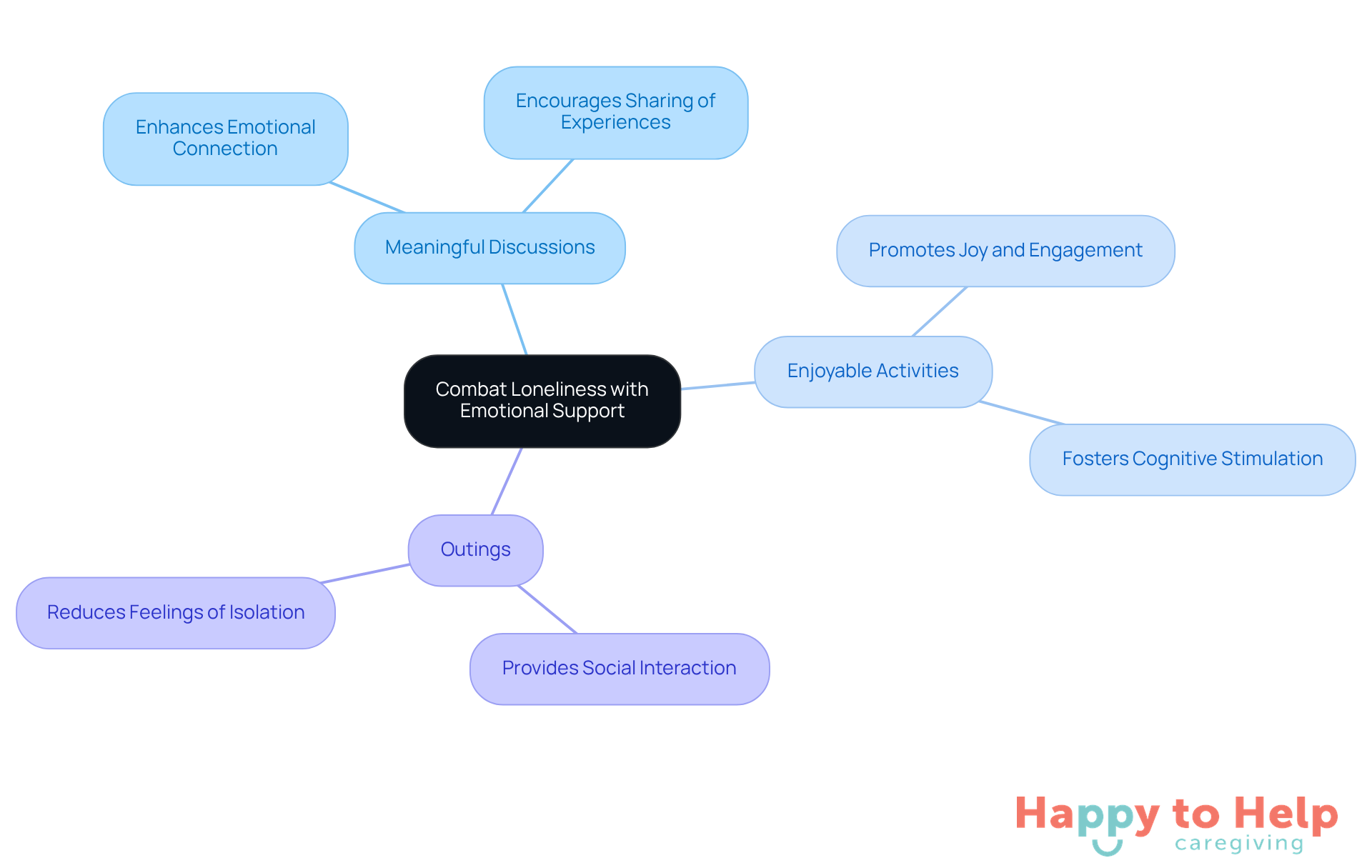
Companion care acts as a crucial solution by alleviating feelings of loneliness through regular interpersonal interaction and emotional support. Caregivers can actively engage older adults in:
- Meaningful discussions
- Enjoyable activities
- Outings
These interactions not only reduce loneliness but also enhance cognitive stimulation, fostering a sense of connection and purpose.
As noted by Luchetti M., "loneliness increases the risk for dementia at a magnitude similar to the impact of being physically inactive or smoking." By nurturing these essential connections, companion care enhances emotional well-being and empowers seniors to lead happier, more fulfilling lives.
This approach aligns with the World Health Assembly's resolution on social connection adopted in May 2025, which emphasizes the critical need for social integration among older adults. Caregivers can implement these strategies to create a supportive environment that combats loneliness and promotes overall health.
Taking the Next Steps
Companion care addresses a pressing problem: loneliness among seniors. This issue not only affects their emotional well-being but also poses safety concerns and diminishes the quality of personalized attention they receive. The implications are significant; without proper support, older adults may experience increased feelings of isolation, leading to detrimental effects on their mental health.
To combat these challenges, engaging seniors in meaningful activities and creating tailored care plans are essential strategies. By ensuring a safe living environment, caregivers can alleviate feelings of isolation while promoting cognitive stimulation and emotional security. Evidence shows that personalized care leads to higher satisfaction and better health outcomes for the elderly.
As the importance of social interaction and emotional support becomes increasingly recognized, caregivers and families must prioritize these elements in senior care. Implementing effective companion care strategies can significantly enhance safety and empower older adults to live fulfilling lives. Embracing these practices not only benefits individual seniors but also enriches communities, fostering a culture of compassion and connection for all ages.
https://iframe.tely.ai/cta/eyJhcnRpY2xlX2lkIjogIjY5NDFmMzQyMDNjMTJkY2ZiNTk2MGFjZSIsICJjb21wYW55X2lkIjogIjY4ZWU1ZGNhNzMxNzYyNTU3ZjNjOTVjMSIsICJpbmRleCI6IG51bGwsICJ0eXBlIjogImFydGljbGUifQ==Frequently Asked Questions
What is the main issue that companion care addresses for older adults?
Companion care addresses loneliness and its impact on mental health, which is a significant problem faced by many older adults.
How does loneliness affect older adults' mental health?
Loneliness can lead to increased levels of depression and anxiety, severely affecting the overall well-being and quality of life of older adults.
What are the benefits of companion care for seniors?
Research shows that older adults receiving companion care experience lower levels of depression and anxiety, resulting in better mental health outcomes.
What activities can help enhance the lives of older adults receiving companion care?
Encouraging participation in meaningful activities and facilitating social connections can significantly enhance the lives of older adults.
Why are strong social ties important for older adults?
Strong social ties are crucial for mental health as they can slow the aging process and reduce the risk of cognitive decline.
What role does emotional support play in companion care?
Emotional support through companion care is essential for maintaining mental acuity and overall wellness in older adults.
How can caregivers help older adults thrive at home?
By prioritizing social engagement and emotional support, caregivers can help older adults thrive in the comfort of their own homes.
List of Sources
- Enhance Quality of Life Through Companionship
- Medflyt at Home | Elderly Mental Health Statistics: What You Need To Know (https://medflyt.com/blog/posts/elderly-mental-health-statistics)
- Social connection linked to improved health and reduced risk of early death (https://who.int/news/item/30-06-2025-social-connection-linked-to-improved-heath-and-reduced-risk-of-early-death)
- Older adults find support through health care companions (https://news-medical.net/news/20250924/Older-adults-find-support-through-health-care-companions.aspx)
- Today’s Research on Aging 44: More Than a Feeling: How Social Connection Protects Health in Later Life (https://prb.org/resources/todays-research-on-aging-44-more-than-a-feeling-how-social-connection-protects-health-in-later-life)
- Creating Safe Living Environment for Seniors: Tips & Practices (https://peacevillage.org/news/why-companionship-is-key-to-happy-aging-elderly-well-being)
- Tailor Care Plans to Individual Needs
- 2025: AI enhances personalized care; caregiver experience in the spotlight (https://healthcareitnews.com/news/2025-ai-enhances-personalized-care-caregiver-experience-spotlight)
- Novel Care Model May Improve Outcomes for Older Adults With Multiple Chronic Conditions (https://consultqd.clevelandclinic.org/novel-care-model-may-improve-outcomes-for-older-adults-with-multiple-chronic-conditions)
- Importance of Personalized Senior Home Care in Burlington NC (https://wisdomseniorcare.com/the-importance-of-personalized-care-plans-for-seniors)
- Revolutionizing Senior Wellness: A Vision for the Future (https://redmondseniors.org/blog/f/revolutionizing-senior-wellness-a-vision-for-the-future)
- Ensure Safety and Security at Home
- Home Safety for Seniors: Statistics & Proven Safety Solutions (https://agesafeamerica.com/home-safety-hub/aging-in-place/home-safety-seniors-statistics-solutions)
- 7 Things Caregivers Do to Keep Seniors Safe | Amada (https://amadaseniorcare.com/2024/02/7-things-caregivers-do-to-keep-seniors-safe)
- Senior Home Safety: Tips from Home Care Experts - Advanced Nursing & Home Care (https://advancednursing.care/quality-of-life/senior-home-safety-tips-from-home-care-experts)
- Ensuring a Safe and Secure Home for Seniors: Expert Advice from Angel Care Inc., NY | Home Care agency in New York (https://angelcareny.com/ensuring-a-safe-and-secure-home-for-seniors-expert-advice-from-angel-care-inc-ny)
- Home Care Assistance: Five Tips for Families Worried About Senior Safety (https://homehelpershomecare.com/nw-indiana/community-blog/2025/july/five-tips-for-family-caregivers-worried-about-senior-safety)
- Combat Loneliness with Emotional Support
- Social connection linked to improved health and reduced risk of early death (https://who.int/news/item/30-06-2025-social-connection-linked-to-improved-heath-and-reduced-risk-of-early-death)
- Social isolation, loneliness in older people pose health risks | Alzheimers.gov (https://alzheimers.gov/news/social-isolation-loneliness-older-people-pose-health-risks)
- Loneliness and isolation: Back to pre-pandemic levels, but still high, for older adults (https://ihpi.umich.edu/news-events/news/loneliness-and-isolation-back-pre-pandemic-levels-still-high-older-adults)
- 1 in 3 older adults still experience loneliness and isolation (https://michiganmedicine.org/health-lab/1-3-older-adults-still-experience-loneliness-and-isolation)
- Loneliness linked to dementia risk in large-scale analysis (https://nia.nih.gov/news/loneliness-linked-dementia-risk-large-scale-analysis)