Why Memory Care Respite is Essential for Family Caregivers

For families in our service areas
For families in our service areas, this guide explains respite care and how non-medical in-home caregiving can support care planning in East Idaho, Treasure Valley & Magic Valley, Northern Wasatch, North Central West Virginia, and Northeast Ohio.
Understanding Why Memory Care Respite is Essential
Caregiving for individuals with memory-related conditions presents a significant challenge, often leading to emotional and physical strains that can result in caregiver burnout. This issue not only impacts the well-being of caregivers but also diminishes the quality of care their loved ones receive.
The implications of caregiver burnout are profound. When caregivers are overwhelmed, they may struggle to provide the necessary support, which can affect their loved ones' health and happiness. Memory care respite services emerge as a vital solution, offering caregivers a chance to recharge while ensuring their family members are in safe, professional hands.
However, many caregivers face stigma and various challenges that hinder them from seeking this essential support. Prioritizing their own well-being can feel daunting, yet it is crucial. Respite services can transform the caregiving experience, allowing caregivers to return refreshed and better equipped to provide care.
Define Memory Care Respite and Its Importance
Problem: Caregivers of individuals with memory-related conditions, such as dementia or Alzheimer's disease, often face significant emotional and physical strains. These challenges can lead to burnout, making it difficult for them to provide the best care possible.
Agitate: The toll of caregiving can be overwhelming. Without regular breaks, caregivers may find themselves exhausted, which not only affects their well-being but also the quality of care they provide. Statistics show that caregivers who do not take time for themselves are more likely to experience stress and fatigue, ultimately impacting their loved ones' support.
Memory care respite services provide a vital solution. These temporary assistance services allow primary caregivers to take necessary breaks while ensuring their loved ones receive professional, compassionate care in a secure environment. By utilizing these services, caregivers can rejuvenate and return to their roles revitalized.
Moreover, studies indicate that temporary support positively influences the mood and mental well-being of individuals with dementia, fostering a supportive atmosphere that benefits both caregivers and those they care for. As one expert noted, "Using temporary support is not a sign of weakness; instead, it is an essential initial step toward becoming an effective long-term provider."
By acknowledging the importance of memory care respite, caregivers can enhance their own well-being while ensuring the highest quality of support for their loved ones.
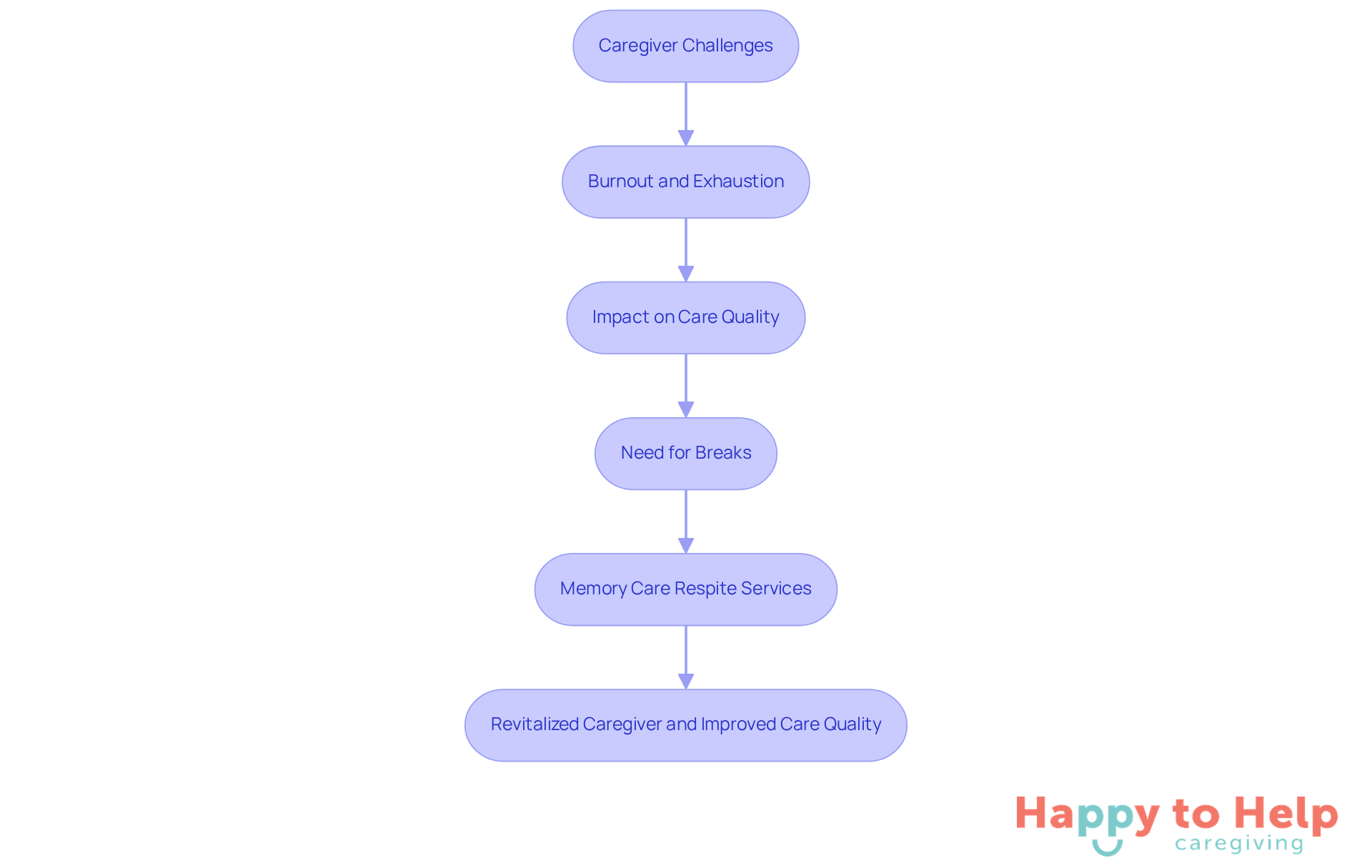
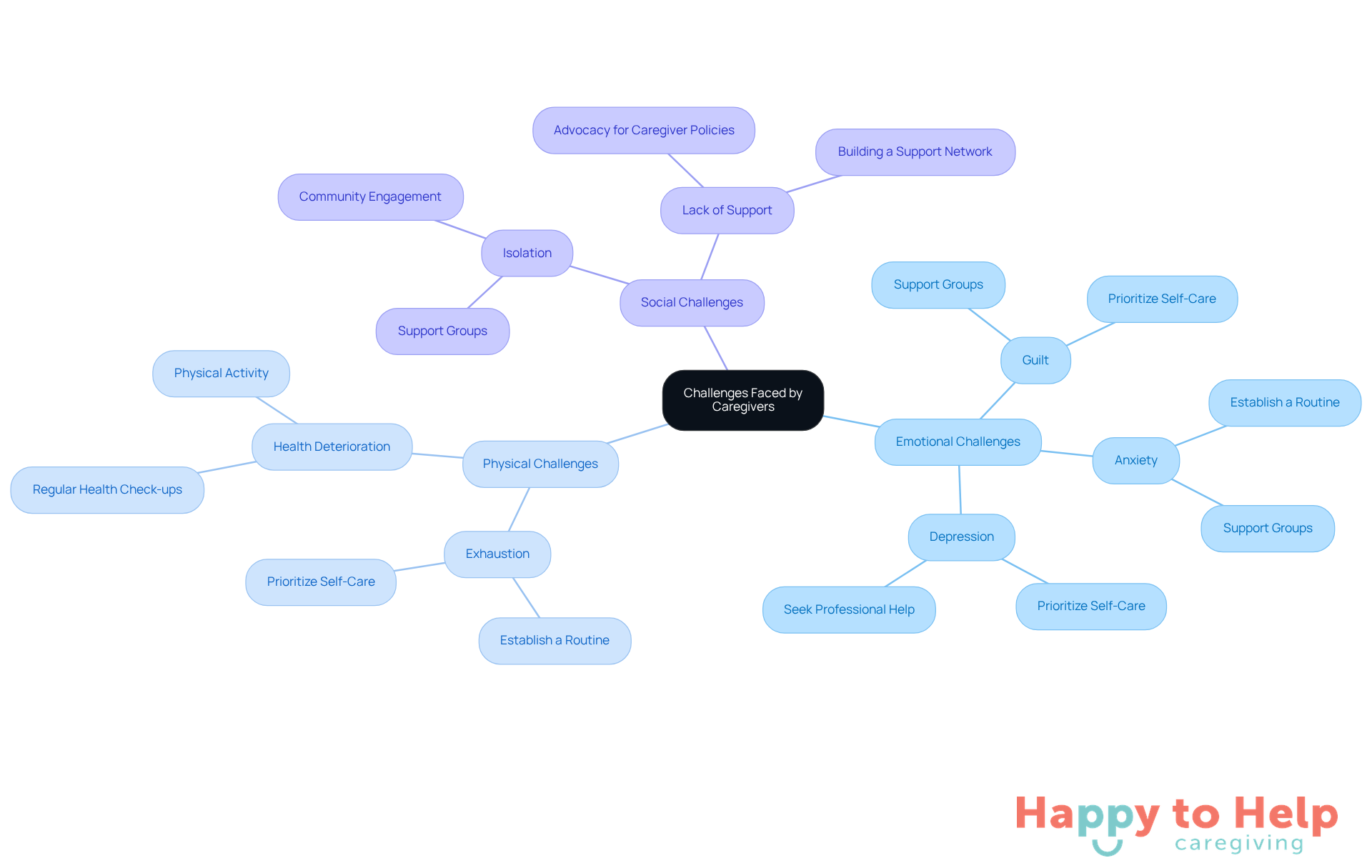
Examine the Challenges Faced by Caregivers
Caregivers often face a myriad of challenges that can lead to significant stress and burnout. Emotional strain from witnessing the decline of a loved one, physical exhaustion from caregiving demands, and social isolation due to time-consuming responsibilities are just a few of these challenges.
Many caregivers express feelings of guilt, anxiety, and depression, which can be exacerbated by a lack of support from their social circles. Additionally, they may struggle with time management, trying to balance caregiving with personal and professional obligations. This immense load can deteriorate their health, making it essential to address these difficulties.
To combat these challenges, caregivers can implement efficient support systems. Here are some actionable solutions:
- Seek support groups: Connecting with others in similar situations can provide emotional relief and practical advice.
- Establish a routine: Creating a structured daily schedule can help manage time effectively.
- Prioritize self-care: Taking time for personal health and well-being is crucial for sustaining caregiving efforts.
By recognizing these challenges and actively seeking solutions, caregivers can improve their well-being and continue to provide the care their loved ones need.
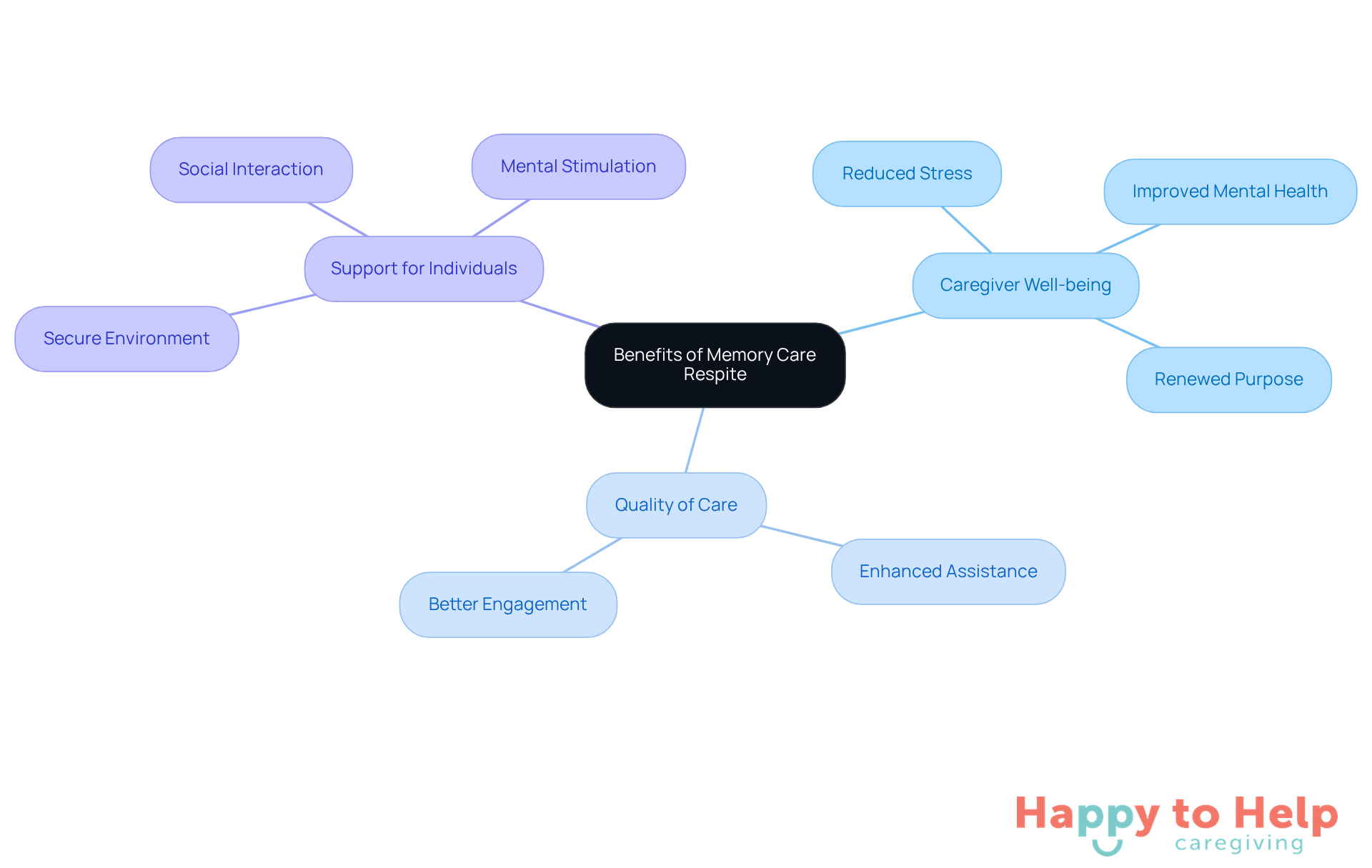
Explore the Benefits of Memory Care Respite
Caregiving can be a demanding role, often leading to significant stress and fatigue. Caregivers frequently find themselves overwhelmed, which can negatively impact their mental health and overall well-being. This situation not only affects the caregivers but also the individuals they assist, as the quality of care may diminish when caregivers are burnt out.
Memory care respite services provide a practical solution to this pressing issue. By providing caregivers with much-needed breaks, these services allow them to recharge both physically and emotionally. This time away can lead to reduced stress levels and improved mental health, fostering a renewed sense of purpose in their caregiving role.
Providers who utilize relief services often report feeling more competent and invigorated. This renewed energy translates into better assistance for their family members, enhancing the overall caregiving experience. For individuals receiving assistance, these relief services ensure they are supported in a secure and engaging environment, promoting social interaction and mental stimulation.
In summary, memory care respite services are essential for enhancing the quality of life for both caregivers and those they assist. By addressing caregiver burnout and providing effective support, these services create a healthier, more sustainable caregiving dynamic.
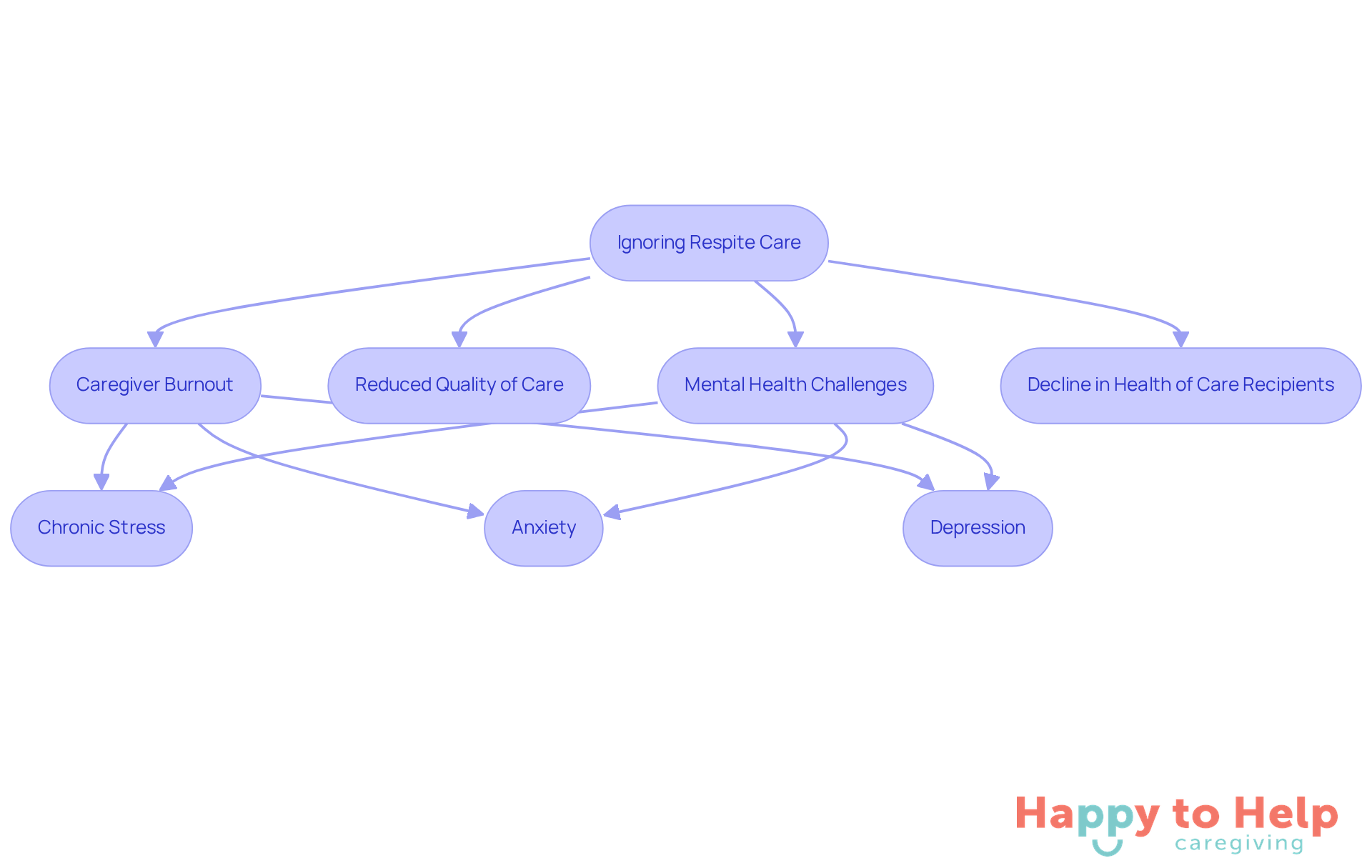
Analyze the Consequences of Ignoring Respite Care
Ignoring the necessity for rest support can lead to significant consequences for both support providers and those they assist. Caregiver burnout is a pressing issue, characterized by emotional, physical, and mental exhaustion. Statistics reveal that 40 to 70% of individuals providing care experience symptoms of depression, with 47% reporting mental health challenges in the past year. This burnout often results in a reduced quality of care, as overwhelmed supporters struggle to meet the needs of their loved ones effectively.
For instance, Esme Almonte, a caregiver, shared her experience of prioritizing her husband's needs over her own, which led to her exhaustion and neglect of personal health. Such neglect can manifest in chronic stress, anxiety, and depression, complicating the provider's ability to offer sufficient support. Furthermore, individuals receiving assistance may also see a decline in their health and well-being due to the lack of attention and support they require. This creates a harmful cycle that impacts the entire family structure, highlighting the importance of caregivers actively pursuing relief services.
By focusing on their own well-being, caregivers can enhance the quality of assistance they provide, ultimately benefiting both themselves and their loved ones. It's crucial to recognize that over 44 million family supporters contribute the equivalent of $873.5 billion in paid labor annually, underscoring the financial significance of caregiving and the necessity of supporting providers through relief services.
However, barriers such as lack of trust, shame, and concerns about care quality often prevent caregivers from utilizing respite services. Addressing these issues is essential to foster a supportive environment for caregivers.
Taking the Next Steps
Memory care respite is not just a luxury; it’s a vital lifeline for family caregivers facing the immense demands of caring for loved ones with memory-related conditions. Caregivers often experience emotional strain, physical exhaustion, and social isolation, which can lead to burnout. This burnout not only affects their health but also the quality of care they provide.
Recognizing the need for breaks is essential. By utilizing memory care respite services, caregivers can alleviate stress and rejuvenate themselves, ultimately leading to a more positive caregiving experience. This proactive approach helps prevent caregivers from becoming overwhelmed, breaking the detrimental cycle that can impact both their well-being and that of their loved ones.
Taking action now can lead to a brighter future for both caregivers and those they care for. Embracing the benefits of memory care respite allows caregivers to prioritize their own well-being, fostering a healthier dynamic that promotes longevity in their caregiving roles. Remember, prioritizing self-care is not just beneficial; it’s essential in the caregiving journey.
https://iframe.tely.ai/cta/eyJhcnRpY2xlX2lkIjogIjY5NDFmMzU0MTE4MTVjMDQxY2UzNWU2NiIsICJjb21wYW55X2lkIjogIjY4ZWU1ZGNhNzMxNzYyNTU3ZjNjOTVjMSIsICJpbmRleCI6IG51bGwsICJ0eXBlIjogImFydGljbGUifQ==Frequently Asked Questions
What is memory care respite?
Memory care respite refers to temporary assistance services that provide caregivers of individuals with memory-related conditions, such as dementia or Alzheimer's disease, a much-needed break while ensuring their loved ones receive professional and compassionate care in a secure environment.
Why is memory care respite important for caregivers?
Memory care respite is important for caregivers because it allows them to take necessary breaks, helping to alleviate emotional and physical strains that can lead to burnout. Regular breaks enable caregivers to rejuvenate, ultimately improving their well-being and the quality of care they provide.
What are the consequences of caregivers not taking breaks?
When caregivers do not take breaks, they may experience significant stress and fatigue, which can negatively impact their own well-being and the quality of care they provide to their loved ones.
How does temporary support affect individuals with dementia?
Studies indicate that temporary support positively influences the mood and mental well-being of individuals with dementia, fostering a supportive atmosphere that benefits both caregivers and those they care for.
Is using memory care respite a sign of weakness?
No, using memory care respite is not a sign of weakness; it is considered an essential step toward becoming an effective long-term provider of care.
List of Sources
- Define Memory Care Respite and Its Importance
- The Benefits Of Respite Care For Dementia Caregivers - NCCDP (https://nccdp.org/the-benefits-of-respite-care-for-dementia-caregivers)
- Memory Care and Respite Care: What to Know (https://aplaceformom.com/caregiver-resources/articles/memory-care-respite)
- Alzheimer’s Association Awarded $25 Million Grant to Enhance Respite Care for Dementia Caregivers (https://alz.org/news/2024/alzheimers-association-awarded-dollar25-million-grant-enhance-respite-care-dementia-caregivers)
- Respite Care | Alzheimer's Association (https://alz.org/help-support/caregiving/care-options/respite-care)
- How Does Respite Care Helps Prevent Caregiver Burnout (https://sundaleseniorliving.com/news-and-articles/the-role-of-respite-care-in-preventing-caregiver-burnout)
- Examine the Challenges Faced by Caregivers
- Caregiving’s Mental Health Crisis (https://forbes.com/sites/otsuka/2025/10/02/caregivings-mental-health-crisis)
- Caregiving Crisis: Nearly 1 in 4 US adults serve as caregivers for relatives with complex needs (https://investigatetv.com/2025/11/04/caregiving-crisis-nearly-1-4-us-adults-serve-caregivers-relatives-with-complex-needs)
- Study: 82 percent of unpaid caregivers suffer mental health struggles (https://mcknights.com/news/study-82-percent-of-unpaid-caregivers-suffer-mental-health-struggles)
- Caregiving is taking a toll on the mental health of millions of Americans (https://npr.org/2025/01/26/nx-s1-5271537/caregiving-is-taking-a-toll-on-the-mental-health-of-millions-of-americans)
- Explore the Benefits of Memory Care Respite
- Stats, Facts and Things to Know About Respite Care (https://bethesdaseniorliving.com/senior-resources/stats-facts-and-things-to-know-about-respite-care)
- Medicare offering dementia caregiver benefit: It's a start, advocates say (https://naplesnews.com/story/news/local/2025/08/20/medicare-now-offers-2500-dementia-caregiving-stipend-how-it-helps/84334583007)
- Exploring the Benefits of Respite Services to Family Caregivers: Methodological Issues and Current Findings - PMC (https://pmc.ncbi.nlm.nih.gov/articles/PMC5550302)
- New Medicare program offers much-needed relief for caregivers of dementia patients (https://finance.yahoo.com/news/new-medicare-program-offers-much-needed-relief-for-caregivers-of-dementia-patients-203450020.html)
- Analyze the Consequences of Ignoring Respite Care
- Caregiving’s Mental Health Crisis (https://forbes.com/sites/otsuka/2025/10/02/caregivings-mental-health-crisis)
- Respite care more than doubles chances of elderly patients dying at home, study finds (https://mcknights.com/news/respite-care-more-than-doubles-chances-of-elderly-patients-dying-at-home-study-finds)
- These people know how to fix the caregiving crisis. Is it doable? (https://usatoday.com/story/life/health-wellness/2025/12/03/caregivers-need-respite-care-mental-health-counseling-paid-family-program-resources/87234207007)
- The Respite Gap: Why Caregivers Aren’t Using Support Services (https://forbes.com/sites/sophieokolo/2025/09/08/the-respite-gap-why-caregivers-arent-using-support-services)