Understanding Why Senior Care in Omaha is Essential
Aging individuals in Omaha face a complex landscape of unique needs that often go unaddressed. This creates significant challenges for family caregivers. As the demand for senior care rises, the emotional and physical toll on caregivers intensifies, leading to feelings of guilt, anxiety, and burnout.
How can families ensure their loved ones receive the specialized support they require while also safeguarding their own well-being? This article delves into the essential role of professional senior care in alleviating these burdens. By highlighting its profound impact on both the elderly and their families, we aim to provide actionable solutions that caregivers can implement.
Recognize the Unique Needs of Aging Individuals
Aging individuals often face a myriad of unique needs that require specialized attention across physical, emotional, and social dimensions.
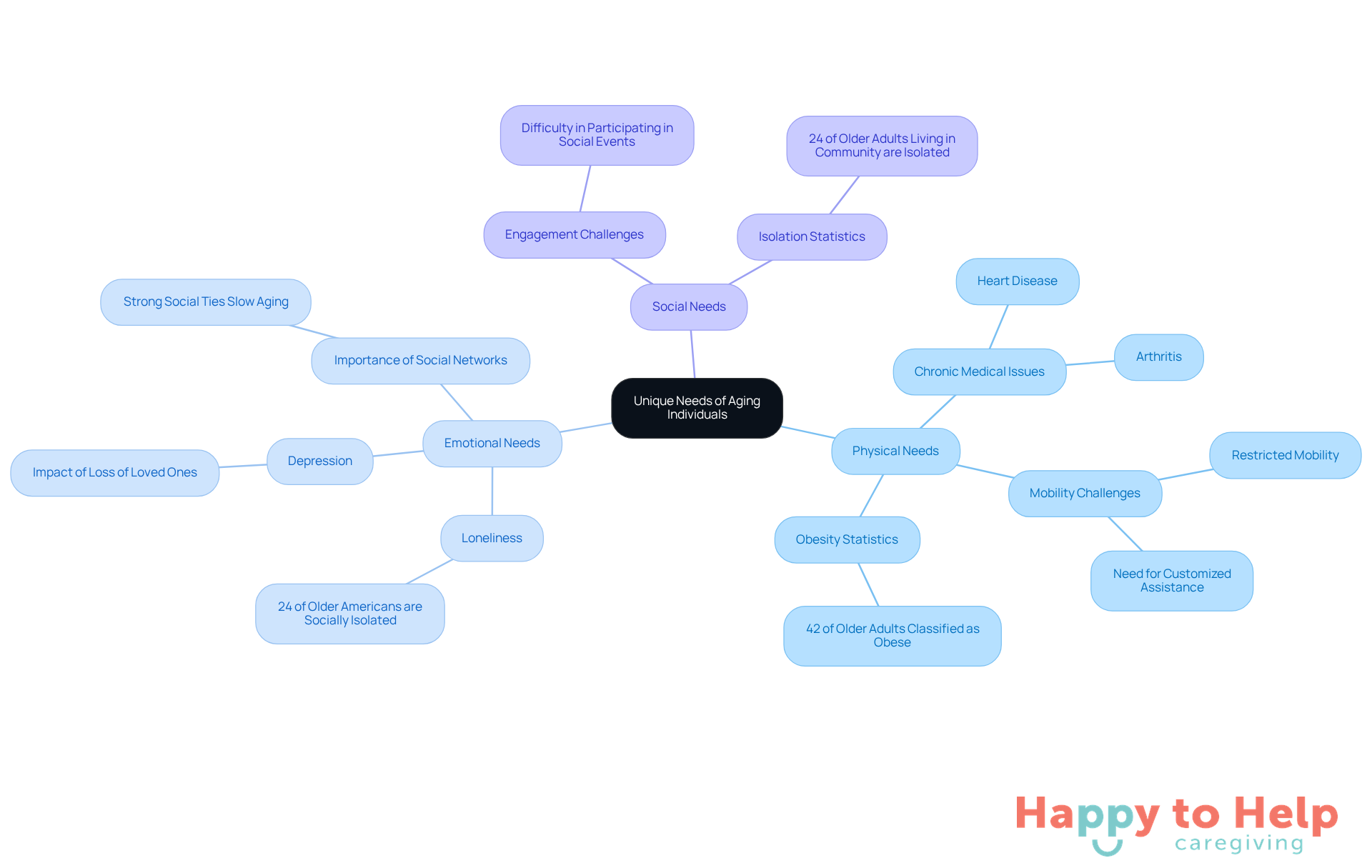
Problem: Physically, seniors struggle with chronic medical issues like arthritis and heart disease, which can greatly restrict mobility and require customized assistance. In 2022, heart disease was the primary reason for fatalities among older adults, emphasizing the significance of tackling these wellness challenges. It is projected that nearly 42% of older adults will be classified as obese, further complicating their physical health and mobility.
Agitate: Caregivers play a vital role in helping with daily activities, including bathing, dressing, and medication management, ensuring that elderly individuals maintain their independence as much as possible. However, the emotional toll on caregivers can be significant, as they navigate the complexities of their loved ones' health challenges.
Solution: To address these issues, caregivers can implement strategies such as creating a structured daily routine that includes physical activity tailored to the individual's abilities. Encouraging participation in light exercises can help improve mobility and overall health.
Emotionally, many seniors grapple with feelings of loneliness and depression, particularly following the loss of loved ones or when they can no longer engage in previously enjoyed social activities. Studies show that strong social networks can act as a protective element against psychological problems, emphasizing the significance of companionship and mental engagement offered through in-home caregiving services. In fact, older adults with strong social ties age one to two years slower than those without such connections, underscoring the critical role of emotional support in enhancing their quality of life.
Socially, sustaining relationships with family and friends is essential for mental well-being, yet many older adults find it difficult to engage in social events due to mobility limitations or medical issues. In 2022, approximately 24% of older Americans living in the community were socially isolated, which can lead to adverse health outcomes.
Actionable Tips for Caregivers:
- Facilitate regular communication with family and friends through phone calls or video chats.
- Encourage participation in community activities that are accessible and enjoyable.
Comprehending these distinct requirements is crucial for family supporters and professionals alike, as it guides the creation of effective care strategies that encourage independence and improve the overall well-being of seniors.
Understand Family Caregiver Challenges
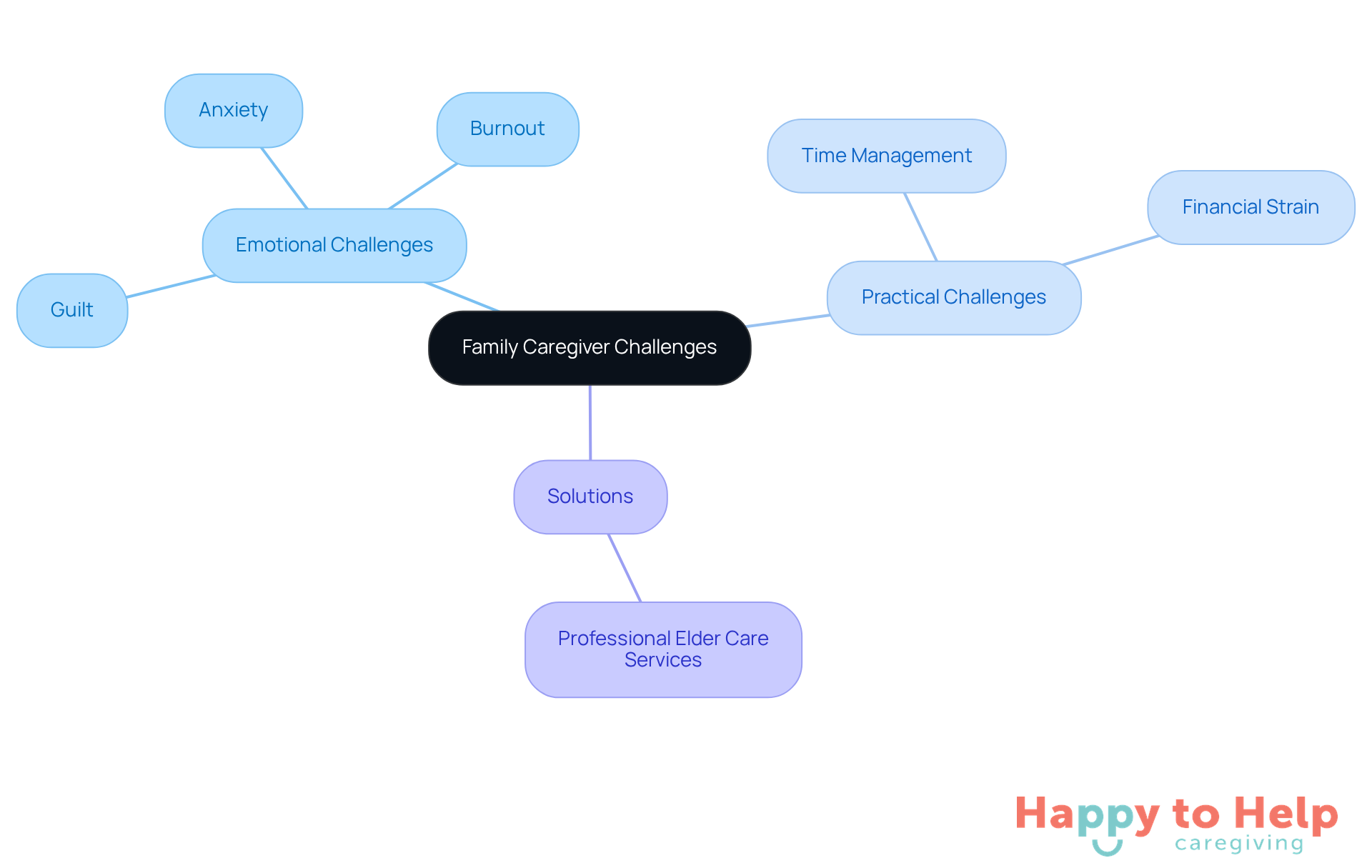
Family supporters often find themselves in a challenging position, balancing their own lives with the demands of caring for an aging loved one. The problem lies in the psychological strain that comes with caregiving. Many caregivers report feelings of guilt, anxiety, and stress, especially when they sense they are not meeting their loved one's needs sufficiently. This emotional burden can lead to burnout, affecting both their health and the quality of care provided to the senior.
Agitating the issue, practical challenges such as time management and financial strain are also prevalent. Caregiving can feel like a full-time job, leaving little room for personal time or employment opportunities. Many caregivers must juggle work responsibilities alongside caregiving tasks, which increases stress and fatigue. Financially, the costs associated with caregiving-whether direct expenses for medical supplies or indirect costs like lost wages-can be significant, complicating the caregiver's situation further.
The solution lies in acknowledging these challenges and understanding why professional elder care services are not just advantageous but often vital for families navigating the complexities of caregiving. Seeking help can alleviate some of the burdens, allowing caregivers to focus on their own well-being while ensuring their loved ones receive the care they need.
Explore the Benefits of Professional Senior Care
In-home assistance services provide a solution to a pressing problem: the increasing need for senior care in Omaha among elderly individuals. As the number of older adults requiring nursing home care is projected to rise from 1.3 million in 2010 to approximately 2.3 million by 2030, families face significant challenges in providing adequate support. This situation can lead to stress and anxiety for both the elderly and their caregivers.
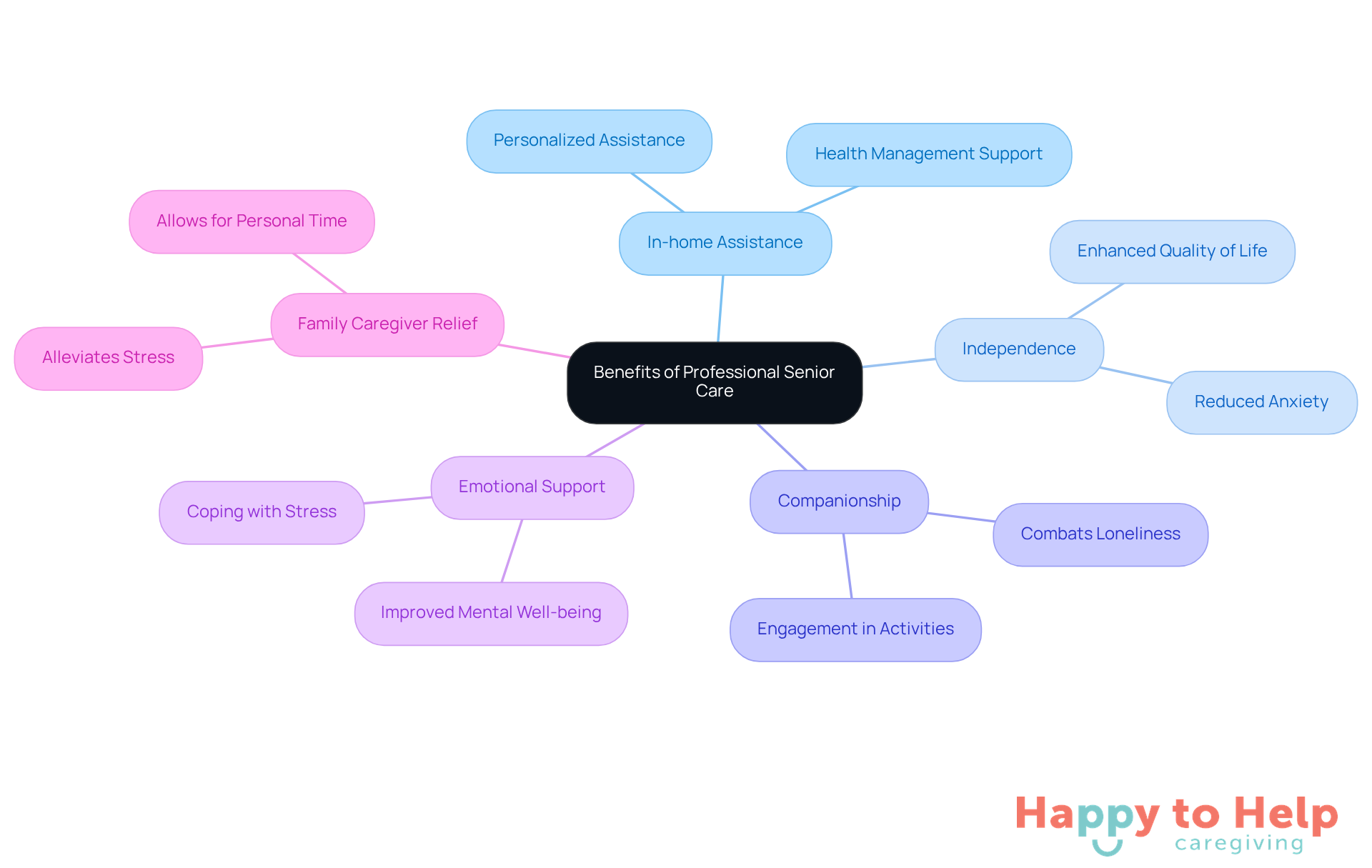
The implications of this problem are profound. Many elderly individuals prefer to age in place, yet they often struggle with daily activities and health management. This can diminish their quality of life and increase feelings of isolation. In-home care offers a solution by providing personalized assistance tailored to each individual's specific needs. Professional caregivers are trained to evaluate health conditions, ensuring that older adults receive appropriate medical attention and support with daily tasks.
Moreover, in-home care fosters independence. By allowing older adults to remain in the comfort of their own homes, they experience a familiar environment that reduces anxiety and enhances their sense of security. This stability can lead to improved mental and psychological well-being, helping elderly individuals maintain sharper cognitive abilities and a stronger sense of autonomy.
Companionship is another critical benefit of professional caregiving. Engaging older adults in meaningful conversations and activities combats loneliness and social isolation, which are prevalent issues among this demographic. The compassionate support provided by caregivers can significantly enhance the mental well-being of older adults, ultimately improving their overall quality of life.
For family caregivers, professional assistance alleviates stress, allowing them to take necessary breaks and focus on their own well-being. This support not only benefits the elderly but also promotes a healthier family dynamic.
In summary, the advantages of senior care in Omaha extend beyond mere physical assistance. They encompass emotional support, enhanced quality of life, and essential relief for family caregivers, making in-home assistance a vital consideration for families in Omaha.
Highlight the Importance of Personalized Care Plans
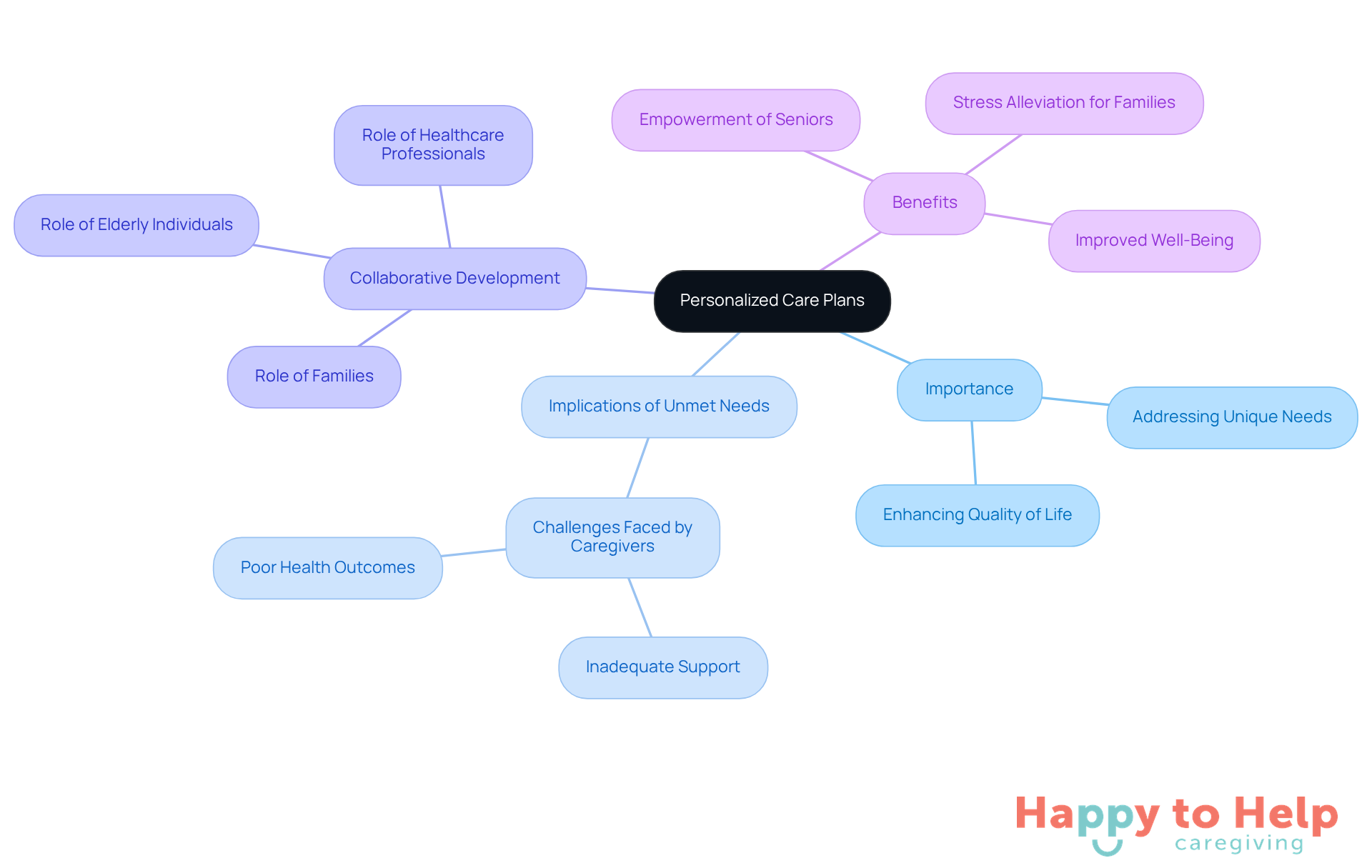
Personalized care plans are essential for effective senior care Omaha, as they address the unique needs of each individual comprehensively. The problem arises when these needs go unmet, leading to inadequate support for elderly individuals. This gap can significantly impact their quality of life, as caregivers may not fully understand the specific challenges faced by each person.
The implications of not having personalized care plans are profound. For instance, an elderly individual with mobility challenges requires different support than someone experiencing cognitive decline. Without tailored strategies, caregivers may struggle to provide the appropriate assistance, which can result in poorer health outcomes and decreased satisfaction with care.
The solution lies in developing personalized care plans through a collaborative process. Involving the elderly individual, their family, and healthcare professionals ensures that all aspects of their physical, emotional, and social needs are considered. This approach not only enhances the quality of care but also promotes dignity and respect for older adults, as they actively participate in decisions about their care.
Moreover, personalized care plans empower older adults, fostering a sense of control over their lives and improving overall well-being. They also alleviate stress for families by clarifying responsibilities and providing peace of mind during challenging times. In summary, personalized care plans in senior care Omaha are not just about improving care effectiveness; they also play a crucial role in the emotional and psychological health of aging individuals, making them indispensable in senior caregiving.
Key Takeaways for Caregivers
The essential nature of senior care in Omaha is critical, especially for family caregivers who often feel overwhelmed by the demands of supporting aging loved ones. As the elderly population increases, so does the need for specialized care that addresses their unique physical, emotional, and social challenges. Understanding these needs is vital for creating effective care strategies that enhance seniors' quality of life while alleviating the burden on their caregivers.
Aging individuals face significant health issues, emotional struggles, and social isolation. These challenges can be effectively managed through personalized care plans and in-home assistance. The emotional toll on family caregivers, compounded by practical challenges like time management and financial strain, highlights the necessity of seeking external support. Professional caregivers not only provide essential assistance but also foster companionship, which contributes to improved mental well-being for both seniors and their families.
Investing in senior care services in Omaha is not merely a convenience; it is a vital step toward ensuring the dignity, health, and happiness of aging individuals. Families should explore available resources and consider the benefits of professional assistance. Such support is instrumental in promoting a healthier family dynamic and enhancing the overall quality of life for loved ones. Embracing this approach can lead to a more fulfilling caregiving experience, transforming challenges into opportunities for connection and care.
https://iframe.tely.ai/cta/eyJhcnRpY2xlX2lkIjogIjY5M2Y3NWFiYWIxOGVmNWI4ZjA0NTBjNCIsICJjb21wYW55X2lkIjogIjY4ZWU1ZGNhNzMxNzYyNTU3ZjNjOTVjMSIsICJpbmRleCI6IG51bGwsICJ0eXBlIjogImFydGljbGUifQ==Frequently Asked Questions
What unique needs do aging individuals face?
Aging individuals often face unique needs across physical, emotional, and social dimensions, including chronic medical issues, mobility restrictions, feelings of loneliness and depression, and difficulties in maintaining social connections.
What are some common physical health challenges for seniors?
Common physical health challenges for seniors include chronic conditions like arthritis and heart disease, which can restrict mobility. Additionally, obesity is projected to affect nearly 42% of older adults, further complicating their health.
How do caregivers support aging individuals?
Caregivers support aging individuals by assisting with daily activities such as bathing, dressing, and medication management, which helps seniors maintain their independence.
What emotional challenges do seniors often experience?
Many seniors experience feelings of loneliness and depression, especially after losing loved ones or when they can no longer participate in social activities they once enjoyed.
How can caregivers help improve the emotional well-being of seniors?
Caregivers can improve emotional well-being by facilitating strong social networks, encouraging companionship, and promoting mental engagement through in-home caregiving services.
What social challenges do aging individuals face?
Aging individuals often struggle to engage in social events due to mobility limitations or medical issues, leading to social isolation, which affects their mental well-being.
What percentage of older Americans were socially isolated in 2022?
Approximately 24% of older Americans living in the community were socially isolated in 2022.
What strategies can caregivers implement to assist seniors?
Caregivers can create structured daily routines that include tailored physical activities, facilitate regular communication with family and friends, and encourage participation in accessible community activities.
List of Sources
- Recognize the Unique Needs of Aging Individuals
- Get the Facts on Older Americans (https://ncoa.org/article/get-the-facts-on-older-americans)
- Today’s Research on Aging 44: More Than a Feeling: How Social Connection Protects Health in Later Life (https://prb.org/resources/todays-research-on-aging-44-more-than-a-feeling-how-social-connection-protects-health-in-later-life)
- Older adults prioritize social activities, inclusiveness in massive survey assessing what matters most to them (https://mcknights.com/news/older-adults-prioritize-social-activities-inclusiveness-in-massive-survey-assessing-what-matters-most-to-them)
- Social engagement helps older adults feel younger, live longer: study (https://mcknightsseniorliving.com/news/social-engagement-helps-older-adults-feel-younger-live-longer-study)
- Warning From Older Adults: Care for Aging in America Needs Urgent Rethinking (https://johnahartford.org/newsroom/view/warning-from-older-adults-care-for-aging-in-america-needs-urgent-rethinking)
- Understand Family Caregiver Challenges
- Honoring America’s Family Caregivers, the Unseen Workforce Behind Our Health System - Medicare Rights Center (https://medicarerights.org/medicare-watch/2025/11/25/honoring-americas-family-caregivers-the-unseen-workforce-behind-our-health-system)
- Caregiver burnout reaches alarming new levels (https://rollingout.com/2025/07/22/family-caregivers-mental-health-crisis)
- Opinion | America’s Caregivers Are in Crisis (https://nytimes.com/2025/11/24/opinion/caregiving-crisis.html)
- New Report Reveals Crisis Point for America’s 63 million Family Caregivers - Massachusetts Healthy Aging Collaborative (https://mahealthyagingcollaborative.org/new-report-reveals-crisis-point-for-americas-63-million-family-caregivers)
- National Alliance for Caregiving: Caregiving in the US 2025 Report (https://johnahartford.org/resources/view/national-alliance-for-caregiving-caregiving-in-the-us-2025-report)
- Explore the Benefits of Professional Senior Care
- How Senior In-Home Care Promotes Independence in San Antonio, TX (https://news10.com/business/press-releases/ein-presswire/866935491/how-senior-in-home-care-promotes-independence-in-san-antonio-tx)
- 28 Senior Care Statistics: In-Home & Assisted Living | Shortlister (https://myshortlister.com/insights/senior-care-statistics)
- The Benefits of Care In Your Home for Seniors - Bethesda Health Group (https://bethesdahealth.org/blog/the-benefits-of-care-in-your-home-for-seniors)
- The Benefits of In-Home Care for Seniors - Consumer Directed Choices (https://cdchoices.org/2023/11/27/the-benefits-of-in-home-care-for-seniors)
- Top Benefits of Home Care for Seniors (https://nhcares.com/blog/top-benefits-of-home-care)
- Highlight the Importance of Personalized Care Plans
- Importance of Personalized Senior Home Care in Burlington NC (https://wisdomseniorcare.com/the-importance-of-personalized-care-plans-for-seniors)
- The Importance of Personalized Care Plans when Aging in Place (https://kendalathome.org/blog/the-importance-of-personalized-care-plans-when-aging-in-place)
- Benefits of Personalized Care Plans in Nursing Homes (https://havenhealthaz.com/blog/benefits-of-personalized-care-plans-in-nursing-homes)
- The Importance of Personalized Care Plans in Memory Care (https://bucknerparkwayplace.org/news-blog/the-importance-of-personalized-care-plans-in-memory-care)
- Empowering aging: How AI and value-based care are making senior living more personalized and affordable (https://mcknights.com/marketplace/marketplace-experts/empowering-aging-how-ai-and-value-based-care-are-making-senior-living-more-personalized-and-affordable)