Why Seniors Shopping Boosts Health, Happiness, and Independence
For families in our service areas
For families in our service areas, this guide explains caregiving and how non-medical in-home caregiving can support care planning in East Idaho, Treasure Valley & Magic Valley, Northern Wasatch, North Central West Virginia & Southwestern Pennsylvania, and Northeast Ohio.
What You Need to Know About Why Seniors Shopping Boosts Health,
Shopping is often viewed as a mere chore, but for seniors, it poses a significant problem. This perspective overlooks the vital opportunity shopping provides for enhancing physical health, cognitive function, and social connections. Engaging in regular shopping activities can significantly boost mobility, stimulate mental engagement, and foster relationships, all contributing to a greater sense of independence and happiness.
However, many older adults encounter barriers that prevent them from enjoying these benefits. These challenges can lead to decreased mobility and social isolation, further impacting their overall well-being. So, how can seniors overcome these obstacles and transform shopping into a powerful tool for well-being?
By addressing these barriers head-on, seniors can reclaim the benefits of shopping. Practical solutions include:
- Seeking assistance from caregivers
- Utilizing community resources
- Exploring online shopping options
These strategies not only facilitate the shopping experience but also enhance the quality of life for seniors.
Enhance Physical Activity and Mobility Through Shopping
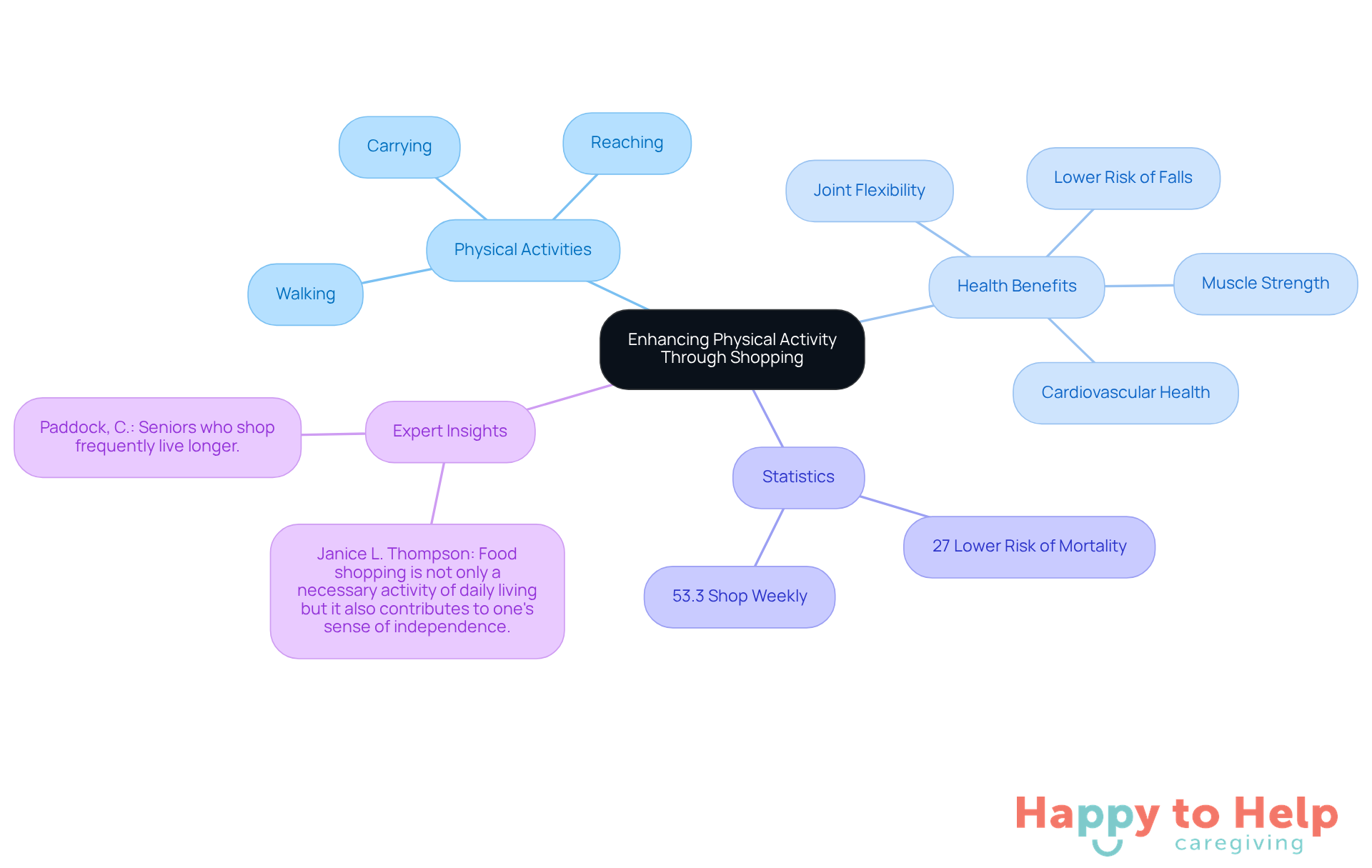
Shopping naturally involves various physical tasks, such as walking, reaching, and carrying items. These activities can significantly enhance mobility and overall physical well-being in older adults. However, many seniors shopping face challenges in maintaining their physical activity levels, which can result in decreased independence and increased health risks.
Research shows that engaging in regular seniors shopping can help maintain joint flexibility, muscle strength, and cardiovascular health. For instance, seniors shopping frequently experience improved stamina and a lower risk of falls, which is crucial for maintaining their independence. A study found that seniors shopping daily have a 27% lower risk of mortality compared to those who shop less often. This statistic underscores the importance of incorporating seniors shopping into their routines as a means of promoting physical exercise.
Moreover, 53.3% of seniors shopping make purchases at least once a week, which highlights the significance of regular shopping for health and mobility. As Janice L. Thompson notes, "Food purchasing is not only a necessary activity of daily living but it also contributes to one's sense of independence." Additionally, frequent shopping is linked to longevity, as Paddock, C. states, "seniors shopping frequently live longer." These insights illustrate how seniors shopping can play a vital role in enhancing the well-being of older adults.
Stimulate Cognitive Engagement and Memory Retention
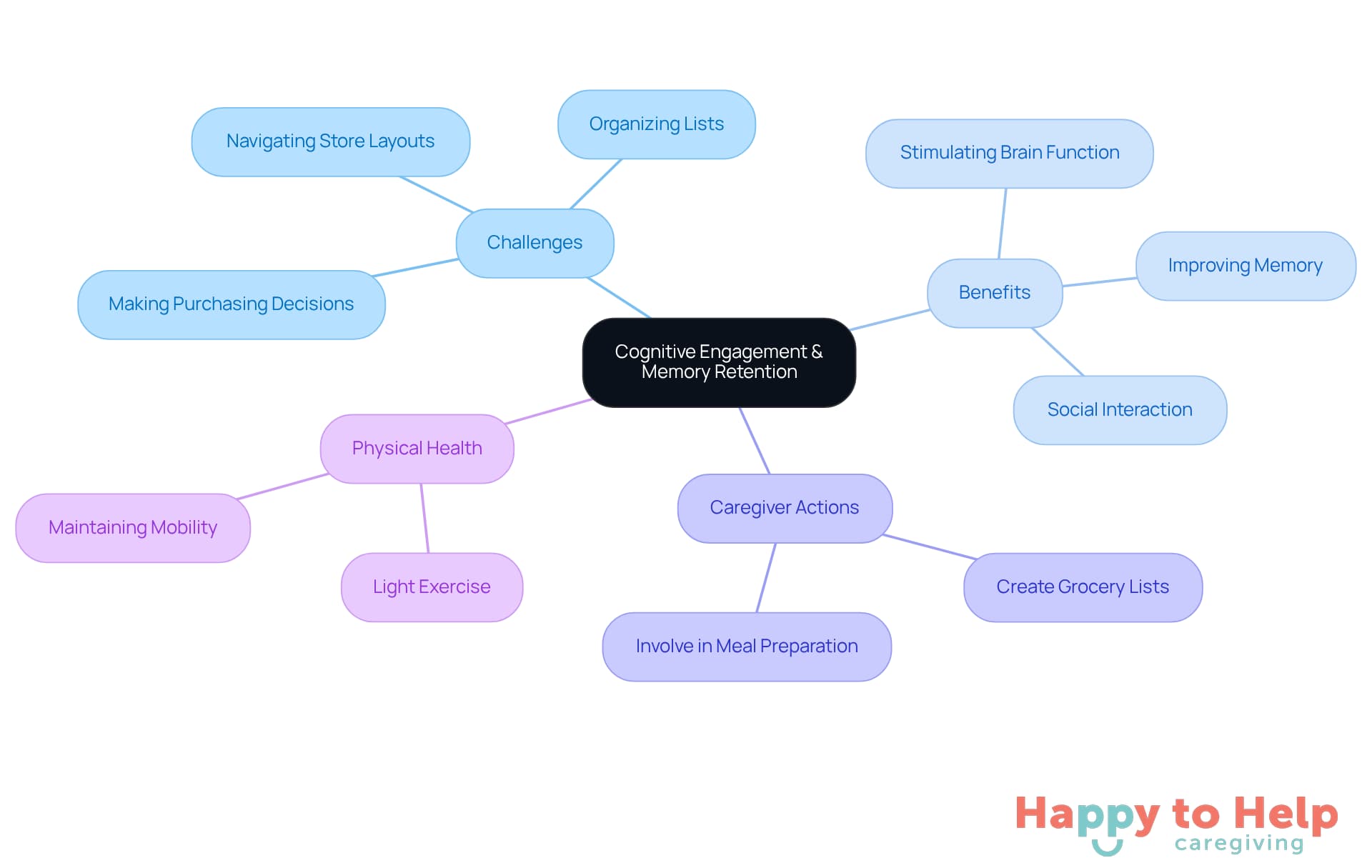
Grocery tasks present a significant challenge for seniors, as cognitive decline can impact their ability to perform everyday activities. This decline can lead to difficulties in organizing lists, navigating store layouts, and making purchasing decisions, which are essential for maintaining independence and mental health.
Engaging in seniors shopping is not just about buying food; it plays a crucial role in stimulating brain function and improving memory retention. Research indicates that cognitive engagement through such activities can significantly delay the onset of dementia and other cognitive impairments. Seniors shopping regularly engage in these tasks, often reporting enhanced memory and cognitive function as they continuously exercise their decision-making and problem-solving abilities.
Moreover, seniors shopping offers valuable social interaction opportunities, helping to alleviate feelings of loneliness and isolation. This mental engagement not only bolsters the mental health of seniors shopping but also fosters a sense of accomplishment and independence, thereby reinforcing their self-esteem and confidence.
To support seniors in this endeavor, caregivers can encourage them to:
- Create grocery lists
- Involve them in meal preparation
This not only enhances organizational skills but also provides a sense of purpose. Additionally, making healthier food selections is vital for managing health issues like diabetes and heart disease.
Lastly, seniors shopping for groceries serves as a light form of exercise, promoting physical health and mobility, which are essential for overall well-being. By integrating these activities into their routine, caregivers can help seniors maintain their cognitive engagement and improve their quality of life.
Foster Social Interaction and Build Relationships
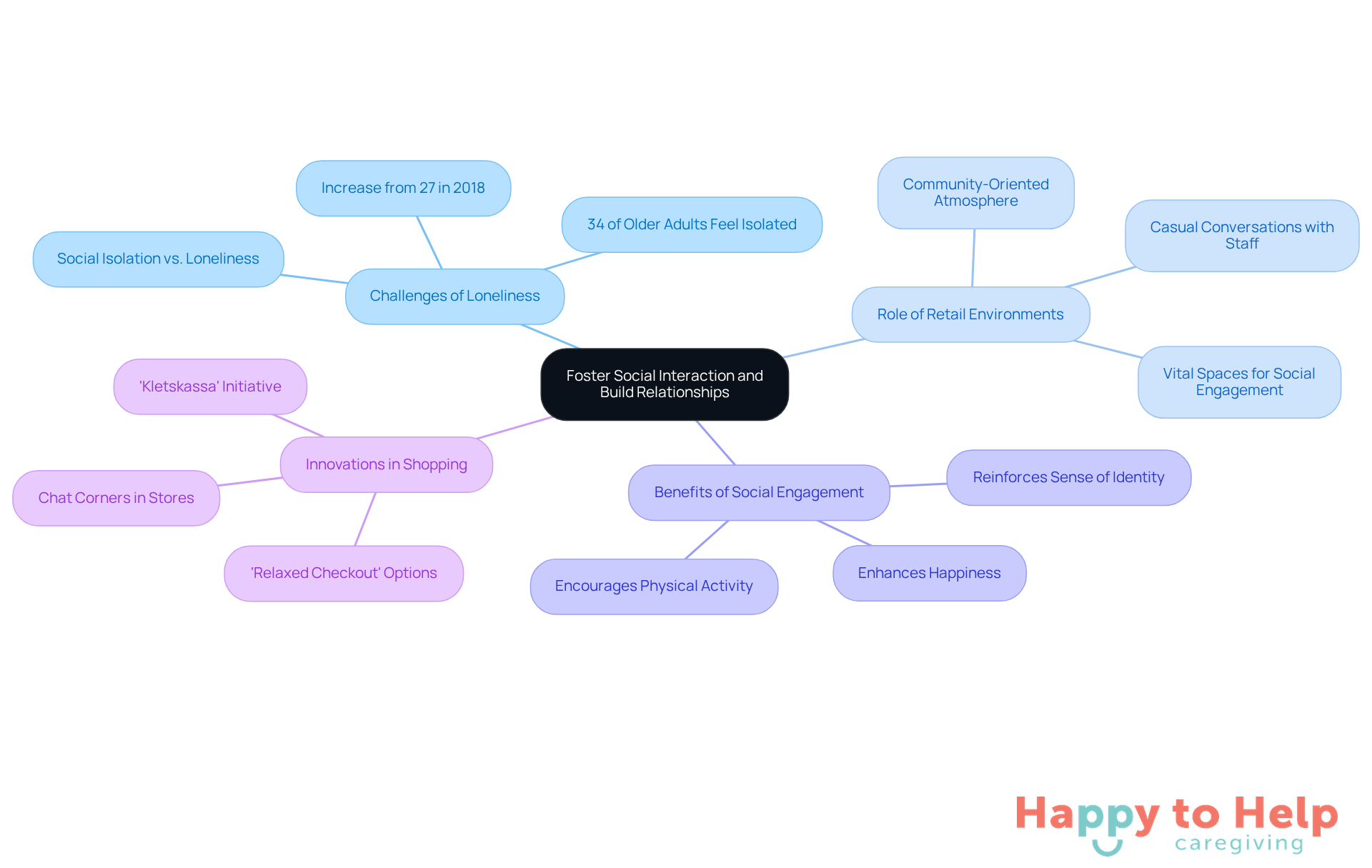
Loneliness and isolation are significant challenges faced by older adults, impacting their emotional well-being. In January 2023, about 34% of older adults reported feeling isolated from others, highlighting the urgent need for social engagement. Retail environments serve as vital spaces for seniors shopping to engage in social interactions, whether through casual conversations with store staff, encounters with friends, or participating in group outings.
Engaging in seniors shopping activities allows older adults to maintain existing social connections and forge new relationships, which can greatly enhance their happiness. For example, regular visits to the same grocery store often lead to familiar interactions with staff, fostering a sense of community and belonging. As noted by Ali et al., 'Social interactions with employees have a positive and significant impact on the social well-being of seniors shopping.'
This social engagement not only uplifts their mood but also reinforces their sense of identity and purpose, contributing to a healthier lifestyle. Furthermore, shopping encourages physical activity through walking and lifting, which can combat feelings of loneliness. Retail innovations, such as 'relaxed checkout' options, demonstrate how purchasing environments are evolving to better assist seniors shopping, thereby enriching their social experiences.
Empower Independence and Personal Choice in Shopping
Seniors shopping empowers older adults by enabling them to make individual decisions regarding their purchases, greatly enhancing their self-worth and feeling of control over their lives. This autonomy is vital for mental health, reinforcing their identity and personal agency.
Research indicates that seniors shopping actively report feeling more empowered and involved in their daily activities. The ability to select their own products, whether groceries or personal items, fosters a sense of ownership and responsibility. This empowerment not only enhances their happiness but also encourages seniors shopping to be active participants in their communities.
Moreover, retail activities offer chances for low-impact physical exercise, cognitive engagement, and social interaction, all of which contribute to a healthier lifestyle and enhanced emotional well-being. Significantly, a study by C. Paddock discovered that seniors shopping often live longer, highlighting the health advantages linked to purchasing.
Furthermore, the case study 'Sense of Purpose Through Retail' emphasizes how seniors shopping provide older adults with a sense of purpose, demonstrating that running errands enhances their independence and overall sense of fulfillment. By incorporating seniors shopping into their routines, older adults can preserve their autonomy and improve their overall quality of life.
In 2024, 72% of older adults in the US reported making online purchases, reflecting a change in buying habits that further supports their independence. Participating in retail activities, such as seniors shopping, also stimulates cognitive functions, as discussed in the case study 'Mental Stimulation Through Shopping,' which emphasizes the mental engagement required in decision-making and product comparison.
Overall, seniors shopping serves as a multifaceted activity that enriches their lives.
Your Path Forward
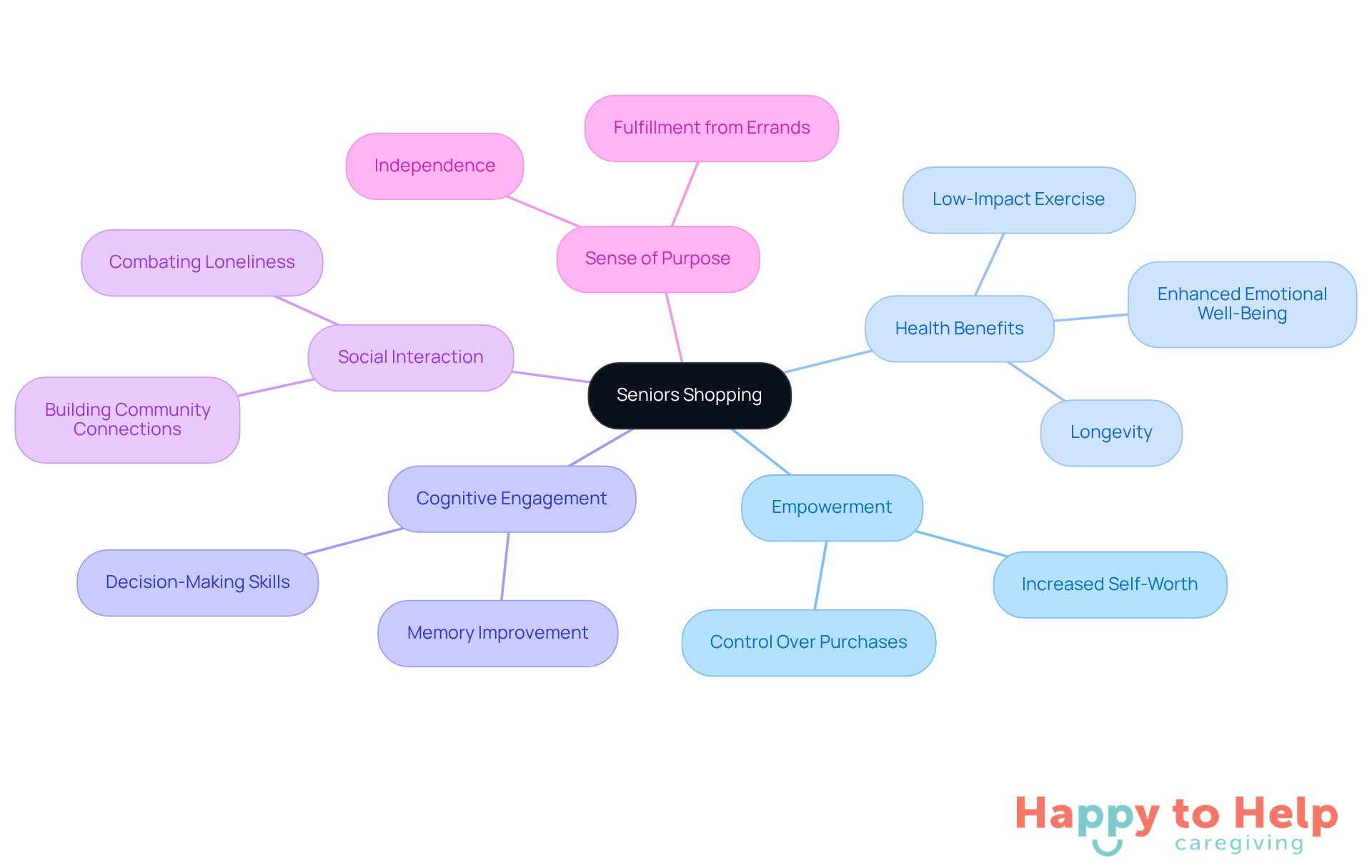
Seniors shopping is more than just a routine activity; it’s a vital contributor to their health, happiness, and independence. However, many older adults may struggle with maintaining their physical activity levels, cognitive function, and social connections, which are essential for a fulfilling life. This lack of engagement can lead to decreased well-being and increased feelings of isolation.
By engaging in shopping, older adults can enhance their physical activity, stimulate cognitive function, and foster social connections. Regular shopping promotes physical mobility, helping to maintain joint flexibility and cardiovascular health. This significantly reduces the risk of falls and enhances overall well-being. Additionally, shopping tasks challenge cognitive abilities, aiding in memory retention and decision-making skills. The social aspect of shopping combats loneliness, providing opportunities for meaningful interactions that enrich emotional health.
Integrating shopping into the lives of seniors is crucial for preserving their independence and improving their quality of life. Encouraging older adults to participate in shopping not only boosts their physical and mental health but also strengthens their social ties. Here are some actionable tips for caregivers:
- Encourage seniors to create shopping lists to enhance cognitive engagement.
- Suggest shopping with friends or family to promote social interaction.
- Explore local markets or community events that offer shopping opportunities.
Embracing the benefits of shopping can lead to a more vibrant and engaged lifestyle for seniors, underscoring its importance in their daily routines.
https://iframe.tely.ai/cta/eyJhcnRpY2xlX2lkIjogIjY5NDFmMzRkMTE4MTVjMDQxY2UzNWU1YyIsICJjb21wYW55X2lkIjogIjY4ZWU1ZGNhNzMxNzYyNTU3ZjNjOTVjMSIsICJpbmRleCI6IG51bGwsICJ0eXBlIjogImFydGljbGUifQ==Frequently Asked Questions
How does shopping enhance physical activity and mobility in older adults?
Shopping involves various physical tasks such as walking, reaching, and carrying items, which can significantly improve mobility and overall physical well-being in older adults.
What challenges do seniors face when shopping that may affect their physical activity levels?
Many seniors encounter difficulties in maintaining their physical activity levels while shopping, which can lead to decreased independence and increased health risks.
What are the health benefits of seniors shopping regularly?
Regular shopping helps maintain joint flexibility, muscle strength, and cardiovascular health in seniors. It also improves stamina and lowers the risk of falls, which is crucial for their independence.
How does the frequency of shopping relate to the risk of mortality in seniors?
A study found that seniors who shop daily have a 27% lower risk of mortality compared to those who shop less often, highlighting the importance of incorporating shopping into their routines for physical exercise.
What percentage of seniors shop at least once a week?
Approximately 53.3% of seniors make purchases at least once a week, indicating the significance of regular shopping for their health and mobility.
How does shopping contribute to a senior's sense of independence?
As noted by Janice L. Thompson, food purchasing is not only a necessary daily activity but also contributes to a senior's sense of independence.
Is there a link between frequent shopping and longevity in seniors?
Yes, frequent shopping is associated with longevity, as stated by Paddock, C., who noted that seniors who shop frequently tend to live longer.
List of Sources
- Enhance Physical Activity and Mobility Through Shopping
- Food shopping habits, physical activity and health-related indicators among adults aged ≥70 years | Public Health Nutrition | Cambridge Core (https://cambridge.org/core/journals/public-health-nutrition/article/food-shopping-habits-physical-activity-and-healthrelated-indicators-among-adults-aged-70-years/A0DA2B2706D02CA0360DEDC44A28EE83)
- 14 of the Best Quotes About Aging - Senior Planet from AARP (https://seniorplanet.org/14-of-the-best-quotes-about-aging)
- Benefits of Shopping for Older Adults | Comfort Keepers (https://comfortkeepers.com/articles/info-center/senior-independent-living/benefits-of-shopping-for-older-adults)
- Frequent shopping prolongs life, study suggests (https://sciencedaily.com/releases/2011/04/110406192437.htm)
- Stimulate Cognitive Engagement and Memory Retention
- Surprising Benefits Of Participating In Grocery Shopping For Seniors (https://moradaseniorliving.com/senior-living-blog/surprising-benefits-of-participating-in-grocery-shopping-for-seniors)
- Seniors draw on extra brainpower for shopping (https://sciencedaily.com/releases/2014/11/141118182452.htm)
- First-of-its-kind study finds that lifestyle programs improve cognition in older adults (https://mcknightsseniorliving.com/news/first-of-its-kind-study-finds-that-lifestyle-programs-improve-cognition-in-older-adults)
- Foster Social Interaction and Build Relationships
- A Grocery Line Where Slower is Better: Supermarkets Open ‘Chat Checkouts’ to Combat Loneliness Among Elderly (https://goodnewsnetwork.org/a-checkout-line-where-slower-is-better-supermarket-jumbo)
- How Some Grocery Stores Are Helping Alleviate Loneliness (https://mylifesite.net/blog/post/how-some-grocery-stores-are-helping-alleviate-loneliness)
- How Participating In Grocery Shopping Prevents Loneliness And Isolation In Seniors (https://moradaseniorliving.com/senior-living-blog/how-participating-in-grocery-shopping-prevents-loneliness-and-isolation-in-seniors)
- Social connectedness and well-being of elderly customers: Do employee-to-customer interactions matter? (https://tandfonline.com/doi/full/10.1080/19368623.2023.2139036)
- Could supermarket 'slow checkouts' be a cure to rising loneliness? (https://abc.net.au/news/2023-09-05/can-supermarkets-help-cure-loneliness/102811322)
- Empower Independence and Personal Choice in Shopping
- Empowering Seniors Through Innovative, Sustainable and Functional Garments (https://sgs.com/en-cl/news/2025/10/cc-2025-q3-empowering-seniors-through-innovative-sustainable-and-functional-garments)
- Benefits of Shopping for Older Adults | Comfort Keepers (https://comfortkeepers.com/articles/info-center/senior-independent-living/benefits-of-shopping-for-older-adults)
- 7 Surprising Benefits Of Going Shopping For Seniors (https://verandaclub.com/7-surprising-benefits-of-going-shopping-for-seniors)
- Shopping 'may improve health' (https://bbc.com/news/health-12990071)