
Understanding Comparing Mobility Devices
Navigating the world can be increasingly challenging for seniors, leading to a decline in their independence and confidence. This problem is significant, as it affects their ability to engage with their surroundings and maintain a fulfilling life. With a plethora of mobility devices available - from simple canes to sophisticated scooters - understanding the right choice is crucial for enhancing the quality of life for older adults.
However, with so many options tailored to different needs, caregivers often find it difficult to determine which device will truly empower seniors to regain their mobility and independence. This uncertainty can exacerbate feelings of helplessness for both seniors and their caregivers. To address this, it’s essential to consider the specific needs of the individual and the features of each device.
By evaluating factors such as:
- Ease of use
- Comfort
- Safety
Caregivers can make informed decisions that significantly improve mobility and confidence for seniors. Engaging with experts and utilizing resources can also provide valuable insights into the best options available.
Understanding Mobility Devices for Seniors
Mobility challenges can significantly impact the independence of seniors, making it difficult for them to navigate their daily lives. These challenges can lead to a loss of confidence and increased reliance on caregivers, which can be frustrating for both parties.
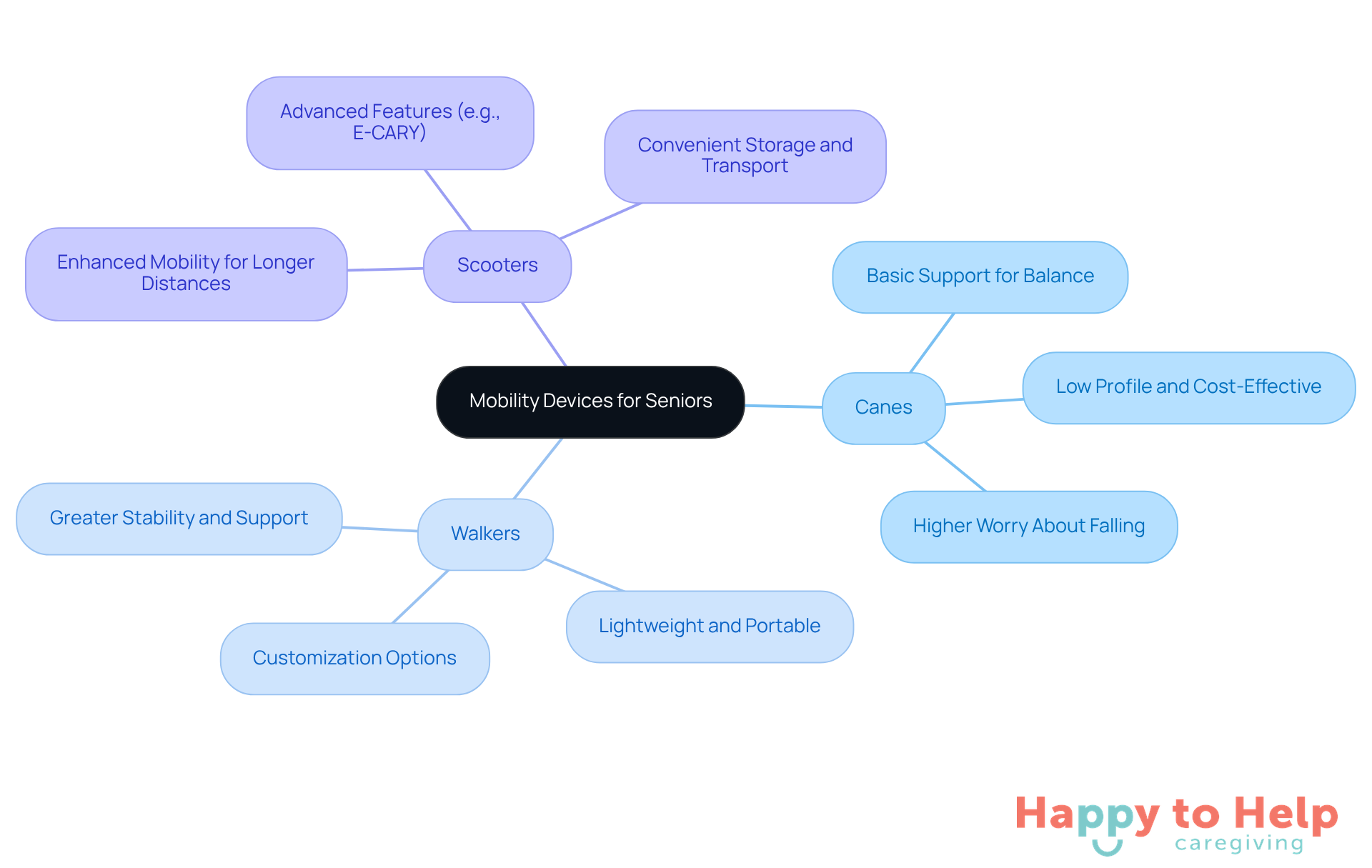
Understanding the various mobility devices for seniors available is essential for addressing these mobility issues. From basic canes that provide minimal support for balance to advanced mobility devices for seniors like scooters that facilitate movement over longer distances, each of these mobility devices for seniors caters to different needs based on the user's physical condition and lifestyle.
Here’s a quick overview of some common assistance devices:
- Canes: Offer basic support for balance.
- Walkers: Provide greater stability and support.
- Scooters: Enable enhanced mobility for longer distances.
Each mobility device for seniors has unique features designed to tackle specific movement challenges faced by older adults. Therefore, it’s crucial to evaluate personal requirements before making a selection. By choosing the right assistance device, seniors can maintain their independence and improve their quality of life.
Exploring Canes: Types and Benefits
For older adults, maintaining balance while walking can be a significant challenge. This issue can lead to falls, which pose serious risks to their health and independence.
Canes serve as an effective solution to this problem. They are among the most commonly used assistance devices, providing essential support and stability during walking. There are various types of canes available:
- Single-point canes offer basic support
- Quad canes feature a wider base for enhanced stability
These devices are particularly beneficial for individuals with minor balance issues or those recovering from surgery. Lightweight and portable, canes are easy to use, making them one of the best mobility devices for seniors who need a little extra support without sacrificing their independence.
Moreover, mobility devices for seniors, including canes, can significantly reduce the risk of falls by improving balance and posture. By incorporating a cane into their daily routine, older adults can navigate their environment with greater confidence and safety.

Evaluating Walkers: Options and Features
Seniors often face significant mobility challenges, which can lead to serious risks, including falls. In fact, statistics show that a quarter of adults over 65 experience falls annually, resulting in injuries and hospitalizations. This alarming trend highlights the urgent need for effective mobility devices for seniors.
Mobility devices for seniors, including walkers and rollators, provide essential support and stability, helping them navigate their environments more safely. Rollators, in particular, come equipped with wheels and built-in seats, allowing users to rest when needed. These mobility devices for seniors not only enhance mobility but also foster a sense of independence, enabling them to move with confidence.
When selecting a mobility aid, caregivers should consider key factors like:
- Weight capacity
- Adjustability
- Ease of use
These elements are crucial for ensuring the effectiveness of the aid. Occupational therapists emphasize that using walking aids can transform movement from a daunting task into a manageable one, significantly improving safety and assurance.
As the senior population continues to grow, the demand for mobility devices for seniors is expected to rise. The senior walker market is projected to reach USD 2.73 billion by 2032, up from USD 1.56 billion in 2023, reflecting a compound annual growth rate (CAGR) of 6.44% from 2024 to 2032. This growth underscores the vital role that mobility devices for seniors play in enhancing the well-being and independence of older adults.

Assessing Scooters: Advantages and Considerations
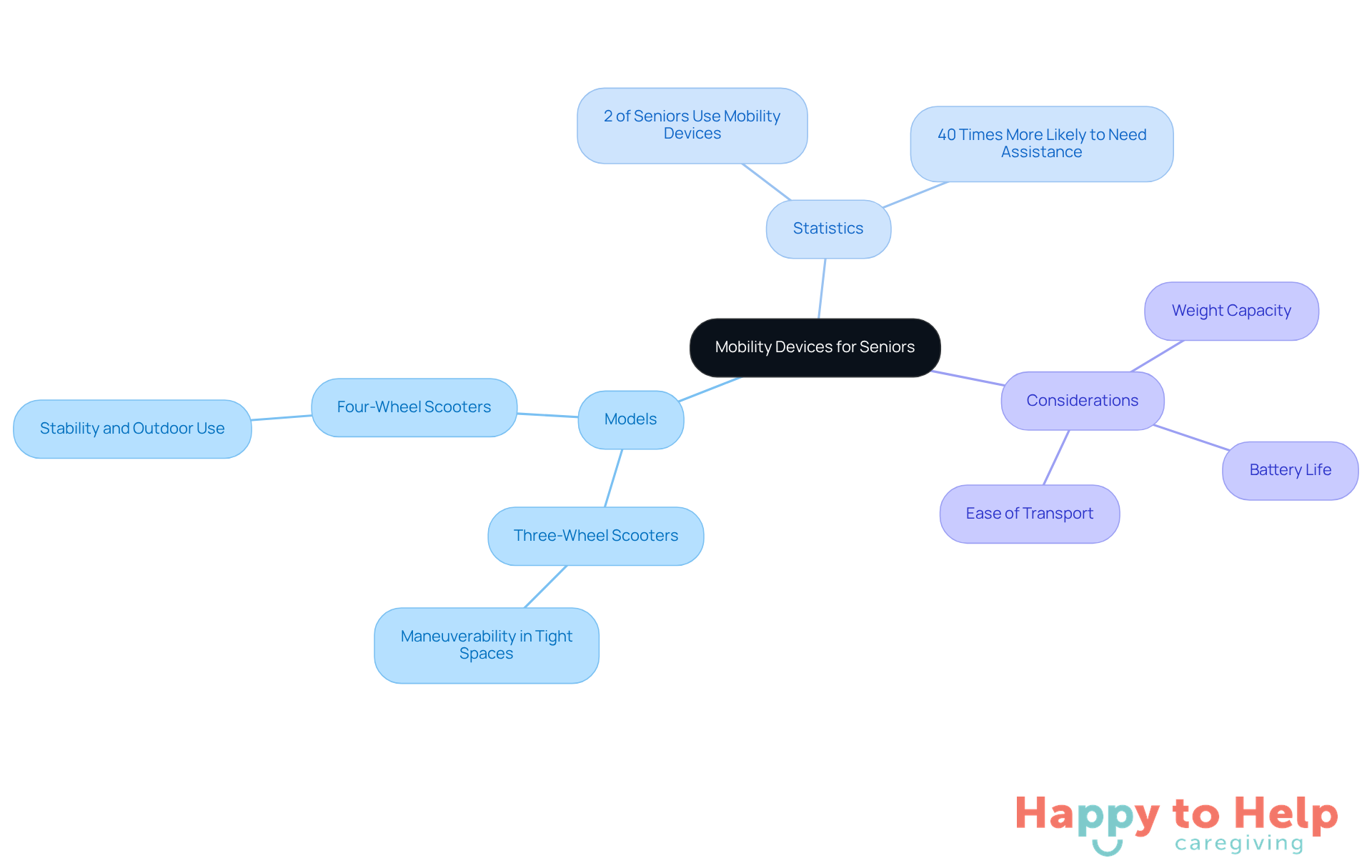
Mobility devices for seniors are essential for those who struggle with walking or need assistance over longer distances. These devices come in various models, including three-wheel and four-wheel options, tailored for different terrains and specific needs. The problem is clear: many seniors face challenges that hinder their independence and mobility.
The implications of this issue are significant. Statistics reveal that about 2% of seniors in the United States, roughly 815,000 individuals, rely on personal transport devices. This highlights the crucial role of mobility devices for seniors in enhancing their quality of life. Furthermore, seniors using assistive devices are over 40 times more likely to require help with self-care tasks compared to those who do not use them, underscoring the importance of these vehicles in daily living.
So, what can caregivers do? When selecting mobility devices for seniors, several factors should be considered, including:
- Weight capacity
- Battery life
- Ease of transport
For example, heavy-duty models from trusted brands like Pride Mobility and Golden Technologies can support users weighing up to 500 lbs. Features like larger tires and full suspension systems provide stability and safety across various terrains.
Real-life experiences illustrate the positive impact of scooters. Many older adults report feeling more confident and free in their movements, allowing them to engage more fully in their communities. To ensure seniors maintain their independence and quality of life, understanding their personal transportation needs and lifestyle preferences is vital when choosing the right mobility devices for seniors.
Comparative Analysis: Choosing the Right Mobility Device
Choosing the right mobility devices for seniors can be a daunting task for caregivers, as it requires a thorough evaluation of personal needs, preferences, and lifestyle. The problem lies in the variety of options available, each catering to different levels of mobility challenges. For instance, canes are best suited for those facing minor movement challenges, offering minimal support and portability. However, they may not adequately support individuals with severe balance issues.
Walkers provide enhanced stability, making them ideal for individuals who require more assistance. Yet, they can be cumbersome in tight spaces and challenging to transport. On the other hand, mobility devices for seniors, like scooters, serve those needing assistance over extended distances or those with considerable walking challenges. They offer outstanding ease of movement but may be less practical for indoor navigation.
Each device presents distinct advantages and disadvantages. While canes are lightweight and easy to maneuver, walkers excel in stability but can be difficult to use in crowded environments. Scooters are great for longer distances but may not fit well in smaller indoor settings.
Statistics reveal that over 6.8 million Americans use assistive devices for movement, with canes, rolling aids, and electric chairs being among the most common. A comparative analysis shows that canes are favored for their simplicity, while rolling aids are preferred for their stability, and electric mobility devices for seniors are increasingly popular for facilitating longer journeys.
Real-world examples illustrate the decision-making process for older adults. For instance, a senior with arthritis may opt for a walker to ensure stability during daily activities, while another individual recovering from surgery might choose a scooter for ease of movement during rehabilitation. Ultimately, the optimal option among mobility devices for seniors depends on the user's specific movement challenges and daily tasks.
To make an informed choice, caregivers should conduct personalized evaluations and consult health professionals before using mobility devices for seniors. This ensures safety and effectiveness. Additionally, caregivers must remain vigilant about potential scams related to mobility equipment acquisition.

Taking the Next Steps
Understanding the right mobility device for seniors is crucial for enhancing their independence and quality of life. Seniors often face mobility challenges that can limit their ability to engage with their community and maintain autonomy. Each type of mobility aid - whether it's a cane, walker, or scooter - serves a unique purpose tailored to specific needs and challenges.
By recognizing the differences among these devices, caregivers can better support seniors in maintaining their mobility and confidence. The following outlines the primary mobility aids:
- Canes provide basic support for balance, making them ideal for those with minor mobility issues.
- Walkers offer enhanced stability and are particularly beneficial for individuals requiring more assistance.
- Scooters cater to seniors needing help with longer distances, offering greater freedom of movement.
Each device presents its own set of advantages and considerations, emphasizing the importance of personalized evaluations when selecting the most suitable option.
Ultimately, the choice of mobility device can significantly impact a senior's ability to engage with their community and maintain their independence. Caregivers must consider individual preferences, lifestyle, and specific mobility challenges when making this decision. By doing so, they can ensure that seniors not only choose the right mobility aid but also enjoy a better quality of life, filled with confidence and autonomy.
https://iframe.tely.ai/cta/eyJhcnRpY2xlX2lkIjogIjY5MjNhMGI4YzVlZWQyYmRiNTU3YmYyMiIsICJjb21wYW55X2lkIjogIjY4ZWU1ZGNhNzMxNzYyNTU3ZjNjOTVjMSIsICJpbmRleCI6IG51bGwsICJ0eXBlIjogImFydGljbGUifQ==Frequently Asked Questions
What are mobility devices for seniors?
Mobility devices for seniors are tools designed to assist older adults in overcoming mobility challenges, helping them maintain independence and navigate daily activities. They range from basic canes to advanced scooters.
What types of mobility devices are commonly available for seniors?
Common mobility devices for seniors include canes, walkers, and scooters. Canes provide basic support, walkers offer greater stability, and scooters facilitate movement over longer distances.
How do canes help seniors with mobility challenges?
Canes help seniors maintain balance while walking, reducing the risk of falls and enhancing stability. They are particularly beneficial for individuals with minor balance issues or those recovering from surgery.
What are the different types of canes available for seniors?
The two main types of canes are single-point canes, which offer basic support, and quad canes, which have a wider base for enhanced stability.
Why is it important to choose the right mobility device?
Choosing the right mobility device is crucial because each device is designed to address specific movement challenges based on the user's physical condition and lifestyle. The right choice can help seniors maintain independence and improve their quality of life.
How can mobility devices reduce the risk of falls for seniors?
Mobility devices, such as canes, improve balance and posture, which can significantly reduce the risk of falls, allowing older adults to navigate their environment with greater confidence and safety.
List of Sources
- Understanding Mobility Devices for Seniors
- New Lightweight Mobility Devices Cater to Active Elderly - INTCO Medical (https://intcowheelchair.com/news/new-lightweight-mobility-devices-cater-to-active-elderly)
- Understanding Wheelchair Use in Older Adults From the National Health and Aging Trends Study (https://sciencedirect.com/science/article/pii/S0003999323005300)
- Mobility Device Use Among Older Adults and Incidence of Falls and Worry About Falling: Findings From the 2011–2012 National Health and Aging Trends Study - PMC (https://pmc.ncbi.nlm.nih.gov/articles/PMC4439269)
- Breaking News: Fall 2025 Brings a New Era of Lightweight Walkers and Rollators for Seniors (https://cbs42.com/business/press-releases/ein-presswire/850373373/breaking-news-fall-2025-brings-a-new-era-of-lightweight-walkers-and-rollators-for-seniors)
- New 2025 Summer Guide Empowers Seniors to Stay Independent as Mobility Equipment Innovation Surges Nationwide (https://kron4.com/business/press-releases/ein-presswire/827097148/new-2025-summer-guide-empowers-seniors-to-stay-independent-as-mobility-equipment-innovation-surges-nationwide)
- Exploring Canes: Types and Benefits
- The best canes for 2025, according to nurses, physiotherapists and physical therapists (https://health.yahoo.com/wellness/healthy-aging/mobility/article/best-cane-221730730.html)
- Friend or Foe? Study Examines Seniors' Increasing Use of Walking Aids | UVM News | The University of Vermont (https://uvm.edu/uvmnews/news/friend-or-foe-study-examines-seniors-increasing-use-walking-aids)
- Breaking News: Fall 2025 Brings a New Era of Lightweight Walkers and Rollators for Seniors (https://cbs42.com/business/press-releases/ein-presswire/850373373/breaking-news-fall-2025-brings-a-new-era-of-lightweight-walkers-and-rollators-for-seniors)
- References - The Future of Disability in America - NCBI Bookshelf (https://ncbi.nlm.nih.gov/books/NBK11419)
- Evaluating Walkers: Options and Features
- Elderly Walker Market Size, Share Analysis Report 2032 (https://snsinsider.com/reports/elderly-walker-market-5887)
- New Lightweight Mobility Devices Cater to Active Elderly - INTCO Medical (https://intcowheelchair.com/news/new-lightweight-mobility-devices-cater-to-active-elderly)
- The Best Occupational Therapy Quotes - The OT Toolbox (https://theottoolbox.com/occupational-therapy-quotes)
- 29 Occupational Therapy Quotes! • OT Potential (https://otpotential.com/blog/occupational-therapy-quotes)
- Breaking News: Fall 2025 Brings a New Era of Lightweight Walkers and Rollators for Seniors (https://cbs42.com/business/press-releases/ein-presswire/850373373/breaking-news-fall-2025-brings-a-new-era-of-lightweight-walkers-and-rollators-for-seniors)
- Assessing Scooters: Advantages and Considerations
- The 2025 Senior Mobility Scooter Market: Intelligent and Portable Innovations Redefining Mobility for Older Adults - SUPERPI (https://superpirobot.com/news/industry-knowledge/the-2025-senior-mobility-scooter-market-intelligent-and-portable-innovations-redefining-mobility-for-older-adults)
- Assisted Mobility Devices Demand - All Mobility Store in Delmar (https://allmobilitystore.com/the-growing-demand-for-assisted-mobility-devices)
- Mobility Device Statistics: United States (https://disabled-world.com/disability/statistics/mobility-stats.php)
- Heavy Duty Mobility Scooter Buying Guide (https://restoremobility.com/blogs/mobility/heavy-duty-mobility-scooter-buying-guide?srsltid=AfmBOoq0cMpQdgaCNrS3t6sS\_A76lHK20drBBAnjEvDqftcn0BbYJHkF)
- Comparative Analysis: Choosing the Right Mobility Device
- New Lightweight Mobility Devices Cater to Active Elderly - INTCO Medical (https://intcowheelchair.com/news/new-lightweight-mobility-devices-cater-to-active-elderly)
- Top 5 Cutting-Edge Equipment for Seniors in 2025 - INTCO Medical (https://intcowheelchair.com/news/top-5-cutting-edge-equipment-for-seniors-in-2025)
- Need Mobility Equipment? Read This First. - Consumer Reports (https://consumerreports.org/health/mobility-equipment-buying-advice-a8546548736)
- Mobility Device Statistics: United States (https://disabled-world.com/disability/statistics/mobility-stats.php)
- Best Mobility Aids for Seniors: How to Choose the Right One | Home Care agency in New York (https://angelcareny.com/best-mobility-aids-for-seniors-how-to-choose-the-right-one)