
The Importance of Comparing Senior Home Care Options:
Elderly care options present a significant challenge for families aiming to provide the best support for their loved ones. As the demand for personalized care grows, understanding the differences between in-home assistance and assisted living facilities becomes increasingly important.
In-home care promotes comfort and independence, allowing seniors to remain in familiar surroundings. However, this option can sometimes lead to feelings of isolation or lack of comprehensive support. On the other hand, assisted living facilities offer a structured environment with various services, but they may not provide the same level of personal connection that in-home care can foster.
Families often find themselves navigating these complex choices, weighing the pros and cons of each option. To enhance the quality of life for seniors, it’s essential to consider their individual needs and preferences. By evaluating both in-home care and assisted living, families can make informed decisions that best suit their loved ones.
Overview of Senior Care Options
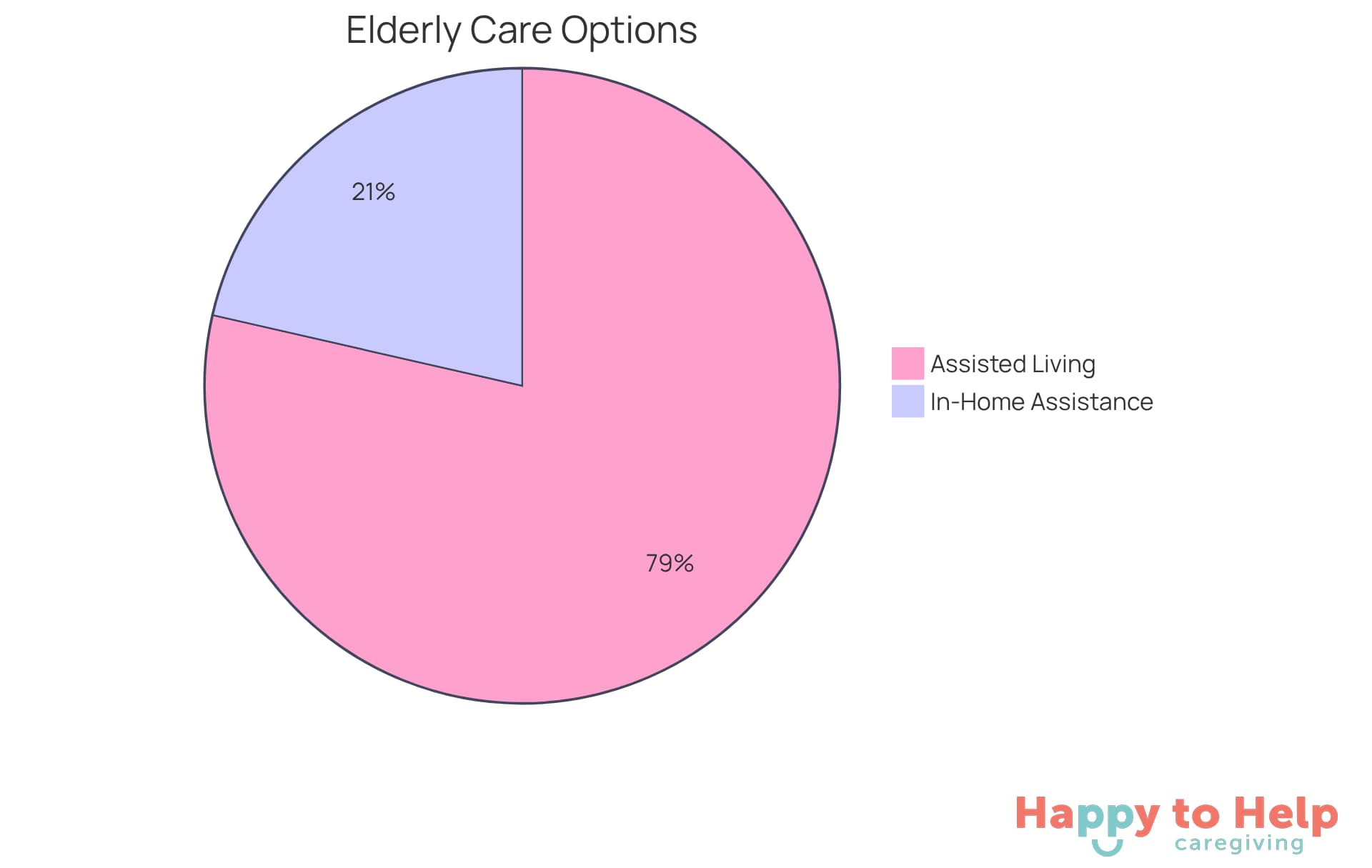
Elderly support alternatives present a significant challenge for families navigating care options for their loved ones. With choices primarily between in-home assistance and senior home care options, it is crucial to understand these alternatives.
In-home support offers personalized assistance within the familiar surroundings of one’s residence, fostering independence and comfort. Services range from companionship and personal assistance to skilled nursing, allowing seniors to maintain their routines and lifestyle choices. Notably, around 12 million people in the U.S. currently receive home care, highlighting a growing preference for this option.
On the other hand, assisted living facilities provide a structured environment where residents receive comprehensive support with daily activities, meals, and social engagement. These facilities cater to individuals who require more extensive assistance due to health conditions or mobility challenges. Approximately 44% of older adults need help with at least one daily activity, with bathing being the most common requirement.
Experts in elderly support emphasize the benefits of senior home care options, noting that they often lead to improved emotional health and quality of life for older adults. This preference for domestic support is evident, as 53% of family caregivers favor in-home assistance over traditional senior home care options. Real-world examples illustrate this trend, with families increasingly seeking personalized support solutions that allow their loved ones to age gracefully at home.
Understanding these choices is essential for families managing the complexities of elderly assistance. By ensuring their loved ones receive the support that aligns with their specific needs and preferences, caregivers can significantly enhance their quality of life.
In-Home Care: Benefits and Services
Caring for elderly individuals can be challenging for families, especially when considering senior home care options to ensure their loved ones receive the support they need. Many caregivers face the problem of balancing their responsibilities while trying to provide adequate care. This situation can lead to stress and anxiety for both caregivers and the elderly.
One significant implication of inadequate support is that elderly individuals may struggle with daily activities, which can diminish their quality of life. They may feel isolated or overwhelmed, leading to emotional distress. This is where senior home care options can provide valuable assistance.
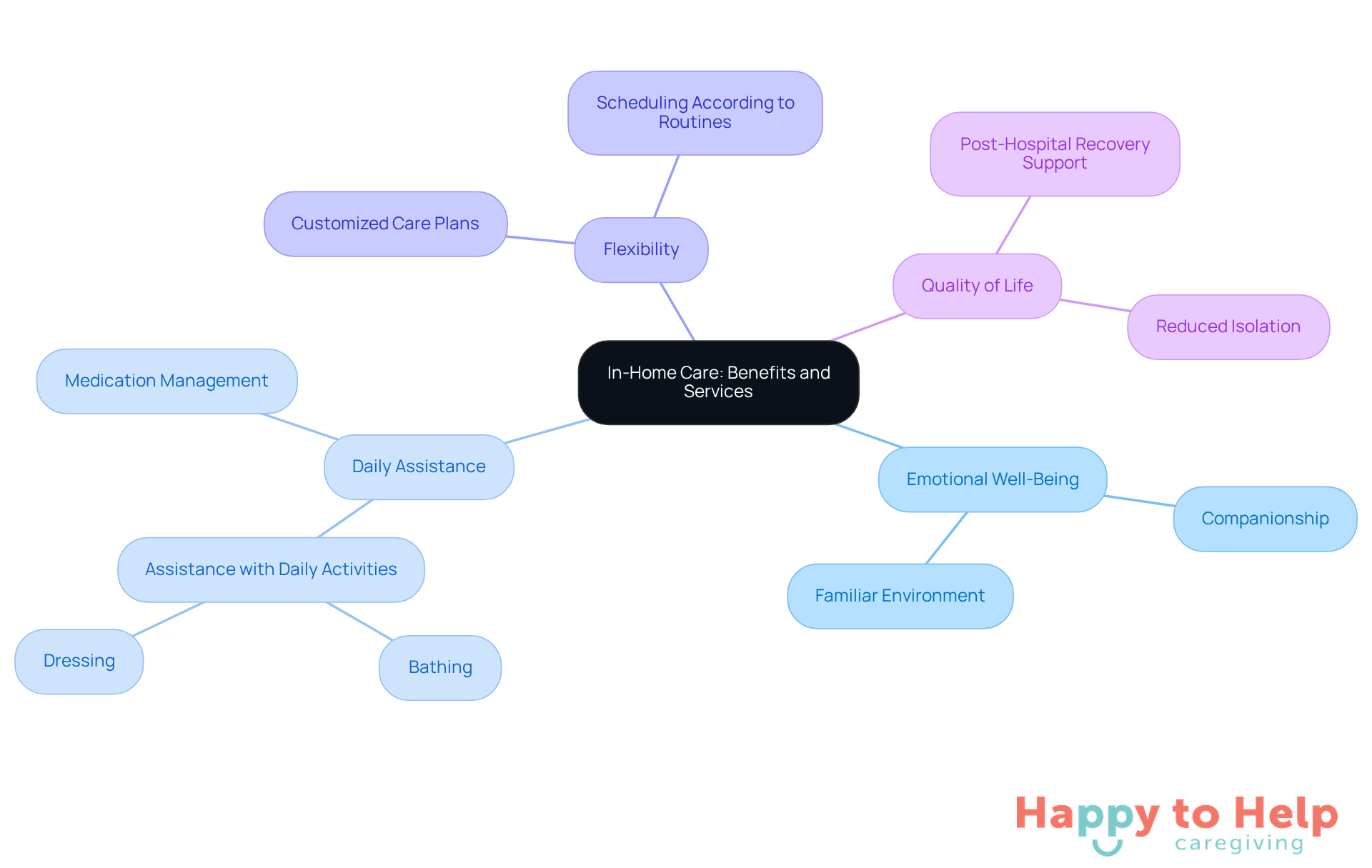
In-home assistance offers a tailored solution to these challenges. It provides customized plans designed to meet personal requirements, significantly improving an elderly person's quality of life. Services typically include:
- Companionship
- Assistance with daily activities such as bathing and dressing
- Medication management
- Post-hospital recovery support
One of the key advantages of in-home care is that it allows elderly individuals to remain in a familiar environment. This familiarity can reduce anxiety and promote emotional well-being. Additionally, in-home care is often more flexible, enabling families to schedule services according to their loved ones' routines. This flexibility is especially beneficial for older adults who value their independence and wish to maintain their daily routines.
Assisted Living: Features and Advantages
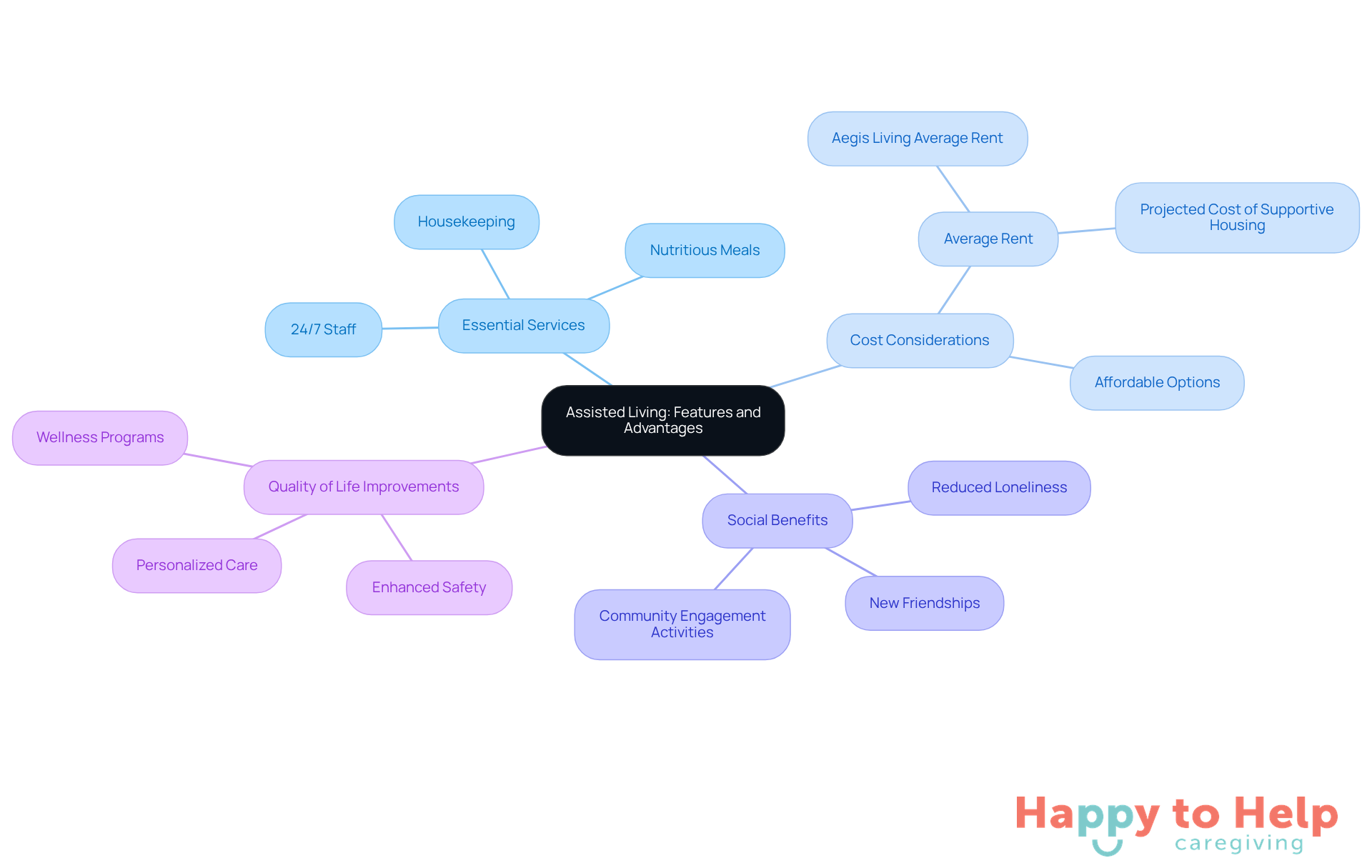
Assisted care establishments address a significant problem: the need for older adults to balance autonomy with support. Many elderly individuals face isolation and require assistance with daily activities, which can lead to feelings of loneliness and decreased quality of life. In 2025, the anticipated cost of supportive housing is around $4,500 per month, reflecting the growing demand for these services as more seniors seek nurturing environments.
These facilities offer a range of essential services, including:
- 24/7 staff availability
- Nutritious meals
- Housekeeping
All designed to enhance residents' well-being. Notably, Aegis Living's average rent of $12,000 a month illustrates the cost variations within the sector. The implications of these costs highlight the importance of finding affordable options that still provide necessary support.
To combat isolation, assisted care facilities often provide diverse social and recreational activities, fostering community and engagement among residents. For those needing consistent medical oversight, supportive housing offers a superior level of care compared to at-home alternatives, ensuring safety and improving overall quality of life.
Real-world examples showcase the benefits of assisted care. Many communities are integrating wellness programs and intergenerational activities to enrich residents' lives. As Liz Pearce, Director of Elderly Housing at U.S. News, states, "Relocating to assisted communities greatly enhances residents' social wellness: 61% reported decreased loneliness, and 85% formed new friendships." This transition to more customized support models is crucial in meeting the evolving needs of older adults.
With the rising trend of 'aging in place,' care facilities are increasingly viewed as a viable option for seniors who wish to maintain their independence while receiving the necessary support. By choosing assisted care, older adults can enjoy a fulfilling lifestyle that balances autonomy with the care they need.
Comparative Analysis: In-Home Care vs. Assisted Living
When evaluating in-home care versus assisted living, several critical factors emerge that can pose challenges for caregivers.
-
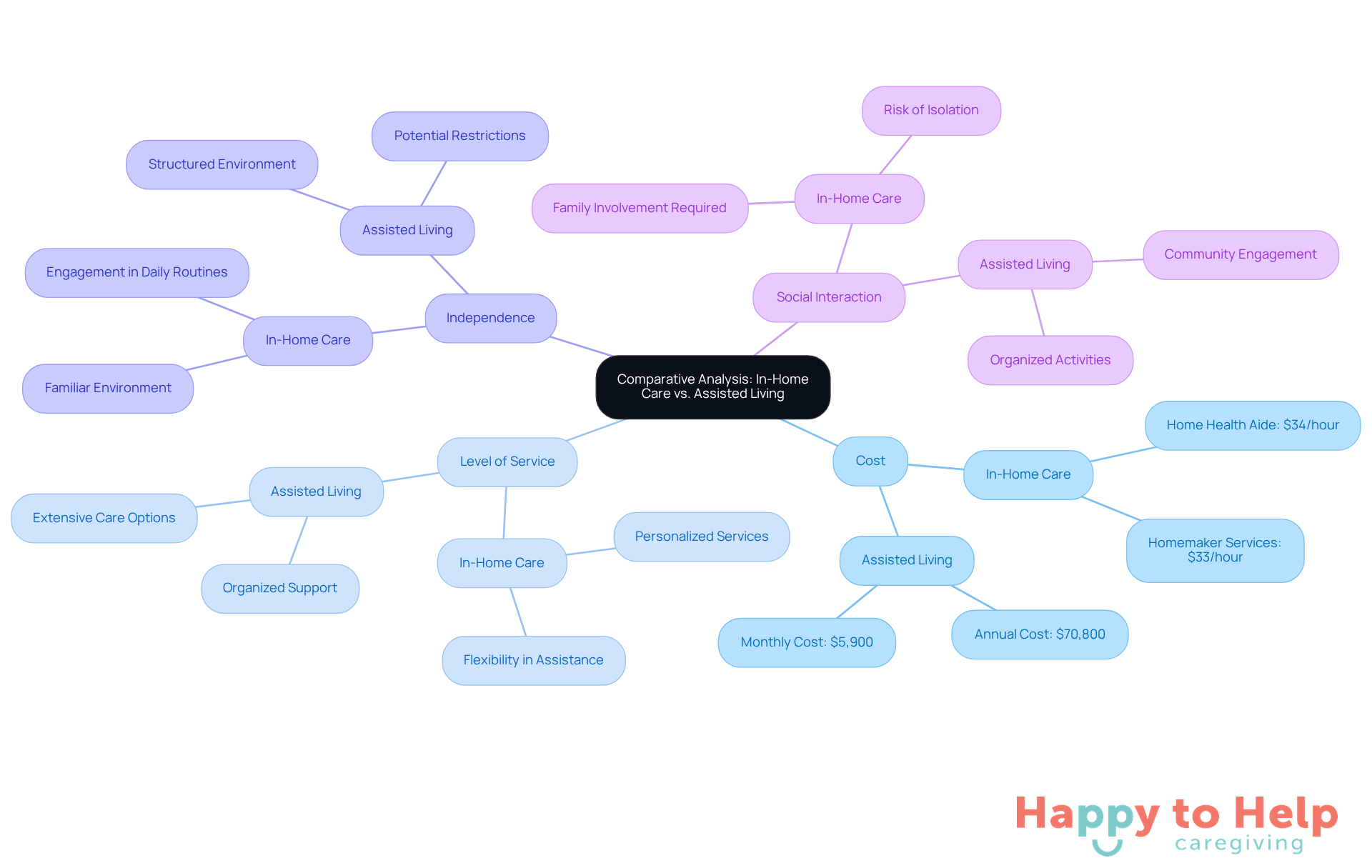
Cost: One major concern is the cost associated with each option. In-home care is typically billed on an hourly basis, making it a potentially more economical choice for those requiring limited assistance. For instance, the national median cost for home health aides was approximately $34 per hour in 2024, while homemaker services averaged around $33 per hour. In contrast, supportive housing typically involves a monthly charge that includes accommodation, meals, and support services, which can be more economical for individuals requiring extensive assistance. In 2024, the annual national median cost for assisted living services reached $70,800, reflecting a 10% increase from the previous year.
-
Level of Service: Another challenge is the level of service provided. In-home assistance offers a high degree of personalization, allowing services to be tailored to the specific needs of the individual. This flexibility is especially advantageous for older adults who may need different levels of assistance throughout the day. On the other hand, assisted living establishments provide an organized setting with extensive support alternatives, which may be crucial for older adults encountering considerable health difficulties. A recent report showed that 74% of family caregivers feel unprepared for their duties, emphasizing the significance of having suitable support in place.
-
Independence: Maintaining independence is a primary concern for many seniors. In-home care enables them to stay in a familiar environment, significantly enhancing their quality of life as they can continue engaging in daily routines and activities they enjoy. Conversely, assisted care, while providing a supportive community, may restrict this independence due to its structured nature.
-
Social Interaction: Social interaction is another vital aspect. Assisted care facilities often promote social engagement through organized activities, beneficial for mental health and overall well-being. In contrast, in-home assistance may require families to take a more active role in ensuring their loved ones have opportunities for social interaction, which can be challenging, especially for those who may be isolated or have mobility issues.
Ultimately, the choice between in-home support and assisted living involves considering the unique needs of the senior and the family's preferences in relation to senior home care options, cost, and lifestyle. As the demand for personalized care solutions continues to grow, many families are increasingly leaning towards senior home care options that prioritize individual needs and comfort.
Moving Forward with Comparing Senior Home Care Options:
Choosing between in-home care and assisted living is a significant decision for families seeking the best support for their elderly loved ones. This choice can be challenging, as it requires understanding the distinct advantages of each option and the unique needs of the individual requiring care.
In-home care offers personalized assistance, allowing seniors to stay in the comfort of their own homes. This option is often more economical for those needing limited help and provides a high degree of personalization tailored to daily routines. On the other hand, assisted living facilities deliver organized support and social engagement, which can be crucial for seniors facing significant health challenges.
The growing preference for in-home assistance highlights the importance of maintaining independence and emotional well-being. Families are increasingly prioritizing care solutions that align with their loved ones' lifestyles, ensuring they receive the support they need while preserving their dignity.
Ultimately, selecting the right care option involves careful consideration of cost, level of service, and the desired balance between independence and support. Families should explore all available options to ensure their loved ones receive the care that best suits their needs. By doing so, they can foster an environment that promotes comfort and quality of life for seniors, paving the way for a fulfilling aging experience.
https://iframe.tely.ai/cta/eyJhcnRpY2xlX2lkIjogIjY5MmZiYWFjNWE2YzBkMzU2MDcwMDMxOSIsICJjb21wYW55X2lkIjogIjY4ZWU1ZGNhNzMxNzYyNTU3ZjNjOTVjMSIsICJpbmRleCI6IG51bGwsICJ0eXBlIjogImFydGljbGUifQ==Frequently Asked Questions
What are the main types of senior care options available?
The main types of senior care options available are in-home assistance and assisted living facilities.
What is in-home support for seniors?
In-home support offers personalized assistance within the senior's own residence, providing services such as companionship, personal assistance, and skilled nursing to help them maintain their routines and lifestyle choices.
How many people in the U.S. currently receive home care?
Approximately 12 million people in the U.S. currently receive home care.
What do assisted living facilities provide?
Assisted living facilities provide a structured environment where residents receive comprehensive support with daily activities, meals, and social engagement, catering to individuals who require more extensive assistance.
What percentage of older adults need help with at least one daily activity?
About 44% of older adults need help with at least one daily activity, with bathing being the most common requirement.
What are the benefits of senior home care options according to experts?
Experts note that senior home care options often lead to improved emotional health and quality of life for older adults.
What preference do family caregivers have regarding senior care?
Approximately 53% of family caregivers prefer in-home assistance over traditional senior home care options.
Why is it important for families to understand senior care choices?
Understanding senior care choices is essential for families to manage the complexities of elderly assistance and ensure their loved ones receive support that aligns with their specific needs and preferences, enhancing their quality of life.
List of Sources
- Overview of Senior Care Options
- Families Prefer In-Home Care To Senior Living – Yet Struggle To Identify Needed Support (https://homehealthcarenews.com/2025/11/families-prefer-in-home-care-to-senior-living-yet-struggle-to-identify-needed-support)
- Most Americans expect to need long-term care in the future, and they don’t want that care in assisted living (https://mcknightsseniorliving.com/news/most-americans-expect-to-need-long-term-care-in-the-future-and-they-dont-want-that-care-in-assisted-living)
- 2025 Home Care Statistics: Trends & Insights To Know (https://premierhcinc.com/blog/home-care-statistics)
- Family caregivers prefer in-home care over senior living, new industry report finds (https://mcknightshomecare.com/news/family-caregivers-prefer-in-home-care-over-senior-living-new-industry-report-finds)
- Facts & Figures (https://ahcancal.org/Assisted-Living/Facts-and-Figures/Pages/default.aspx)
- In-Home Care: Benefits and Services
- What’s Next For Home Health As The Industry Faces Its Biggest Test Yet (https://homehealthcarenews.com/2025/10/whats-next-for-home-health-as-the-industry-faces-its-biggest-test-yet)
- Home Care Industry Trends to Watch in 2025 (https://firstlighthomecare.com/blog/home-care-industry-trends)
- Home Care News Brief: September 17, 2025 (https://members.homecarefla.org/news/Details/home-care-news-brief-september-17-2025-289036)
- How VNS Health is Shaping the Home Care Industry in 2025 (https://vnshealth.org/about/newsroom/articles/how-vns-health-is-shaping-the-home-care-industry-in-2025)
- Governor Hochul Announces Next Steps in Plans to Strengthen Home Care Services for New Yorkers (https://governor.ny.gov/news/governor-hochul-announces-next-steps-plans-strengthen-home-care-services-new-yorkers)
- Assisted Living: Features and Advantages
- 9 Trends Reshaping Assisted Living in 2025 (And What to Do About Them) (https://assistedlivinginvesting.net/blog/9-trends-reshaping-assisted-living-in-2025-and-what-to-do-about-them)
- U.S. News Releases 2025 Best Senior Living Ratings (https://usnews.com/info/blogs/press-room/articles/2025-04-15/u-s-news-releases-2025-best-senior-living-ratings)
- The senior living market can't keep up with demand as boomers age (https://cnbc.com/2025/08/19/senior-living-housing-market-cant-keep-up-with-demand.html)
- Senior Living Trends | 2025 Senior Health Trends (https://alignseniorcare.com/senior-living-trends-to-look-out-for)
- Seven Trends In Senior Living For 2025 ...And Beyond (https://forbes.com/sites/sarazeffgeber/2025/01/23/seven-trends-in-senior-living-for-2025-and-beyond)
- Comparative Analysis: In-Home Care vs. Assisted Living
- Families Prefer In-Home Care To Senior Living – Yet Struggle To Identify Needed Support (https://homehealthcarenews.com/2025/11/families-prefer-in-home-care-to-senior-living-yet-struggle-to-identify-needed-support)
- Average Senior In-Home Care Costs in 2025 (https://seniorliving.org/home-care/costs)
- Family caregivers prefer in-home care over senior living, new industry report finds (https://mcknightshomecare.com/news/family-caregivers-prefer-in-home-care-over-senior-living-new-industry-report-finds)
- Cost of Long Term Care by State | Cost of Care Report | Carescout (https://carescout.com/cost-of-care)
- Most Americans expect to need long-term care in the future, and they don’t want that care in assisted living (https://mcknightsseniorliving.com/news/most-americans-expect-to-need-long-term-care-in-the-future-and-they-dont-want-that-care-in-assisted-living)