
Quick Guide to Discover the Best Caregiving Apps
Caring for a loved one can be an incredibly rewarding yet challenging journey. Family caregivers often face emotional hurdles, such as stress and burnout, as they juggle numerous responsibilities. It’s essential to acknowledge these feelings and understand that you’re not alone in this experience.
Fortunately, there are caregiving apps designed to lighten your load. These tools offer features like task management, medication reminders, and communication aids, all aimed at making your caregiving experience more organized and less overwhelming. Imagine having a reliable assistant right at your fingertips, helping you keep track of important tasks and ensuring your loved one receives the care they need.
Many caregivers have found solace in these apps. One caregiver shared, "Using this app has transformed my daily routine. I feel more in control and less stressed, knowing I won’t forget important tasks." Such testimonials highlight the compassionate support these apps provide, fostering a sense of community among caregivers.
As you explore your options, remember that these tools are here to support you. They can help you manage your responsibilities while allowing you to focus on what truly matters—your loved one’s well-being. Embrace the journey with the knowledge that you have resources available to ease your path.
In conclusion, while caregiving can be tough, you don’t have to navigate it alone. With the right apps, you can enhance your caregiving experience, making it more manageable and fulfilling. Take a moment to reflect on how these tools can bring a sense of calm and organization to your daily life.
Why Discover the Best Caregiving Apps Matters
Caring for a loved one is both a profound privilege and a challenging journey. It’s not uncommon for caregivers to feel overwhelmed, experiencing stress and burnout along the way. Thankfully, a new generation of caregiving apps has emerged, crafted to ease these burdens and enrich the caregiving experience. With features like task management, medication reminders, and health monitoring, these tools can make a significant difference.
Yet, with so many options available, how can caregivers find the right app that meets their unique needs? It’s essential to navigate potential hurdles, such as technology barriers and privacy concerns. This article explores the top caregiving apps, comparing their features and benefits. Our goal is to empower family caregivers in their vital roles, providing the support and reassurance they deserve.
Key Features of Leading Caregiving Apps
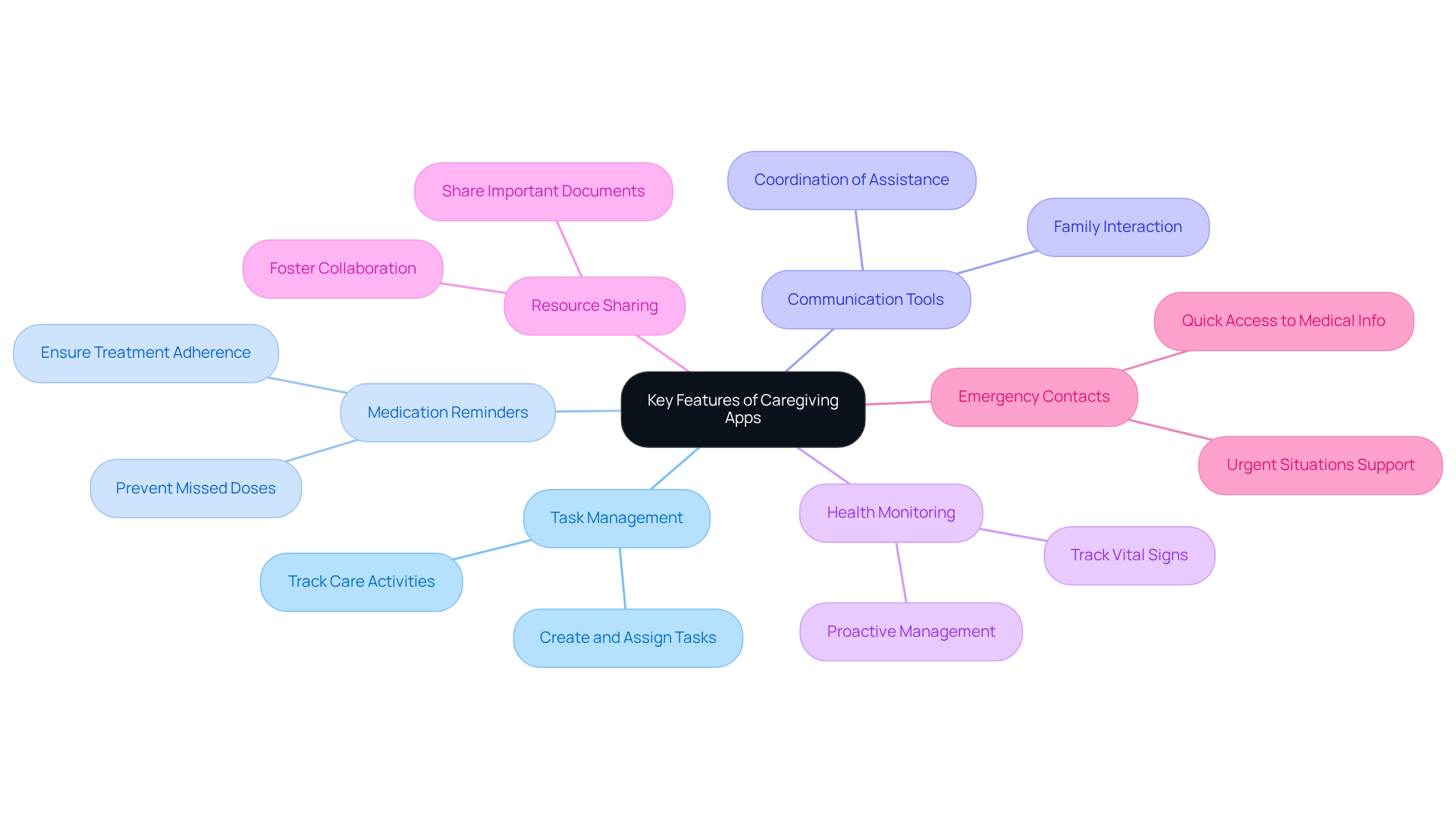
Caring for a loved one can be incredibly rewarding, but it often comes with its own set of emotional challenges. Many caregivers experience feelings of stress and burnout as they navigate their responsibilities. Thankfully, the best caregiving apps are available to help, offering various functionalities designed to improve the assistance experience.
One key feature is Task Management. This allows caregivers to create and assign tasks, ensuring that all necessary care activities are tracked and completed efficiently. As one caregiver shared, "A structured plan includes methods to use, architecture, the timeline for the project, and the costing." This highlights just how important organized task management is in caregiving.
Another vital aspect is Medication Reminders. These alerts help prevent missed doses and ensure adherence to treatment plans. It’s reassuring to know that the average duration spent on operations can decrease by 80% thanks to the effectiveness of these applications.
Communication Tools also play a crucial role. They enable interaction among family members and support providers, allowing for updates and coordination of assistance efforts. This connection can make a world of difference in managing care.
Some apps even offer Health Monitoring features, tracking vital signs and health metrics. This provides valuable insights into the recipient's condition, enabling proactive management and peace of mind.
Additionally, Resource Sharing allows individuals to share important documents and notes, fostering collaboration among family members. And in urgent situations, quick access to Emergency Contacts and medical information can be crucial.
These features are designed to simplify support tasks, enhance communication, and ultimately elevate the quality of assistance provided to loved ones. An analysis of the best caregiving apps reveals how these resources have transformed the support experience, making them essential for family supporters facing the challenges of caregiving. Remember, you’re not alone in this journey; there are tools and communities ready to support you.
Benefits of Using Caregiving Apps for Family Caregivers
Caregiving can be a challenging journey, filled with emotional ups and downs. Thankfully, the best caregiving apps offer numerous benefits that can help family caregivers navigate this path with greater ease and support.
-
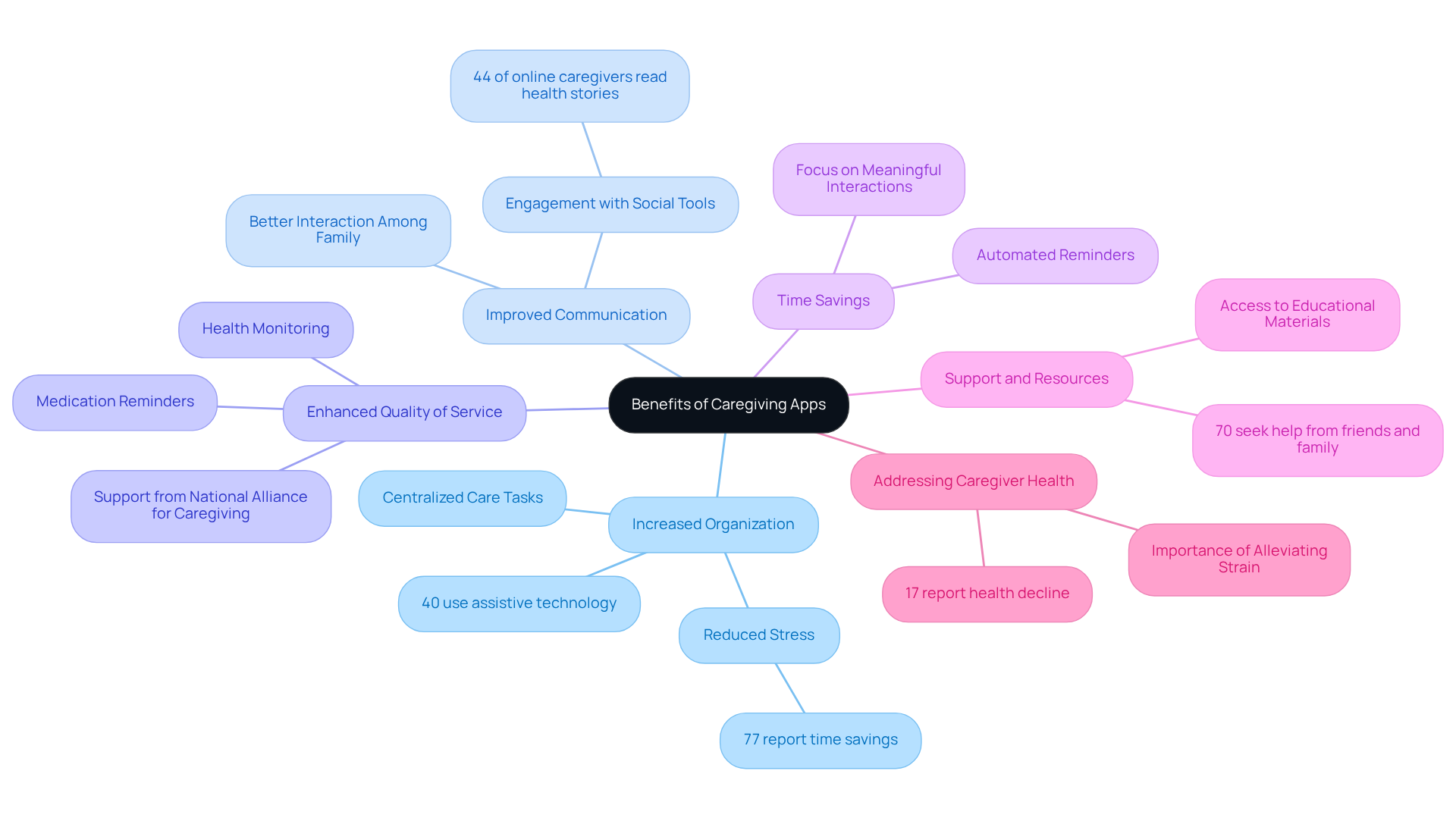
Increased Organization: Imagine being able to centralize care tasks and schedules. This not only helps caregivers manage their responsibilities more effectively but also reduces stress and confusion. Research shows that individuals who use organizational tools report lower stress levels, with 77% stating that technology saves them time. Additionally, 40% of supporters have embraced assistive technology for those they care for, showcasing a proactive approach to enhancing the quality of care.
-
Improved Communication: These platforms foster better interaction among family members, ensuring everyone stays informed and engaged in the support process. A study by the Pew Research Center reveals that caregivers are more connected with social tools related to health, reinforcing the collaborative spirit these apps promote.
-
Enhanced Quality of Service: With features like medication reminders and health monitoring, caregivers can provide more consistent and informed support, leading to better health outcomes. The National Alliance for Caregiving & UnitedHealthcare notes that caregivers are particularly receptive to technologies that assist in delivering and monitoring medical care for their loved ones.
-
Time Savings: Automating reminders and managing tasks can free up precious time, allowing caregivers to focus on meaningful interactions with their loved ones instead of getting overwhelmed by administrative duties.
-
Support and Resources: Many applications provide access to educational materials and support networks, helping caregivers feel less isolated and more empowered in their roles. This support is crucial, as 70% of caregivers seek information and assistance from friends and family, highlighting the need for accessible resources.
-
Addressing Caregiver Health: It's vital to acknowledge the physical and emotional toll caregiving can take. Statistics reveal that 17% of caregivers report a decline in their health due to their responsibilities, underscoring the importance of tools that can alleviate some of this strain.
In summary, the best caregiving apps can significantly enhance the caregiving experience, making it more manageable and efficient while reducing stress for providers. Remember, you’re not alone on this journey; support is available to help you every step of the way.
Drawbacks and Limitations of Caregiving Apps
While caregiving apps can offer many benefits, it’s important to recognize the significant drawbacks and limitations that caregivers might face:
-
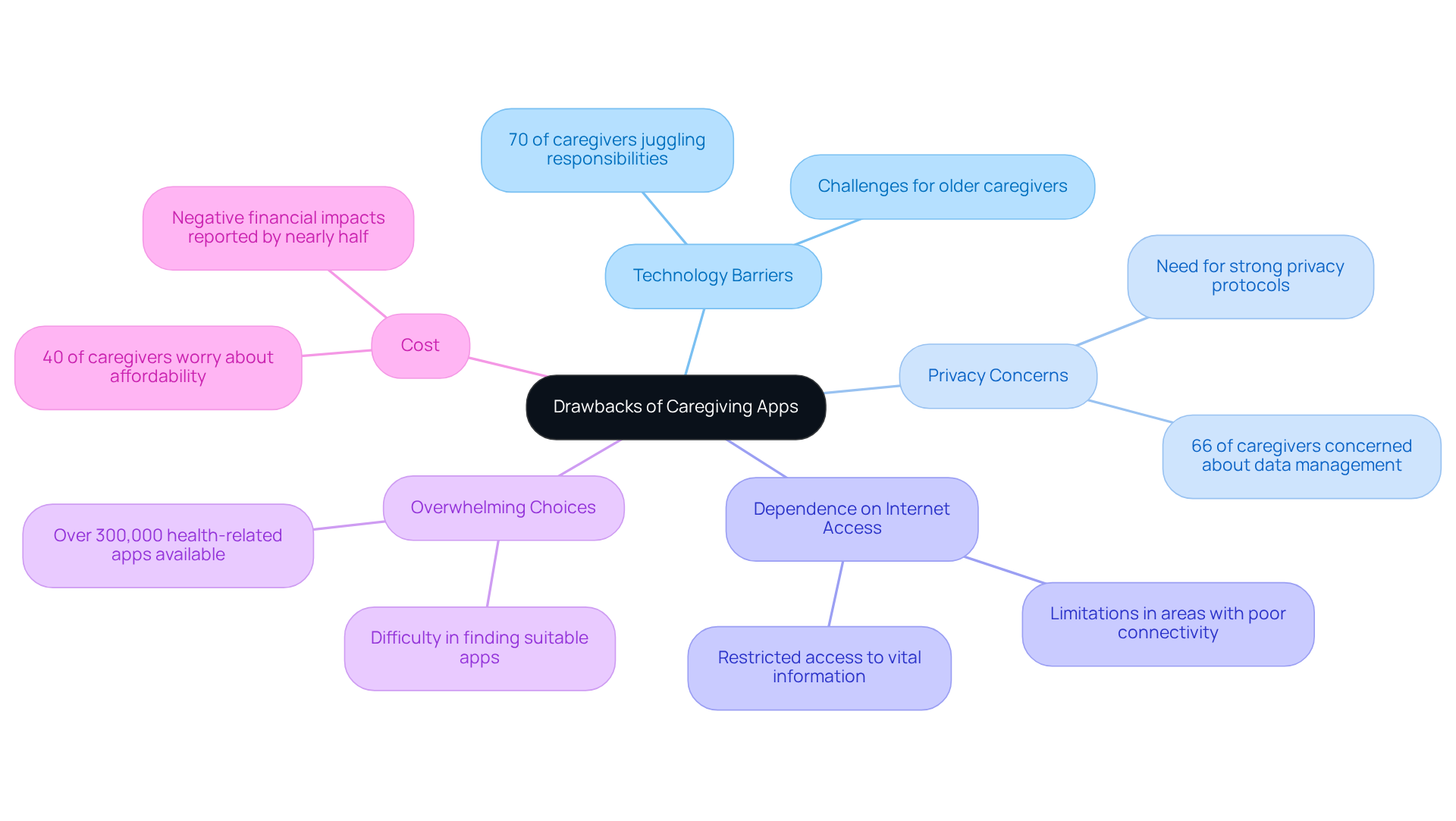
Technology Barriers: Navigating technology can be a real challenge for many caregivers, especially for older individuals who may not be as familiar with digital tools. Imagine trying to balance job responsibilities with caregiving duties—70% of caregivers aged 18 to 64 are doing just that. This juggling act can make it even harder to fully utilize app features.
-
Privacy Concerns: Storing sensitive health information on apps raises serious worries about data security. Almost 66% of caregivers express concerns about how their data is managed. It’s crucial for app developers to prioritize strong privacy protocols to maintain user trust.
-
Dependence on Internet Access: Many caregiving applications require a stable internet connection, which can be a limitation for those in areas with poor connectivity. This lack of access can restrict caregivers from getting vital information and support when they need it most.
-
Overwhelming Choices: With over 300,000 health-related applications available, the sheer number of options can feel daunting. Caregivers may struggle to find the best caregiving apps that suit their needs. Vulnerable populations often face additional challenges in using these technologies, highlighting the need for accessible app design.
-
Cost: Subscription fees for certain programs can be a burden for families on a budget. About 40% of caregivers worry about the affordability of these tools, and nearly half report experiencing at least one negative financial impact from their caregiving responsibilities.
Recognizing these challenges is essential for caregivers as they weigh the pros and cons of using support applications. By understanding these limitations, they can make informed choices that best assist their loved ones, ensuring they feel supported and empowered in their caregiving journey.
Comparative Analysis of Top Caregiving Apps
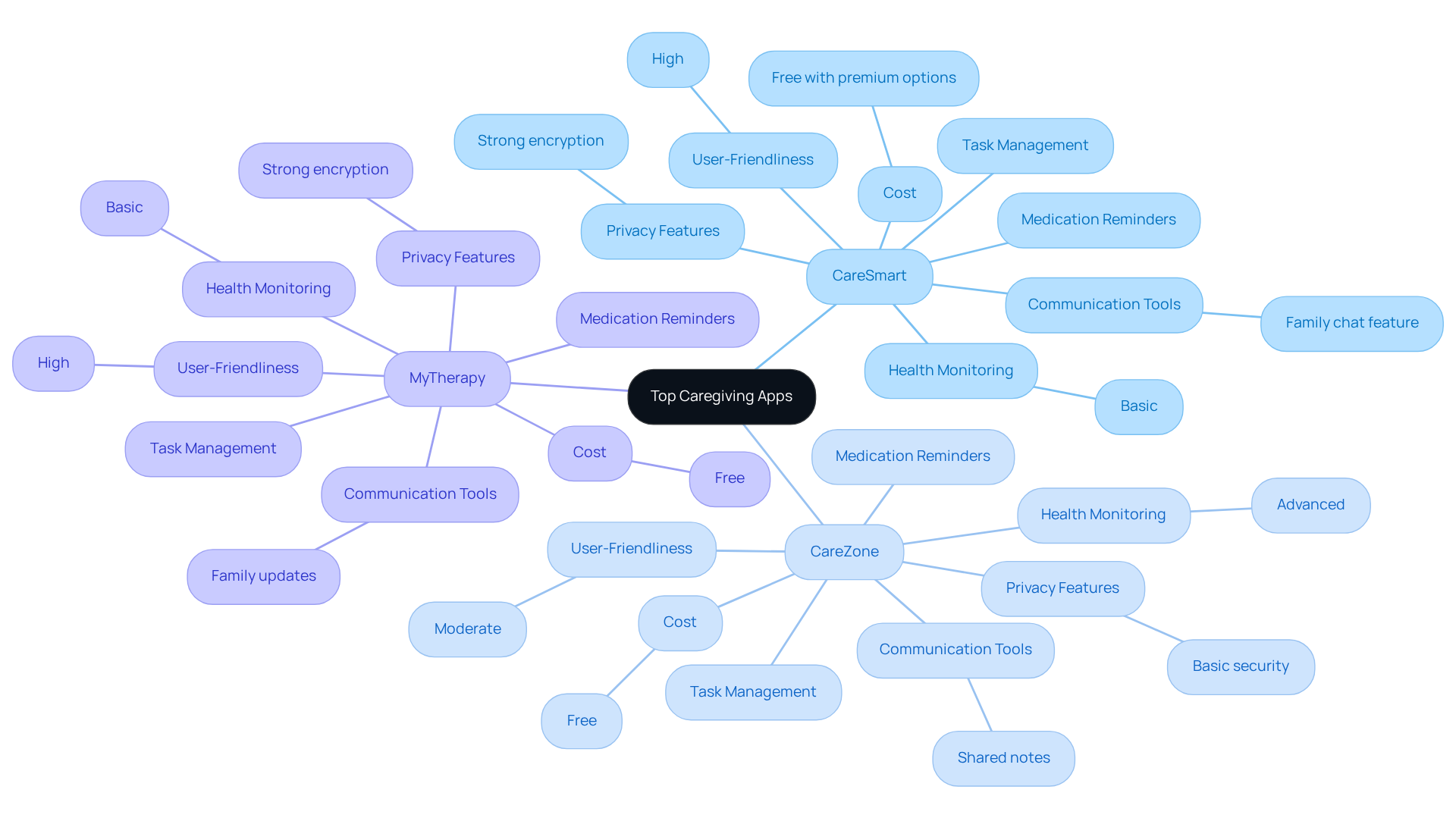
In this comparative analysis, we explore three of the best caregiving apps, which are CareSmart, CareZone, and MyTherapy. Each of these tools is designed to help family members manage their loved ones' wellbeing with care and efficiency.
Feature/Benefit | CareSmart | CareZone | MyTherapy
-------------------------|-------------------------------|-------------------------------|-------------------------------
Task Management | Yes | Yes | Yes
Medication Reminders | Yes | Yes | Yes
Health Monitoring | Basic | Advanced | Basic
Communication Tools | Family chat feature | Shared notes | Family updates
Cost | Free with premium options | Free | Free
User-Friendliness | High | Moderate | High
Privacy Features | Strong encryption | Basic security | Strong encryption
CareSmart truly shines with its user-friendly interface and strong privacy features. This makes it especially appealing to tech-savvy caregivers who want to feel secure while managing care. The family chat function enhances communication, allowing supporters to coordinate assistance effortlessly. A specialist in caregiving technology shared, "CareSmart's intuitive design facilitates organization and connection with family members."
CareZone, on the other hand, excels in advanced health monitoring capabilities. This makes it a great choice for those who need detailed tracking of health metrics. Its shared notes feature encourages collaboration among family members, ensuring everyone stays informed about the care plan. A supporter using CareZone expressed, "The health tracking tools have been invaluable for managing my mother's medications and appointments."
MyTherapy offers a simple, complimentary option that includes essential features. It’s a strong selection for those who appreciate simplicity without sacrificing functionality. User satisfaction statistics reveal that 85% of individuals using MyTherapy reported improved medication adherence and organization in their support tasks.
Ultimately, the choice of the best caregiving apps for support depends on the specific needs and preferences of the caregiver and their loved one. Caregivers often appreciate the unique strengths of each app, with many noting enhanced organization and communication in their caregiving tasks. As virtual care continues to evolve, these applications play a vital role in ensuring continuity of care, especially in light of the challenges posed by the pandemic. Remember, you’re not alone in this journey; these tools are here to support you every step of the way.
Making the Right Choice
Navigating the complexities of caregiving can feel overwhelming. It’s a journey filled with emotional challenges, and it’s okay to feel that weight. But there’s good news: the right apps can significantly lighten that load. The best caregiving apps not only help streamline tasks and improve communication among family members but also enhance the overall quality of care provided. By embracing technology, caregivers can discover support and resources that make their responsibilities more manageable and fulfilling.
Throughout this article, we’ve highlighted key features like:
- Task management
- Medication reminders
- Health monitoring
These tools are essential for caregivers, promoting organization and efficiency while fostering collaboration and connection among family members. While the benefits of using caregiving apps are substantial—think reduced stress and improved health outcomes—it’s also important to recognize the limitations. Technology barriers and privacy concerns can pose challenges, and acknowledging these is crucial.
Ultimately, you don’t have to face the journey of caregiving alone. Embracing the available tools and resources can empower you to provide better support for your loved ones while also taking care of your own well-being. As the landscape of caregiving continues to evolve, exploring the best caregiving apps can lead to a more connected, informed, and effective caregiving experience. Remember, you are not alone in this; support is just a tap away.
https://iframe.tely.ai/cta/eyJhcnRpY2xlX2lkIjogIjY5MDk0MmEyNGRjNWZmNzE2Y2ZkNTMzOCIsICJjb21wYW55X2lkIjogIjY4ZWU1ZGNhNzMxNzYyNTU3ZjNjOTVjMSIsICJpbmRleCI6IG51bGwsICJ0eXBlIjogImFydGljbGUifQ==Frequently Asked Questions
What are the main features of leading caregiving apps?
Leading caregiving apps typically include Task Management, Medication Reminders, Communication Tools, Health Monitoring, Resource Sharing, and quick access to Emergency Contacts and medical information.
How does Task Management benefit caregivers?
Task Management allows caregivers to create and assign tasks, ensuring that all necessary care activities are tracked and completed efficiently, which helps reduce stress and improve organization.
What role do Medication Reminders play in caregiving?
Medication Reminders help prevent missed doses and ensure adherence to treatment plans, significantly improving the efficiency of caregiving operations.
Why are Communication Tools important in caregiving apps?
Communication Tools enable interaction among family members and support providers, facilitating updates and coordination of assistance efforts, which enhances the overall caregiving experience.
What is the purpose of Health Monitoring features in caregiving apps?
Health Monitoring features track vital signs and health metrics, providing valuable insights into the recipient's condition and enabling proactive management of their health.
How does Resource Sharing work in caregiving apps?
Resource Sharing allows individuals to share important documents and notes, fostering collaboration among family members and improving the support network for the caregiver.
Why is quick access to Emergency Contacts crucial in caregiving?
Quick access to Emergency Contacts and medical information is vital in urgent situations, ensuring that caregivers can respond promptly and effectively to any emergencies that may arise.
How do caregiving apps improve the overall support experience?
These apps simplify support tasks, enhance communication, and elevate the quality of assistance provided, making them essential tools for family caregivers facing the challenges of caregiving.