
Understanding Aid and Attendance Eligibility for
Understanding the complexities of Aid and Attendance benefits is vital for veterans and their families facing daily living challenges. Many struggle with navigating the eligibility criteria and application process, which can be daunting. This uncertainty can leave caregivers feeling overwhelmed and unsure of their options.
These payments serve as a crucial financial support system, helping those who require assistance due to age, disability, or health issues. Without proper guidance, many may miss out on essential benefits that could significantly improve their quality of life.
So, what steps can caregivers take to secure these benefits? By understanding the eligibility requirements and seeking assistance from knowledgeable resources, caregivers can overcome the barriers that often complicate access. It's essential to stay informed and proactive in the application process.
Define Aid and Attendance Benefits for Veterans
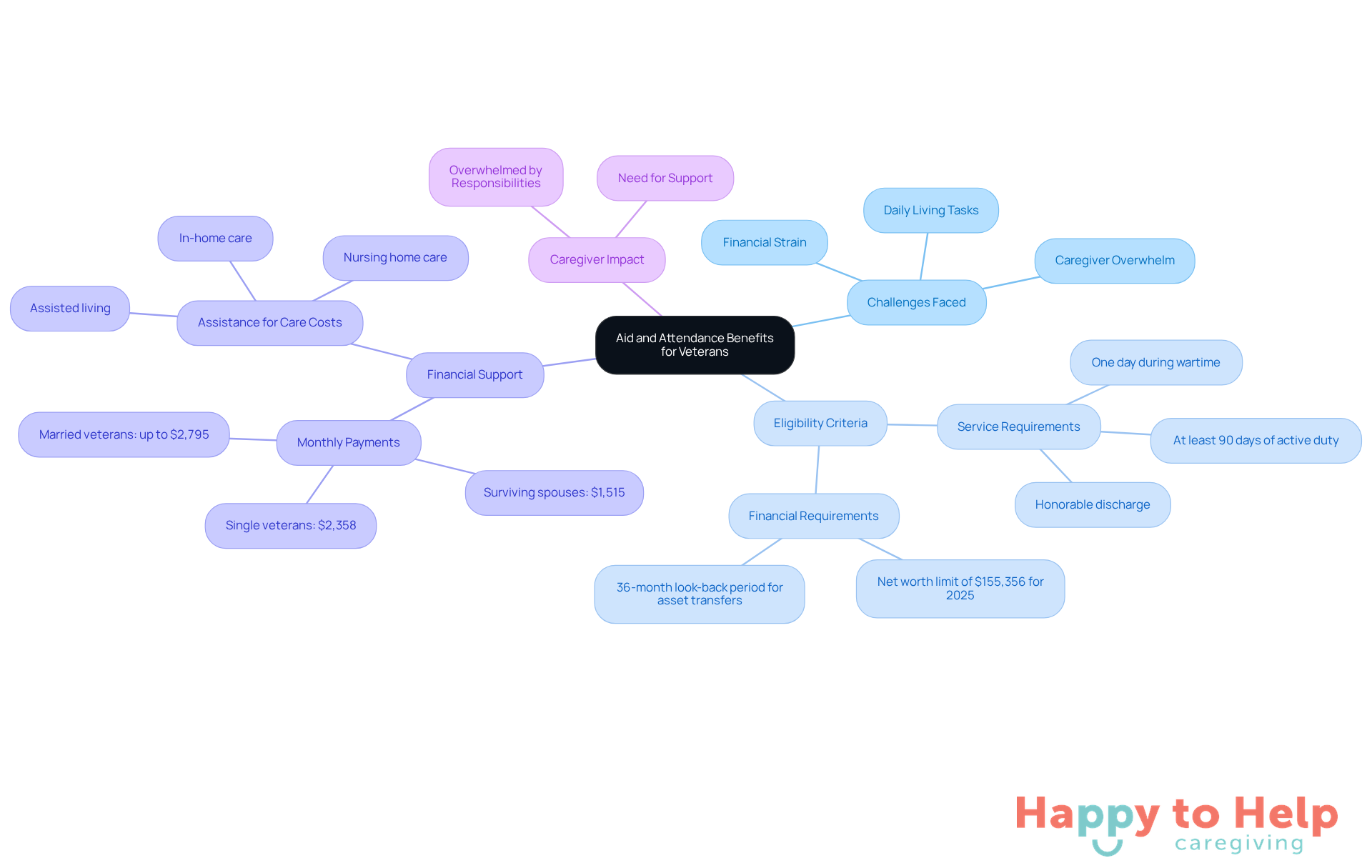
Aid and Attendance (A&A) payments represent a crucial financial lifeline for former service members and their surviving spouses who struggle with daily living tasks. Many veterans face challenges in managing their daily needs due to age, disability, or health issues, which can lead to significant stress and financial strain on families.
This situation often leaves caregivers feeling overwhelmed, as they juggle the demands of providing care while managing their own responsibilities. The costs associated with in-home care, assisted living, or nursing home care can quickly add up, making it difficult for families to cope.
Fortunately, the Department of Veterans Affairs (VA) offers A&A payments to help alleviate some of these financial burdens. To qualify, veterans must meet specific service criteria and demonstrate a need for assistance. This program is not standalone; it enhances the basic VA pension, providing essential support to those who need it most.
By understanding the A&A program and its requirements, caregivers can access the financial aid necessary to meet aid and attendance eligibility, ensuring their loved ones receive the care they deserve.
Outline Eligibility Requirements for Aid and Attendance
Veterans face several challenges that can complicate their access to essential support needed to qualify for aid and attendance eligibility. Understanding these criteria is crucial for those who need assistance.
-
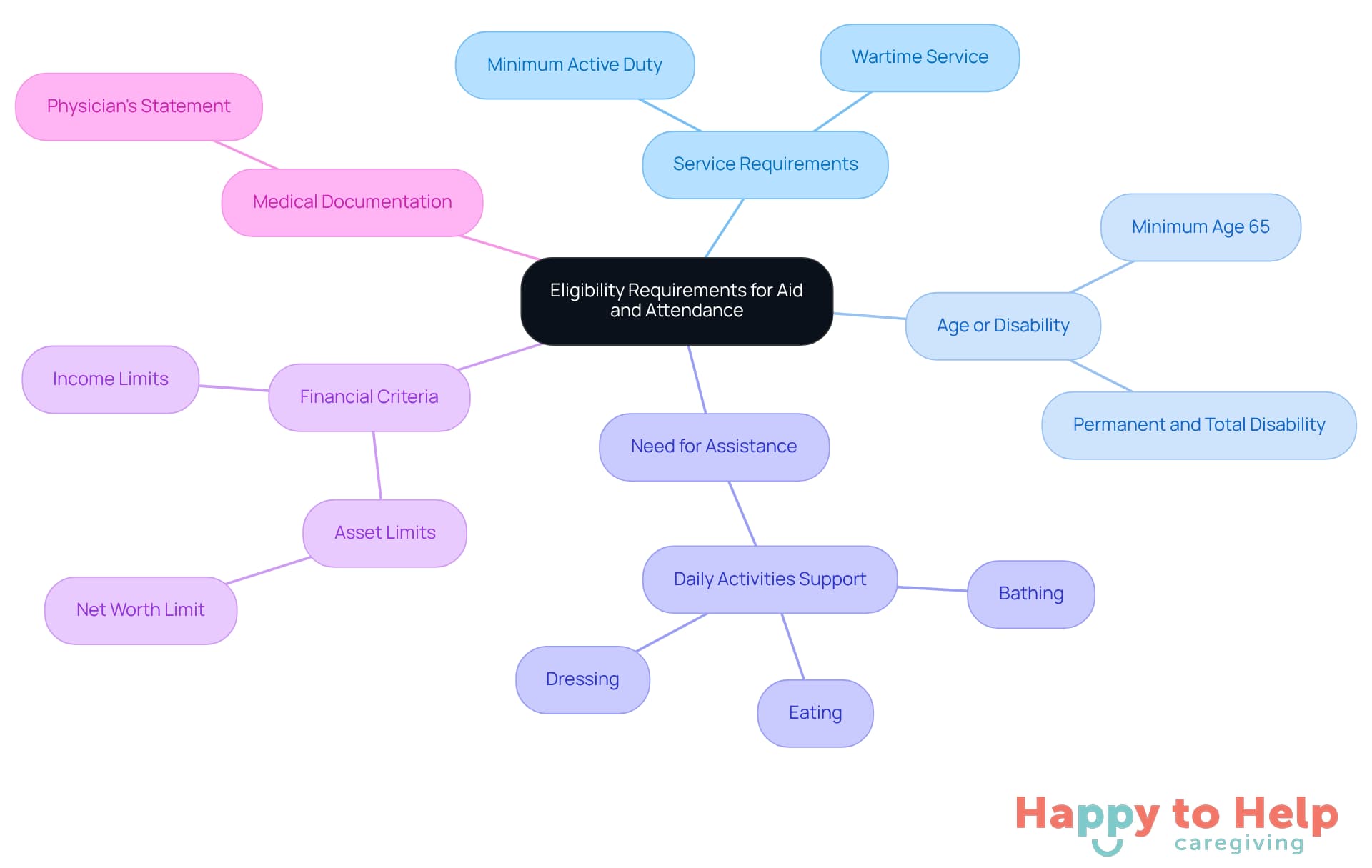
Service Requirements: Veterans must have served a minimum of 90 days of active duty, including at least one day during a recognized wartime period.
-
Age or Disability: Applicants need to be at least 65 years old or have a permanent and total disability.
-
Need for Assistance: It's essential to demonstrate a need for help with daily activities, such as bathing, dressing, or eating.
-
Financial Criteria: There are specific income and asset limits that are updated annually. As of 2025, the net worth limit is $159,240, excluding the value of the home and vehicle.
-
Medical Documentation: A physician's statement is necessary to confirm the need for assistance.
These guidelines ensure that aid and attendance eligibility is properly assessed for individuals who genuinely require support. With approximately 8.1 million individuals aged 65 or older, many may qualify for these vital resources.
Explain the Application Process for Aid and Attendance Benefits
Applying for aid and attendance eligibility benefits can be a daunting task for caregivers, often filled with complexities that can lead to frustration. Many face challenges in gathering the necessary documentation and understanding the application process, which can take a significant amount of time and effort.
To tackle these challenges, here are essential steps to ensure a smooth application process:
-
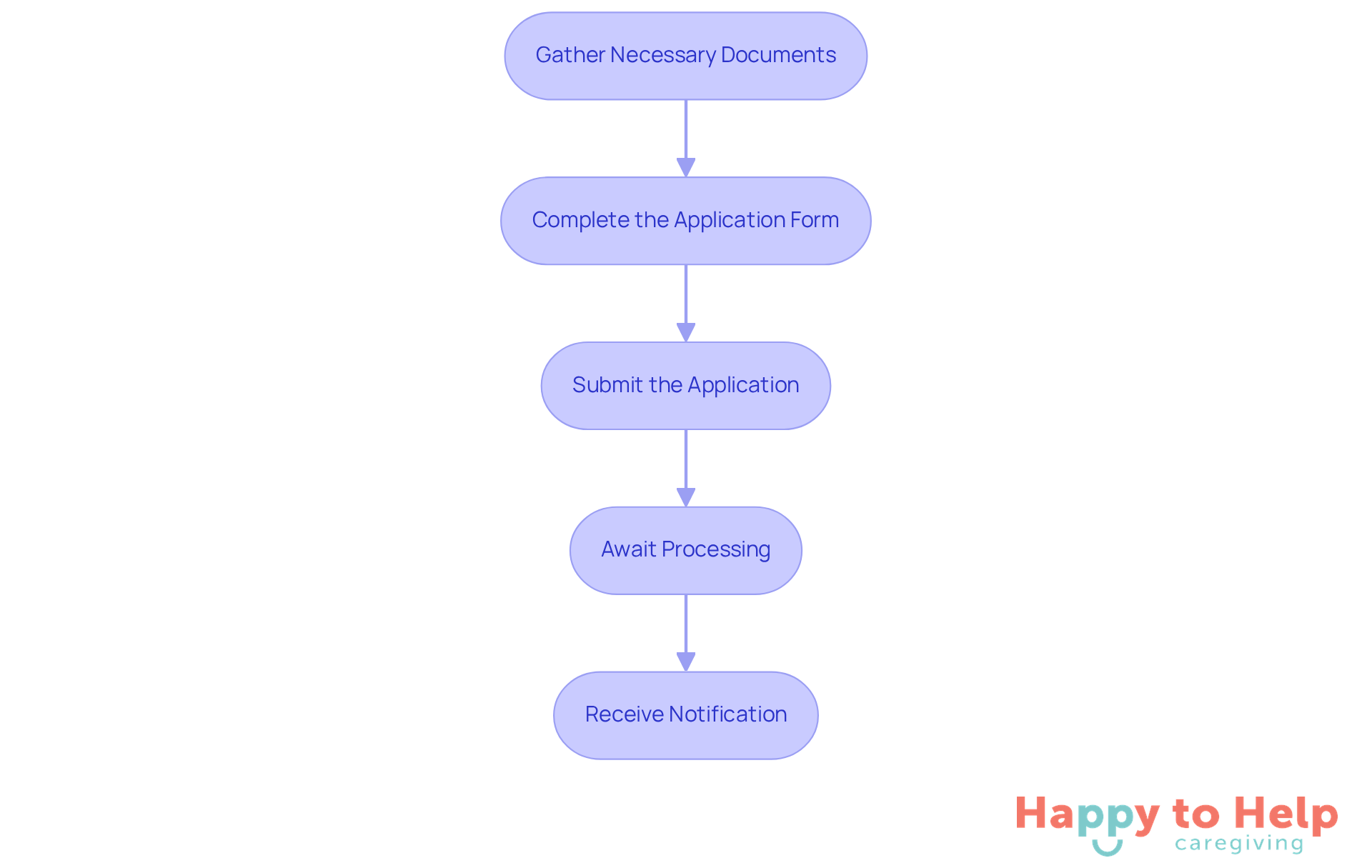
Gather Necessary Documents: Start by collecting all required documentation, including military discharge papers (DD-214), medical records, and financial statements. This foundational step is crucial, as the VA reviews finances from the previous 36 months, focusing on countable income and net worth, which must not exceed $154,140 for 2024.
-
Complete the Application Form: Fill out VA Form 21-2680 (Examination for Housebound Status or Permanent Need for Regular Aid and Attendance) and VA Form 21P-527EZ (Application for Veterans Pension). These forms are essential for determining eligibility and outlining the individual's care requirements.
-
Submit the Application: Send the completed forms along with supporting documents to the appropriate VA Pension Management Center based on your state. Ensuring that all paperwork is accurate and complete can help prevent delays in processing.
-
Await Processing: The VA will review the application, which typically takes between 12 to 18 months. During this period, they may request additional information, so maintaining open communication is essential.
-
Receive Notification: Once a decision is made, the VA will notify you of the outcome. If authorized, advantages will be included in the individual's monthly pension, potentially offering substantial financial assistance for caregiving requirements.
Statistics indicate that many former service members successfully navigate this process with the right preparation and assistance related to their aid and attendance eligibility. Engaging with a VA-accredited agent can further streamline the application, reducing the expected approval time and increasing the likelihood of a favorable outcome. As highlighted by military service groups, "Beginning the application process early can greatly alleviate the strain during times of need.
Address Challenges in Securing Aid and Attendance Benefits
Securing Aid and Attendance benefits presents several challenges for veterans and their families:
-
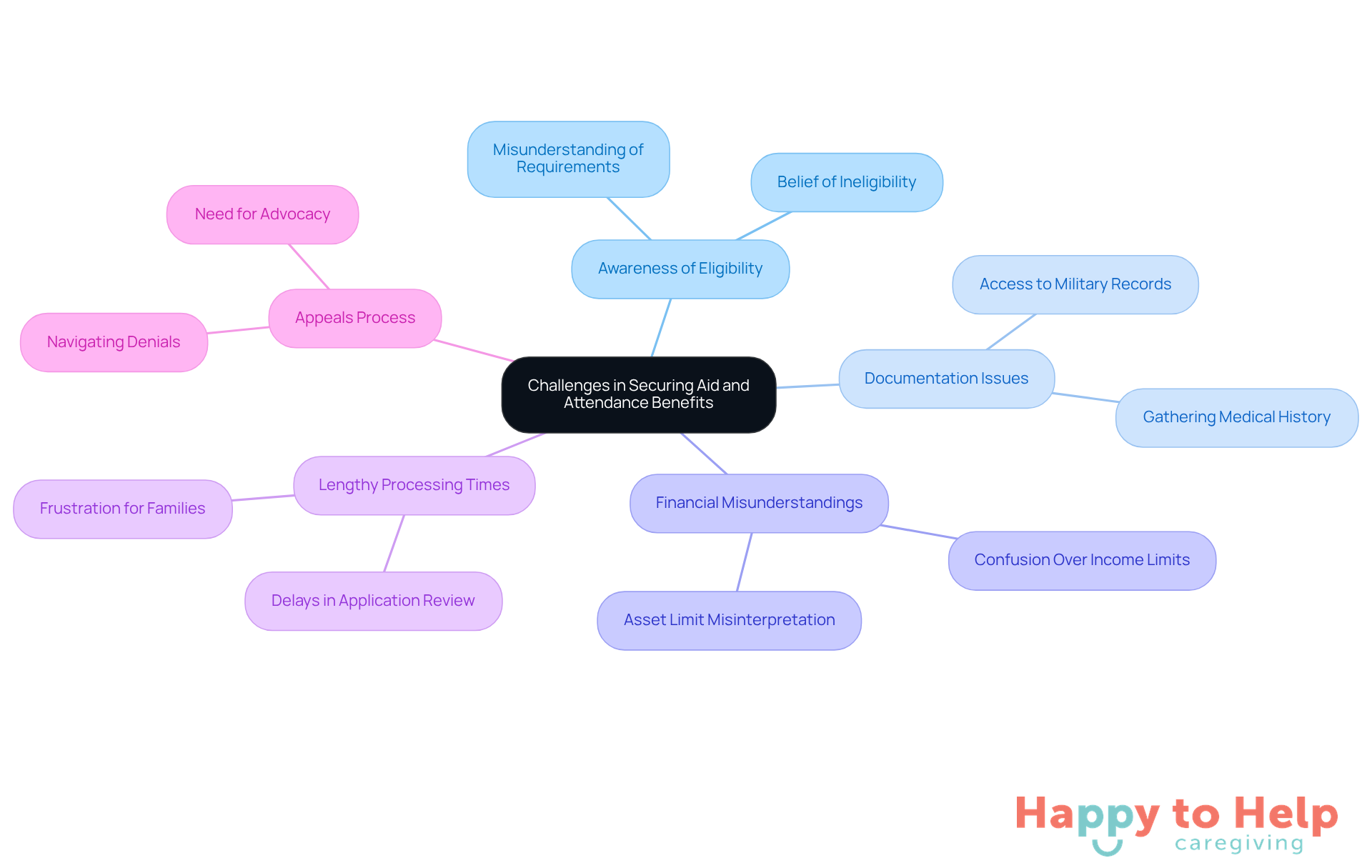
Many veterans are unaware of the specific requirements for aid and attendance eligibility and may mistakenly believe they do not qualify due to complex eligibility criteria. This misunderstanding can prevent them from accessing vital support.
-
Documentation Issues: Gathering the necessary documentation can be overwhelming, especially for those who may not have easy access to their military records or medical history. This can delay the application process significantly.
-
Financial Misunderstandings: Confusion over income and asset limits often leads to applicants being denied benefits they are entitled to. It's crucial to understand these limits to avoid unnecessary denials.
-
Lengthy Processing Times: The application process can be slow, leading to frustration and uncertainty for families in need of immediate assistance. This delay can exacerbate the challenges they face.
-
Appeals Process: If an application is denied, navigating the appeals process can be daunting without proper guidance. Seeking assistance from a knowledgeable advocate can help streamline this process and improve the chances of a successful appeal.
By addressing these challenges head-on, caregivers can better navigate the complexities of securing aid and attendance eligibility.
Taking the Next Steps
Navigating the complexities of Aid and Attendance benefits presents a significant challenge for veterans and their families seeking financial support for daily living assistance. This program is crucial, as it enables former service members and their surviving spouses to access necessary funds for managing their care needs effectively. However, understanding the eligibility criteria and application process is vital to ensure that those who qualify can secure the assistance they deserve.
The specific service requirements, age or disability considerations, and necessary financial documentation are key aspects that must be understood. Moreover, the challenges faced during the application process - such as documentation issues and lengthy processing times - highlight the importance of preparation and a thorough understanding of the system. By being informed about these elements, caregivers can better advocate for their loved ones and navigate the often daunting landscape of veterans' benefits.
Securing Aid and Attendance benefits alleviates financial stress and enhances the quality of life for veterans requiring assistance. It is imperative for those eligible to take action: gather the necessary documentation and seek guidance when needed. By doing so, they can ensure that the sacrifices made during service are honored through the support they receive in their time of need.
https://iframe.tely.ai/cta/eyJhcnRpY2xlX2lkIjogIjY5MjdhNWU0MDdjMGRmNzAyZDczNTUzOCIsICJjb21wYW55X2lkIjogIjY4ZWU1ZGNhNzMxNzYyNTU3ZjNjOTVjMSIsICJpbmRleCI6IG51bGwsICJ0eXBlIjogImFydGljbGUifQ==Frequently Asked Questions
What are Aid and Attendance (A&A) benefits for veterans?
A&A benefits are financial payments provided by the Department of Veterans Affairs (VA) to help veterans and their surviving spouses who struggle with daily living tasks due to age, disability, or health issues.
Who qualifies for Aid and Attendance benefits?
To qualify for A&A benefits, veterans must meet specific service criteria and demonstrate a need for assistance with daily living tasks.
How do A&A benefits assist veterans and their families?
A&A benefits help alleviate financial burdens associated with in-home care, assisted living, or nursing home care, providing crucial support to veterans and their families.
Are A&A benefits standalone payments?
No, A&A benefits are not standalone; they enhance the basic VA pension, providing additional financial support to those who need it most.
Why is understanding the A&A program important for caregivers?
Understanding the A&A program and its requirements allows caregivers to access the financial aid necessary to meet aid and attendance eligibility, ensuring their loved ones receive the care they deserve.
List of Sources
- Define Aid and Attendance Benefits for Veterans
- A Hidden Lifeline for Veterans: Understanding VA Aid & Attendance Benefits (https://patch.com/illinois/homerglen-lockport/hidden-lifeline-veterans-understanding-va-aid-attendance-benefits)
- Veterans Aid and Attendance Benefit 2025: How Can It Help Pay for Senior Living Costs. - Residences Senior Living (https://residencesseniorliving.com/blog/veterans-aid-and-attendance-benefit-2025-how-can-it-help-pay-for-senior-living-costs)
- New 2025 Updates to Veterans Benefits for Assisted Living (https://floridaseniorconsulting.com/updated-veterans-aid-and-attendance-benefits-for-assisted-living)
- Upcoming Changes to Veterans Aid and Attendance Pension | KWGD (https://kwgd.com/news/upcoming-changes-to-veterans-aid-and-attendance-pension)
- VA Aid & Attendance Pension: 2026 Benefits & Eligibility Criteria (https://medicaidplanningassistance.org/va-pension-aid-and-attendance)
- Outline Eligibility Requirements for Aid and Attendance
- VA Aid & Attendance Pension: 2026 Benefits & Eligibility Criteria (https://medicaidplanningassistance.org/va-pension-aid-and-attendance)
- A Hidden Lifeline for Veterans: Understanding VA Aid & Attendance Benefits (https://patch.com/illinois/homerglen-lockport/hidden-lifeline-veterans-understanding-va-aid-attendance-benefits)
- New 2025 Updates to Veterans Benefits for Assisted Living (https://floridaseniorconsulting.com/updated-veterans-aid-and-attendance-benefits-for-assisted-living)
- Veterans Aid and Attendance Benefit 2025: How Can It Help Pay for Senior Living Costs. - Residences Senior Living (https://residencesseniorliving.com/blog/veterans-aid-and-attendance-benefit-2025-how-can-it-help-pay-for-senior-living-costs)
- Upcoming Changes to Veterans Aid and Attendance Pension | KWGD (https://kwgd.com/news/upcoming-changes-to-veterans-aid-and-attendance-pension)
- Explain the Application Process for Aid and Attendance Benefits
- What to Know About Applying for the VA Aid & Attendance Benefit | The Herrick House (https://theherrickhouse.org/news-stories/all-news-stories/stories/2025/01/apply-va-aid-attendance-benefit)
- How Long Does the Aid & Attendance Application Process Take? (https://avcchomecare.com/aid-attendance-application-process-length)
- 5 Key Things to Know about Applying for the VA Aid and Attendance Benefit (https://veteranshomecare.com/5-key-things-to-know-about-applying-for-the-va-aid-and-attendance-benefit)
- A Hidden Lifeline for Veterans: Understanding VA Aid & Attendance Benefits (https://patch.com/illinois/homerglen-lockport/hidden-lifeline-veterans-understanding-va-aid-attendance-benefits)
- Veteran’s Aid and Attendance Benefits 2025 - North Woods Village Memory Care (https://northwoodsmemorycare.com/veterans-aid-and-attendance-benefits-2025)