
Understanding Overnight Care for Elderly Cost: Key
Understanding the complexities of overnight care for the elderly presents a significant challenge for families. Ensuring the safety and comfort of loved ones during nighttime hours can be daunting, especially as the aging population continues to grow. This situation places an emotional and physical strain on caregivers, who often feel overwhelmed by the responsibilities they face.
With a variety of support options available, families may struggle to navigate the landscape of overnight care services. Costs can vary significantly, leading to confusion about how to balance quality care with affordability. So, how can families make informed decisions in this complex environment?
This article explores the critical factors influencing overnight care costs, outlines the different types of services available, and offers practical tips for selecting the right provider. By understanding these elements, families can find the best solutions for their elderly loved ones, ensuring they receive the care they deserve.
Define Overnight Care for the Elderly
Overnight assistance for the elderly presents a significant challenge for families. Many elderly individuals require help during nighttime hours, typically from 8 PM to 8 AM, to ensure their safety and comfort. This need can lead to emotional strain on family caregivers who may worry about their loved ones being alone at night.
Statistics reveal that around 44% of home assistance recipients need help with at least one daily task, with 83% specifically requiring support with bathing and showering. This highlights the vital role of nighttime support in aiding the elderly. As the population of adults aged 65 and older continues to grow, the demand for such services is expected to rise significantly. Projections indicate that by 2040, nearly two million individuals will require assisted living accommodations.
To address these challenges, families can consider various types of overnight assistance. Caregivers can provide customized support, which may include:
- Medication supervision
- Companionship
- Help with daily tasks
They can either stay awake to monitor the elder's needs or offer 'sleeping' assistance, being available if help is needed. This arrangement not only offers peace of mind to families but also ensures that someone is present to respond to emergencies or assist with nighttime routines.
As Jonathan Marsh, a writer on support, states, "Overnight assistance involves professional helpers remaining with your loved one during the night to offer aid and oversight." Families should also evaluate the overnight care for elderly cost when considering these services. The national median overnight care for elderly cost in 2025 varies from $25 to $35 per hour, with flat-rate sleeping shifts priced between $120 and $200 for 10-12 hours. Understanding the overnight care for elderly cost is crucial for families who want to provide the best care for their loved ones.
Explore Types of Overnight Care Options
Caring for the elderly can be challenging, particularly regarding the overnight care for elderly cost to ensure they receive the right support. Many caregivers face the problem of balancing their own needs with those of their loved ones, leading to stress and fatigue.
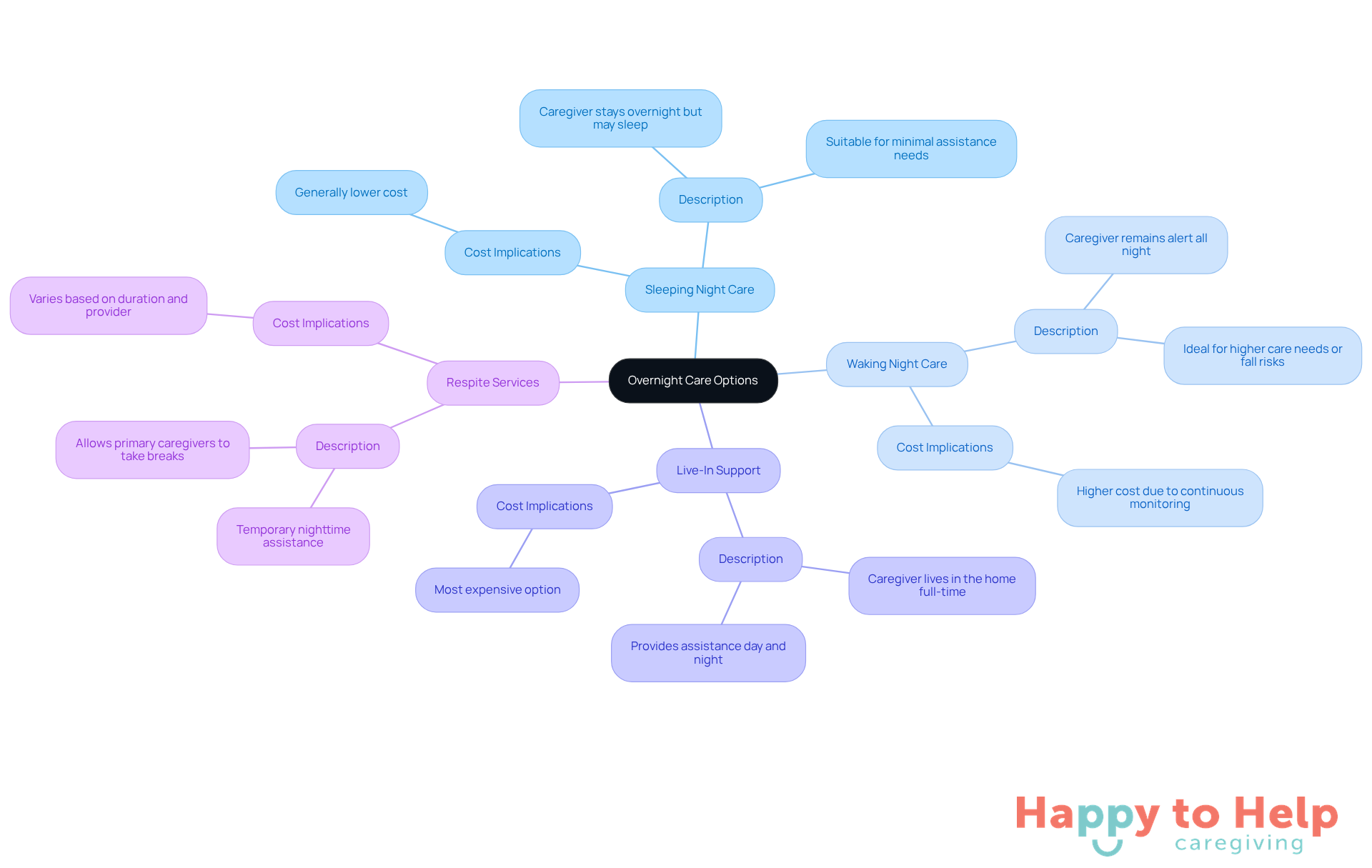
To address these challenges, several overnight care options are available:
- Sleeping Night Care: Caregivers stay overnight but may sleep unless needed. This option is suitable for older adults who require minimal assistance, considering the overnight care for elderly cost.
- Waking Night Care: Caregivers remain alert all night, providing continuous monitoring and support, which can significantly influence the overnight care for elderly cost. This is ideal for elderly individuals with greater care needs or those at risk of falls, especially when evaluating overnight care for elderly cost.
- Live-In Support: A caregiver lives in the home full-time, providing assistance during the night and throughout the day, which influences the overnight care for elderly cost. This is beneficial for older adults who need ongoing assistance, especially considering the overnight care for elderly cost.
- Respite Services: Temporary nighttime assistance, which contributes to overnight care for elderly cost, allows primary caregivers to take a break, ensuring seniors receive professional support while their family members rest or manage other responsibilities.
By understanding these options, caregivers can make informed decisions that enhance the quality of care for their loved ones.
Identify Factors Affecting Overnight Care Costs
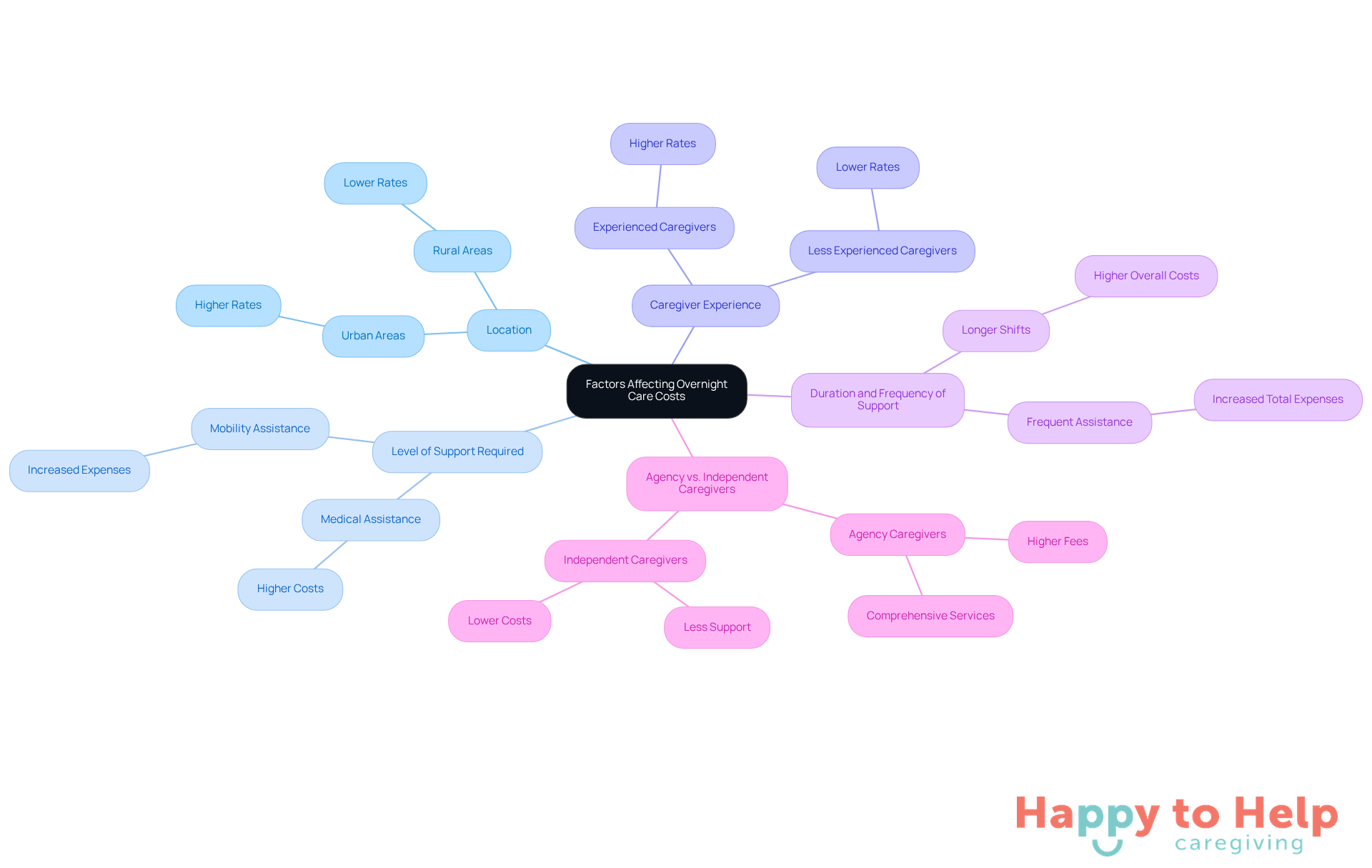
The overnight care for elderly cost can be a significant concern for families. Understanding the factors that influence the overnight care for elderly cost is crucial for making informed decisions.
-
Location: Geographic area plays a significant role in pricing. Urban areas typically have higher rates due to increased demand and cost of living.
-
Level of Support Required: The complexity of assistance needed, such as help with medical conditions or mobility issues, can increase expenses.
-
Caregiver Experience: More experienced caregivers may charge higher rates, reflecting their expertise and training.
-
Duration and Frequency of Support: Longer shifts or more frequent assistance can lead to higher overall costs. For instance, the overnight care for elderly cost may vary from $120 to $250 each evening, based on the services offered.
-
Agency vs. Independent Caregivers: Hiring through an agency may incur additional fees compared to hiring independent caregivers directly. However, agencies often provide more comprehensive services and backup support.
By considering these factors, families can better navigate the complexities of caregiving costs and make choices that best suit their needs.
Select the Right Overnight Care Provider
Choosing the right overnight assistance provider for your loved one can be a daunting task, filled with concerns about their safety and comfort. Caregivers often face the challenge of ensuring that their loved ones receive the best possible care tailored to their unique needs.
-
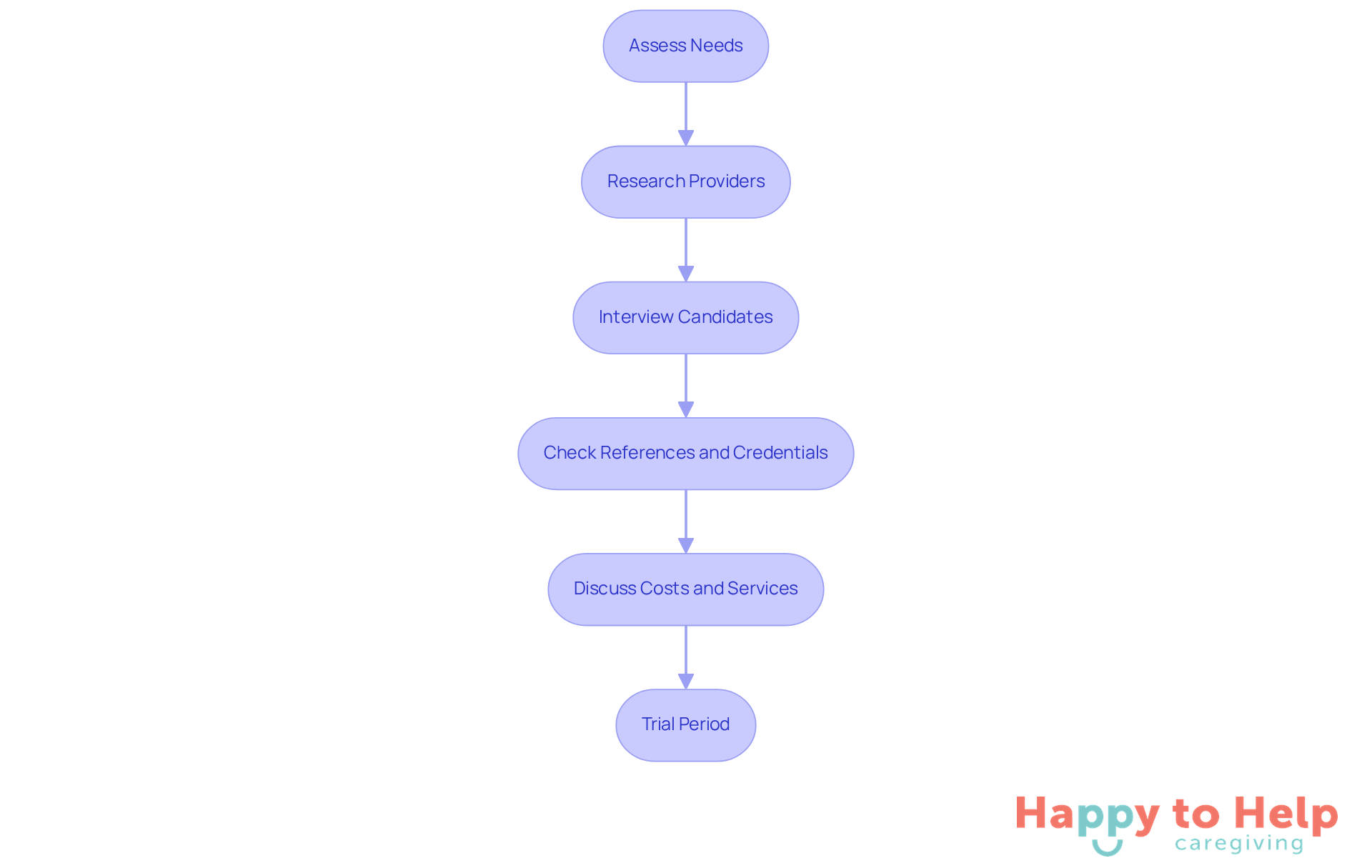
Assess Needs: Start by identifying the specific requirements of your loved one. Consider any medical conditions, mobility challenges, and personal preferences that may influence their care. Understanding these needs is crucial for making an informed decision.
-
Research Providers: Look for reputable agencies or independent professionals known for their quality of service. Positive reviews and testimonials on platforms like A Place for Mom or Care.com can guide your decision-making process, helping you find trustworthy options.
-
Interview Candidates: Conduct thorough interviews with potential support providers to assess their experience and qualifications. It's essential to understand their approach to care, how they handle emergencies, and their compatibility with your loved one’s personality and needs.
-
Check References and Credentials: Verify the provider's background by reviewing their certifications, training, and references from former clients. This step is crucial for ensuring that the individual is qualified and trustworthy.
-
Discuss Costs and Services: Transparency regarding rates and services is vital. The overnight care for elderly cost typically ranges from $16 to $27 per hour, depending on the level of care required and the provider's location. Factors such as the provider's experience and any specialized training, particularly for conditions like Alzheimer’s, can influence the overnight care for elderly cost. Clarifying any additional fees upfront will help you budget effectively and avoid unexpected expenses.
-
Trial Period: If possible, organize a trial phase to see how effectively the attendant engages with your loved one. This allows you to evaluate their ability to meet support needs and ensures a good match before making a long-term commitment. Observing how caregivers interact with seniors during this period is crucial for determining compatibility and effectiveness.
By following these steps, families can make informed decisions that prioritize the well-being and comfort of their aging loved ones, ensuring they receive the personalized care they deserve.
Key Takeaways for Caregivers
Understanding the complexities of overnight care for the elderly is crucial for families aiming to support their loved ones during nighttime hours. The problem lies in ensuring safety and comfort for seniors, which can also weigh heavily on family caregivers emotionally. As the demand for these services grows, it becomes vital to recognize the various options available and their associated costs.
Several key aspects of overnight care are worth noting. Families can choose from different types of care options, including:
- Sleeping night care
- Waking night care
- Live-in support
- Respite services
Evaluating factors that influence the cost of overnight care for the elderly is essential. These factors include:
- Location
- The level of support required
- Caregiver experience
- Whether to opt for agency or independent caregivers
By understanding these elements, families can make informed decisions that align with their loved ones' needs and budget.
Selecting the right overnight care provider is a critical step in ensuring the well-being of elderly individuals. Families should assess their loved ones' specific needs, research potential providers, and conduct thorough interviews to find the best match. Taking these steps not only enhances the quality of care but also provides peace of mind, knowing that their loved ones are safe and supported during the night. Investing in reliable overnight care is significant, as it plays a vital role in maintaining the dignity and quality of life for seniors.
https://iframe.tely.ai/cta/eyJhcnRpY2xlX2lkIjogIjY5MjI2NGZmYzVlZWQyYmRiNTU3YmViOCIsICJjb21wYW55X2lkIjogIjY4ZWU1ZGNhNzMxNzYyNTU3ZjNjOTVjMSIsICJpbmRleCI6IG51bGwsICJ0eXBlIjogImFydGljbGUifQ==Frequently Asked Questions
What is overnight care for the elderly?
Overnight care for the elderly involves providing assistance during nighttime hours, typically from 8 PM to 8 AM, to ensure the safety and comfort of elderly individuals who may require help.
Why is overnight care important for elderly individuals?
Overnight care is important because many elderly individuals need support with daily tasks and may experience emotional strain if left alone at night. It helps ensure their safety and provides peace of mind for family caregivers.
What percentage of home assistance recipients need help with daily tasks?
Approximately 44% of home assistance recipients need help with at least one daily task.
What specific support do many elderly individuals require?
About 83% of elderly individuals receiving assistance specifically require support with bathing and showering.
What types of overnight assistance can families consider?
Families can consider various types of overnight assistance, including medication supervision, companionship, and help with daily tasks.
How can caregivers provide overnight assistance?
Caregivers can either stay awake to monitor the elder's needs or offer 'sleeping' assistance, being available if help is needed during the night.
What is the projected demand for assisted living accommodations by 2040?
By 2040, it is projected that nearly two million individuals will require assisted living accommodations due to the growing population of adults aged 65 and older.
What is the cost of overnight care for the elderly?
The national median cost for overnight care for the elderly in 2025 ranges from $25 to $35 per hour, with flat-rate sleeping shifts priced between $120 and $200 for 10-12 hours.
Why is it important for families to understand the cost of overnight care?
Understanding the cost of overnight care is crucial for families who want to provide the best care for their loved ones while managing their budget effectively.
List of Sources
- Define Overnight Care for the Elderly
- Overnight Care for Elderly: A Family Guide to Costs & Options [2025] - Resource for Seniors and Caregivers | SeniorSite (https://seniorsite.org/resource/overnight-care-for-elderly-a-family-guide-to-costs-options)
- 2025 Home Care Statistics: Trends & Insights To Know (https://premierhcinc.com/blog/home-care-statistics)
- Sleep Well, Care Well: The Benefits of Overnight Care for Family Caregivers (https://homehelpershomecare.com/bradenton/community-blog/2023/january/sleep-well-care-well-the-benefits-of-overnight-care-for-family-caregivers)
- Safety & Restorative Benefits of Overnight Care for Seniors & Families (https://homeinstead.ca/location/3025/news-and-media/the-safety-and-restorative-benefits-of-overnight-care-for-seniors-and-their-families-in-calgary)
- Why Overnight Safety Is Critical for Seniors (https://genactainhomecare.com/why-overnight-safety-is-critical-for-seniors)
- Explore Types of Overnight Care Options
- Overnight program for dementia patients gives caregivers a rest (https://nbcnews.com/health/health-news/overnight-program-dementia-patients-gives-caregivers-rest-flna1c6435970)
- Overnight Care Services for the Elderly: What Really Happens During Support (https://londondaily.news/overnight-care-services-for-the-elderly-what-really-happens-during-support)
- Home Care News | Senior Care News | Right at Home (https://rightathome.net/news)
- Overnight Programs for Seniors with Dementia | CCA (https://conciergecareadvisors.com/overnight-seniors-with-dementia)
- Overnight Respite Care for Aging Parents: A Comprehensive Guide | CareYaya (https://careyaya.org/resources/blog/overnight-respite-care-aging-parents-comprehensive-guide)
- Identify Factors Affecting Overnight Care Costs
- Home Care Costs in 2025: A State-by-State Guide (https://aplaceformom.com/caregiver-resources/articles/in-home-care-costs)
- Overnight Care for Elderly: A Family Guide to Costs & Options [2025] - Resource for Seniors and Caregivers | SeniorSite (https://seniorsite.org/resource/overnight-care-for-elderly-a-family-guide-to-costs-options)
- How Much is Overnight Care for the Elderly? | Hometouch (https://myhometouch.com/articles/how-much-is-overnight-care-for-the-elderly)
- In-home elder care cost is rising more than three times faster than inflation (https://axios.com/2025/10/30/trump-immigration-elder-care)
- Elder care costs a growing crisis as population ages | LinkedIn (https://linkedin.com/news/story/elder-care-costs-a-growing-crisis-as-population-ages-6740212)
- Select the Right Overnight Care Provider
- Overnight program for dementia patients gives caregivers a rest (https://nbcnews.com/health/health-news/overnight-program-dementia-patients-gives-caregivers-rest-flna1c6435970)
- Senior Care Providers in Sarasota (https://visitingangels.com/sarasota/news-info/tips-for-choosing-senior-care-providers-in-sarasota/12577)
- Overnight Care for the Elderly: What Are Your Options? - Corporate Carebuilders (https://carebuildersathome.com/blog/overnight-care-for-elderly)
- Caregiving Crisis: 45% Increase in Americans Providing Care (https://aarp.org/caregiving/basics/caregiving-in-us-survey-2025)
- Caregiver Statistics: Demographics (https://caregiver.org/resource/caregiver-statistics-demographics)