
Why The Cost of a Live-In Caregiver: Key Matters
Understanding the financial implications of hiring a live-in caregiver is crucial for families seeking to provide the best support for their loved ones. Families face the challenge of budgeting effectively amidst rising costs and increasing demand for personalized care. With more households recognizing the value of continuous support, the need for live-in aides continues to grow. However, the costs associated with these services can vary significantly based on numerous factors, leaving many families uncertain about how to manage their finances.
What are the key elements that influence these expenses? Families must navigate the complexities of caregiver pricing to ensure they make informed decisions. By understanding the factors that affect costs, such as location, caregiver experience, and specific care needs, families can better prepare for the financial commitment involved.
To help families budget effectively, consider these actionable tips:
- Research local rates for live-in caregivers.
- Assess the specific needs of your loved one to determine the level of care required.
- Explore options for financial assistance or insurance coverage that may help offset costs.
By taking these steps, families can gain clarity on the financial aspects of hiring a live-in caregiver, ensuring they provide the best possible support for their loved ones.
Defining Live-In Caregivers
The Problem of Inadequate Caregiving Support
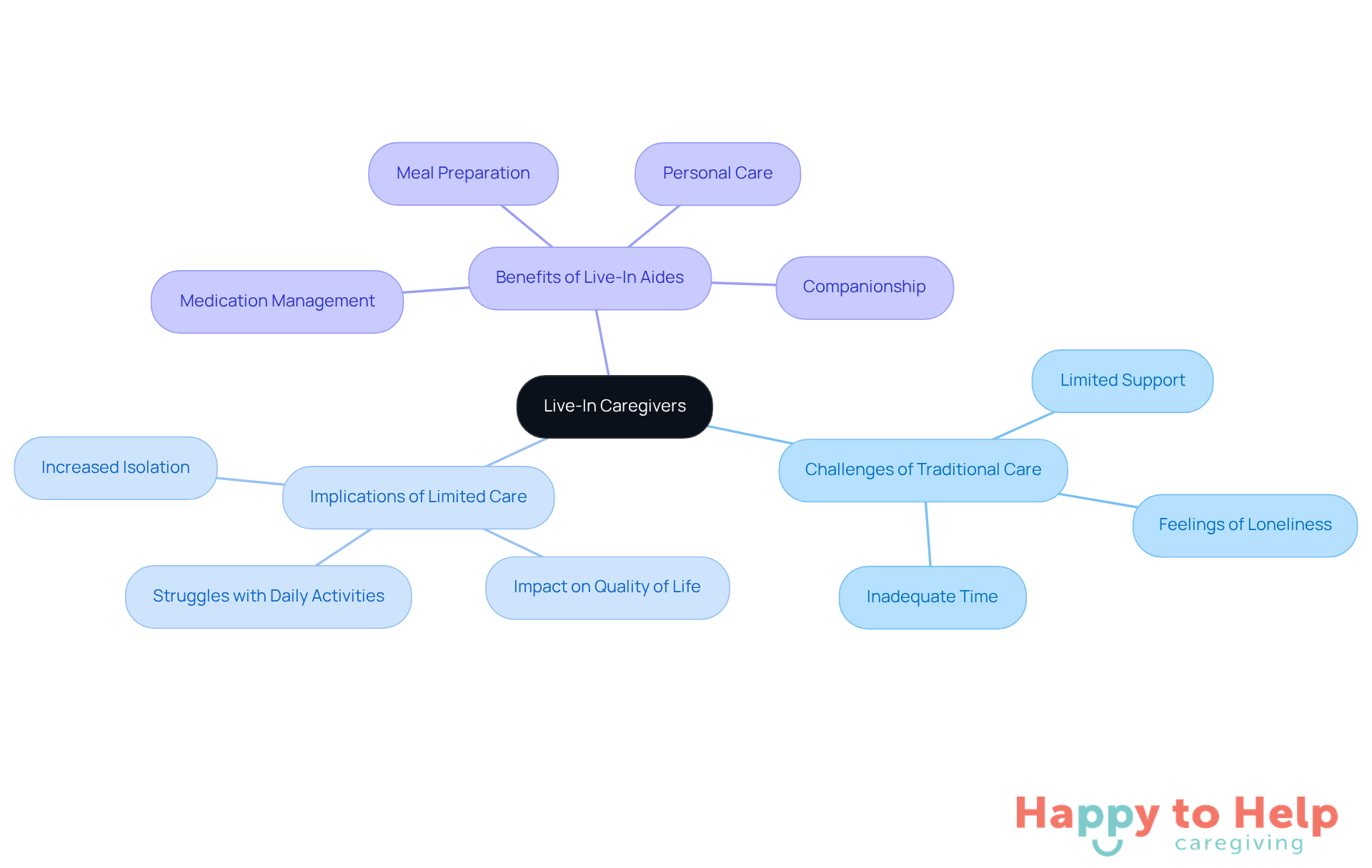
Many families face the challenge of providing adequate care for seniors or individuals with disabilities. Traditional caregiving methods often fall short, as conventional attendants may only visit for a few hours each day. This limited support can lead to feelings of loneliness and insecurity for those in need.
The Implications of Limited Care
Without continuous assistance, individuals may struggle with daily activities, impacting their overall quality of life. The lack of a steady caregiving presence can exacerbate feelings of isolation, making it crucial to find a more effective solution.
The Solution: Live-In Aides
Live-in aides offer a dedicated solution by residing in the homes of those they assist. This arrangement ensures 24/7 care, fostering a deeper, more intimate caregiving bond. Their responsibilities include:
- Personal care
- Meal preparation
- Medication management
- Companionship
All within a familiar environment that promotes comfort and security.
In 2025, the significance of residential support providers is underscored by the increasing number of households opting for the cost of a live-in caregiver to meet their needs. Recent statistics reveal that approximately 14% of households employ residential support workers, reflecting a growing recognition of the benefits these professionals provide.
Caregiving experts emphasize the vital role of live-in aides in enhancing the quality of life for seniors. They not only address physical needs but also offer emotional support, helping to alleviate feelings of loneliness and isolation. This comprehensive care model is essential for fostering independence and well-being among seniors, making live-in support providers an invaluable resource for families navigating the complexities of caregiving.
The Role and Importance of Live-In Caregivers
Live-in assistants address a significant problem: many individuals struggle with daily tasks due to age, illness, or disability. This challenge can lead to feelings of loneliness and isolation, impacting both physical and emotional well-being.
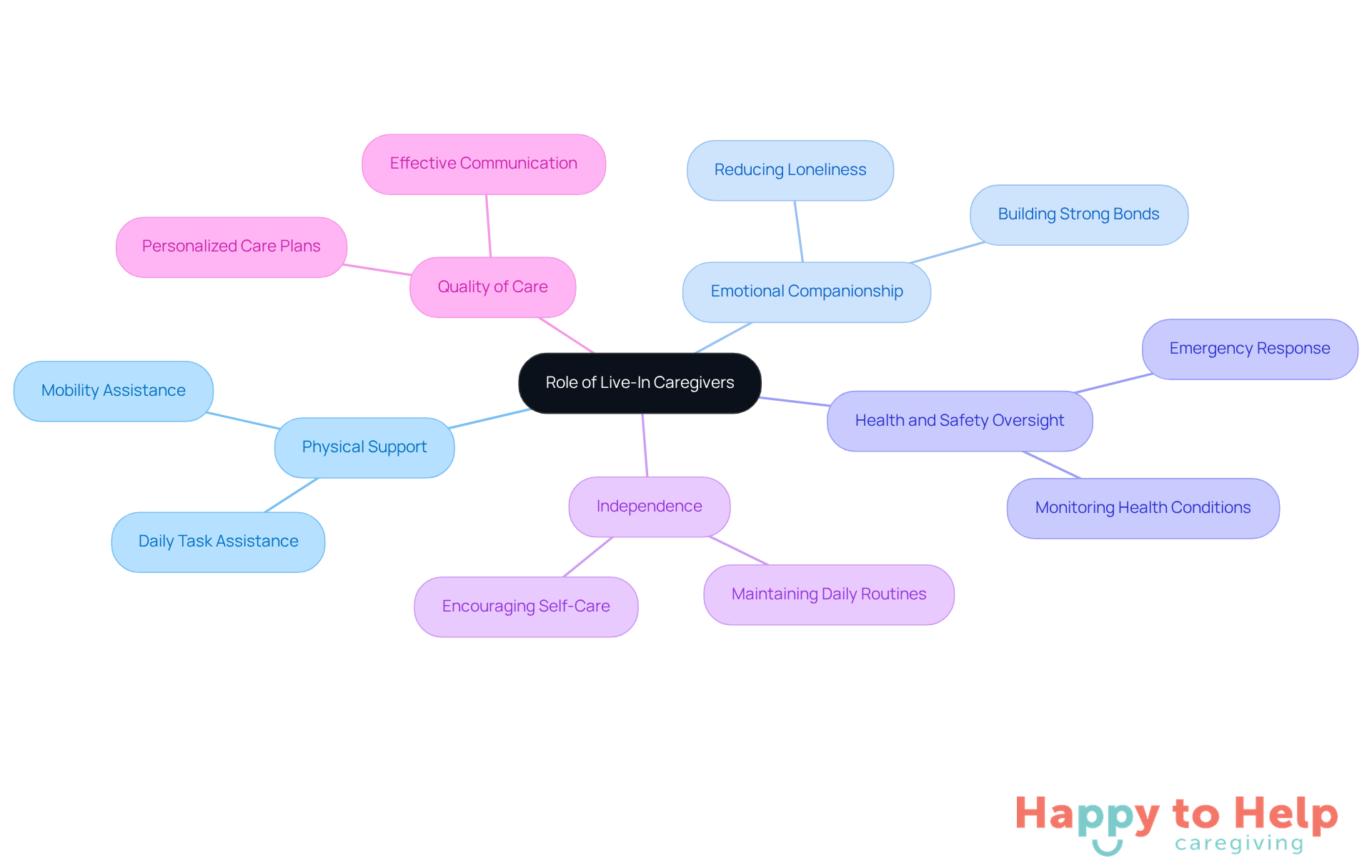
The presence of a live-in assistant not only provides essential physical support but also emotional companionship. By residing in the home, these caregivers can consistently oversee their clients' health and safety, responding swiftly to any needs or emergencies. This arrangement fosters a sense of security and comfort, allowing clients to maintain their independence while receiving necessary care.
Moreover, resident assistants often form strong bonds with their clients, enhancing the overall support experience. This relationship can significantly improve the quality of care, making it more personalized and effective.
In summary, live-in assistants play a crucial role in alleviating the challenges faced by those who need help with daily tasks, providing both practical assistance and emotional support.
Factors Influencing Live-In Caregiver Costs
For many families, understanding the cost of a live in caregiver can be challenging. The problem lies in the multiple factors that influence these expenses, making it difficult to budget effectively.
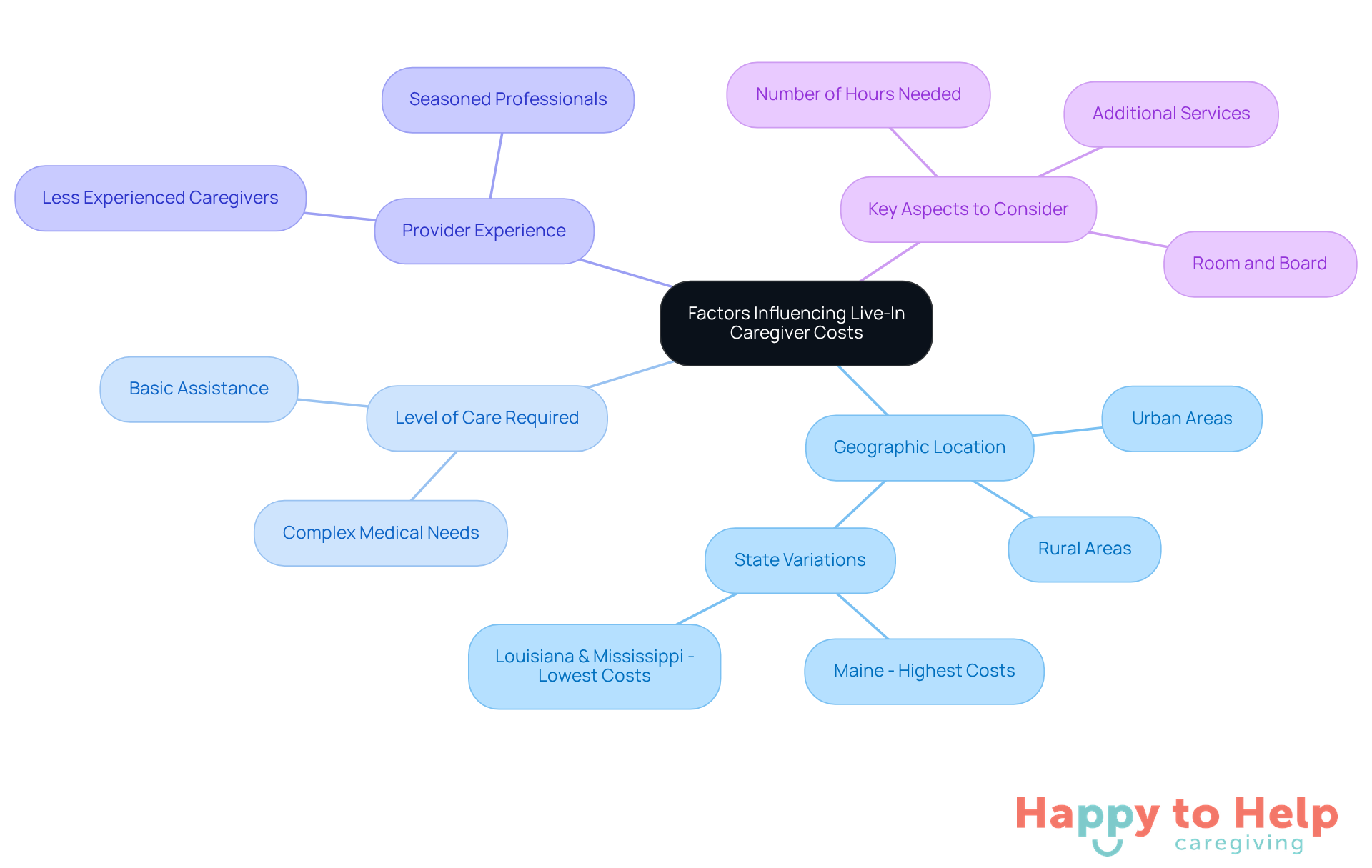
Geographic location is a significant factor; urban areas typically have higher living costs, which translates to higher wages for caregivers. Additionally, the level of care required plays a crucial role. Clients with complex medical needs often face increased costs due to the specialized skills necessary for their care. Furthermore, the provider's experience and qualifications can also affect rates, with more seasoned professionals usually commanding higher fees.
To navigate these challenges, families should consider several key aspects:
- The number of hours the aide is needed.
- Any additional services that may be required.
- Whether room and board will be provided for the aide.
By comprehending these elements, households can budget more efficiently for the cost of a live in caregiver, ensuring they meet their loved ones' needs without experiencing financial strain.
Understanding Live-In Caregiver Cost Structures
Understanding the Pricing Framework for Resident Support Workers
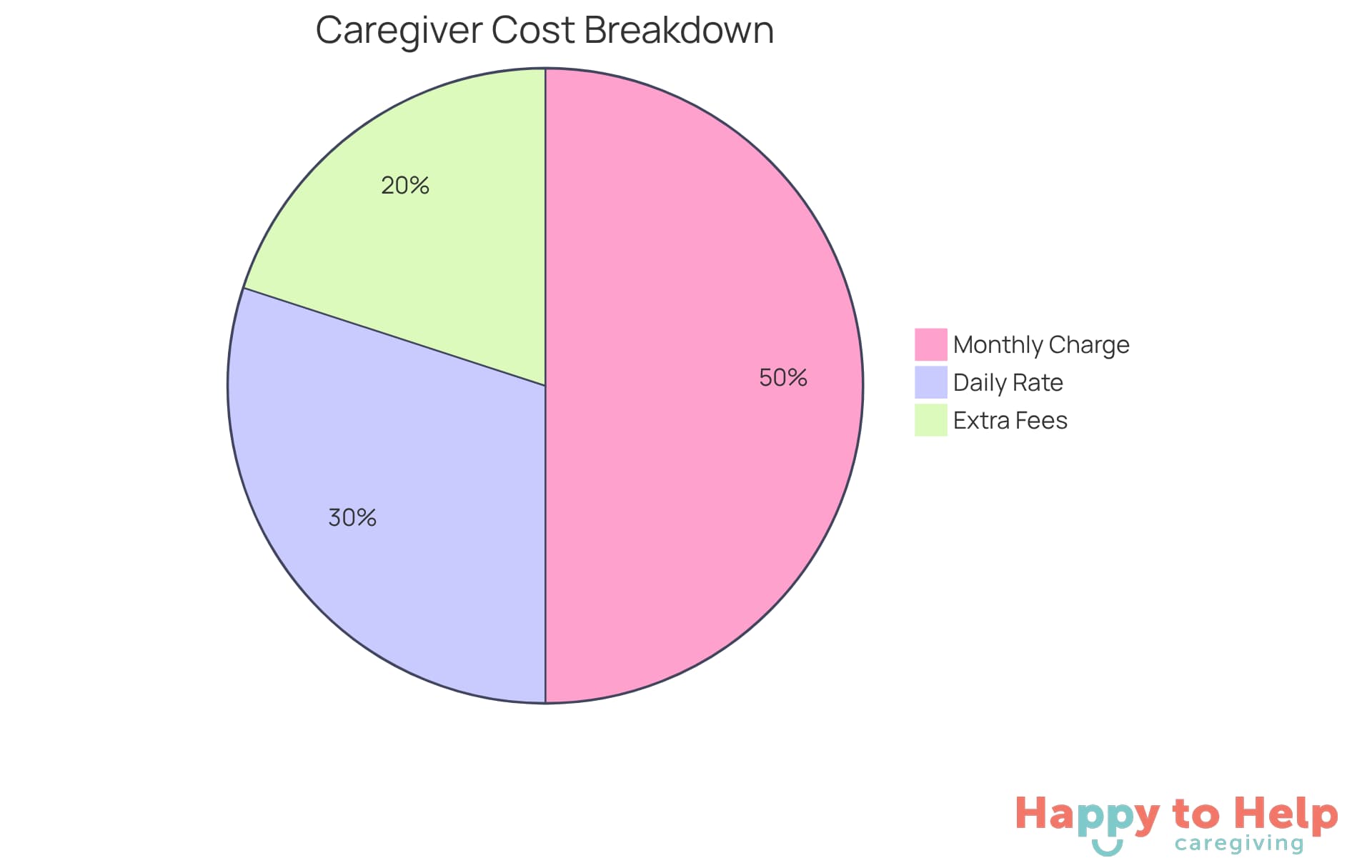
The pricing framework for resident support workers presents a significant challenge for many households. With costs varying widely, families often find themselves uncertain about what to expect. Typically, households can anticipate the cost of a live-in caregiver to be a fixed monthly charge ranging from $6,500 to $10,000, depending on the caregiver's credentials and the level of care required.
Some agencies may offer hourly rates, with the cost of a live-in caregiver being between $200 and $350 per day for live-in services. This variability can lead to unexpected expenses if families are not fully informed.
To navigate these complexities, it's essential for households to clarify whether the quoted price includes room and board, as this can greatly influence total costs. Additionally, families should inquire about any potential extra fees for overtime or specialized services.
By understanding these cost structures, families can make informed decisions, ensuring they select a caregiving solution that aligns with their budget while adequately meeting their loved one's needs.
Moving Forward with The Cost of a Live-In Caregiver: Key
The discussion surrounding the cost of live-in caregivers reveals a significant challenge: families often struggle to understand the financial implications of hiring these essential aides. This lack of clarity can lead to emotional stress and uncertainty, making it difficult for families to make informed decisions about caregiving solutions.
Key factors influencing the cost of live-in caregivers include:
- Geographic location
- The level of care required
- The caregiver's experience
- The number of hours needed
- Whether room and board are included in the pricing
By grasping these components, households can navigate the complexities of budgeting for live-in care more effectively, ensuring they find a suitable arrangement that meets their loved ones' needs without financial strain.
Ultimately, investing in a live-in caregiver is not merely a financial decision; it represents a commitment to enhancing the quality of life for those who require assistance. As the demand for live-in support continues to grow, families are encouraged to prioritize understanding the costs and benefits associated with this caregiving model. Embracing the support of live-in caregivers can lead to a more secure, fulfilling, and independent life for individuals who need it most.
https://iframe.tely.ai/cta/eyJhcnRpY2xlX2lkIjogIjY5MjNhMGRiNmIzYzAyYTIxMjhhY2RmZiIsICJjb21wYW55X2lkIjogIjY4ZWU1ZGNhNzMxNzYyNTU3ZjNjOTVjMSIsICJpbmRleCI6IG51bGwsICJ0eXBlIjogImFydGljbGUifQ==Frequently Asked Questions
What is the main problem families face regarding caregiving for seniors or individuals with disabilities?
Many families struggle to provide adequate care because traditional caregiving methods often involve attendants who only visit for a few hours each day, leading to feelings of loneliness and insecurity for those in need.
What are the implications of limited caregiving support?
Limited caregiving support can result in individuals struggling with daily activities, which negatively impacts their overall quality of life and exacerbates feelings of isolation.
What is the solution to inadequate caregiving support?
The solution is to employ live-in aides who reside in the homes of those they assist, providing continuous 24/7 care and fostering a deeper caregiving bond.
What responsibilities do live-in aides have?
Live-in aides are responsible for personal care, meal preparation, medication management, and providing companionship, all within a familiar environment that promotes comfort and security.
What trend is observed regarding the employment of live-in caregivers?
By 2025, it is expected that an increasing number of households will opt for the cost of a live-in caregiver, with approximately 14% of households currently employing residential support workers.
How do live-in aides enhance the quality of life for seniors?
Live-in aides enhance the quality of life by addressing both physical needs and offering emotional support, which helps alleviate feelings of loneliness and isolation, fostering independence and well-being among seniors.
List of Sources
- Defining Live-In Caregivers
- Adult children of senior living residents, other family caregivers, need support, information, study finds (https://mcknightsseniorliving.com/news/adult-children-of-senior-living-residents-other-family-caregivers-need-support-information-study-finds)
- A bill in Congress would return $5,000 to millions of family caregivers every year, but will it pass? (https://cbsnews.com/newyork/news/credit-for-caring-act-family-caregiver-tax-credit)
- The senior population is booming. Caregiving is struggling to keep up (https://cnbc.com/2025/11/21/senior-caregiving-labor.html)
- Expensive and exhausting: Why caregivers need to care for themselves, too : Consider This from NPR (https://npr.org/2025/11/20/nx-s1-5615163/expensive-and-exhausting-why-caregivers-need-to-care-for-themselves-too)
- The declining population will make it even harder to care for elders (https://npr.org/2025/11/02/nx-s1-5535648/population-elderly-caregivers)
- The Role and Importance of Live-In Caregivers
- Caregivers are in crisis. How bad it is depends on where you live, new data shows. (https://ca.news.yahoo.com/caregivers-crisis-bad-depends-where-090225123.html)
- Number of Family Caregivers Supporting Older Adults Increased Nearly One-Third Between 2011 and 2022 | Johns Hopkins Bloomberg School of Public Health (https://publichealth.jhu.edu/2025/number-of-family-caregivers-supporting-older-adults-increased-nearly-one-third-between-2011-and-2022)
- New Report Reveals Crisis Point for America’s 63 million Family Caregivers (https://press.aarp.org/2025-07-24-New-Report-Reveals-Crisis-Point-for-Americas-63-million-Family-Caregivers)
- The Importance of Caregiver-Client Relationships in Senior Well-Being (https://homeinstead.com/home-care/usa/in/goshen/588/news-and-media/the-importance-of-caregiver-client-relationships-in-senior-well-being)
- The Caregiving Landscape: Data & Insights on the Caregiver Experience in the U.S. (https://caregiveraction.org/caregiver-statistics)
- Factors Influencing Live-In Caregiver Costs
- 24/7 In-Home Care Costs in 2025 - Assisted Living Magazine (https://assistedlivingmagazine.com/24-7-in-home-care-costs-in-2025)
- The Cost of Dignity: A Guide to In-Home Care Costs and Happier Aging in 2025 | Nurse Next Door (https://nursenextdoor.com/blog/how-much-does-senior-home-care-cost)
- Home Care Costs in 2025: A State-by-State Guide (https://aplaceformom.com/caregiver-resources/articles/in-home-care-costs)
- At Home Care Pricing: Essential Industry Statistics for 2025 - Assisting Hands Rockford (https://assistinghands.com/100/illinois/rockford/blog/at-home-care-pricing-essential-industry-statistics-for-2025)
- Understanding Live-In Caregiver Cost Structures
- Understanding the Cost and Value of Home Care in 2025 (https://assistinghands.com/135/texas/nesanantonio/blog/understanding-the-cost-and-value-of-home-care-in-2025)
- Tension Between Demand Growth, Rate Pressure Shape At-Home Care Playbooks (https://homehealthcarenews.com/2025/08/tension-between-demand-growth-rate-pressure-shapes-at-home-care-playbooks)
- How Much Does In-Home Care Cost in 2025? A State-by-State Guide - Elder Answers (https://elder-answers.com/how-does-in-home-care-cost-in-2025)
- Cost of In-Home Care in California (2025) + 11 Ways to Pay (https://lovinghomecareinc.com/blog/cost-of-in-home-care-california)
- 24/7 In-Home Care Costs in 2025 - Assisted Living Magazine (https://assistedlivingmagazine.com/24-7-in-home-care-costs-in-2025)