
What You Need to Know About The Cost of Respite Care for Elderly
Caregiving for the elderly presents significant challenges, highlighting the urgent need for support systems that can ease the burdens on primary caregivers. Many caregivers experience stress and fatigue, which can negatively impact both their well-being and the quality of care they provide to their loved ones.
Respite care stands out as a crucial solution, offering temporary relief that allows caregivers to recharge. This not only enhances their mental and physical health but also improves the overall care experience for the elderly. However, the financial aspects of respite care can be overwhelming, with costs varying widely based on location and service type.
How can families navigate this complex landscape to access necessary respite care without jeopardizing their financial stability? By exploring available resources and understanding their options, caregivers can find effective ways to secure the support they need.
Define Respite Care and Its Importance for Elderly Caregivers
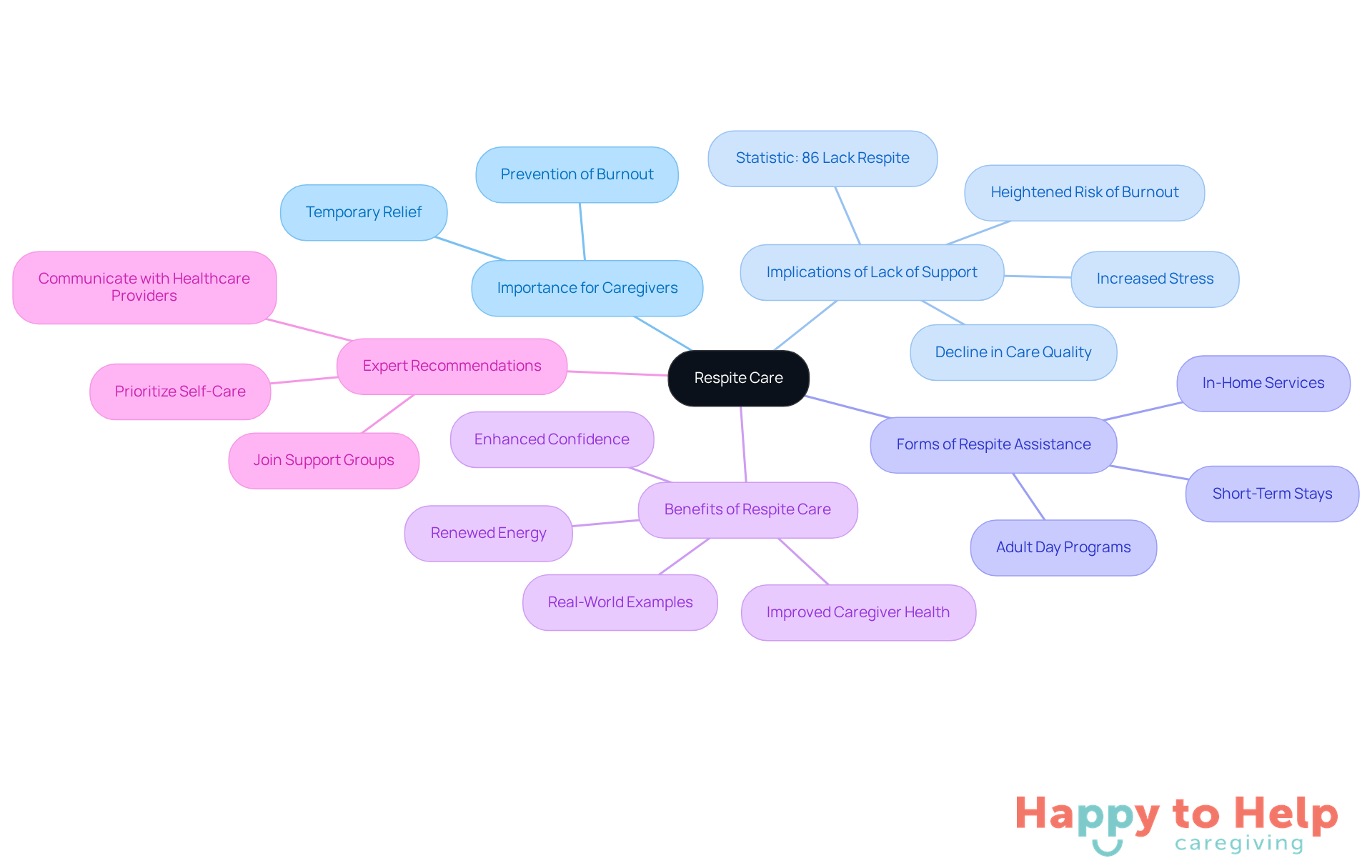
Respite assistance serves as a crucial support network for primary caregivers, providing them with much-needed temporary relief from their responsibilities. Caregivers, especially those looking after elderly individuals, often face physical and emotional exhaustion. This exhaustion can lead to a decline in their health and well-being, ultimately affecting the quality of care they provide.
The implications of this problem are significant. Without adequate support, caregivers may experience increased stress, anxiety, and a heightened risk of burnout. Alarmingly, statistics reveal that 86% of individuals caring for an adult do not receive any temporary relief, highlighting a critical gap in assistance for caregivers.
Fortunately, respite assistance can take various forms, including:
- in-home services
- adult day programs
- short-term stays in specialized facilities
Each option is designed to meet the unique needs of both the caregiver and the individual receiving care. Research shows that even a few hours of relief each week can greatly enhance a caregiver’s health, reducing stress and improving overall well-being.
Real-world examples underscore the benefits of respite care. Caregivers who utilize these services often report feeling more capable, confident, and balanced, allowing them to return to their caregiving roles with renewed energy. Experts emphasize that prioritizing self-care through respite options is essential for caregivers to maintain their effectiveness.
Recognizing the importance of respite support is increasingly vital for families navigating the challenges of caregiving. By taking advantage of available resources, caregivers can ensure they remain healthy and effective in their roles.
Explore Different Types of Respite Care Services
Caregivers often face significant challenges, including stress and burnout, as they juggle their responsibilities. With nearly 1 in 4 Americans acting as family caregivers, the awareness of the cost of respite care for elderly is more critical than ever. These services not only alleviate caregiver stress but also enhance the quality of life for care recipients.
Types of Respite Care Services:
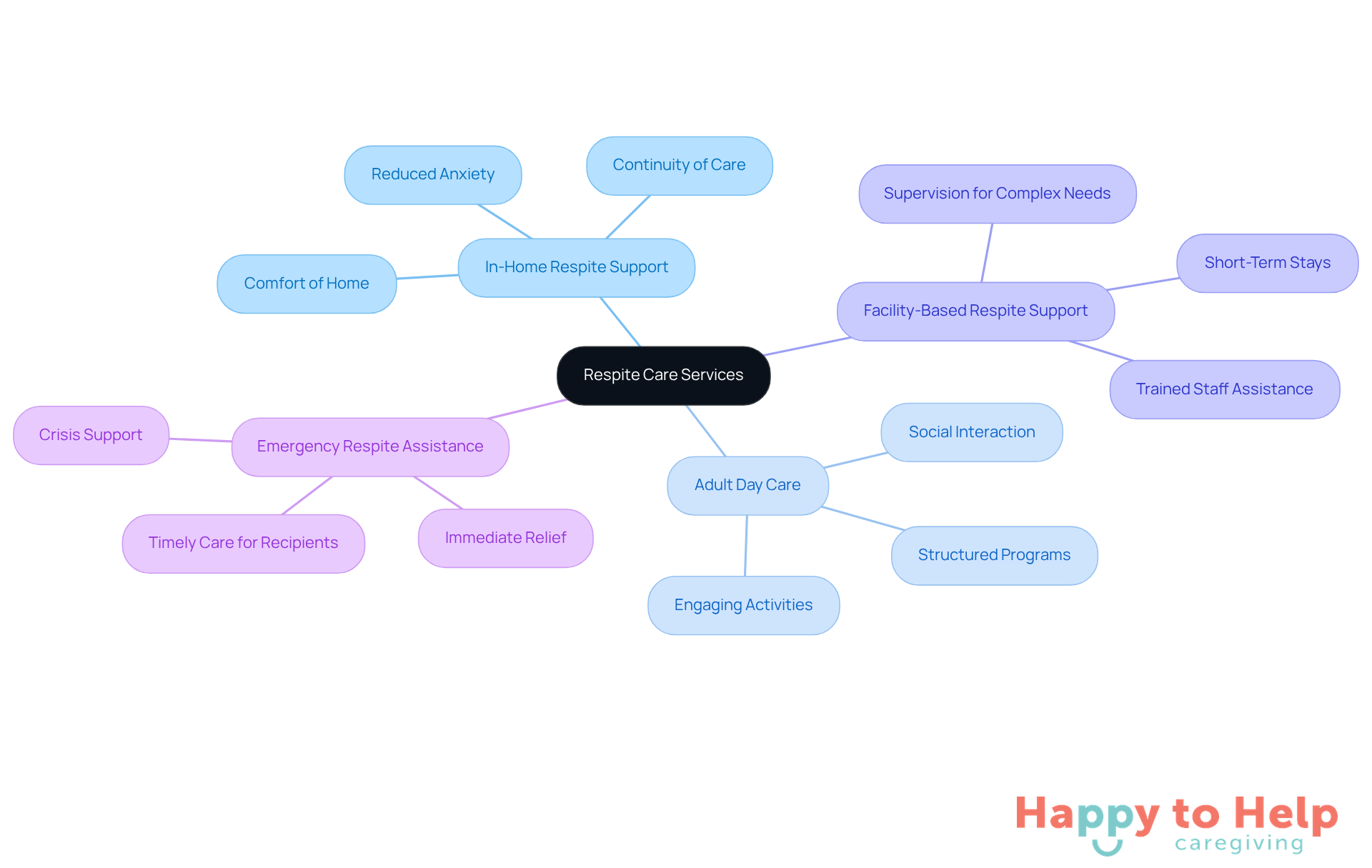
- In-Home Respite Support: This option allows caregivers to hire professionals who provide assistance in the comfort of the home. It helps recipients stay in a familiar environment, reducing anxiety and fostering a sense of safety.
- Adult Day Care: These facilities offer structured programs during the day, promoting social interaction and engaging activities for seniors. This not only gives caregivers a much-needed break but also enriches the lives of participants through community involvement.
- Facility-Based Respite Support: This involves short-term stays in assisted living or nursing home facilities, where trained staff offer assistance and supervision. Such arrangements are beneficial for individuals needing extended time away or those with complex support needs.
- Emergency Respite Assistance: Designed for unforeseen circumstances, this service provides immediate relief for caregivers during crises, ensuring that recipients receive timely support.
Each type of respite care offers unique benefits. For instance, in-home support is particularly effective in maintaining the emotional well-being of both caregivers and their loved ones, as it allows for continuity in care and comfort. When selecting the most suitable respite care option, providers should carefully evaluate the specific needs of the recipient, their own schedules, and the cost of respite care for elderly. The significance of these services cannot be overstated, as they play a vital role in reducing caregiver stress and improving overall family dynamics.
Analyze Factors Influencing the Cost of Respite Care
The cost of respite care presents a significant challenge for many families, with expenses varying widely based on several key factors:
-
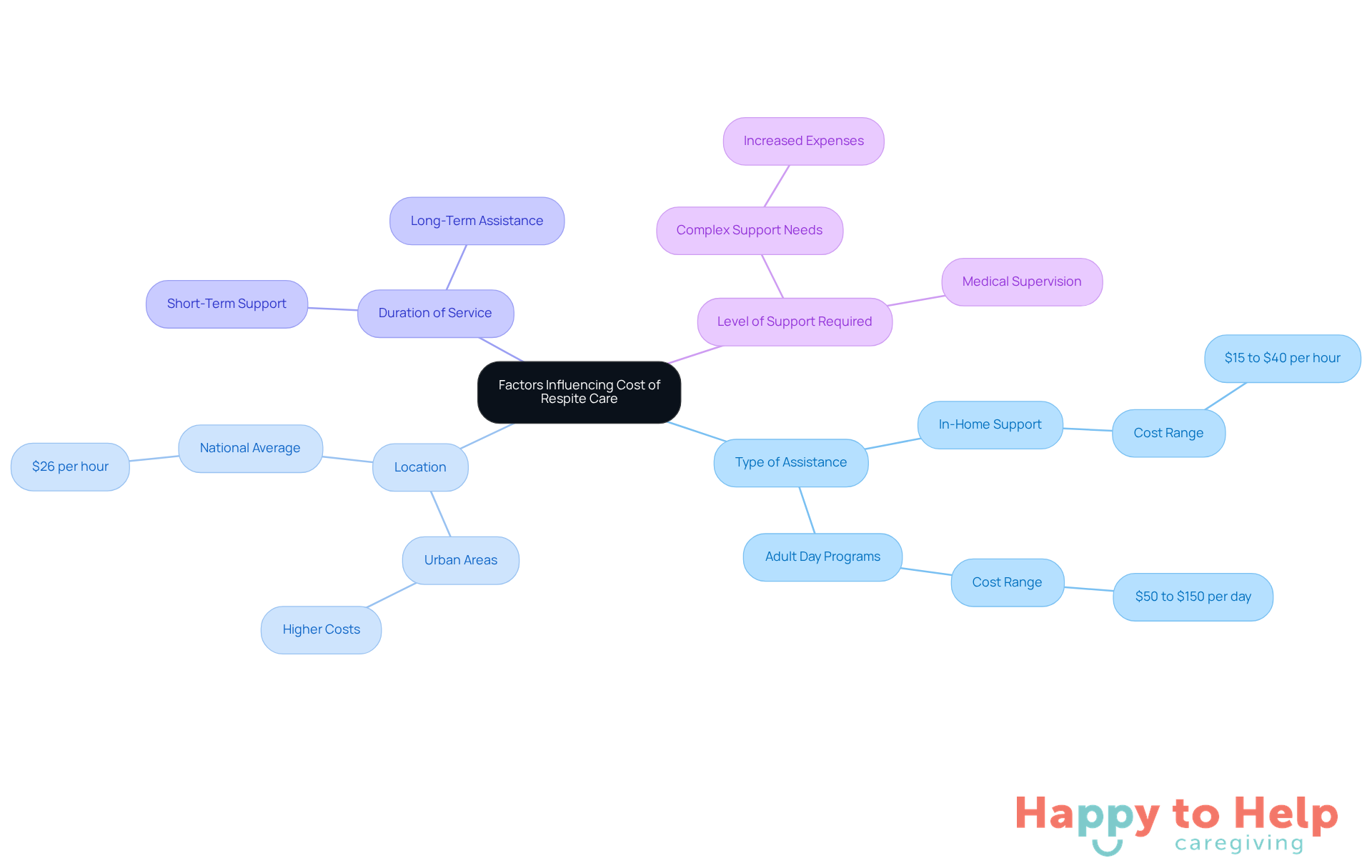
Type of Assistance: In-home support typically incurs greater costs compared to adult day programs. For example, in-home relief services usually range from $15 to $40 per hour, while adult day programs may charge between $50 and $150 per day. This illustrates the varying levels of service and assistance available.
-
Location: Costs tend to be higher in urban areas due to increased demand and operational expenses. The national average for in-home respite services is approximately $26 per hour, but this can vary greatly by region, with some metropolitan areas experiencing significantly higher rates.
-
Duration of Service: The length of time assistance is needed also influences pricing. Short-term support arrangements may have different rates compared to long-term assistance, with many providers offering flexible pricing structures to accommodate varying needs.
-
Level of Support Required: The intensity of assistance needed plays a crucial role in determining costs. More complex support requirements, such as those necessitating medical supervision, typically lead to increased expenses. Caregivers should thoroughly assess the specific needs of their family members to gain a clearer understanding of the cost of respite care for elderly individuals associated with temporary assistance.
Moreover, expenses for seniors are projected to rise by 20-30% by 2025, highlighting the necessity for families to engage in proactive financial planning. Nearly 50% of caregivers face significant financial impacts, underscoring the emotional and monetary challenges families encounter when considering temporary support options. The growing preference for aging-in-place support, along with advancements in home technology, is also influencing the cost and availability of short-term relief services.
Identify Payment Options and Insurance Coverage for Respite Care
Caregivers often encounter significant challenges regarding the cost of respite care for elderly. The financial burden can be overwhelming, especially when considering the cost of respite care for elderly as out-of-pocket payments for temporary support. While this may be manageable for short-term needs, it can quickly become a strain for families requiring prolonged assistance.
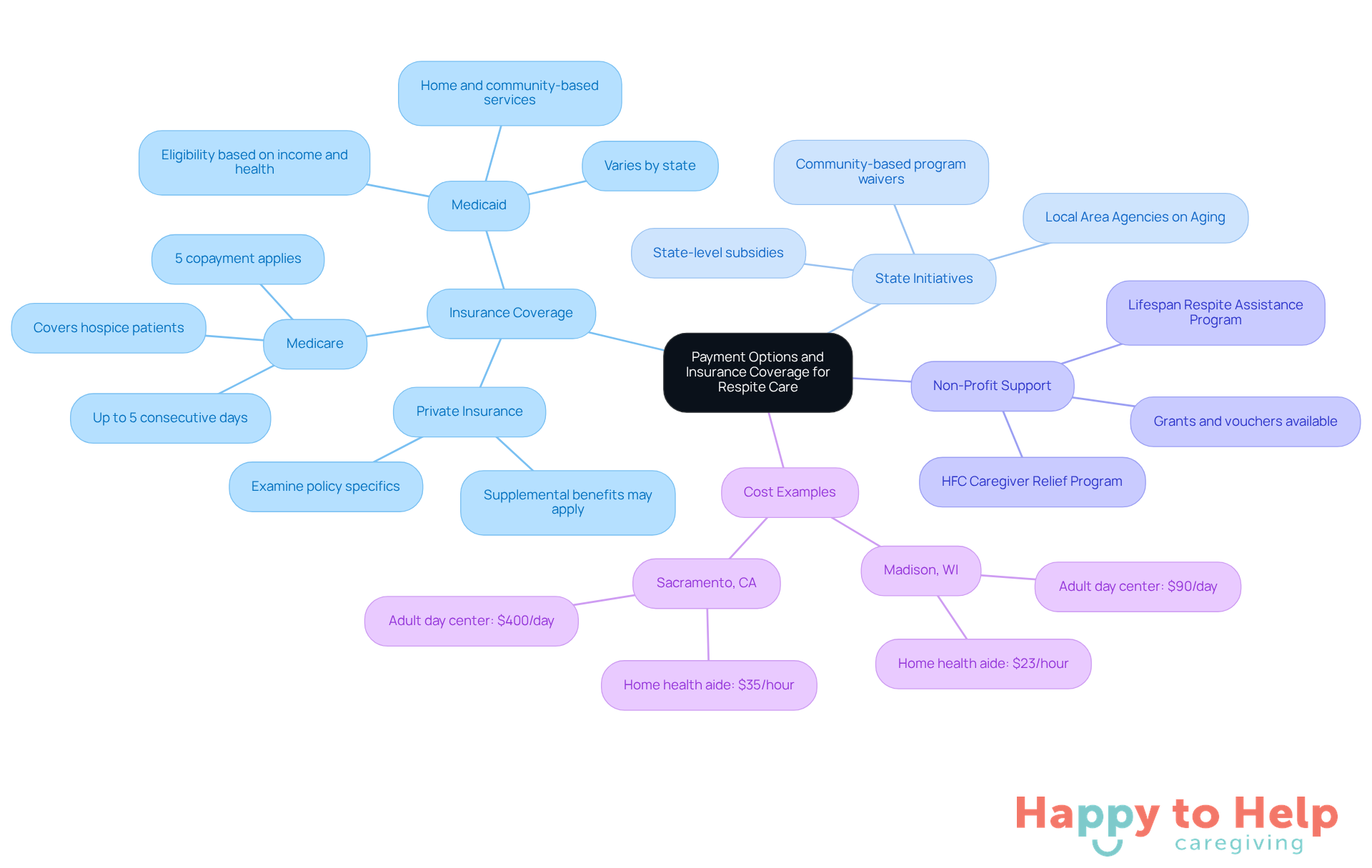
Insurance coverage can also be a complex issue. Some private insurance plans may offer temporary support services, but it’s crucial to examine the specifics of each policy. Medicare typically covers temporary support only for hospice patients under the Part A benefit, allowing for up to five consecutive days of assistance in certified facilities. Medicaid varies widely by state, often providing relief through home and community-based program waivers, but eligibility is contingent on income and health conditions.
Fortunately, there are state and local initiatives that can provide financial support or subsidies for temporary relief, particularly for low-income families or those caring for individuals with disabilities. Local Area Agencies on Aging can serve as valuable resources for information on available services.
Additionally, non-profit organizations may offer grants or vouchers to help offset the costs of temporary support. Programs like the Lifespan Respite Assistance program and the HFC Caregiver Relief Program exemplify initiatives that can make respite care more accessible.
Understanding these options is essential for caregivers seeking to alleviate some of the financial burdens associated with the cost of respite care for elderly. For instance, in 2023, the average hourly cost for a home health aide was $23 in Madison, WI, and $35 in Sacramento, CA. This illustrates how location can impact costs and highlights the importance of exploring various funding avenues.
Your Path Forward
Respite care is a crucial resource for elderly caregivers, who often face overwhelming responsibilities. This situation can lead to stress and burnout, negatively impacting both their well-being and the quality of care they provide to their loved ones. Recognizing the importance of respite care is essential for caregivers seeking to sustain their health and effectiveness.
Various types of respite care are available, including:
- in-home support
- adult day programs
- facility-based options
Each of these services is designed to meet unique needs, allowing caregivers to find the right fit for their situation. However, the costs associated with respite care can be complex, influenced by factors such as location, duration, and the level of support required. Families must actively seek out available resources and support systems to navigate these financial challenges.
To alleviate stress and prevent burnout, caregivers should prioritize respite care. Exploring payment options and insurance coverage can provide crucial insights into managing these expenses. By understanding and utilizing respite services, caregivers can significantly improve their well-being and enhance the quality of life for both themselves and those they care for. Ultimately, investing in respite care not only addresses immediate needs but also contributes to a healthier family dynamic.
https://iframe.tely.ai/cta/eyJhcnRpY2xlX2lkIjogIjY5Mjc5NGZkNmFmMzU5NTU2OTU3ODdkMSIsICJjb21wYW55X2lkIjogIjY4ZWU1ZGNhNzMxNzYyNTU3ZjNjOTVjMSIsICJpbmRleCI6IG51bGwsICJ0eXBlIjogImFydGljbGUifQ==Frequently Asked Questions
What is respite care?
Respite care is a support service that provides temporary relief to primary caregivers, allowing them to take a break from their caregiving responsibilities.
Why is respite care important for elderly caregivers?
Respite care is important because it helps alleviate physical and emotional exhaustion experienced by caregivers, which can lead to a decline in their health and well-being and ultimately affect the quality of care they provide.
What are the common challenges faced by caregivers?
Caregivers often face increased stress, anxiety, and a heightened risk of burnout, particularly due to the lack of temporary relief, with statistics showing that 86% of caregivers do not receive any form of respite assistance.
What forms can respite assistance take?
Respite assistance can take various forms, including in-home services, adult day programs, and short-term stays in specialized facilities.
How does respite care benefit caregivers?
Research indicates that even a few hours of relief each week can significantly enhance a caregiver’s health, reduce stress, and improve overall well-being, allowing them to return to their caregiving roles with renewed energy.
What do caregivers report after utilizing respite services?
Caregivers who use respite services often report feeling more capable, confident, and balanced in their caregiving roles.
Why should caregivers prioritize self-care through respite options?
Prioritizing self-care through respite options is essential for caregivers to maintain their effectiveness and ensure they remain healthy while providing care.
How can families support caregivers in their roles?
Families can support caregivers by recognizing the importance of respite care and taking advantage of available resources to help caregivers manage their responsibilities effectively.
List of Sources
- Define Respite Care and Its Importance for Elderly Caregivers
- Taking Care of You: The Importance of Respite for Caregivers - Madison Health & Rehabilitation (https://madisonhealthcenter.com/taking-care-of-you-the-importance-of-respite-for-caregivers)
- How Does Respite Care Helps Prevent Caregiver Burnout (https://sundaleseniorliving.com/news-and-articles/the-role-of-respite-care-in-preventing-caregiver-burnout)
- Improving Support for Family Caregivers (https://nationalacademies.org/news/2025/07/improving-support-for-family-caregivers)
- Respite care more than doubles chances of elderly patients dying at home, study finds (https://mcknights.com/news/respite-care-more-than-doubles-chances-of-elderly-patients-dying-at-home-study-finds)
- Explore Different Types of Respite Care Services
- Stats, Facts and Things to Know About Respite Care (https://bethesdaseniorliving.com/senior-resources/stats-facts-and-things-to-know-about-respite-care)
- National Alliance for Caregiving: Caregiving in the US 2025 Report (https://johnahartford.org/resources/view/national-alliance-for-caregiving-caregiving-in-the-us-2025-report)
- Respite care more than doubles chances of elderly patients dying at home, study finds (https://mcknights.com/news/respite-care-more-than-doubles-chances-of-elderly-patients-dying-at-home-study-finds)
- Respite Care for the Elderly Market Size & Opportunities, 2025-2032 (https://coherentmarketinsights.com/industry-reports/respite-care-for-the-elderly-market)
- Analyze Factors Influencing the Cost of Respite Care
- New Report Reveals Crisis Point for America’s 63 million Family Caregivers (https://press.aarp.org/2025-07-24-New-Report-Reveals-Crisis-Point-for-Americas-63-million-Family-Caregivers)
- Will Senior Care Costs Rise in 2025? - Stillinger Investigations, Inc. (https://investigatesc.com/senior-care)
- What Is the Average Cost of Respite Care? (https://bucknerwestminster.org/news-blog/what-is-the-average-cost-of-respite-care)
- Respite Care for the Elderly Market Size & Opportunities, 2025-2032 (https://coherentmarketinsights.com/industry-reports/respite-care-for-the-elderly-market)
- Identify Payment Options and Insurance Coverage for Respite Care
- Does Medicare Pay for Respite Care? (https://ncoa.org/article/does-medicare-cover-respite-care)
- Does Medicare pay for respite care? (https://medicalnewstoday.com/articles/does-medicare-pay-for-respite-care)
- Medicare tests payment plan for respite care costs so unpaid caregivers can 'take a break' (https://gpb.org/news/2024/07/26/medicare-tests-payment-plan-for-respite-care-costs-so-unpaid-caregivers-can-take)
- Federal budget committee greenlights millions in spending for family caregivers, respite services (https://mcknightshomecare.com/news/federal-budget-committee-greenlights-millions-in-spending-for-family-caregivers-respite-services)