
What You Need to Know About Why Do People with Dementia Stop
Dementia fundamentally alters how individuals perceive hunger and nourishment, leading to a troubling phenomenon: many may neglect the essential act of eating. Statistics show that up to 50% of those in care settings stop consuming adequate meals. This presents a pressing challenge for caregivers, who must understand and address the underlying causes of appetite loss.
What psychological and physical factors contribute to this significant decline in nutrition? Caregivers face the daunting task of ensuring that those affected maintain not only their health but also their dignity. To tackle this issue effectively, caregivers can implement several strategies.
- Recognizing the signs of appetite loss is crucial.
- Regularly monitoring food intake and observing changes in behavior can help identify when intervention is needed.
- Creating a pleasant mealtime environment can encourage eating.
- Simple adjustments, such as reducing distractions and offering favorite foods, can make a significant difference.
- Involving patients in meal preparation can enhance their interest in food.
- Caregivers should also consider consulting with nutritionists to develop meal plans that cater to individual preferences and dietary needs.
By addressing these factors, caregivers can help ensure that those with dementia receive the nourishment they need.
Understand How Dementia Impacts Eating Habits
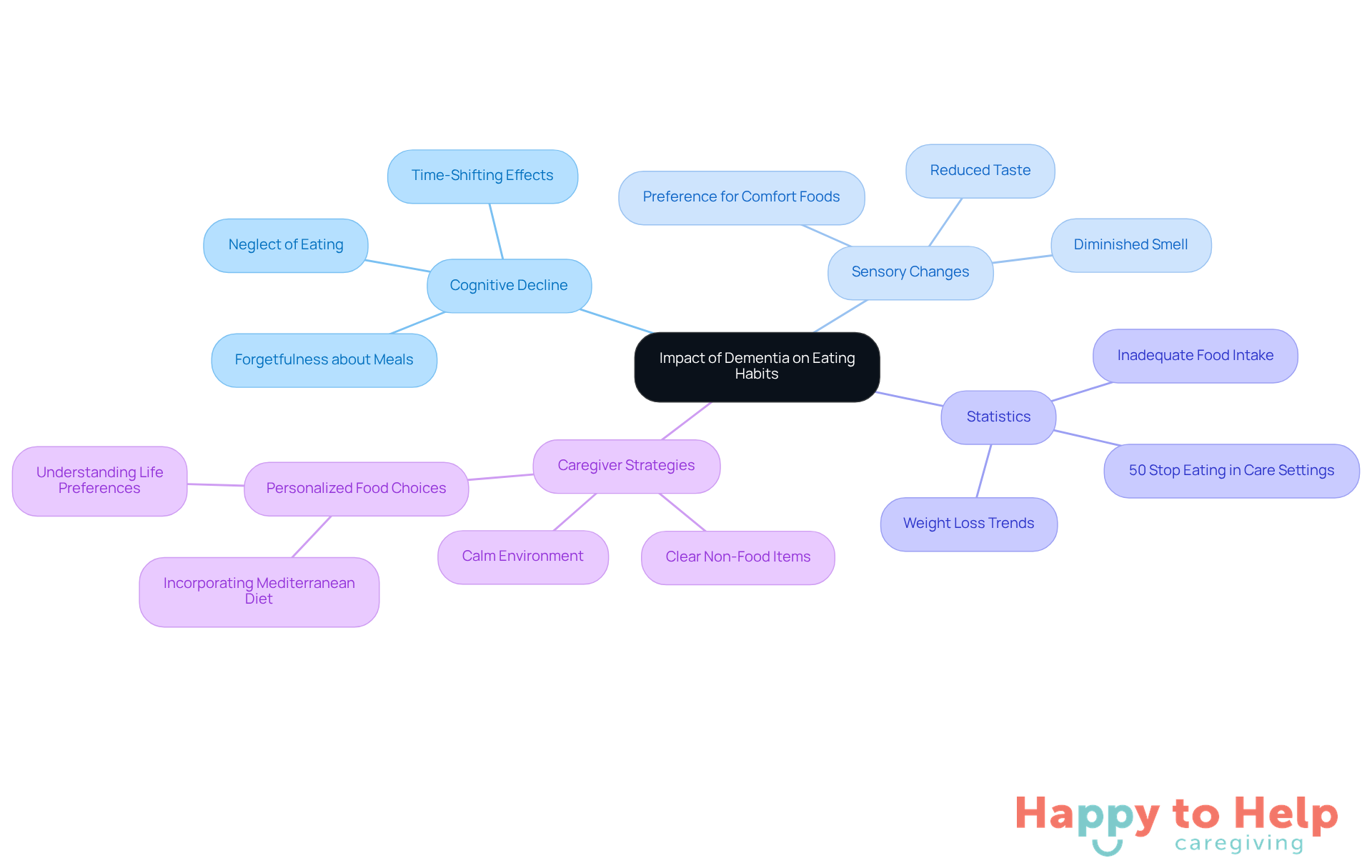
Dementia poses a significant challenge by altering how individuals perceive hunger and nourishment. As the disease progresses, many may neglect the need to eat, leading to questions about why do people with dementia stop eating or fail to recognize nourishment as essential. This cognitive decline can lead to missed meal times and a lack of interest in foods they once enjoyed. Additionally, sensory changes, such as reduced taste and smell, further diminish the appeal of meals, making them less enticing.
Statistics reveal that up to 50% of people with dementia stop eating in care settings, experiencing insufficient meal consumption. This highlights the urgent need for caregivers to adapt their mealtime strategies. To improve the dining experience, caregivers can take simple yet effective steps:
- Clearing non-food items from the table to reduce confusion.
- Serving meals in a calm, familiar environment to enhance comfort.
Understanding a person's life story and preferences is crucial. This knowledge allows caregivers to select foods that resonate with the individual, thereby improving nutrition. Incorporating elements of the Mediterranean diet, known for its health benefits and lower risks of chronic diseases, can also be advantageous.
By recognizing these challenges and implementing tailored strategies, caregivers can significantly boost the nutritional intake and overall health of individuals affected by cognitive impairment.
Explore Psychological and Physical Factors Leading to Appetite Loss
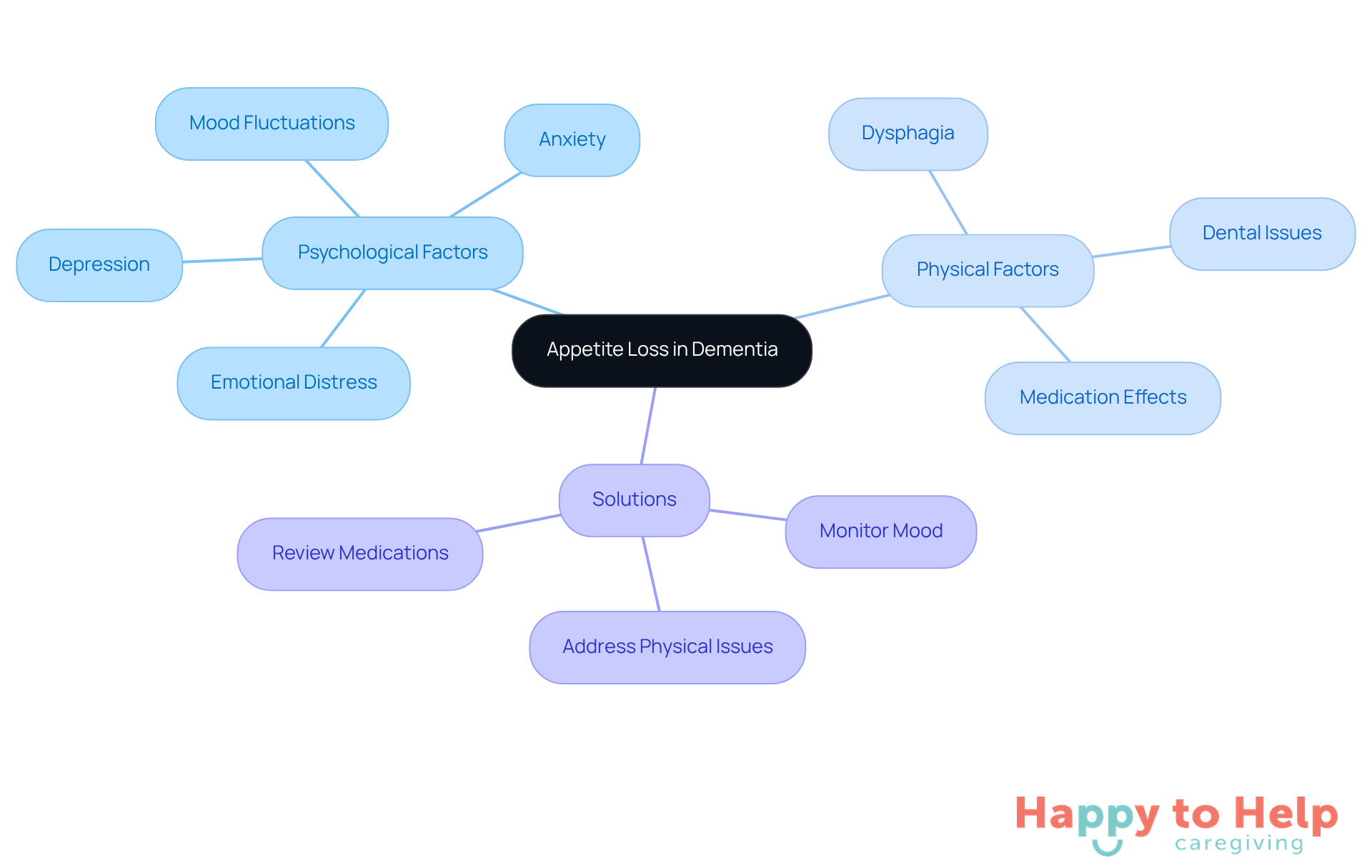
Appetite loss is a significant concern for individuals experiencing cognitive decline, especially considering that do people with dementia stop eating. This issue can stem from various psychological and physical factors.
Psychologically, depression is prevalent among dementia patients, which makes us wonder why do people with dementia stop eating, leading to a marked decrease in interest in food. Emotional distress, anxiety, and mood fluctuations can further worsen this situation. Physically, conditions like dysphagia (difficulty swallowing) and dental issues can make eating uncomfortable or painful, prompting individuals to avoid food altogether. Additionally, certain medications may suppress appetite or alter taste perception, compounding the problem.
Solution: Recognizing these factors is crucial for caregivers. Here are some actionable tips to encourage better eating habits:
- Monitor Mood: Keep an eye on emotional changes and seek professional help if depression or anxiety is suspected.
- Address Physical Issues: Consult healthcare providers about swallowing difficulties or dental problems to improve the eating experience.
- Review Medications: Discuss with doctors any potential side effects of medications that may affect appetite.
By understanding and addressing these underlying issues, caregivers can foster a more supportive environment that encourages better nutrition, which is important to consider when exploring why do people with dementia stop eating.
Examine Health Risks and Emotional Implications of Poor Nutrition
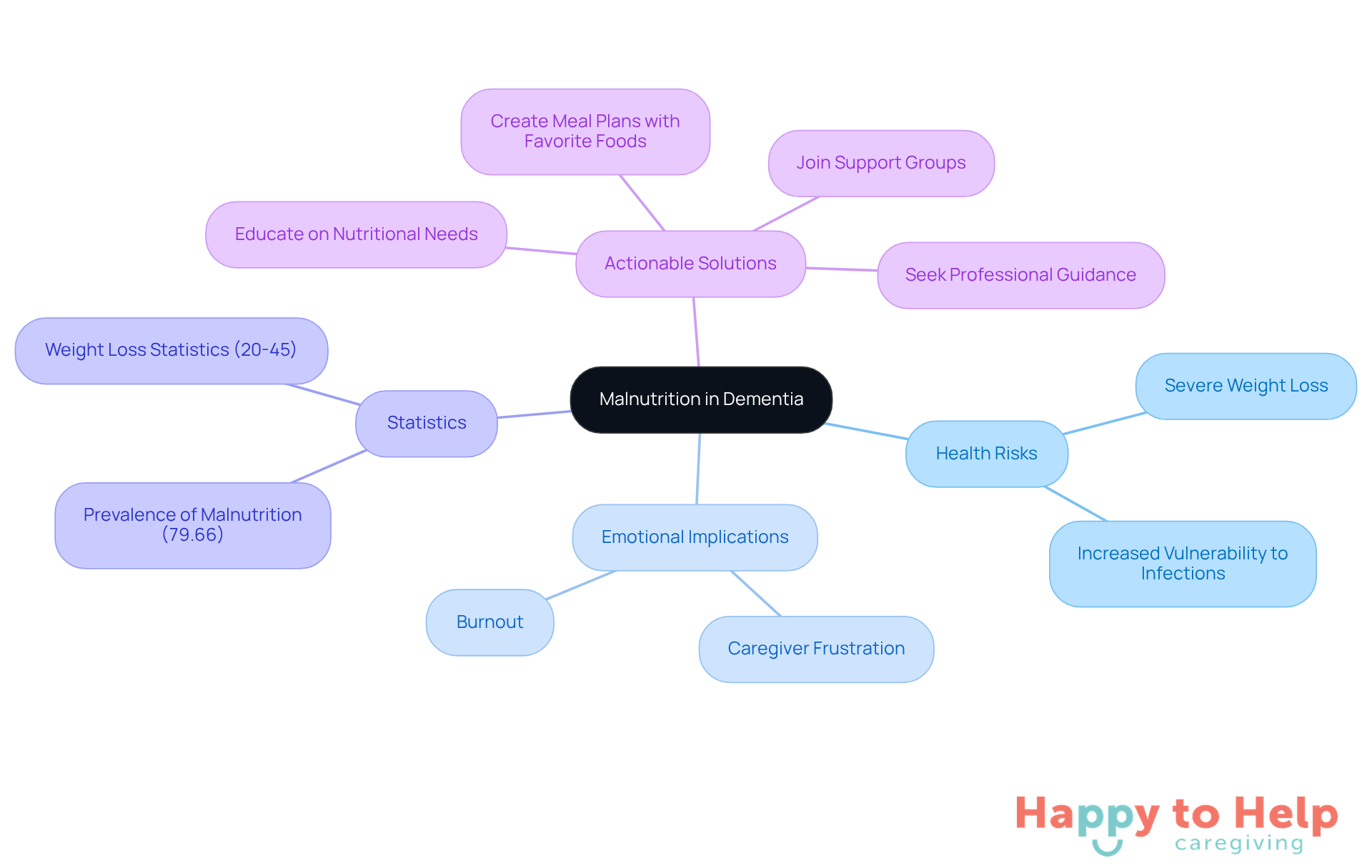
The significant health risks posed by malnutrition in individuals with dementia, such as severe weight loss and increased vulnerability to infections, lead to concerns about whether people with dementia stop eating. This decline in nutrition can exacerbate cognitive impairment, creating a harmful cycle that prompts the concern of why people with dementia stop eating and enjoying meals. Caregivers often experience emotional challenges as they witness their loved ones grappling with these issues, leading to feelings of frustration and helplessness. This emotional strain can contribute to caregiver burnout, highlighting the urgent need for strong support systems and resources for families.
Addressing the nutritional needs of those with cognitive impairment goes beyond physical health; it is crucial for maintaining dignity and improving the overall quality of life for affected individuals. With a staggering 79.66% prevalence of malnutrition among patients with cognitive decline, the need for effective nutritional interventions is evident. Research indicates that 20-45% of people with cognitive decline in the community experience clinically significant weight loss within a year, underscoring the necessity for tailored nutritional support.
As caregivers navigate these challenges, understanding the emotional impact of malnutrition is vital in fostering a supportive environment that prioritizes both health and well-being. Here are some actionable solutions:
- Educate yourself about the nutritional needs of dementia patients.
- Create a meal plan that includes their favorite foods to encourage eating.
- Seek professional guidance from a nutritionist specializing in dementia care.
- Join support groups to share experiences and strategies with other caregivers.
By implementing these strategies, caregivers can help mitigate the effects of malnutrition and enhance the quality of life for those they care for.
Implement Strategies to Encourage Eating and Improve Nutrition
Problem: Caregivers often struggle to promote eating and enhance nutrition, particularly when considering why do people with dementia stop eating. Inadequate nutrition and increased health issues can arise from the question of why do people with dementia stop eating.
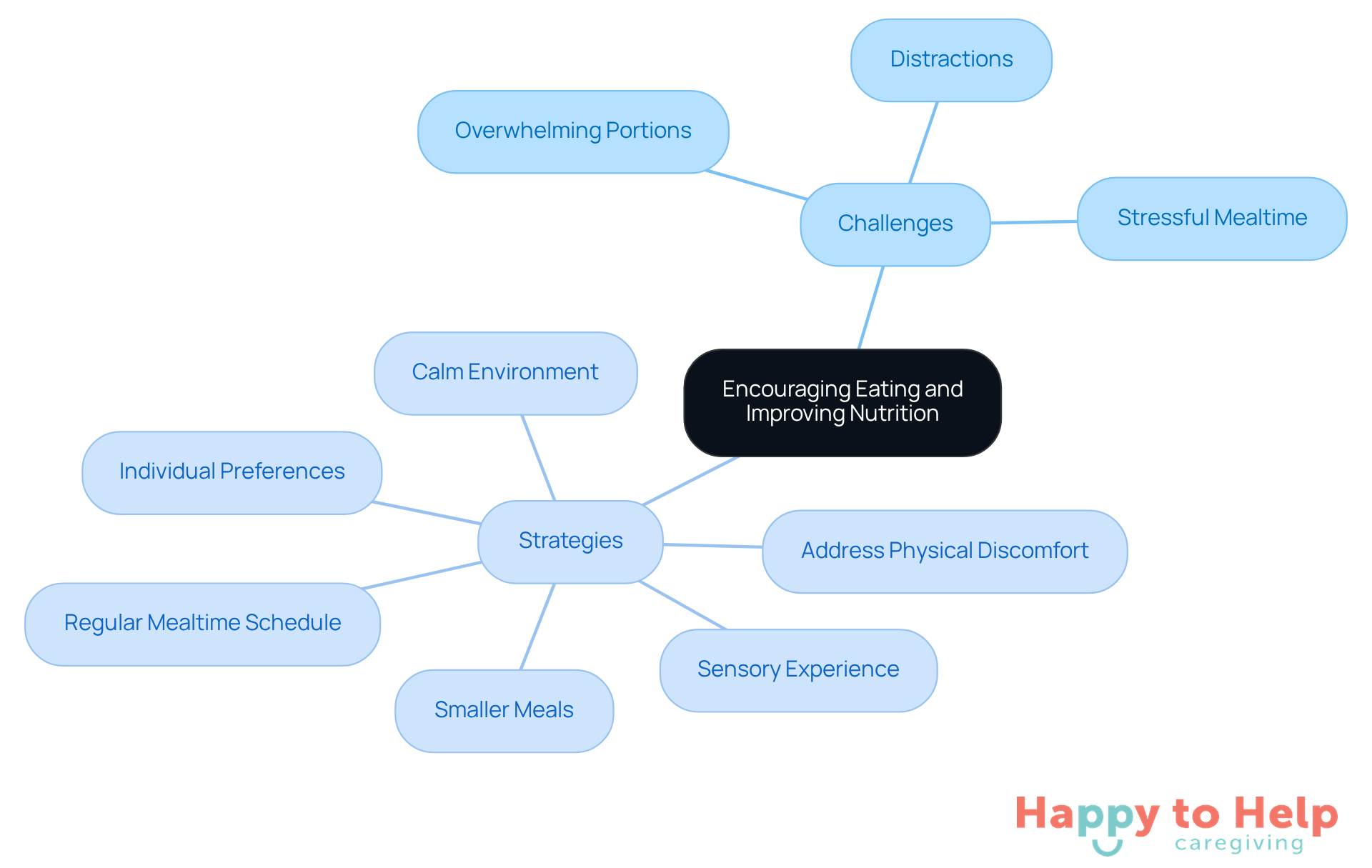
Agitate: The challenges are significant; mealtime can become a stressful experience for both caregivers and those they care for, particularly when they wonder why do people with dementia stop eating. Large portions may overwhelm individuals, and distractions can hinder their focus on eating, raising concerns about why do people with dementia stop eating, which ultimately affects their overall well-being.
Solution: To address these challenges, caregivers can implement several effective strategies:
- Establish a Regular Mealtime Schedule: This provides organization and comfort, making it easier for individuals to engage with their meals.
- Offer Smaller, More Frequent Meals: Smaller portions can prevent feelings of overwhelm and encourage better consumption.
- Enhance the Sensory Experience: Use attractive colors, enticing aromas, and varied textures to stimulate interest in food.
- Consider Individual Preferences: Offer favorite foods and experiment with different flavors to cater to personal tastes.
- Create a Calm Environment: Minimize distractions during meals to help individuals focus on eating.
- Address Physical Discomfort: Ensure that any issues, such as pain or difficulty swallowing, are managed to promote a positive mealtime experience.
Key Takeaways for Caregivers
Dementia significantly alters eating habits, leading many individuals to neglect their nutritional needs. This decline in appetite can stem from a combination of cognitive, psychological, and physical factors. Caregivers must understand and address these challenges effectively to foster a supportive environment that prioritizes health and well-being.
Emotional distress, sensory changes, and physical difficulties all contribute to appetite loss in dementia patients. To combat this issue, caregivers can implement tailored strategies:
- Create a calm mealtime atmosphere.
- Serve smaller portions.
- Address any underlying medical issues.
Understanding personal preferences and incorporating favorite foods can significantly enhance the dining experience for those affected by cognitive decline.
Prioritizing nutrition is vital not only for physical health but also for maintaining dignity and improving the overall quality of life for individuals with dementia. Caregivers are encouraged to seek out resources, educate themselves on dietary needs, and connect with support networks to share experiences and strategies. By taking proactive steps to address the complexities of eating and nutrition in dementia care, caregivers can make a positive impact on the lives of both themselves and those they support.
https://iframe.tely.ai/cta/eyJhcnRpY2xlX2lkIjogIjY5MjI2NTFkNGZjYWRhOTUwOGRlNDQ0NiIsICJjb21wYW55X2lkIjogIjY4ZWU1ZGNhNzMxNzYyNTU3ZjNjOTVjMSIsICJpbmRleCI6IG51bGwsICJ0eXBlIjogImFydGljbGUifQ==Frequently Asked Questions
How does dementia affect eating habits?
Dementia alters how individuals perceive hunger and nourishment, leading to neglect of eating, missed meal times, and a lack of interest in foods they once enjoyed.
Why do people with dementia stop eating?
Cognitive decline associated with dementia can cause individuals to fail to recognize the need for nourishment as essential, contributing to reduced food intake.
What sensory changes occur in individuals with dementia that impact eating?
Individuals with dementia may experience reduced taste and smell, which diminishes the appeal of meals and makes them less enticing.
What statistics are available regarding eating habits in people with dementia?
Statistics indicate that up to 50% of people with dementia stop eating in care settings, leading to insufficient meal consumption.
What strategies can caregivers use to improve mealtime for individuals with dementia?
Caregivers can improve the dining experience by clearing non-food items from the table, serving meals in a calm and familiar environment, and understanding the individual’s life story and food preferences.
How can knowledge of an individual's preferences help with their nutrition?
Understanding a person's life story and preferences allows caregivers to select foods that resonate with the individual, thereby improving their nutrition.
What dietary approach is recommended for individuals with dementia?
Incorporating elements of the Mediterranean diet, which is known for its health benefits and lower risks of chronic diseases, can be advantageous for individuals with dementia.
What is the overall goal of implementing tailored strategies for individuals with dementia?
The goal is to significantly boost the nutritional intake and overall health of individuals affected by cognitive impairment.
List of Sources
- Understand How Dementia Impacts Eating Habits
- Appetite and dementia (https://alzheimers.org.uk/get-support/living-with-dementia/poor-appetite-dementia)
- ADI - Nutrition and dementia (https://alzint.org/resource/nutrition-and-dementia)
- Changes in eating habits and food preference (https://alzheimers.org.uk/get-support/living-with-dementia/changes-eating-habits-food-preference)
- Eating and dementia (https://dementia.org.au/living-dementia/home-life/eating-and-dementia)
- Explore Psychological and Physical Factors Leading to Appetite Loss
- Factors affecting the appetites of persons with Alzheimer's disease and mild cognitive impairment (https://onlinelibrary.wiley.com/doi/10.1111/ggi.13455)
- Dementia Loss Of Appetite (Causes, Stages & Alzheimer’s Signs) (https://optoceutics.com/dementia-loss-of-appetite-alzheimers-eating-patients-hunger-elderly-disease?srsltid=AfmBOookdL8h0keuzMGhAAUIkqJtF\_xDLSPpYfFV2HxKbFn9Uxl3b4Aw)
- Appetite and dementia (https://alzheimers.org.uk/get-support/living-with-dementia/poor-appetite-dementia)
- (https://belleviecare.co.uk/support-advice/dementia-quotes-to-lift-your-spirits)
- Relationship between Eating Disturbance and Dementia Severity in Patients with Alzheimer’s Disease (https://journals.plos.org/plosone/article?id=10.1371/journal.pone.0133666)
- Examine Health Risks and Emotional Implications of Poor Nutrition
- Nutrition and dementia care: developing an evidence-based model for nutritional care in nursing homes - BMC Geriatrics (https://bmcgeriatr.biomedcentral.com/articles/10.1186/s12877-017-0443-2)
- New UH study: It’s never too late to eat smarter to help your brain avoid dementia (https://uhcancercenter.org/about-us/newsroom/1123-new-uh-study-it-s-never-too-late-to-eat-smarter-to-help-your-brain-avoid-dementia)
- ADI - Nutrition and dementia (https://alzint.org/resource/nutrition-and-dementia)
- Prevalence of Malnutrition in People with Dementia in Long-Term Care: A Systematic Review and Meta-Analysis - PMC (https://pmc.ncbi.nlm.nih.gov/articles/PMC10343750)