
Understanding Elder Care Services
Caring for elderly loved ones often presents a complex maze of emotional and logistical challenges. Family caregivers frequently juggle their own responsibilities while striving to provide the best support for their aging relatives. This balancing act can lead to significant stress and burnout, impacting both caregivers and their loved ones.
To address these challenges, it’s essential to explore ten vital elder care services that can empower family caregivers. These services not only alleviate the burdens of caregiving but also enhance the quality of life for both caregivers and their elderly family members. By equipping caregivers with valuable tools and resources, we can improve their caregiving journey and foster a healthier environment for everyone involved.
Happy to Help Caregiving: Personalized In-Home Support for Seniors
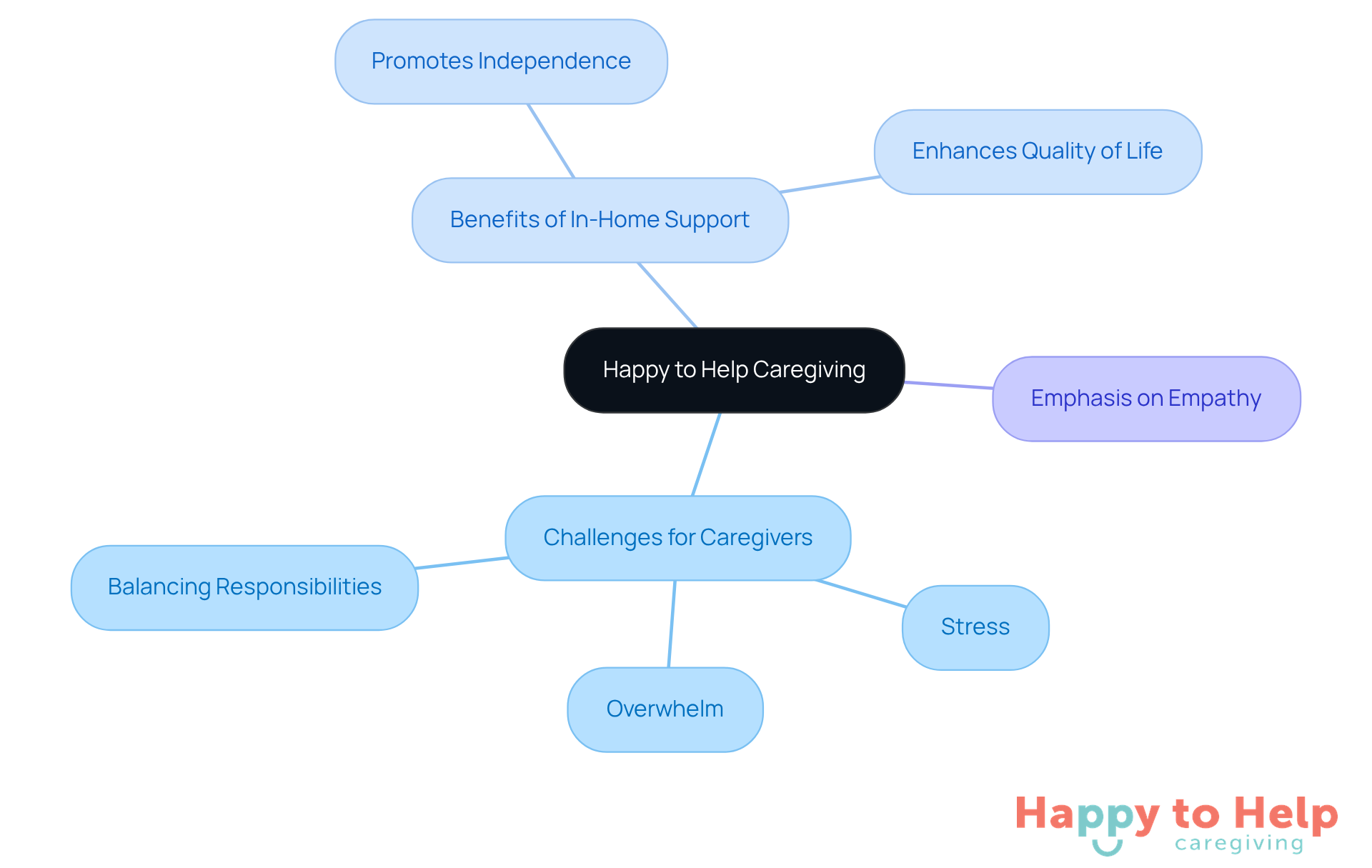
Caring for elder care individuals can be a daunting challenge for families. Many caregivers struggle to provide the necessary support while balancing their own responsibilities. This often leads to feelings of stress and overwhelm, impacting both the caregiver and the elderly person in their care.
Happy to Help Caregiving addresses these challenges by offering tailored elder care assistance in-home. Their services ensure that elder care individuals receive compassionate support in the comfort of their own homes. This approach not only promotes independence but also enhances the overall quality of life for clients.
With a strong emphasis on empathy and communication, Happy to Help Caregiving stands out as a reliable ally for families navigating the complexities of elder care. By choosing their services, families can alleviate some of the burdens associated with caregiving, allowing for a more balanced and fulfilling experience.
Companionship Care: Alleviate Loneliness and Enhance Well-Being
Isolation among elder ca is a significant problem that can severely impact their mental health and overall well-being. Many elder ca experience feelings of loneliness, which can lead to depression and a diminished sense of purpose. This issue is compounded by the fact that social engagement often declines with age, making it crucial for elder ca to address these feelings head-on.
To combat this isolation, elder ca can play a vital role by engaging clients in meaningful conversations and activities. By fostering emotional connections, caregivers not only help reduce feelings of loneliness but also motivate elder ca to participate in social activities. This engagement can lead to improved mental health and a stronger sense of purpose.
Here are some actionable tips for caregivers:
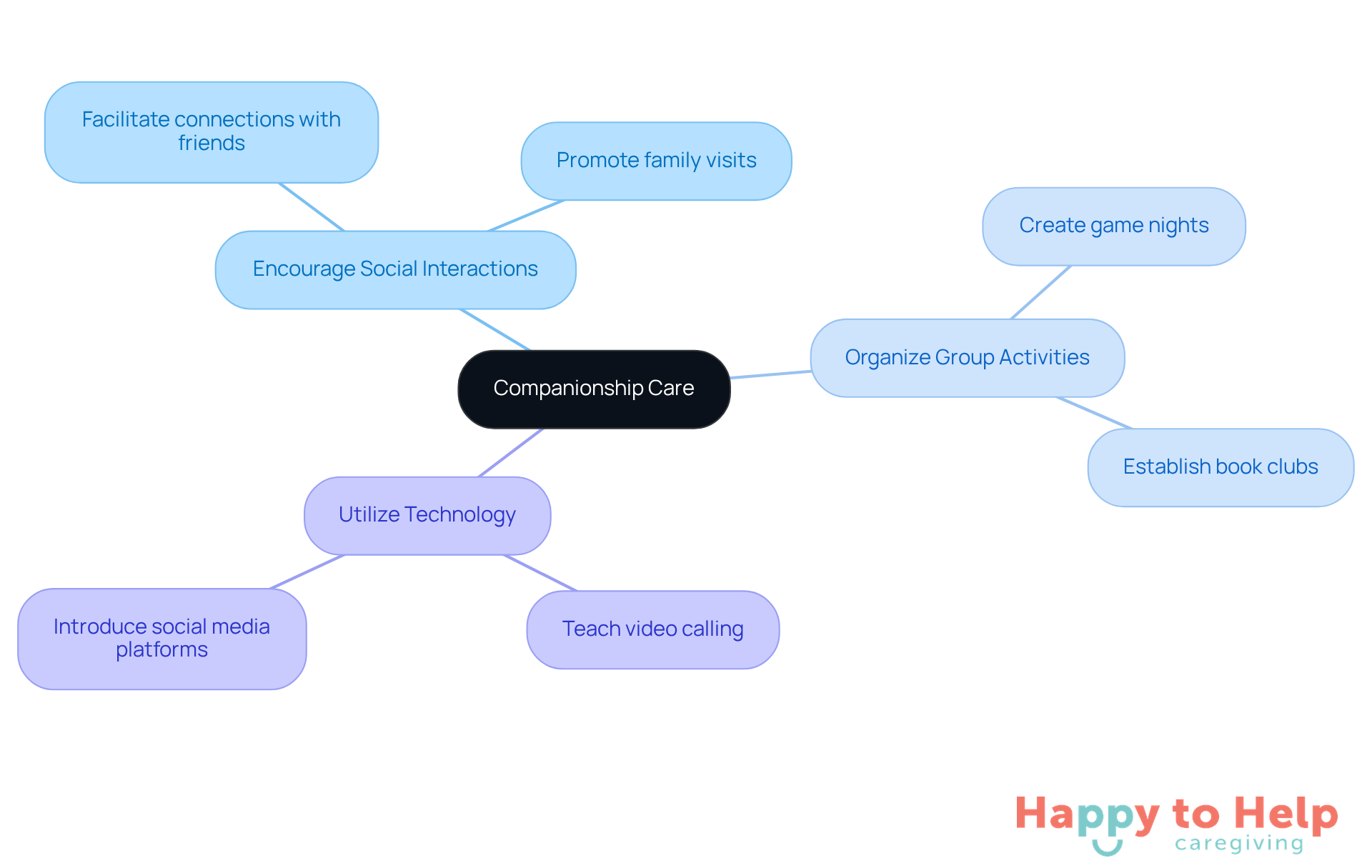
- Encourage regular social interactions: Facilitate opportunities for older adults to connect with friends and family.
- Organize group activities: Create events that promote socialization, such as game nights or book clubs.
- Utilize technology: Teach older adults how to use video calls to stay in touch with loved ones.
By implementing these strategies, caregivers can significantly enhance the emotional well-being of elder ca, helping them feel more connected and engaged in their lives.
Post-Hospital Recovery Assistance: Smooth Transitions for Better Health
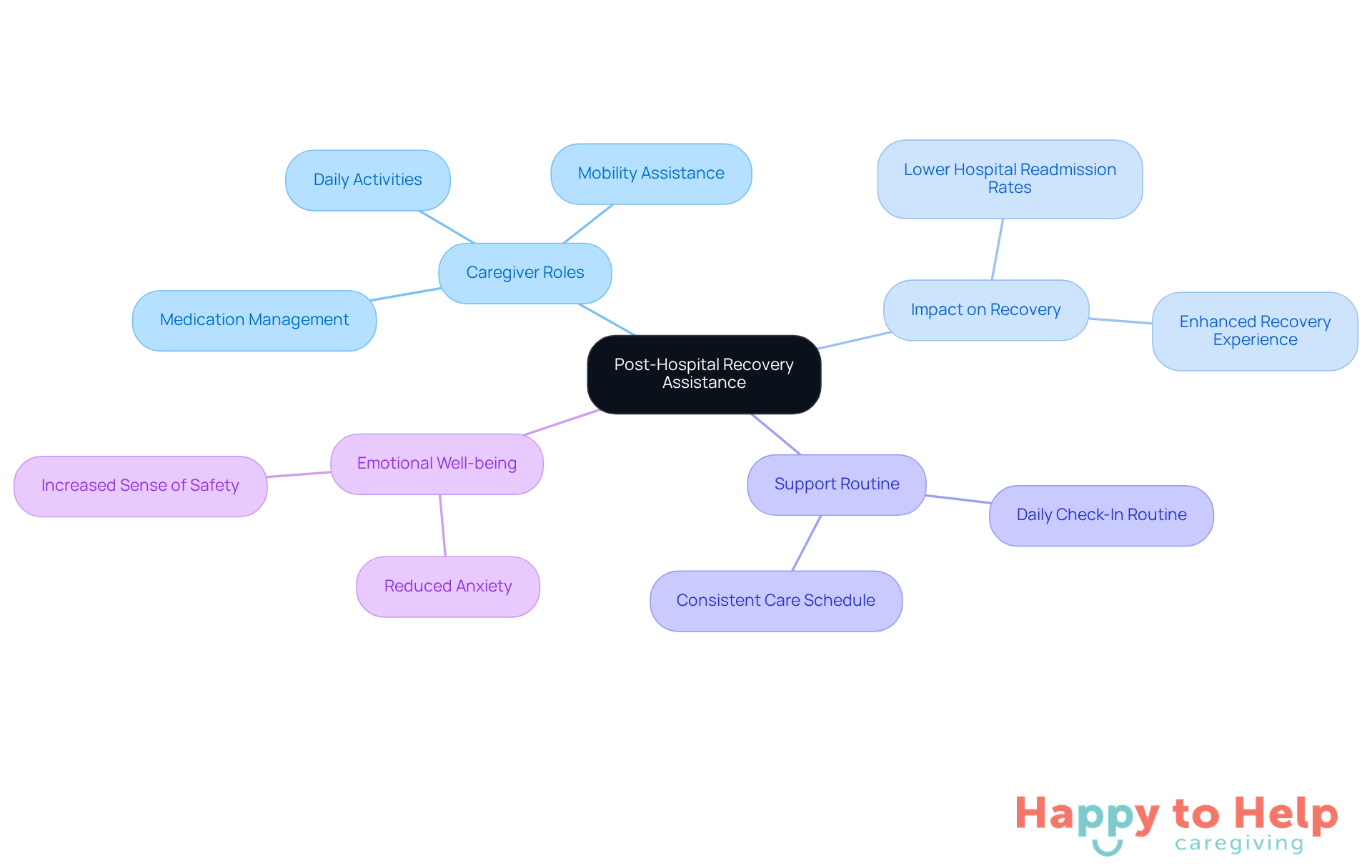
Post-hospital recovery assistance is a critical issue for elder care as older adults transition from hospital to home. Without proper support, these individuals face significant challenges in their recovery, leading to increased hospital readmission rates, especially among the elder care population. Caregivers are essential in this process, managing medications, assisting with mobility, and helping with daily activities. A study by the National Institutes of Health found that older adults receiving elder care services had significantly lower hospital readmission rates, highlighting the importance of professional assistance.
This tailored support not only fosters a sense of safety but also enhances the overall recovery experience, allowing older adults to recuperate in the comfort of their own homes. Maintaining a consistent support routine is vital; it helps seniors feel more at ease and improves both their physical and emotional well-being during recovery. To further assist your loved one, consider implementing a daily check-in routine. This practice can help monitor their emotional state and encourage open communication about their recovery needs.
Respite Care: Essential Breaks for Family Caregivers
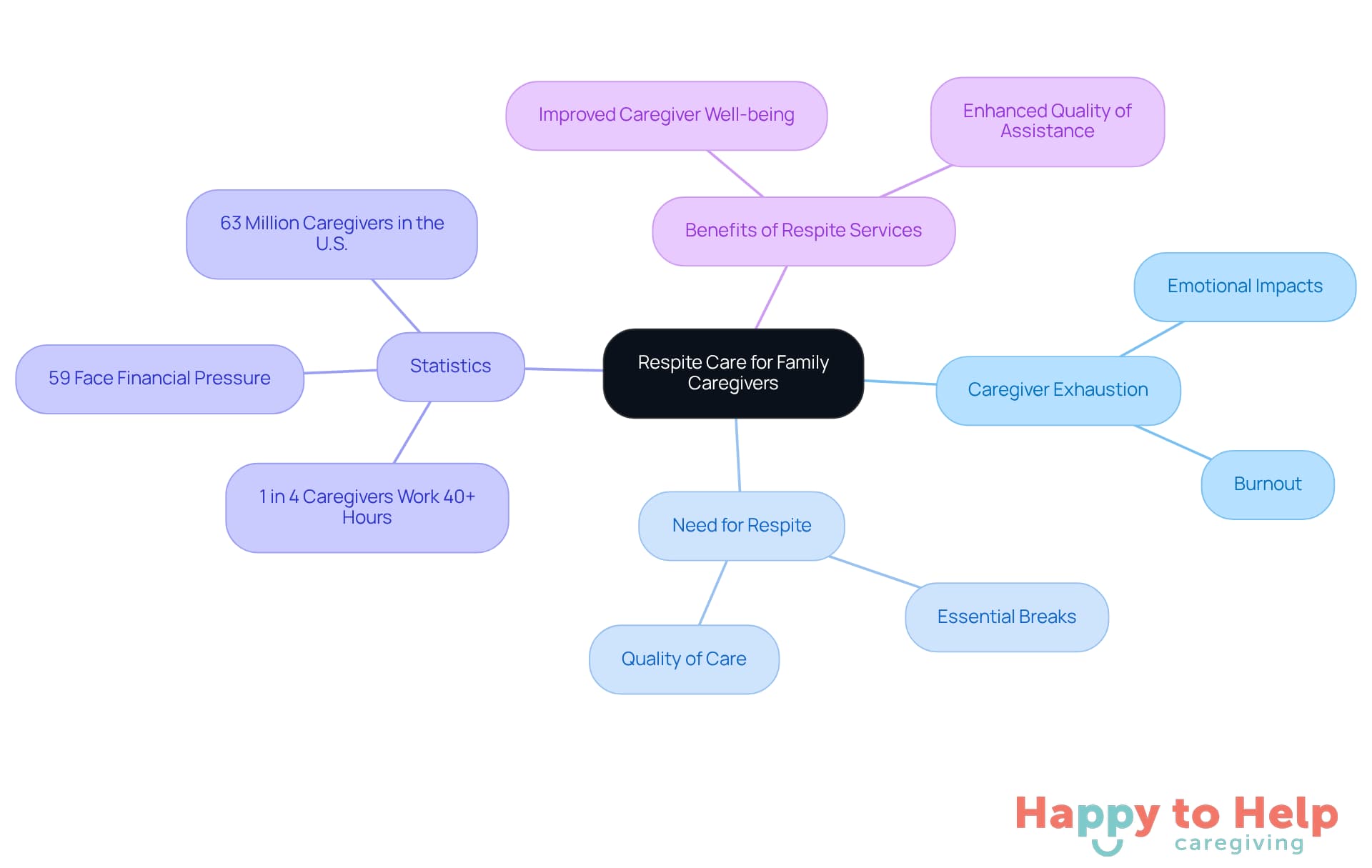
Caregivers face significant challenges, particularly the exhaustion that comes from providing constant support. This exhaustion can lead to burnout, impacting not only the caregivers' well-being but also the quality of care they provide. As one expert noted, "Every parent of a medically fragile child dreams of a cure, but their second biggest wish is often something much simpler - a chance to rest." This highlights the critical need for respite support, which offers essential breaks for family helpers, allowing them to rejuvenate while ensuring their loved ones receive ongoing, quality assistance.
Respite services can be tailored to meet various needs, whether for a few hours or several days. This flexibility provides caregivers with the necessary time to address personal matters or simply relax. By alleviating the stresses associated with caregiver exhaustion, elder care services significantly enhance the overall quality of assistance provided to seniors. Statistics reveal that nearly 1 in 4 caregivers report offering 40 or more hours of support each week, underscoring the intensity of their responsibilities and the urgent need for respite services.
Moreover, with 59% of family helpers experiencing financial pressure, the necessity for support systems like respite services becomes even more pronounced. The recent announcement regarding respite services on October 20, 2025, reinforces the importance of these essential breaks for caregivers. As the demand for elder care assistance and education continues to grow, respite services remain a vital component of the caregiving landscape.
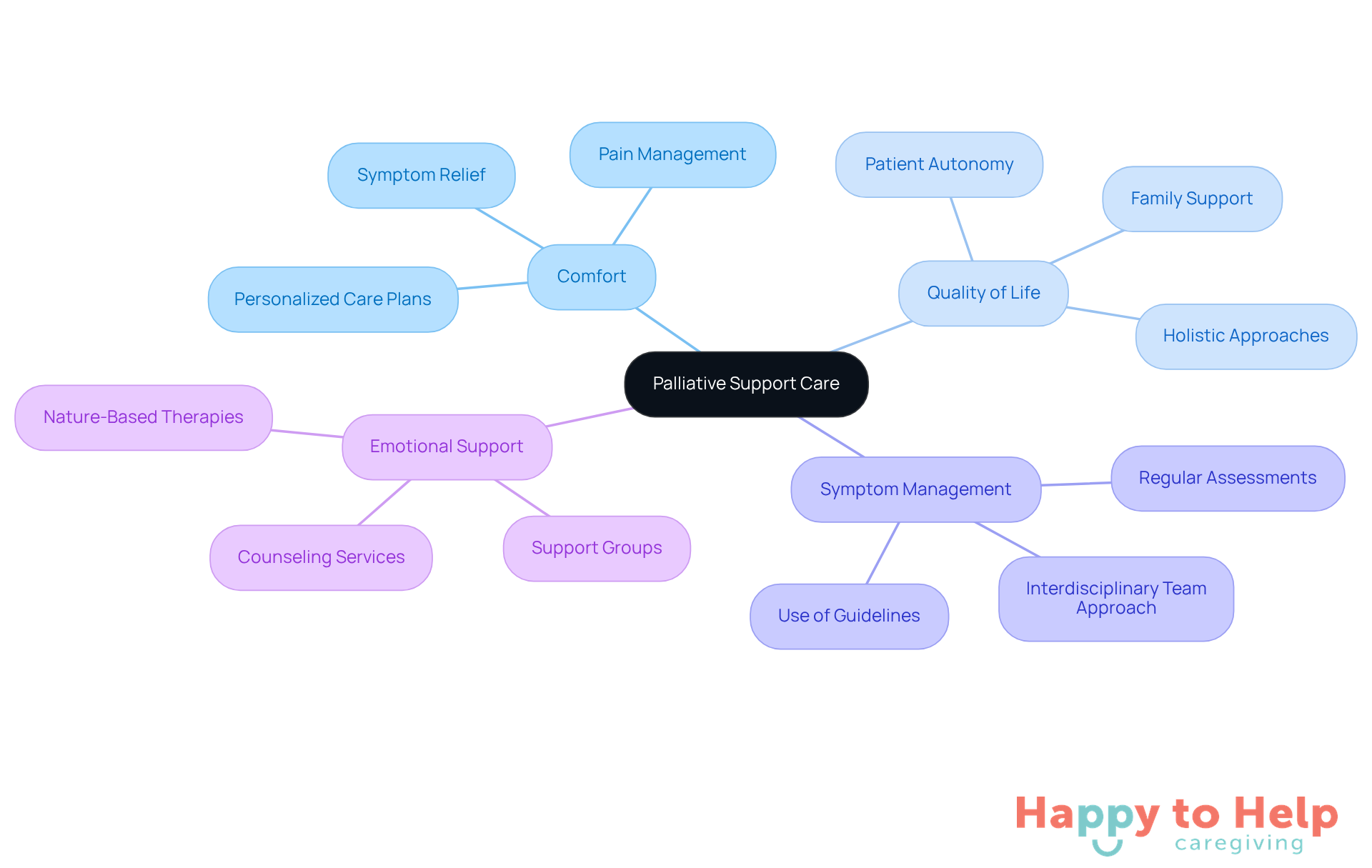
Palliative Support Care: Enhancing Comfort and Quality of Life
Elder care individuals who are facing significant health issues often struggle with comfort and quality of life. This situation can lead to increased distress for both the elder care recipients and their caregivers.
Palliative assistance in elder care addresses these challenges by focusing on improving comfort and overall well-being. It emphasizes symptom management and emotional support, which are crucial for maintaining dignity during difficult times.
By tailoring support to the unique needs of each individual, caregivers can help seniors navigate their health challenges more effectively. This approach not only enhances the quality of life but also provides peace of mind for families.
Flexible Scheduling: Tailoring Care to Family Needs
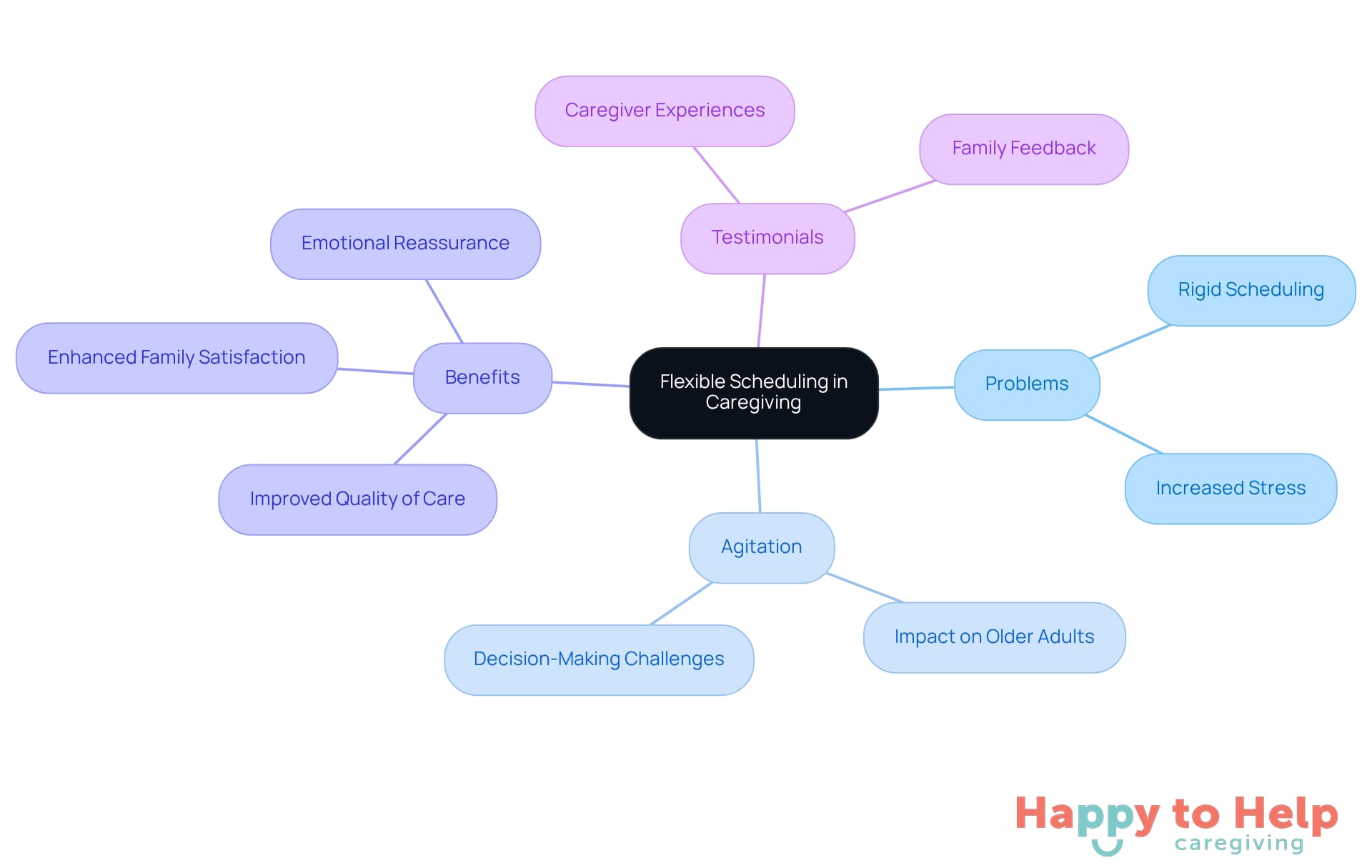
Problem: Rigid scheduling can create significant challenges for families in need of caregiving support. Families often struggle to find assistance that aligns with their unique needs and routines, leading to increased stress and feelings of overwhelm.
Agitate: Research shows that older adults thrive on routine; disruptions can heighten stress levels. When caregivers cannot adjust visit times or service frequency, it can lead to a lack of control over daily life. This imbalance can make it difficult for families to manage the intricate decision-making involved in caregiving.
Adaptable scheduling is a cornerstone of Happy to Help Caregiving, allowing families to personalize elder care according to their specific requirements. By adjusting visit times and service frequency, support providers can offer help precisely when it is most advantageous. This flexibility not only enhances the overall support experience but also fosters a sense of control for families.
Flexible scheduling coordinates visits from support staff with the moments when clients are most alert and comfortable, significantly improving the quality of assistance. Families report that this tailored approach alleviates feelings of overwhelm, enabling them to focus on their loved ones' well-being. As one provider noted, "When appointments are arranged with adaptability, providers come during the times when patients are attentive, open, and physically at ease."
Testimonials from caregivers emphasize the emotional reassurance that comes from knowing assistance is delivered on their terms. This adaptability is crucial in fostering family satisfaction and enhancing the caregiving journey.
24/7 Availability: Constant Support for Peace of Mind
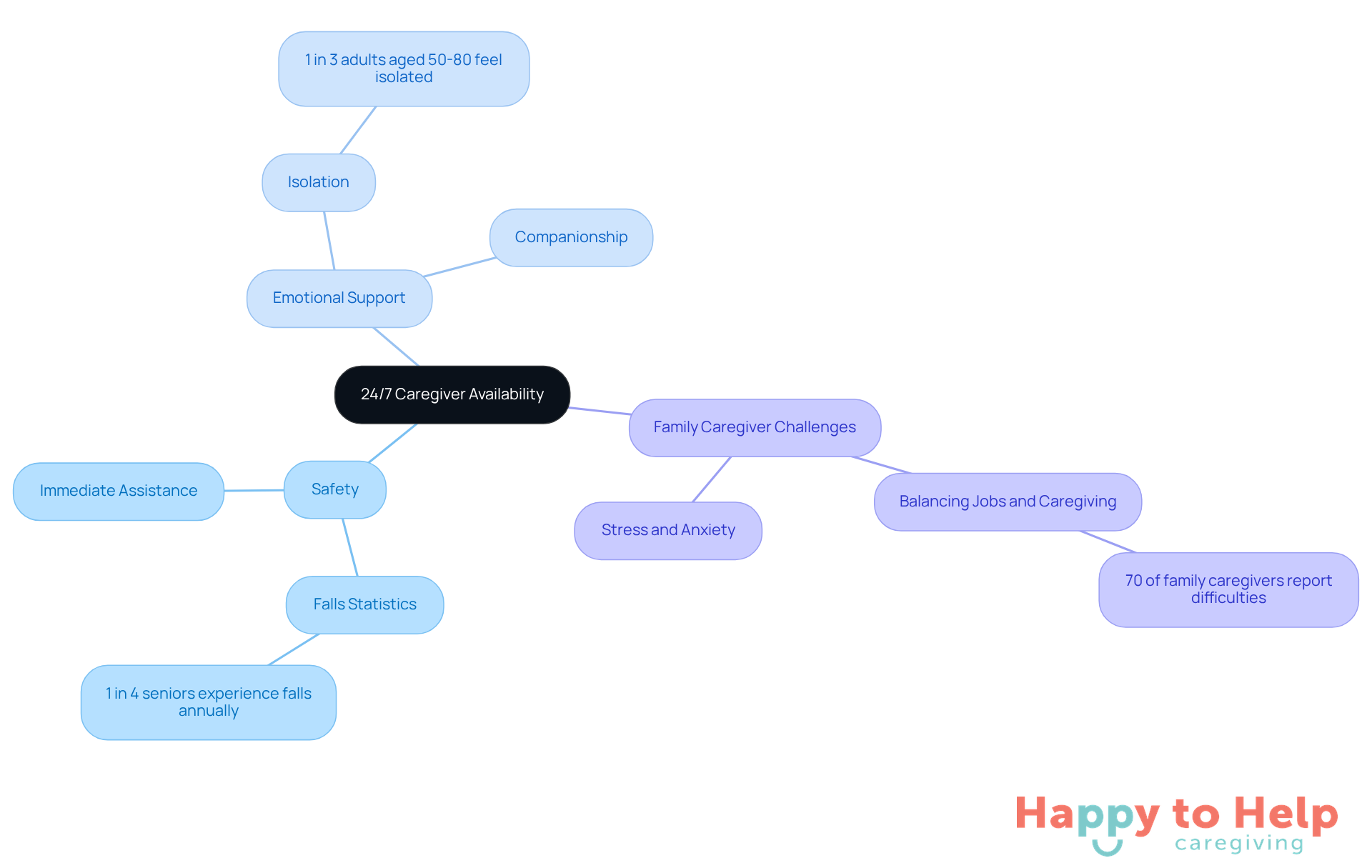
Caregivers face significant challenges in providing continuous support for their loved ones. The 24/7 presence of elder caregivers is essential, especially for families with seniors who have complex health needs or may require immediate assistance. Research indicates that one in four individuals over the age of 65 experiences a fall annually, highlighting the critical need for ongoing assistance to prevent such incidents.
The implications of inadequate support can be severe. Families often worry about the safety and well-being of their loved ones, which can lead to stress and anxiety. Knowing that professional care is available at all hours offers families peace of mind and reassurance. This is particularly important as the rise of 'solo-agers' - individuals aging without traditional family support - underscores the increasing demand for tailored in-home caregiving services.
To address these challenges, families can consider elder care services that provide round-the-clock support. Almost 70% of family caregivers report difficulties in balancing their jobs with caregiving duties, making professional assistance crucial in alleviating their burden. Constant support not only helps manage health conditions but also addresses the emotional needs of seniors. Notably, one in three adults aged 50-80 report feeling isolated at least some of the time, emphasizing the importance of companionship and emotional support.
In summary, the peace of mind that comes from knowing loved ones are safe and supported is invaluable. By seeking elder care services, families can enhance their loved ones' quality of life while also easing their own responsibilities.
Technology Integration: Enhancing Communication and Care Management
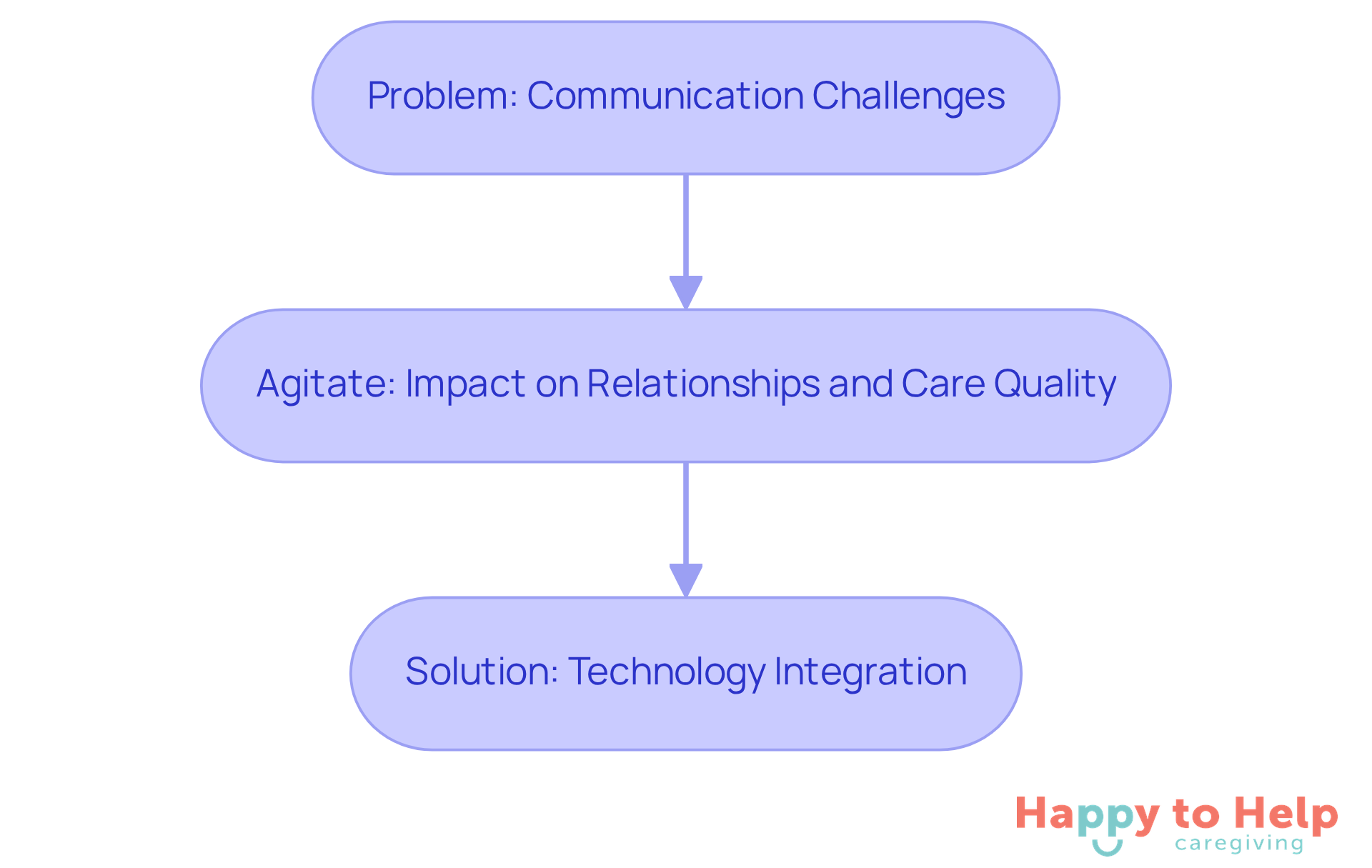
Problem: Communication challenges can hinder effective caregiving at Happy to Help Caregiving. Caregivers often struggle to share vital information with family members, which can lead to misunderstandings and a lack of engagement in the support process.
Agitate: This disconnect not only strains the caregiver-family relationship but can also negatively impact the quality of care provided to clients. As industry leaders emphasize, effective communication is essential in elder care support, and without it, caregivers may find themselves overwhelmed while families feel disconnected from their loved ones' care.
Solution: The incorporation of technology is crucial in addressing these challenges. Digital tools, such as online notes and scheduling systems, facilitate smooth information sharing among caregivers and family members. By utilizing these technologies, families can stay connected with their loved ones' support, leading to improved outcomes and a more cohesive caregiving experience. This collaborative approach strengthens the caregiver-family relationship and fosters a supportive environment for clients.
Personalized Care Plans: Tailoring Support to Individual Needs
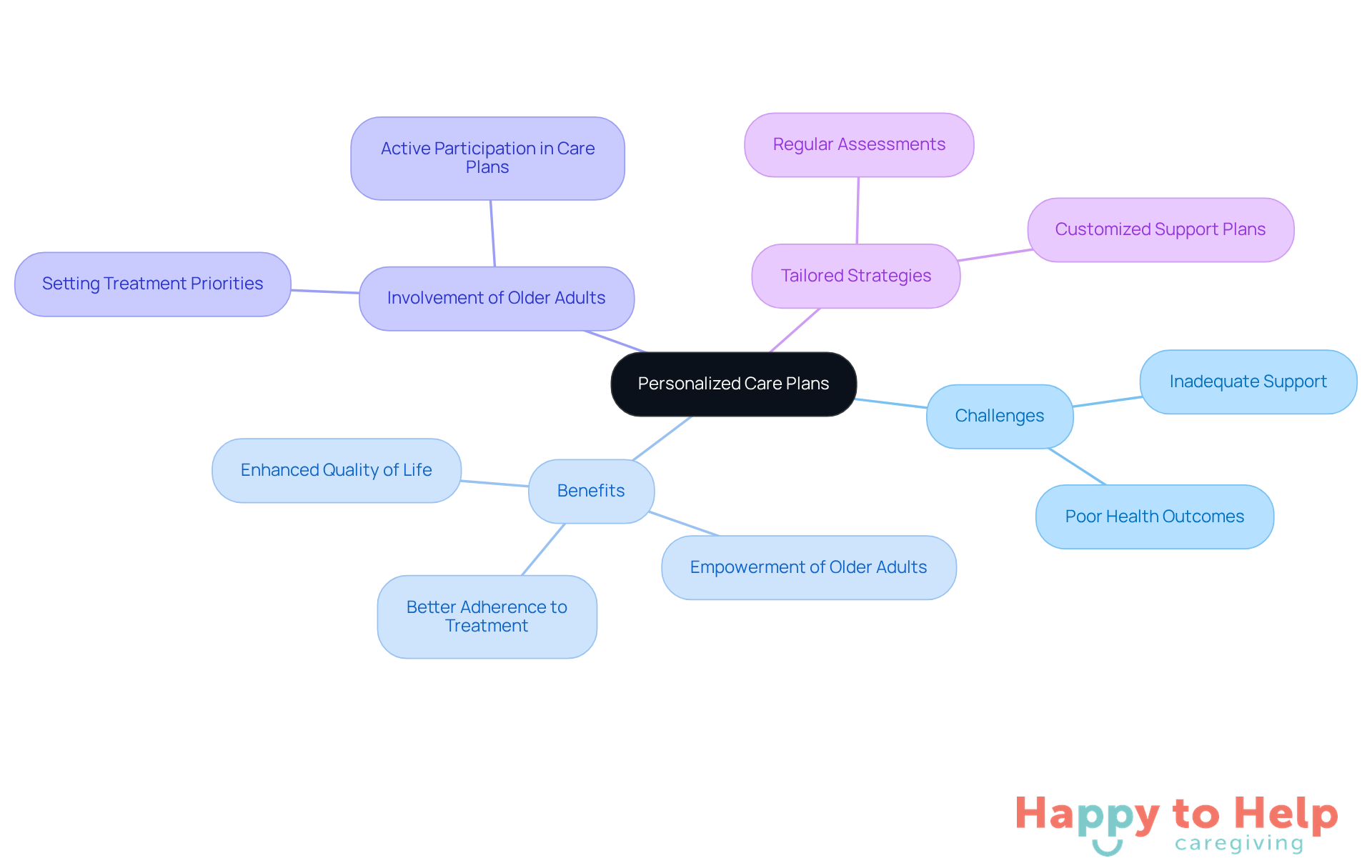
At the heart of caregiving challenges lies the issue of inadequate personalized support for elder care. Many older adults in elder care face a lack of tailored care plans that address their unique needs and preferences, which can lead to poorer health outcomes and diminished quality of life.
Healthcare professionals emphasize the importance of involving elder care in the treatment decisions of older adults. When elder care participate actively, they feel more empowered and engaged, which leads to better adherence to treatment plans and an enhanced sense of well-being. As noted by Haven Health, "The goal is to guarantee that each individual receives personalized assistance so they can flourish."
To combat these challenges, Happy to Help Caregiving offers meticulously crafted elder care support plans. These plans are established through thorough assessments and are regularly updated to reflect any changes in the client's health or circumstances. By prioritizing individualized assistance, Happy to Help Caregiving ensures that clients receive elder care to thrive, promoting independence and dignity in their daily lives.
Furthermore, Ardeshir Hashmi, MD, highlights that "Patient Priorities Care is based on the idea that older adults should set their own treatment priorities." This approach not only addresses the immediate needs of seniors but also aligns with their long-term goals.
The growing demand for elder care services illustrates the preference of many older adults to age in place, making personalized care plans more crucial than ever. By implementing tailored support strategies, caregivers can significantly enhance the quality of life for their clients.
Compassionate Caregivers: Building Trust and Ensuring Comfort
Caregiving presents unique challenges, particularly in providing both physical assistance and emotional support. Without compassionate helpers, clients may feel isolated and undervalued, which can hinder their overall well-being.
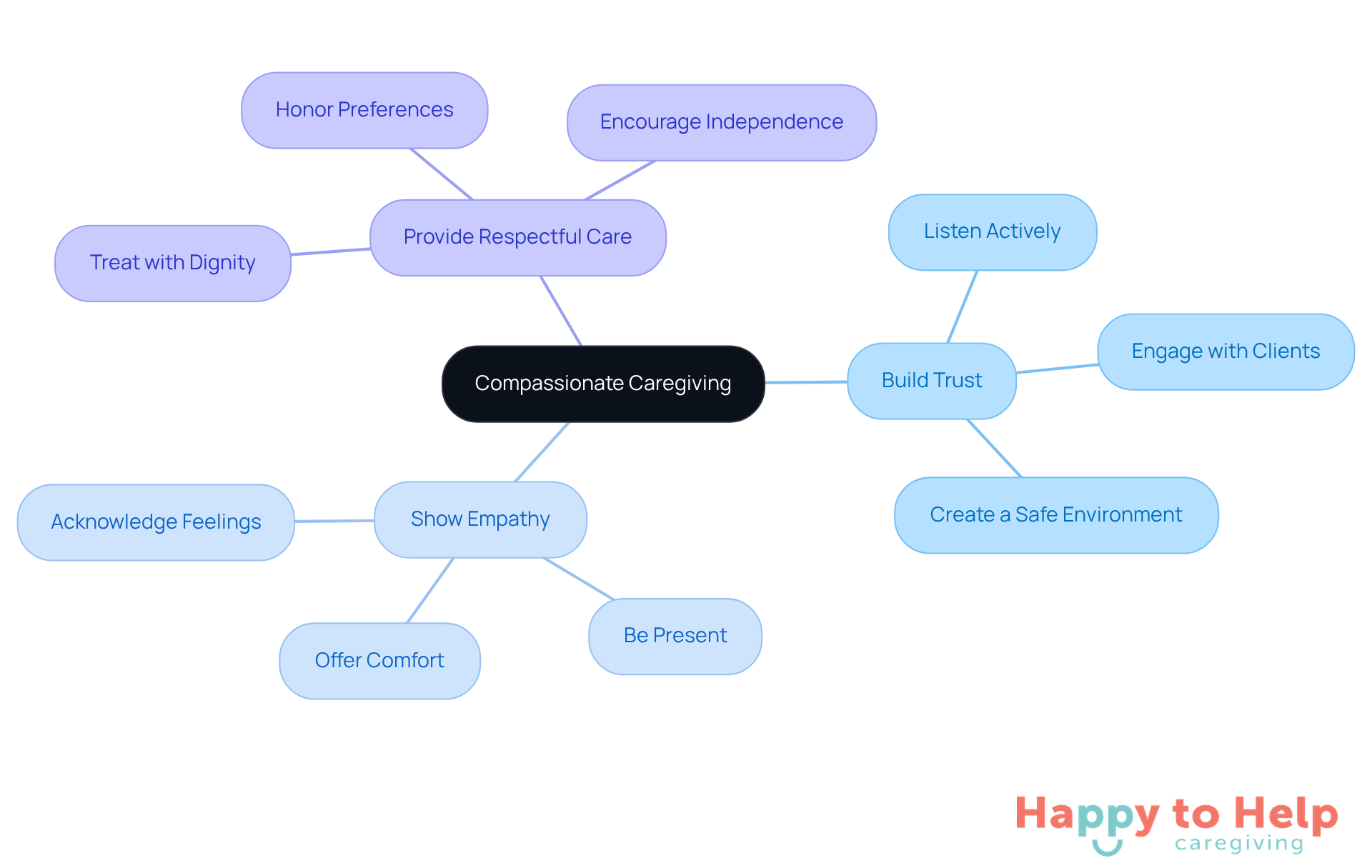
Compassionate helpers are essential in addressing these issues. They build trust and rapport with clients, creating a safe and comfortable environment that is crucial for effective caregiving. By treating clients with respect and empathy, caregivers not only enhance the overall elder care experience but also ensure that seniors feel valued and understood.
To improve caregiving practices, caregivers can implement the following strategies:
- Build Trust: Take time to listen and engage with clients, fostering a sense of security.
- Show Empathy: Acknowledge clients' feelings and experiences, making them feel heard.
- Provide Respectful Care: Always treat clients with dignity, reinforcing their self-worth.
By focusing on these key areas, caregivers can significantly enhance the elder care they provide, ensuring that clients receive the emotional and physical support they need.
Moving Forward with Elder Care Services
Caring for elderly individuals presents unique challenges that can weigh heavily on families. The emotional and physical burdens faced by caregivers often lead to stress and feelings of isolation. Without comprehensive elder care services, the quality of care for seniors can suffer, impacting their overall well-being.
To address these challenges, families can embrace a variety of essential services designed to enhance the quality of care. From personalized in-home support to companionship care and 24/7 availability, these services cater to the diverse needs of seniors. Key offerings include:
- Post-hospital recovery assistance
- Respite care
- Palliative support
- Integration of technology for better communication
Each of these services plays a vital role in ensuring that elderly individuals receive the care and support they need. Flexible scheduling and personalized care plans further reinforce the importance of tailoring support to meet individual needs, promoting independence and dignity for seniors.
Ultimately, the significance of these elder care services extends beyond just meeting physical needs; they contribute to emotional well-being, reduce feelings of isolation, and foster a sense of community. Families are encouraged to explore these options and consider how integrating these essential services can lead to a more balanced and fulfilling caregiving experience. By prioritizing quality care, families can ensure their loved ones thrive in a supportive environment, making a profound difference in their lives.
https://iframe.tely.ai/cta/eyJhcnRpY2xlX2lkIjogIjY5MmY5MTk3ZGM0MTVjZWNlZTQ2NmM3OSIsICJjb21wYW55X2lkIjogIjY4ZWU1ZGNhNzMxNzYyNTU3ZjNjOTVjMSIsICJpbmRleCI6IG51bGwsICJ0eXBlIjogImFydGljbGUifQ==Frequently Asked Questions
What challenges do families face when caring for elder individuals?
Families often struggle to provide necessary support while balancing their own responsibilities, leading to feelings of stress and overwhelm for both the caregiver and the elderly person.
How does Happy to Help Caregiving support elder care individuals?
Happy to Help Caregiving offers personalized in-home support that ensures elder care individuals receive compassionate assistance, promoting independence and enhancing their overall quality of life.
What is the importance of companionship care for elder individuals?
Companionship care addresses feelings of loneliness among elder individuals, which can lead to depression and a diminished sense of purpose. Engaging clients in meaningful conversations and activities helps reduce loneliness and motivates them to participate in social activities.
What strategies can caregivers implement to alleviate loneliness in elder individuals?
Caregivers can encourage regular social interactions, organize group activities, and utilize technology to help older adults stay connected with loved ones.
Why is post-hospital recovery assistance critical for older adults?
Post-hospital recovery assistance is essential as it helps older adults transition from hospital to home, reducing challenges in recovery and lowering hospital readmission rates.
What role do caregivers play in post-hospital recovery?
Caregivers manage medications, assist with mobility, and help with daily activities, providing essential support that fosters a sense of safety and enhances the recovery experience.
How can families support their loved ones during post-hospital recovery?
Families can implement a daily check-in routine to monitor their loved one's emotional state and encourage open communication about their recovery needs.
List of Sources
- Happy to Help Caregiving: Personalized In-Home Support for Seniors
- Home Care Industry Trends to Watch in 2025 (https://firstlighthomecare.com/blog/home-care-industry-trends)
- National Alliance for Caregiving: Caregiving in the US 2025 Report (https://johnahartford.org/resources/view/national-alliance-for-caregiving-caregiving-in-the-us-2025-report)
- 2025 Home Care Statistics: Trends & Insights To Know (https://premierhcinc.com/blog/home-care-statistics)
- News - Happy To Help (https://happytohelpcaregiving.com/news)
- Family caregivers prefer in-home care over senior living, new industry report finds (https://mcknightshomecare.com/news/family-caregivers-prefer-in-home-care-over-senior-living-new-industry-report-finds)
- Companionship Care: Alleviate Loneliness and Enhance Well-Being
- Loneliness among seniors: Isolation can lead to serious mental health issues (https://click2houston.com/news/local/2025/04/22/loneliness-among-seniors-isolation-can-lead-to-serious-mental-health-issues)
- New initiative aims to reduce loneliness among older adults in Louisville (https://news.louisville.edu/news/new-initiative-aims-reduce-loneliness-among-older-adults-louisville)
- Loneliness More Common Among Middle-Aged In U.S. (https://usnews.com/news/health-news/articles/2025-04-22/loneliness-more-common-among-middle-aged-in-u-s)
- 1 in 3 older adults still experience loneliness and isolation (https://michiganmedicine.org/health-lab/1-3-older-adults-still-experience-loneliness-and-isolation)
- Trends in Loneliness Among Older Adults from 2018-2023 (https://ihpi.umich.edu/national-poll-healthy-aging/reports-and-resources/trends-loneliness-among-older-adults-2018-2023)
- Post-Hospital Recovery Assistance: Smooth Transitions for Better Health
- Post-Hospital Discharge: Why In-Home Care Improves Recovery for Florida Seniors (https://visitingangels.com/pasco/news-info/post-hospital-discharge-why-in-home-care-improves-recovery/26199)
- Safe Healing: Home Care for Seniors After Hospitalization (https://sandiegohomecaregivers.com/why-home-care-for-seniors-after-hospitalization-makes-recovery-easier)
- Post-pandemic, even hospital care goes remote (https://npr.org/sections/health-shots/2023/04/29/1167392633/hospital-at-home-remote-care)
- How Healing at Home Helps Unclog the Hospital Bed Logjam (https://usnews.com/news/health-news/articles/2025-03-03/how-healing-at-home-helps-unclog-the-hospital-bed-logjam)
- Sent Home To Heal, Patients Avoid Wait for Rehab Home Beds - KFF Health News (https://kffhealthnews.org/news/article/patients-rehab-at-home-unclog-hospital-bed-nursing-home-waiting-list)
- Respite Care: Essential Breaks for Family Caregivers
- Family Caregiver Support, Education Needs Growing (https://hospicenews.com/2025/11/11/family-caregiver-support-education-needs-growing)
- News & Updates | ARCH National Respite Network & Resource Center (https://archrespite.org/news)
- Family Caregivers Struggling In Some States More Than Others (https://disabilityscoop.com/2025/10/31/family-caregivers-struggling-in-some-states-more-than-others/31710)
- New Report Reveals Crisis Point for America’s 63 million Family Caregivers (https://press.aarp.org/2025-07-24-New-Report-Reveals-Crisis-Point-for-Americas-63-million-Family-Caregivers)
- Improving Support for Family Caregivers (https://nationalacademies.org/news/2025/07/improving-support-for-family-caregivers)
- Palliative Support Care: Enhancing Comfort and Quality of Life
- Palliative Care News Archives (https://hospicenews.com/category/palliative-care-news)
- The Effectiveness of Palliative Care Interventions in Long-Term Care Facilities: A Systematic Review - PMC (https://pmc.ncbi.nlm.nih.gov/articles/PMC11277722)
- Palliative Care News | Living with Serious Illness | Get Palliative Care (https://getpalliativecare.org/news)
- ‘A good death’: How compassionate care helps people navigate the end of life (https://news.yale.edu/2025/10/13/good-death-how-compassionate-care-helps-people-navigate-end-life)
- Flexible Scheduling: Tailoring Care to Family Needs
- 9 Ways to Find Caregivers With Flexible Scheduling Options - MedCity News (https://medcitynews.com/2025/05/9-ways-to-find-caregivers-with-flexible-scheduling-options)
- The number of family caregivers is surging (https://19thnews.org/2025/07/family-caregivers-surging-aarp)
- The need for caregiving benefits may have reached a fever pitch (https://hrdive.com/news/sandwich-generation-needs-caregiving-benefits/802864)
- How Flexible Scheduling Improves The Home Care Experience For Families – CCN – Columbus County News (https://columbuscountynews.com/2025/12/how-flexible-scheduling-improves-the-home-care-experience-for-families)
- As Family Caregiving Grows, So Does the Need for Reform - Medicare Rights Center (https://medicarerights.org/medicare-watch/2025/08/14/as-family-caregiving-grows-so-does-the-need-for-reform)
- 24/7 Availability: Constant Support for Peace of Mind
- 2025 Home Care Statistics: Trends & Insights To Know (https://premierhcinc.com/blog/home-care-statistics)
- Americans see urgent need for aging support services, survey finds (https://mcknights.com/news/americans-see-urgent-need-for-aging-support-services-survey-finds)
- 24/7 In-Home Care Costs in 2025 - Assisted Living Magazine (https://assistedlivingmagazine.com/24-7-in-home-care-costs-in-2025)
- Pros and Cons of Offering 24/7 Home Health Care Services (https://erspsolutions.com/resource/24-7-home-health-care)
- Technology Integration: Enhancing Communication and Care Management
- Smart Solutions for Caregivers: Tools to Enhance Senior Care - South Bay at Mount Pleasant (https://southbayatmountpleasant.com/news/smart-solutions-for-caregivers-tools-to-enhance-senior-care)
- The Tech-Enabled Evolution of Home-Based Care - THL (https://thl.com/articles/the-tech-enabled-evolution-of-home-based-care)
- HHS Launches $2M AI Initiative To ‘Transform’ Caregiving, Address Staffing Challenges (https://homehealthcarenews.com/2025/11/hhs-launches-2m-ai-initiative-to-transform-caregiving-address-staffing-challenges)
- Family Communication Tools for Seniors at Home (https://elderlifefinancial.com/resources/family-communication-tools-for-seniors-at-home)
- Modern Tools That Improve Safety and Accountability in Elder Care Settings (https://dcreport.org/2025/11/24/modern-tech-tools-improving-safety-in-elder-care-facilities)
- Personalized Care Plans: Tailoring Support to Individual Needs
- Webster Home Care Emphasizes How Personalized Support Helps Adults Thrive Safely in Their Own Homes (https://naplesnews.com/press-release/story/68103/webster-home-care-emphasizes-how-personalized-support-helps-adults-thrive-safely-in-their-own-homes)
- Novel Care Model May Improve Outcomes for Older Adults With Multiple Chronic Conditions (https://consultqd.clevelandclinic.org/novel-care-model-may-improve-outcomes-for-older-adults-with-multiple-chronic-conditions)
- 2025: AI enhances personalized care; caregiver experience in the spotlight (https://healthcareitnews.com/news/2025-ai-enhances-personalized-care-caregiver-experience-spotlight)
- Benefits of Personalized Care Plans in Nursing Homes (https://havenhealthaz.com/blog/benefits-of-personalized-care-plans-in-nursing-homes)
- ‘We’re Back, Baby’: 6 Senior Living Leaders Predict Memory Care’s Future (https://seniorhousingnews.com/2025/10/17/were-back-baby-6-senior-living-leaders-predict-memory-cares-future)
- Compassionate Caregivers: Building Trust and Ensuring Comfort
- 2023 Study — Caregiving in America, Statistics on Family Caregivers and Beyond | Guardian (https://guardianlife.com/reports/caregiving-in-america)
- Building Trust in Senior Care: It Starts With One Moment (https://care-one.com/blog/building-trust-in-senior-care)
- Master Compassionate Care in Home Care: Strategies for Family Caregivers - Happy To Help (https://happytohelpcaregiving.com/master-compassionate-care-in-home-care-strategies-for-family-caregivers)
- The Caregiving Landscape: Data & Insights on the Caregiver Experience in the U.S. (https://caregiveraction.org/caregiver-statistics)