Why Tips for Families Looking for a Live-In Matters
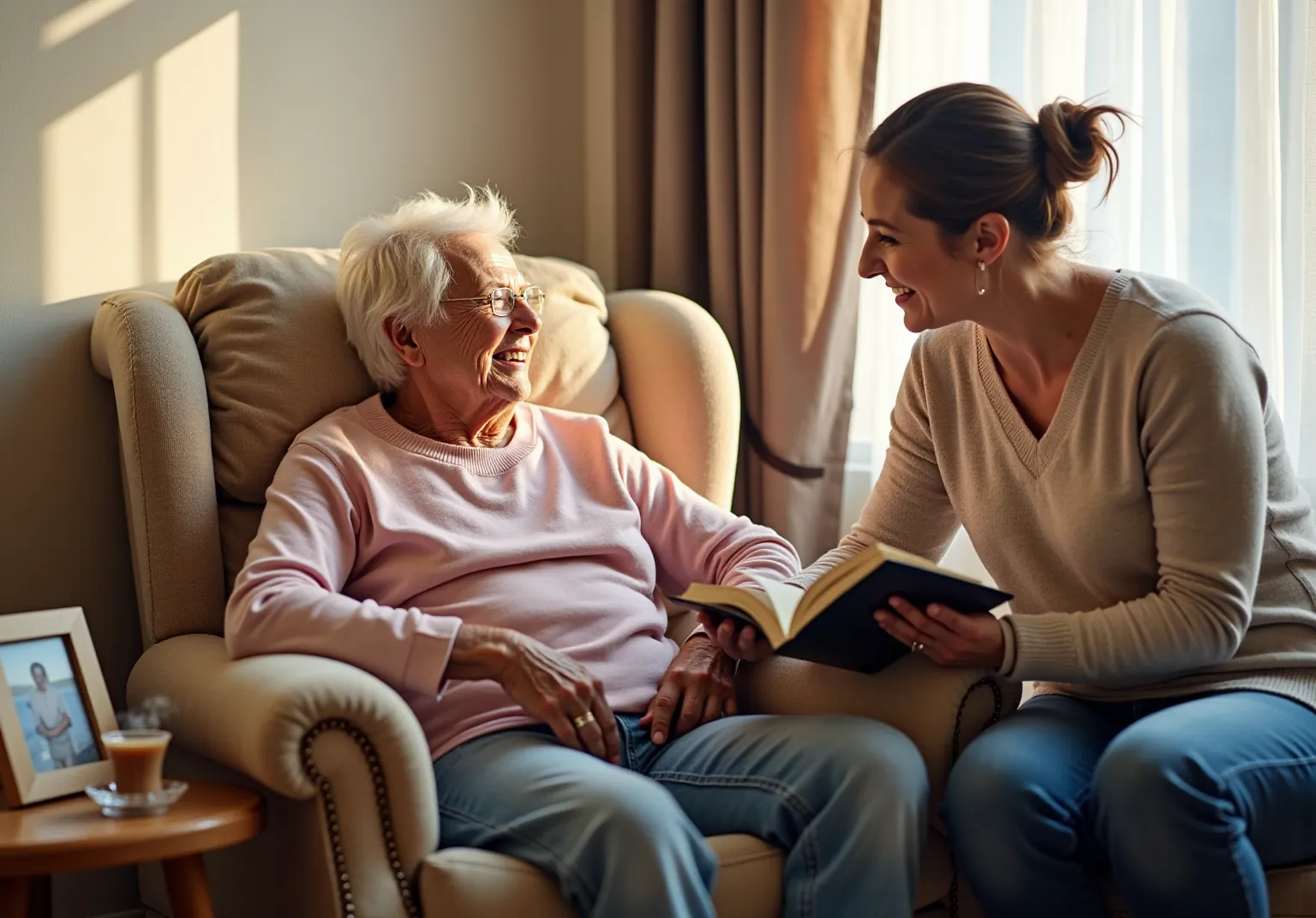
Caring for elderly loved ones can be a daunting task. Families often struggle to find the right live-in caregiver who can provide not just assistance, but also genuine companionship. The emotional toll of isolation on seniors is profound, leading to a significant decline in their overall well-being.
This article offers ten essential tips to empower families in navigating the complex process of hiring a live-in caregiver. These tips ensure that their loved ones receive personalized, compassionate care tailored to their unique needs. But what are the key factors that can make or break the success of this caregiving arrangement?
Happy to Help Caregiving: Personalized In-Home Support for Seniors
Caring for seniors and individuals with special needs often presents significant challenges, especially when families are looking for a live-in caregiver for elderly to help combat feelings of loneliness and isolation. These emotional struggles can greatly impact their overall well-being and quality of life. Without adequate support, individuals may feel disconnected and unsupported in their own homes.
Happy to Help Caregiving is looking for a live-in caregiver for elderly to provide compassionate in-home support tailored to the unique needs of their clients. Their services include:
- Companionship care
- Post-hospital recovery assistance
- Respite care
- Palliative support care
By focusing on enhancing quality of life, they ensure that clients receive the necessary support to thrive in their own homes, fostering independence and well-being.
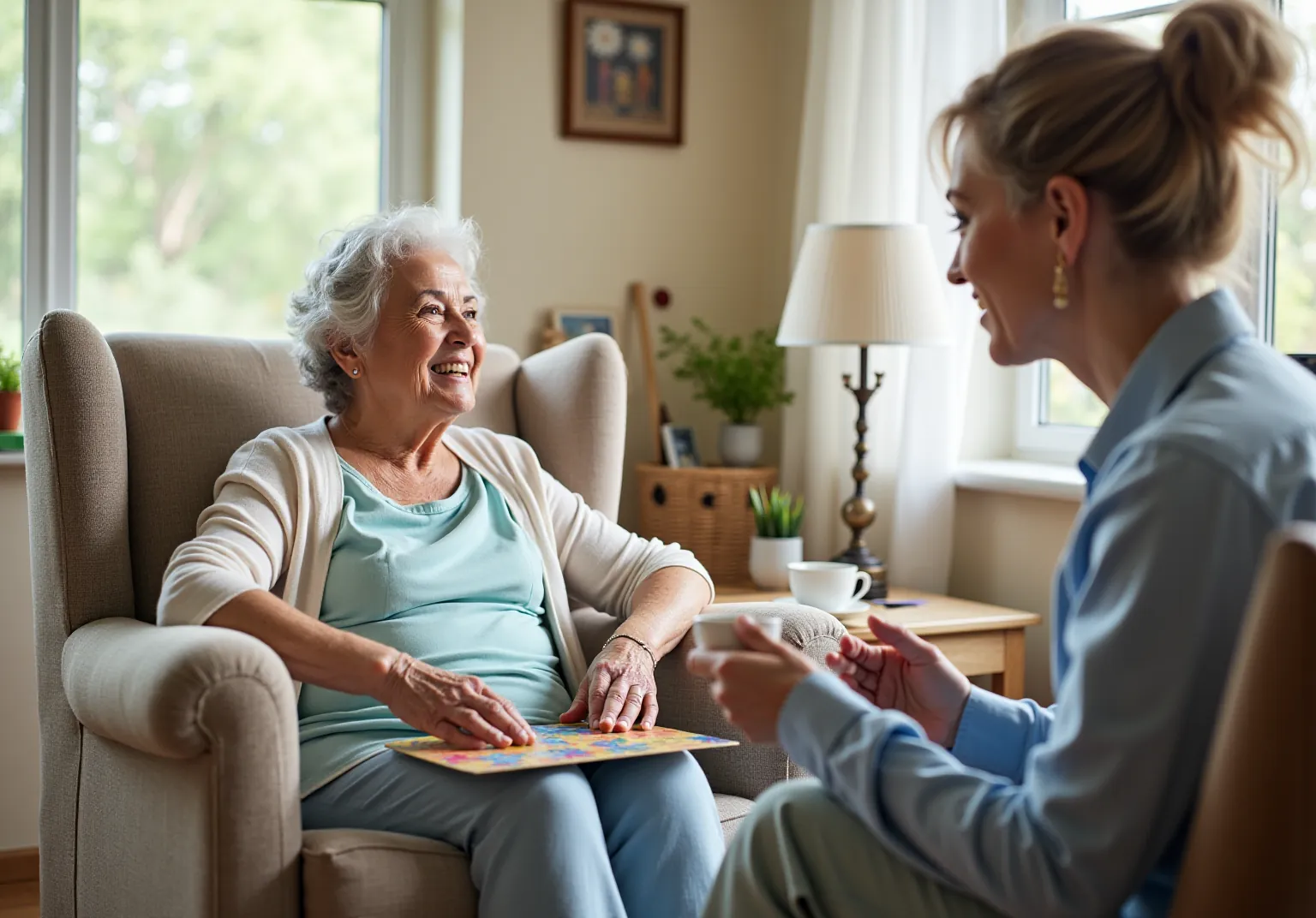
Their trained support providers not only offer emotional assistance but also engage clients in enjoyable activities. This approach alleviates feelings of loneliness and isolation, allowing individuals to feel more connected and supported. Families looking for a live-in caregiver for elderly can find peace of mind with Happy to Help Caregiving, knowing their loved ones are receiving the care they need to lead fulfilling lives.
Assess Individual Needs: Tailor Care to Your Loved One's Requirements
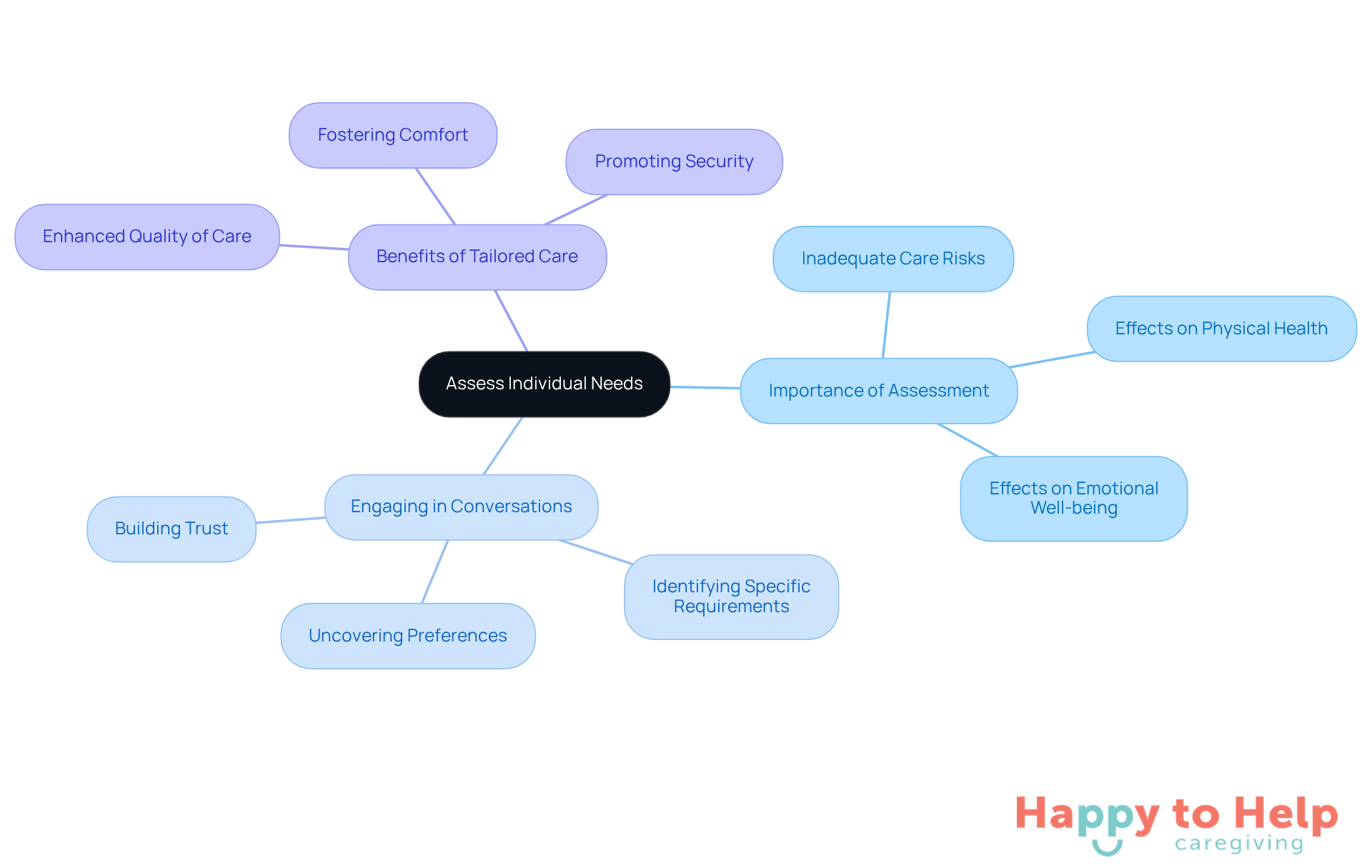
Caregivers face a significant challenge in understanding their loved one's unique needs when looking for a live-in caregiver for elderly. Failing to conduct a thorough assessment can lead to inadequate care, which may affect the individual's physical health and emotional well-being.
To address this issue, it's crucial to engage in meaningful conversations with your loved one. This dialogue helps uncover their preferences and any specific requirements they may have. By taking this tailored approach, caregivers not only enhance the quality of care but also foster a sense of comfort and security for the individual receiving assistance.
Conduct Background Checks: Ensure Safety and Trustworthiness
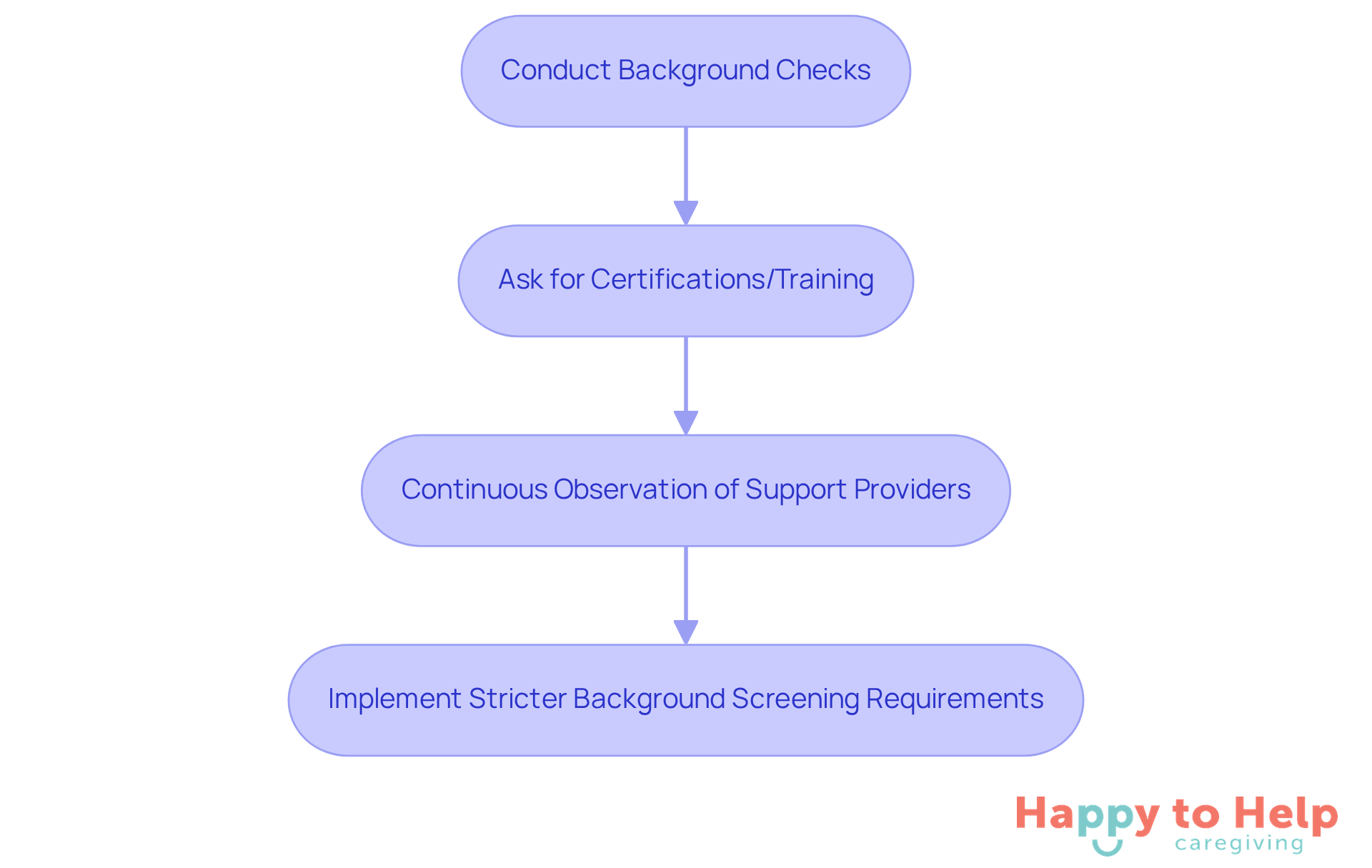
When looking for a live-in caregiver for elderly, safety is a significant concern. Families face the problem of ensuring the trustworthiness of caregivers, which can be daunting. Without thorough background checks, including criminal history, employment verification, and reference checks, families risk exposing themselves to potential dangers.
The implications of insufficient vetting are serious. Statistics reveal that elder financial abuse costs older Americans between $2.6 billion and $36.5 billion each year. Furthermore, about one in six individuals aged 60 and older experienced some form of abuse in 2023. These alarming figures highlight the urgent need for stringent safety protocols in caregiving.
To address these challenges, families should implement a rigorous vetting process. This includes:
- Asking for certifications or training that demonstrate the provider's qualifications and commitment to high-quality support.
- Continuous observation of support providers, as it helps maintain a secure environment for clients and ensures adherence to safety standards.
As the elderly population grows, many states are enforcing stricter background screening requirements for in-home care providers. By prioritizing these measures, households can significantly reduce the risks associated with looking for a live-in caregiver for elderly. As noted by the Centers for Medicare and Medicaid Services, "Background checks mitigate risk," reinforcing the importance of these safety measures.
Establish Clear Communication: Foster a Positive Caregiver Relationship
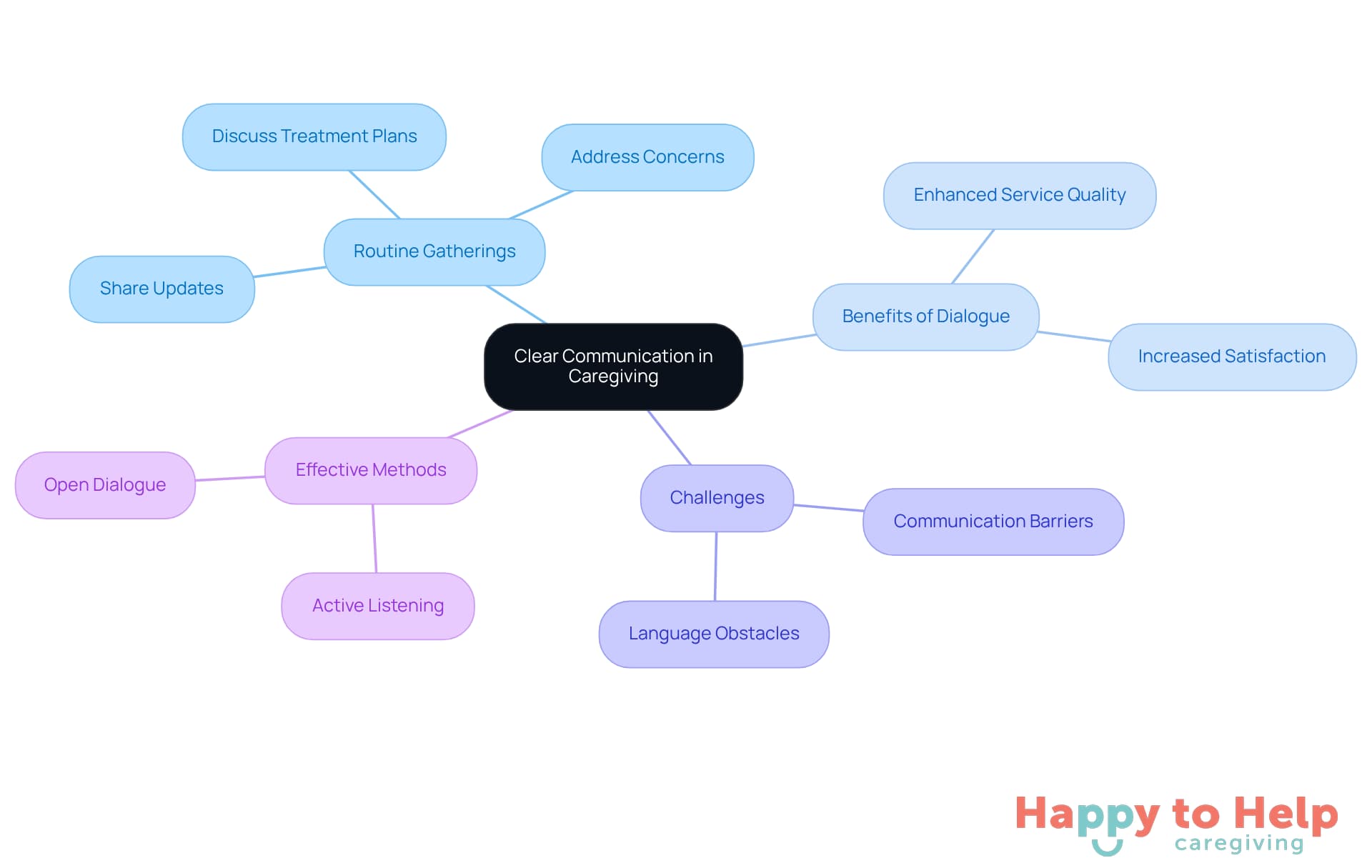
Establishing clear communication channels between family members and support providers is crucial for nurturing positive relationships. However, many caregivers face significant challenges due to communication barriers, which can hinder effective caregiving.
Routine gatherings should be arranged to discuss treatment plans, address concerns, and share updates. This practice not only nurtures trust but also allows support providers to express any challenges they may encounter, fostering a collaborative atmosphere. Studies show that households participating in regular dialogue with caregivers experience notable enhancements in service quality and overall satisfaction. For instance, families providing in-home support for individuals with dementia save a remarkable $232 billion each year, highlighting the financial and emotional benefits of effective communication.
Supporters who engage in frequent dialogues benefit from in-depth conversations about schedules and choices, resulting in customized support strategies that emphasize comfort and well-being. Furthermore, efficient communication methods, such as active listening and open dialogue, enable providers to adapt to evolving situations, ensuring that support remains responsive and relevant. As Allan Levine states, "Effective communication is the linchpin that holds the entire caregiving process together."
By prioritizing these interactions, families can strengthen their connection with caregivers, ultimately enhancing the caregiving experience for everyone involved. It is also vital to acknowledge that language obstacles can hinder communication, making it necessary to find providers who can connect both medically and culturally with recipients of assistance.
Set Clear Expectations: Define Roles and Responsibilities
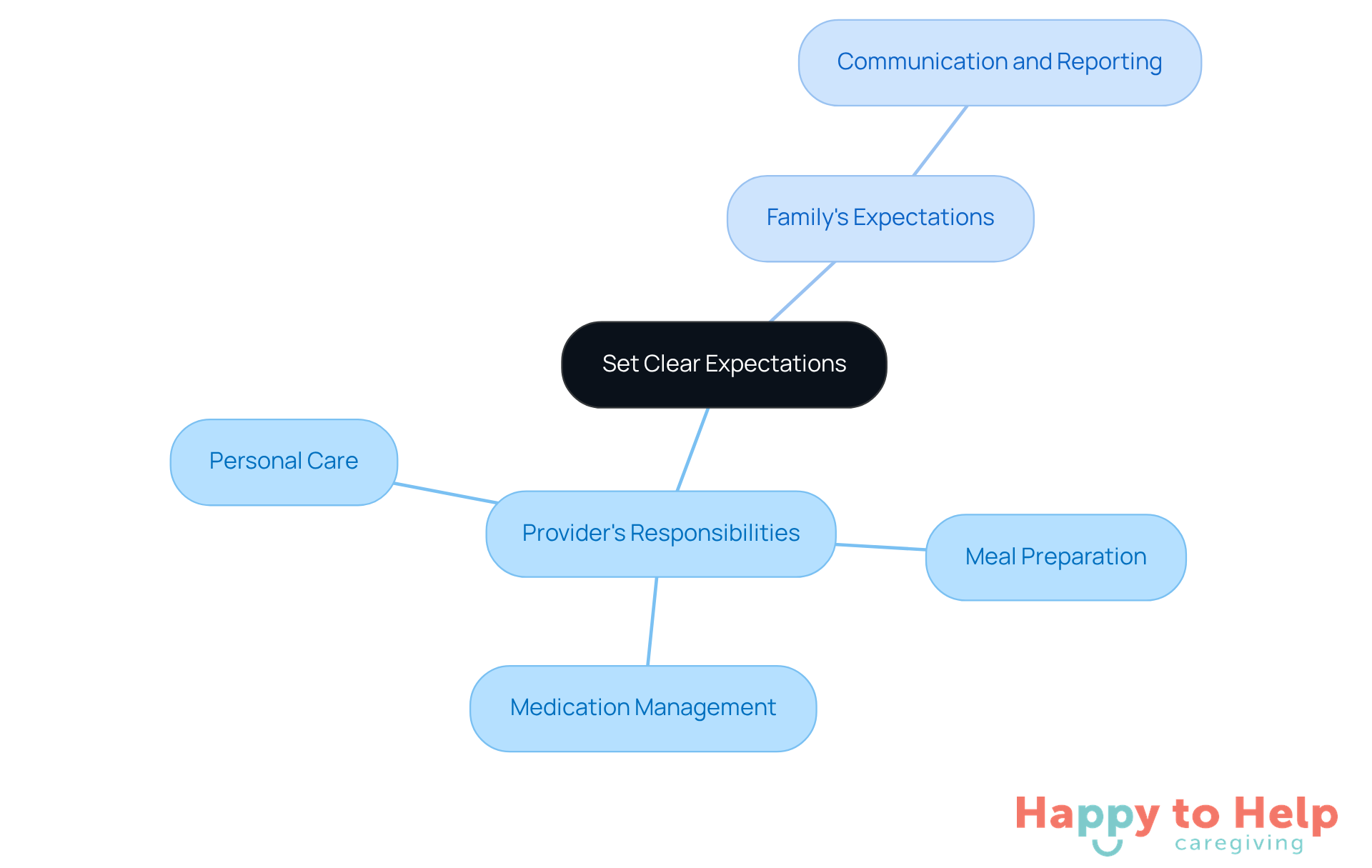
Establishing clear expectations about the provider's roles and responsibilities is crucial for a successful caregiving arrangement. When these expectations are vague, it can lead to misunderstandings that affect the quality of care. Caregivers may struggle with unclear duties, which can result in frustration for both the provider and the family.
To address this issue, it's essential to discuss specific responsibilities that the helper will manage. This includes:
- Personal care
- Meal preparation
- Medication management
Additionally, outlining the family's expectations regarding communication and reporting is vital. By clarifying these roles, both parties can align their goals and work together more effectively.
Create a Comfortable Environment: Enhance Caregiver Effectiveness
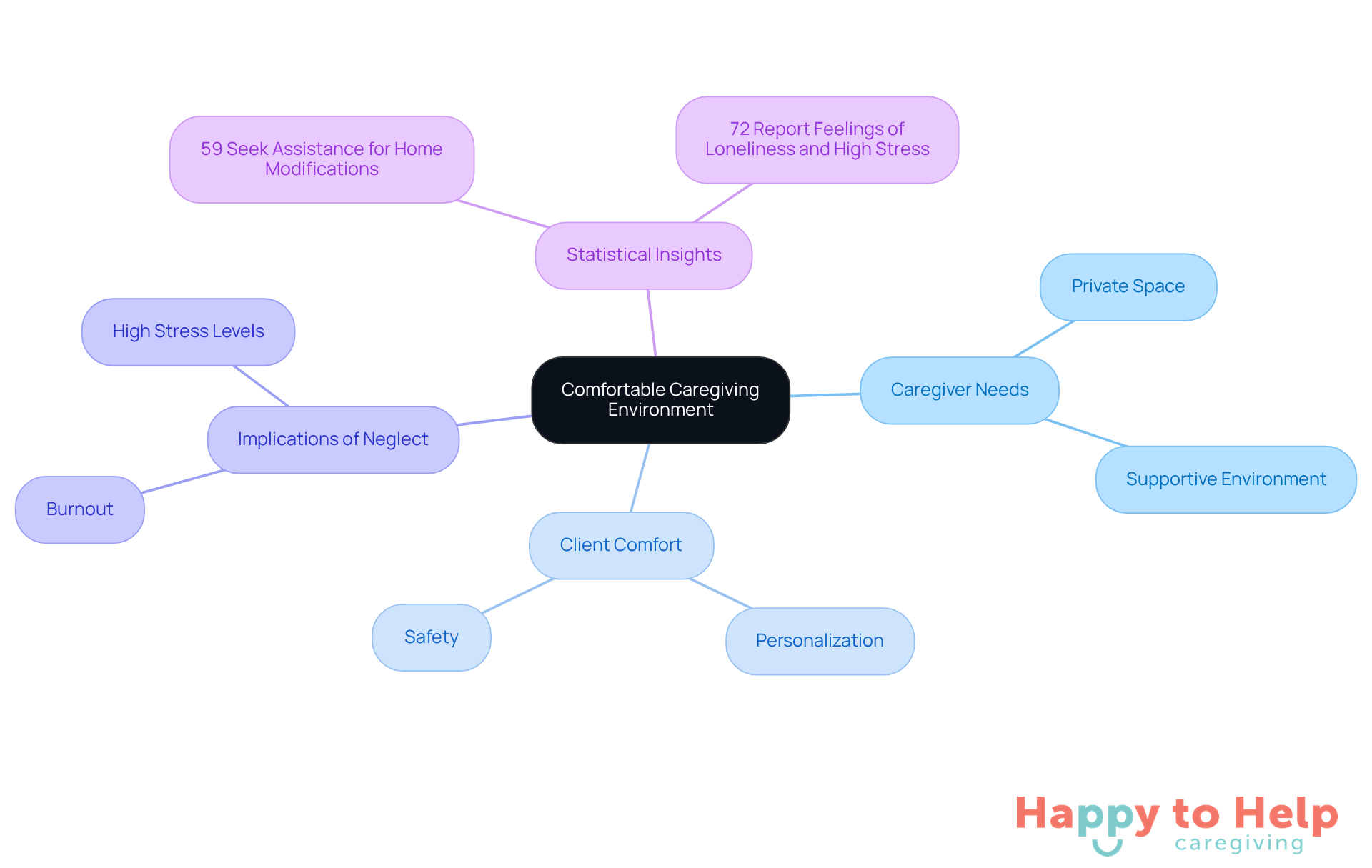
Establishing a comfortable and safe environment is crucial for effective caregiving. Caregivers often face the problem of burnout, which can stem from working in a space that is not conducive to their well-being. A clean, well-lit area free from hazards not only promotes safety but also enhances the overall caregiving experience.
The implications of neglecting this aspect can be significant. Personalizing the environment with familiar items can provide emotional comfort to clients, fostering a sense of security. However, it’s equally important to address the needs of caregivers. Offering a private space for them to relax and rejuvenate can greatly lessen burnout.
Research indicates that individuals providing care in supportive environments are less likely to experience high stress levels. In fact, 72% of these individuals report feelings of loneliness and high stress. To combat this, implementing thoughtful home modifications is essential. Ensuring easy access to essential areas and minimizing clutter can further enhance the effectiveness of caregivers.
Moreover, 59% of those providing care seek assistance for home modifications to improve their caregiving environment. By prioritizing both the provider's and client's well-being, families can create a nurturing atmosphere that supports optimal care.
Involve Caregivers in Daily Routines: Promote Engagement and Companionship
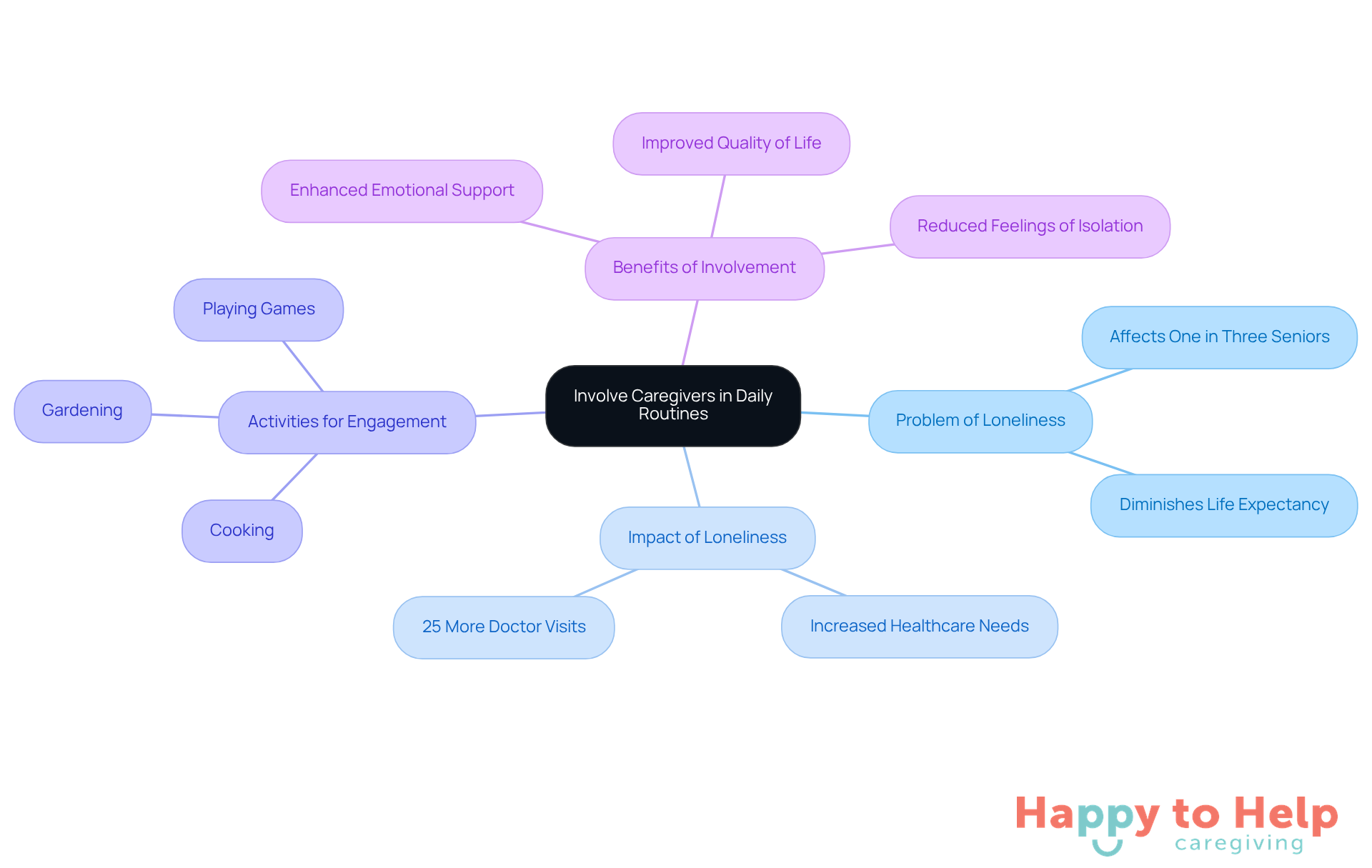
Problem: Many seniors experience loneliness, a condition that affects one in three individuals in this age group. This loneliness can lead to serious health issues, diminishing life expectancy even more than obesity or smoking.
Agitate: Chronic loneliness not only impacts emotional well-being but also results in increased healthcare needs. Research shows that older adults who feel isolated tend to visit the doctor 25% more often than those who have meaningful companionship.
Involving caregivers in daily routines is essential, especially when looking for a live-in caregiver for elderly, as it can significantly enhance engagement and companionship for seniors. Encourage caregivers to participate in activities that your loved one enjoys, such as cooking, gardening, or playing games. These shared experiences build rapport and promote a sense of normalcy and joy in daily life.
Involved caregivers are more likely to provide attentive and compassionate support, which is essential for preserving the emotional and physical well-being of seniors, particularly when families are looking for a live-in caregiver for elderly. By fostering meaningful interactions, families can ensure that their loved ones receive the nurturing support they need to thrive at home.
Implement Regular Check-Ins: Ensure Care Quality and Satisfaction
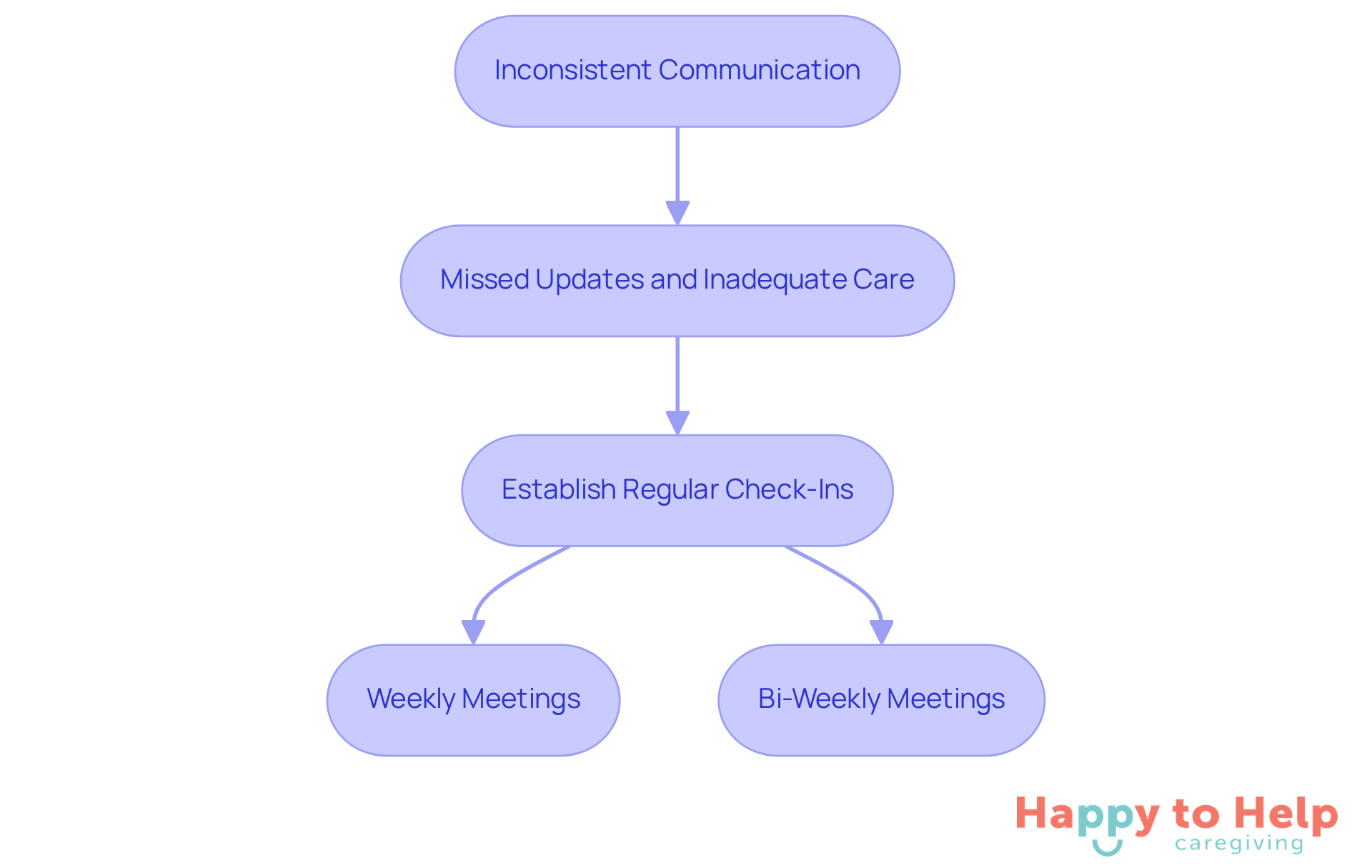
Problem: Inconsistent communication with support providers can lead to misunderstandings and inadequate care for clients.
Agitate: Without regular check-ins, caregivers may miss important updates or concerns, which can compromise the quality of assistance provided. This lack of communication can create gaps in the care plan, ultimately affecting the well-being of those receiving care.
Solution: Establishing regular check-ins with support providers is essential for guaranteeing the quality of assistance offered. Schedule weekly or bi-weekly meetings to discuss the care plan, address any concerns, and gather feedback from both the support person and the client. This practice not only helps identify potential issues early but also reinforces the importance of open communication and collaboration in the caregiving process.
Prioritize Flexibility: Accommodate Caregiver and Family Needs
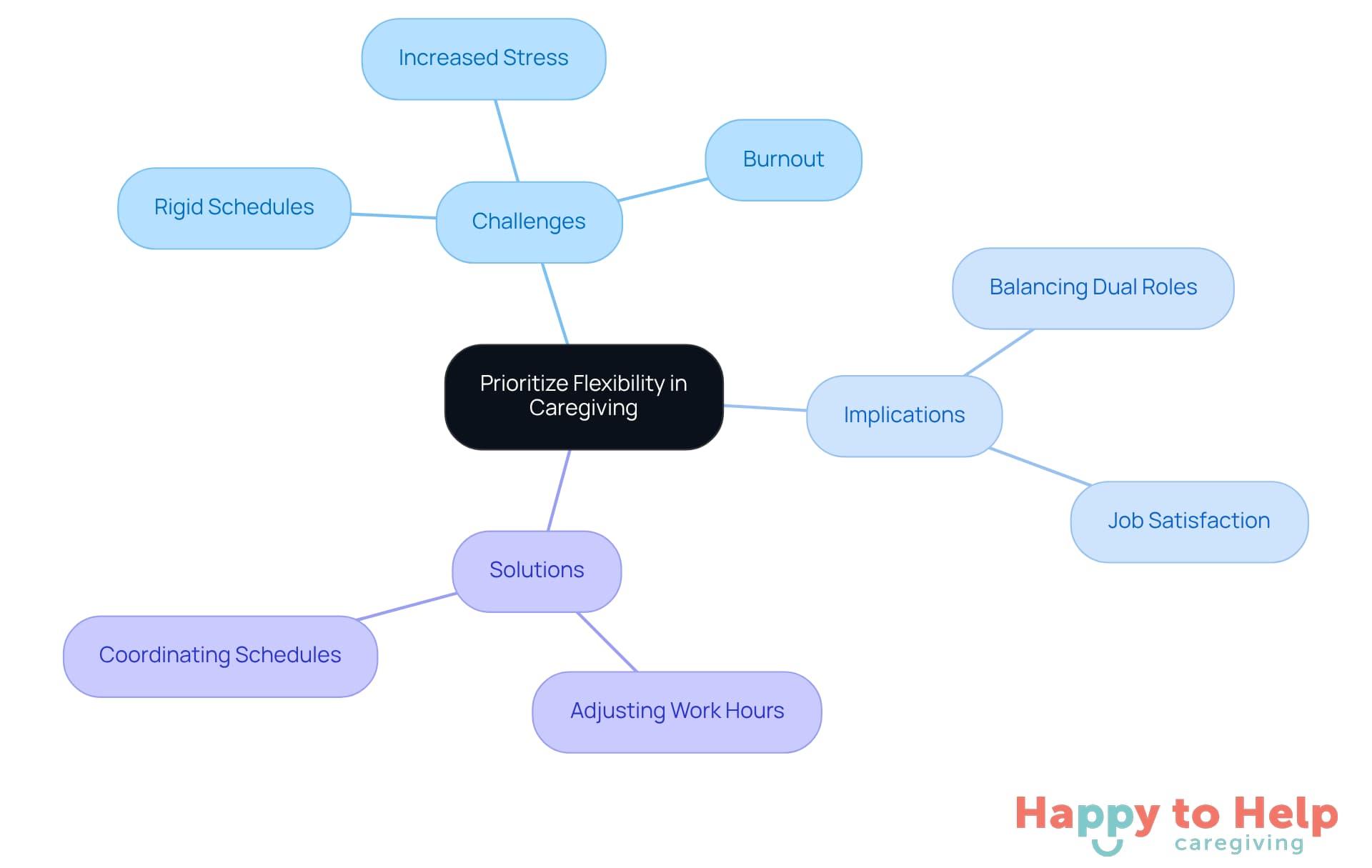
Adaptability in support arrangements poses a significant challenge for caregivers, impacting their ability to meet the evolving needs of both providers and households. Many caregivers struggle with rigid schedules that do not accommodate medical appointments, social gatherings, or changes in a client's health status. This inflexibility can lead to increased stress and burnout, which affects over 60% of those in caregiving roles (National Alliance for Caregiving and AARP).
The implications of this issue are profound. A study found that 70% of employed caregivers face difficulties balancing their dual roles, underscoring the urgent need for more adaptable arrangements. When caregivers can adjust their schedules, it not only enhances their job satisfaction but also fosters a constructive working relationship with families. As one expert noted, "Flexibility in work hours and responsibilities enables individuals in supportive roles to offer the best possible assistance while preserving their own well-being" (Amy Freshman, Senior Director for HR at ADP).
To address these challenges, caregivers can implement several practical solutions:
- Adjusting work hours to ensure presence during critical moments-like hospital visits or recovery processes-can significantly improve the caregiving experience.
- Coordinating schedules with household events fosters a sense of community and support, which is essential for the emotional well-being of both the provider and the client.
In conclusion, emphasizing adaptability in support arrangements is crucial. By prioritizing flexible schedules, caregivers can create a nurturing atmosphere that meets the changing requirements of households and supporters alike.
Review and Adjust Care Plans: Adapt to Changing Needs
Evaluating and modifying support plans is essential for addressing the changing needs of your loved one. Without regular assessments, caregivers may struggle to meet these evolving requirements, leading to inadequate support and diminished quality of life.
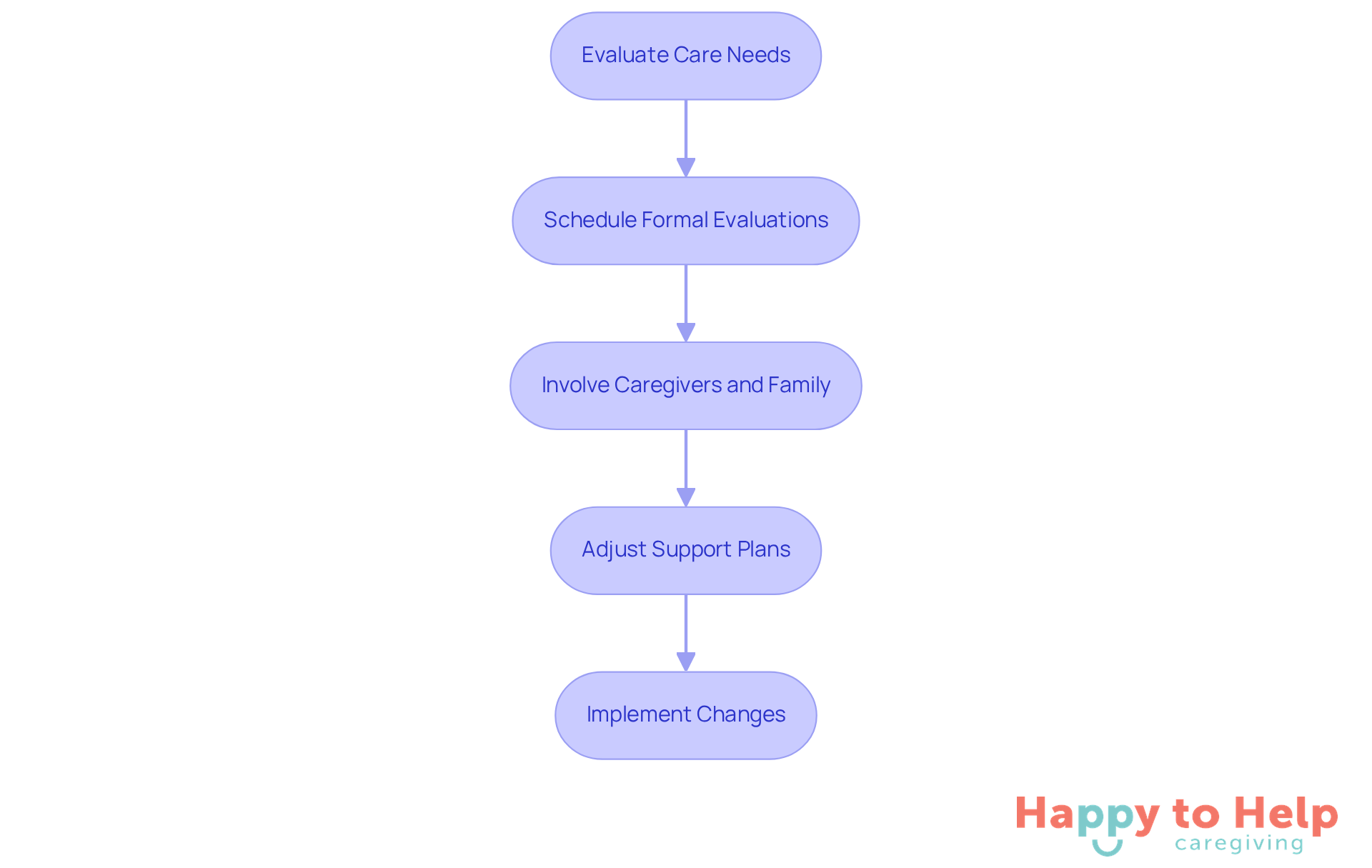
To tackle this issue, schedule formal evaluations every three to six months, or sooner if significant health changes or life circumstances arise. Involving both caregivers and family members in these discussions fosters agreement on support objectives and expectations. This proactive approach not only helps maintain high standards of care but also ensures that the individual’s needs are consistently met, enhancing their overall well-being.
Experts in geriatric management emphasize that adjusting support plans based on ongoing evaluations can lead to better outcomes. This strategy allows for timely interventions and assistance tailored to the person’s changing circumstances. Additionally, incorporating a multidisciplinary team in the evaluation process guarantees a comprehensive approach to care, addressing all aspects of the individual's needs.
Your Path Forward
Finding the right live-in caregiver for elderly loved ones presents a significant challenge that demands careful consideration and planning. Families often struggle with ensuring their loved ones receive the emotional and physical support necessary for thriving at home. This situation can lead to feelings of anxiety and uncertainty about the quality of care provided.
To address these concerns, families should prioritize personalized care by understanding individual needs, conducting thorough background checks, fostering open communication, and setting clear expectations. These steps are crucial in creating a positive caregiving experience that meets the unique requirements of each elderly individual.
Essential strategies for hiring a live-in caregiver include:
- Assessing the unique requirements of the elderly individual.
- Establishing a safe and comfortable environment.
- Involving caregivers in daily routines to promote companionship.
- Implementing regular check-ins to maintain care quality.
By embracing flexibility and adaptability, families can better accommodate the evolving needs of both caregivers and their loved ones, ultimately enhancing the overall caregiving experience.
In summary, hiring a live-in caregiver is not merely about finding assistance for daily tasks; it’s about fostering a nurturing relationship that promotes well-being and connection. Families are encouraged to take a proactive approach, ensuring their loved ones are supported in ways that encourage independence and joy. By following these essential tips, families can create a more fulfilling and secure environment for their elderly members, paving the way for a healthier and happier life at home.
https://iframe.tely.ai/cta/eyJhcnRpY2xlX2lkIjogIjY5MjEwYWI4NjZkNWIxZjhjMDE0MWQ2NCIsICJjb21wYW55X2lkIjogIjY4ZWU1ZGNhNzMxNzYyNTU3ZjNjOTVjMSIsICJpbmRleCI6IG51bGwsICJ0eXBlIjogImFydGljbGUifQ==Frequently Asked Questions
What services does Happy to Help Caregiving offer for seniors?
Happy to Help Caregiving provides personalized in-home support for seniors, including companionship care, post-hospital recovery assistance, respite care, and palliative support care.
How does Happy to Help Caregiving enhance the quality of life for seniors?
They focus on fostering independence and well-being by ensuring clients receive necessary support, emotional assistance, and engagement in enjoyable activities to combat feelings of loneliness and isolation.
Why is it important to assess individual needs when looking for a live-in caregiver for elderly?
Conducting a thorough assessment helps caregivers understand their loved one's unique needs, preferences, and specific requirements, which enhances the quality of care and fosters a sense of comfort and security.
What safety measures should families consider when selecting a live-in caregiver for elderly?
Families should conduct thorough background checks, including criminal history, employment verification, and reference checks, to ensure the trustworthiness of caregivers and mitigate risks.
What are the implications of insufficient vetting for caregivers?
Insufficient vetting can expose families to potential dangers, including elder financial abuse, which costs older Americans billions annually, and increases the risk of various forms of abuse among seniors.
What steps can families take to ensure caregiver safety?
Families should implement a rigorous vetting process that includes asking for certifications or training, continuous observation of support providers, and adhering to safety standards to maintain a secure environment for clients.
List of Sources
- Happy to Help Caregiving: Personalized In-Home Support for Seniors
- New Survey Reveals Americans Want More Personalized Care Insights from their Health Tech (https://prnewswire.com/news-releases/new-survey-reveals-americans-want-more-personalized-care-insights-from-their-health-tech-302578448.html)
- National Alliance for Caregiving: Caregiving in the US 2025 Report (https://johnahartford.org/resources/view/national-alliance-for-caregiving-caregiving-in-the-us-2025-report)
- Caregiver Statistics: Demographics (https://caregiver.org/resource/caregiver-statistics-demographics)
- She cares for her aging parents full time. That requires taking care of herself, too (https://npr.org/2025/11/20/nx-s1-5522341/unpaid-caregivers-elderly-support)
- Top Trends in Senior Care Services for 2024 (https://westmontliving.com/blog/assisted-living/top-10-trends-in-senior-care-services-for-2024)
- Assess Individual Needs: Tailor Care to Your Loved One's Requirements
- Family Caregiver Support, Education Needs Growing (https://hospicenews.com/2025/11/11/family-caregiver-support-education-needs-growing)
- Customized Care at Home: The Benefits of Personalized Care Plans - VNA Health Group (https://vnahg.org/customized-care-at-home-the-benefits-of-personalized-care-plans)
- U.S. News to Debut Best Home Health Ratings in 2026 (https://usnews.com/info/blogs/press-room/articles/2025-11-03/u-s-news-to-debut-best-home-health-ratings-in-2026)
- The Importance of Personalized In-Home Care Services for Seniors - (https://homecare-aid.com/the-importance-of-personalized-in-home-care-services-for-seniors)
- Personalized Care for Seniors: Feel Seen, Supported, Empowered (https://harborchase.com/blogs/what-personalized-care-for-seniors-looks-like)
- Conduct Background Checks: Ensure Safety and Trustworthiness
- Hearing on streamlining home‑care worker background checks spotlights long delays and gaps in paid care (https://citizenportal.ai/articles/6117533/Hearing-on-streamlining-homecare-worker-background-checks-spotlights-long-delays-and-gaps-in-paid-care)
- Characteristics of background check findings in nursing students (https://sciencedirect.com/science/article/abs/pii/S8755722324000541)
- The Case For Stronger Caregiver Vetting In Home Care (https://homehealthcarenews.com/2024/10/the-case-for-stronger-caregiver-vetting-in-home-care)
- Home Health Agencies Conducted Background Checks of Varying Types (https://oig.hhs.gov/reports/all/2015/home-health-agencies-conducted-background-checks-of-varying-types)
- The Importance of Background Checks on In-Home Caregivers - Critical Research (https://criticalresearch.com/background-checks/importance-background-checks-home-care)
- Establish Clear Communication: Foster a Positive Caregiver Relationship
- The Importance of Effective Communication in Caregiving (https://familycaregiversonline.net/the-importance-of-effective-communication-in-caregiving)
- Effective Communication Between Families and Caregivers (https://dailydovecare.com/effective-communication-between-families-and-caregivers)
- Determining Evidence for Family Caregiver Communication: Associating Communication Behaviors With Breakdown and Repair - PMC (https://pmc.ncbi.nlm.nih.gov/articles/PMC10474591)
- Communication Breakdowns Take Toll on Family Caregivers, Especially for Older Adults with Chronic Illness (https://ltcnews.com/articles/communication-breakdowns-toll-family-caregivers-older-adults-chronic-illness)
- The Importance of Effective Communication in Home Care (https://blog.nevvon.com/the-importance-of-effective-communication-in-home-care)
- Set Clear Expectations: Define Roles and Responsibilities
- What Expectations Should I Set for the Caregiver? - Caring.com (https://caring.com/resources/what-expectations-should-i-set-for-the-caregiver)
- Caregiver Statistics: Demographics (https://caregiver.org/resource/caregiver-statistics-demographics)
- Caregiving Crisis: 45% Increase in Americans Providing Care (https://aarp.org/caregiving/basics/caregiving-in-us-survey-2025)
- The Caregiving Landscape: Data & Insights on the Caregiver Experience in the U.S. (https://caregiveraction.org/caregiver-statistics)
- 10 Common Caregiving Tasks to Do for Your Older Loved One (https://health.usnews.com/senior-care/caregiving/articles/common-caregiver-duties)
- Create a Comfortable Environment: Enhance Caregiver Effectiveness
- Home-Based Care Companies Improve Outcomes By Training Family Caregivers (https://homehealthcarenews.com/2025/10/home-based-care-companies-improve-outcomes-by-training-family-caregivers)
- Caregiving can be a tough, lonely mission. One daughter found ways to reconnect (https://npr.org/sections/shots-health-news/2024/10/31/nx-s1-5172517/caregiver-caregiving-isolation-burnout-resources)
- Caregiver Statistics: Health, Technology, and Caregiving Resources (https://caregiver.org/resource/caregiver-statistics-health-technology-and-caregiving-resources)
- 39 Caregiver Statistics, Facts & Trends (https://humancareny.com/blog/39-caregiver-statistics-facts-trends)
- AltaMed PACE: Helping caregivers keep their loved ones safe, comfortable, healthy, and in their own home | AltaMed (https://altamed.org/news/altamed-pace-helping-caregivers-keep-their-loved-ones-safe-comfortable-healthy-and-their-own)
- Involve Caregivers in Daily Routines: Promote Engagement and Companionship
- Unpaid caregivers find moments of joy in daily life | Survey Research Center (https://src.isr.umich.edu/news-events/news/unpaid-caregivers-find-moments-of-joy-in-daily-life)
- 39 Caregiver Statistics, Facts & Trends (https://humancareny.com/blog/39-caregiver-statistics-facts-trends)
- Caregiver Statistics: Work and Caregiving (https://caregiver.org/resource/caregiver-statistics-work-and-caregiving)
- 10 Benefits of Companionship Carers for Seniors' Well-Being - Happy To Help (https://happytohelpcaregiving.com/10-benefits-of-companionship-carers-for-seniors-well-being)
- Celebrating National Family Caregivers Month with BLS Data : U.S. Bureau of Labor Statistics (https://bls.gov/blog/2023/celebrating-national-family-caregivers-month-with-bls-data.htm)
- Implement Regular Check-Ins: Ensure Care Quality and Satisfaction
- The Caregiving Landscape: Data & Insights on the Caregiver Experience in the U.S. (https://caregiveraction.org/caregiver-statistics)
- D-CARE study finds caregiver satisfaction higher with dementia care programs than usual care (https://uclahealth.org/news/release/d-care-study-finds-caregiver-satisfaction-higher-with)
- 27 Inspirational Quotes for Caregivers (https://ultimatecareny.com/resources/27-quotes-for-caregivers)
- Caregiver Statistics: Demographics (https://caregiver.org/resource/caregiver-statistics-demographics)
- 20 Caregiver Quotes for Inspiration - Home Helpers Bradenton (https://homehelpershomecare.com/bradenton/community-blog/2017/june/20-inspirational-caregiver-quotes)
- Prioritize Flexibility: Accommodate Caregiver and Family Needs
- The need for caregiving benefits may have reached a fever pitch (https://hrdive.com/news/sandwich-generation-needs-caregiving-benefits/802864)
- Why Flexible Working Arrangements Have Staying Power | PLANADVISER (https://planadviser.com/why-flexible-working-arrangements-have-staying-power)
- Caregiver Statistics: Work and Caregiving (https://caregiver.org/resource/caregiver-statistics-work-and-caregiving)
- Helping Caregivers Thrive With Caregiver Leave, Flexible Work and More (https://adp.com/spark/articles/2025/03/helping-caregivers-thrive-with-caregiver-leave-flexible-work-and-more.aspx)
- Understanding the use of Flexible Work Arrangements Among Older New Zealand Caregivers - PMC (https://pmc.ncbi.nlm.nih.gov/articles/PMC10088344)
- Review and Adjust Care Plans: Adapt to Changing Needs
- Monitoring and evaluating the effectiveness of the care plan | RT Medical Home Healthcare (https://rtmedhealth.com/monitoring-and-evaluating-the-effectiveness-of-the-care-plan)
- Many seniors unprepared for Medicare plan cost and benefit changes (https://healthcarefinancenews.com/news/many-seniors-unprepared-medicare-plan-cost-and-benefit-changes)
- Importance of Regular Review and Adaptation of Care Plans (https://catalystgrp.co.uk/blog/importance-of-regular-review-and-adaptation-of-care-plans)
- Medicare Updates Every Caregiver Should Know (https://theseniorsource.org/medicare-updates-every-caregiver-should-know)
- Warning From Older Adults: Care for Aging in America Needs Urgent Rethinking (https://johnahartford.org/newsroom/view/warning-from-older-adults-care-for-aging-in-america-needs-urgent-rethinking)