
The Importance of Choosing a Companionship Agency for Care
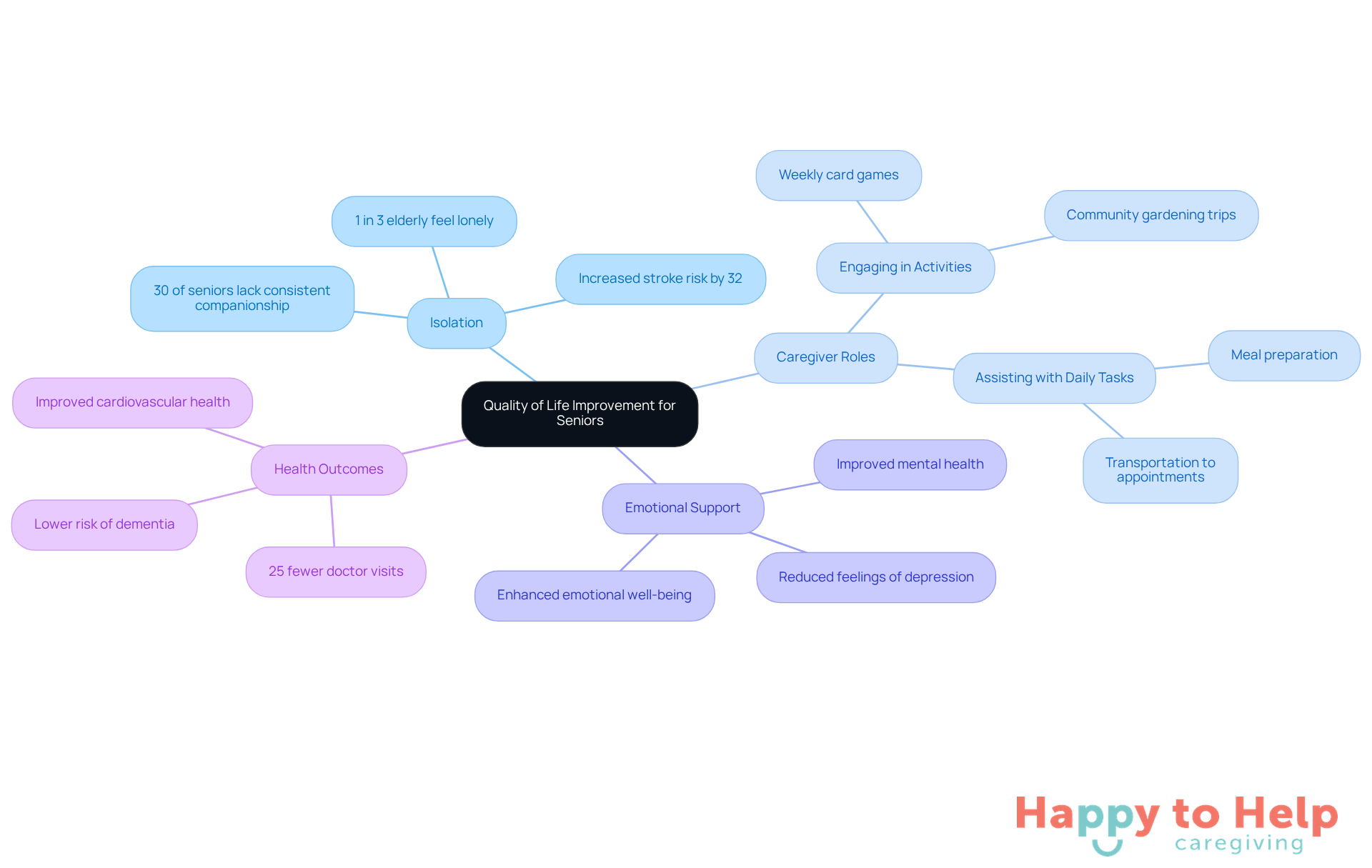
Companionship is more than just a pleasant addition to daily life; it is a crucial element in enhancing the well-being of older adults. Alarmingly, one in three seniors experiences chronic loneliness, highlighting a significant problem that demands attention. This pervasive issue not only affects emotional health but can also lead to serious physical health consequences, making the need for effective companionship services more pressing than ever.
Choosing a companionship agency offers a viable solution to this growing concern. Personalized care can alleviate feelings of isolation, providing emotional support that fosters independence and improves quality of life. By tailoring companionship services to meet individual needs, caregivers can help seniors feel valued and connected.
Can a tailored approach to companionship truly transform the lives of seniors? The answer lies in the profound impact that meaningful interactions can have on their overall well-being.
Happy to Help Caregiving: Personalized Companionship for Enhanced Well-Being
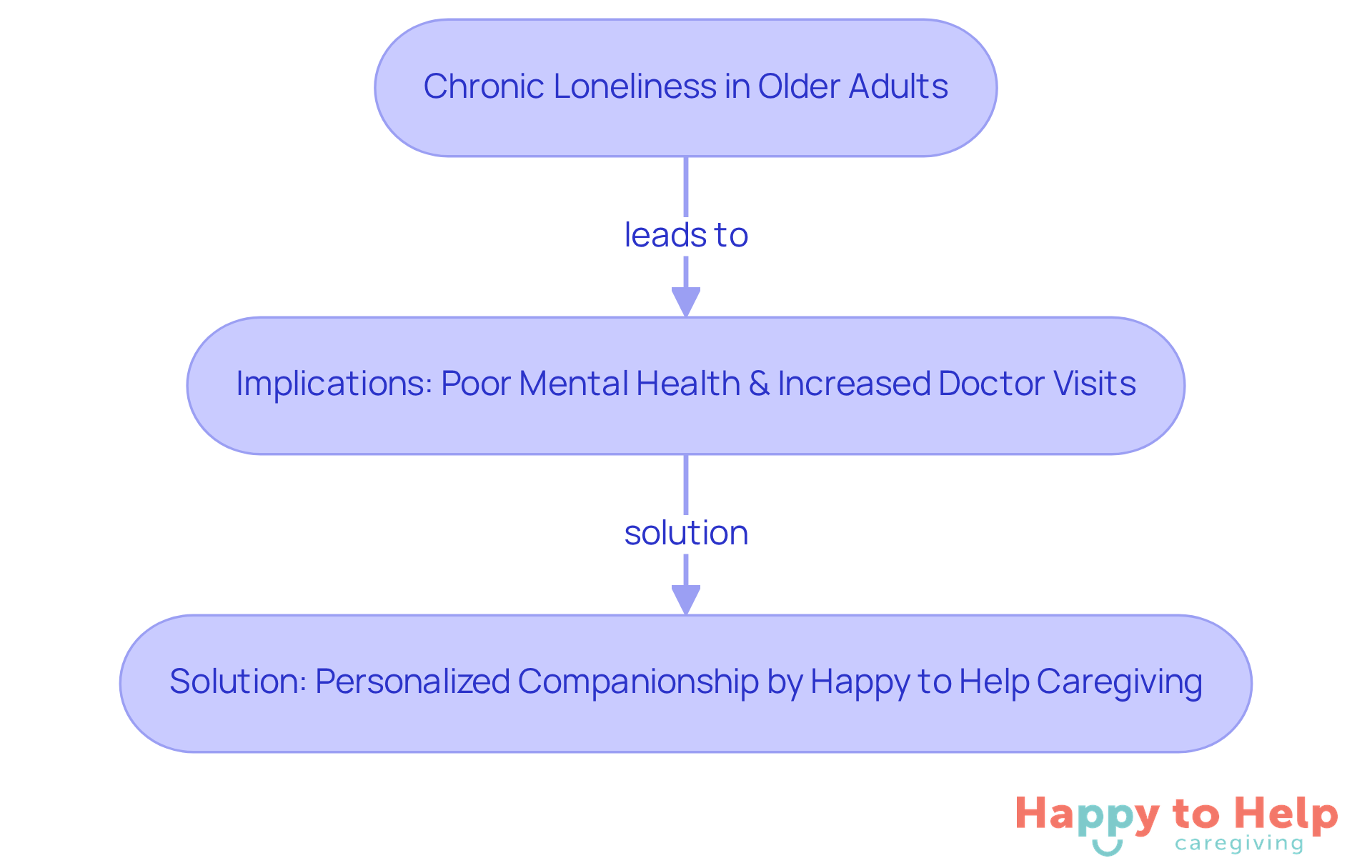
Problem: Many older adults face chronic loneliness, which significantly impacts their mental health and overall well-being. Research shows that one in three older individuals experiences this issue, leading to detrimental effects on their quality of life.
Agitate: The implications of loneliness are profound. Older adults who feel isolated often report poorer mental health outcomes. Additionally, those not receiving adequate companionship may find themselves visiting doctors more frequently, with studies indicating that individuals utilizing in-home assistance have 25% fewer doctor visits each year compared to those who do not.
Solution: Happy to Help Caregiving addresses these challenges by providing tailored companionship agency that enhances the emotional and physical well-being of older adults and individuals with special needs. By customizing support to personal preferences, caregivers create a nurturing atmosphere that fosters independence and improves daily functioning. This personalized approach not only ensures clients feel valued but also strengthens the bond between caregivers and clients, enabling older adults to thrive in their own homes.
Incorporating personalized companionship agency programs can lead to significant improvements in mental health and overall happiness for older adults. By focusing on building these connections, caregivers can make a meaningful difference in the lives of those they support.
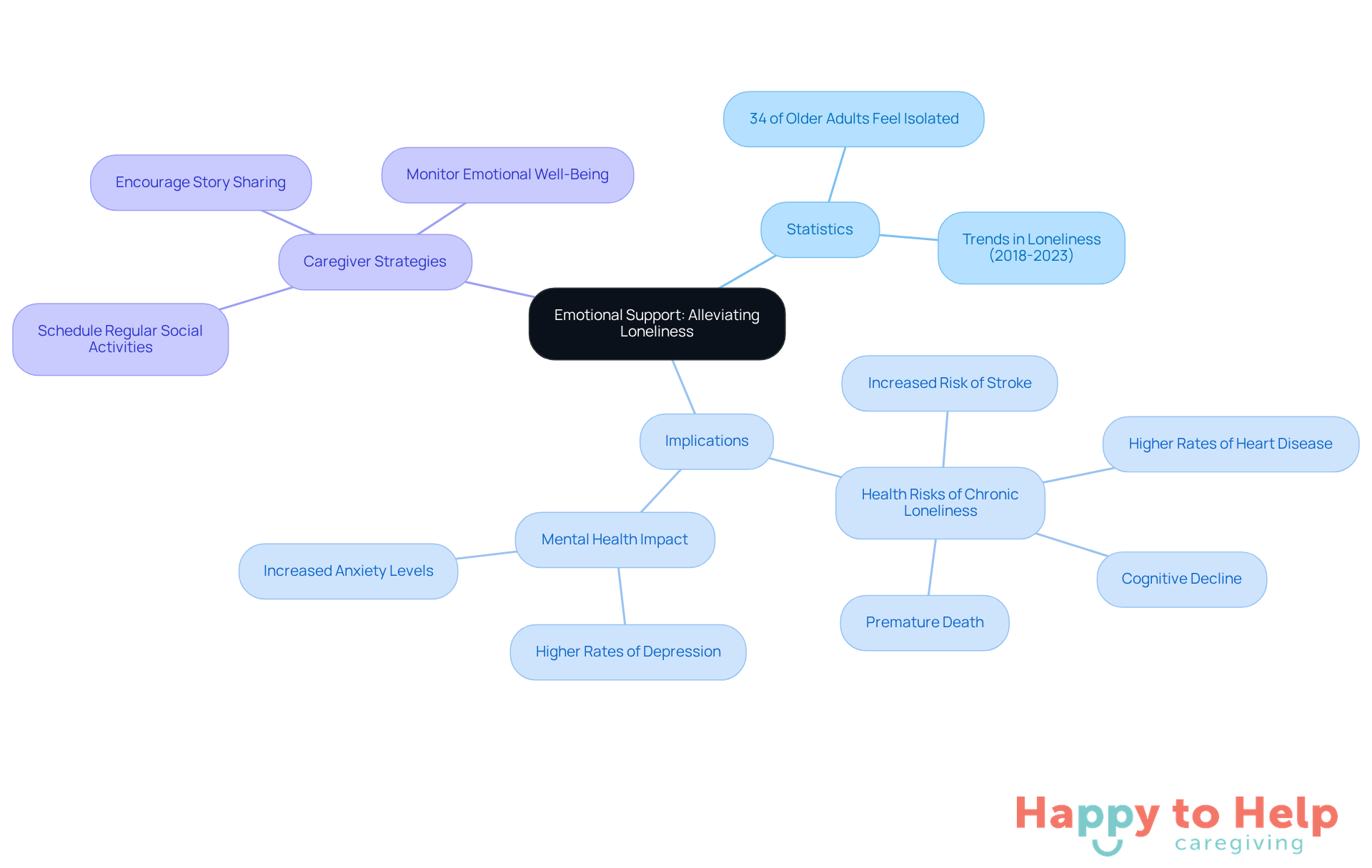
Emotional Support: Alleviating Loneliness Through Companionship
Companionship services address a significant problem: loneliness and isolation among seniors. Many older adults experience these feelings, which can lead to serious emotional distress. In fact, in 2023, 34% of older adults reported feeling isolated, underscoring the urgent need for social connections.
The implications of chronic loneliness are alarming. Research indicates that it is linked to increased rates of stroke, heart disease, diabetes, cognitive decline, and even premature death. Moreover, regular social engagement can notably lessen symptoms of depression and anxiety. Just a few hours of social connection each week can significantly enhance mental well-being.
So, what can caregivers do? By actively engaging clients in meaningful conversations and enjoyable activities, caregivers can foster connections that enhance emotional stability. Emphasizing social engagement not only improves the quality of life for older adults but also supports their overall health and recovery.
Incorporating a companionship agency into caregiving routines can make a profound difference. Here are some actionable tips for caregivers:
- Schedule regular social activities, such as games or group outings.
- Encourage clients to share their stories and experiences, fostering deeper connections.
- Monitor emotional well-being and adjust activities based on individual preferences.
By focusing on these strategies, caregivers can effectively combat loneliness and promote a healthier, happier life for seniors.
Daily Living Assistance: Facilitating Independence and Comfort
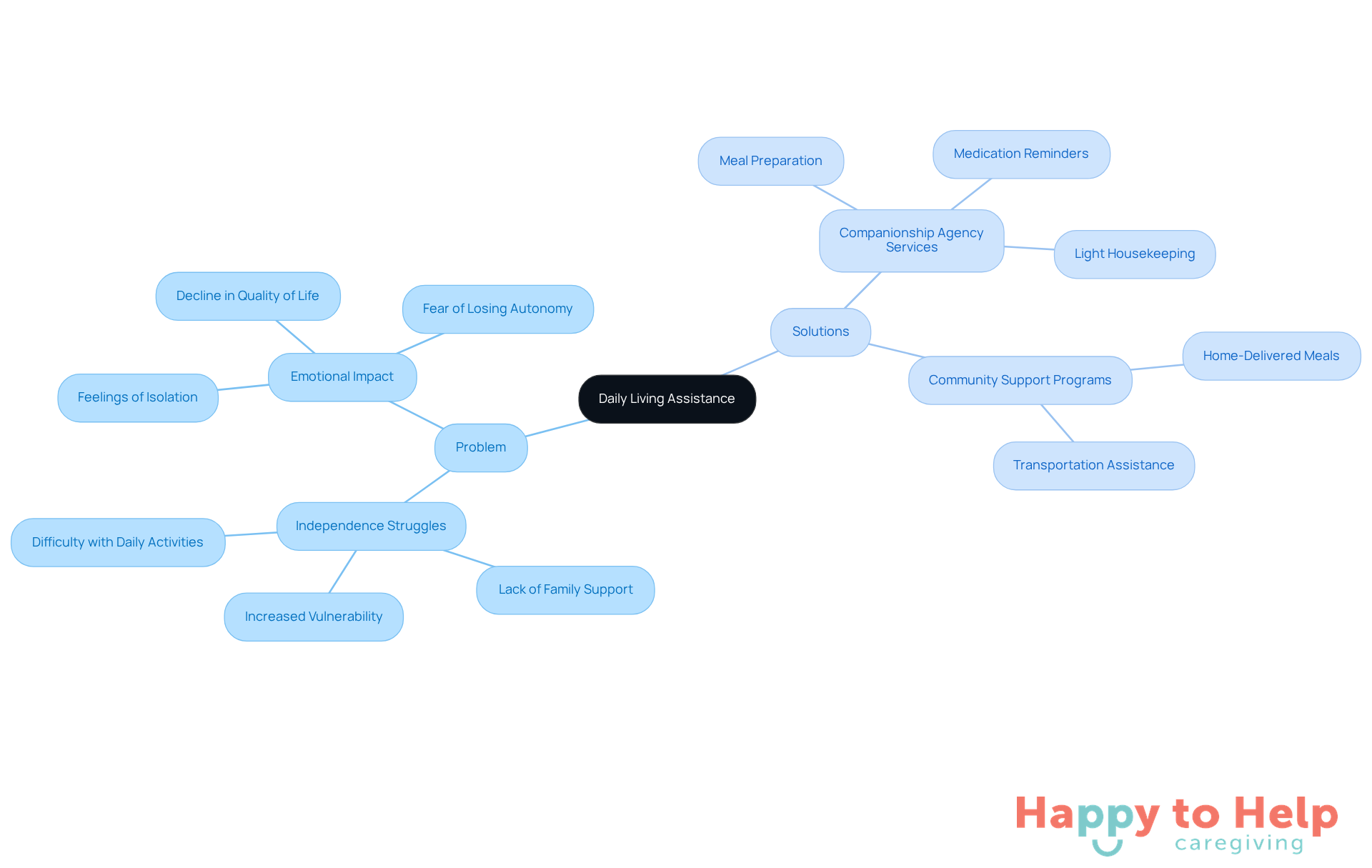
Problem: Many elderly individuals struggle to maintain their independence due to the challenges of daily living tasks.
Agitate: This situation can lead to feelings of isolation and a decline in quality of life, as they may require assistance with essential activities. Without proper support, their comfort and autonomy can be significantly compromised.
Companionship agency offerings extend beyond emotional support to include crucial daily living assistance. Caregivers can help with activities such as:
- Meal preparation
- Medication reminders
- Light housekeeping
By providing this support, caregivers enable elderly individuals to remain comfortable in their own homes, enhancing their quality of life and fostering a sense of autonomy.
Social Engagement: Fostering Connections and Reducing Isolation
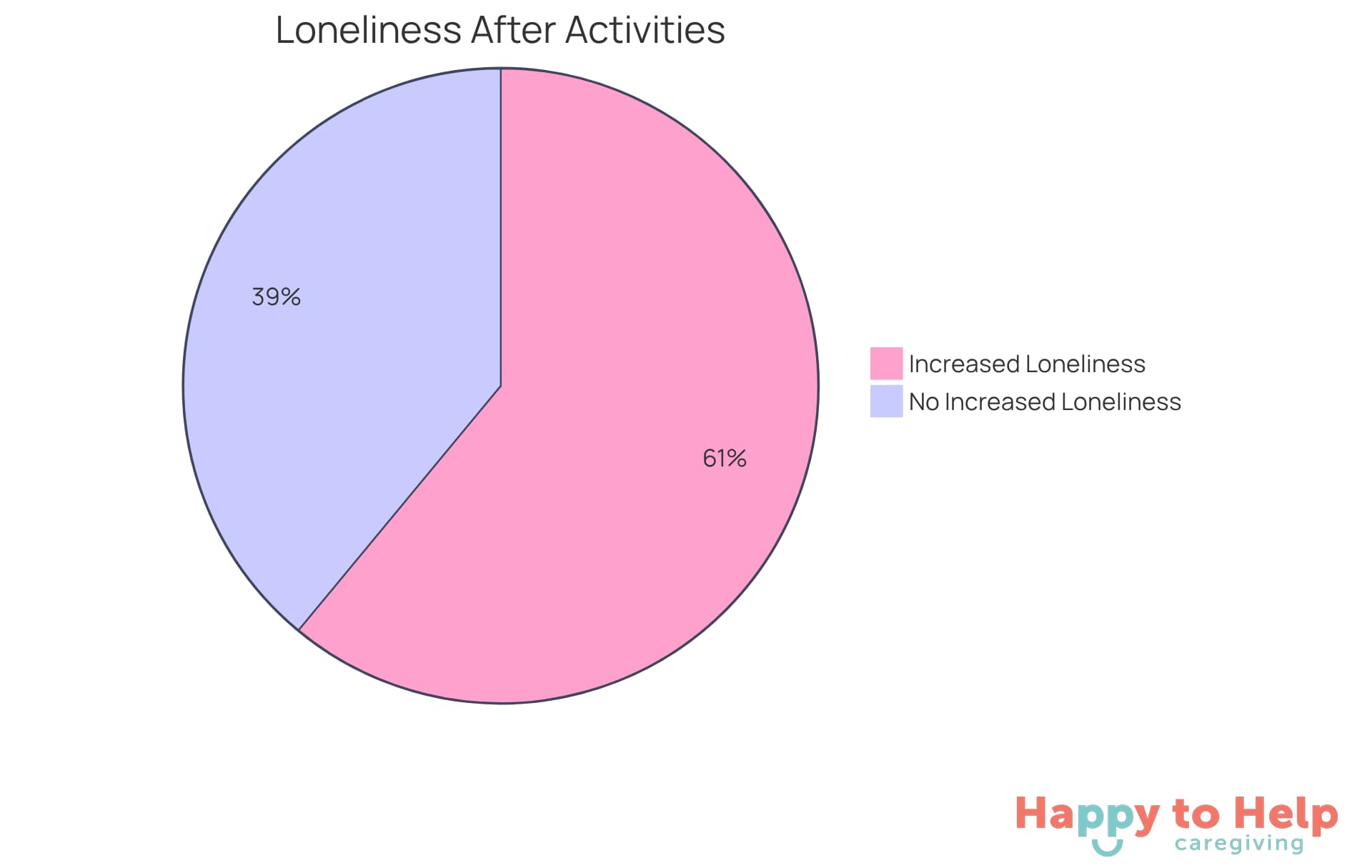
Social engagement poses a significant challenge in companionship agency services, as many elderly individuals face feelings of isolation. This issue is not just a minor inconvenience; it can deeply affect their mental health and overall well-being. In fact, studies show that 61% of older adults report increased feelings of loneliness after participating in social activities, highlighting the urgency of addressing this problem.
To combat these feelings of isolation, caregivers can implement practical solutions offered by a companionship agency that foster social interaction. Activities such as:
- Shared hobbies
- Outings
- Meaningful conversations
can create vital connections. Engaging in:
- Group games
- Arts and crafts
- Community outings
not only enhances mood but also supports overall well-being. These activities are essential components of effective elderly care, as they promote cognitive health and better mental health outcomes for older adults.
Post-Hospital Recovery Support: Aiding Transition to Home Life
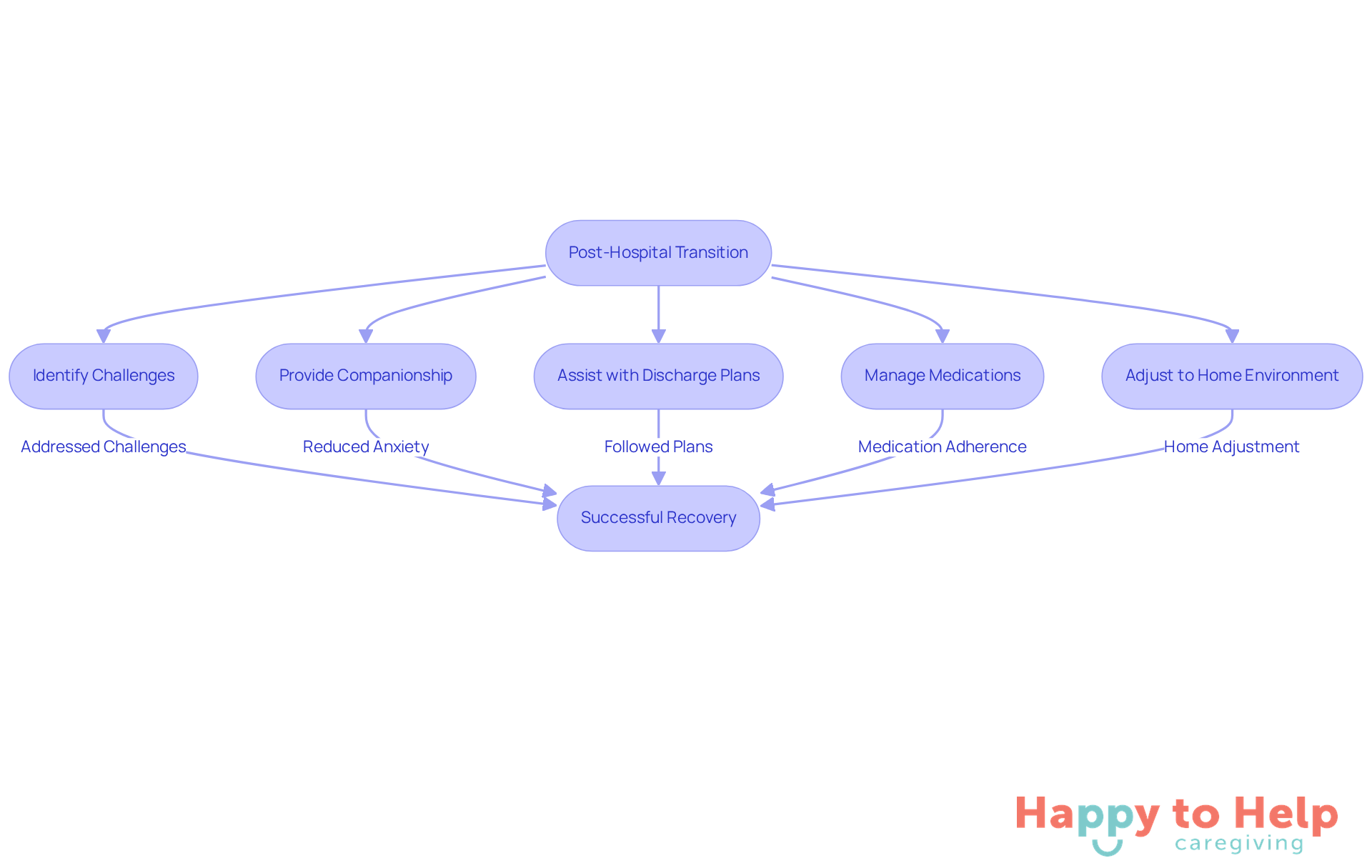
After a hospital stay, many seniors encounter significant challenges when transitioning back to home life. This situation can lead to feelings of isolation and anxiety, making recovery more difficult. Companionship agency plays a crucial role in addressing these issues by providing essential support during this recovery phase.
These services help clients adhere to discharge plans, manage medications, and adjust to their home environment. Caregivers offer reassurance and assistance, which can significantly reduce anxiety and promote a successful recovery. By ensuring that seniors have the support they need, caregivers can help them navigate this challenging time more effectively.
Tailored Care Plans: Customizing Support for Individual Needs
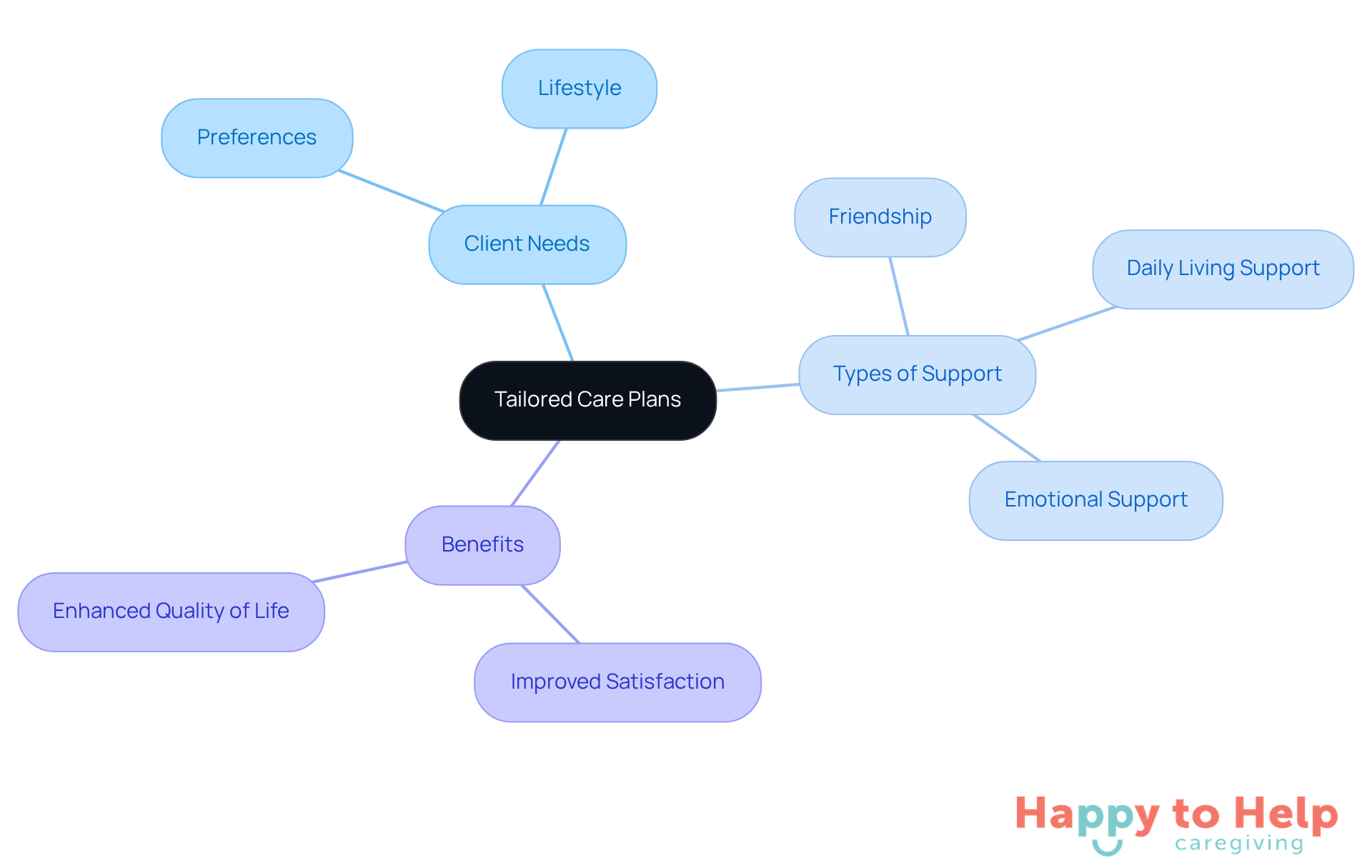
Caregivers often face the challenge of meeting the diverse needs of their clients. Without a tailored approach, they may struggle to provide the necessary support, which can lead to decreased client satisfaction and quality of life.
Customized support plans are essential in addressing this issue. Each client receives a plan that reflects their specific needs, preferences, and lifestyle. This tailored focus not only ensures that caregivers can offer the most efficient assistance-whether it includes friendship, daily living support, or emotional support-but also significantly enhances the quality of life for their clients.
By adapting to individual circumstances, caregivers can effectively improve their service delivery. Implementing these customized plans allows caregivers to provide the right support at the right time, fostering a more meaningful connection with their clients.
Cost-Effectiveness: Maximizing Value in Companionship Services
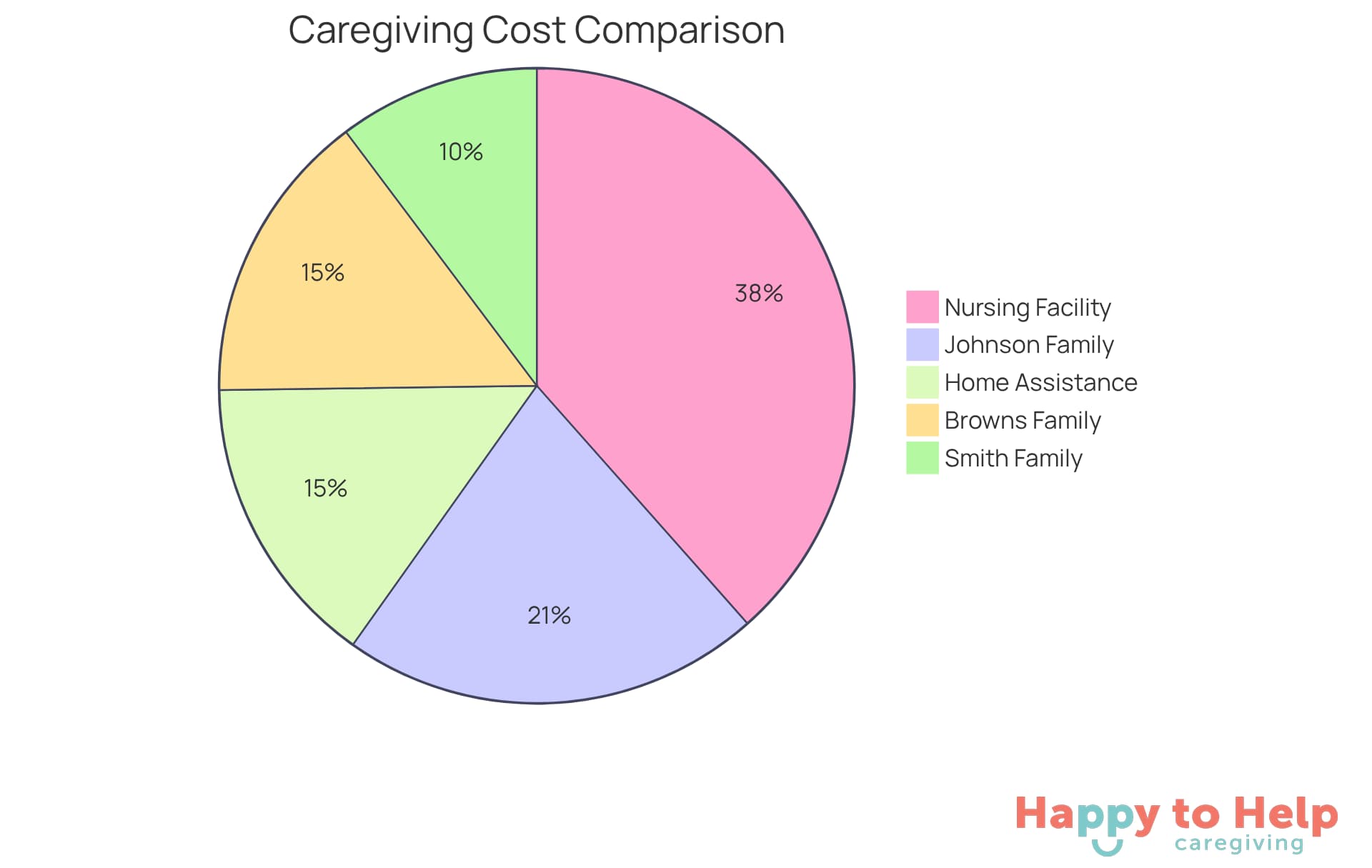
Choosing a companionship agency can be a financially wise decision for families seeking assistance for their loved ones. The problem is that traditional caregiving methods often come with hefty price tags. For instance, the typical yearly expense for home assistance in 2021 was around $42,000, significantly less than the average of $108,000 for a private room in a nursing facility. This stark contrast highlights the financial advantages of opting for social support.
Families can customize companionship choices to fit their specific needs, ensuring they receive quality support without overspending. For example:
- The Johnson family incurs $5,000 monthly for a live-in caregiver in a city.
- The Browns, facing rural challenges, pay $3,500 for similar services.
- The Smith family pays $2,400 per month for a part-time caregiver visiting four times a week.
These examples illustrate how individualized support can be tailored to diverse situations, ultimately leading to improved financial outcomes.
Financial advisors frequently emphasize the importance of non-medical support, noting that it enhances the quality of life for seniors while lowering overall healthcare expenses. By preventing hospitalizations and reducing the need for emergency medical assistance, social support can lead to significant savings for families. As we approach 2025, the financial benefits of non-medical care are increasingly recognized, as families strive to balance quality care with affordability.
Moreover, social support plays a vital role in alleviating feelings of loneliness and isolation among older adults, which is crucial for their emotional health. This emotional support not only enhances well-being but also contributes to the financial benefits, creating a comprehensive solution for families.
In conclusion, selecting a companionship agency provides essential emotional support for seniors and serves as a cost-efficient alternative to institutional assistance. This makes it a smart investment for families looking to enhance their loved ones' well-being while managing costs. Families are encouraged to assess their financial situation and compare support options to find the best fit for their needs.
Respite Care: Supporting Family Caregivers with Temporary Relief
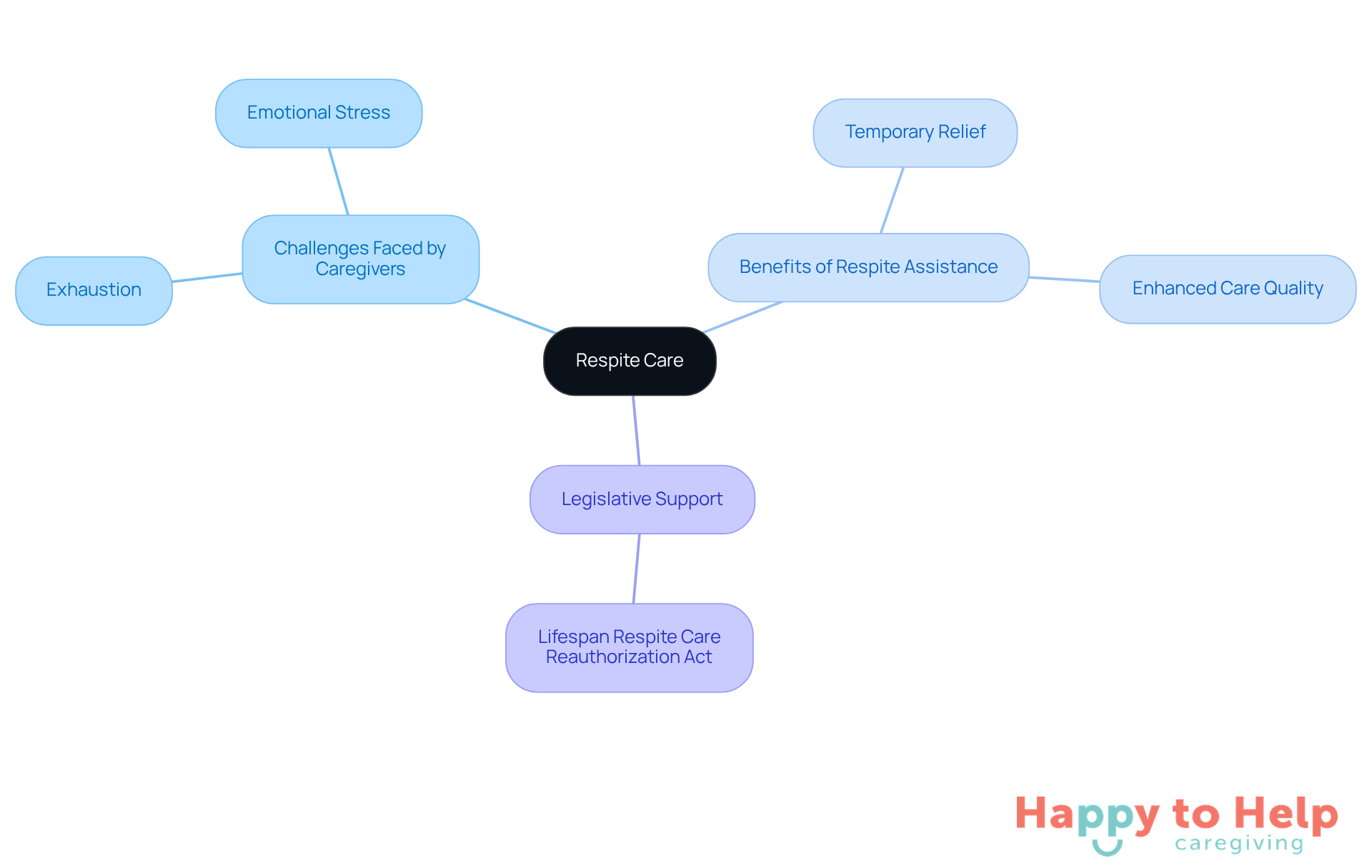
Family caregivers often face significant challenges, including exhaustion and emotional stress. With around 63 million caregivers in the U.S. feeling the weight of these burdens, the need for effective support is clear. Caregiver fatigue not only affects their well-being but also impacts the quality of care provided to their loved ones.
Respite assistance serves as a vital solution, offering temporary relief that allows caregivers to rejuvenate and focus on their own health. By utilizing a companionship agency, families can ensure that their loved ones receive ongoing, high-quality support while caregivers take necessary breaks. This approach not only alleviates caregiver exhaustion but also enhances the overall experience for seniors.
Experts stress the importance of regular breaks for caregivers, as these intervals are crucial for maintaining their mental and physical health. The Lifespan Respite Care Reauthorization Act highlights the growing recognition of respite support's significance, aiming to extend funding for programs that provide short-term relief. By reducing the mental strain on caregivers, respite assistance fosters a healthier, more sustainable caregiving environment, benefiting both caregivers and those they support.
Quality of Life Improvement: Enriching Daily Experiences for Seniors
Companionship agency services address a significant problem: the isolation faced by many elderly individuals. This isolation can lead to a decline in both physical and emotional health, impacting their overall quality of life. Research shows that one in three elderly individuals experiences feelings of loneliness, which can result in increased doctor visits and health issues.
To combat this, caregivers play a crucial role by providing emotional support and engaging clients in enjoyable activities. They assist with daily tasks, fostering a more fulfilling lifestyle. This holistic approach not only meets physical needs but also nurtures social well-being, leading to a more satisfying daily routine. For instance, older adults who receive social support report 25% fewer doctor visits each year, highlighting the positive health outcomes associated with regular social interaction.
Experts emphasize that social connection is essential for emotional well-being. Engaging in meaningful activities with caregivers can transform daily life. Take Mrs. Jenkins, for example; she found joy in her weekly card games with her companion caregiver. Such interactions enhance emotional well-being and contribute to improved mental health, reducing the risk of conditions like depression and anxiety.
The advantages of friendship extend beyond mere socialization. They encompass a comprehensive approach to health that promotes independence and dignity in aging. By nurturing relationships and offering customized assistance, companionship agency support programs play a crucial role in helping older adults lead enriched, vibrant lives. Caregivers can implement these strategies to ensure that their clients not only receive care but also enjoy a fulfilling and connected life.
Technology Integration: Enhancing Communication and Care Coordination
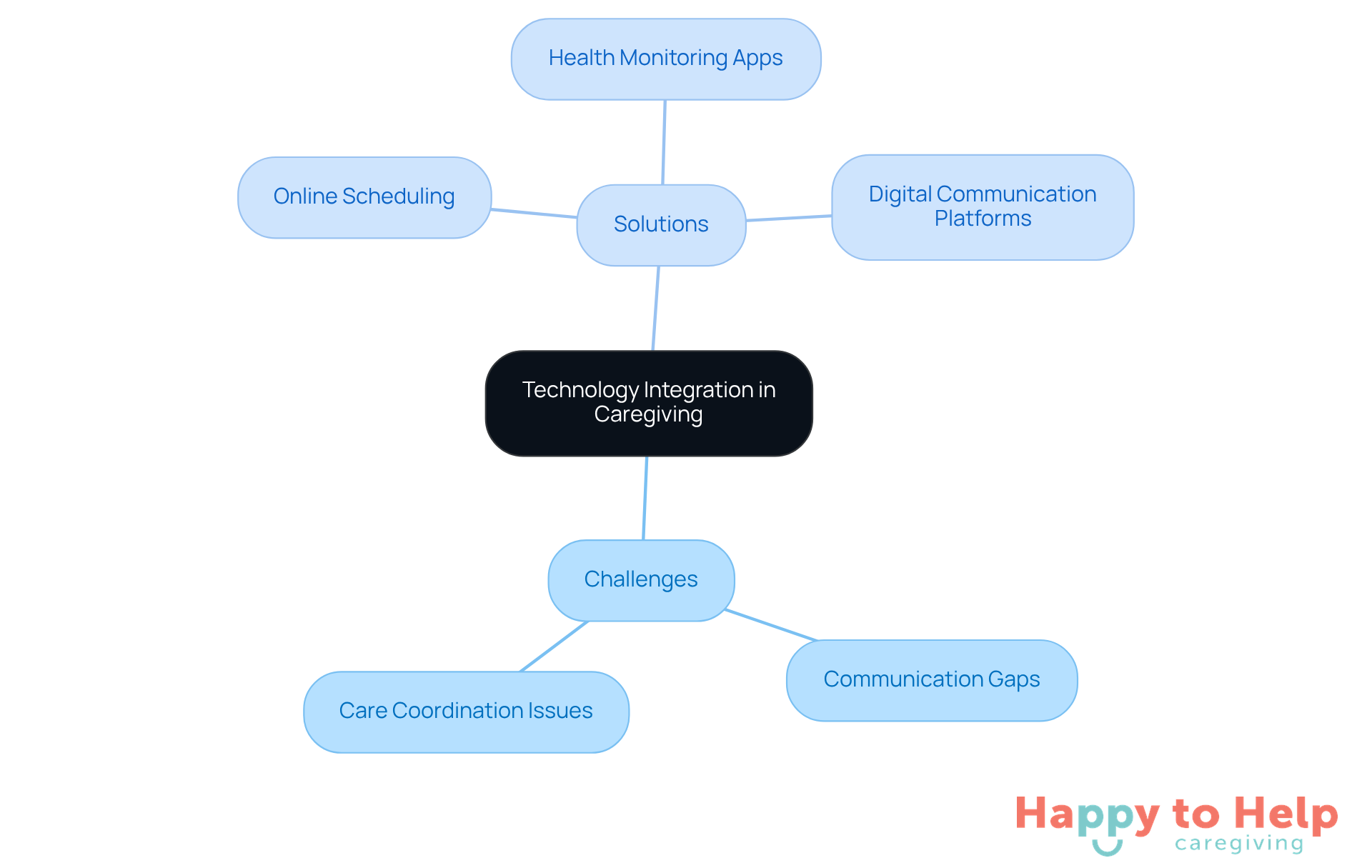
Caregivers often face significant challenges in communication and support coordination, which can hinder the quality of care provided to seniors. When families and healthcare providers are not effectively connected, it can lead to misunderstandings and gaps in care, ultimately impacting the well-being of those they serve.
To address these issues, integrating technology into companionship services offers a practical solution. Tools such as:
- Online scheduling
- Health monitoring apps
- Digital communication platforms
enable caregivers to maintain seamless connections with families and healthcare providers. This ensures that everyone involved in the care process is informed and engaged, leading to improved outcomes for seniors.
Making the Right Choice
Choosing a companionship agency addresses a significant problem: loneliness among older adults. This pervasive issue can lead to detrimental effects on both mental and physical health, making it crucial for caregivers to seek effective solutions.
Companionship agencies provide personalized support and emotional engagement, which are essential in combating feelings of isolation. By fostering independence and enriching daily experiences, these services allow seniors to thrive in their own homes.
Key benefits of companionship agencies include:
- Emotional support that alleviates isolation
- Practical assistance with daily living tasks
These services are tailored to meet the unique needs of each individual, emphasizing the importance of social connections and cost-effectiveness. This makes companionship services a compelling choice for families looking to enhance their loved ones' well-being.
Ultimately, companionship agencies serve as a vital lifeline for seniors, enhancing their emotional health and overall quality of life. Families should explore these options, recognizing that investing in companionship is about fostering relationships and creating a supportive environment. Embracing this approach can lead to a more connected and vibrant existence for seniors, paving the way for a brighter future.
https://iframe.tely.ai/cta/eyJhcnRpY2xlX2lkIjogIjY5MjEwYTkyODEzMGJhN2E4MTdhZWU2NiIsICJjb21wYW55X2lkIjogIjY4ZWU1ZGNhNzMxNzYyNTU3ZjNjOTVjMSIsICJpbmRleCI6IG51bGwsICJ0eXBlIjogImFydGljbGUifQ==Frequently Asked Questions
What is the main issue faced by many older adults according to the article?
Many older adults face chronic loneliness, which significantly impacts their mental health and overall well-being.
What are the consequences of loneliness in older adults?
Loneliness can lead to poorer mental health outcomes, increased doctor visits, and is linked to serious health issues such as stroke, heart disease, diabetes, cognitive decline, and even premature death.
How does Happy to Help Caregiving address the issue of loneliness?
Happy to Help Caregiving provides personalized companionship services that enhance the emotional and physical well-being of older adults by customizing support to their personal preferences.
What benefits do personalized companionship programs offer to older adults?
These programs lead to significant improvements in mental health and overall happiness, allowing older adults to thrive in their own homes and feel valued.
What strategies can caregivers use to alleviate loneliness among seniors?
Caregivers can schedule regular social activities, encourage clients to share their stories, and monitor emotional well-being to adjust activities based on individual preferences.
What types of daily living assistance do caregivers provide?
Caregivers assist with meal preparation, medication reminders, and light housekeeping, enabling elderly individuals to maintain their comfort and independence at home.
How can companionship services improve the quality of life for older adults?
By promoting social engagement and meaningful interactions, companionship services can enhance emotional stability and overall health, leading to a better quality of life for seniors.
List of Sources
- Happy to Help Caregiving: Personalized Companionship for Enhanced Well-Being
- Why Home Care Providers Are Increasingly Offering Companion Care Services for Seniors | Aaniie, formerly Smartcare Software (https://aaniie.com/news/why-home-care-providers-are-increasingly-offering-companion-care-services-for-seniors)
- Combat Loneliness: The Benefits of Companion Care for Seniors (https://allheartcare.com/more-than-just-company-the-vital-role-of-companion-care-for-seniors)
- The Incredible Benefits of Home Care, in 7 Amazing Stats - Companions For Seniors (https://companionsforseniors.com/2019/08/benefits-home-care-amazing-stats-trends-reports)
- News - Happy To Help (https://happytohelpcaregiving.com/news)
- 10 Benefits of Companionship Carers for Seniors' Well-Being - Happy To Help (https://happytohelpcaregiving.com/10-benefits-of-companionship-carers-for-seniors-well-being)
- Emotional Support: Alleviating Loneliness Through Companionship
- Summary - Social Isolation and Loneliness in Older Adults - NCBI Bookshelf (https://ncbi.nlm.nih.gov/books/NBK557972)
- Social connection linked to improved health and reduced risk of early death (https://who.int/news/item/30-06-2025-social-connection-linked-to-improved-heath-and-reduced-risk-of-early-death)
- 10 Benefits of Companionship Carers for Seniors' Well-Being - Happy To Help (https://happytohelpcaregiving.com/10-benefits-of-companionship-carers-for-seniors-well-being)
- Trends in Loneliness Among Older Adults from 2018-2023 (https://ihpi.umich.edu/national-poll-healthy-aging/reports-and-resources/trends-loneliness-among-older-adults-2018-2023)
- Loneliness and isolation: Back to pre-pandemic levels, but still high, for older adults (https://ihpi.umich.edu/news-events/news/loneliness-and-isolation-back-pre-pandemic-levels-still-high-older-adults)
- Daily Living Assistance: Facilitating Independence and Comfort
- New data detail which older adults are more likely to need help with ADLs (https://mcknightsseniorliving.com/news/new-data-detail-which-older-adults-are-more-likely-to-need-help-with-adls)
- U.S. Caregiving System Leaves Significant Unmet Needs Among Aging Adults - The New School SCEPA (https://economicpolicyresearch.org/resource-library/u-s-caregiving-system-leaves-significant-unmet-needs-among-aging-adults)
- 2025 Home Care Statistics: Trends & Insights To Know (https://premierhcinc.com/blog/home-care-statistics)
- Families caring for older adults at home say aging in place should not be taken lightly, but may be worth it (https://cbsnews.com/newyork/news/aging-in-place-home-remodeling-cost-of-caregiving)
- New Study Explores the Need for Expanded Long-Term Care Services to Support Aging-in-Place | Johns Hopkins Bloomberg School of Public Health (https://publichealth.jhu.edu/2025/new-study-explores-the-need-for-expanded-long-term-care-services-to-support-aging-in-place)
- Social Engagement: Fostering Connections and Reducing Isolation
- Social engagement helps older adults feel younger, live longer: study (https://mcknightsseniorliving.com/news/social-engagement-helps-older-adults-feel-younger-live-longer-study)
- Long-term care communities can boost social engagement in older adults (https://news-medical.net/news/20250804/Long-term-care-communities-can-boost-social-engagement-in-older-adults.aspx)
- U.S. News Survey Finds Senior Living Reduces Loneliness (https://sunriseseniorliving.com/resources/caregivers-and-families/senior-living-reduces-loneliness)
- Active social engagement and health among older adults: assessing differences by cancer survivorship status - Health and Quality of Life Outcomes (https://hqlo.biomedcentral.com/articles/10.1186/s12955-024-02281-8)
- Hobby engagement and mental wellbeing among people aged 65 years and older in 16 countries - PMC (https://pmc.ncbi.nlm.nih.gov/articles/PMC10504079)
- Post-Hospital Recovery Support: Aiding Transition to Home Life
- Recovery in Activities of Daily Living Among Older Adults Following Hospitalization for Acute Medical Illness - PMC (https://pmc.ncbi.nlm.nih.gov/articles/PMC2717728)
- Home Care and the New Healthcare Ecosystem: Reducing Readmissions and Supporting Aging in Place - Family & Nursing Care (https://familynursingcare.com/home-care-and-the-new-healthcare-ecosystem-reducing-readmissions-and-supporting-aging-in-place)
- Smart Homes and Post-Hospital Care: Supporting Seniors Aging in Place (https://hcprosonline.com/smart-homes-and-post-hospital-care-supporting-seniors-aging-in-place)
- Patients set to lose hospital care at home if government funding isn’t extended (https://statnews.com/2025/09/26/government-shutdown-impacts-medicare-hospital-at-home-program)
- Post-Hospital Care for Seniors Supports Healing (https://picseniorcare.com/how-post-hospital-care-for-seniors-makes-recovery-easier)
- Tailored Care Plans: Customizing Support for Individual Needs
- Older adults prioritize social activities, inclusiveness in massive survey assessing what matters most to them (https://mcknights.com/news/older-adults-prioritize-social-activities-inclusiveness-in-massive-survey-assessing-what-matters-most-to-them)
- How Personalized Care Models Are Transforming Senior Living in 2025 (https://stpetersassistedliving.com/blog/how-personalized-care-models-are-revolutionizing-senior-living-in-2025)
- Senior Living Trends in 2025 | Juniper (https://junipercommunities.com/senior-living-trends-in-2025)
- What Can Personalized Home Care Offer to the Elderly - Affirmed Homecare (https://affirmedhomecare.com/news/what-can-personalized-home-care-offer-to-the-elderly)
- Healthcare For Seniors Statistics (https://rosewood-nursing.com/post/healthcare-for-seniors-statistics)
- Cost-Effectiveness: Maximizing Value in Companionship Services
- DOL Proposes Rule to Reinstate Companionship & Live-in Exemptions from Minimum Wage and Overtime for Third-Party Employers | Littler (https://littler.com/news-analysis/asap/dol-proposes-rule-reinstate-companionship-live-exemptions-minimum-wage-and)
- Quotes on Caring for Aging Parents (https://regencyhcs.com/blog/quotes-on-caring-for-aging-parents)
- 5 Benefits Of Companion Care For Seniors | In-Home Senior Care In Palm Desert, CA (https://alwaysbestcare.com/palm-desert/resources/5-benefits-of-companion-care-for-seniors)
- Home Care Cost (https://ltsschoices.aarp.org/scorecard-report/2023/dimensions-and-indicators/home-care-cost)
- How Much Does In-Home Care Cost Per Month: A Budget Guide (https://homewatchcaregivers.com/houston-galleria/about-us/blog/how-much-does-in-home-care-cost-per-month-a-budg)
- Respite Care: Supporting Family Caregivers with Temporary Relief
- Family Caregivers Struggling In Some States More Than Others (https://disabilityscoop.com/2025/10/31/family-caregivers-struggling-in-some-states-more-than-others/31710)
- A bill in Congress would return $5,000 to millions of family caregivers every year, but will it pass? (https://cbsnews.com/newyork/news/credit-for-caring-act-family-caregiver-tax-credit)
- Congressman Nick Langworthy Introduces Bill to Support the Wellbeing of Family Caregivers (https://langworthy.house.gov/media/press-releases/congressman-nick-langworthy-introduces-bill-support-wellbeing-family)
- News & Updates | ARCH National Respite Network & Resource Center (https://archrespite.org/news)
- It’s Time to Care for Caregivers: Senator Markey Announces Comprehensive Family Caregiving Legislative Agenda | U.S. Senator Ed Markey of Massachusetts (https://markey.senate.gov/news/press-releases/11/20/2025/its-time-to-care-for-caregivers-senator-markey-announces-comprehensive-family-caregiving-legislative-agenda)
- Quality of Life Improvement: Enriching Daily Experiences for Seniors
- The Role of Companionship in Senior Well-Being (https://anodyne-services.com/2025/01/07/the-role-of-companionship-in-senior-well-being)
- 10 Benefits of Companionship Carers for Seniors' Well-Being - Happy To Help (https://happytohelpcaregiving.com/10-benefits-of-companionship-carers-for-seniors-well-being)
- Friendship, helping people boosts happiness for older adults - UPI.com (https://upi.com/Health\_News/2025/10/19/friendship-happiness-aging/3721760894904)
- The Power of Companionship for Seniors: A Key Ingredient to Quality Aging (https://homecarepgh.com/blog-posts/companionship-in-old-age)
- How Companion Drivers Help Fight Senior Loneliness and Isolation | NorthPennNow (https://northpennnow.com/news/2025/nov/14/how-companion-drivers-help-fight-senior-loneliness-and-isolation)
- Technology Integration: Enhancing Communication and Care Coordination
- How AI Could Change Family Caregiving (https://aarp.org/caregiving/basics/how-ai-can-help-caregivers)
- From ‘Simple Things’ To AI: What Innovation Means For 3 At-Home Care Providers (https://homehealthcarenews.com/2025/08/from-simple-things-to-ai-what-innovation-means-for-3-at-home-care-providers)
- AI must optimize home care, continuity, and early detection for older adults (https://news-medical.net/news/20251007/AI-must-optimize-home-care-continuity-and-early-detection-for-older-adults.aspx)
- Technology and interventions are changing care for older adults (https://fastcompany.com/91414509/technology-and-interventions-are-changing-care-for-older-adults)
- HHS Launches New Caregiving AI Initiative to 'Spark Innovative Support' (https://hospicenews.com/2025/11/18/hhs-launches-new-caregiving-ai-initiative-to-spark-innovative-support)