
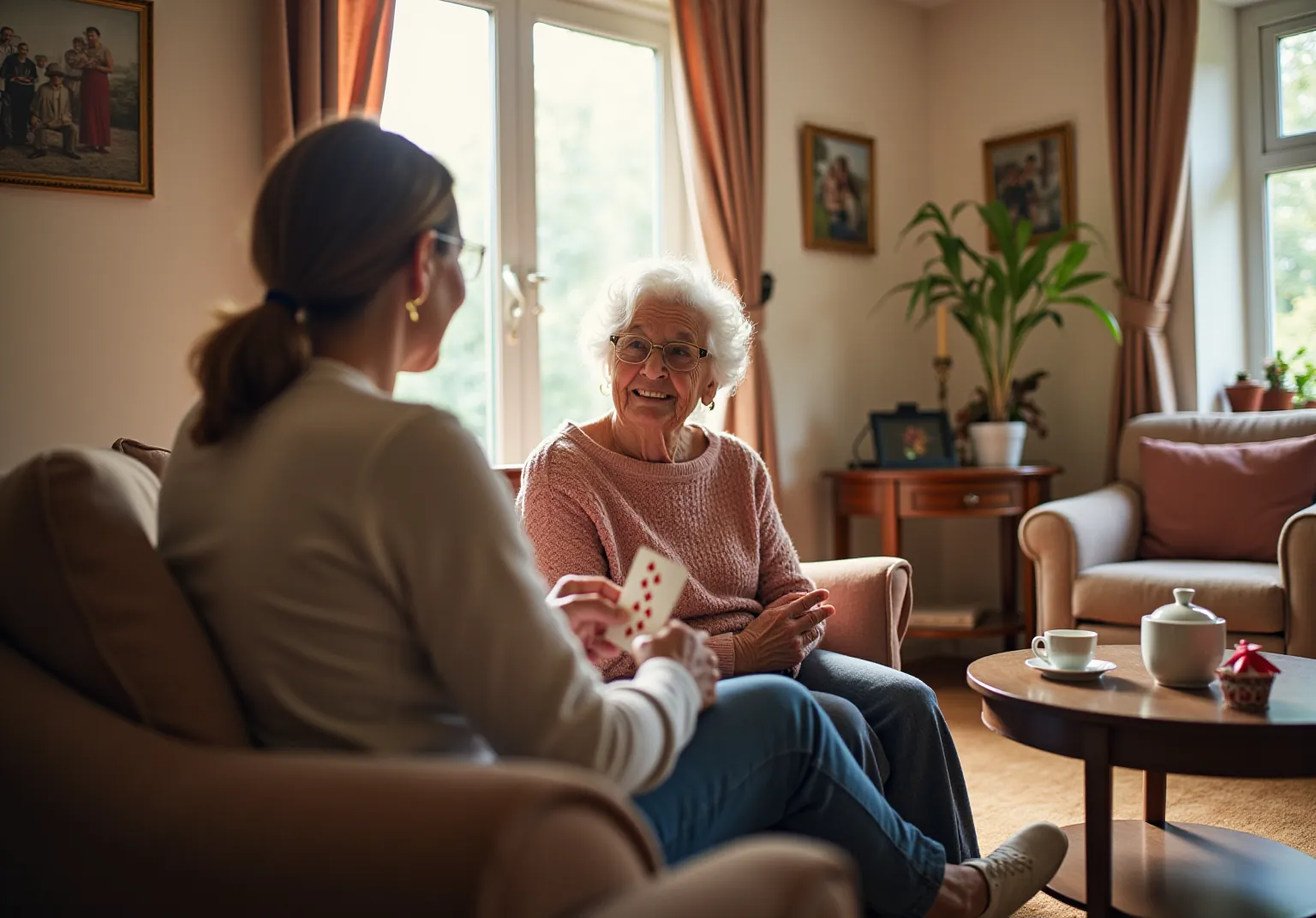
For families in our service areas
For families in our service areas, this guide explains companion care and how non-medical in-home caregiving can support care planning in East Idaho, Treasure Valley & Magic Valley, Northern Wasatch, North Central West Virginia, and Northeast Ohio.
Understanding Companionship Care for Elderly Loved
Companionship care for elderly loved ones has become a vital lifeline in a world where loneliness and isolation can overshadow the golden years. With over 55 million seniors in the U.S. grappling with the emotional challenges of aging, the benefits of personalized companionship care are more significant than ever. This article explores the transformative impact of companionship, showing how it alleviates feelings of isolation, enhances safety, promotes independence, and boosts mental well-being.
What happens when emotional support becomes a cornerstone of elderly care? How can families ensure their loved ones thrive in the comfort of home? These questions are crucial as we delve into the heart of companionship care, offering insights and solutions that can make a real difference in the lives of seniors and their families.
Happy to Help Caregiving: Personalized Companionship Care for Seniors
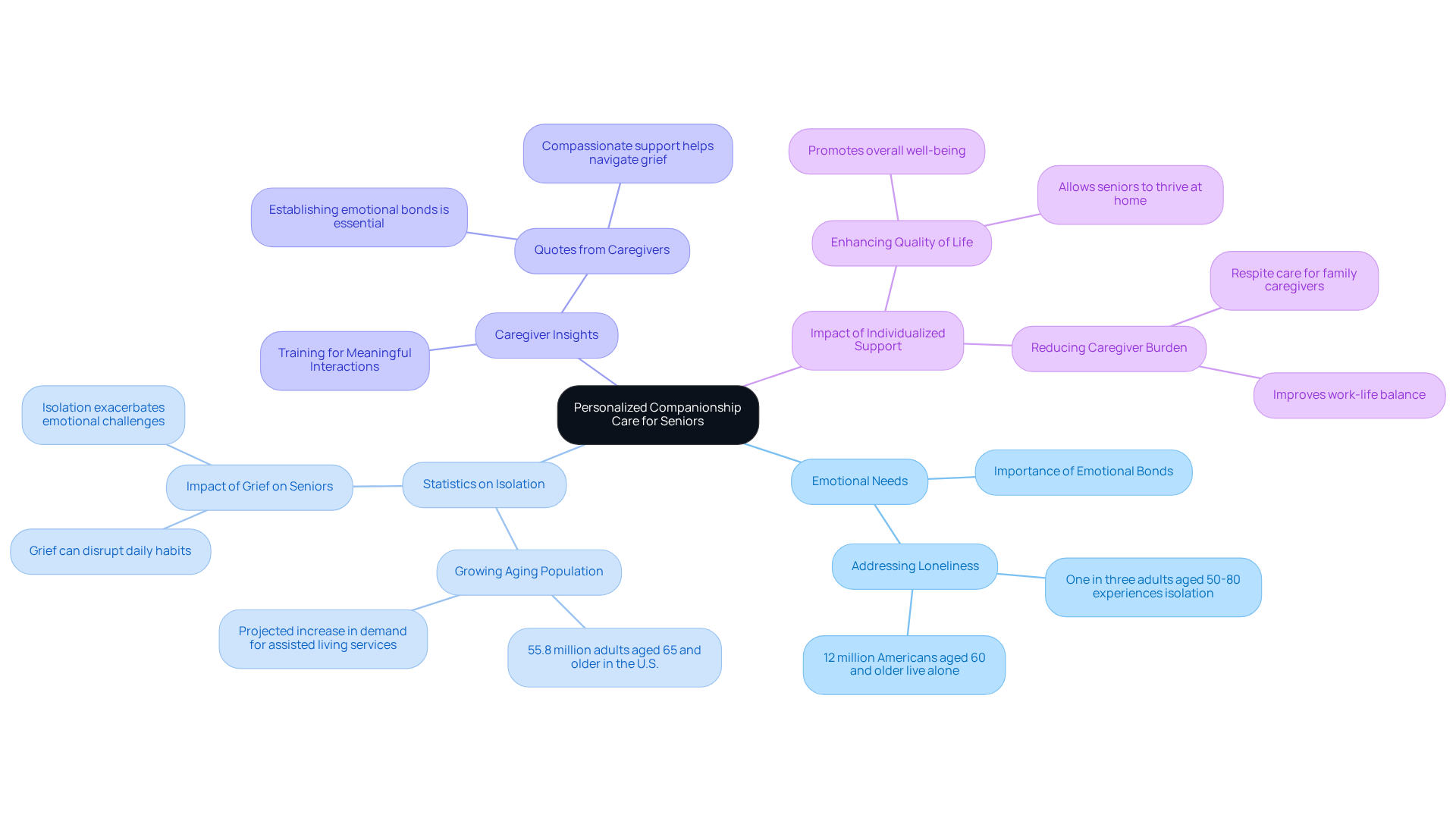
At Happy to Help Caregiving, we truly understand the emotional challenges faced by the elderly and their families. Our tailored companionship care for elderly is specifically designed for seniors, emphasizing the importance of emotional bonds in their daily lives. With over 55.8 million adults aged 65 and older in the U.S., the need for compassionate care has never been more urgent.
We recognize that our clients have both physical and emotional needs. Our caregivers are trained to engage in meaningful interactions, nurturing a sense of belonging and security within the comfort of home. A recent survey revealed that one in three adults aged 50-80 experiences isolation at least occasionally. This highlights just how vital companionship care for elderly is in addressing loneliness.
By prioritizing individual preferences and routines, we significantly enhance the caregiving experience. Families seeking compassionate support for their loved ones can find solace in our services. As one caregiver beautifully put it, "Establishing emotional bonds is essential; it transforms the caregiving journey into a collaboration that genuinely aids our elderly individuals."
The impact of such individualized support is profound. It not only alleviates feelings of isolation but also promotes overall well-being, allowing elderly individuals to thrive in their own homes. We’re here to provide companionship care for elderly that makes a difference, ensuring that every senior feels valued and understood.
Reducing Loneliness: The Emotional Support of Companion Care
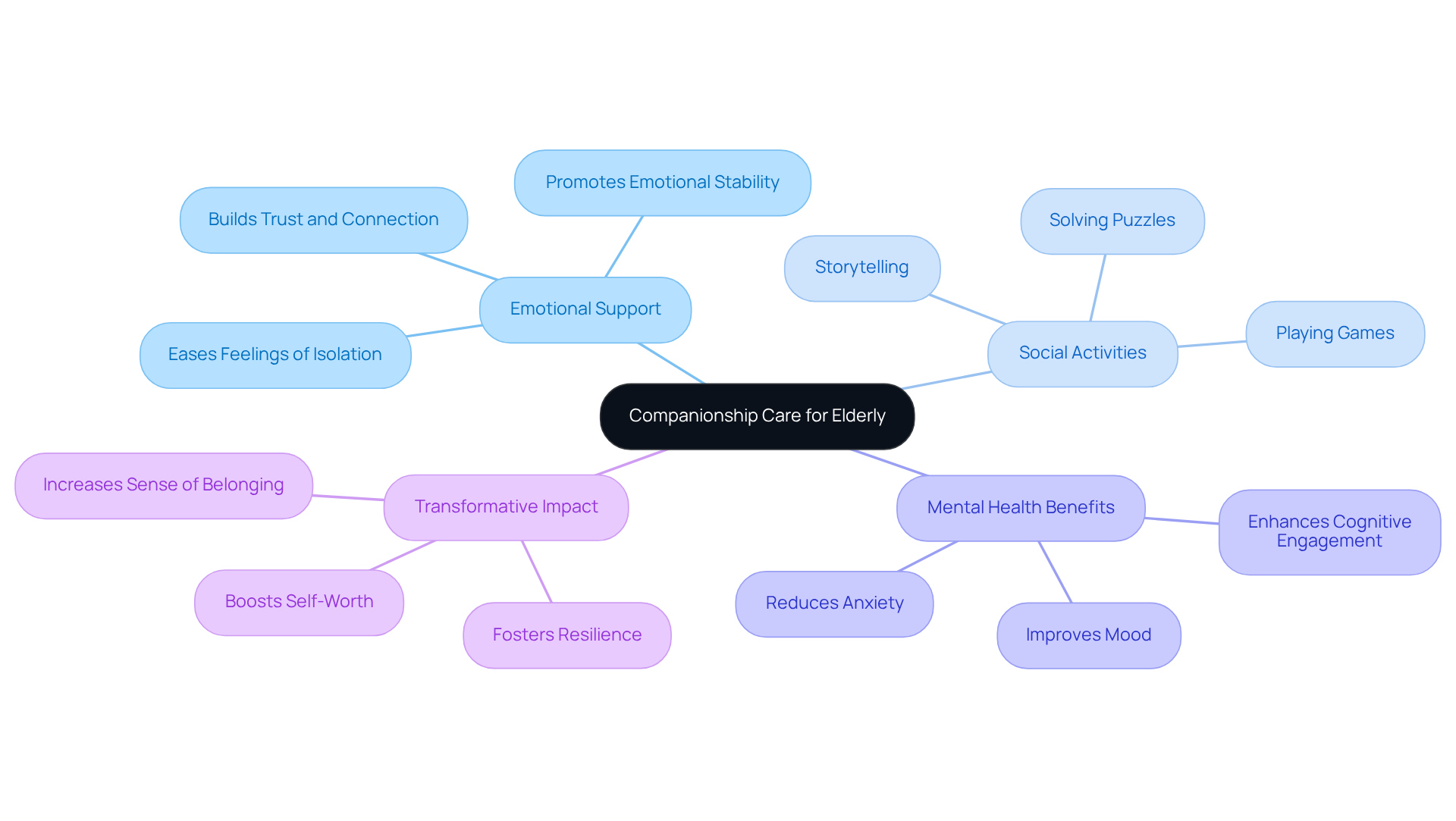
Companionship care for elderly is vital in combating loneliness among older adults. With nearly 30% of the elderly population in the U.S. living alone, the need for connection is more important than ever. Regular interactions with caregivers offer essential emotional support, helping to ease feelings of isolation and depression.
Seniors who engage in social activities with companions - like storytelling, playing games, or solving puzzles - often find themselves experiencing lower levels of anxiety and an uplifted mood. This emotional bond nurtures a sense of belonging, which is crucial for maintaining mental health and enhancing the quality of life for elderly individuals.
Moreover, participating in enjoyable activities with friends fosters emotional stability and resilience. Companionship care for elderly becomes a transformative aspect of their daily lives, bringing joy, trust, and a renewed sense of self-worth. It’s heartwarming to see how these connections can truly make a difference, reminding us all of the power of companionship.
Enhancing Safety: How Companion Care Provides Security for Seniors
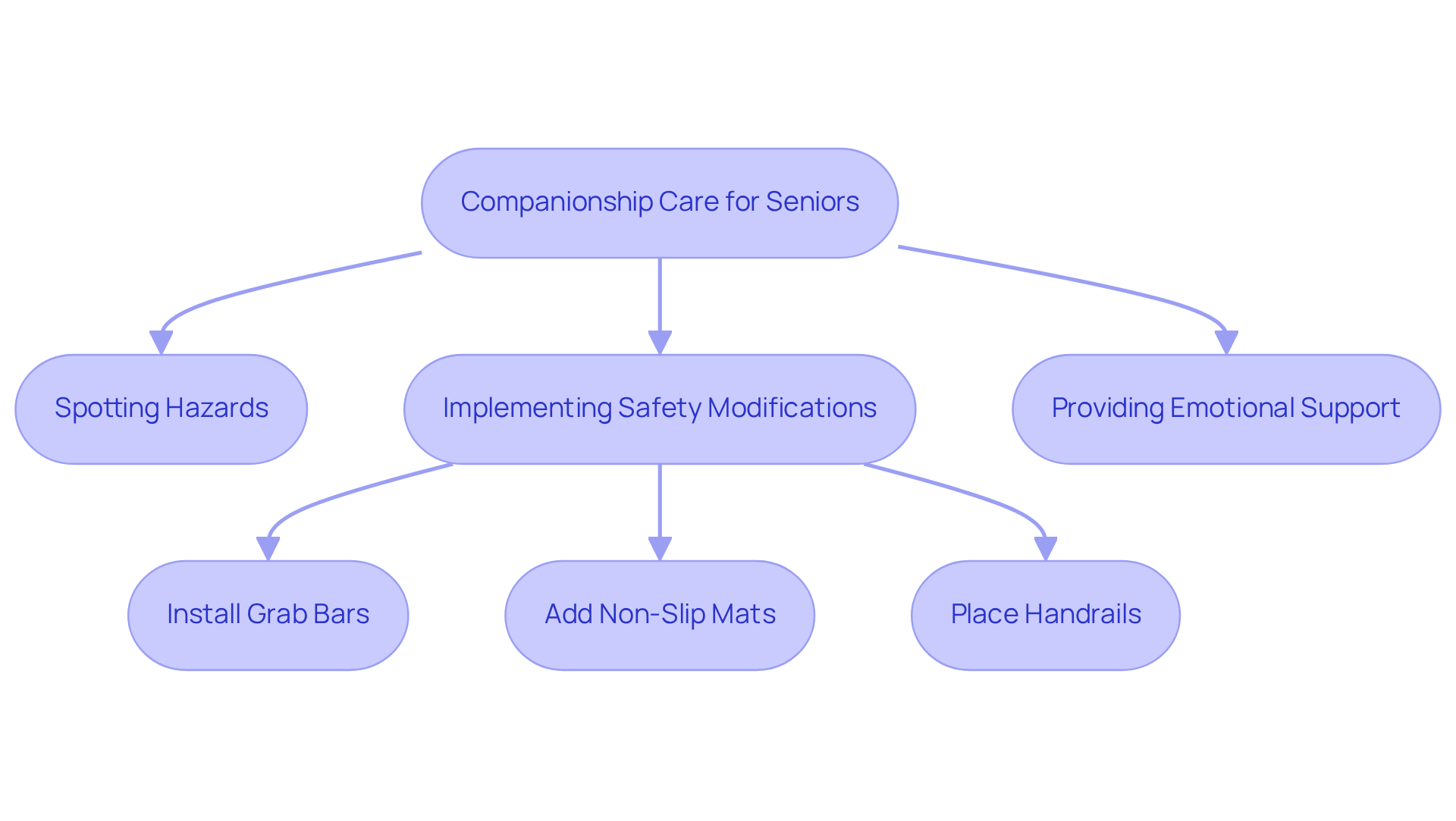
Companionship care for elderly is essential for enhancing the safety of older adults living at home. Caregivers are specially trained to spot potential hazards and assist with mobility, which significantly lowers the risk of falls and accidents. Their presence acts as a protective measure, allowing older adults to move around with greater confidence.
For example, caregivers often implement thoughtful safety modifications. They might:
- Install grab bars in bathrooms
- Add non-slip mats
- Place handrails along stairways
These simple changes can make a world of difference in reducing risks. Knowing someone is there to watch over them helps elderly individuals feel secure, preventing accidents like slips or falls.
This vigilant supervision not only safeguards the elderly but also brings peace of mind to families. They can rest easy knowing their loved ones are receiving attentive support. Moreover, the emotional support and companionship care for elderly provided by caregivers create a nurturing environment. This allows older adults to maintain their independence while feeling valued and protected.
Promoting Independence: Empowering Seniors Through Companionship
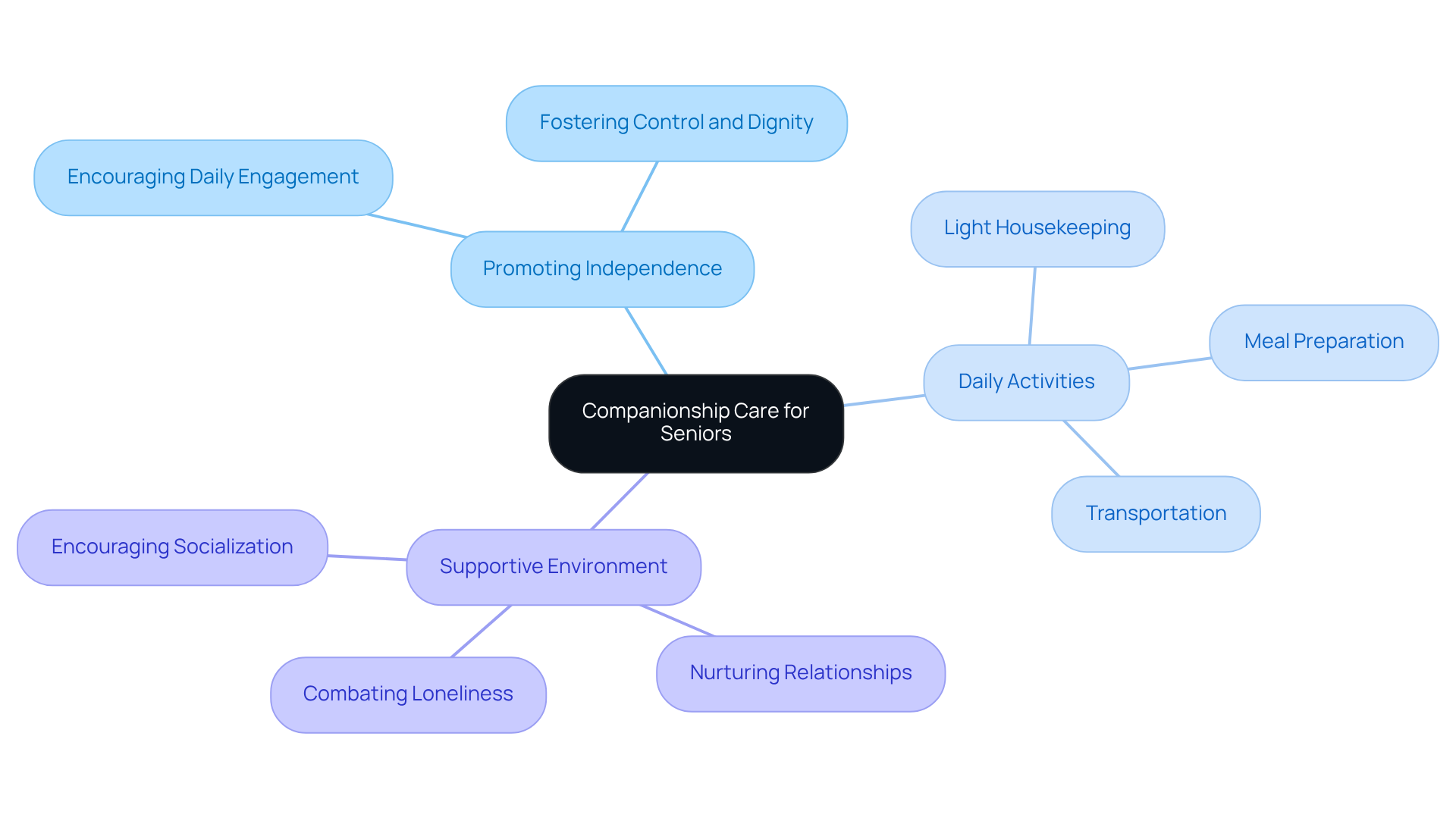
Companionship care for elderly truly fosters a sense of independence. It encourages older adults to engage in daily activities while providing the support they need. Caregivers assist with essential tasks like:
- Meal preparation
- Light housekeeping
- Transportation
This support allows older adults to maintain their routines and preferences, fostering a sense of control and dignity.
Imagine the joy of an older adult preparing their favorite meal, with a caregiver by their side, ready to help when needed. This empowerment not only enhances their daily lives but also helps them live fulfilling lives in the comfort of their own homes.
It's about more than just assistance; it's about creating a nurturing environment where older adults feel valued and respected. With companionship care for elderly, they can thrive, surrounded by understanding and compassion.
Encouraging Socialization: The Role of Companionship in Senior Engagement
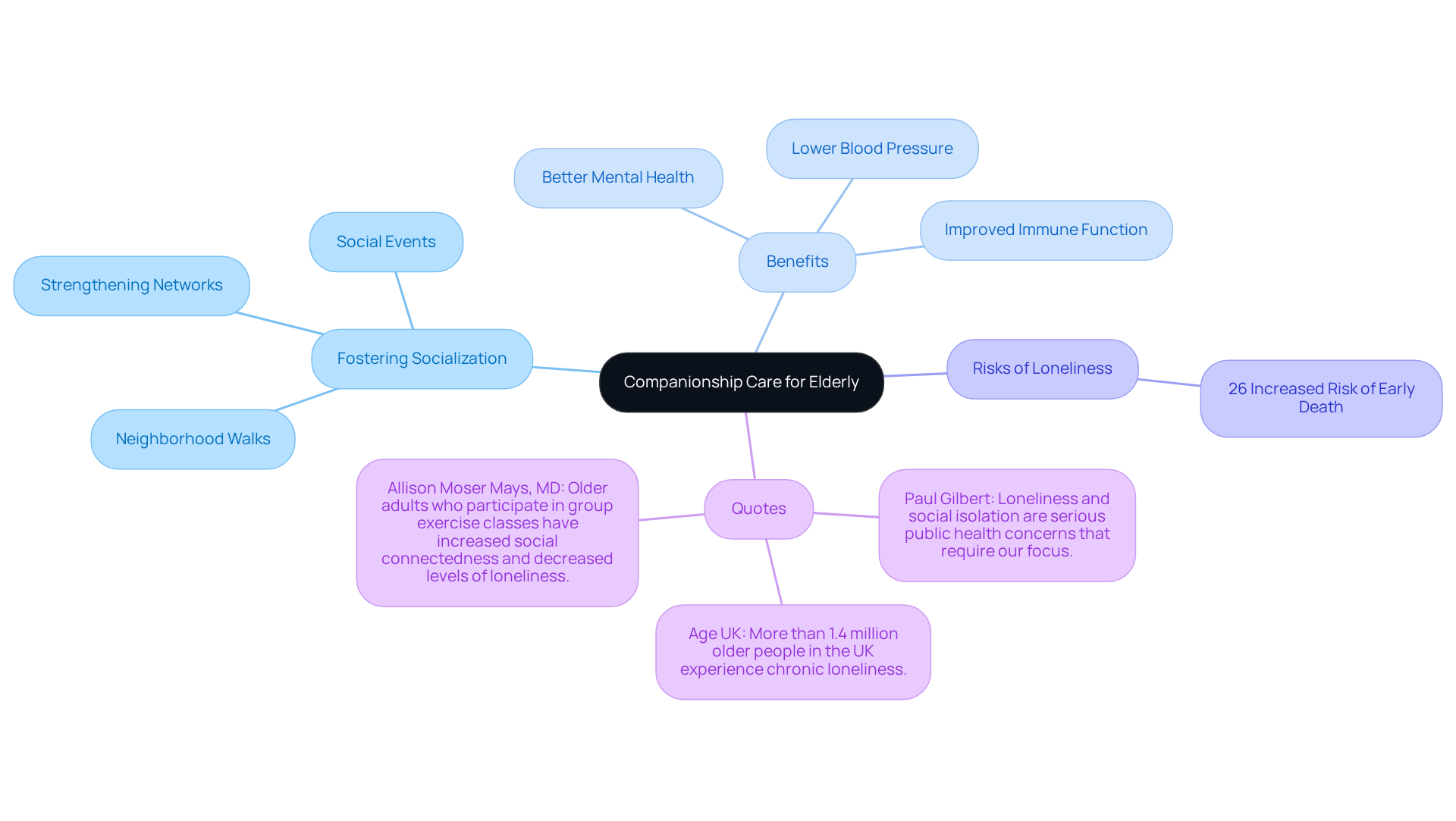
Companionship care for elderly is essential in fostering socialization among older adults, creating opportunities for meaningful interactions that truly matter. Caregivers play a crucial role in this by accompanying elderly individuals to social events, outings, or even simple neighborhood walks. These moments help maintain and strengthen their social networks, which is so important.
Consistent interaction is vital in combating loneliness - a condition that can lead to increased risks of depression and cognitive decline. Studies show that older adults who stay socially active enjoy better mental health, lower blood pressure, and improved immune function. It’s alarming to note that prolonged loneliness can raise the risk of early death by 26%. This underscores the urgency of addressing this issue.
Engaging in conversations and activities not only boosts emotional well-being but also fosters a sense of belonging and purpose, significantly contributing to overall happiness. As Paul Gilbert wisely states, "Loneliness and social isolation are serious public health concerns that require our focus." Companionship care for elderly individuals can truly transform their daily lives, making them feel valued and connected.
Boosting Mental Health: The Holistic Benefits of Companion Care
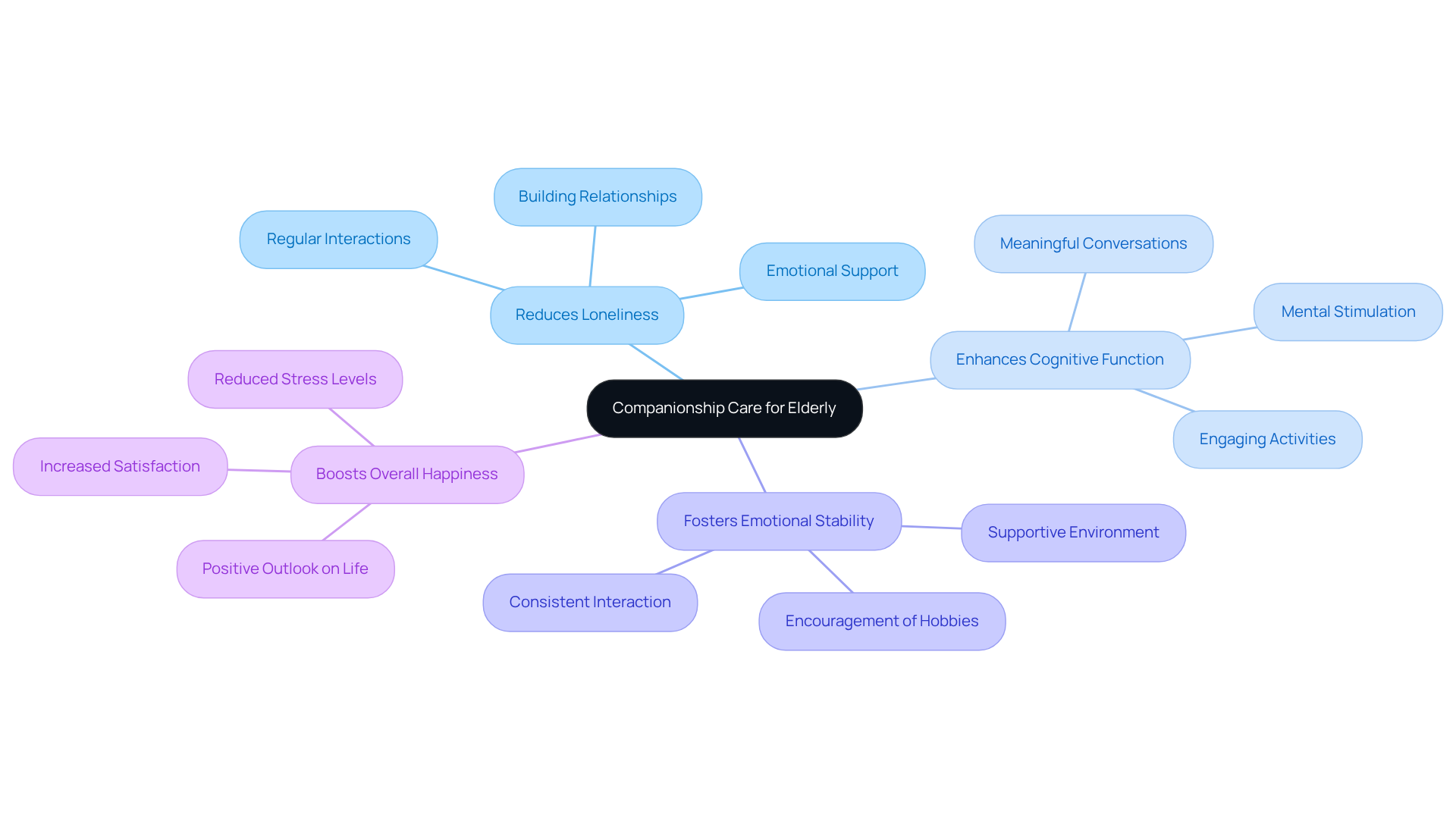
Companionship care for elderly offers vital mental health benefits, significantly easing feelings of depression and anxiety. It's heartbreaking to know that one in three older adults faces chronic loneliness, which can deeply affect their emotional well-being. Regular interactions with caregivers provide essential social engagement, nurturing a sense of connection and belonging that is so important for mental health.
Engaging in meaningful conversations and enjoyable activities not only boosts cognitive function but also helps older adults maintain their mental sharpness. This holistic approach to support fosters emotional stability, leading to a brighter outlook on life. Research shows that consistent companionship care for elderly can lower stress levels and enhance overall happiness, making it a crucial element of elderly care.
Imagine the joy of sharing stories or participating in activities that bring laughter and connection. These moments can transform a day, reminding us all of the importance of companionship. By prioritizing these interactions, we can create a nurturing environment that uplifts spirits and promotes well-being.
Providing Practical Help: Daily Living Support Through Companion Care
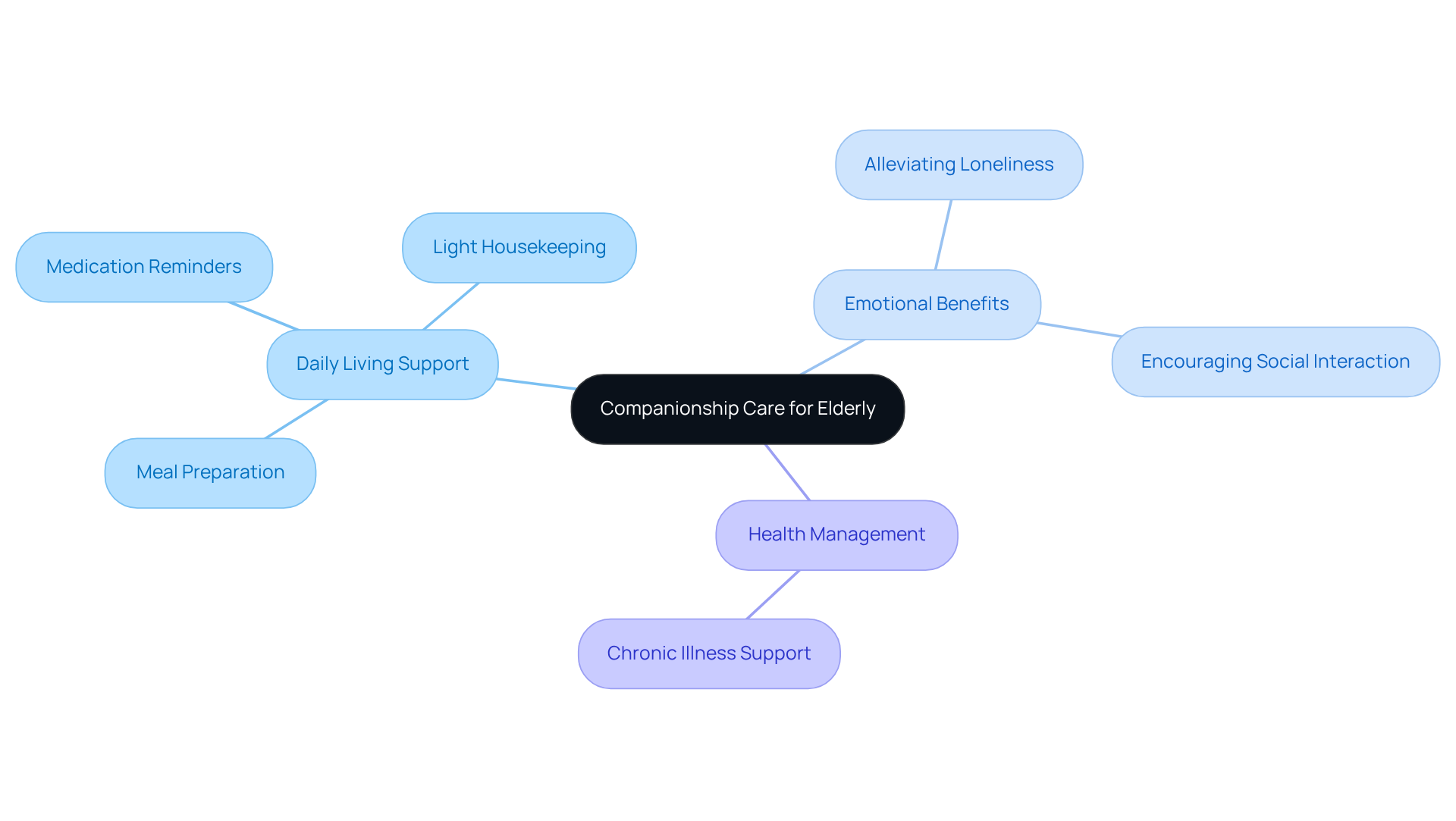
Companionship care for elderly is provided by companion aides who play a vital role in assisting with essential daily living activities, such as meal preparation, medication reminders, and light housekeeping. This practical companionship care for elderly allows older adults to engage in their daily routines without the burden of household chores, significantly reducing stress and enhancing their quality of life. By taking care of these tasks, support providers help older adults maintain their independence, ensuring their homes remain safe and welcoming.
The impact of caretaker support on the independence of older adults is profound. Companionship care for elderly individuals provides regular assistance with daily activities, helping them manage their routines while fostering a sense of autonomy. As one provider shared, "Companion assistants work closely with families and healthcare professionals to create personalized care plans that truly reflect the needs of the individual." This tailored approach ensures that older adults receive the specific help they require, boosting their well-being and encouraging them to participate in activities they love.
Moreover, the emotional benefits of companionship care for elderly in daily living assistance are significant. Companionship care for elderly individuals is provided by caregivers who offer companionship and engage in meaningful conversations, which are essential for alleviating feelings of loneliness and isolation. Elderly individuals who feel lonely are less likely to partake in social or recreational activities, highlighting the importance of supportive caregivers. Companionship care for elderly involves facilitating social interactions and encouraging involvement in community activities, helping older adults build connections and maintain a sense of belonging. This holistic support, particularly companionship care for elderly, not only enhances daily living but also contributes to a happier, healthier life for older adults. Additionally, homemaking care aids elderly individuals in managing chronic illnesses, further underscoring the practical health benefits of daily living assistance.
Facilitating Meaningful Activities: Enriching Seniors' Lives with Companionship
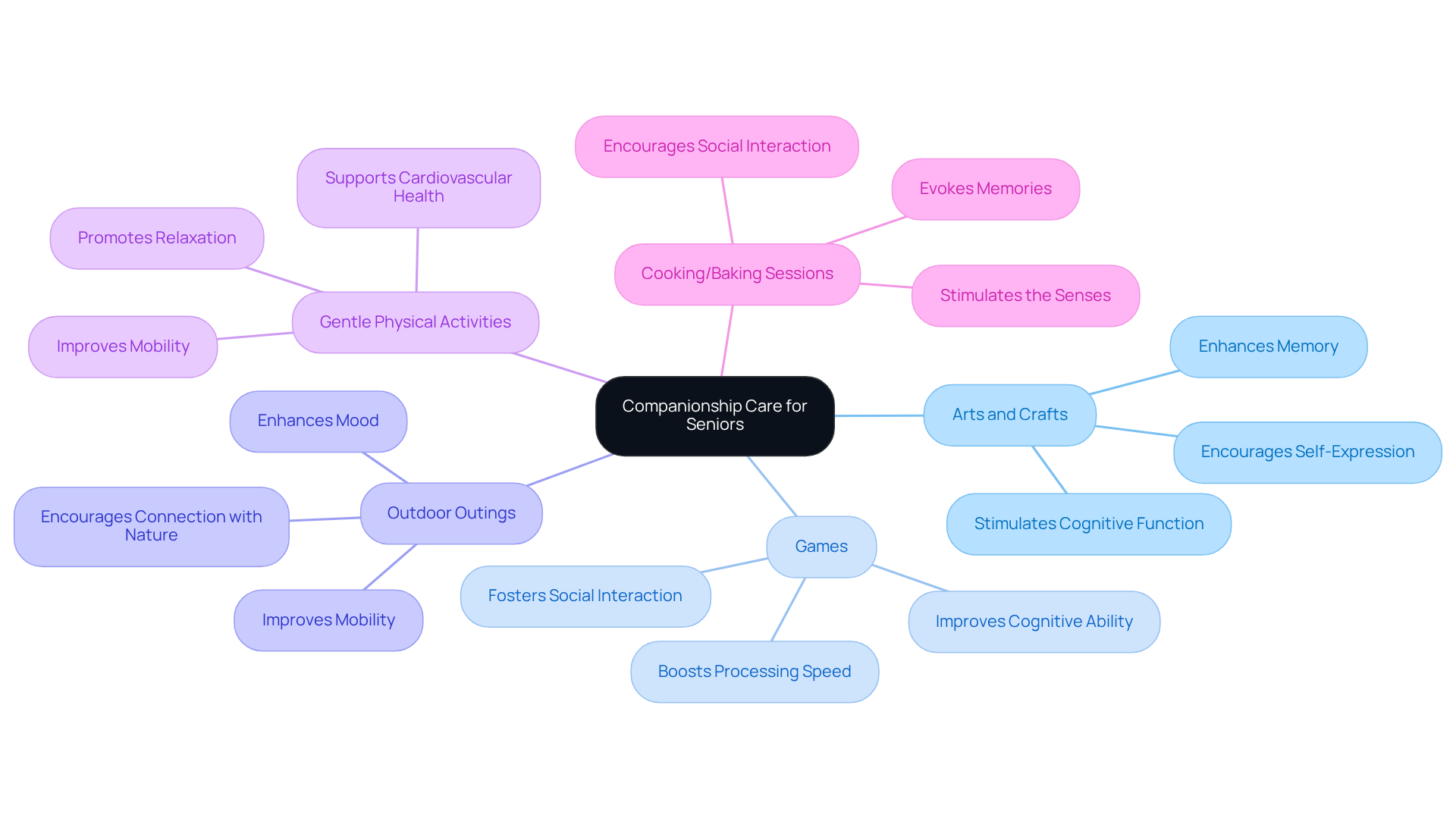
Companionship care for elderly individuals truly makes a difference in the lives of older adults. They help facilitate meaningful activities like:
- Arts and crafts
- Games
- Outdoor outings
These enjoyable pastimes not only bring joy but also stimulate cognitive function. For instance, games like bingo, which require two or more players, can enhance memory and processing speed while fostering social interaction.
Engaging in creative endeavors instills a sense of accomplishment and purpose, which is vital for maintaining mental sharpness and emotional well-being. Additionally, gentle physical activities such as stretching and walking can improve mobility and cardiovascular health, promoting overall wellness.
By encouraging social engagement and connection to the world, companionship care for elderly helps seniors combat feelings of loneliness and isolation. This, in turn, significantly enhances their quality of life and sense of belonging with companionship care for elderly. To further enrich these experiences, caregivers might consider organizing cooking or baking sessions. Not only do these activities stimulate the senses, but they also encourage social interaction and reminiscence, creating cherished moments together.
Alleviating Caregiver Stress: Peace of Mind Through Companion Care
Companionship care for elderly truly eases the burden on caregivers, providing families with the relief they desperately need. Knowing that their loved ones are receiving companionship care for elderly allows family members to take a step back, recharge, and focus on their own well-being. This sense of peace is invaluable; it empowers families to maintain a healthy balance between caregiving responsibilities and personal lives.
Imagine the weight lifted when caregivers can trust that their loved ones are receiving companionship care for elderly from caring hands. This support not only alleviates stress but also nurtures the emotional health of everyone involved. Families can share moments of joy and connection, knowing they have the time to care for themselves as well.
Ultimately, this balance is essential. It’s about creating a space where caregivers feel supported and valued, allowing them to thrive alongside their loved ones. With companionship care for elderly, families can find that harmony, ensuring that both caregivers and those they care for can enjoy life to the fullest.
Enhancing Quality of Life: The Comprehensive Benefits of Companion Care
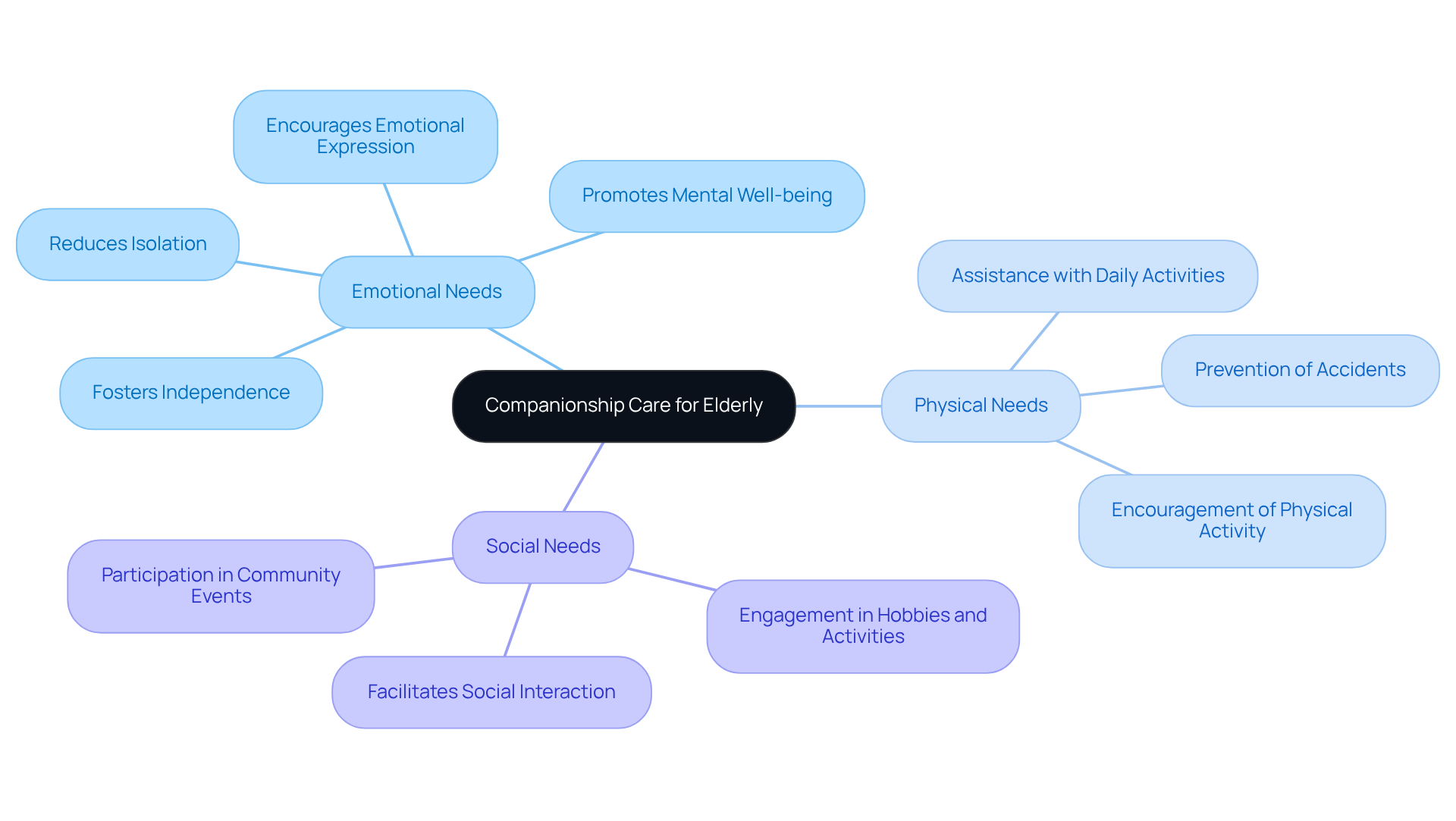
Companionship care for elderly genuinely enhances the quality of life for seniors by addressing their emotional, physical, and social needs. Many families face the challenge of seeing their loved ones struggle with loneliness and a loss of independence. It’s heart-wrenching to witness, isn’t it? However, through personalized support, companionship care for elderly can make a world of difference. It fosters independence, reduces feelings of isolation, and promotes mental well-being.
Imagine the joy of knowing that your elderly loved one is not just cared for, but also engaged and connected. The invaluable benefits of companionship care for elderly individuals are comprehensive. It’s not just a service; it’s a lifeline for families seeking to improve the lives of their cherished seniors. With this support, they can truly thrive in the comfort of their own homes, surrounded by familiarity and love.
As one caregiver shared, "Seeing my client smile again after feeling so alone was the most rewarding experience. It reminded me of the importance of companionship." This is the essence of companionship care for elderly, which involves nurturing relationships that bring warmth and joy into the lives of seniors.
Making the Right Choice
Companionship care for elderly individuals is truly essential in enhancing their overall well-being. It addresses not just emotional, but also physical and social needs. This type of care offers vital support while fostering meaningful relationships, allowing seniors to thrive in a nurturing environment. By prioritizing companionship, families can help their loved ones experience joy, connection, and a renewed sense of purpose in their daily lives.
It’s clear that companionship care significantly reduces feelings of loneliness, promotes independence, and enhances safety for seniors. Regular interactions with caregivers lead to improved mental health, greater emotional stability, and a sense of belonging. Plus, the practical assistance caregivers provide in daily living activities helps elderly individuals maintain their routines and dignity, all while feeling valued and respected.
The importance of companionship care really cannot be overstated. It serves as a lifeline for elderly loved ones, offering not only practical support but also emotional enrichment that improves quality of life. Families are encouraged to reflect on the profound impact that personalized companionship care can have, ensuring their seniors remain engaged, secure, and connected to the world around them. Embracing this approach can lead to happier, healthier lives for both seniors and their caregivers, creating a harmonious balance that benefits everyone involved.
https://iframe.tely.ai/cta/eyJhcnRpY2xlX2lkIjogIjY5MWZkYzVlYTE0NTEzNzg0OGJmYTQ1YyIsICJjb21wYW55X2lkIjogIjY4ZWU1ZGNhNzMxNzYyNTU3ZjNjOTVjMSIsICJpbmRleCI6IG51bGwsICJ0eXBlIjogImFydGljbGUifQ==Frequently Asked Questions
What is Happy to Help Caregiving?
Happy to Help Caregiving offers personalized companionship care specifically designed for seniors, focusing on addressing both their physical and emotional needs.
Why is companionship care important for the elderly?
Companionship care is vital for combating loneliness among older adults, as nearly 30% of the elderly population in the U.S. lives alone. It provides essential emotional support, helping to ease feelings of isolation and depression.
How does companionship care enhance the well-being of seniors?
Engaging in social activities with caregivers, such as storytelling and playing games, helps seniors experience lower levels of anxiety and an uplifted mood, nurturing a sense of belonging and improving their overall quality of life.
What kind of training do caregivers receive at Happy to Help Caregiving?
Caregivers are trained to engage in meaningful interactions, recognize individual preferences, and implement safety measures to enhance both the emotional and physical well-being of elderly clients.
How does companionship care improve safety for seniors at home?
Caregivers are trained to identify potential hazards and assist with mobility, which significantly lowers the risk of falls and accidents. They may also implement safety modifications like installing grab bars and adding non-slip mats.
What impact does companionship care have on feelings of isolation?
Individualized companionship care alleviates feelings of isolation, promotes emotional stability, and fosters resilience, allowing elderly individuals to thrive in their own homes and feel valued.
How can families benefit from Happy to Help Caregiving services?
Families seeking compassionate support for their loved ones can find solace in the companionship care services, knowing that their elderly family members are receiving attentive support and emotional connection in a safe environment.