

For families in our service areas
For families in our service areas, this guide explains companion care and how non-medical in-home caregiving can support care planning in East Idaho, Treasure Valley & Magic Valley, Northern Wasatch, North Central West Virginia, and Northeast Ohio.
Why In Home Companion Care Matters
Loneliness is a significant issue for many seniors, often leading to serious mental health challenges such as depression and anxiety. This problem not only affects their emotional well-being but can also impact their overall quality of life. In-home companion care emerges as a vital solution, offering assistance with daily tasks while fostering meaningful social interactions that enrich the lives of elderly individuals.
By choosing in-home companion care, families can expect numerous benefits. This compassionate support system enhances emotional well-being, promotes independence, and ultimately improves the quality of life for seniors and their families. What specific advantages can families anticipate when they opt for this type of care? Let's explore the transformative impact of in-home companion care on the lives of seniors.
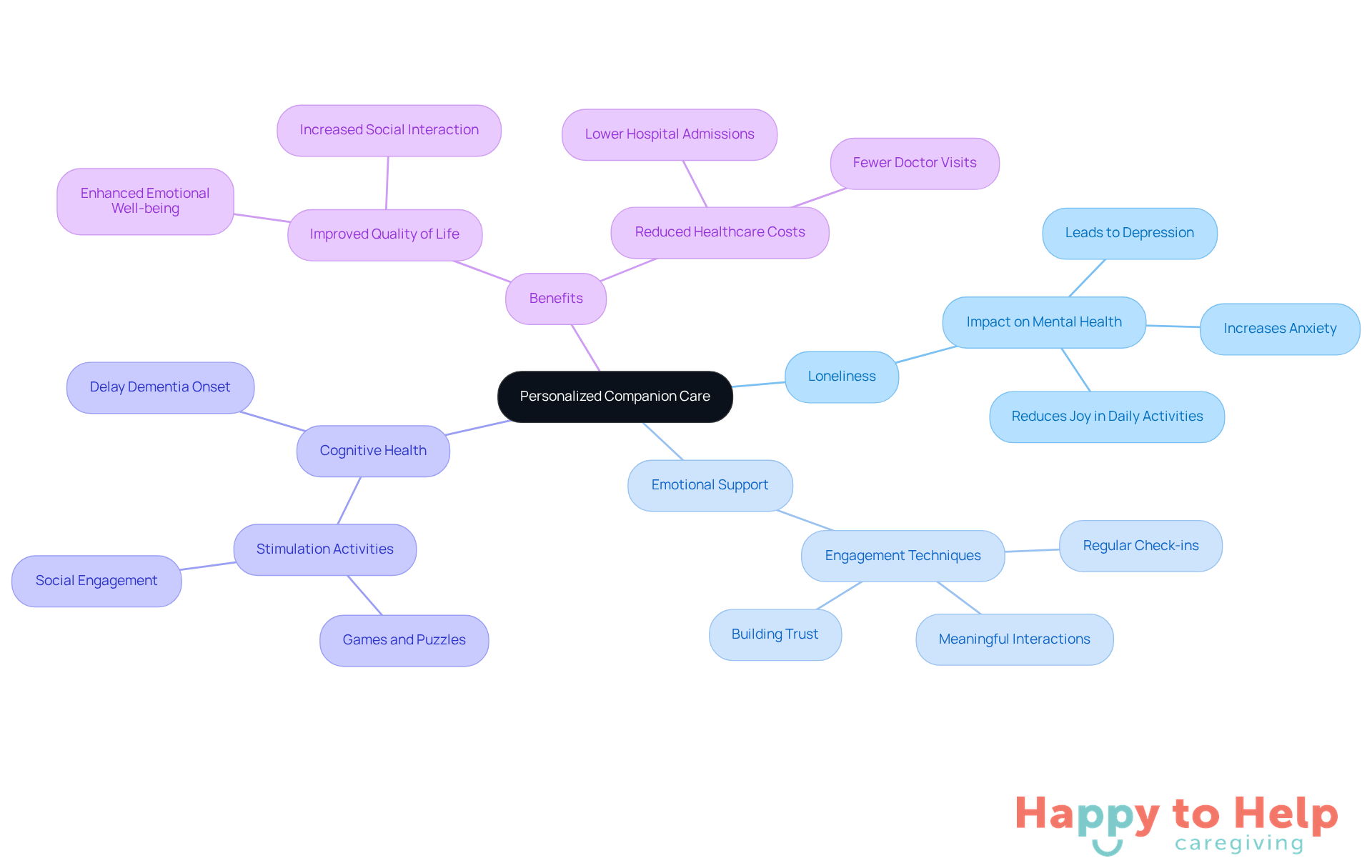
Happy to Help Caregiving: Personalized Companion Care for Emotional Support
Loneliness among elderly individuals is a significant problem that can lead to severe mental health issues, including depression and anxiety. Research shows that regular social interaction is vital for seniors, as it can boost mood and reduce feelings of isolation. This is especially crucial for those facing challenges such as anxiety and depression, as engaging in social activities stimulates the brain, helping to maintain cognitive health and delay the onset of dementia.
To address this issue, Happy to Help Caregiving offers customized companionship that emphasizes emotional support. Caregivers are specifically trained to engage clients in meaningful interactions, fostering relationships that enhance emotional well-being. This tailored approach ensures that clients feel valued and understood, playing a crucial role in their mental health and overall quality of life.
By investing in personalized companion support, families can help their loved ones maintain a positive outlook and improve their quality of life. This not only creates a significant impact on emotional and mental wellness but can also lead to fewer doctor visits and hospital admissions, providing financial advantages alongside emotional support. As one provider observed, "Having a dependable companion can lower stress and anxiety levels in older adults," highlighting the vital role of companionship in improving the quality of life for elderly individuals.
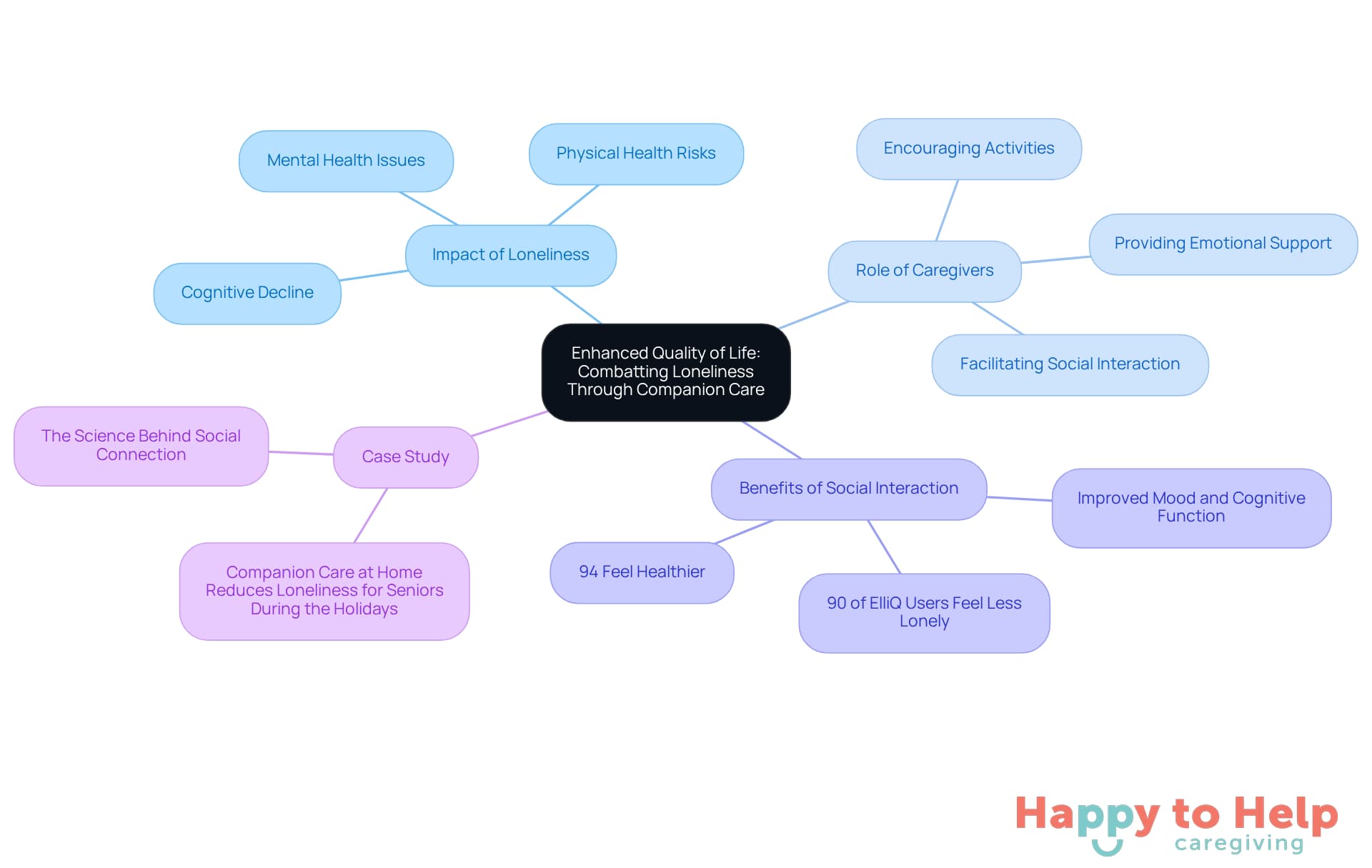
Enhanced Quality of Life: Combatting Loneliness Through Companion Care
In home companion care addresses a significant problem: loneliness and isolation among older adults. These feelings can lead to serious mental health issues, including depression and anxiety. Caregivers play a vital role in mitigating these challenges in home companion care by facilitating regular social interaction for their clients.
Engaging clients in enjoyable activities not only combats loneliness but also promotes a more active lifestyle, enhancing overall well-being. Studies show that regular social interaction can significantly improve mood and cognitive function. For example, over 90% of ElliQ users report feeling less lonely, while 94% feel healthier and more connected.
Moreover, the emotional support provided by companions helps seniors navigate challenges like grief and anxiety, reinforcing their dignity and self-worth. A compelling case study, 'Companion Care at Home Reduces Loneliness for Seniors During the Holidays,' illustrates how in home companion care and festive activities can transform the holiday season into a time of shared joy, significantly alleviating feelings of loneliness.
Given the serious implications of isolation, it’s crucial for family supporters to consider arranging regular visits in home companion care. This proactive step can greatly enhance their loved one's social interactions and overall quality of life.
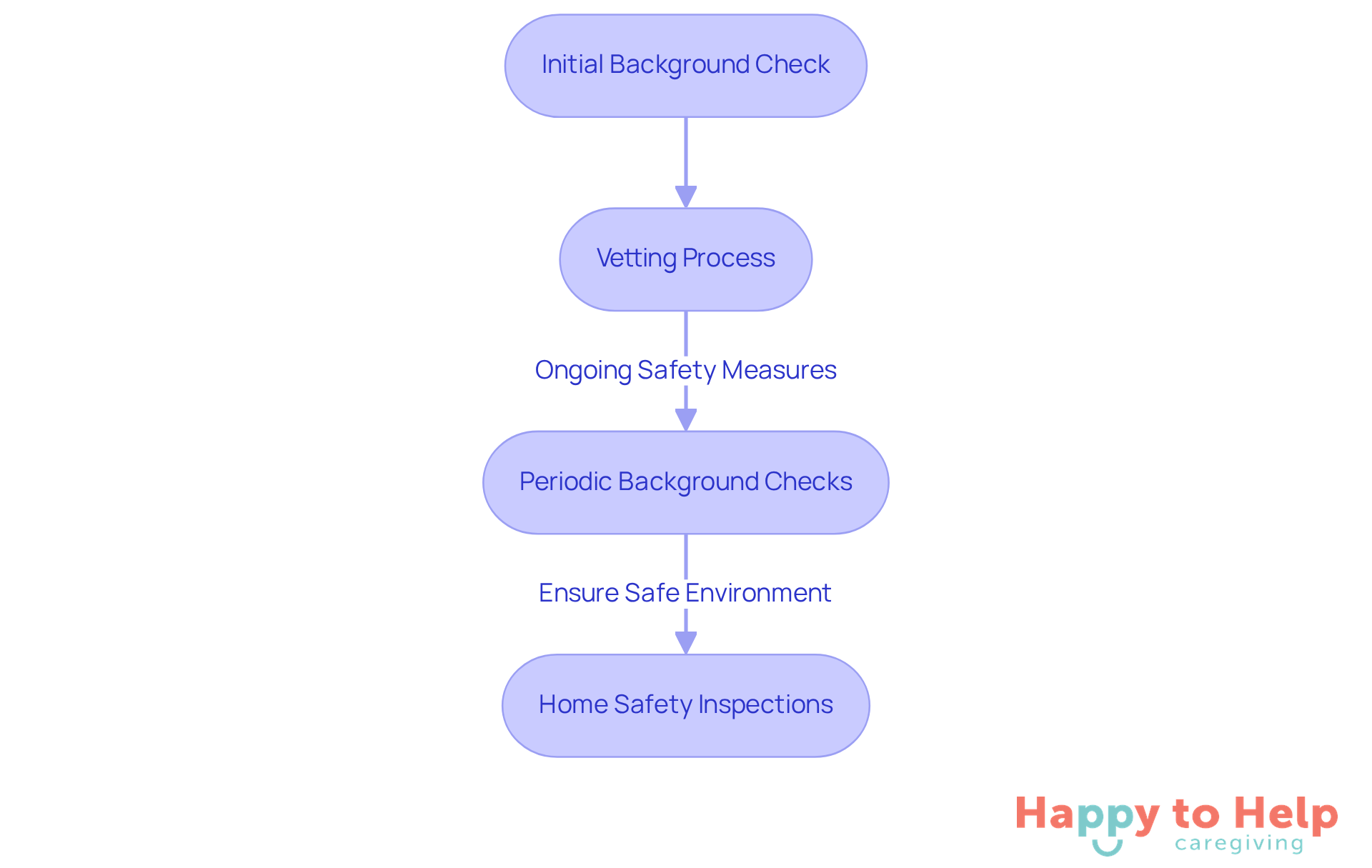
Peace of Mind for Families: Trusting Professional Companion Care
Families often worry about the safety and well-being of their loved ones when receiving in home companion care. This concern is valid, especially considering that one in five adults over age 70 experiences some form of elder abuse annually. Such statistics highlight the importance of ensuring that caregivers are trustworthy and well-trained.
To address these concerns, Happy to Help Caregiving conducts thorough background checks for all providers. This rigorous vetting process not only enhances trust but also reassures families that reliable individuals are delivering assistance. As one expert noted, "This statistic reminds that individuals with Professional Companionship skills must be vetted for safety," underscoring the necessity of thorough screenings.
Moreover, maintaining ongoing safety and trust requires periodic background checks for current employees. Families can feel more secure knowing that these measures are in place. By fostering a secure environment, they can focus on their loved ones' needs, confident that compassionate and reliable support in home companion care is being provided.
Testimonials from families reveal that this commitment to safety significantly alleviates anxiety. As one family member stated, "A background check is actually a promise," which allows for a more positive caregiving experience. Additionally, initial home safety inspections are conducted to ensure a safe environment for both clients and caregivers.
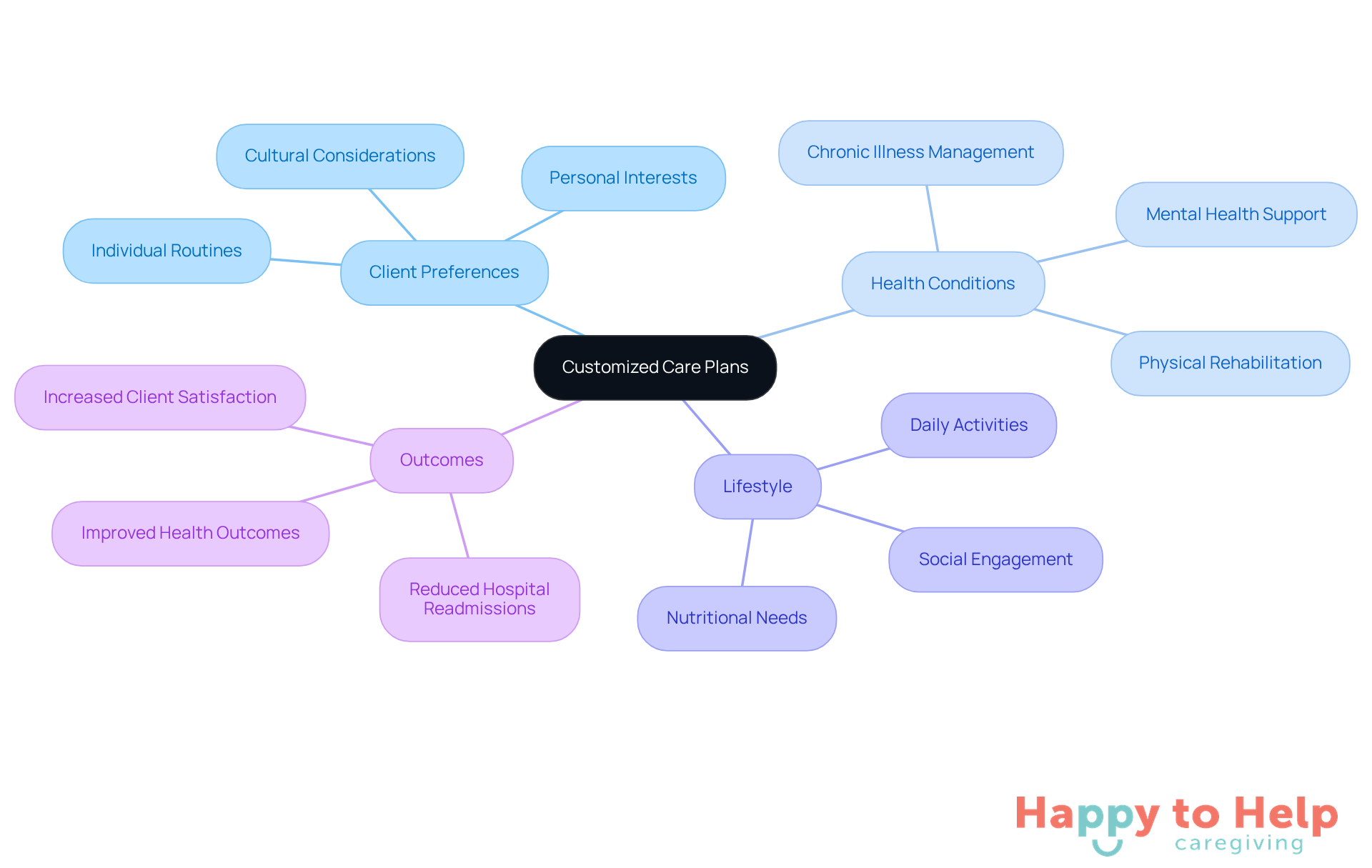
Customized Care Plans: Tailoring Companion Care to Individual Needs
Caregivers often face the challenge of providing support that truly meets the unique needs of their clients. Without personalized plans, clients may experience dissatisfaction and poorer health outcomes.
To address this issue, Happy to Help Caregiving creates tailored support plans that consider each client's preferences, health conditions, and lifestyle. This personalized approach ensures that the support offered is not only relevant but also effective.
By implementing these customized plans, caregivers can significantly enhance client satisfaction and promote better health outcomes.
Flexible Scheduling: Adapting Companion Care to Fit Lifestyles
Problem: Many families face challenges with rigid caregiving schedules that do not adapt to their unique needs. This inflexibility can lead to increased stress and discomfort for both clients and their families.
Agitate: Families often feel overwhelmed by strict support plans that fail to accommodate changing situations. This pressure can diminish the comfort and security of loved ones, leaving families anxious about their care. As Misty Delegato notes, "Comprehending the role flexibility plays can alleviate your worries regarding management of support."
Happy to Help Caregiving addresses these issues through its in home companion care with a commitment to flexible scheduling. In home companion care, caregivers can tailor their availability to meet the specific needs of clients, whether they require assistance for just a few hours a week or continuous support. Recent advancements in scheduling technology, including real-time communication tools, allow families to easily modify assistance hours and communicate their needs effectively. This responsiveness not only fosters reliability but also enhances overall client satisfaction. In fact, adaptable scheduling can reduce job-related stress by 20 percent, enabling families to focus on their daily responsibilities while ensuring their loved ones receive the dedicated support they deserve.

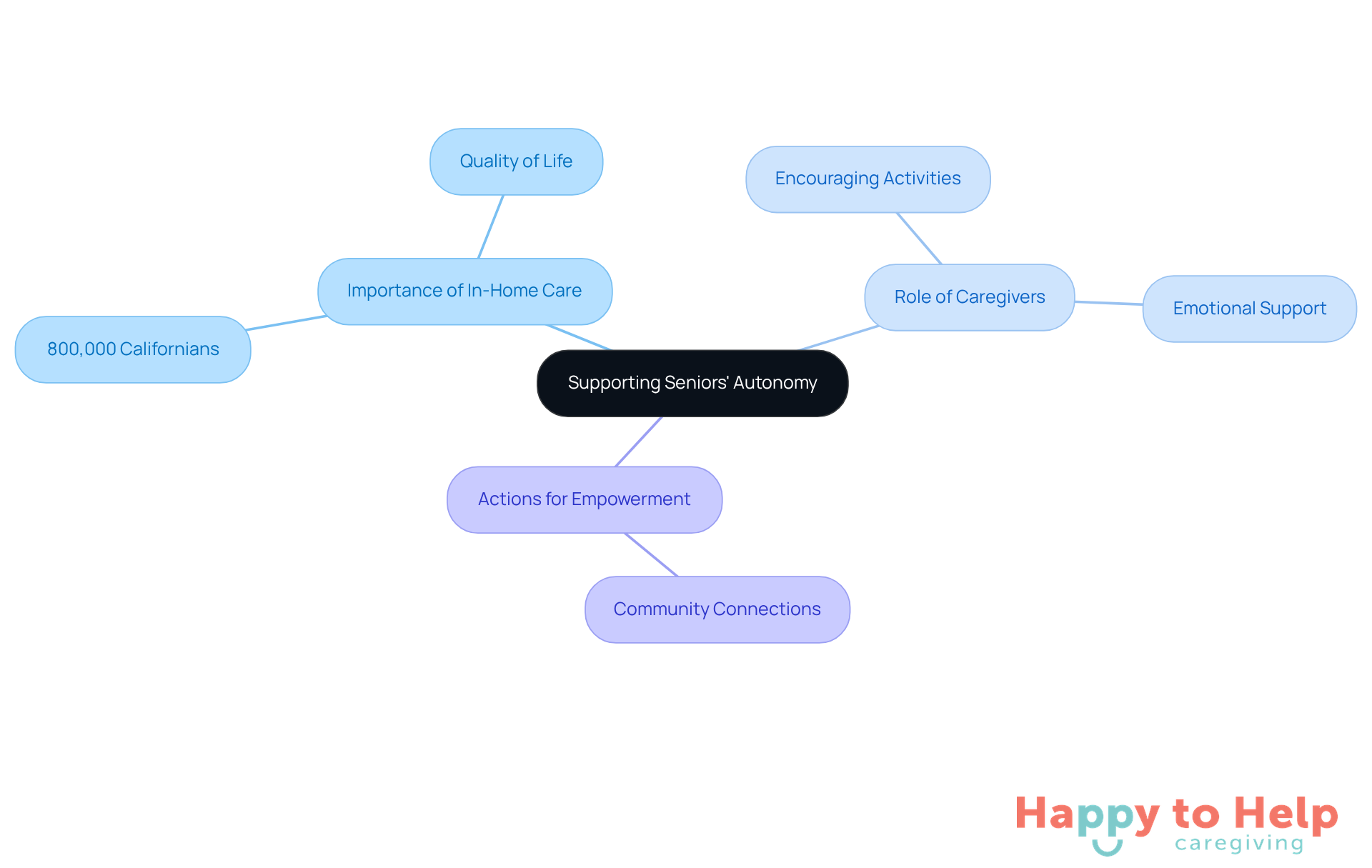
Preserving Independence: Supporting Seniors' Autonomy Through Companion Care
In home companion care is essential for helping older adults maintain their independence. Many older individuals face the challenge of losing self-care confidence, especially after hospital admissions. This decline can significantly impact their quality of life, making the role of caregivers crucial in restoring that confidence.
Approximately 800,000 Californians depend on In-Home Supportive Services funded through Medi-Cal. This statistic underscores the importance of such services in promoting independence among older adults. Caregivers assist with daily tasks while encouraging clients to engage in activities they can manage independently. This approach nurtures a sense of control, allowing older adults to feel empowered in their lives.
As Home Helpers Home Care states, "Independence doesn’t mean doing everything alone. It means being able to live at home without unnecessary risks." By fostering independence, companion assistance not only enhances the quality of life for elderly individuals but also supports their ability to manage their routines and choices. This empowerment is vital for their mental and emotional well-being, reinforcing their self-esteem and dignity.
To effectively support older adults, caregivers can:
- Encourage participation in manageable activities.
- Provide emotional support to rebuild confidence.
- Facilitate connections with community resources.
Ultimately, in home companion care leads to a more rewarding and gratifying life at home for older adults.
Ensuring Safety: The Protective Role of Companion Care
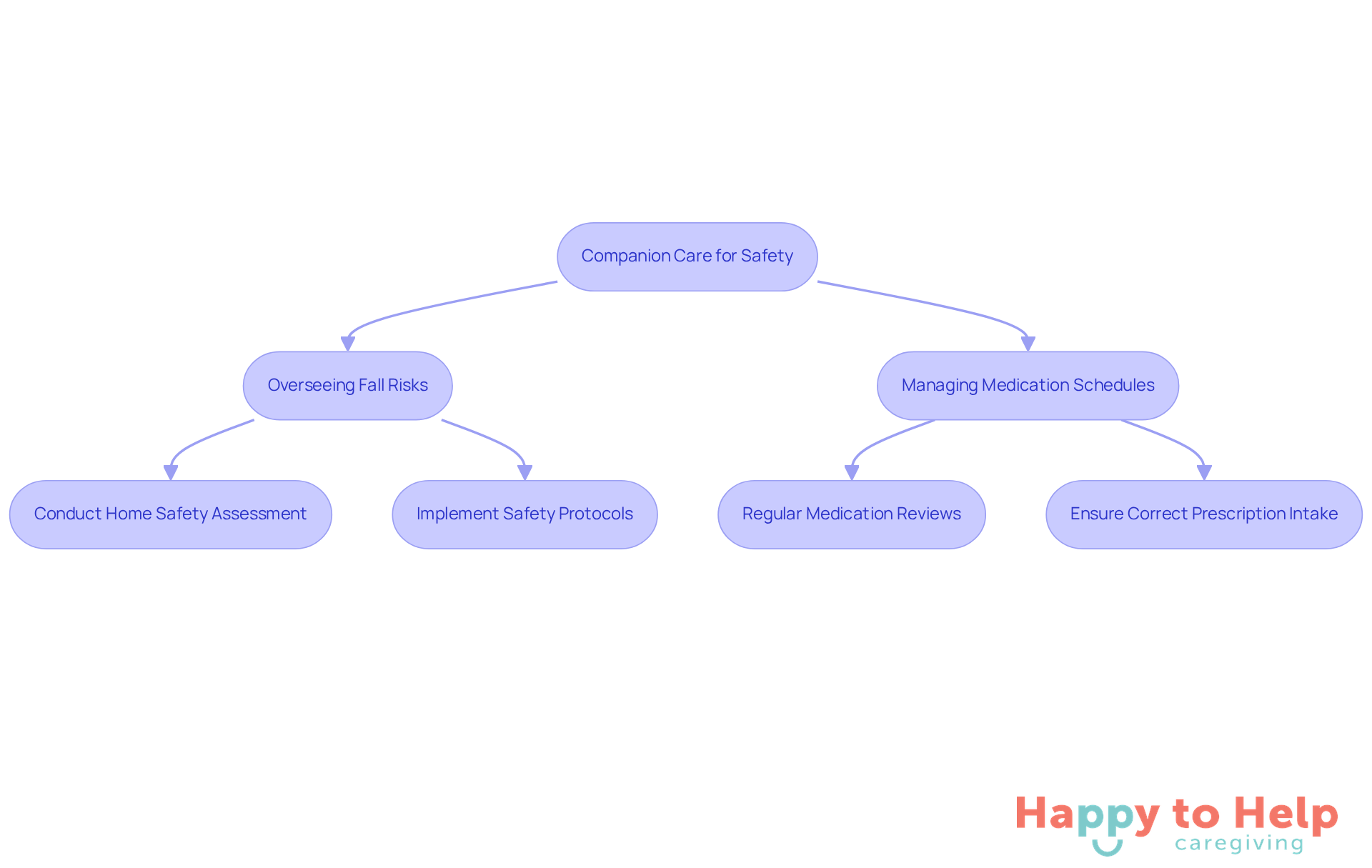
Companion care presents a significant challenge for elderly individuals, as safety risks in the home can lead to serious consequences. Falls are a major concern, accounting for 25% of all hospital admissions and 40% of nursing home admissions among older adults. Alarmingly, one in three older adults experiences a fall each year, highlighting the urgent need for effective safety measures.
To address these issues, caregivers undergo specialized training to identify potential hazards and assist clients in safely navigating their environments. This proactive approach includes:
- Overseeing fall risks
- Managing medication schedules
Regular medication reviews are crucial, as improper management can lead to serious health risks. By ensuring seniors take their prescriptions correctly, caregivers play a vital role in maintaining their health.
Moreover, caregivers provide immediate emergency support, which is essential in preventing accidents and ensuring prompt assistance when needed. Research indicates that trained providers can significantly lower the occurrence of falls and related injuries by implementing effective safety measures. For instance, a comprehensive home safety assessment can lead to a 33% reduction in treatment costs associated with fall injuries over three years. In fact, 100% of ER doctors agree that an annual Home Safety Assessment is vital for keeping seniors safe at home.
Experts emphasize the protective role of in-home companion care, noting that caregivers not only enhance physical safety but also contribute to emotional well-being by alleviating feelings of isolation. They can identify subtle changes in behavior or ability, underscoring their proactive role in maintaining safety. This dual focus on safety and companionship in home companion care fosters a secure environment, allowing older adults to maintain their independence while providing families with peace of mind.
By incorporating safety protocols and empathetic assistance, in-home companion care services transform the home into a more secure refuge for older adults.
Emotional Support: The Heart of Companion Care for Seniors
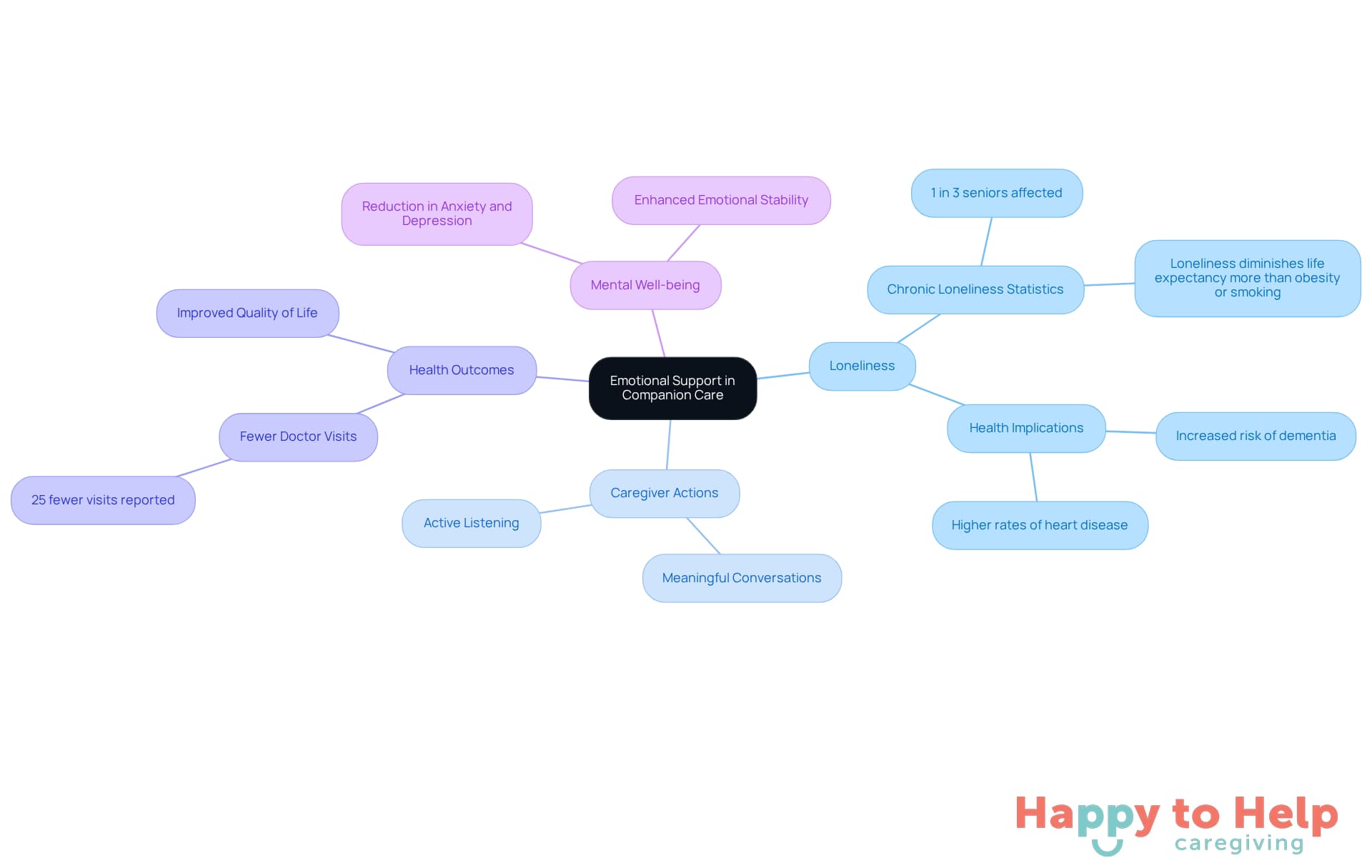
Emotional support is a significant challenge in home companion care, where caregivers often face the issue of loneliness among older adults. This loneliness is not just a feeling; it can lead to serious health implications. Research shows that one in three seniors experiences chronic loneliness, which can reduce life expectancy more than obesity or smoking. This highlights the urgent need for effective companionship to combat these feelings and foster a sense of belonging.
To address this problem, caregivers can engage in meaningful conversations and actively listen to their clients' concerns. By fostering emotional bonds, support providers can help reduce symptoms of depression and anxiety, ultimately improving the overall quality of life for elderly individuals. Case studies reveal that older adults using companionship services report 25% fewer doctor visits annually, indicating that emotional assistance can lead to better health outcomes.
Moreover, consistent interaction with caregivers nurtures a sense of purpose and joy in daily routines, which is crucial for mental health. Psychologists emphasize that regular social interaction helps older adults feel seen, heard, and valued, leading to emotional stability and improved mental well-being. In essence, the presence of a compassionate individual not only alleviates anxiety but also promotes a positive healing atmosphere. Thus, companionship assistance is a vital element of elderly welfare in home companion care.
Continuity of Care: Supporting Recovery and Chronic Condition Management
Continuity of support is a significant challenge for seniors managing chronic conditions or recovering from illness. Without consistent assistance from known providers, trust diminishes, and communication falters. This lack of continuity can hinder health monitoring and the timely adjustment of support plans, ultimately affecting recovery outcomes.
Research shows that patients who receive support from familiar caregivers experience significantly improved recovery rates. For instance, case studies like "Nutritional Strategies to Enhance Recovery" and "Guidance for a Smooth Recovery Journey at Home" highlight that these caregivers are more attuned to their clients' unique needs and preferences. Healthcare professionals emphasize that familiar supporters not only reduce anxiety but also foster a sense of security, which is crucial for effective recovery.
As David J. Nyweide noted, "Higher continuity was associated with a lower rate of preventable hospitalization for the year preceding a preventable hospitalization during the study period." This underscores the importance of ongoing relationships in providing individualized support, ultimately enhancing the overall well-being of seniors in home companion care during their recovery journey.
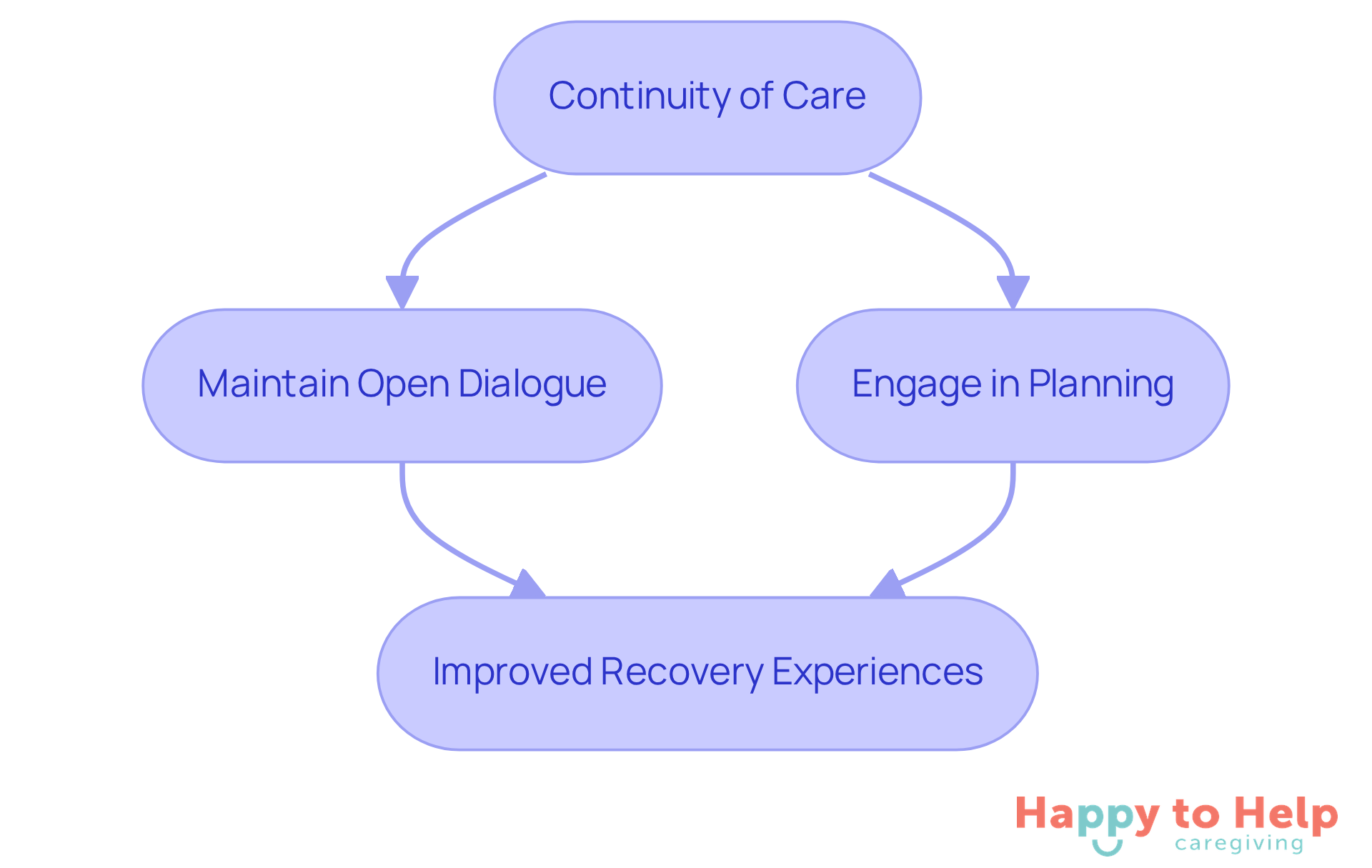
To nurture these vital relationships, family caregivers can take several actionable steps:
- Maintain Open Dialogue: Regular communication with supporters helps ensure everyone is aligned on care needs.
- Engage in Planning: Actively involve caregivers in the planning process for assistance, making them feel valued and informed.
By prioritizing continuity in support, caregivers can significantly improve recovery experiences in home companion care for seniors.
Companionship: The Core Benefit of In-Home Companion Care for Seniors
Loneliness is a significant issue for many seniors, often leading to feelings of isolation and depression. This problem can severely impact their overall well-being and quality of life.
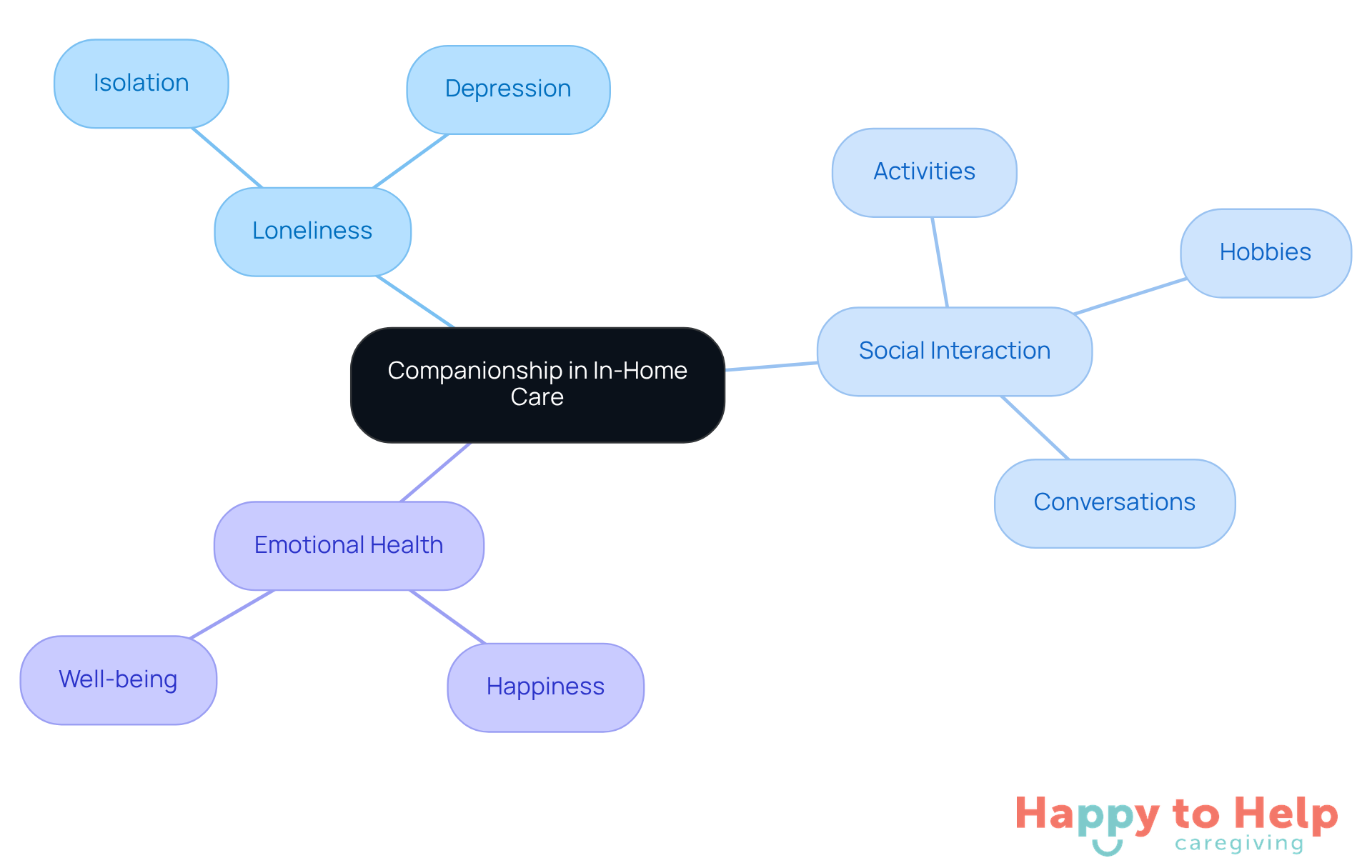
In home companion care addresses this challenge by providing not just assistance with daily tasks, but also meaningful social interaction. Caregivers engage clients in activities, hobbies, and conversations that enrich their lives, fostering a sense of community.
The companionship provided through in home companion care is vital. It combats loneliness and promotes happier, healthier seniors. By prioritizing social engagement, caregivers can significantly enhance the emotional and mental health of their clients.
Making the Right Choice
Loneliness among seniors is a pressing issue that significantly impacts their emotional and mental well-being. This isolation can lead to a decline in health and quality of life, making it essential to address these challenges effectively.
In-home companion care emerges as a vital solution. By providing personalized support and fostering meaningful relationships, caregivers not only combat isolation but also enhance the overall quality of life for elderly individuals. Caregivers play a crucial role, extending beyond mere assistance with daily tasks; they become essential companions who enrich the lives of their clients through engagement and social interaction.
Key benefits of in-home companion care include:
- Emotional Support: Caregivers offer companionship that alleviates feelings of loneliness.
- Safety: Regular check-ins ensure seniors feel secure in their environment.
- Customized Care Plans: Tailored approaches meet the unique needs of each individual.
- Flexible Scheduling: Adaptable care allows for a routine that suits the senior's lifestyle.
These elements work together to ensure that seniors feel valued, secure, and empowered in their daily lives. The emphasis on personalized care plans and the importance of continuity in support illustrate how tailored approaches can lead to improved health outcomes and overall satisfaction for both seniors and their families.
Recognizing the significance of in-home companion care is crucial for families seeking to enhance the well-being of their loved ones. By prioritizing companionship and emotional support, families can create a nurturing environment that alleviates loneliness while fostering independence and dignity in their elderly relatives. Investing in these services not only benefits seniors but also provides peace of mind for families, knowing their loved ones are receiving compassionate, reliable care tailored to their unique needs.
https://iframe.tely.ai/cta/eyJhcnRpY2xlX2lkIjogIjY5MjBmZDZmY2E3OGI5ZDliYTJkYTRmOCIsICJjb21wYW55X2lkIjogIjY4ZWU1ZGNhNzMxNzYyNTU3ZjNjOTVjMSIsICJpbmRleCI6IG51bGwsICJ0eXBlIjogImFydGljbGUifQ==Frequently Asked Questions
What is the main issue that Happy to Help Caregiving addresses?
Happy to Help Caregiving addresses loneliness among elderly individuals, which can lead to severe mental health issues such as depression and anxiety.
How does regular social interaction benefit seniors?
Regular social interaction boosts mood, reduces feelings of isolation, stimulates the brain, helps maintain cognitive health, and can delay the onset of dementia.
What type of support does Happy to Help Caregiving provide?
Happy to Help Caregiving offers customized companionship that emphasizes emotional support, with caregivers trained to engage clients in meaningful interactions.
What are the potential benefits of personalized companion support for families?
Personalized companion support can help loved ones maintain a positive outlook, improve their quality of life, reduce the frequency of doctor visits and hospital admissions, and provide emotional support.
How does in-home companion care combat loneliness?
In-home companion care facilitates regular social interaction and engages clients in enjoyable activities, promoting a more active lifestyle and enhancing overall well-being.
What evidence supports the effectiveness of companion care in reducing loneliness?
Studies show that over 90% of ElliQ users report feeling less lonely, while 94% feel healthier and more connected due to regular social interaction provided by caregivers.
What safety measures does Happy to Help Caregiving implement for caregivers?
Happy to Help Caregiving conducts thorough background checks for all providers and maintains ongoing safety through periodic background checks for current employees.
Why is it important for families to trust the caregivers?
Trust is crucial because one in five adults over age 70 experiences some form of elder abuse annually, making it essential for caregivers to be trustworthy and well-trained.
What additional steps does Happy to Help Caregiving take to ensure safety?
They conduct initial home safety inspections to ensure a safe environment for both clients and caregivers.
How do families feel about the safety measures in place?
Testimonials from families indicate that the commitment to safety significantly alleviates anxiety, with some stating that a background check is a promise of reliability.
List of Sources
- Happy to Help Caregiving: Personalized Companion Care for Emotional Support
- The Incredible Benefits of Home Care, in 7 Amazing Stats - Companions For Seniors (https://companionsforseniors.com/2019/08/benefits-home-care-amazing-stats-trends-reports)
- The Emotional Benefits of Companion Care for Seniors (https://comfortkeepers.com/offices/texas/round-rock/resources/news/the-emotional-benefits-of-companion-care-for-seniors)
- Caregiving’s Mental Health Crisis (https://forbes.com/sites/otsuka/2025/10/02/caregivings-mental-health-crisis)
- How companion care improves mental health in elderly clients (https://humancareny.com/blog/how-companion-care-improves-mental-health-in-elderly-clients)
- Caregiving is taking a toll on the mental health of millions of Americans (https://npr.org/2025/01/26/nx-s1-5271537/caregiving-is-taking-a-toll-on-the-mental-health-of-millions-of-americans)
- Enhanced Quality of Life: Combatting Loneliness Through Companion Care
- How Companion Care Can Help Combat Senior Isolation and Loneliness | HealthMax Home Health Care (https://healthmaxmn.com/blog/how-companion-care-can-help-combat-senior-isolation-and-loneliness)
- The Emotional Benefits of Companion Care for Seniors (https://comfortkeepers.com/offices/texas/round-rock/resources/news/the-emotional-benefits-of-companion-care-for-seniors)
- AI Companions Redefine Elder Care: 3 Ways They Fight Loneliness, Boost Safety And Scale Support (https://forbes.com/sites/cathyrubin/2025/05/16/ai-companions-are-redefining-elder-care-3-ways-they-fight-loneliness-boost-safety-and-scale-support)
- The Unbeatable Benefits of Companion Care for Seniors (https://comforcare.com/massachusetts/canton/resources/blog/the-unbeatable-benefits-of-companion-care-for-seniors)
- Companion Care at Home Reduces Loneliness for Seniors During the Holidays (https://lifesathomecare.com/companion-care-at-home-reduces-loneliness-for-seniors-during-the-holidays)
- Peace of Mind for Families: Trusting Professional Companion Care
- The Caregiving Landscape: Data & Insights on the Caregiver Experience in the U.S. (https://caregiveraction.org/caregiver-statistics)
- Why Thorough Background Checks Matter for Companionship Care (https://southerncaliforniacaregiving.com/why-thorough-background-checks-matter-for-companionship-care)
- The Case For Stronger Caregiver Vetting In Home Care (https://homehealthcarenews.com/2024/10/the-case-for-stronger-caregiver-vetting-in-home-care)
- Support for Family Caregivers Brings Peace of Mind (https://hiredhandshomecare.com/support-for-family-caregivers-brings-peace-of-mind)
- National Alliance for Caregiving: Caregiving in the US 2025 Report (https://johnahartford.org/resources/view/national-alliance-for-caregiving-caregiving-in-the-us-2025-report)
- Customized Care Plans: Tailoring Companion Care to Individual Needs
- Novel Care Model May Improve Outcomes for Older Adults With Multiple Chronic Conditions (https://consultqd.clevelandclinic.org/novel-care-model-may-improve-outcomes-for-older-adults-with-multiple-chronic-conditions)
- Customized Care at Home: The Benefits of Personalized Care Plans - VNA Health Group (https://vnahg.org/customized-care-at-home-the-benefits-of-personalized-care-plans)
- How Personalized Care Plans Enhance Medical Services in Long-Term Care (https://rosewood-nursing.com/post/how-personalized-care-plans-enhance-medical-services-in-long-term-care)
- Home Care Impact on Recovery of Patient (A Statistics Report) (https://lovinghomecareinc.com/home-care-recovery-statistics)
- The Future of Private Home Care: What to Expect in 2025 (https://anodyne-services.com/2024/08/14/the-future-of-private-home-care-what-to-expect-in-2025)
- Flexible Scheduling: Adapting Companion Care to Fit Lifestyles
- New survey finds flexible schedule, quick access to wages key to addressing the national nursing shortage (https://galehealthcaresolutions.com/new-survey-finds-flexible-schedule-quick-access-to-wages-key-to-addressing-the-national-nursing-shortage)
- Flexible work: What workers, especially low-wage workers, really want and how best to provide it (https://epi.org/publication/flexible-work)
- The Critical Role of Flexibility in Home Care Scheduling for Family Peace of Mind (https://relevar.com/the-critical-role-of-flexibility-in-home-care-scheduling-for-family-peace-of-mind)
- Exploring the Rising Demand for Flexible Work in Healthcare (https://healthecareers.com/career-resources/nurse-career/rising-demand-for-flexible-work-in-healthcare)
- Flexible scheduling (https://countyhealthrankings.org/strategies-and-solutions/what-works-for-health/strategies/flexible-scheduling)
- Preserving Independence: Supporting Seniors' Autonomy Through Companion Care
- Post-Hospital Care Sanger, CA - How Post-Hospital Care Supports Seniors' Independence (https://a-plusinhomecare.com/how-post-hospital-care-supports-seniors-independence)
- Promoting Independence through In-Home Care (https://visitingangels.com/npr/news-info/promoting-independence-through-in-home-care/24383)
- Californians Receiving In-Home Care Fear Medicaid Cuts Will End Their Independent Living - California Health Care Foundation (https://chcf.org/resource/californians-receiving-in-home-care-fear-medicaid-cuts-will-end-their-independent-living)
- In-Home Long-Term Care: How to Support Senior Independence (https://seniorhelpers.com/ca/studio-city/resources/blogs/2025-11-11)
- 7 Ways In-home Care Helps Seniors Stay Independent | Home Helpers® Home Care (https://homehelpershomecare.com/blog/2025/september/seven-ways-in-home-care-supports-independence)
- Ensuring Safety: The Protective Role of Companion Care
- Hidden Hazards in the Home: Help Protect Yourself and Your Loved Ones (https://ncoa.org/article/hidden-home-hazards-older-adults-more-likely-to-die-from-falls-and-fires)
- Home Safety for Seniors: Statistics & Proven Safety Solutions (https://agesafeamerica.com/home-safety-hub/articles/home-safety-seniors-statistics-solutions)
- Facts About Falls (https://cdc.gov/falls/data-research/facts-stats)
- Home Care Assistance: Five Tips for Families Worried About Senior Safety (https://homehelpershomecare.com/nw-indiana/community-blog/2025/july/five-tips-for-family-caregivers-worried-about-senior-safety)
- How Companion Care Provides Safety and Supervision for Seniors (https://humancareny.com/blog/how-companion-care-provides-safety-and-supervision-for-seniors)
- Emotional Support: The Heart of Companion Care for Seniors
- Lonely Seniors Are Turning To AI Bots For Companionship (https://forbes.com/sites/rashishrivastava/2025/10/18/lonely-seniors-are-turning-to-ai-bots-for-companionship)
- Mental Health Problems on the Rise in Older Adults (https://aarp.org/health/healthy-living/mental-health-diagnoses-spike)
- 10 Benefits of Companionship Carers for Seniors' Well-Being - Happy To Help (https://happytohelpcaregiving.com/10-benefits-of-companionship-carers-for-seniors-well-being)
- A Better Solution Home Care (https://abs.care/How-Companionship-Care-Improves-Mental-Health-in-Older-Adults)
- 1 in 3 older adults still experience loneliness and isolation (https://michiganmedicine.org/health-lab/1-3-older-adults-still-experience-loneliness-and-isolation)
- Continuity of Care: Supporting Recovery and Chronic Condition Management
- Continuity of care during long-term care transitions: a scoping review of the Canadian literature - PMC (https://pmc.ncbi.nlm.nih.gov/articles/PMC12032762)
- Continuity of Care and Preventable Hospitalization (https://jamanetwork.com/journals/jamainternalmedicine/fullarticle/1738715)
- 42 inspirational quotes for caregivers (https://care.com/c/40-inspirational-caregiver-quotes)
- 27 Inspirational Quotes for Caregivers (https://ultimatecareny.com/resources/27-quotes-for-caregivers)
- 20 Caregiver Quotes for Inspiration - Home Helpers Bradenton (https://homehelpershomecare.com/bradenton/community-blog/2017/june/20-inspirational-caregiver-quotes)
- Companionship: The Core Benefit of In-Home Companion Care for Seniors
- Some Important Statistics and In-Home Companion Care (https://americareinfo.com/beach-cities/articles/in-home-companion-care-some-important-facts-on-aging-to-consider)
- The Unbeatable Benefits of Companion Care for Seniors (https://comforcare.com/massachusetts/canton/resources/blog/the-unbeatable-benefits-of-companion-care-for-seniors)
- The Amazing Benefits of Companion Care for Seniors (https://homeinstead.com/home-care/usa/az/phoenix/808/news-and-media/the-amazing-benefits-of-companion-care-for-seniors)
- How Companionship in Home Care Boosts Seniors' Mental Health - Care With Love (https://carewithlove.com/how-companionship-in-home-care-boosts-seniors-mental-health)
- The Hidden Benefits of Companionship Care for Seniors (https://safehomecare.com/post/the-hidden-benefits-of-companionship-care-for-seniors)