10 Benefits of Live Ins for the Elderly You Should Know
For families in our service areas
For families in our service areas, this guide explains caregiving and how non-medical in-home caregiving can support care planning in East Idaho, Treasure Valley & Magic Valley, Northern Wasatch, North Central West Virginia & Southwestern Pennsylvania, and Northeast Ohio.
Understanding Live Ins for the Elderly
The aging population faces numerous challenges, including emotional isolation and safety concerns. These issues make the need for effective caregiving solutions more pressing than ever. Live-in care presents a viable solution, offering personalized support that enhances the quality of life for elderly individuals while alleviating stress for caregivers and families.
However, how can live-in caregivers effectively address the unique needs of seniors? It's essential to foster an environment of trust and companionship. This article explores ten key benefits of live-in care, highlighting its vital role in promoting independence, emotional well-being, and peace of mind for both the elderly and their families.
Personalized Care from Happy to Help Caregiving
Problem: Caregivers often face exhaustion and stress, which can impact the quality of care provided to elderly individuals. Many older adults experience feelings of isolation, which can lead to decreased happiness and emotional well-being.
Agitate: This situation is concerning, as it not only affects the caregivers but also the elderly clients who rely on them for support. When caregivers are overwhelmed, the personalized attention that older adults need may diminish, leading to a decline in their overall quality of life.
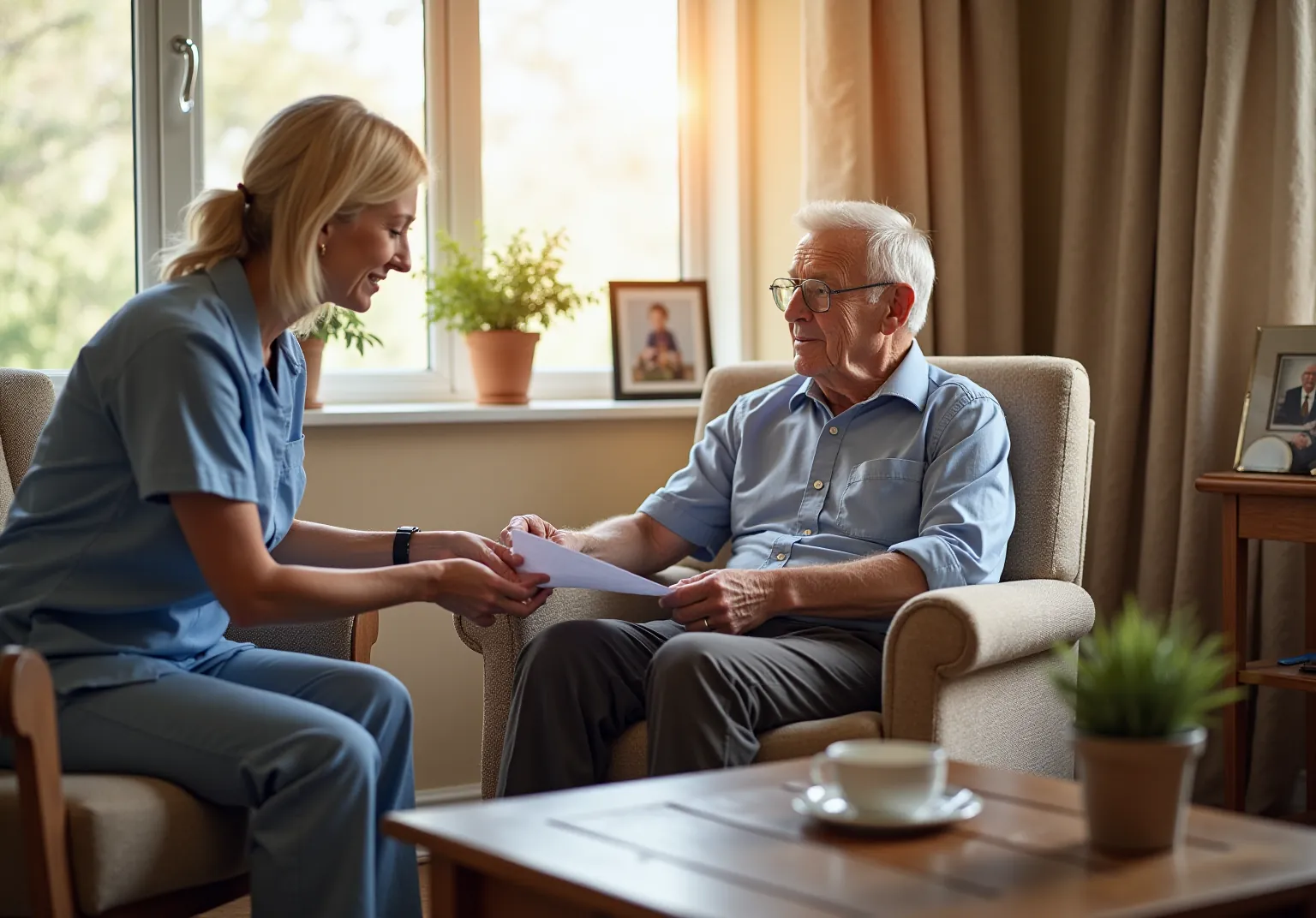
Solution: Happy to Help Caregiving excels in providing personalized care tailored to the unique needs of each client. This approach ensures that older adults receive support that respects their preferences, routines, and lifestyles. Care plans are developed collaboratively with families, allowing for adjustments as needs change. This level of customization enhances comfort and nurtures a sense of autonomy, which is essential for the emotional well-being of elderly individuals.
Studies show that tailored support plans can greatly alleviate provider exhaustion by distributing tasks with professional aides. This not only promotes independence and social involvement for elderly individuals but also enhances their quality of life. The emotional impact of personalized caregiving is profound; it combats feelings of isolation and enhances overall happiness, making it an essential component of effective elder care.
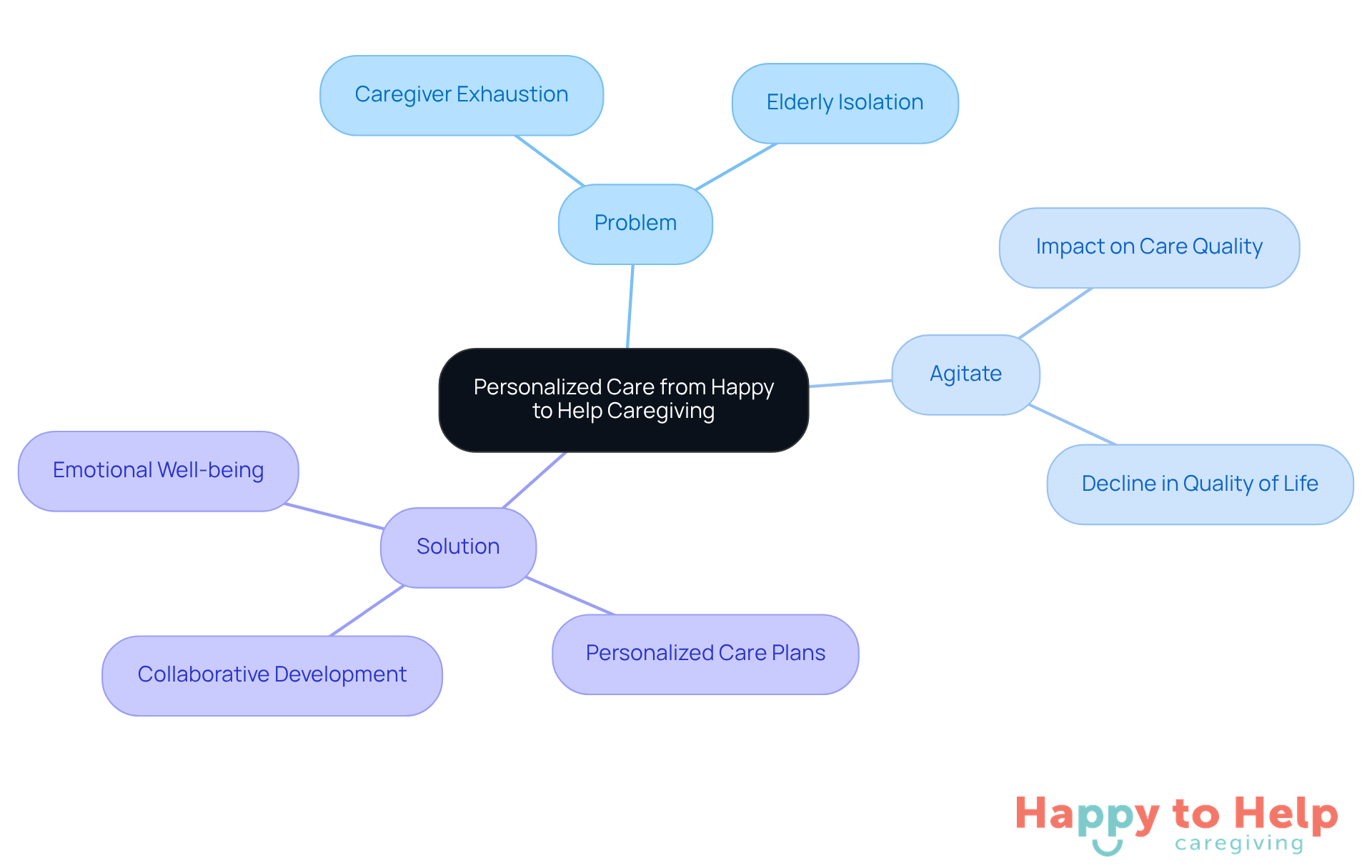
Emotional Support and Companionship
Loneliness and depression are significant challenges faced by elderly individuals, often leading to a decline in emotional health. These feelings can be exacerbated by a lack of companionship and meaningful interactions, making it crucial to address this issue effectively.
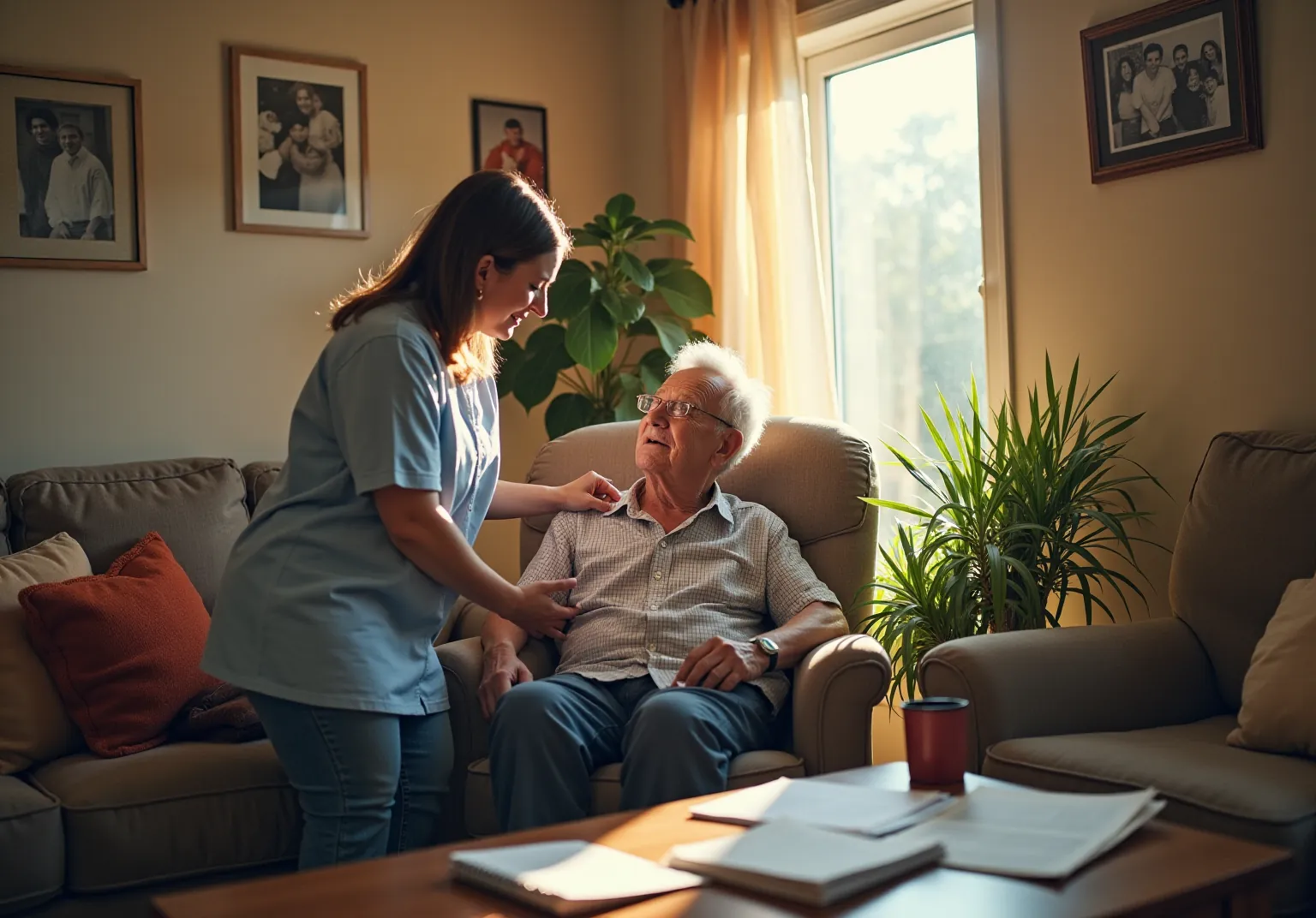
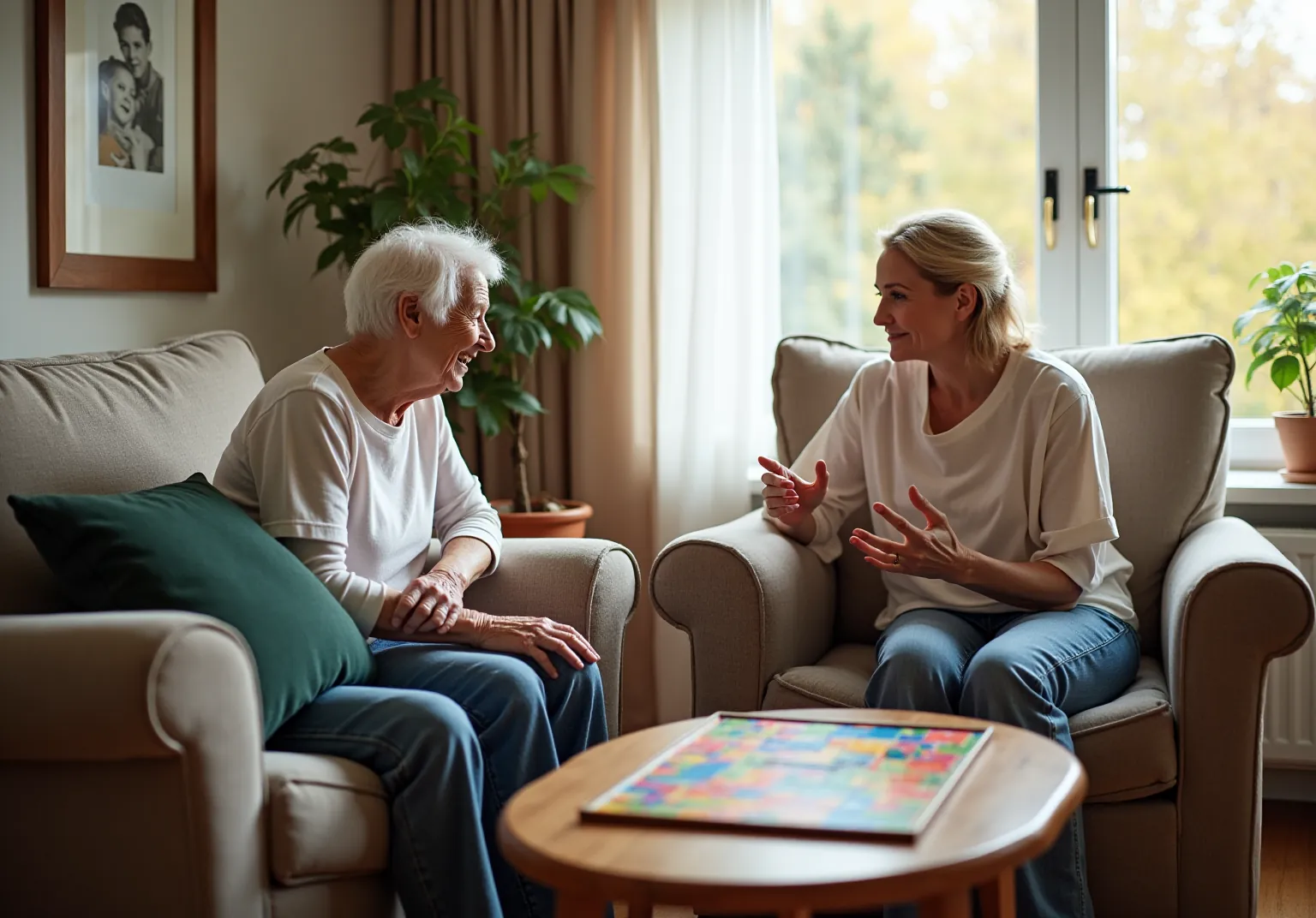
Live ins for the elderly play a vital role in combating these feelings by offering essential emotional support and companionship. Engaging in meaningful conversations, participating in shared activities, and simply being present can significantly enhance an older adult's emotional well-being. Caregivers are trained to recognize signs of emotional distress, providing comfort and reassurance that fosters a nurturing environment.
To support elderly individuals, caregivers can implement the following strategies:
- Encourage regular conversations to foster connection.
- Plan shared activities that promote engagement and joy.
- Be attentive to signs of emotional distress and respond with empathy.
By focusing on these actionable solutions, caregivers can create a supportive atmosphere that promotes mental well-being and combats feelings of loneliness.
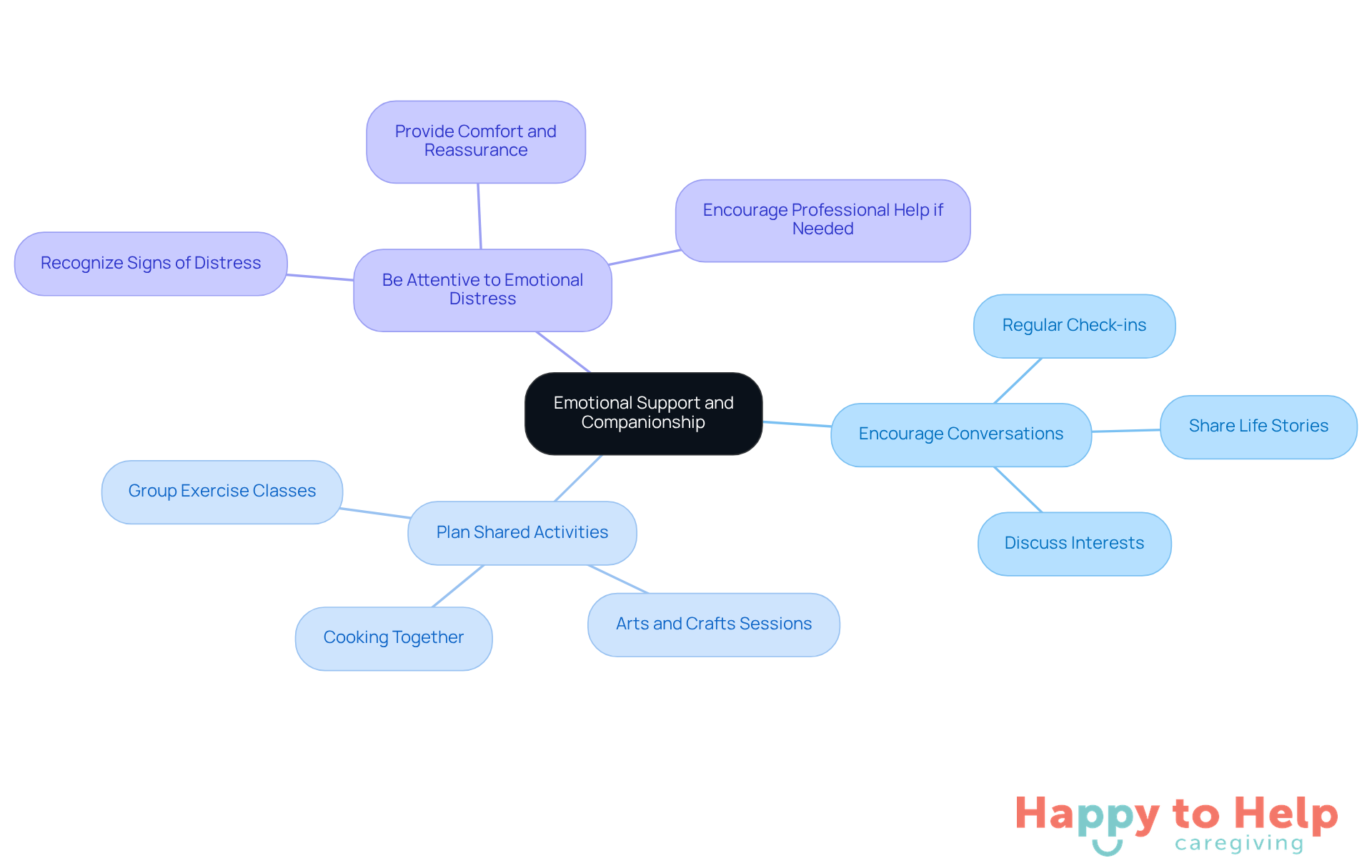
Enhanced Safety and Security at Home
Safety and security for elderly individuals at home is a significant concern. Many face potential hazards that can lead to accidents, particularly those with cognitive impairments or mobility challenges. This situation can be distressing for families, who worry about their loved ones' well-being.
Live ins for the elderly play a crucial role in addressing these challenges. They are trained to identify risks and implement preventive measures, such as fall-proofing living spaces and ensuring proper lighting. Their continuous oversight not only minimizes the likelihood of accidents but also provides families with peace of mind, knowing their loved ones are safe.
To enhance safety at home, caregivers can take several actionable steps:
- Assess the living environment for potential hazards.
- Install grab bars in bathrooms and hallways.
- Ensure adequate lighting in all areas of the home.
By taking these measures, caregivers can significantly improve the safety and security of elderly individuals, allowing them to maintain their independence while reducing risks.
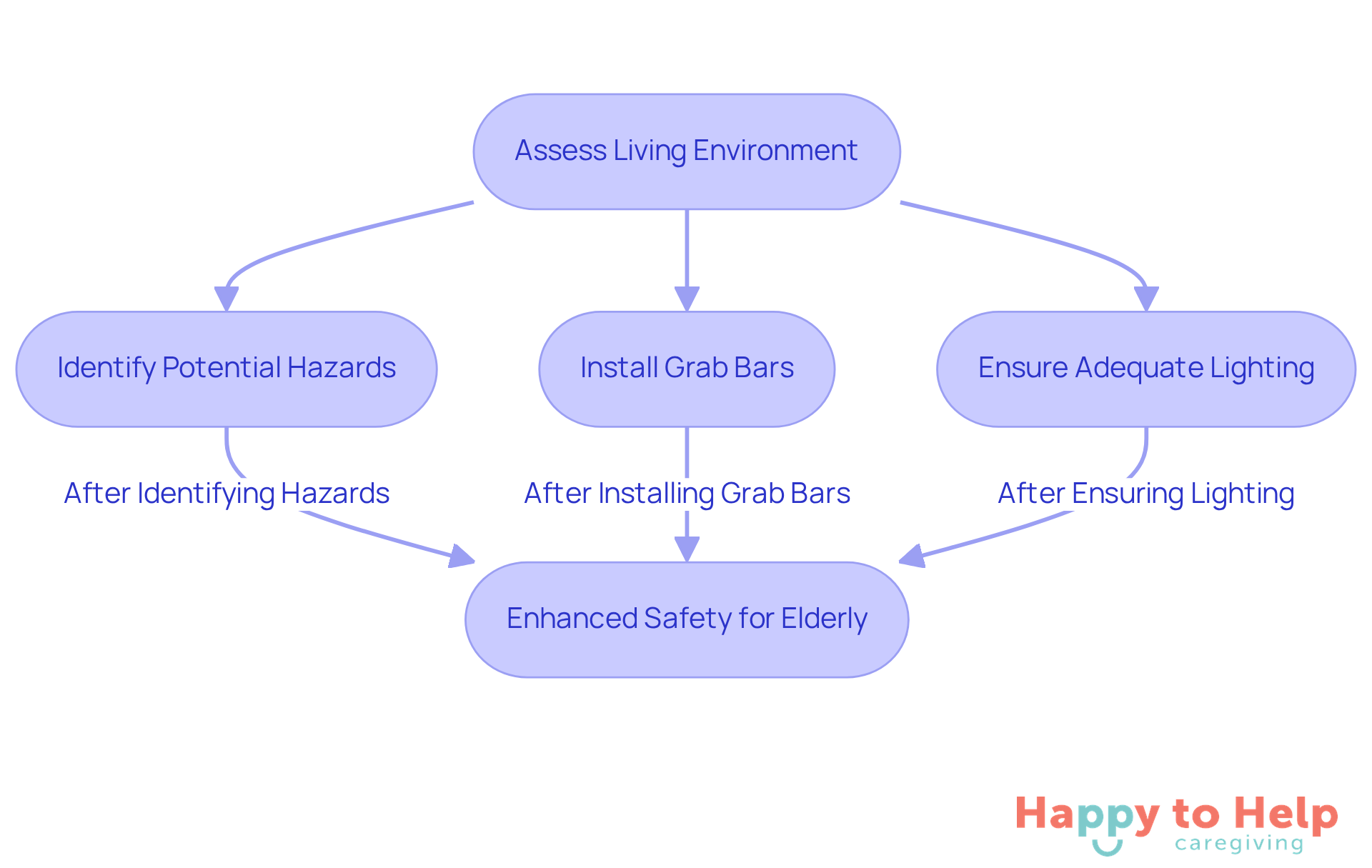
Flexible Care Schedules
One significant challenge faced by caregivers is the inflexibility of traditional care schedules. This rigidity can lead to increased stress for both caregivers and older adults, as it often fails to accommodate the unique needs of seniors. For instance, many elderly individuals require assistance at specific times, such as during medication schedules or meal preparations, which are crucial for their health and emotional well-being.
The solution lies in live ins for the elderly, which provide inherent flexibility. Caregivers can customize their schedules for live ins for the elderly to meet the particular needs of older adults, whether that involves providing assistance during the day, overnight, or on weekends. This adaptability not only ensures timely support but also promotes a more personalized caregiving experience. Families can feel confident knowing their loved ones are cared for in a manner that respects their unique preferences and daily habits.
Moreover, flexible scheduling significantly reduces stress for older adults. Consistent and reliable care fosters trust and enhances their overall well-being. As noted by a healthcare expert, "in-home assistance enables elderly individuals to preserve their independence while obtaining the support they require, which is vital for their overall well-being."
Additionally, with 67 percent of family supporters struggling to balance work and caregiving responsibilities, the importance of flexible scheduling becomes even more evident. By adjusting support to address the changing requirements of seniors, caregivers can enhance emotional bonds and contentment, ultimately fostering a nurturing atmosphere where seniors can flourish.
Continuity of Care and Trust
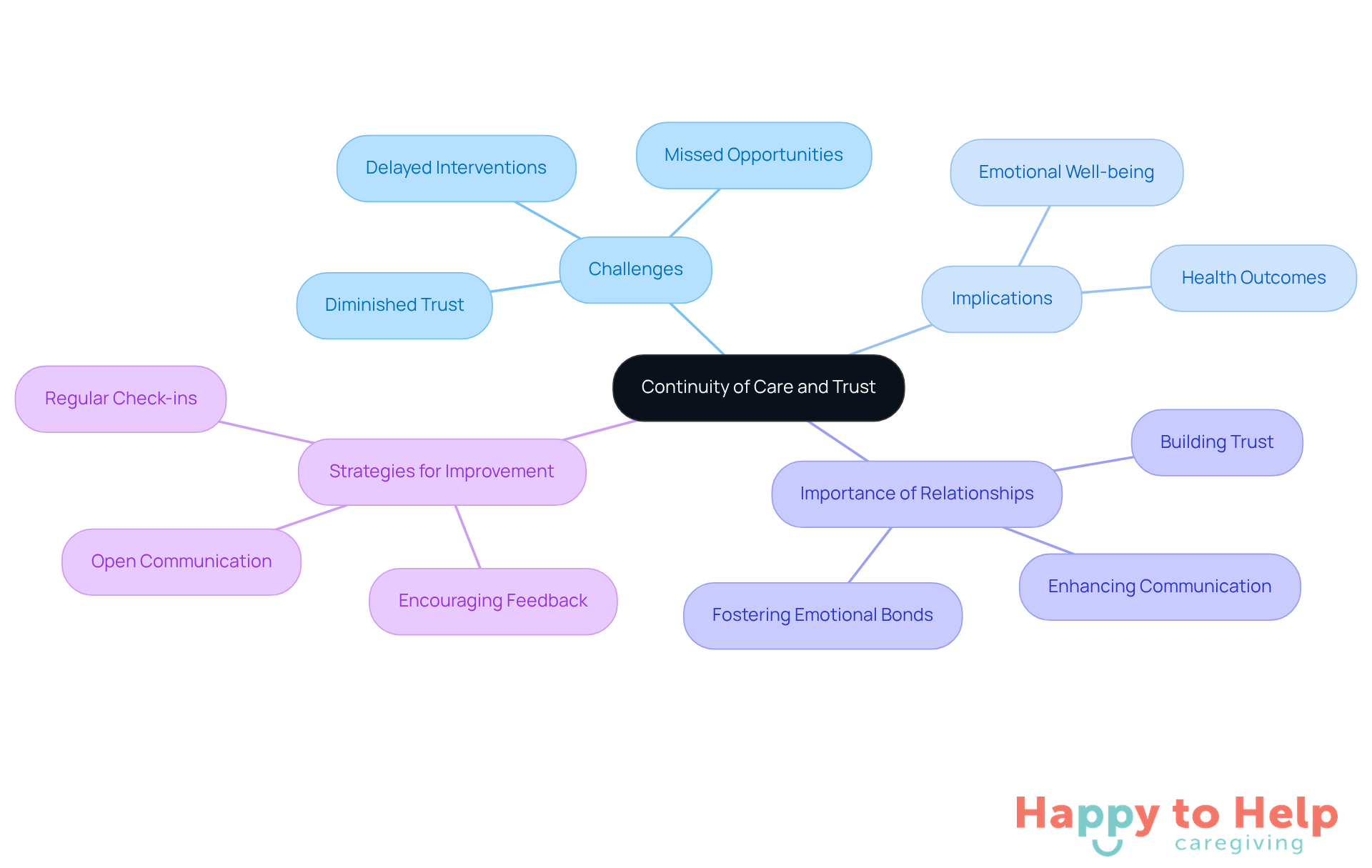
Continuity of care presents a significant challenge in live-in caregiving. Without it, elderly individuals often experience diminished trust and security, which can lead to feelings of worry and loneliness. When caregivers do not consistently provide assistance, they miss the opportunity to develop a deep understanding of their clients' preferences, routines, and health conditions. This lack of familiarity can hinder the delivery of efficient and tailored support, ultimately impacting the emotional well-being of seniors.
The implications of inconsistent care are profound. As support providers become reliable friends, older adults feel more at ease in their own homes. However, without regular interactions, caregivers may struggle to recognize subtle changes in their clients' conditions, delaying necessary interventions that could enhance health outcomes. For instance, a support worker who frequently engages with an elderly individual can quickly identify slight alterations in their health, allowing for prompt actions that improve overall well-being.
To address these challenges, families and caregivers should prioritize continuity in care. Establishing open communication with support providers is essential for fostering strong relationships. According to a recent survey, 91% of caregivers believe that client relationships are crucial to their job satisfaction, highlighting the importance of trust in these connections. By promoting regular interactions, caregivers can build emotional connections that encourage older adults to express their needs and concerns more freely.
Ultimately, the trust cultivated through continuity not only enhances the quality of care but also empowers seniors to maintain their independence and dignity. Caregivers can implement practical strategies, such as scheduling regular check-ins and encouraging feedback, to strengthen these vital relationships.
Support with Daily Living Activities
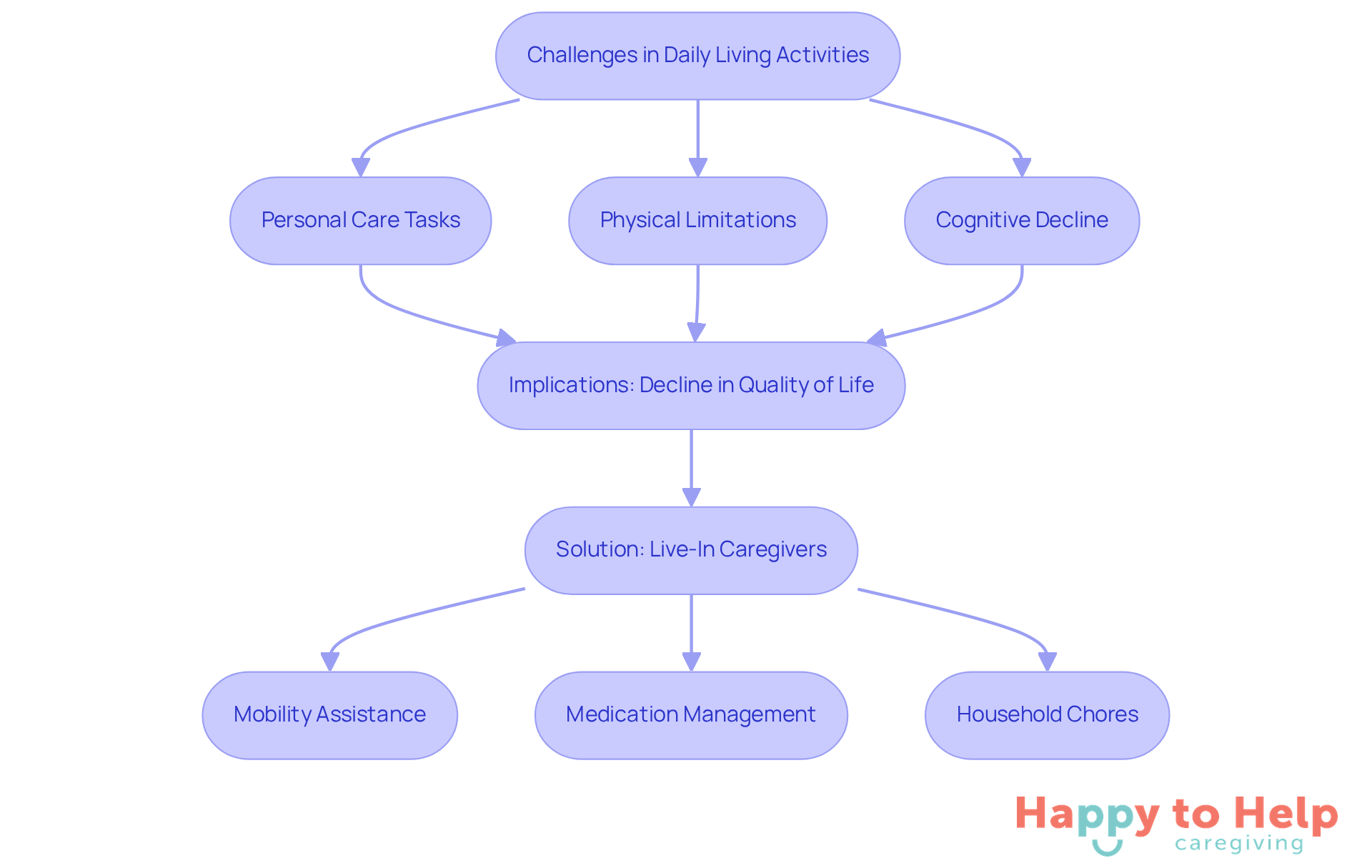
Older adults often face significant challenges with daily living activities, including personal care tasks like bathing, dressing, and meal preparation. These difficulties can stem from physical limitations or cognitive decline, making it hard for them to maintain their independence.
The implications of these struggles are profound. Without adequate support, older adults may experience a decline in their quality of life, leading to feelings of frustration and helplessness. This is where live ins for the elderly play a crucial role.
Live ins for the elderly provide vital assistance by helping with mobility, medication management, and household chores. By offering this support, they enable older adults to uphold their autonomy and dignity while ensuring their safety and well-being.
Incorporating caregivers into the daily routine can significantly improve the lives of older adults. Caregivers not only assist with essential tasks but also foster a sense of companionship and security, which is invaluable for those facing the challenges of aging.
Promotion of Social Interaction and Activities
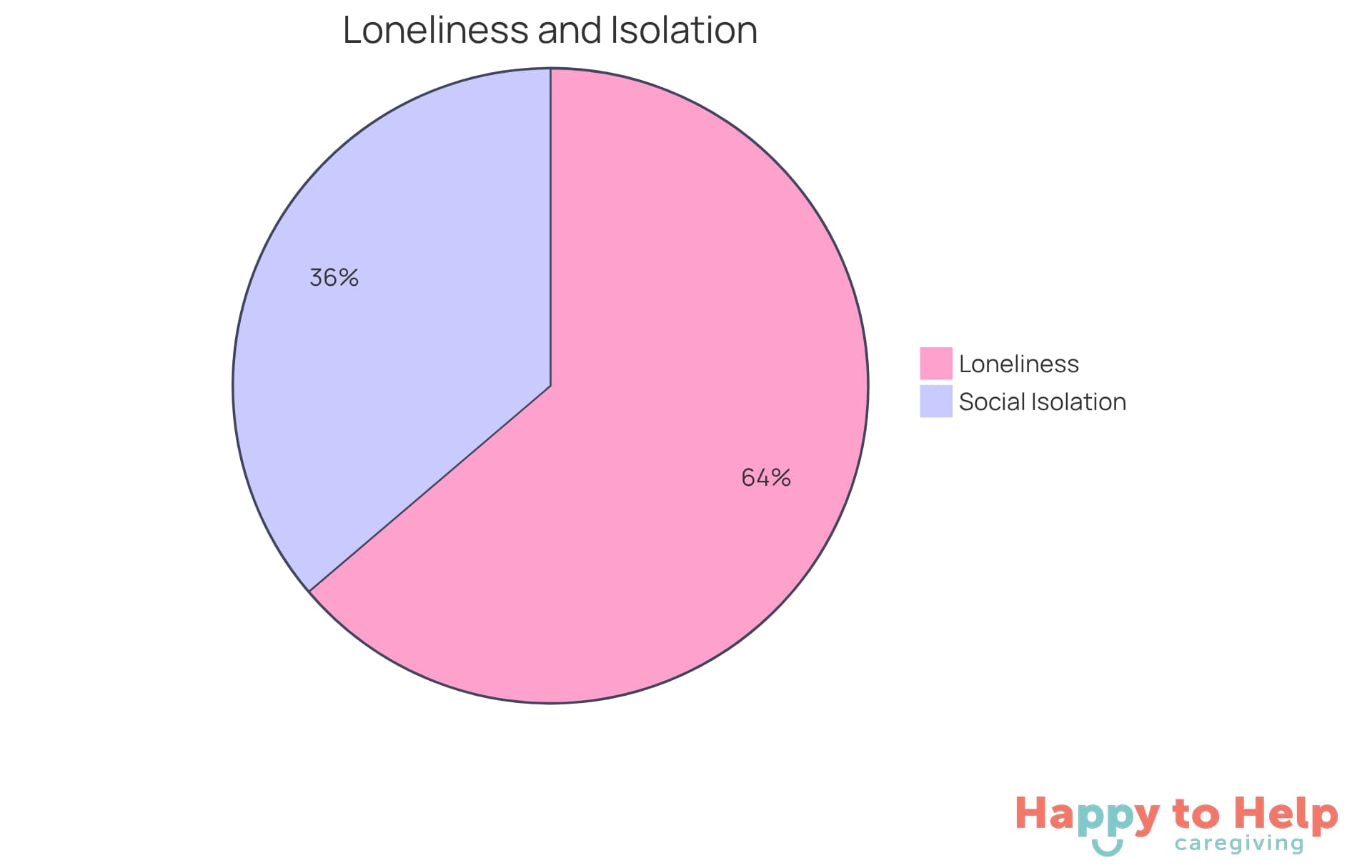
Live ins for the elderly play a crucial role in addressing a significant problem: loneliness and social isolation among seniors. Many older adults struggle with these issues, which can lead to depression and a diminished quality of life. A recent survey revealed that 44% of older adults feel lonely sometimes or often, despite 94% valuing the ability to age at home. Furthermore, one in four seniors experiences social isolation, underscoring the urgent need for effective support.
The implications of social isolation are profound. It not only affects mental health but also diminishes the overall well-being of seniors. By fostering relationships and encouraging participation in enjoyable activities, live ins for the elderly can significantly enhance the quality of life for their clients. Activities such as:
- Group outings
- Arts and crafts
- Simple games
stimulate both mental and physical well-being, promoting a sense of purpose and belonging.
To combat these challenges, live ins for the elderly can provide practical solutions. They can organize an activity schedule tailored to the preferences of older adults, ensuring that they remain engaged and energetic. Additionally, community programs that promote physical activity can enhance health while facilitating social connections among seniors.
The benefits of social engagement extend beyond companionship; they contribute to improved mental health and a greater sense of dignity. By empowering elderly individuals to participate in their communities and make decisions about their activities, live ins for the elderly help to establish a support network that nurtures resilience and joy in daily life. As Melanie Barbieri noted, technology can serve as an extension of human connection, further strengthening the emotional ties between supporters and the elderly.
Health Monitoring and Medication Management
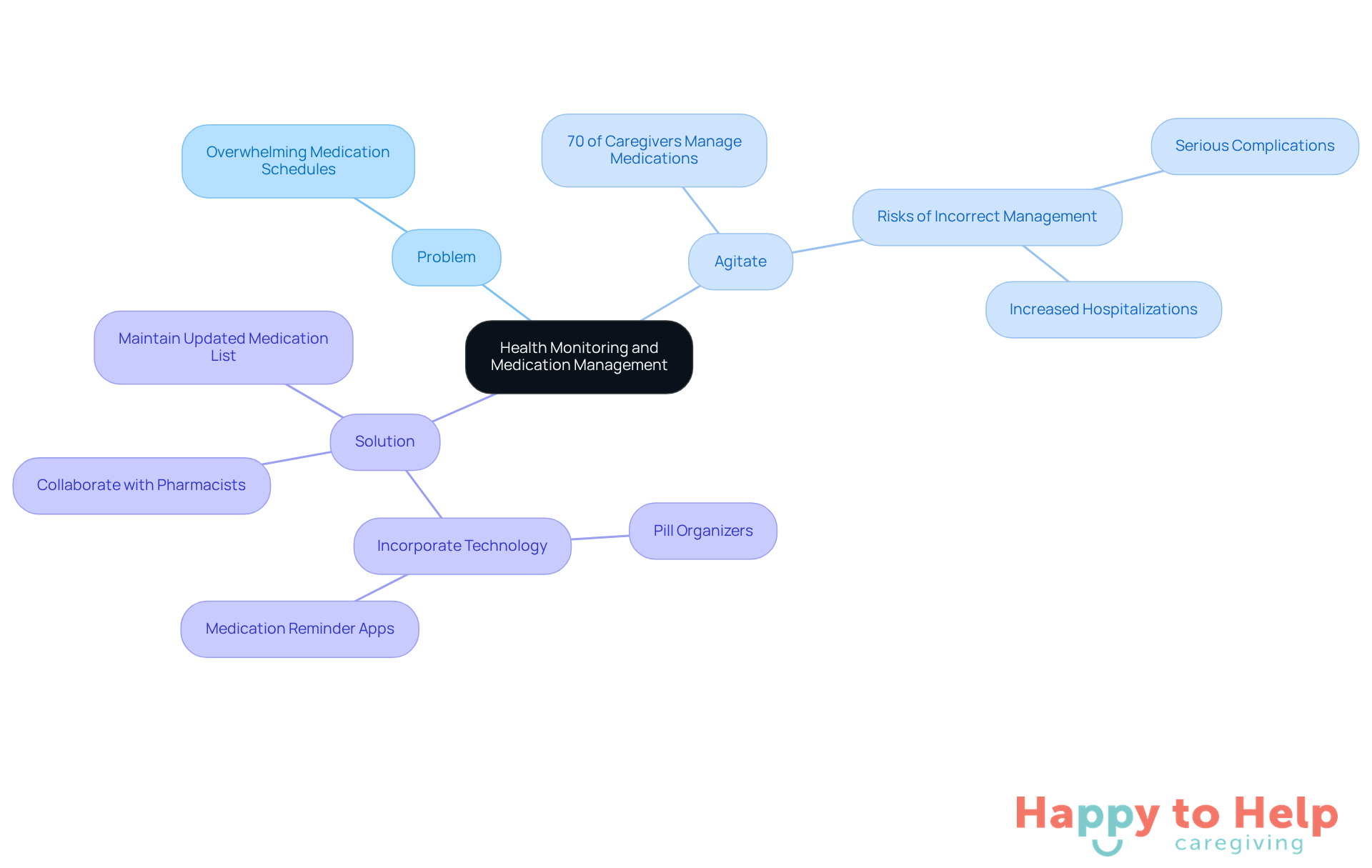
Live ins for the elderly provide crucial support in health monitoring and medication management for seniors. However, managing medication schedules can be overwhelming for caregivers.
Agitate: With 70% of caregivers responsible for their loved one’s medications, the stakes are high. Incorrect medication management can lead to serious complications and increased hospitalizations. Caregivers must monitor vital signs and overall health, promptly reporting any changes to family members or healthcare providers. This proactive approach is essential for enhancing care quality and improving health outcomes for seniors.
Solution: To tackle these challenges, caregivers should maintain an updated medication list, especially for older adults with multiple chronic conditions. Incorporating technology, such as pill organizers and medication reminder apps, can simplify medication management and enhance adherence. Additionally, collaborating with pharmacists ensures comprehensive medication management and addresses potential interactions. By implementing these strategies, caregivers can create a safer, more supportive environment for live ins for the elderly, enhancing their well-being and independence.
Cost-Effectiveness of Live-In Care
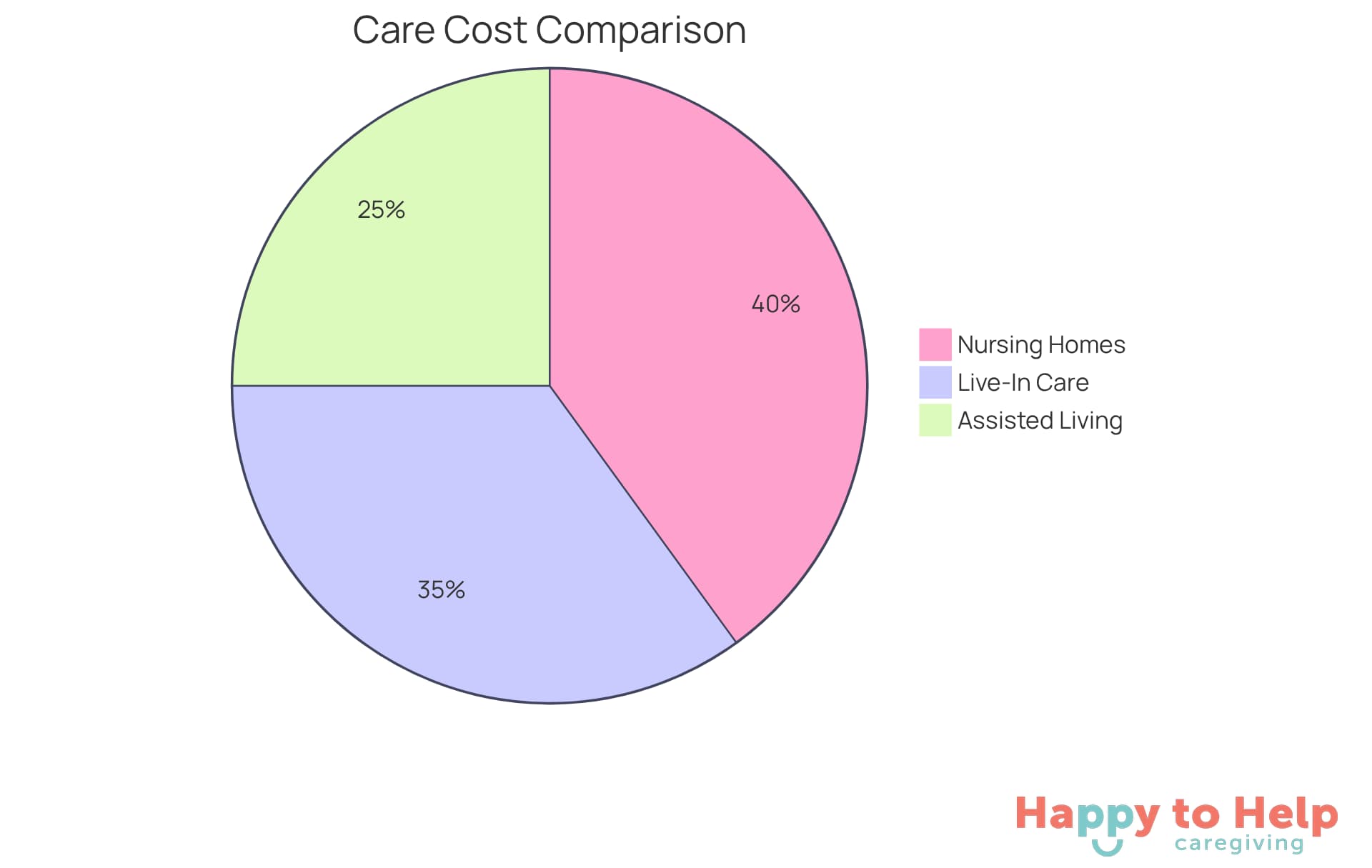
The high costs of nursing homes and assisted living facilities can be a significant burden for families seeking support for their elderly loved ones. This financial strain often leaves families feeling overwhelmed and unsure of how to provide the necessary care without breaking the bank.
Fortunately, live ins for the elderly emerge as a cost-effective solution. By allowing seniors to remain in the comfort of their own homes, families can avoid the hefty facility fees and additional service costs associated with traditional care options. Live ins for the elderly not only promote independence but also enhance the quality of life for seniors, making them a financially viable choice for families.
Peace of Mind for Families
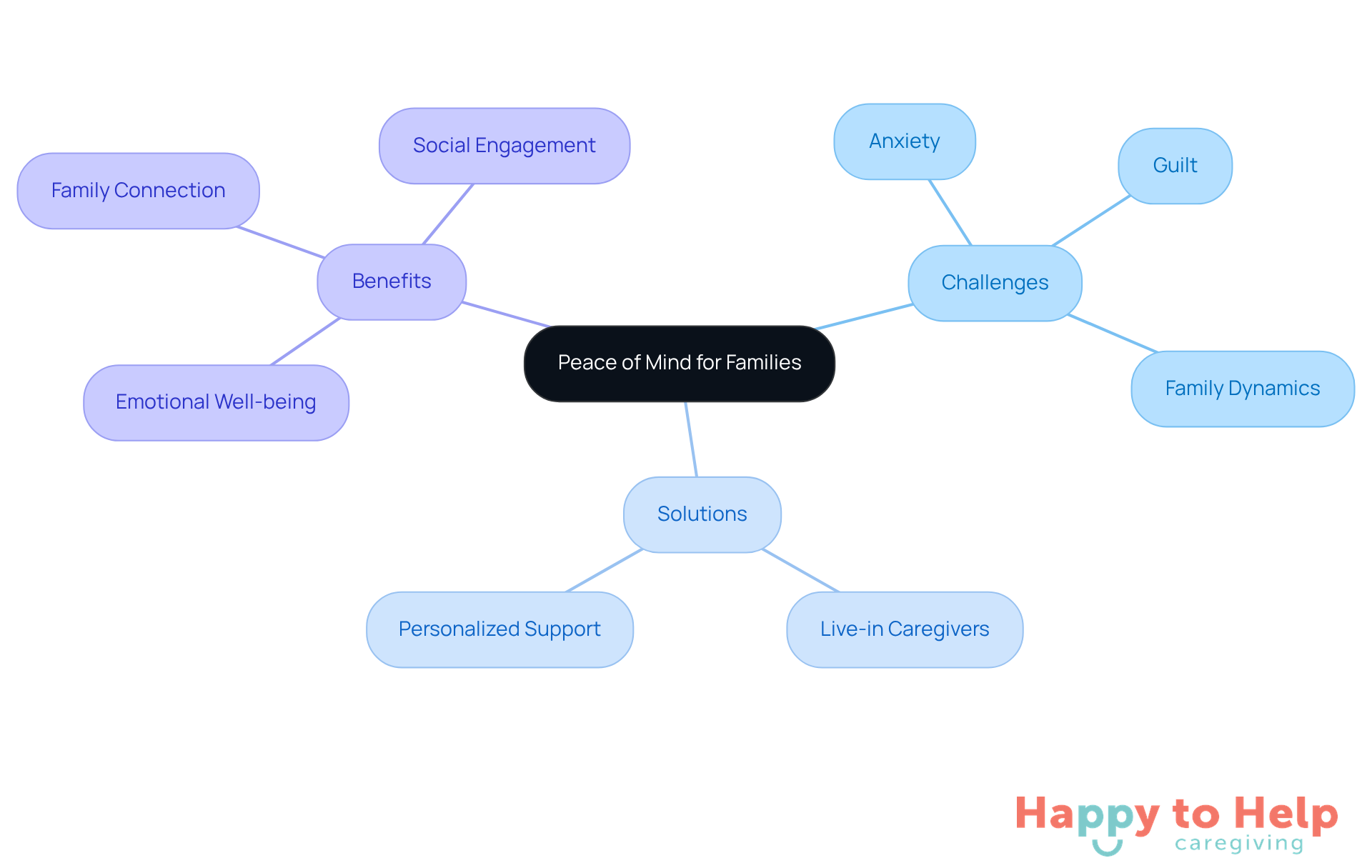
Caring for elderly loved ones can be a daunting challenge for families. Many caregivers experience anxiety and guilt, worrying about their relatives' safety and well-being. These feelings can take a toll on family dynamics, making it difficult to focus on personal lives while constantly concerned about their loved ones.
Live ins for the elderly provide a practical solution to these challenges. By utilizing live ins for the elderly, families can provide personalized and compassionate support in the comfort of home, ensuring their elderly relatives are not only safe but also engaged in meaningful activities. This arrangement alleviates concerns, allowing family members to maintain a close connection while focusing on their own lives.
The presence of a dedicated caregiver fosters a sense of security, significantly reducing feelings of anxiety and guilt. Families can trust that their loved ones are receiving the attention and care they deserve. Moreover, live ins for the elderly play a crucial role in enhancing the emotional well-being of seniors, which positively impacts family dynamics.
By ensuring that seniors are socially engaged and supported, live-in care nurtures a harmonious environment that benefits everyone involved. This approach not only addresses the immediate concerns of caregivers but also promotes a healthier, more connected family life.
Making the Right Choice
The challenges of elderly care are significant, often leaving families feeling overwhelmed and anxious about their loved ones' well-being. Many seniors face loneliness, safety concerns, and a lack of personalized support, which can diminish their quality of life.
Live-in care emerges as a compelling solution to these issues. By integrating caregivers into the daily lives of seniors, families can provide dedicated attention tailored to individual needs. This approach not only enhances emotional well-being but also ensures safety and security in a familiar environment.
The benefits of live-in caregivers are numerous. They offer:
- Personalized care that respects seniors' preferences
- Emotional support that combats feelings of isolation
- Enhanced safety measures that provide peace of mind for families
- Flexible care schedules that allow for timely assistance
- Continuity of care that fosters trust and strengthens relationships between caregivers and elderly clients
- Promotion of social interaction and support with daily living activities that enrich seniors' lives, helping them maintain dignity and independence
In conclusion, embracing live-in care for the elderly is a vital choice for families aiming to enhance their loved ones' well-being. By opting for this compassionate approach, families can alleviate their own anxieties and empower seniors to thrive in the comfort of their homes. Investing in quality care leads to happier, healthier, and more connected lives for both seniors and their families.
https://iframe.tely.ai/cta/eyJhcnRpY2xlX2lkIjogIjY5M2Y1MGFiYzVjNjk0NTk3NDczMjcwYiIsICJjb21wYW55X2lkIjogIjY4ZWU1ZGNhNzMxNzYyNTU3ZjNjOTVjMSIsICJpbmRleCI6IG51bGwsICJ0eXBlIjogImFydGljbGUifQ==Frequently Asked Questions
What challenges do caregivers face that affect the quality of care for elderly individuals?
Caregivers often experience exhaustion and stress, which can impact the quality of care they provide. This situation can lead to a decline in the personalized attention that elderly clients need, affecting their overall quality of life.
How does Happy to Help Caregiving address the issues faced by caregivers and elderly individuals?
Happy to Help Caregiving provides personalized care tailored to the unique needs of each client. Care plans are developed collaboratively with families, allowing for adjustments as needs change, which enhances comfort and nurtures a sense of autonomy for elderly individuals.
What are the benefits of personalized caregiving?
Personalized caregiving alleviates provider exhaustion by distributing tasks with professional aides, promotes independence and social involvement for elderly individuals, and combats feelings of isolation, enhancing overall happiness and emotional well-being.
What emotional challenges do elderly individuals face, and how can caregivers help?
Elderly individuals often face loneliness and depression due to a lack of companionship. Caregivers can help by encouraging regular conversations, planning shared activities, and being attentive to signs of emotional distress to provide comfort and reassurance.
How do live-in caregivers enhance safety and security for elderly individuals at home?
Live-in caregivers are trained to identify risks and implement preventive measures, such as fall-proofing living spaces and ensuring proper lighting. Their continuous oversight minimizes the likelihood of accidents and provides families with peace of mind.
What actionable steps can caregivers take to enhance safety at home for elderly individuals?
Caregivers can assess the living environment for potential hazards, install grab bars in bathrooms and hallways, and ensure adequate lighting in all areas of the home to improve safety and security.
List of Sources
- Personalized Care from Happy to Help Caregiving
- Caregiver Statistics: Demographics (https://caregiver.org/resource/caregiver-statistics-demographics)
- Senior Living Trends in 2025 | Juniper (https://junipercommunities.com/senior-living-trends-in-2025)
- Home Health Care News Names HarmonyCares a Home-Based Health Company to Watch in 2025 | HarmonyCares (https://harmonycares.com/home-health-care-news-names-harmonycares-a-home-health-company-to-watch-in-2025)
- Customized Care at Home: The Benefits of Personalized Care Plans - VNA Health Group (https://vnahg.org/customized-care-at-home-the-benefits-of-personalized-care-plans)
- 2025: AI enhances personalized care; caregiver experience in the spotlight (https://healthcareitnews.com/news/2025-ai-enhances-personalized-care-caregiver-experience-spotlight)
- Emotional Support and Companionship
- The Role of Companion Care in Reducing Depression Among Seniors (https://malamamaikai.com/role-of-companion-care-in-reducing-depression-among-seniors)
- Humana Foundation Expands National Efforts to Improve Seniors’ Emotional Health (https://policy.humana.com/issue-area/news-and-resources/news-press/2025/humana-foundation-expands-national-efforts-to-improve-seniors)
- Trends in Loneliness Among Older Adults from 2018-2023 (https://ihpi.umich.edu/national-poll-healthy-aging/national-findings/trends-loneliness-among-older-adults-2018-2023)
- How Companionship in Home Care Boosts Seniors' Mental Health - Care With Love (https://carewithlove.com/how-companionship-in-home-care-boosts-seniors-mental-health)
- Enhanced Safety and Security at Home
- As falling deaths rise for older adults, how home safety can make a difference (https://denver7.com/news/local-news/as-falling-deaths-rise-for-older-adults-how-home-safety-can-make-a-difference)
- Home Safety for Seniors: Statistics & Proven Safety Solutions (https://agesafeamerica.com/home-safety-hub/aging-in-place/home-safety-seniors-statistics-solutions)
- Older Americans Are More Likely to Suffer Fatalities from Falls and Fire; CPSC Report Highlights Hidden Hazards Around the Home (https://cpsc.gov/Newsroom/News-Releases/2022/Older-Americans-Are-More-Likely-to-Suffer-Fatalities-from-Falls-and-Fire-CPSC-Report-Highlights-Hidden-Hazards-Around-the-Home)
- Experts warn of rising winter fall risks for seniors; urge proactive safety measures (https://13wham.com/news/local/experts-warn-of-rising-winter-fall-risks-for-seniors-urge-proactive-safety-measures-university-rochester-cdc-physical-therapists-urmc-injury-related-deaths)
- HHS Backs AI Innovation for America’s Caregivers | HHS.gov (https://hhs.gov/press-room/hhs-backs-ai-innovation-for-americas-caregivers.html)
- Flexible Care Schedules
- New U.S. Workforce Report: Nearly 70% of Family Caregivers Report Difficulty Balancing Career and Caregiving Responsibilities, Spurring Long-Term Impacts to U.S. Economy (https://press.aarp.org/2024-5-16-US-Workforce-Report-70-Caregivers-Difficulty-Balancing-Career-Caregiving-Responsibilities)
- Caregiving While Working Calls for Workplace Flexibility (https://aarp.org/pri/topics/work-finances-retirement/employers-workforce/employer-caregiving-survey)
- How Flexible Scheduling Improves The Home Care Experience For Families – CCN – Columbus County News (https://columbuscountynews.com/2025/12/how-flexible-scheduling-improves-the-home-care-experience-for-families)
- 10 Benefits of Live In Care for Your Loved Ones' Well-Being - Happy To Help (https://happytohelpcaregiving.com/10-benefits-of-live-in-care-for-your-loved-ones-well-being)
- 9 Ways to Find Caregivers With Flexible Scheduling Options - MedCity News (https://medcitynews.com/2025/05/9-ways-to-find-caregivers-with-flexible-scheduling-options)
- Continuity of Care and Trust
- AI must optimize home care, continuity, and early detection for older adults (https://news-medical.net/news/20251007/AI-must-optimize-home-care-continuity-and-early-detection-for-older-adults.aspx)
- Bolster Client-Caregiver Relationships With Trust & Respect (https://homecaremag.com/bolser-client-caregiver-relationships)
- The Importance of Caregiver-Client Relationships in Senior Well-Being (https://homeinstead.com/home-care/usa/in/goshen/588/news-and-media/the-importance-of-caregiver-client-relationships-in-senior-well-being)
- How Caregivers Build Trust with Seniors - Serengeti Care (https://serengeticare.com/how-caregivers-build-trust-with-seniors)
- Building Trust and Rapport as a Caregiver - Senior1Care (https://senior1care.com/careers-in-caring/building-trust-and-rapport-as-a-caregiver)
- Support with Daily Living Activities
- Disability and Care Needs Among Older Americans - PMC (https://pmc.ncbi.nlm.nih.gov/articles/PMC4221755)
- Home Care Workers Rally For $21M In State Funding To Boost Wages, Secure Paid Overtime (https://homehealthcarenews.com/2025/09/home-care-workers-rally-for-21m-in-state-funding-to-boost-wages-secure-paid-overtime)
- Most Older Adults Are Likely to Need and Use Long-Term Services and Supports Issue Brief (https://aspe.hhs.gov/reports/most-older-adults-are-likely-need-use-long-term-services-supports-issue-brief-0)
- New data detail which older adults are more likely to need help with ADLs (https://mcknightsseniorliving.com/news/new-data-detail-which-older-adults-are-more-likely-to-need-help-with-adls)
- Pa.'s independent home care workers get pay raise in state budget but agencies miss out (https://community.triblive.com/news/3919501)
- Promotion of Social Interaction and Activities
- Helping Older Adults Take Charge of Their Social Well-Being - News & Events | odphp.health.gov (https://odphp.health.gov/news/202509/helping-older-adults-take-charge-their-social-well-being)
- Senior Living Operators Take Aim at Resident Loneliness With New Tech, Tools (https://seniorhousingnews.com/2025/07/09/senior-living-operators-take-aim-at-resident-loneliness-with-new-tech-tools)
- Keeping Seniors Moving: Executive Home Care Promotes Safe Mobility and Physical Activity (https://fox4kc.com/business/press-releases/cision/20250408LA43039/keeping-seniors-moving-executive-home-care-promotes-safe-mobility-and-physical-activity)
- Care to Stay Home Highlights Live-In Caregivers Improving Daily Life in Spokane, WA (https://wjbf.com/business/press-releases/ein-presswire/866934068/care-to-stay-home-highlights-live-in-caregivers-improving-daily-life-in-spokane-wa)
- How Caregivers Promote Senior Independence - UDS Foundation (https://udservices.org/how-caregivers-promote-senior-independence)
- Health Monitoring and Medication Management
- 2025 Senior Health, Technology Trends | Right at Home Pierce County (https://rightathome.net/pierce-county/blog/2025-senior-trends)
- Technology and interventions are changing care for older adults (https://fastcompany.com/91414509/technology-and-interventions-are-changing-care-for-older-adults)
- Medication management guidance for older adults (https://medicalnewstoday.com/articles/elderly-medication-management)
- Shifting medication management to family caregivers comes with challenges, study finds (https://mcknights.com/news/shifting-medication-management-to-family-caregivers-comes-with-challenges-study-finds)
- Effective Medication Management Tips for Caregivers (https://caregiveraction.org/supporting-your-loved-one-managing-their-medications)
- Cost-Effectiveness of Live-In Care
- 24/7 In-Home Care Costs in 2025 - Assisted Living Magazine (https://assistedlivingmagazine.com/24-7-in-home-care-costs-in-2025)
- 3 in 4 Americans prefer receiving long-term care at home (https://insurancenewsnet.com/oarticle/3-in-4-americans-prefer-receiving-long-term-care-at-home)
- Cost of Home Care vs. Nursing Homes (https://aplaceformom.com/caregiver-resources/articles/home-care-vs-nursing-home-costs)
- Most Americans expect to experience a long-term care event, and nearly 3 in 4 want in-home care if it happens to them - according to Northwestern Mutual Planning & Progress Study (https://news.northwesternmutual.com/2025-10-07-Most-Americans-expect-to-experience-a-long-term-care-event,-and-nearly-3-in-4-want-in-home-care-if-it-happens-to-them-according-to-Northwestern-Mutual-Planning-Progress-Study)
- The Benefits of In-Home Care for Seniors - Consumer Directed Choices (https://cdchoices.org/2023/11/27/the-benefits-of-in-home-care-for-seniors)
- Peace of Mind for Families
- Peace of Mind at Home: How In-Home Care Supports Visiting Seniors and Post-Surgery Recovery (https://alexandrialivingmagazine.com/home-and-garden/peace-of-mind-at-home-how-in-home-care-supports-visiting-sen)
- Why Peace of Mind Matters for Seniors and Families in Vacaville – Nexus (https://opentext.wsu.edu/chelan/part/why-peace-of-mind-matters-for-seniors-and-families-in-vacaville)
- Peace of Mind for the Holidays: The Gift of Thoughtful Care Coordination (https://superiorinhome.com/peace-of-mind-for-the-holidays-the-gift-of-thoughtful-care-coordination)
- 10 Benefits of Live In Care for Your Loved Ones' Well-Being - Happy To Help (https://happytohelpcaregiving.com/10-benefits-of-live-in-care-for-your-loved-ones-well-being)
- Staying Connected through Technology (https://clearwaterliving.com/news-blog/staying-connected-through-technology?article=the-greatest-gift-this-holiday-peace-of-mind-about-your-aging-loved-one-s-next-chapter)