
What You Need to Know About Home Health Care Services in Houston,
Navigating the complexities of home health care can be daunting for families. The challenge lies in finding the right support for their loved ones, which can lead to stress and uncertainty. In Houston, families face a variety of essential services that cater to individuals recovering from illness, managing chronic conditions, or simply requiring companionship.
This article explores ten critical home health care services designed to enhance the quality of life for clients while providing peace of mind for families. By understanding these services, families can ensure they access the most effective support tailored to their specific circumstances. How can caregivers navigate this landscape to find the best solutions for their loved ones?
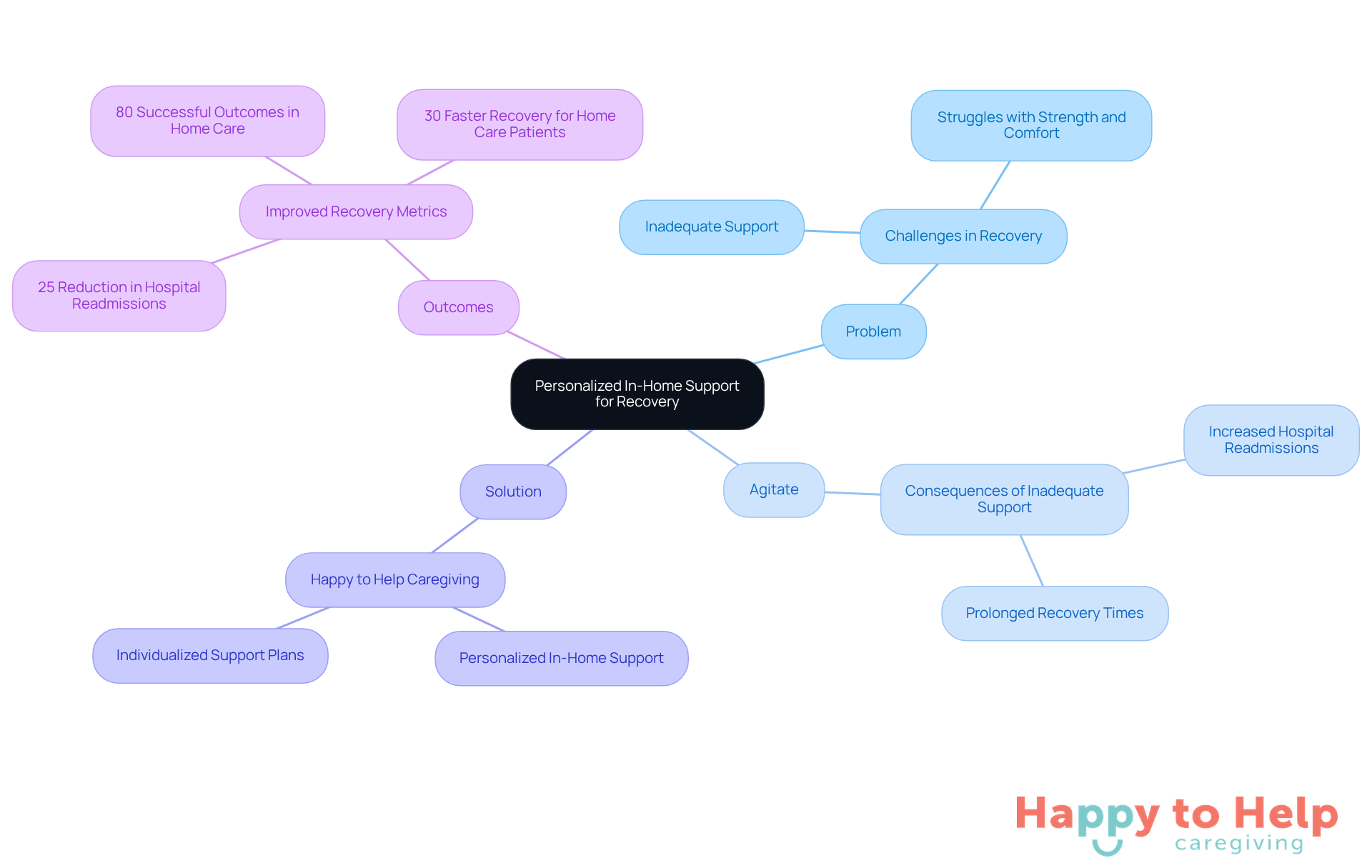
Happy to Help Caregiving: Personalized In-Home Support for Recovery
Problem: Many individuals recovering from surgery or illness face challenges in receiving adequate support, which can hinder their recovery process.
Agitate: Without personalized care, patients may struggle to regain their strength and comfort in a familiar environment. This lack of tailored support can lead to increased hospital readmissions and prolonged recovery times. In fact, studies show that patients receiving home care experience a 25% reduction in hospital readmissions for chronic conditions.
Solution: Happy to Help Caregiving excels in delivering personalized in-home support, meticulously tailored to meet the distinct needs of each client. By working closely with families, caregivers create individualized support plans that promote recovery and comfort. This focused attention not only enhances the recovery experience but also leads to better health outcomes; 80% of home care patients achieve successful outcomes compared to just 60% in hospitals.
Successful recovery narratives abound, showcasing how individuals flourish with the dedicated assistance of caregivers who prioritize their well-being. By ensuring that individuals receive the support they need, Happy to Help Caregiving plays a crucial role in facilitating a smoother recovery process, ultimately contributing to improved health outcomes and increased satisfaction.
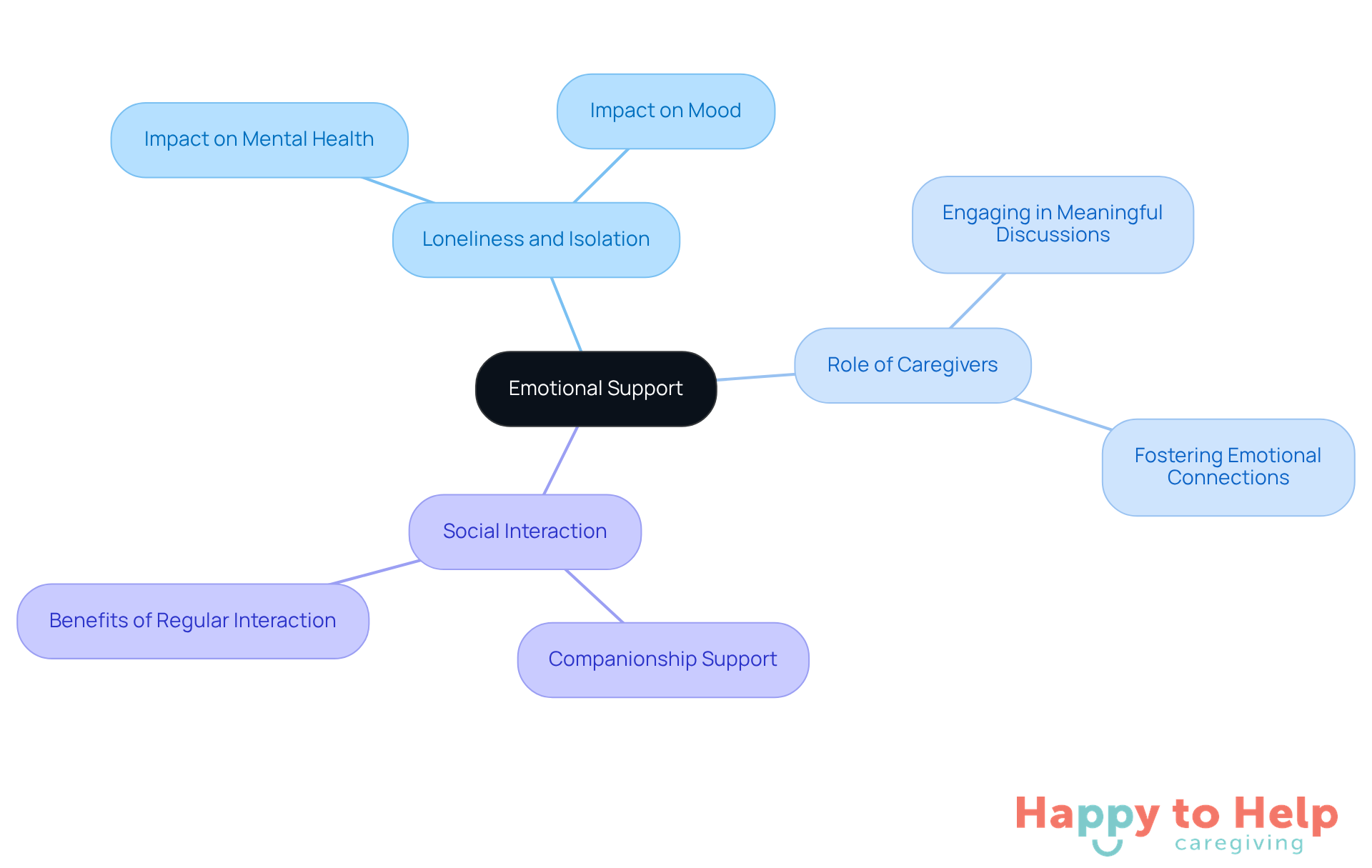
Emotional Support: Alleviating Loneliness and Isolation
Loneliness and isolation are significant challenges faced by many seniors, impacting their mental health and overall well-being. These feelings can lead to a decline in mood and a sense of disconnection from the world around them.
To combat these issues, Happy to Help Caregiving emphasizes the importance of emotional support. Caregivers are trained to engage individuals in meaningful discussions and activities, fostering emotional connections that can alleviate feelings of loneliness. This approach not only enhances mood but also nurtures a sense of belonging and security.
Regular social interaction through companionship support is a practical solution that can significantly improve mental health outcomes for seniors. By providing consistent companionship, caregivers can help seniors feel valued and connected, ultimately enhancing their quality of life.
Flexible Scheduling: Tailored Care That Fits Your Lifestyle
Problem: Many families struggle with rigid caregiving schedules that can add stress to their daily lives. Balancing work, personal responsibilities, and caregiving tasks often feels overwhelming.
Agitate: This lack of flexibility can disrupt daily routines and create anxiety for both caregivers and their loved ones. Family caregivers frequently express the need for adaptable support options in home health care Houston TX, as inflexible arrangements can lead to increased stress and a diminished sense of security.
Solution: Happy to Help Caregiving prioritizes flexible scheduling, allowing caregivers to modify their availability for both short-term and long-term support. This adaptability ensures that assistance integrates smoothly into the lives of clients and their families. By tailoring home health care houston tx services to meet the unique needs of each household, families can maintain their daily routines while ensuring their loved ones receive the necessary support.
Incorporating flexible support alternatives not only improves the quality of life for clients but also helps families manage their responsibilities more efficiently.
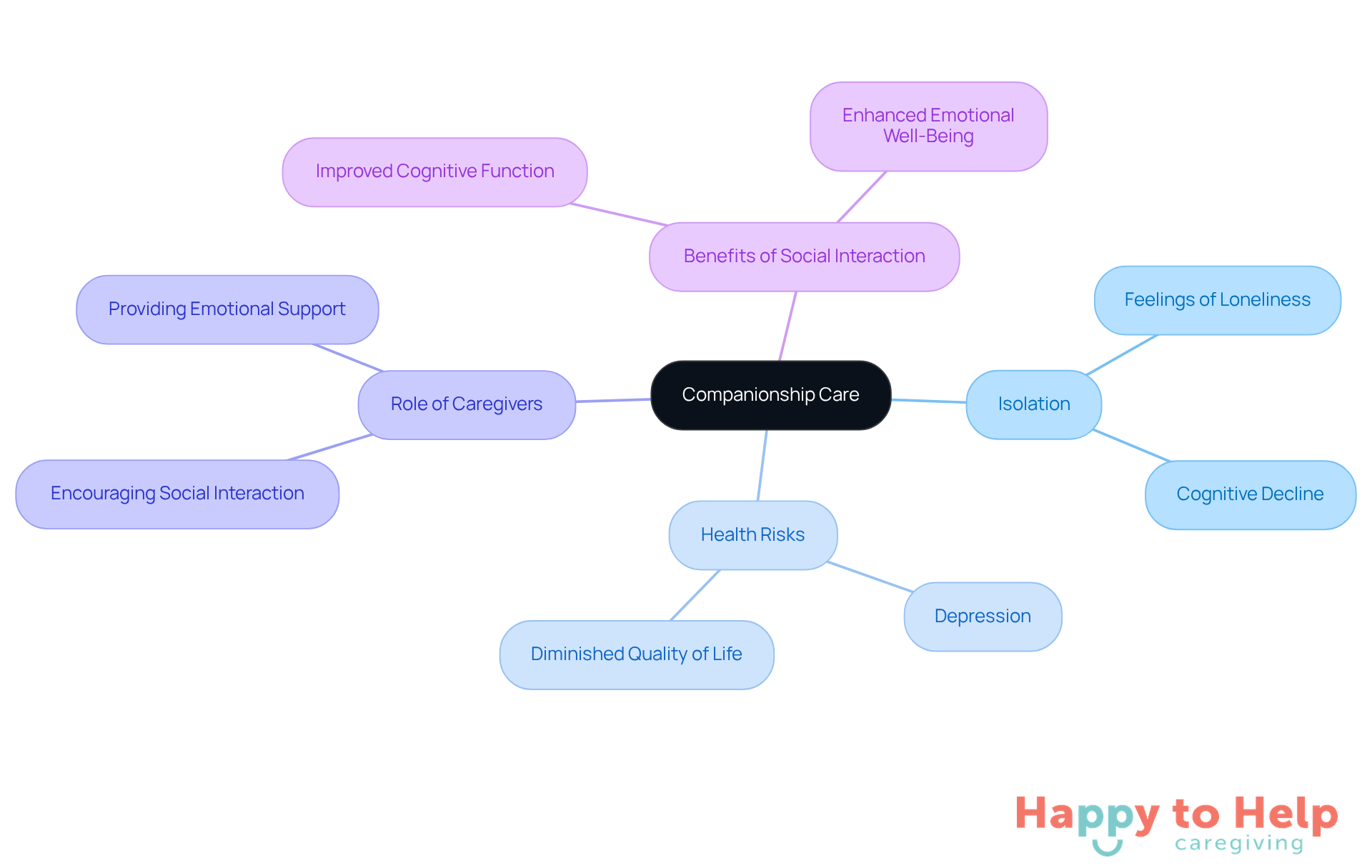
Companionship Care: Enhancing Quality of Life at Home
Companionship support from Happy to Help Caregiving addresses a significant problem: many seniors experience feelings of isolation. This isolation can lead to serious health risks, including depression and cognitive decline. Research shows that nearly one-third of adults over 50 report feeling isolated, which underscores the importance of social interaction in their lives.
The implications of this isolation are profound. Seniors often miss out on meaningful social interactions and enjoyable activities, which can greatly diminish their quality of life. Caregivers play a crucial role in this context, not only assisting with daily tasks but also providing the emotional support necessary for improved mental health. By fostering involvement in hobbies and social gatherings, caregivers can significantly enhance seniors' home life.
So, what can caregivers do? Encouraging regular social interaction is key. Companionship support helps reduce feelings of loneliness and promotes emotional well-being. Successful companionship programs have shown that regular interactions can improve cognitive function, making them essential for seniors' mental health. As gerontologists emphasize, nurturing social connections is vital for enhancing the quality of life for older adults.
In summary, companionship care is an invaluable service provided by home health care Houston TX for families looking to assist their loved ones at home. By prioritizing social engagement, caregivers can help mitigate the risks associated with isolation, ultimately improving the overall quality of life for seniors.
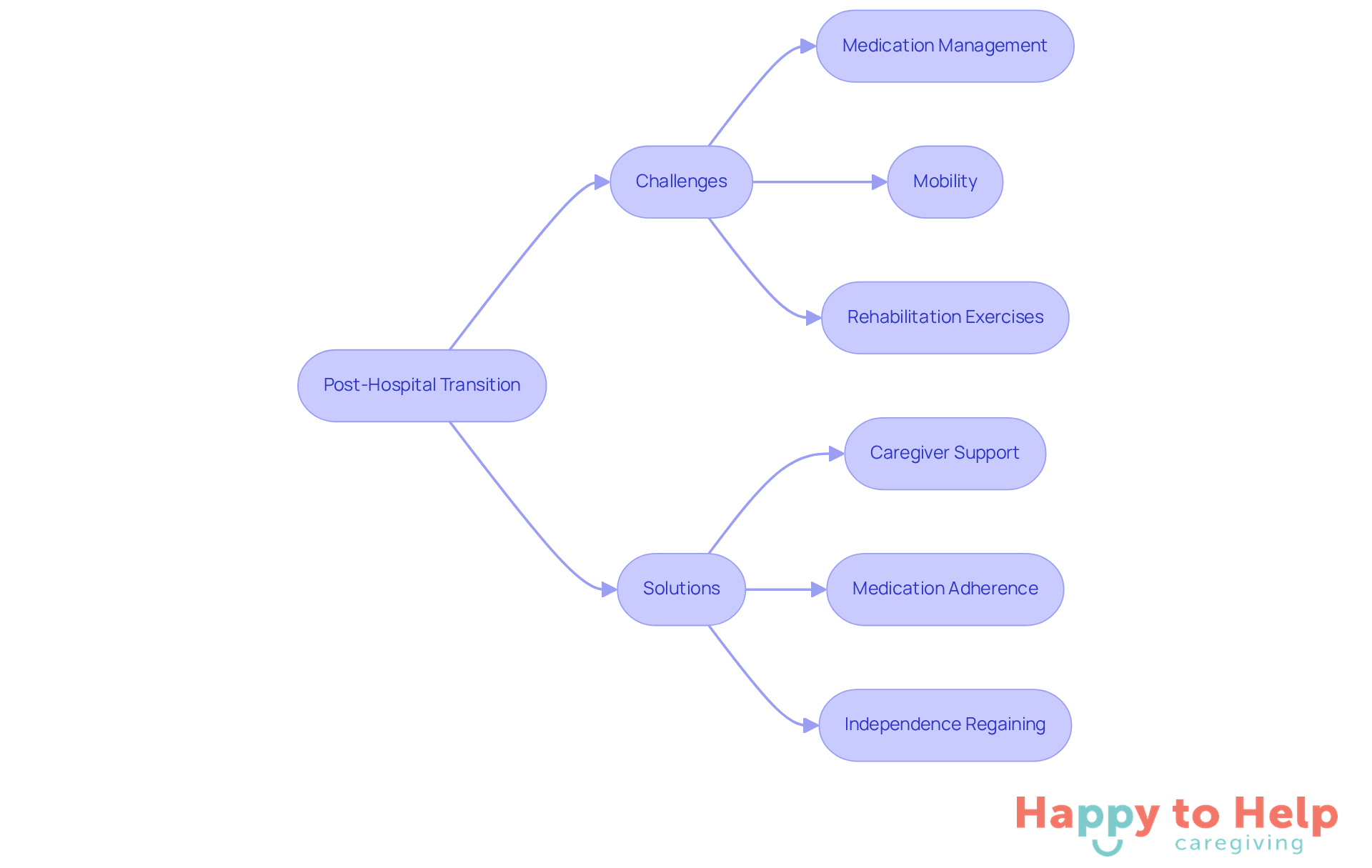
Post-Hospital Recovery: Smooth Transition Back to Daily Life
Problem: Transitioning back to daily life after a hospital stay can be challenging for many individuals. Without proper support, patients may struggle with medication management, mobility, and rehabilitation exercises, which can hinder their recovery.
Agitate: This lack of assistance can lead to increased anxiety and uncertainty, making it difficult for individuals to regain their strength and confidence. Moreover, inadequate support can result in hospital readmissions, which not only disrupts recovery but also places additional strain on healthcare resources.
Solution: Happy to Help Caregiving offers specialized home health care Houston TX services tailored to facilitate a smooth transition for post-hospital recovery. Our caregivers provide essential support, including:
- Medication management to ensure adherence to recovery plans.
- Mobility assistance to help individuals regain their independence.
- Rehabilitation exercises that promote strength and confidence in a familiar environment.
By addressing these needs, caregivers in home health care Houston TX play a crucial role in helping individuals avoid readmissions and promoting a successful recovery.
24/7 Availability: Constant Support for Peace of Mind
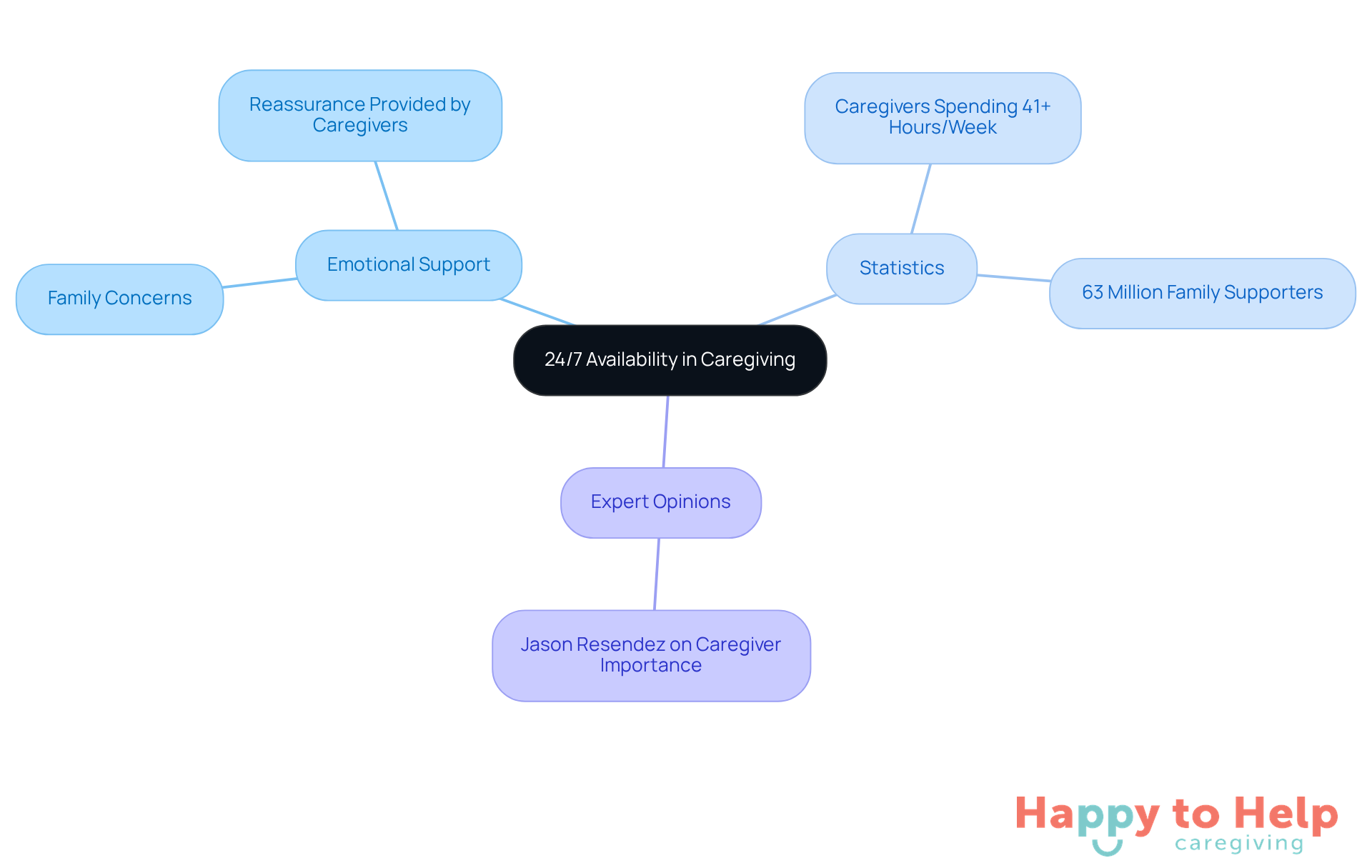
Caregivers face a significant challenge: the need for constant availability to ensure the safety and well-being of those they assist. This issue can lead to emotional strain for families, who worry about their loved ones being alone or unassisted in times of need.
Happy to Help Caregiving addresses this problem with round-the-clock availability, ensuring individuals have access to assistance whenever required. This constant presence not only enhances safety but also provides families with peace of mind. Caregivers are trained to respond quickly to emergencies and offer reassurance, which is crucial for clients with chronic conditions or those recovering from surgery.
Statistics highlight the importance of ongoing support in caregiving. According to the National Alliance for Caregiving and AARP, nearly 25% of caregivers dedicate 41 hours or more each week to their responsibilities. As Jason Resendez, CEO of NAC, points out, "With 63 million family supporters offering an average of 27 hours of unpaid assistance weekly, they’re vital to health service delivery."
This commitment to safety and emotional well-being is a hallmark of Happy to Help Caregiving's approach to home health care in Houston, TX, making it a trusted partner for families navigating the complexities of caregiving.
Respite Care: Supporting Family Caregivers
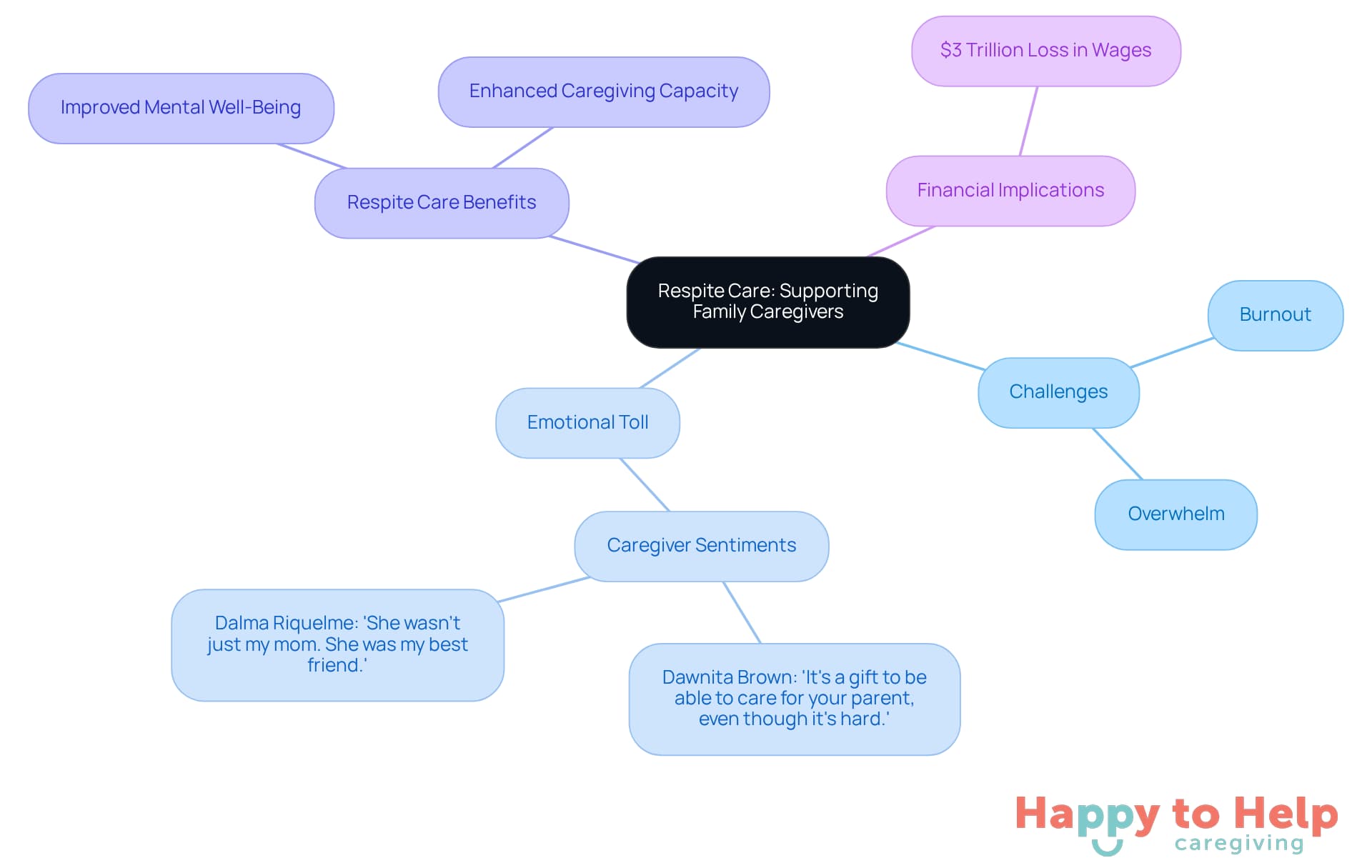
Problem: Caregivers face significant challenges, often leading to burnout. With around 53 million people in the U.S. caring for family members with complex medical needs, many report feeling overwhelmed and exhausted by their responsibilities. This situation not only affects their mental well-being but also their ability to provide effective care.
Agitate: The emotional toll of caregiving can be immense. Studies indicate that caregivers who do not take breaks experience higher stress levels and poorer mental health. Dawnita Brown, a primary supporter, expressed this sentiment well: "It's a blessing to be able to look after your parent, even though it's challenging." Without proper support, caregivers risk their own health and the quality of care they provide.
Respite assistance services, like those offered by Happy to Help Caregiving, are essential for family supporters in the realm of home health care Houston TX. These services allow caregivers to take necessary breaks, knowing their loved ones are in compassionate and professional hands. Utilizing respite support not only improves caregivers' mental well-being but also enhances their capacity to offer support. By prioritizing their own well-being, caregivers can maintain a healthier balance, ensuring they remain effective and engaged in their roles.
Furthermore, with providers collectively facing roughly $3 trillion in lost wages, benefits, and pensions each year, respite support is vital for both emotional well-being and financial stability.
Technology Integration: Enhancing Communication and Care Management
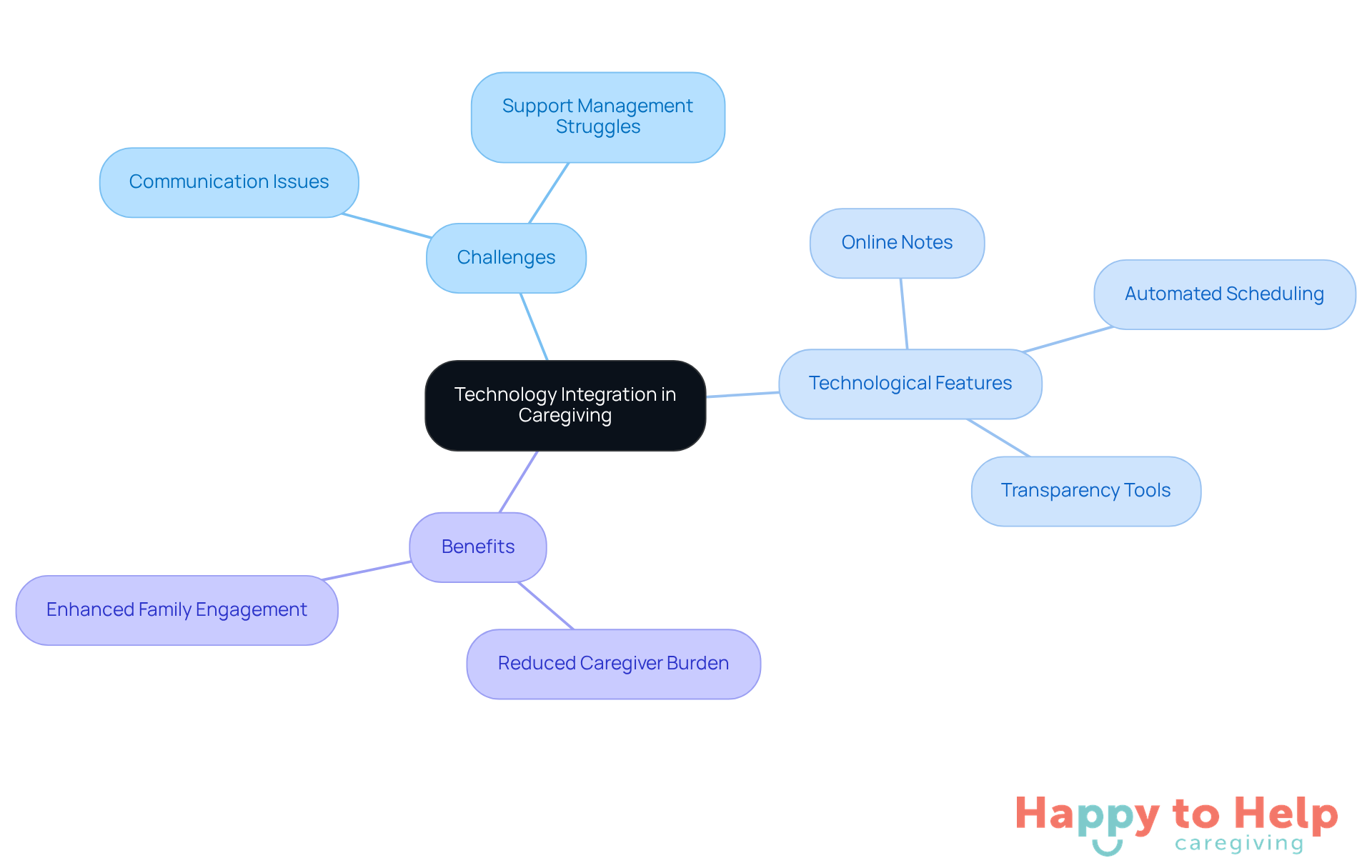
Caregivers often struggle with communication and support management, leading to feelings of isolation and uncertainty. This lack of effective communication can hinder the well-being of both caregivers and their loved ones, creating unnecessary stress and confusion.
To address these challenges, Happy to Help Caregiving employs technology that enhances communication and support management. Features such as online notes for family members and automated scheduling tools keep families informed about their loved ones' well-being. By incorporating these technological solutions, caregivers can foster transparency and collaboration, ensuring that everyone is on the same page regarding support plans and progress.
This approach not only alleviates the burden on caregivers but also strengthens the support network for families. With improved communication tools, caregivers can focus more on providing quality care, while families remain engaged and informed.
Palliative Support Care: Compassionate Management of Chronic Illness
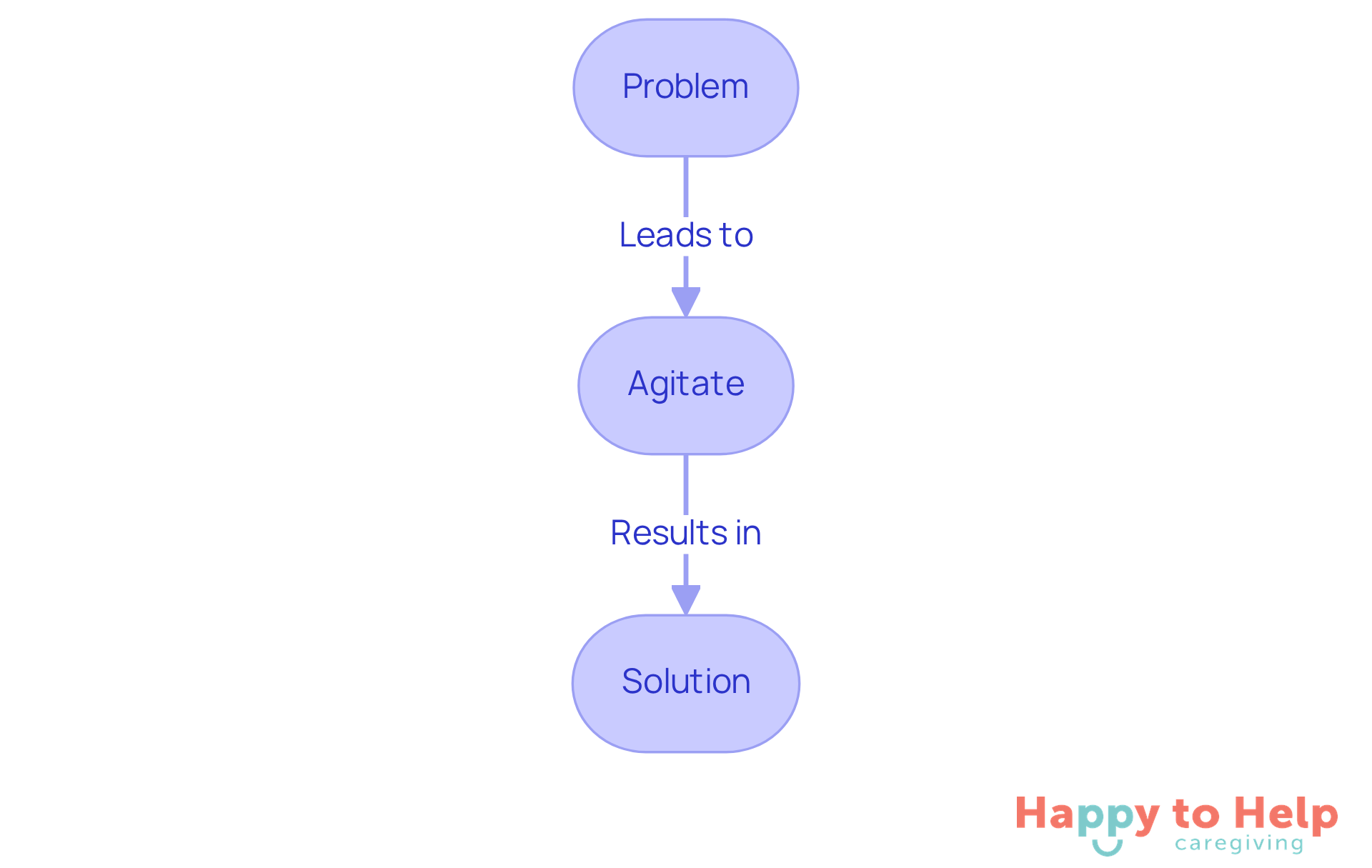
Problem: Managing chronic illnesses can be overwhelming for both patients and caregivers. Individuals often face not only physical symptoms but also emotional and psychological challenges that can lead to feelings of isolation and despair.
Agitate: These emotional struggles are common among those coping with chronic conditions, significantly impacting their quality of life. Without adequate support, patients may feel a loss of dignity and purpose, making their daily lives even more challenging.
Solution: At Happy to Help Caregiving, palliative care is dedicated to addressing these issues with compassion and expertise. Caregivers are specifically trained to manage physical symptoms while also recognizing the emotional needs of individuals. This holistic approach ensures comprehensive support, enhancing quality of life and providing comfort during difficult times.
By nurturing emotional bonds and understanding the unique challenges faced by each individual, caregivers help reduce feelings of isolation. This empathetic support not only improves overall well-being but also allows individuals to maintain a sense of dignity and purpose in their lives.
As Dame Cicely Saunders, founder of the modern hospice movement, stated, "You matter because you are you, and you matter to the last moment of your life." This philosophy underscores the inherent value of every patient and the importance of ongoing relationships with caregivers in palliative support.
Additionally, practical assistance through palliative medicine plays a crucial role in addressing daily challenges faced by patients. With the increasing demand for palliative assistance, Happy to Help Caregiving remains committed to providing the compassionate and thorough support that individuals deserve in our home health care Houston TX services.
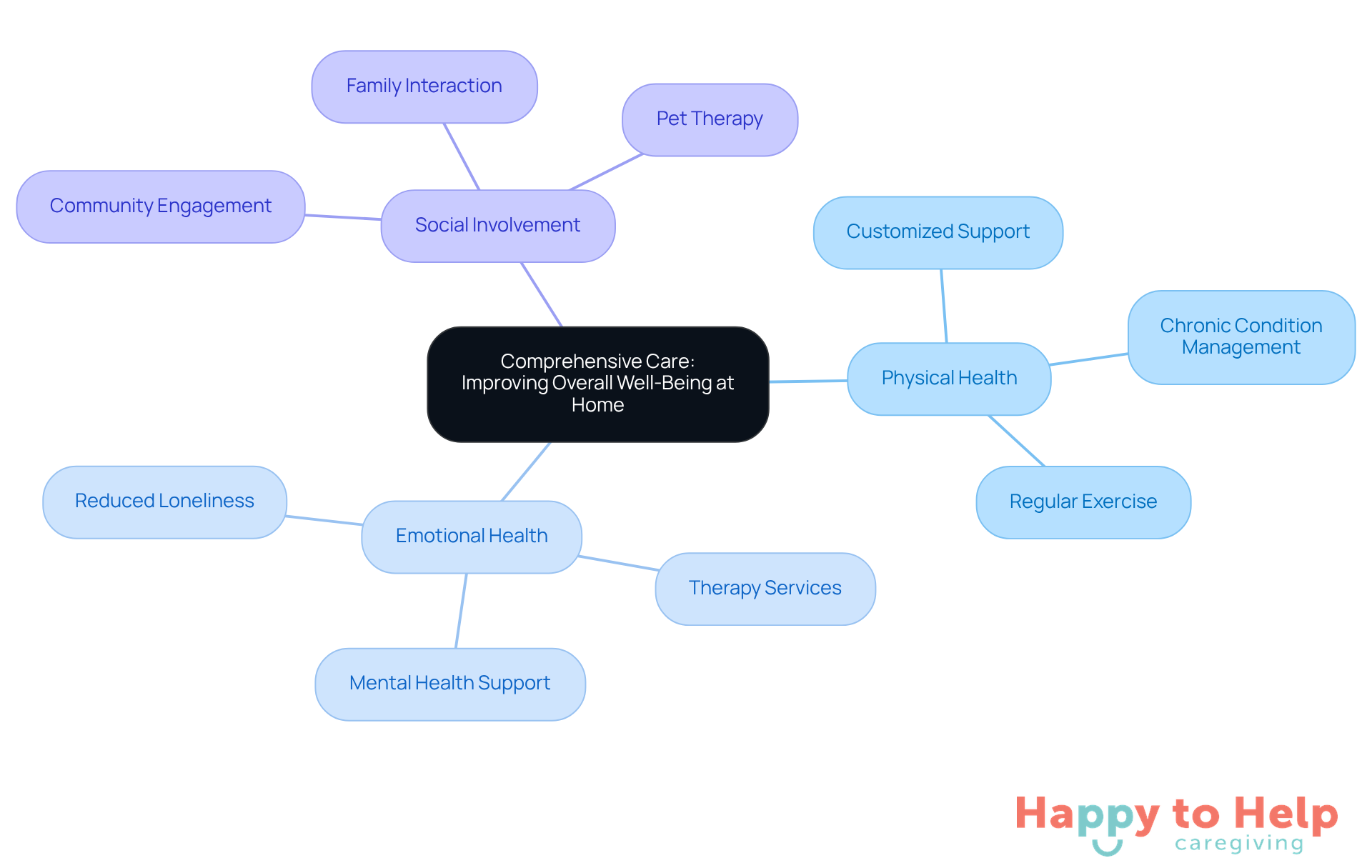
Comprehensive Care: Improving Overall Well-Being at Home
Caregiving often presents significant challenges, particularly when it comes to providing comprehensive support for the elderly. Many caregivers struggle to address both the physical and emotional needs of their clients, which can lead to feelings of isolation and decreased quality of life.
This lack of integrated support can have serious implications. Research shows that older adults who do not receive holistic care may experience heightened feelings of loneliness and deteriorating mental health. These factors are crucial for thriving in familiar surroundings, making it essential to find effective solutions.
Happy to Help Caregiving offers a holistic approach that significantly enhances overall well-being through home health care in Houston, TX. This service merges physical help, emotional encouragement, and social involvement, all customized to the distinct requirements of each individual. By addressing both physical and emotional health, caregivers empower clients to maintain their independence and improve their quality of life.
Studies indicate that integrated support models lead to better health outcomes for the elderly. For instance, older adults receiving comprehensive care experience reduced feelings of loneliness and improved mental health. This dual focus on physical and emotional health in home health care Houston TX fosters a sense of security and comfort, ultimately allowing clients to flourish in their own homes.
In summary, addressing both physical and emotional health in caregiving is not just beneficial; it is essential. Caregivers can implement these strategies to create a supportive environment that promotes well-being and independence for their clients.
Your Path Forward
The importance of home health care services in Houston, TX, is significant, especially for families seeking personalized support for their loved ones. Many families face the challenge of finding adequate assistance that not only aids recovery but also improves the overall quality of life for individuals dealing with health issues. This lack of tailored care can lead to feelings of helplessness and increased stress for caregivers.
To address these challenges, families can turn to essential home health care services that prioritize:
- Personalized in-home support
- Companionship care
- Flexible scheduling
- 24/7 availability
These services are vital in reducing hospital readmissions and alleviating feelings of loneliness and isolation among patients. Moreover, the integration of technology enhances communication and care management, keeping families informed and engaged in their loved ones' care.
In conclusion, the significance of these home health care services goes beyond mere assistance; they create a supportive environment that fosters healing, connection, and well-being. Families in Houston, TX, are encouraged to explore services like those offered by Happy to Help Caregiving. By embracing these comprehensive solutions, families can empower their loved ones and improve their quality of life, leading to better health outcomes and a more fulfilling experience for both caregivers and those they support.
https://iframe.tely.ai/cta/eyJhcnRpY2xlX2lkIjogIjY5MjBmZDRhYzQ4NjU1NjRkNDliYzZhMSIsICJjb21wYW55X2lkIjogIjY4ZWU1ZGNhNzMxNzYyNTU3ZjNjOTVjMSIsICJpbmRleCI6IG51bGwsICJ0eXBlIjogImFydGljbGUifQ==Frequently Asked Questions
What challenges do individuals recovering from surgery or illness face?
Individuals recovering from surgery or illness often struggle to receive adequate support, which can hinder their recovery process. This lack of personalized care may lead to difficulties in regaining strength and comfort, increased hospital readmissions, and prolonged recovery times.
How does personalized in-home support impact recovery?
Personalized in-home support from Happy to Help Caregiving is tailored to meet the distinct needs of each client, enhancing their recovery experience. Studies show that patients receiving home care experience a 25% reduction in hospital readmissions for chronic conditions and 80% of home care patients achieve successful outcomes compared to 60% in hospitals.
What role does emotional support play in caregiving for seniors?
Emotional support is crucial for seniors, as loneliness and isolation can negatively impact their mental health. Caregivers at Happy to Help Caregiving engage individuals in meaningful discussions and activities, fostering emotional connections that alleviate feelings of loneliness and enhance their overall quality of life.
How does Happy to Help Caregiving address the issue of loneliness among seniors?
Happy to Help Caregiving provides companionship support, ensuring regular social interaction. This consistent companionship helps seniors feel valued and connected, ultimately improving their mood and mental health outcomes.
What problems do families face with rigid caregiving schedules?
Families often struggle with rigid caregiving schedules that add stress to their daily lives. This lack of flexibility can disrupt routines and create anxiety for both caregivers and their loved ones, making it challenging to balance work, personal responsibilities, and caregiving tasks.
How does Happy to Help Caregiving provide flexible scheduling?
Happy to Help Caregiving prioritizes flexible scheduling by allowing caregivers to modify their availability for both short-term and long-term support. This adaptability helps integrate assistance smoothly into the lives of clients and their families, allowing them to maintain their daily routines while receiving necessary support.
List of Sources
- Happy to Help Caregiving: Personalized In-Home Support for Recovery
- Home Care Impact on Recovery of Patient (A Statistics Report) (https://lovinghomecareinc.com/home-care-recovery-statistics)
- 2025: AI enhances personalized care; caregiver experience in the spotlight (https://healthcareitnews.com/news/2025-ai-enhances-personalized-care-caregiver-experience-spotlight)
- The Impact of Home Care on Recovery Rates: A Comparative Analysis with Hospital Stays (https://patna.athomecare.in/the-impact-of-home-care-on-recovery-rates-a-comparative-analysis-with-hospital-stays)
- State of home care in 2025 (https://mcknightshomecare.com/state-of-home-care-in-2025)
- How Home Care Boosts Recovery Time (https://humancareny.com/blog/how-home-care-boosts-recovery-time)
- Emotional Support: Alleviating Loneliness and Isolation
- Social connection linked to improved health and reduced risk of early death (https://who.int/news/item/30-06-2025-social-connection-linked-to-improved-heath-and-reduced-risk-of-early-death)
- Summary - Social Isolation and Loneliness in Older Adults - NCBI Bookshelf (https://ncbi.nlm.nih.gov/books/NBK557972)
- Trends in Loneliness Among Older Adults from 2018-2023 (https://ihpi.umich.edu/national-poll-healthy-aging/reports-and-resources/trends-loneliness-among-older-adults-2018-2023)
- 1 in 3 older adults still experience loneliness and isolation (https://michiganmedicine.org/health-lab/1-3-older-adults-still-experience-loneliness-and-isolation)
- Flexible Scheduling: Tailored Care That Fits Your Lifestyle
- Caregiver Statistics: Work and Caregiving (https://caregiver.org/resource/caregiver-statistics-work-and-caregiving)
- Exploring the Rising Demand for Flexible Work in Healthcare (https://healthecareers.com/career-resources/nurse-career/rising-demand-for-flexible-work-in-healthcare)
- Flexible Scheduling in Healthcare: The Key to a Happier, More Productive Workforce - Staffbot Flex (https://staffbotflex.com/flexible-scheduling-in-healthcare-the-key-to-a-happier-more-productive-workforce)
- Flexible scheduling in healthcare: Top strategies from CNOs and HR leaders (https://go.beckershospitalreview.com/hr/flexible-scheduling-in-healthcare-top-strategies-from-cnos-and-hr-leaders)
- Return-to-Office Trends are Reshaping Caregiving at Home - Family & Nursing Care (https://familynursingcare.com/return-to-office-trends-are-reshaping-caregiving-at-home)
- Companionship Care: Enhancing Quality of Life at Home
- Denver researchers say robot companions can improve senior citizens' quality of life (https://npr.org/2025/06/04/nx-s1-5319315/denver-researchers-say-robot-companions-can-improve-senior-citizens-quality-of-life)
- AI “Virtual Companion” Pilot is Supporting Seniors in 2025 - Strohschein Law Group (https://strohscheinlawgroup.com/ai-virtual-companion-pilot-is-supporting-seniors-in-2025)
- Some Important Statistics and In-Home Companion Care (https://americareinfo.com/beach-cities/articles/in-home-companion-care-some-important-facts-on-aging-to-consider)
- 10 Benefits of Companionship Carers for Seniors' Well-Being - Happy To Help (https://happytohelpcaregiving.com/10-benefits-of-companionship-carers-for-seniors-well-being)
- How companion care improves senior quality of life and socialization (https://humancareny.com/blog/how-companion-care-improves-senior-quality-of-life-and-socialization)
- Post-Hospital Recovery: Smooth Transition Back to Daily Life
- Study Finds Home Health Lowers Costs and Readmission Rates Compared to Hospital Care - Center for Medicare Advocacy (https://medicareadvocacy.org/study-finds-home-health-lowers-costs-and-readmission-rates-compared-to-hospital-care)
- Home Care Impact on Recovery of Patient (A Statistics Report) (https://lovinghomecareinc.com/home-care-recovery-statistics)
- Navigating The Transition: From Hospital To Home Care: What Families Should Know - New York Health Care (https://nyhc.com/navigating-the-transition-from-hospital-to-home-care-what-families-should-know)
- Recovery Edwards CO - 50 Quotes for Treatment and Recovery (https://apn.com/resources/50-quotes-for-treatment-and-recovery)
- 24/7 Availability: Constant Support for Peace of Mind
- The number of family caregivers is surging (https://19thnews.org/2025/07/family-caregivers-surging-aarp)
- Caregiver Statistics: Demographics (https://caregiver.org/resource/caregiver-statistics-demographics)
- Families caring for older adults at home say aging in place should not be taken lightly, but may be worth it (https://cbsnews.com/newyork/news/aging-in-place-home-remodeling-cost-of-caregiving)
- New Report Reveals Crisis Point for America’s 63 million Family Caregivers (https://press.aarp.org/2025-07-24-New-Report-Reveals-Crisis-Point-for-Americas-63-million-Family-Caregivers)
- Family Caregiver Support, Education Needs Growing (https://hospicenews.com/2025/11/11/family-caregiver-support-education-needs-growing)
- Respite Care: Supporting Family Caregivers
- Improving Support for Family Caregivers (https://nationalacademies.org/news/2025/07/improving-support-for-family-caregivers)
- A bill in Congress would return $5,000 to millions of family caregivers every year, but will it pass? (https://cbsnews.com/newyork/news/credit-for-caring-act-family-caregiver-tax-credit)
- She cares for her aging parents full time. That requires taking care of herself, too (https://npr.org/2025/11/20/nx-s1-5522341/unpaid-caregivers-elderly-support)
- Family Caregivers Struggling In Some States More Than Others (https://disabilityscoop.com/2025/10/31/family-caregivers-struggling-in-some-states-more-than-others/31710)
- It’s Time to Care for Caregivers: Senator Markey Announces Comprehensive Family Caregiving Legislative Agenda | U.S. Senator Ed Markey of Massachusetts (https://markey.senate.gov/news/press-releases/11/20/2025/its-time-to-care-for-caregivers-senator-markey-announces-comprehensive-family-caregiving-legislative-agenda)
- Technology Integration: Enhancing Communication and Care Management
- HHS Launches New Caregiving AI Initiative to 'Spark Innovative Support' (https://hospicenews.com/2025/11/18/hhs-launches-new-caregiving-ai-initiative-to-spark-innovative-support)
- How Technology Enhances Communication in Senior Care (https://business.seminolebusiness.org/news/details/how-technology-enhances-communication-in-senior-care)
- How Technology Improves Communication Between Families And Care Staff (https://thehighpointresidence.com/blog/how-technology-improves-communication-between-families-and-care-staff)
- HHS Backs AI Innovation for America’s Caregivers | HHS.gov (https://hhs.gov/press-room/hhs-backs-ai-innovation-for-americas-caregivers.html)
- How enabling technology is transforming home-based care | UnitedHealthcare Community & State (https://uhccommunityandstate.com/content/blog-post/blogs/how-enabling-technology-is-transforming-home-based-care)
- Palliative Support Care: Compassionate Management of Chronic Illness
- Here are 11 Inspiring Quotes to Help You Rethink End of Life Care (https://easylivingfl.com/assisted-living/11-inspiring-quotes-to-help-you-rethink-end-of-life-care)
- Palliative Care For Chronic Illness | Carolina Caring (https://carolinacaring.org/news/palliative-care-for-chronic-illnesses-improving-quality-of-life)
- Intensive Caring: Reminding Patients They Matter - PMC (https://pmc.ncbi.nlm.nih.gov/articles/PMC10414729)
- How many people will need palliative care in 2040? Past trends, future projections and implications for services - BMC Medicine (https://bmcmedicine.biomedcentral.com/articles/10.1186/s12916-017-0860-2)
- Chronic illness program offers novel palliative care approach for nursing home residents (https://mcknights.com/news/chronic-illness-program-offers-novel-palliative-care-approach-for-nursing-home-residents)
- Comprehensive Care: Improving Overall Well-Being at Home
- Elderly Care Statistics (https://rosewood-nursing.com/post/elderly-care-statistics)
- Disruption Redefines Home-Based Care: Providers Confront Challenges, Seize New Opportunities (https://homehealthcarenews.com/2025/10/disruption-redefines-home-based-care-providers-confront-challenges-seize-new-opportunities)
- HHS Backs AI Innovation for America’s Caregivers | HHS.gov (https://hhs.gov/press-room/hhs-backs-ai-innovation-for-americas-caregivers.html)
- FastStats (https://cdc.gov/nchs/fastats/older-american-health.htm)
- Get the Facts on Healthy Aging (https://ncoa.org/article/get-the-facts-on-healthy-aging)