

For families in our service areas
For families in our service areas, this guide explains home care and how non-medical in-home caregiving can support care planning in East Idaho, Treasure Valley & Magic Valley, Northern Wasatch, North Central West Virginia, and Northeast Ohio.
Understanding Qualities of Private Duty Home
The landscape of private duty home caregiving is changing rapidly, highlighting the need for exceptional caregivers. With the increasing demand for personalized care, it’s vital to recognize the essential traits that contribute to effective home assistance. What distinguishes those who merely provide care from those who genuinely enhance their clients' lives?
This exploration identifies ten fundamental qualities that not only elevate the caregiving experience but also foster deeper connections. By understanding these traits, caregivers can ensure that individuals receive the compassionate, reliable, and tailored support they truly deserve.
Happy to Help Caregiving: Personalized Care for Individual Needs
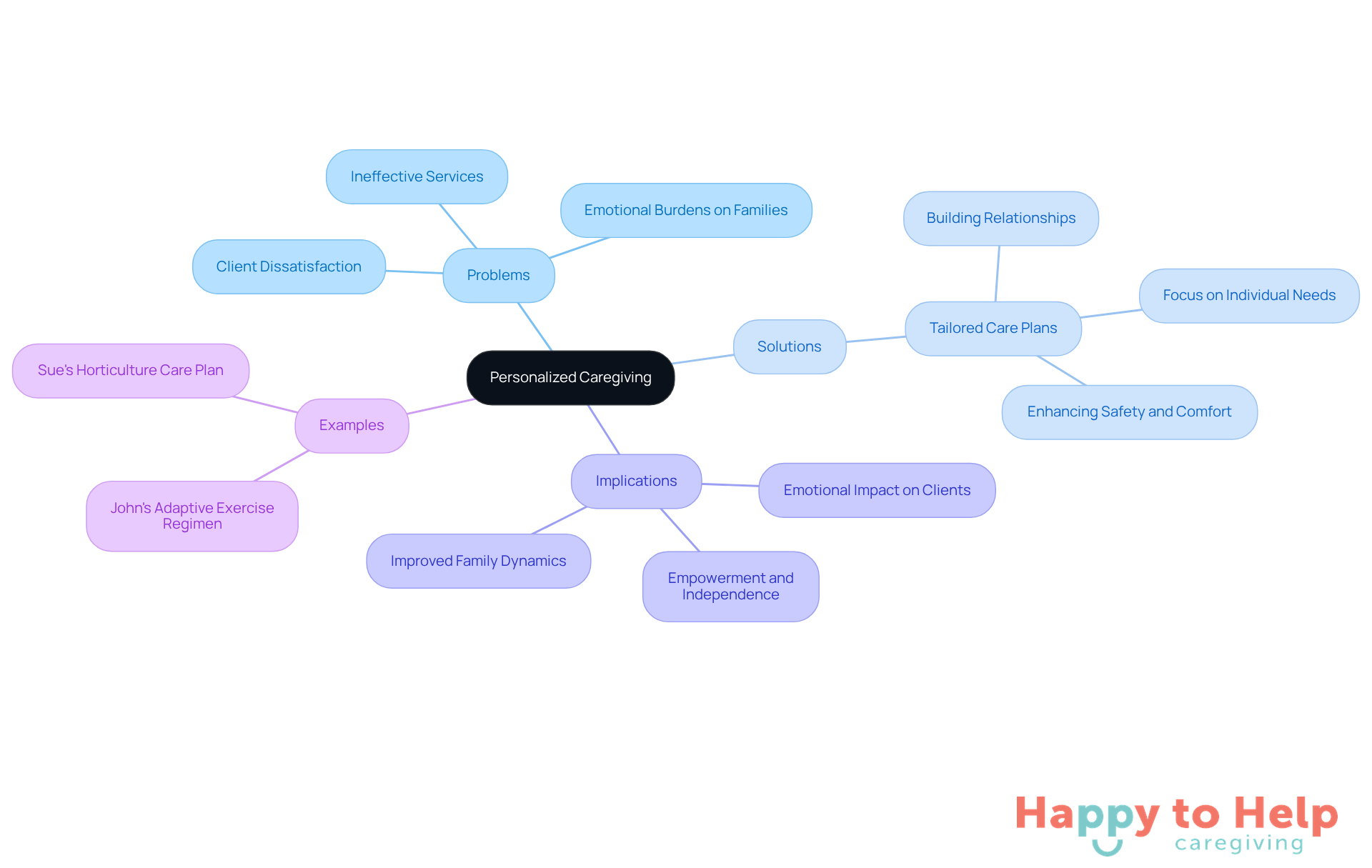
Happy to Help Caregiving addresses a significant problem in the caregiving industry: the lack of personalized care plans that cater to individual needs. This gap can lead to ineffective services that do not resonate with clients' lifestyles or preferences, ultimately affecting their well-being.
The implications of this issue are profound. Seniors and individuals with special requirements often feel unsafe and uneasy when their unique needs are not met. With approximately 12 million individuals in the U.S. currently receiving home assistance, the demand for personalized services is evident.
Happy to Help Caregiving offers a solution through its dedication to tailored care plans. By focusing on personal needs, providers foster a sense of safety and ease, which is vital for the welfare of their clients. Customized support strategies not only enhance customer satisfaction but also transform routine assistance into meaningful interactions, strengthening the bonds between caregivers and clients.
As Wisdom Senior Support highlights, "The simple element that is at the core of every personalized assistance plan is dignity." This focus on tailored caregiving alleviates emotional burdens for families and empowers seniors, allowing them to maintain independence and dignity in their daily lives.
For instance, Sue, an 82-year-old retiree, benefits from a care plan that incorporates her passion for horticulture. This example illustrates how personalized strategies can significantly enhance the lives of individuals, ensuring that their unique interests and needs are respected.
Empathy: Understanding and Connecting with Clients
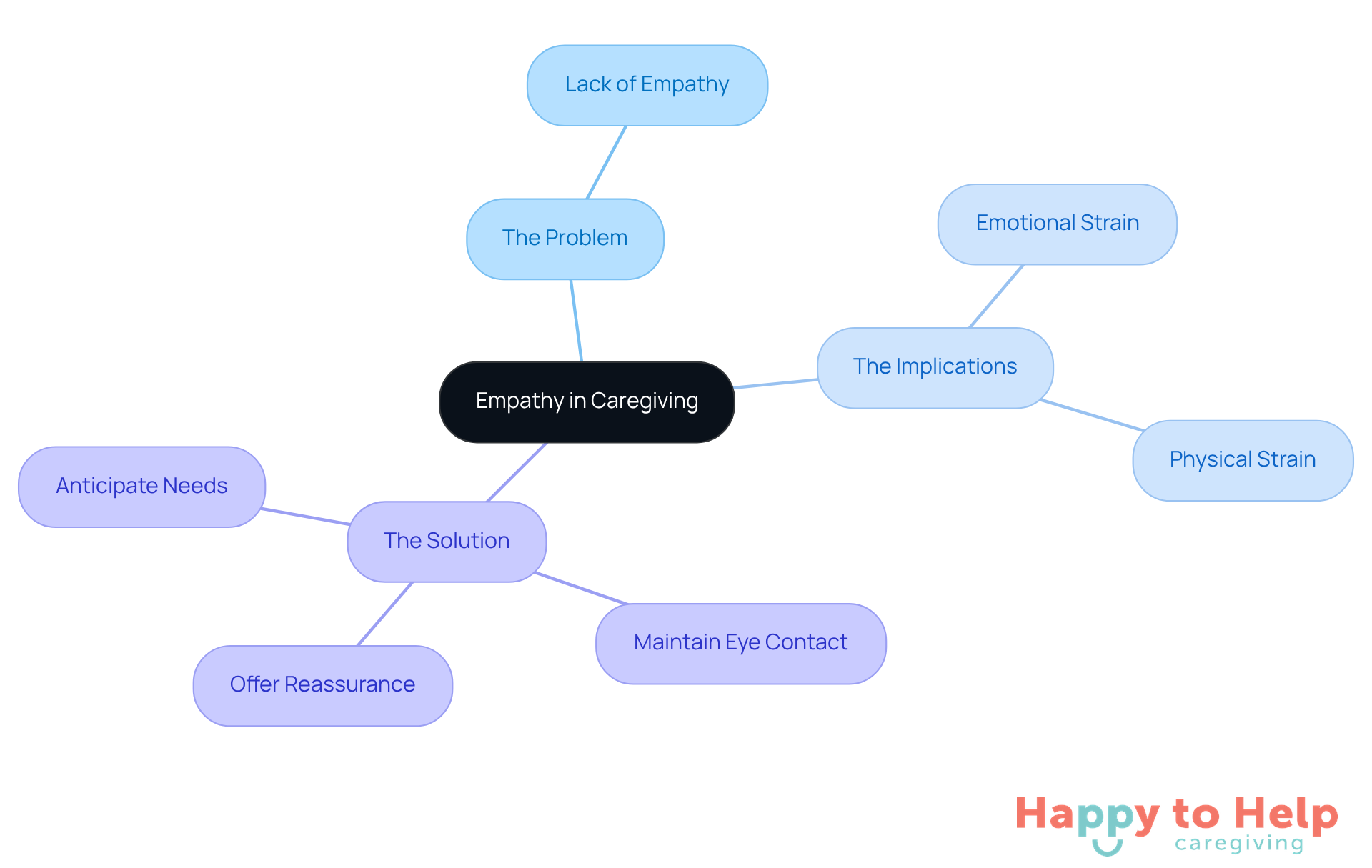
The Problem: Lack of Empathy in Caregiving
Empathy is crucial for caregivers. Without it, they struggle to understand the emotional and physical challenges their patients face. This disconnect can lead to feelings of isolation for patients, making it harder for them to communicate their needs.
The Implications: Emotional and Physical Strain
When caregivers fail to connect empathetically, it not only diminishes the caregiving experience but also negatively impacts the emotional well-being of those they assist. Patients may feel undervalued and misunderstood, which can exacerbate their stress and hinder recovery.
The Solution: Cultivating Empathy
To foster a supportive atmosphere, caregivers should actively listen and respond to patients' emotions. Here are some actionable tips:
- Maintain Eye Contact: This simple act shows patients they are valued.
- Offer Reassurance: A few kind words can go a long way in making patients feel understood.
- Anticipate Needs: By being attuned to patients' emotions, caregivers can adjust their routines to provide better support.
Practicing empathy transforms routine tasks into meaningful connections, strengthening the bond between caregivers and patients. Research indicates that empathetic communication can reduce stress and improve healing times, underscoring the profound impact of empathy in caregiving.
Reliability: Consistent Support for Peace of Mind
Dependability in caregiving is a significant concern for many families. When caregivers are not consistently present and attentive, it can lead to feelings of insecurity and anxiety for both clients and their loved ones. This inconsistency can erode trust and make it difficult for clients to feel secure in the support they receive.
Happy to Help Caregiving addresses this issue head-on. By ensuring that caregivers are consistently available, families can enjoy peace of mind knowing that their loved ones are receiving reliable support. This commitment to dependability not only fosters trust but also allows clients to feel confident in the assistance they receive day in and day out.
In summary, prioritizing dependability in caregiving is essential for building trust and ensuring clients feel secure. Happy to Help Caregiving stands out by guaranteeing consistent availability, providing families with the reassurance they need.
Communication Skills: Facilitating Clear and Open Dialogue
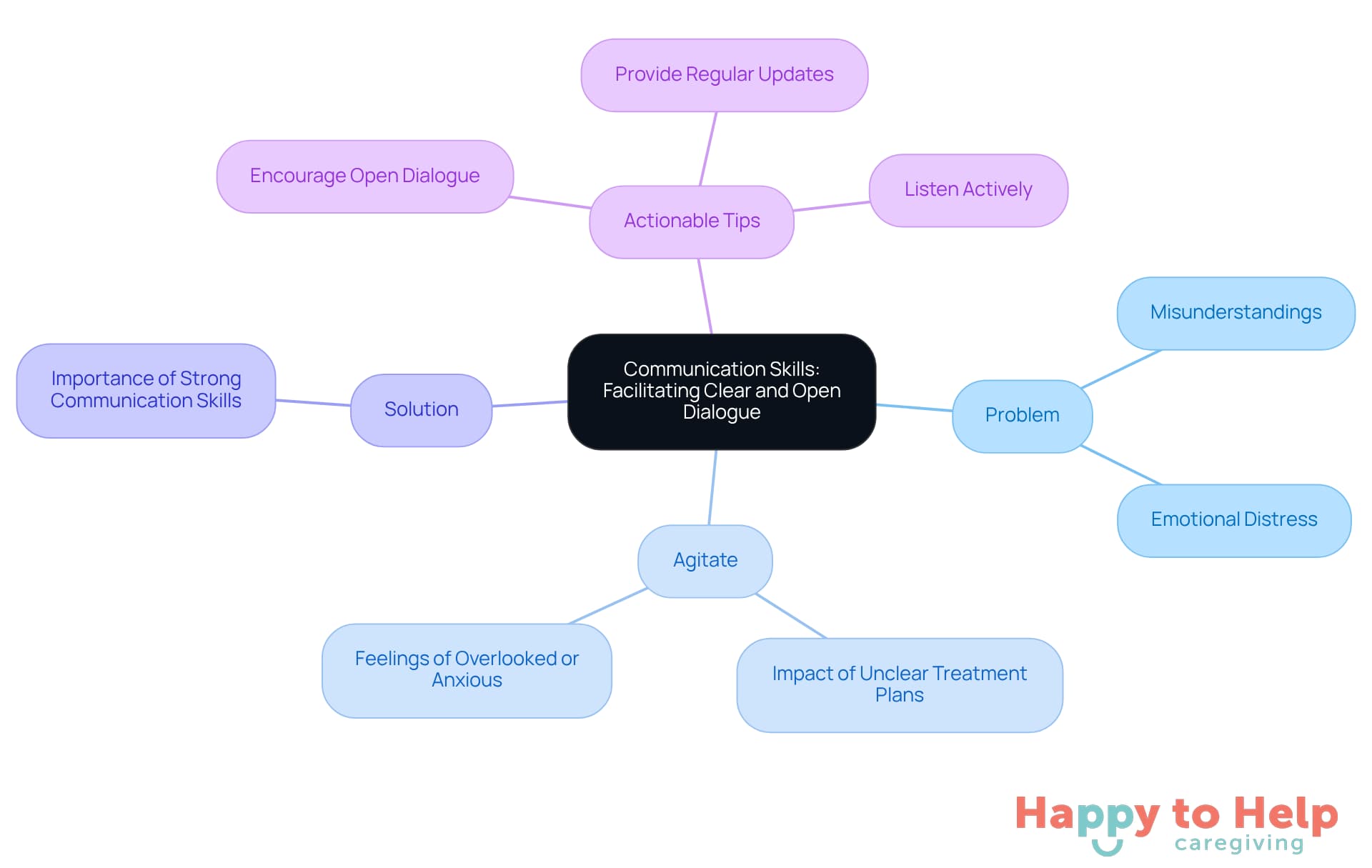
Problem: Caregivers often struggle with effective communication, which can lead to misunderstandings and emotional distress for those they support.
Agitate: When treatment plans are not clearly conveyed, or concerns are not adequately addressed, individuals may feel overlooked or anxious. This lack of clarity can significantly impact their emotional and psychological well-being, making it crucial for caregivers to engage in meaningful dialogue.
Solution: Strong communication skills are essential for support providers. By discussing treatment plans, addressing concerns, and providing updates to family members, caregivers can create a space for open discussion. This approach ensures that individuals feel acknowledged and engaged in their support, fostering a sense of security and trust. Here are some actionable tips for caregivers:
- Encourage open dialogue: Create an environment where individuals feel comfortable sharing their thoughts and feelings.
- Provide regular updates: Keep family members informed about treatment progress and any changes in care plans.
- Listen actively: Show empathy and understanding by truly hearing the concerns of those you support.
Adaptability: Responding to Changing Needs and Circumstances
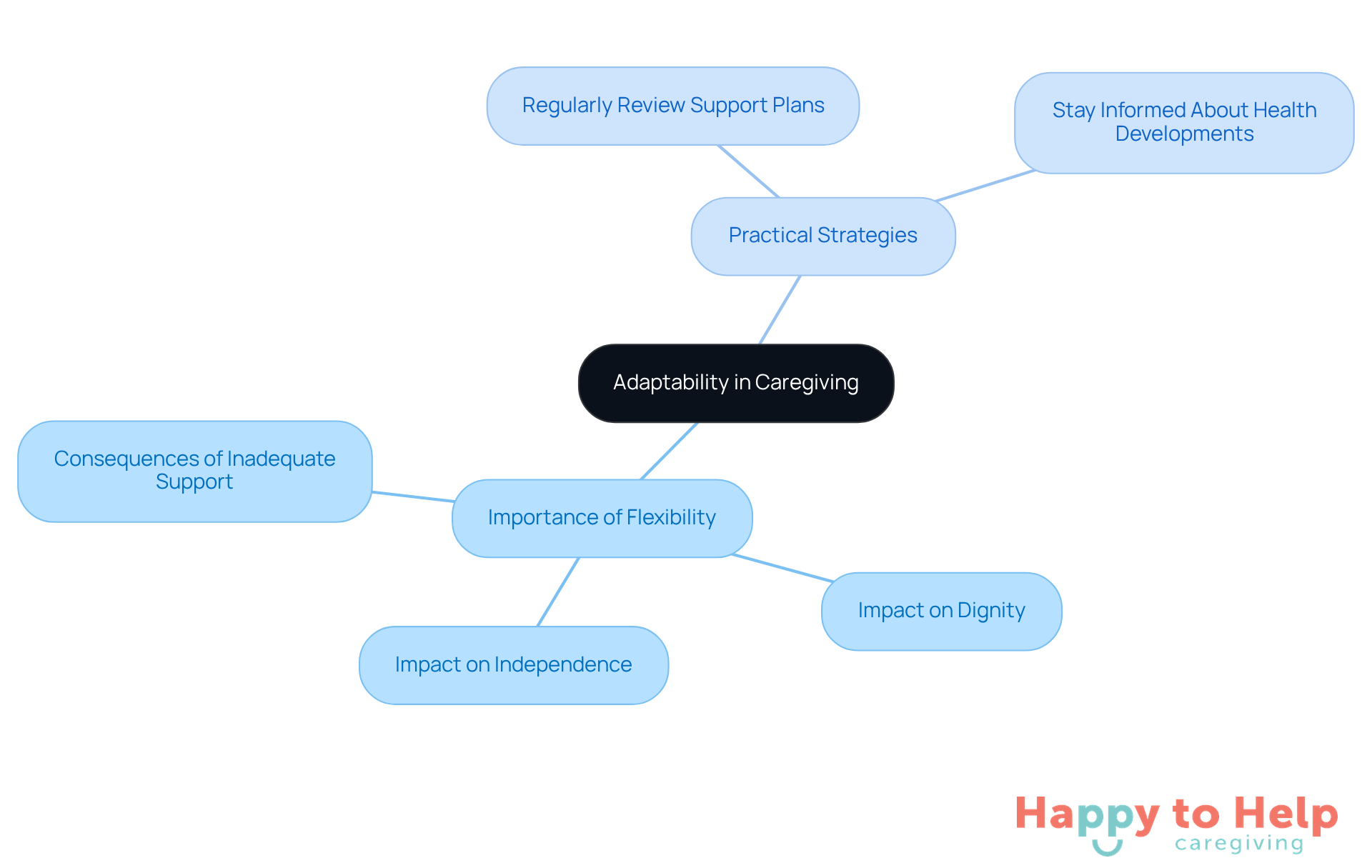
Caregivers face a significant challenge: the need to be adaptable in their approach. As the needs of those they assist change, whether due to a hospital discharge or a sudden health shift, flexibility becomes crucial. This lack of adaptability can lead to inadequate support, impacting the quality of care provided.
The implications of not being flexible are profound. Without the ability to adjust support plans, individuals may struggle to maintain their independence and dignity. Caregivers must recognize that their responsiveness directly affects the well-being of those they assist.
To address this issue, caregivers can implement several practical strategies:
- Regularly reviewing and updating support plans ensures that care remains relevant and effective.
- Staying informed about the latest health developments can help caregivers anticipate changes and respond appropriately.
By embracing flexibility, caregivers not only enhance the quality of care but also empower individuals to lead fulfilling lives.
Patience: Providing Compassionate and Understanding Care
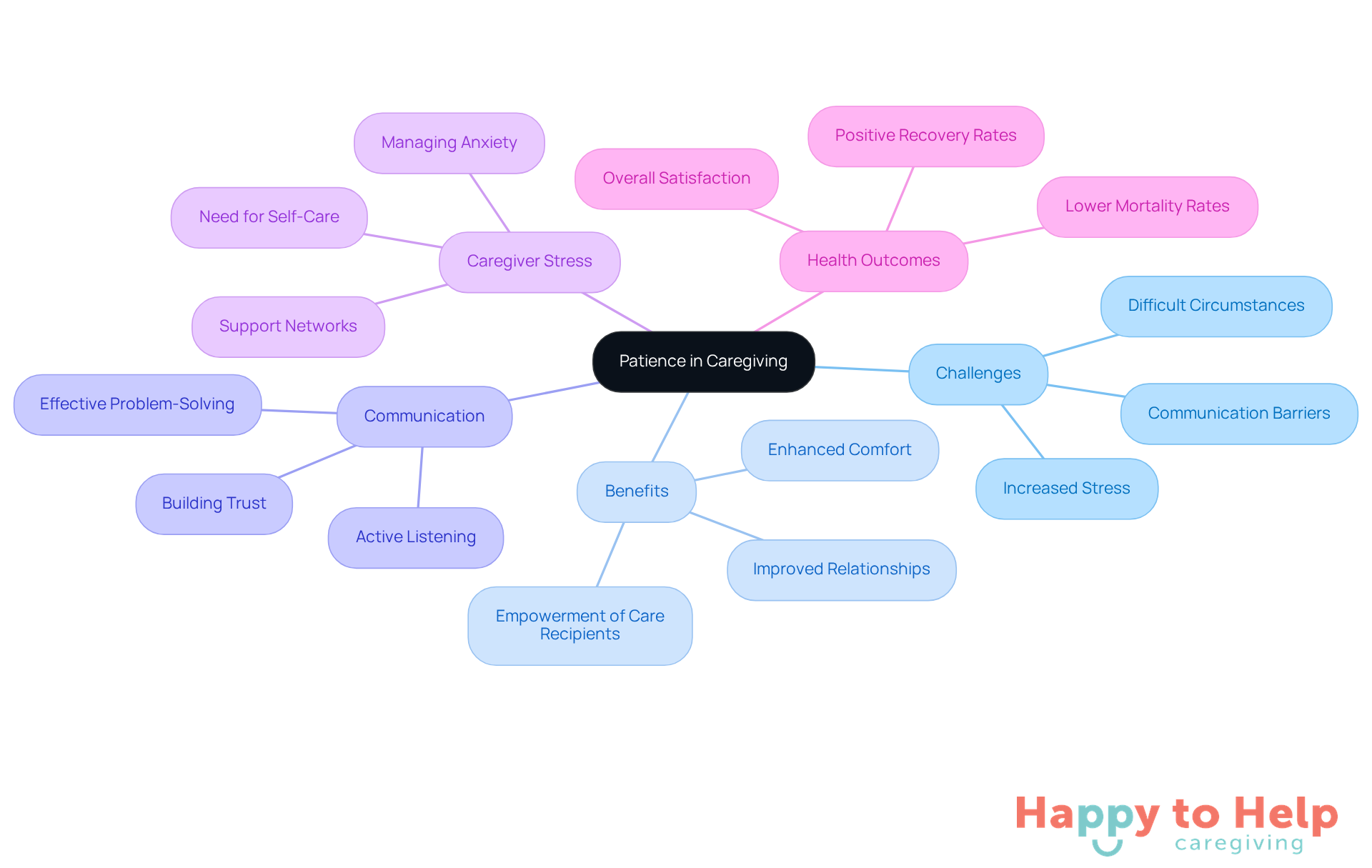
Patience is a crucial trait in caregiving, yet many caregivers struggle with it. Without patience, caregivers may find it challenging to manage difficult circumstances, leading to increased stress for both themselves and those they assist. This lack of patience can hinder effective communication and diminish overall satisfaction with the care provided.
By cultivating patience, caregivers can create a soothing environment that significantly enhances the comfort of individuals. This nurturing atmosphere encourages individuals to engage more actively in their well-being, fostering a sense of trust and safety. Research suggests that caregivers who demonstrate patience not only improve communication but also enhance the overall experience for those they care for. For instance, investing time in listening and addressing individuals' needs can reduce anxiety and promote a more favorable experience.
As one provider noted, "Patience is the number one thing," underscoring its importance in building strong connections with individuals. Moreover, studies indicate that maintaining a patient attitude can lead to improved health outcomes, as patients feel more empowered to participate in their treatment plans.
Ultimately, patience is not just a quality; it is a transformative approach that enhances the caregiving experience for both recipients and providers. By prioritizing patience, caregivers can significantly improve their effectiveness and the well-being of those they serve.
Training and Qualifications: Ensuring Competent Care Delivery
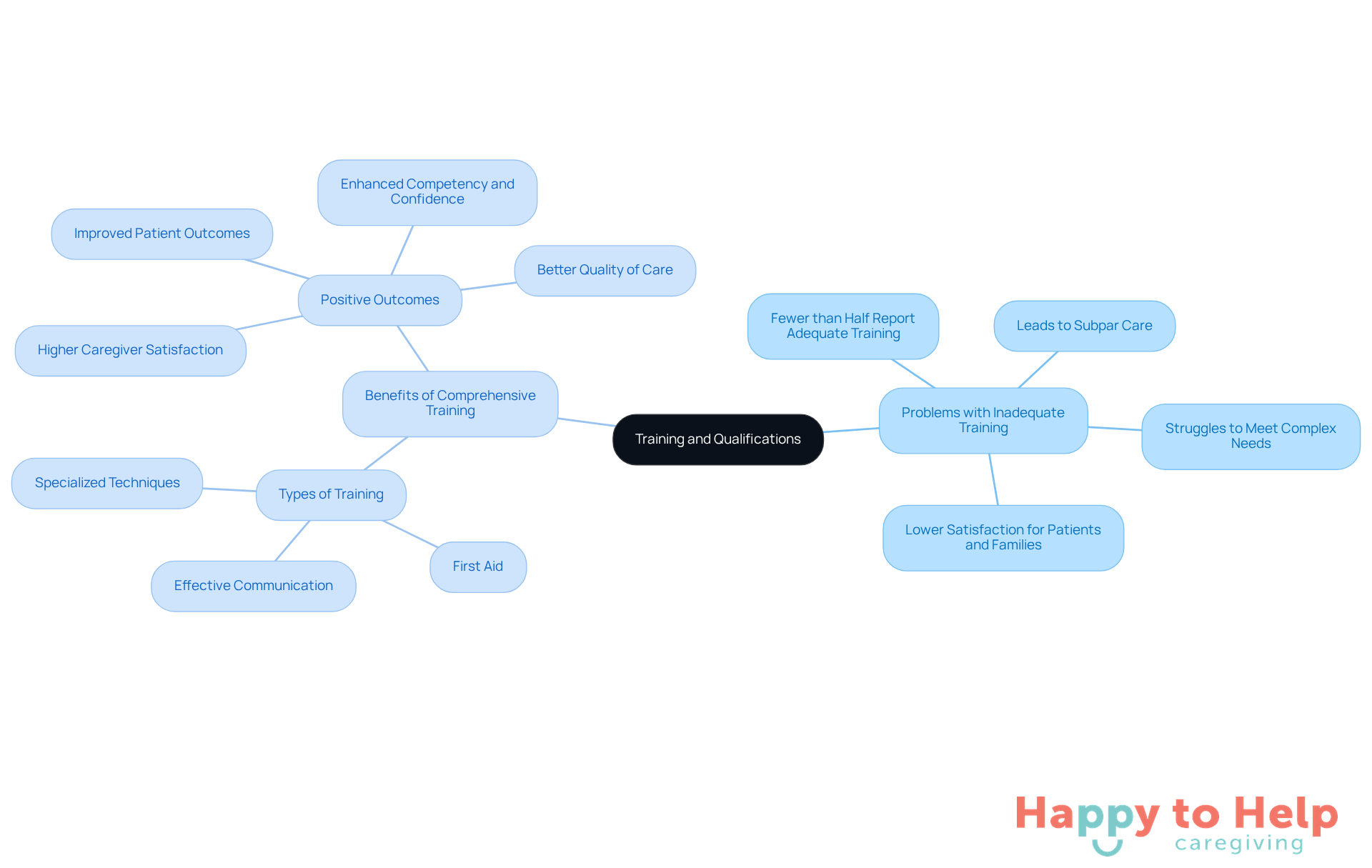
At Happy to Help Caregiving, a significant problem exists in the caregiving field: fewer than half of caregivers nationwide report receiving adequate training. This lack of training contributes to ongoing shortages and can lead to subpar care for individuals who need it most. The implications are serious, as poorly trained caregivers may struggle to meet the complex needs of their patients, resulting in lower satisfaction for both patients and their families.
To address this issue, Happy to Help Caregiving emphasizes extensive training for its staff. This training covers essential areas such as:
- First aid
- Effective communication
- Specialized techniques tailored to the unique requirements of each individual
By prioritizing comprehensive education, Happy to Help Caregiving enhances the competency and confidence of its private duty home caregivers, ensuring that families can trust their loved ones are in capable hands.
The focus on training directly correlates with improved service quality. Well-trained caregivers are better equipped to handle the complexities of long-term support, leading to better patient outcomes. As noted by Home Health News, "Caregivers offered additional training and development are able to provide patients with higher quality care, and typically enjoy higher job satisfaction." This highlights the importance of investing in caregiver education, not just for the benefit of the patients, but also for the satisfaction of the caregivers themselves.
Companionship: Building Meaningful Relationships with Clients
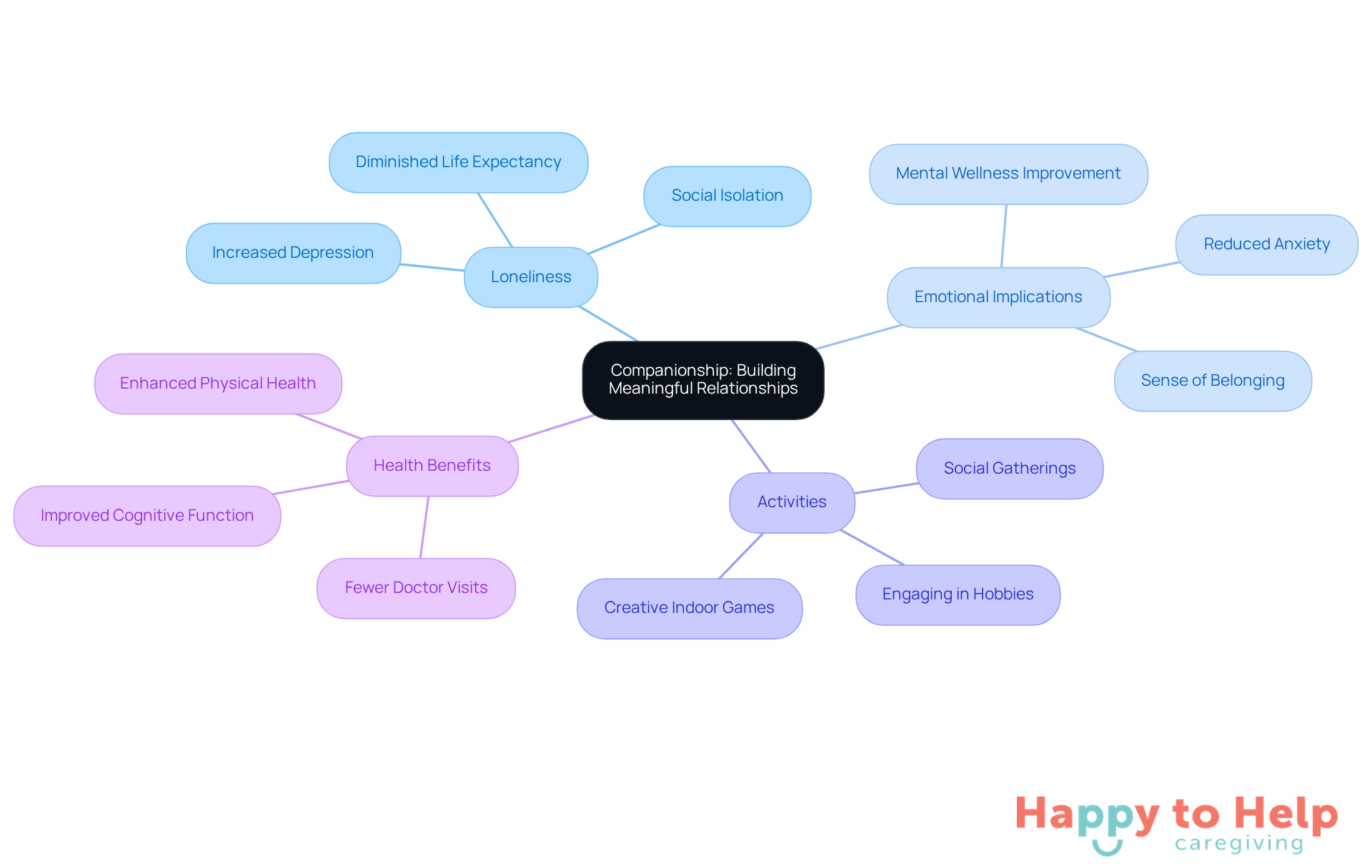
Companionship is more than just providing service; it addresses a significant problem faced by seniors: loneliness. This emotional isolation can lead to serious implications, including increased feelings of depression and anxiety. Studies show that chronic loneliness can even diminish life expectancy more than obesity or smoking.
To combat this issue, caregivers can actively involve seniors in enjoyable activities. By doing so, they not only alleviate feelings of loneliness but also foster a sense of belonging. Just a few hours of companionship each week can significantly improve mental wellness, making seniors feel valued and understood.
Moreover, older adults who utilize home assistance report 25% fewer doctor visits each year, highlighting the health benefits of maintaining meaningful connections. Private duty home caregivers play a vital role in helping seniors flourish in their own residences by prioritizing these connections.
In summary, by cultivating meaningful relationships, caregivers can enhance the quality of life for seniors, emphasizing the critical nature of companionship in home assistance.
Problem-Solving Skills: Navigating Challenges with Confidence
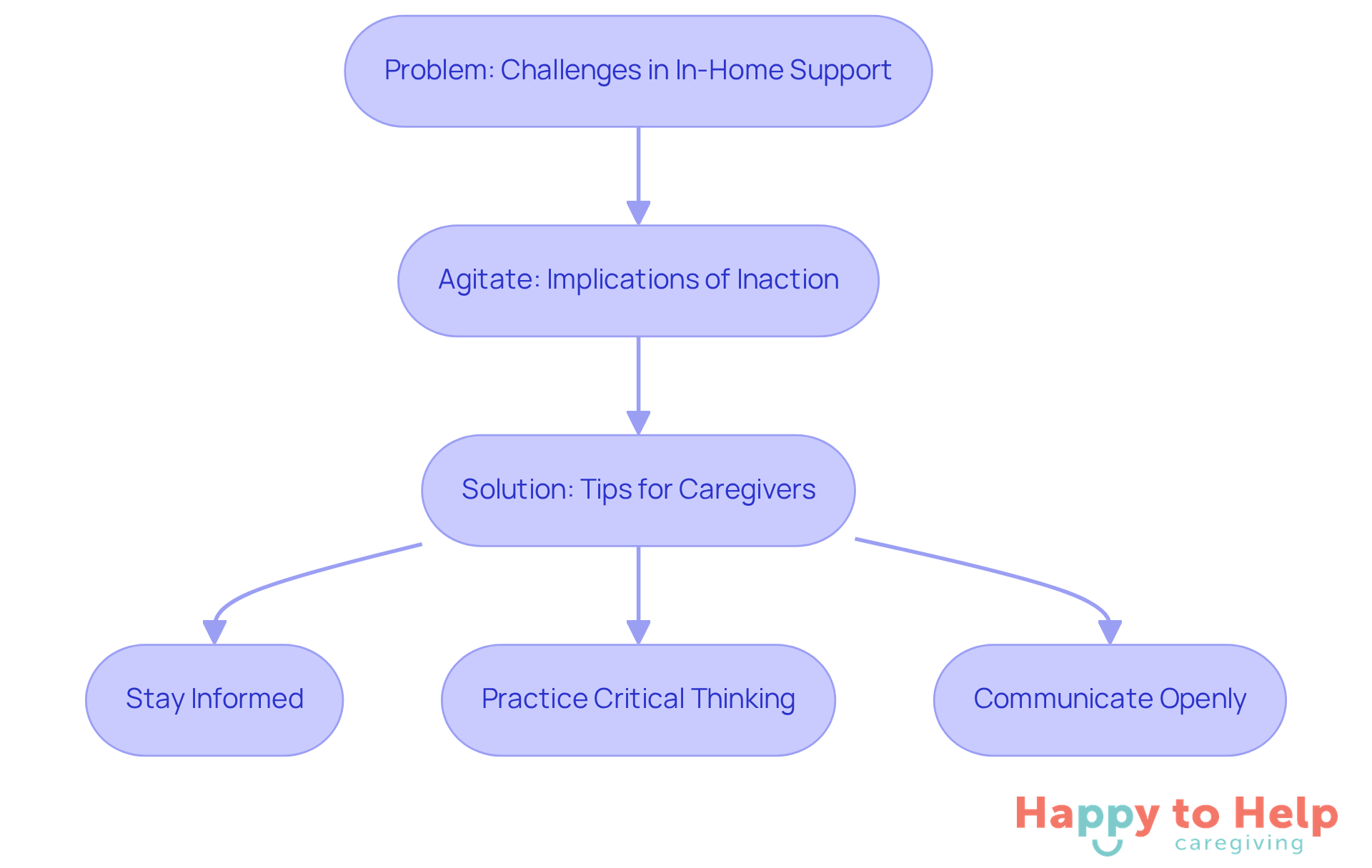
Problem: Caregivers face significant challenges in managing the complexities of in-home support. Whether it's a sudden health issue or a person's emotional distress, these situations demand immediate attention and critical thinking.
Agitate: The implications of not addressing these challenges can be severe. A caregiver's inability to act swiftly can jeopardize patient safety and lead to increased anxiety for families, who need reassurance that their loved ones are receiving the best possible care.
Solution: To navigate these complexities effectively, caregivers must develop strong problem-solving abilities. This not only ensures patient safety but also instills confidence in families. Here are some actionable tips:
- Stay Informed: Regularly update your knowledge on health issues and emotional support strategies.
- Practice Critical Thinking: Engage in scenario-based training to enhance decision-making skills.
- Communicate Openly: Keep families informed about care plans and any changes in the patient's condition.
By honing these skills, caregivers can provide high-quality support that meets the needs of both patients and their families.
Positive Attitude: Fostering a Supportive and Uplifting Environment
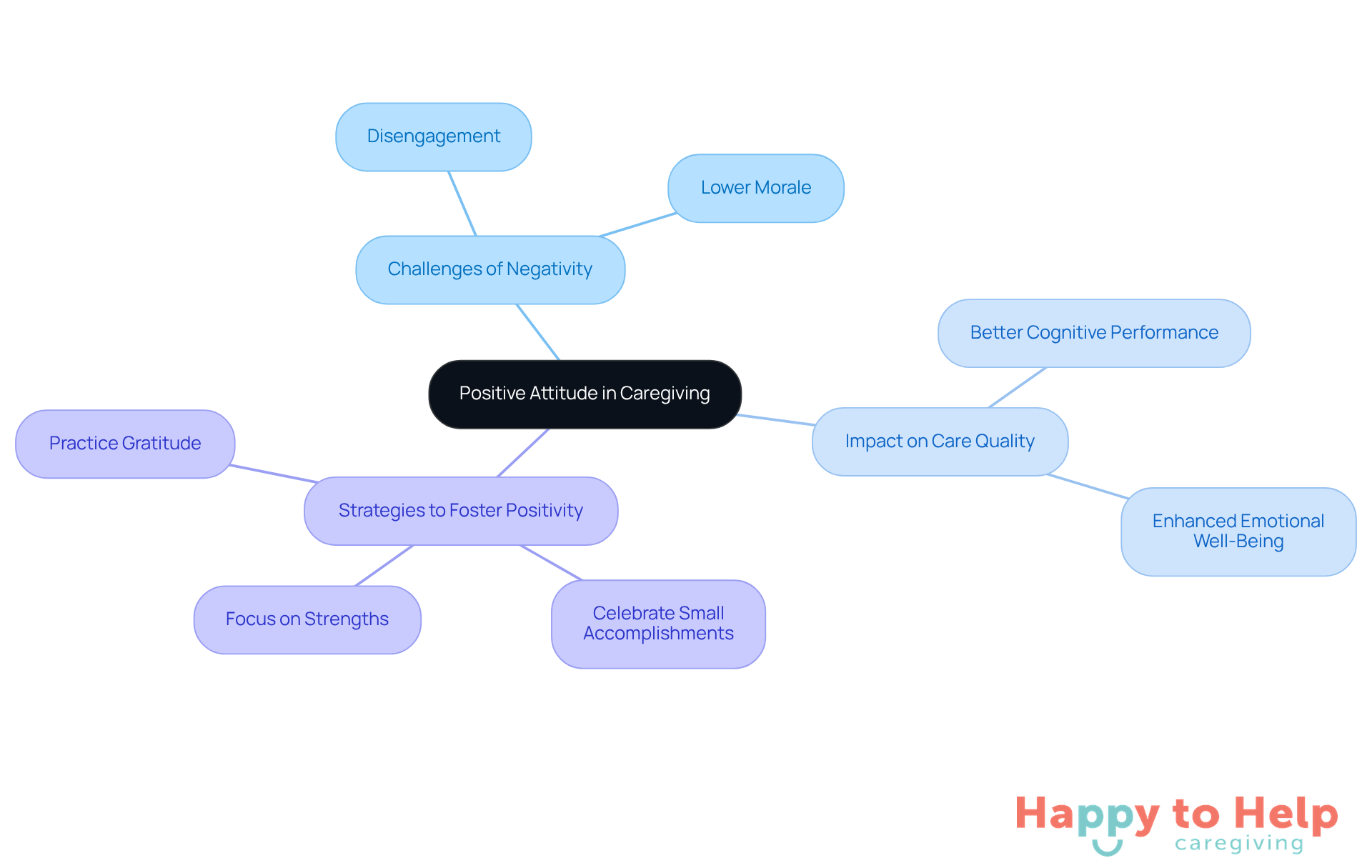
A positive attitude among caregivers is essential, yet many struggle with negativity in their roles. This negativity can create a challenging environment, impacting both the caregivers and those they support. When caregivers lack positivity, it can lead to disengagement and lower morale, ultimately affecting the quality of care provided.
Research indicates that caregivers who maintain a positive outlook can significantly uplift those they assist. For instance, studies show that individuals with a positive perspective experience better cognitive performance, which is crucial in caregiving settings. This positivity not only enhances emotional well-being but also fosters a nurturing atmosphere that encourages individuals to engage actively in their care.
To combat negativity, caregivers can implement several practical strategies:
- Celebrate small accomplishments: Recognizing even minor successes can boost morale and create a sense of achievement.
- Focus on strengths: Concentrating on what individuals do well promotes a supportive environment.
- Practice gratitude: As Hilary Eldridge emphasizes, maintaining a sense of self and gratitude is vital for caregivers to sustain their positivity.
Moreover, positive interactions between providers and clients strengthen relationships, promoting trust and cooperation. By fostering an environment of support, caregivers can enhance the overall care experience, benefiting everyone involved. Ultimately, a caregiver's positivity is crucial in shaping a nurturing environment that enhances the quality of life for clients and supports their journey toward independence.
Moving Forward with Qualities of Private Duty Home
The essential qualities of private duty home caregivers are crucial in ensuring that individuals receive the compassionate, personalized care they deserve. However, many caregivers may lack certain traits that significantly impact the quality of care provided. This gap can lead to a less supportive environment for clients, affecting their dignity and independence.
By prioritizing traits such as:
- Empathy
- Reliability
- Communication skills
- Adaptability
- Patience
- Training
- Companionship
- Problem-solving abilities
- Positive attitude
caregivers can enhance their clients' quality of life. For instance, empathy allows caregivers to connect with clients on a deeper level, while reliability builds trust and peace of mind for families. Effective communication ensures that concerns are addressed promptly, and adaptability enables caregivers to respond to changing needs.
Moreover, patience and problem-solving skills are crucial in navigating challenges, while companionship combats loneliness and promotes emotional well-being. A positive attitude creates a nurturing atmosphere that uplifts both caregivers and clients alike. Investing in the development of these qualities not only benefits clients but also enriches the caregiving profession.
Families can make informed decisions when selecting home care services by recognizing the importance of these traits. Embracing these essential qualities in caregiving is not just about meeting basic needs; it is about fostering meaningful relationships and enhancing the overall well-being of those we serve. By focusing on these key areas, caregivers can ensure they provide the highest standard of care.
https://iframe.tely.ai/cta/eyJhcnRpY2xlX2lkIjogIjY5MjI2NTA1M2Y0ZjQ1OWY0OGYyNTFmZCIsICJjb21wYW55X2lkIjogIjY4ZWU1ZGNhNzMxNzYyNTU3ZjNjOTVjMSIsICJpbmRleCI6IG51bGwsICJ0eXBlIjogImFydGljbGUifQ==Frequently Asked Questions
What is the main issue that Happy to Help Caregiving addresses in the caregiving industry?
Happy to Help Caregiving addresses the lack of personalized care plans that cater to individual needs, which can lead to ineffective services and negatively impact clients' well-being.
Why is personalized care important for clients?
Personalized care is important because it fosters a sense of safety and ease for clients, enhances customer satisfaction, and transforms routine assistance into meaningful interactions, strengthening the bond between caregivers and clients.
How does Happy to Help Caregiving ensure personalized care?
Happy to Help Caregiving focuses on tailored care plans that respect individual needs and preferences, allowing clients to maintain their independence and dignity in daily life.
What role does empathy play in caregiving?
Empathy is crucial in caregiving as it helps caregivers understand the emotional and physical challenges faced by patients, fostering a supportive atmosphere and reducing feelings of isolation.
What are some ways caregivers can cultivate empathy?
Caregivers can cultivate empathy by maintaining eye contact, offering reassurance, and anticipating patients' needs to provide better support.
What are the implications of a lack of empathy in caregiving?
A lack of empathy can diminish the caregiving experience, negatively impact patients' emotional well-being, and exacerbate stress, making it harder for patients to communicate their needs.
Why is reliability important in caregiving?
Reliability is important because inconsistent support can lead to feelings of insecurity and anxiety for clients and their loved ones, eroding trust and making it difficult for clients to feel secure in the assistance they receive.
How does Happy to Help Caregiving address reliability in their services?
Happy to Help Caregiving ensures that caregivers are consistently available, which fosters trust and provides families with peace of mind regarding the support their loved ones receive.
List of Sources
- Happy to Help Caregiving: Personalized Care for Individual Needs
- The Importance of Personalized Care Plans in Home Care (https://anodyne-services.com/2025/01/14/the-importance-of-personalized-care-plans-in-home-care)
- 2025 Home Care Statistics: Trends & Insights To Know (https://premierhcinc.com/blog/home-care-statistics)
- Importance of Personalized Senior Home Care in Burlington NC (https://wisdomseniorcare.com/the-importance-of-personalized-care-plans-for-seniors)
- Customized Care at Home: The Benefits of Personalized Care Plans - VNA Health Group (https://vnahg.org/customized-care-at-home-the-benefits-of-personalized-care-plans)
- The Future of Private Home Care: What to Expect in 2025 (https://anodyne-services.com/2024/08/14/the-future-of-private-home-care-what-to-expect-in-2025)
- Empathy: Understanding and Connecting with Clients
- How Empathy Transforms the Care Experience (https://ayiconnection.com/blog/how-empathy-transforms-the-care-experience)
- Why Empathy is Important in Healthcare | Innovare Medical Media (https://innovaremedia.com/2024/12/why-empathy-is-important-in-healthcare)
- Enhancing and examining the empathy skills of healthcare students and clinicians | University of Technology Sydney (https://uts.edu.au/case-studies/enhancing-and-examining-empathy-skills-healthcare-students-and-clinicians)
- Empathy in Action: Marie's Dedication to Caregivers | United Way Worldwide (https://unitedway.org/news/empathy-in-action-maries-dedication-to-caregivers)
- The Importance of Empathy and Compassion in Bedside Care (https://breezehospiceservices.com/resources/the-importance-of-empathy-and-compassion-in-bedside-care)
- Reliability: Consistent Support for Peace of Mind
- 2025 Home Care Statistics: Trends & Insights To Know (https://premierhcinc.com/blog/home-care-statistics)
- Is Your In-Home Care Reliable? Why It Matters More Than Ever - Riverdale Health Group LLC (https://rhgcares.com/is-your-in-home-care-reliable-why-it-matters-more-than-ever)
- Building Trust: Why Reliability is Key in Home Care Services (https://homematterspaoh.com/building-trust-why-reliability-is-key-in-home-care-services)
- The Importance of Caregiver-Client Relationships in Senior Well-Being (https://homeinstead.com/home-care/usa/in/goshen/588/news-and-media/the-importance-of-caregiver-client-relationships-in-senior-well-being)
- Caregiver Statistics: Demographics (https://caregiver.org/resource/caregiver-statistics-demographics)
- Communication Skills: Facilitating Clear and Open Dialogue
- The Importance of Good Communication in Domiciliary Care | First City Nursing (https://firstcitynursing.co.uk/news/2025/01/the-importance-of-good-communication-in-domiciliary-care/96)
- Why Effective Communication is Crucial in Home Care & How to Achieve It | Aaniie, formerly Smartcare Software (https://aaniie.com/news/why-effective-communication-is-crucial-in-home-care-how-to-achieve-it)
- The Importance of Communication in HHA Services (https://regencyhcs.com/blog/the-importance-of-communication-in-hha-services)
- Adaptability: Responding to Changing Needs and Circumstances
- Your Working Caregiver Experience Matters: What Every Working Caregiver Should Know (https://lifework.arizona.edu/news/2025/your-working-caregiver-experience-matters-what-every-working-caregiver-should-know)
- How in-home care adapts to changing health needs (https://humancareny.com/blog/how-in-home-care-adapts-to-changing-health-needs)
- What to expect when you become a caregiver– and how to cope with the challenges (https://heart.org/en/news/2025/11/20/what-to-expect-when-you-become-a-caregiver-and-how-to-cope-with-the-challenges)
- Caregiver Statistics: Demographics (https://caregiver.org/resource/caregiver-statistics-demographics)
- Private Caregiver Revolution: Embrace The Flexibility And Control - Jhu Innovations (https://stripe.jhu.edu/news/private-caregiver-revolution-embrace-the-flexibility-and-control)
- Patience: Providing Compassionate and Understanding Care
- Use patience, compassion to navigate a loved one’s dementia | opinion (https://metrowestdailynews.com/story/opinion/columns/2025/11/22/patience-is-key-in-navigating-loved-ones-dementia-opinion/87360948007)
- The Day I Rediscovered Patience as a Caregiver (https://tevapharm.com/patients-and-caregivers/all-stories/the-day-i-rediscovered-patience-as-a-caregiver)
- 9 Rewards of Caregiving (https://health.usnews.com/health-news/best-assisted-living/slideshows/rewards-of-caregiving)
- The Role of Patience in Quality Healthcare Workers - LD Network (https://ldnetwork.org/blog/the-role-of-patience-in-quality-healthcare-workers)
- Family caregivers emphasise patience and personal growth: a qualitative analysis from the Caregiving Transitions Study - PMC (https://pmc.ncbi.nlm.nih.gov/articles/PMC8826045)
- Training and Qualifications: Ensuring Competent Care Delivery
- The importance of proper training in home care (https://alayacare.com/blog/the-importance-of-proper-training-in-home-care)
- The Importance of Caregiver Education and Training (https://corecubed.com/blog/critical-value-of-caregiver-education)
- Podcast: CCA CEO Explains Why In-Home Caregivers Need Training (https://advancecaregivers.org/podcast-cca-ceo-explains-why-in-home-caregivers-need-training)
- New Research Highlights Critical Role of Training in Caregiver Retention (https://careacademy.com/blog/role-of-training-in-caregiver-retention)
- Enhancing Caregiver Skills Through Specialized Training (https://ltcnews.com/articles/enhancing-caregiver-skills-specialized-training)
- Companionship: Building Meaningful Relationships with Clients
- 10 Benefits of Companionship Carers for Seniors' Well-Being - Happy To Help (https://happytohelpcaregiving.com/10-benefits-of-companionship-carers-for-seniors-well-being)
- Why Home Care Providers Are Increasingly Offering Companion Care Services for Seniors | Aaniie, formerly Smartcare Software (https://aaniie.com/news/why-home-care-providers-are-increasingly-offering-companion-care-services-for-seniors)
- The Emotional Benefits of Companion Care for Seniors (https://comfortkeepers.com/offices/texas/round-rock/resources/news/the-emotional-benefits-of-companion-care-for-seniors)
- The Importance of Companionship - Dovida NZ (https://dovida.co.nz/news/the-importance-of-companionship)
- | Catholic Charities Serving Central Washington (https://catholiccharitiescw.org/news/companionship-can-counter-the-impacts-of-loneliness-and-isolation)
- Problem-Solving Skills: Navigating Challenges with Confidence
- As Family Caregiving Grows, So Does the Need for Reform - Medicare Rights Center (https://medicarerights.org/medicare-watch/2025/08/14/as-family-caregiving-grows-so-does-the-need-for-reform)
- What to expect when you become a caregiver– and how to cope with the challenges (https://heart.org/en/news/2025/11/20/what-to-expect-when-you-become-a-caregiver-and-how-to-cope-with-the-challenges)
- Keystone Edition | Caregiving: Navigating the Challenges | Season 2025 (https://pbs.org/video/caregiving-navigating-the-challenges-afst7x)
- Navigating Challenges in Home Healthcare - Community Resources for Independent Living (https://crinet.org/2024/06/navigating-challenges-in-home-healthcare)
- Overcoming Challenges In Home-Based Care For Medically Intensive Patients (https://homehealthcarenews.com/2025/09/overcoming-challenges-in-home-based-care-for-medically-intensive-patients)
- Positive Attitude: Fostering a Supportive and Uplifting Environment
- How to find the joy in caregiving (https://mcknights.com/blogs/guest-columns/jamda-highlights/how-to-find-the-joy-in-caregiving)
- Caregivers: Be Realistic, Think Positive (https://heart.org/en/health-topics/caregiver-support/caregivers-be-realistic-think-positive)
- Benefits of positive relationships between caregivers and patients – Aegis Living (https://aegisliving.com/benefits-of-positive-relationships-between-caregivers-and-patients)
- The Importance of a Positive Attitude for Seniors (https://villagecaregiving.com/blog/positive-attitude)
- Maintaining a Positive Outlook as a Caregiver - Home Helpers Home Care (https://homehelpershomecare.com/alpharetta/community-blog/2020/march/maintaining-a-positive-outlook-as-a-caregiver)