

For families in our service areas
For families in our service areas, this guide explains caregiving and how non-medical in-home caregiving can support care planning in East Idaho, Treasure Valley & Magic Valley, Northern Wasatch, North Central West Virginia, and Northeast Ohio.
Understanding Factors Influencing 24 Hour Care at
Navigating the financial landscape of 24-hour in-home care presents a significant challenge for families. With costs averaging between $18,144 and over $25,000 monthly, understanding the factors that influence these expenses is essential. Geographic location and the level of care required can greatly affect pricing, leaving families to grapple with the question: How can they ensure their loved ones receive quality care without straining their finances?
This article explores the key factors impacting the cost of 24-hour care at home. By delving into these elements, we aim to provide families with insights and strategies to make informed decisions. With the right knowledge, caregivers can balance quality support with budget constraints, ensuring their loved ones receive the care they deserve.
Happy to Help Caregiving: Comprehensive 24/7 In-Home Care Services
Happy to Help Caregiving addresses a significant challenge faced by many caregivers: the emotional and physical strains of providing care. With over 53 million Americans serving as family caregivers, the demands can often lead to feelings of isolation and burnout. This situation not only affects the caregivers but also the well-being of those they care for.
To alleviate these pressures, Happy to Help Caregiving offers a comprehensive range of in-home care services, which include options that consider the 24 hour care at home cost, tailored to meet diverse client needs. Key services include:
-
Companionship Care: Vital for enhancing senior well-being, this service engages clients in social activities that alleviate feelings of loneliness and isolation. Caregivers often share how meaningful interactions can significantly uplift a client's mood and overall quality of life. As one provider observed, "Companionship is not merely about being present; it's about establishing a bond that brings happiness to our clients."
-
Post-Hospital Recovery Assistance: Transitioning home after a medical procedure can be challenging. Happy to Help Caregiving provides essential support during this critical period, helping clients regain their independence while ensuring they adhere to recovery protocols.
-
Respite Care: Family supporters often face emotional and physical strains from their responsibilities. Respite services provide them a much-needed break, enabling them to rejuvenate while knowing their loved ones are in capable hands.
-
Palliative Support Care: For clients with serious illnesses, this service focuses on providing comfort and emotional support, ensuring dignity and peace of mind during difficult times.
All services are available 24/7, which reflects the agency's commitment to meeting clients' needs, including inquiries about 24 hour care at home cost. The newest trends in domestic assistance underscore an increasing desire for agency-provided services, as families look for dependable and tailored support for their loved ones. Happy to Help Caregiving distinguishes itself by incorporating technology and person-centered methods, ensuring that clients receive not just assistance, but companionship that enhances their lives.
National Average Cost of 24/7 In-Home Care: Understanding the Financial Commitment
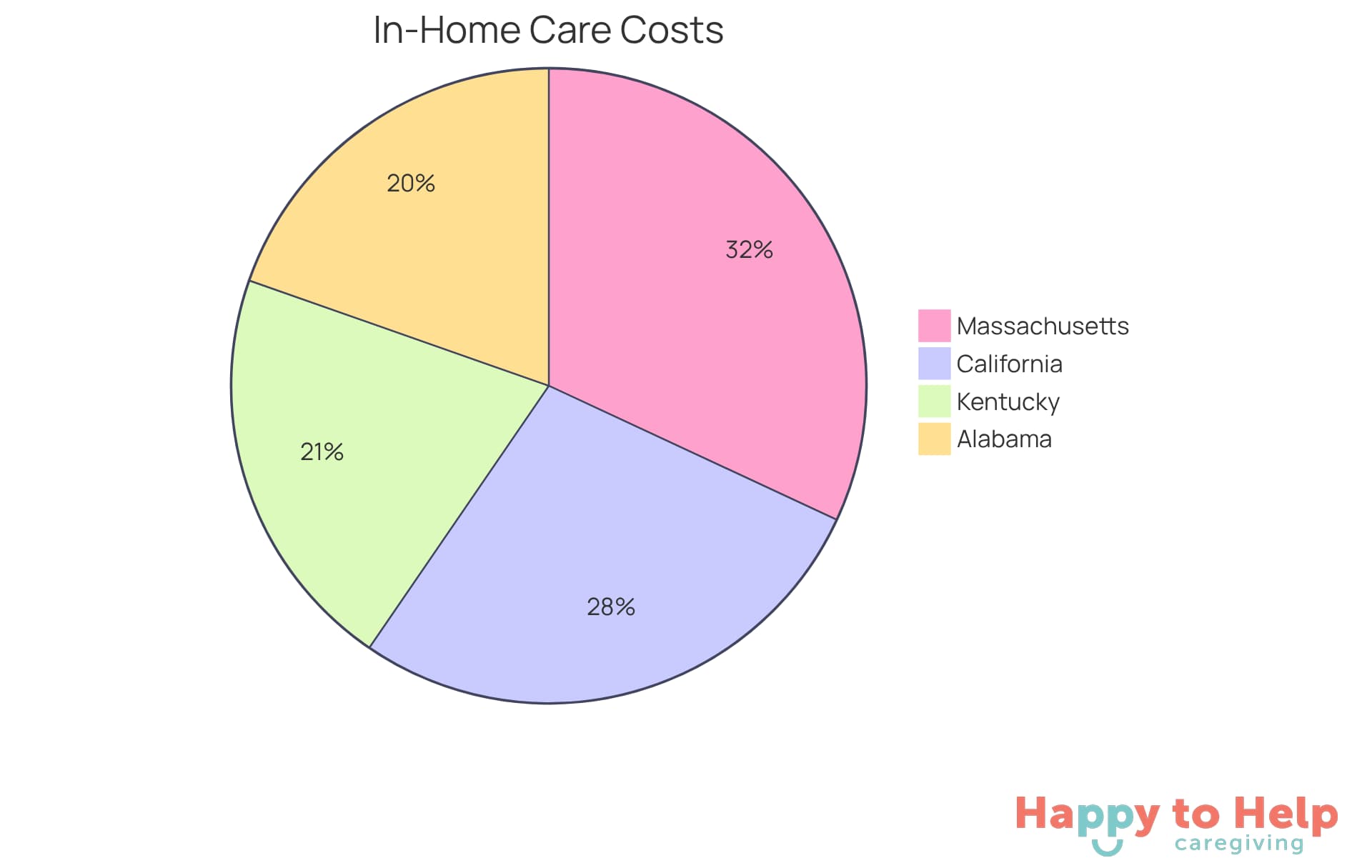
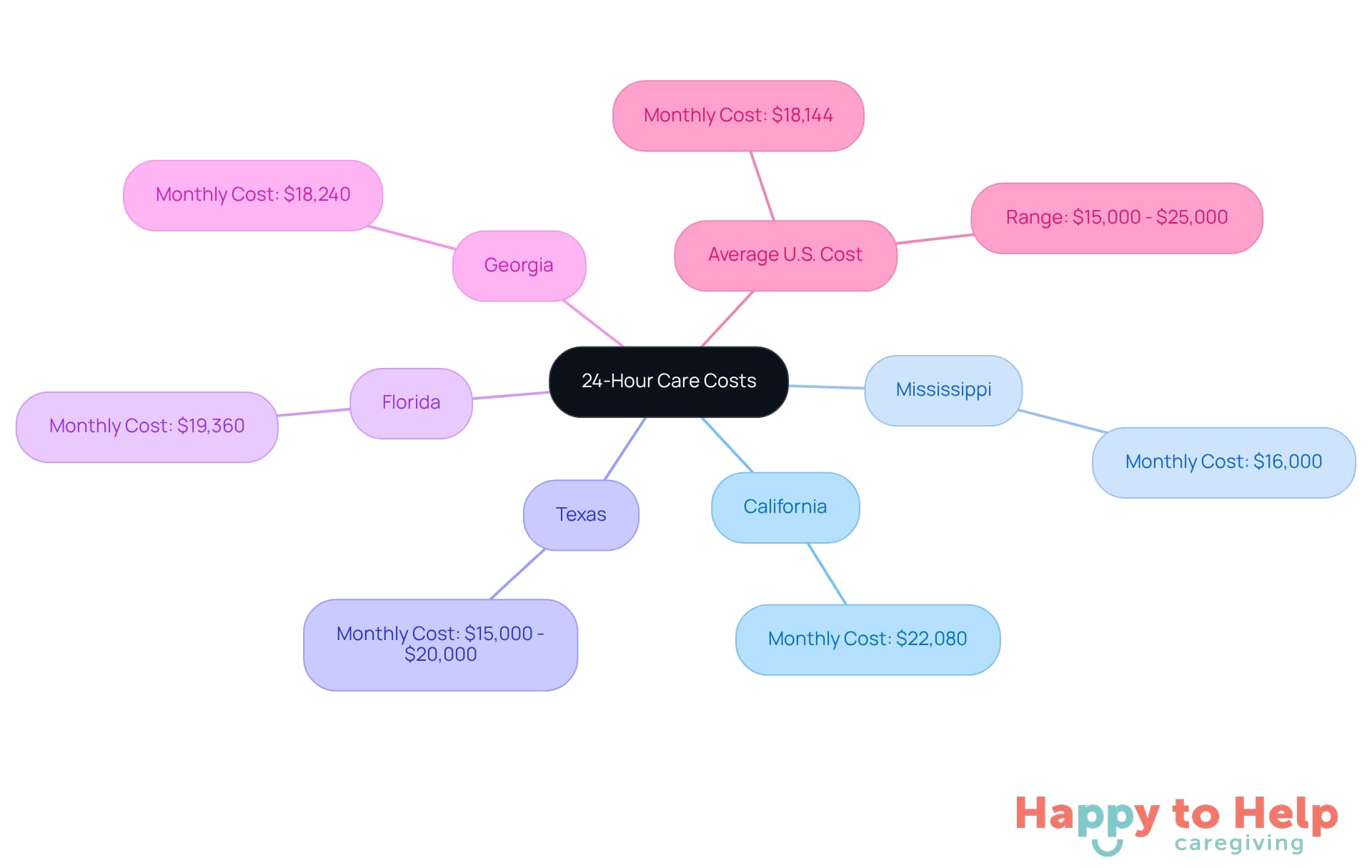
The 24 hour care at home cost can be a significant burden for families, with national averages ranging from $18,144 to over $25,000 each month. This expense is influenced by factors such as geographic location, the type of support required, and caregiver qualifications. For example, states like Massachusetts and California report some of the highest costs, averaging around $25,520 and $22,080, respectively. In contrast, more affordable options exist in states like Alabama and Kentucky, where prices are approximately $15,680 and $16,640.
Families must recognize the 24 hour care at home cost as a significant financial commitment that requires careful budgeting and planning. It's essential to explore various funding alternatives to alleviate some of this financial strain. Options include:
- Long-term support insurance
- Medicaid for eligible individuals
- Veteran benefits
These resources can significantly reduce the overall costs associated with in-home care.
Real-world examples highlight how families have successfully managed these expenses. For instance, a family in Pennsylvania combined personal savings with Medicaid assistance to fund round-the-clock support for their loved one. This approach allowed them to provide necessary care while maintaining their financial stability.
Understanding the 24 hour care at home cost is crucial to navigating the financial landscape of domestic support. It empowers families to make informed decisions that align with their loved ones' needs and their financial capabilities.
Comparative Analysis: 24/7 In-Home Care vs. Assisted Living and Nursing Homes
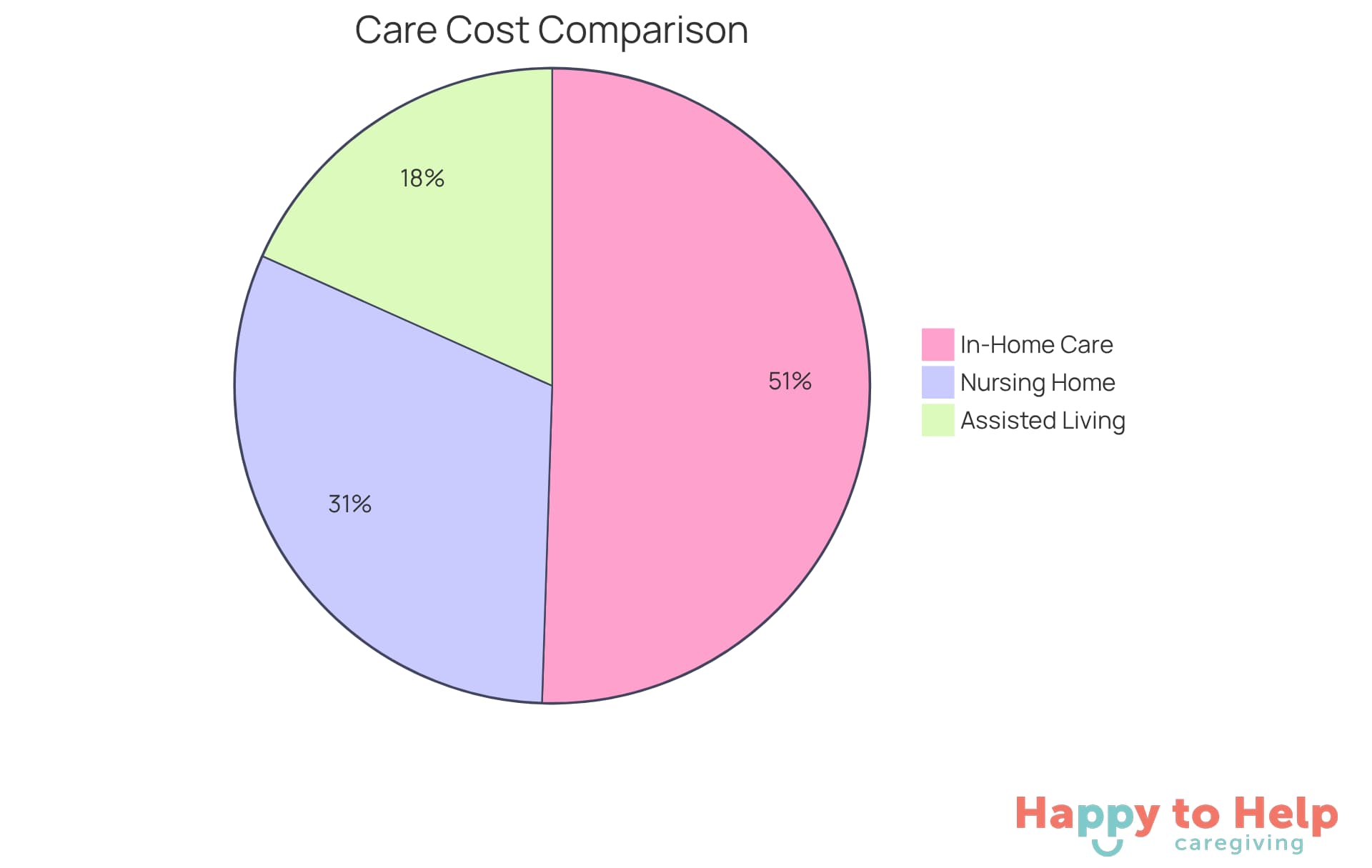
When evaluating the costs and benefits of 24 hour care at home cost compared to assisted living and nursing homes, several critical factors emerge that caregivers must consider.
-
Cost: The average monthly cost for in-home care typically ranges from $17,000 to $17,500, significantly higher than assisted living facilities, which average between $4,500 and $8,000. This stark difference emphasizes the financial implications families must consider when selecting support options. Furthermore, the national average for 24 hour care at home cost is roughly $24 per hour, clarifying the total expense involved.
-
Independence: In-home assistance enables seniors to stay in their familiar surroundings, fostering a sense of comfort and autonomy that is often lost in institutional environments. This continuity can greatly enhance their quality of life.
-
Customization: Unlike the more uniform support models found in assisted living facilities, at-home assistance can be meticulously tailored to meet individual needs. Customized support plans can address specific health needs, daily routines, and individual preferences, ensuring that seniors receive the assistance they truly require.
-
Social Interaction: While residential support offers individual attention, assisted living centers frequently provide additional chances for social involvement through group activities and shared living. This can be especially advantageous for seniors who flourish in social engagement, although it may require sacrificing personal space and privacy.
-
Emotional Costs: The emotional weight of caregiving can be significant, often going unrecognized. Families must consider not only the financial implications but also the emotional and logistical challenges associated with caregiving.
-
Increasing Expenses: It is essential to acknowledge that expenses for both at-home support and assisted living are anticipated to increase, which families should consider in their long-term planning.
-
Length of Stay: The median duration of residence in assisted living is reported to be 22 months, which can result in substantial overall expenses over time.
In summary, the decision between 24/7 in-home support and assisted living involves weighing the higher 24 hour care at home cost of personalized, independent assistance against the potential social advantages of community living. Each option presents unique advantages that cater to different needs and preferences.
Included Services in 24-Hour Care: What Families Should Expect
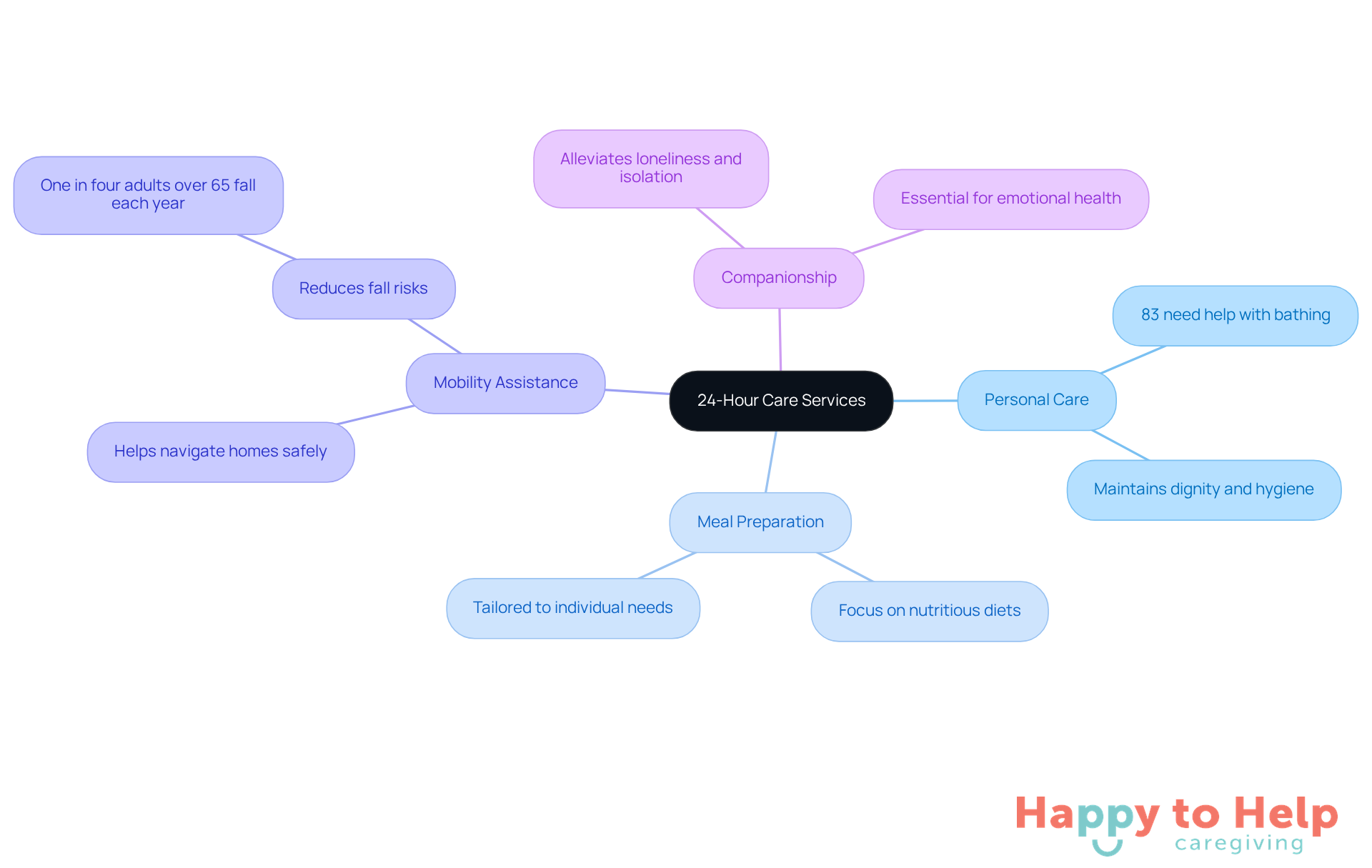
Families often face significant challenges when it comes to providing adequate support for seniors and individuals with special needs. The need for comprehensive care is critical, as many struggle with daily activities that are essential for maintaining their quality of life. For instance, 83% of home assistance recipients require help specifically with bathing and showering, highlighting the vital role of personal care services.
The implications of inadequate support can be severe. Without proper medication management, clients may miss doses, leading to health complications. Alarmingly, only 26% of physician discharge summaries include details about a patient’s physical functioning, which underscores the necessity for thorough evaluations in care planning. Additionally, mobility issues can lead to falls, which affect one in four adults over 65 each year, making mobility assistance crucial.
To address these challenges, caregivers can implement a range of services designed to enhance well-being.
- Personal care services ensure clients maintain dignity and hygiene, while
- meal preparation focuses on nutritious diets tailored to individual needs.
- Mobility assistance helps clients navigate their homes safely, reducing fall risks.
Moreover, companionship plays a significant role in emotional health. Studies show that social interaction can alleviate feelings of loneliness and isolation among seniors, making it an essential component of care.
Effective personal assistance and medication management go beyond meeting basic needs; they promote independence and improve overall quality of life. A well-structured support plan, which includes regular evaluations, can adapt to changing health situations, ensuring clients receive the most appropriate assistance. This holistic approach not only helps seniors thrive at home but also eases family concerns about their loved ones' well-being.
As the home support market is projected to reach $176.3 billion by 2032, the demand for these essential services continues to grow, reflecting the increasing recognition of their importance.
Payment Options for 24/7 In-Home Care: Navigating Financial Solutions
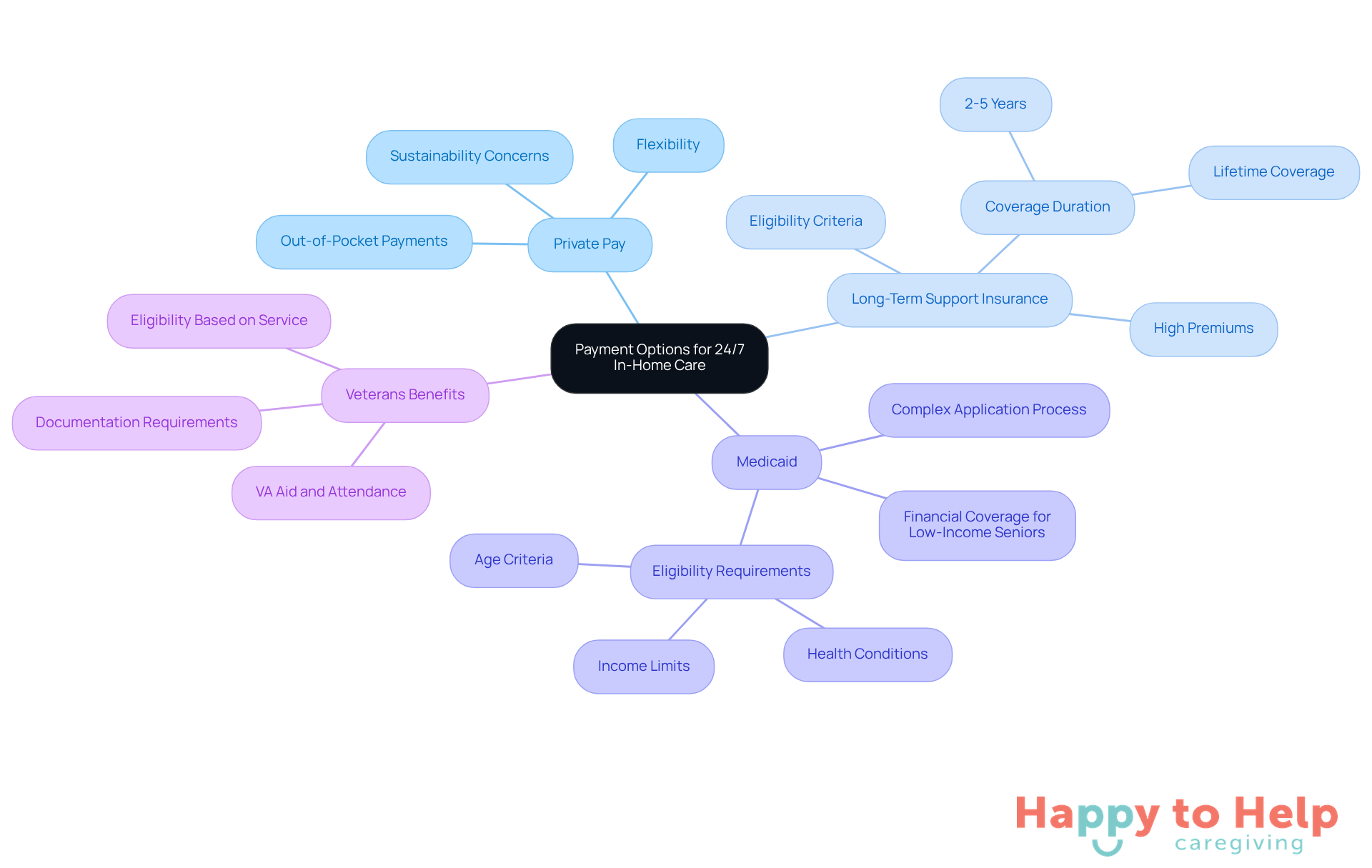
Families often face challenges when it comes to the 24 hour care at home cost for financing 24/7 in-home care. The overwhelming 24 hour care at home cost can leave many caregivers searching for viable solutions. Fortunately, there are several options available to help ease this financial burden:
- Private Pay: This involves directly paying out-of-pocket for services, which can provide flexibility but may not be sustainable long-term.
- Long-Term Support Insurance: These policies are designed to cover expenses for at-home assistance, offering a safety net for families.
- Medicaid: For qualified individuals, Medicaid can cover some home support services, making it a crucial resource for those in need.
- Veterans Benefits: Programs accessible for veterans can significantly aid with expenses related to assistance, ensuring that those who served our country receive the support they deserve.
By understanding these options, families can make informed decisions that best suit their needs.
Regional Variations in 24-Hour Care Costs: A State-by-State Breakdown
The 24 hour care at home cost varies significantly across the United States, which presents a challenge for families seeking support. For instance, in California, monthly costs can soar to about $22,080, driven by high demand and living expenses. In contrast, states like Mississippi offer more affordable options, with average costs around $16,000 per month, thanks to a lower cost of living and fewer regulatory burdens. Texas typically sees averages between $15,000 and $20,000 monthly, reflecting its diverse market and competitive support worker landscape.
Dr. Ella Njike emphasizes the importance of understanding the 24 hour care at home cost: 'If you’re contemplating round-the-clock support for your elderly relatives, you should examine closely what the 24 hour care at home cost could be to your finances.'
Several factors contribute to these pricing disparities, including local demand for services, caregiver licensing requirements, and the overall economic environment of each state. For example, Florida averages $19,360, while Georgia is slightly higher at $18,240. Dr. Njike notes, 'The typical 24 hour care at home cost in the U.S. is roughly $18,144 monthly, but prices can vary from $15,000 to more than $25,000 monthly, depending on your location and the type of assistance needed.'
Understanding these regional variations is crucial for families considering at-home assistance. It enables better financial planning and informed choices regarding support options.
Insurance Coverage for 24/7 In-Home Care: What Families Need to Know
Navigating insurance coverage for 24/7 domestic assistance can be challenging for caregivers. The problem lies in the significant differences in coverage options, which can lead to confusion and uncertainty.
-
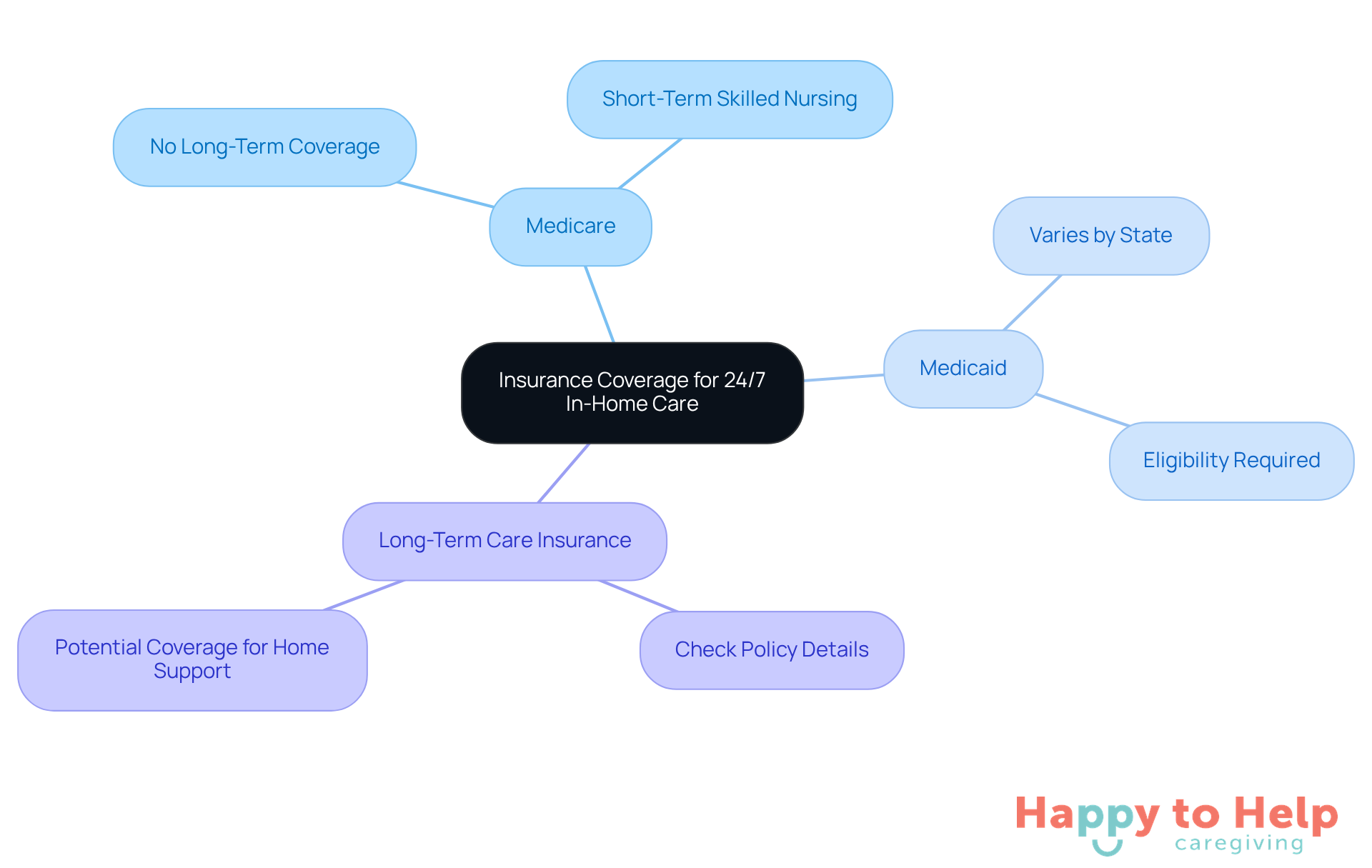
Medicare typically does not cover long-term in-home care, but it may provide coverage for short-term skilled nursing care. This limitation can leave families searching for alternatives.
-
Medicaid offers potential coverage for eligible individuals, but this varies based on state regulations. Understanding these differences is crucial for caregivers seeking support.
-
Long-Term Care Insurance policies may include home support, yet families should carefully examine their specific policy details to ensure they meet their needs. By being informed about these options, caregivers can make better decisions regarding domestic assistance.
Impact of Caregiver Experience on 24-Hour Care Quality and Costs
The experience level of those providing assistance significantly affects both the quality of support given and the overall 24 hour care at home cost. Families face a critical problem: the qualifications of caregivers can lead to varying levels of care and financial strain.
-
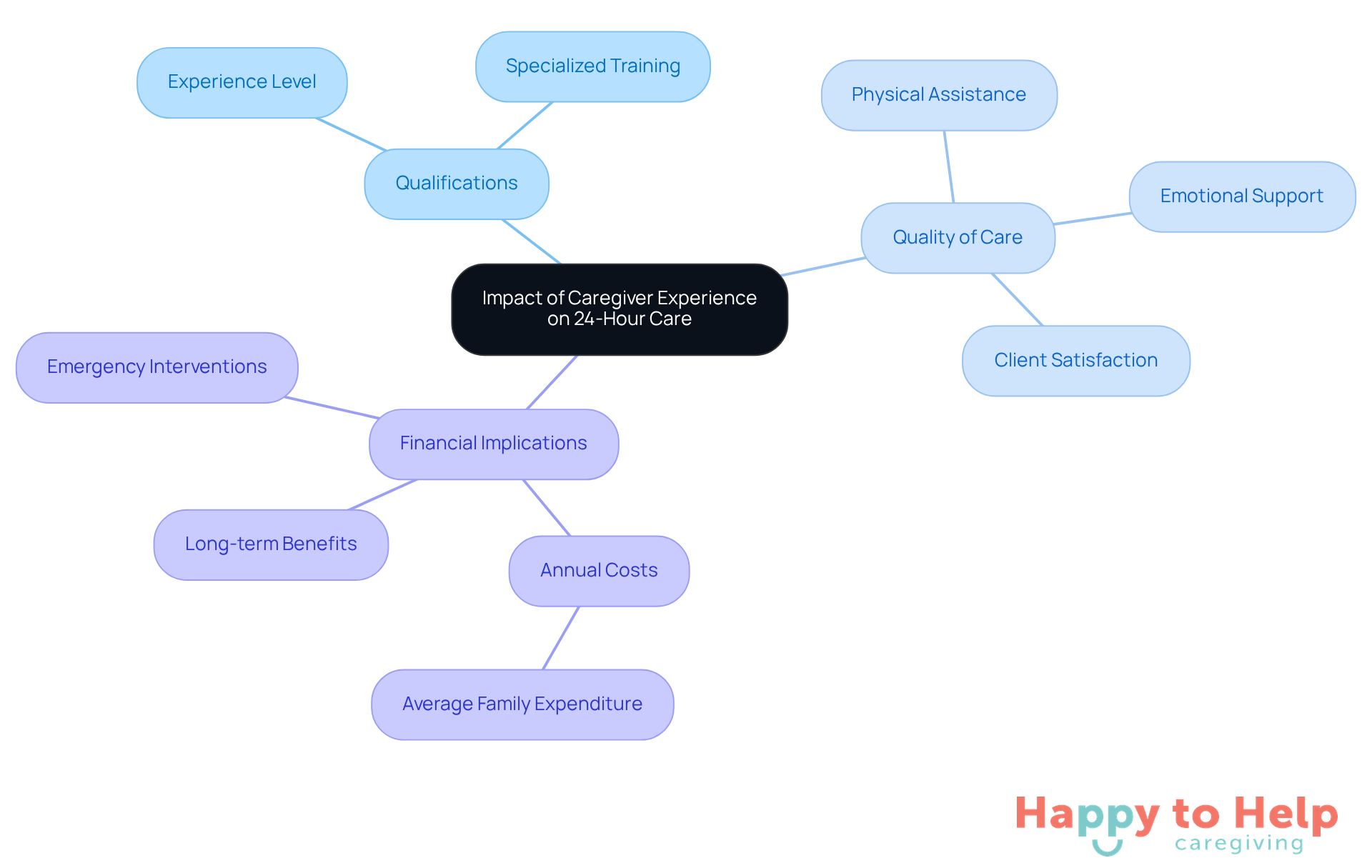
Qualifications: Caregivers with more experience and specialized training typically command higher rates. This is due to their enhanced skills, which are crucial for managing complex medical needs and ensuring safety.
-
Quality of Care: Skilled providers are better prepared to offer not only physical assistance but also emotional support, essential for the well-being of clients. Their ability to navigate challenging situations can lead to improved outcomes and greater satisfaction for both clients and families.
Research indicates that individuals providing care with advanced qualifications contribute to higher quality care. Studies show that satisfaction among those providing assistance is consistently linked to their training and experience. In fact, individuals who receive additional training report greater job satisfaction and are more likely to remain in their roles, which can help reduce the high turnover rates often observed in the industry. Significantly, the average family supporter spends around $7,200 annually out of pocket on caregiving costs, which emphasizes the financial strain they encounter due to 24 hour care at home cost.
The financial implications suggest that although the 24 hour care at home cost may involve higher initial expenses for skilled attendants, the long-term benefits often outweigh these costs. Experienced providers can diminish the necessity for emergency interventions and hospital stays, ultimately resulting in reduced overall healthcare expenses for families. As Peter Ross, CEO and co-founder, stated, "It keeps families in the home, happier and healthier longer."
Investing in qualified caregivers not only improves the quality of support but also promotes a more stable and efficient caregiving environment. This makes it a vital element in the decision-making process for families looking for home assistance.
Alternative Care Options: Exploring Cheaper Alternatives to 24-Hour In-Home Care
For families exploring more affordable care solutions, the challenge of finding effective support can be daunting. Many caregivers face emotional and financial burdens when considering the 24 hour care at home cost. Fortunately, several alternatives can provide the necessary assistance without the hefty price tag.
-
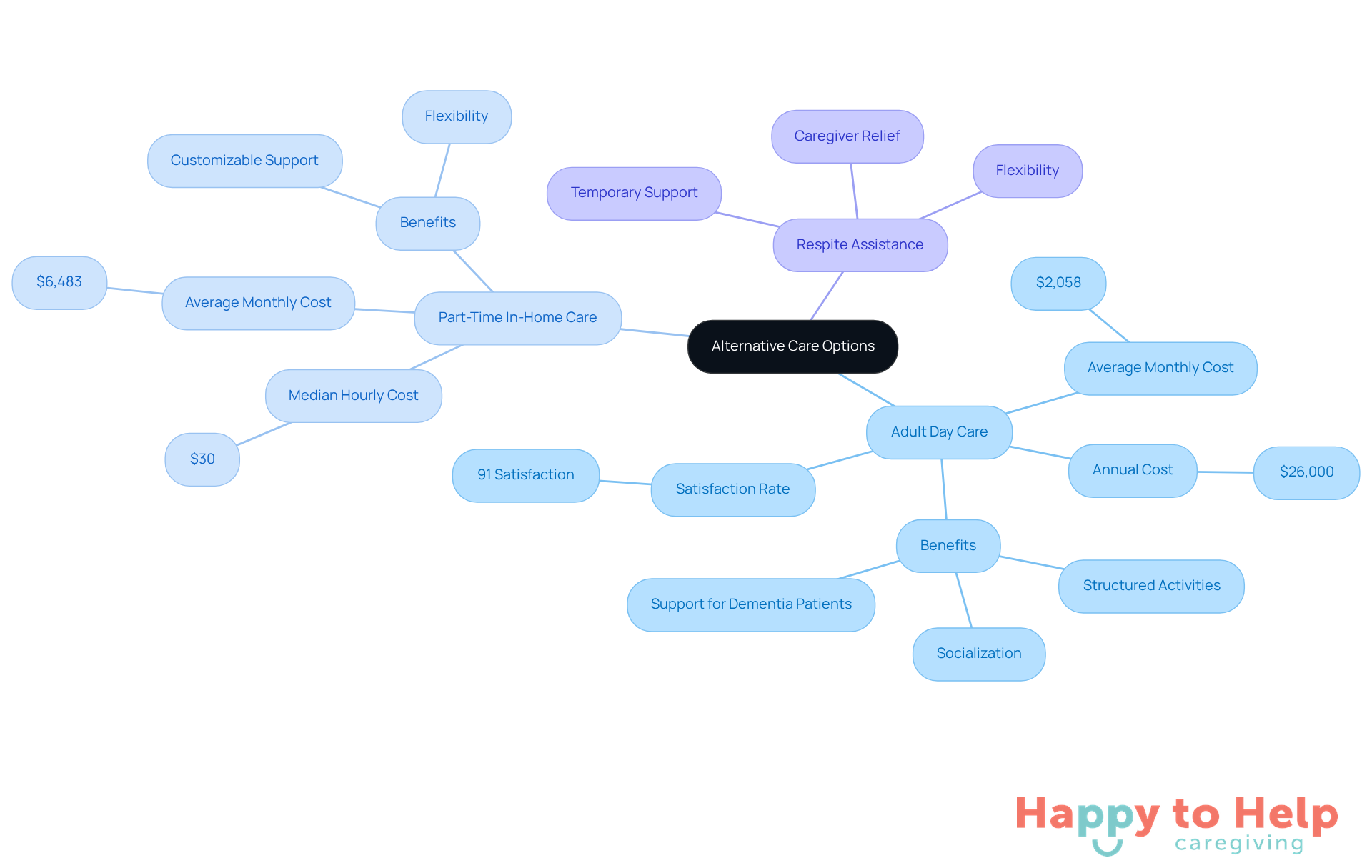
Adult Day Care is a viable option, allowing seniors to receive care during the day while returning home at night. This promotes socialization and reduces feelings of isolation. Adult day programs often include organized activities, meals, and health-related services, making them a valuable resource for families. The average monthly expense for adult day services is approximately $2,058, translating to an annual cost of about $26,000-significantly less than full-time support options. Notably, 70% of individuals in senior living communities are growing older alone, underscoring the importance of social interaction and support services like adult day programs.
-
Part-Time In-Home Care offers another cost-effective solution. By hiring caregivers for specific hours rather than full-time, families can customize the support according to their loved one's needs. The median hourly expense for a home health aide is around $30, leading to an average monthly cost of $6,483 for full-time assistance. This flexibility allows families to ensure their loved ones receive the necessary support without the financial burden associated with 24 hour care at home cost.
-
Respite Assistance provides temporary support, giving primary caregivers a much-needed break. This option allows caregivers to recharge while ensuring their loved ones are well cared for. Respite services can be arranged for a few hours or days, offering flexibility without the commitment of full-time assistance.
The effectiveness of adult day services is backed by statistics showing that nearly 91% of clients express satisfaction with the services received. Families often report that these programs not only meet their loved ones' support needs but also enhance their quality of life. For instance, adult day services can be particularly beneficial for seniors with Alzheimer's or other types of dementia, as they provide a secure environment with structured activities tailored to their needs. Families who choose adult day services over full-time assistance frequently highlight the positive impact on their loved ones' well-being, noting that it allows them to maintain a sense of independence while receiving essential support. This approach not only alleviates the financial strain associated with full-time care but also fosters a more balanced lifestyle for both seniors and their caregivers.
Key Takeaways: Essential Factors Influencing 24-Hour Care Costs
When considering the 24 hour care at home cost, families encounter several essential challenges that can significantly influence their decisions.
-
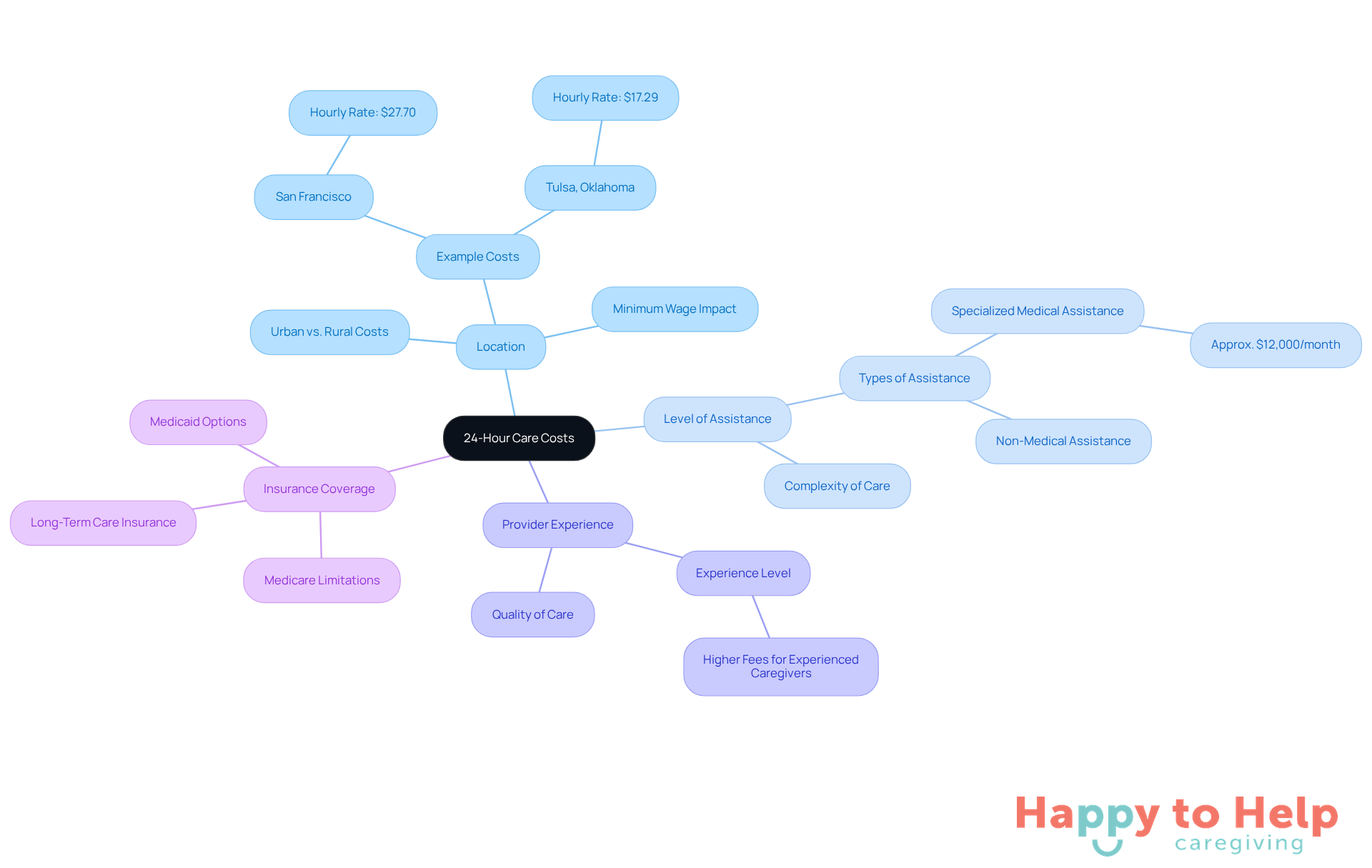
Location: The cost of in-home care varies widely by region. Urban areas often experience higher rates due to increased demand and living expenses. For example, in high-cost cities like San Francisco, rates can reach approximately $27.70 per hour, while more affordable areas like Tulsa, Oklahoma, average around $17.29 per hour. This geographical disparity underscores the importance of assessing local market conditions when planning for services. Additionally, minimum wage regulations can greatly affect in-home senior support expenses, with regions having higher minimum wages typically showing elevated support costs.
-
Level of Assistance Required: Families must also consider the level of assistance needed. More intricate support requirements naturally lead to increased expenses. Specialized medical assistance can significantly raise monthly costs. For instance, the 24 hour care at home cost from certified professionals can amount to approximately $12,000 monthly in expensive regions, whereas non-medical assistance could be more budget-friendly.
-
Provider Experience: The experience level of care providers can influence pricing as well. More experienced caregivers may charge higher fees, but they often deliver superior support, resulting in better outcomes for clients. Families should weigh the potential benefits of hiring experienced caregivers against their budget constraints.
-
Insurance Coverage: Understanding insurance coverage is crucial. Medicare, for instance, does not cover non-medical support or 24/7 assistance unless part of a Medicare Advantage plan. Families should explore all available options, including Medicaid and long-term insurance, to minimize out-of-pocket costs. It's essential to note that while Medicare may cover some home health services, it typically does not cover personal assistance if it is the only requirement.
-
Impact of Location on Budgeting: Families often consider both location and the degree of support needed when planning their finances for at-home assistance. For example, individuals living in states with lower living expenses, such as Louisiana or Alabama, may find more budget-friendly options compared to states like California or New York, where assistance costs are considerably higher. This strategic approach can help families optimize their resources while ensuring their loved ones receive the necessary support. As financial expert Jeremy Clerc notes, 'Utilizing government data and trusted industry surveys, this article aims to provide a comprehensive financial guide for 24 hour care at home cost in 2025.
Key Takeaways for Caregivers
Understanding the costs associated with 24-hour care at home can be a daunting challenge for families. The financial implications are significant, shaped by factors such as geographic location, the level of care required, and caregiver qualifications. This complexity can leave families feeling overwhelmed and uncertain about how to proceed.
The substantial variation in costs across different regions adds to the confusion. Families must customize care to meet individual needs while also considering the potential benefits of investing in experienced caregivers. Without a clear understanding of these elements, families may struggle to make informed decisions that align with their loved ones' needs and their financial realities.
To navigate this landscape effectively, families should explore various funding options. The following can provide essential support in managing expenses:
- Medicaid
- Long-term care insurance
- Alternative care solutions
By prioritizing informed decision-making and utilizing available resources, caregivers can secure the best possible support for their loved ones while maintaining financial stability.
Ultimately, grasping the complexities of 24-hour care at home goes beyond budgeting; it empowers families to make choices that enhance the quality of care. As the in-home care landscape evolves, being proactive and knowledgeable will remain crucial for caregivers. By staying informed and exploring all available options, families can ensure their loved ones receive the quality care they deserve.
https://iframe.tely.ai/cta/eyJhcnRpY2xlX2lkIjogIjY5MjRmMWUzZWM0Y2FiOGU3NGVjMDBlNiIsICJjb21wYW55X2lkIjogIjY4ZWU1ZGNhNzMxNzYyNTU3ZjNjOTVjMSIsICJpbmRleCI6IG51bGwsICJ0eXBlIjogImFydGljbGUifQ==Frequently Asked Questions
What services does Happy to Help Caregiving provide?
Happy to Help Caregiving offers a comprehensive range of in-home care services, including companionship care, post-hospital recovery assistance, respite care, and palliative support care, all available 24/7.
How does companionship care benefit seniors?
Companionship care enhances senior well-being by engaging clients in social activities that alleviate loneliness and isolation, significantly uplifting their mood and overall quality of life.
What support is offered for post-hospital recovery?
Happy to Help Caregiving provides essential support during the transition home after a medical procedure, helping clients regain independence while adhering to recovery protocols.
What is respite care and why is it important?
Respite care offers family caregivers a much-needed break from their responsibilities, allowing them to rejuvenate while ensuring their loved ones are in capable hands.
What does palliative support care focus on?
Palliative support care focuses on providing comfort and emotional support for clients with serious illnesses, ensuring dignity and peace of mind during difficult times.
What is the national average cost of 24/7 in-home care?
The national average cost for 24/7 in-home care ranges from $18,144 to over $25,000 each month, influenced by factors such as geographic location, type of support required, and caregiver qualifications.
What are some funding alternatives to help cover in-home care costs?
Families can explore funding alternatives such as long-term support insurance, Medicaid for eligible individuals, and veteran benefits to alleviate financial strain.
How does the cost of 24/7 in-home care compare to assisted living and nursing homes?
The average monthly cost for in-home care ranges from $17,000 to $17,500, significantly higher than assisted living facilities, which average between $4,500 and $8,000.
What are the advantages of in-home care regarding independence?
In-home care allows seniors to stay in familiar surroundings, fostering a sense of comfort and autonomy that is often lost in institutional environments.
How does customization in in-home care differ from assisted living?
In-home care can be meticulously tailored to meet individual needs, addressing specific health requirements and personal preferences, unlike the more uniform support models found in assisted living facilities.
What are the emotional considerations of caregiving?
The emotional weight of caregiving can be significant, and families must consider both the financial implications and the emotional and logistical challenges associated with caregiving.
What should families consider regarding the increasing expenses of care?
Families should acknowledge that expenses for both at-home support and assisted living are expected to increase, which is important for long-term financial planning.
List of Sources
- Happy to Help Caregiving: Comprehensive 24/7 In-Home Care Services
- Executive Home Care Honors Family Caregivers During National Family Caregivers Month (https://mytwintiers.com/business/press-releases/cision/20251117LA25356/executive-home-care-honors-family-caregivers-during-national-family-caregivers-month)
- State of home care in 2025 (https://mcknightshomecare.com/state-of-home-care-in-2025)
- Demand for Home Care Expected to Surge 22% by 2034 (https://respiratory-therapy.com/public-health/healthcare-policy/home-care/demand-home-care-expected-surge-22-2034)
- Opinion | America’s Caregivers Are in Crisis (https://nytimes.com/2025/11/24/opinion/caregiving-crisis.html)
- She cares for her aging parents full time. That requires taking care of herself, too (https://wgbh.org/news/2025-11-20/she-cares-for-her-aging-parents-full-time-that-requires-taking-care-of-herself-too)
- National Average Cost of 24/7 In-Home Care: Understanding the Financial Commitment
- How Much Does 24/7 In-Home Care Cost Per Month in PA? (https://myallamericancare.com/how-much-does-24-7-in-home-care-cost-per-month)
- 24-hour In-home Care Cost In The US (2025)? - Home Care Agency | Global One Home Care Boston (https://globalonehomecare.com/24-7-in-home-care-cost)
- How Much Does 24/7 In-Home Care Cost? | The Senior List (https://theseniorlist.com/caregiving/24-7-in-home-care)
- How Much Does 24/7 In-Home Care Cost? | HomeCare.org (https://homecare.org/the-cost-of-24-7-in-home-care)
- Comparative Analysis: 24/7 In-Home Care vs. Assisted Living and Nursing Homes
- Assisted Living Costs by State: 2025 Pricing Guide (https://aplaceformom.com/caregiver-resources/articles/cost-of-assisted-living)
- The Cost of Dignity: A Guide to In-Home Care Costs and Happier Aging in 2025 | Nurse Next Door (https://nursenextdoor.com/blog/how-much-does-senior-home-care-cost)
- How Much Does 24/7 In-Home Care Cost? | The Senior List (https://theseniorlist.com/caregiving/24-7-in-home-care)
- The Cost of Assisted Living vs. Home Care: The Numbers and Beyond (https://hearthomes.com/the-cost-of-assisted-living-vs-home-care-the-numbers-and-beyond)
- Most Americans expect to need long-term care in the future, and they don’t want that care in assisted living (https://mcknightsseniorliving.com/news/most-americans-expect-to-need-long-term-care-in-the-future-and-they-dont-want-that-care-in-assisted-living)
- Included Services in 24-Hour Care: What Families Should Expect
- 52 Eye-Opening Home Health Statistics: Insights for 2025 (https://boosthomehealth.com/home-health-statistics)
- Creating a Care Plan That Works: Essential Elements of 24-Hour Home Care (https://homehelpershomecare.com/nw-indiana/community-blog/2025/august/creating-a-care-plan-that-works-essential-elements-of-24-hour-home-care)
- 10 Must-Know U.S. Home Care Industry Stats for 2025 - North American Community Hub (https://nchstats.com/us-home-care-industry-stats)
- Families Prefer In-Home Care To Senior Living – Yet Struggle To Identify Needed Support (https://homehealthcarenews.com/2025/11/families-prefer-in-home-care-to-senior-living-yet-struggle-to-identify-needed-support)
- 2025 Home Care Statistics: Trends & Insights To Know (https://premierhcinc.com/blog/home-care-statistics)
- Payment Options for 24/7 In-Home Care: Navigating Financial Solutions
- How to Pay for In-Home Care | Village Caregiving (https://villagecaregiving.com/blog/paying-for-home-care)
- Payment Rates for Medicaid Home Care: States’ Responses to Workforce Challenges | KFF (https://kff.org/medicaid/payment-rates-for-medicaid-home-care-states-responses-to-workforce-challenges)
- Cost of In-Home Care in California (2025) + 11 Ways to Pay (https://lovinghomecareinc.com/blog/cost-of-in-home-care-california)
- New State-by-State Data Expose the Crushing Financial Strain of Family Caregiving — and Call for Immediate Federal and State Action (https://press.aarp.org/2025-10-28-New-Data-Expose-Financial-Strain-of-Family-Caregiving)
- Home Care Cost (https://ltsschoices.aarp.org/scorecard-report/2023/dimensions-and-indicators/home-care-cost)
- Regional Variations in 24-Hour Care Costs: A State-by-State Breakdown
- How Much Does 24/7 In-Home Care Cost? | The Senior List (https://theseniorlist.com/caregiving/24-7-in-home-care)
- 24/7 In-Home Care Costs in 2025 - Assisted Living Magazine (https://assistedlivingmagazine.com/24-7-in-home-care-costs-in-2025)
- 24-hour In-home Care Cost In The US (2025)? - Home Care Agency | Global One Home Care Boston (https://globalonehomecare.com/24-7-in-home-care-cost)
- Home Care Costs in 2025: A State-by-State Guide (https://aplaceformom.com/caregiver-resources/articles/in-home-care-costs)
- Insurance Coverage for 24/7 In-Home Care: What Families Need to Know
- CMS Program Statistics - Medicare Home Health Agency Data (https://data.cms.gov/summary-statistics-on-use-and-payments/medicare-medicaid-service-type-reports/cms-program-statistics-medicare-home-health-agency)
- Tracking the Medicaid Provisions in the 2025 Reconciliation Bill | KFF (https://kff.org/medicaid/tracking-the-medicaid-provisions-in-the-2025-budget-bill)
- Long-term care statistics 2025 (https://singlecare.com/blog/news/long-term-care-statistics)
- Is long-term care insurance worth getting this fall? (https://cbsnews.com/news/is-long-term-care-insurance-worth-getting-fall-2025)
- Impact of Caregiver Experience on 24-Hour Care Quality and Costs
- The importance of proper training in home care (https://alayacare.com/blog/the-importance-of-proper-training-in-home-care)
- Home-Based Care Companies Improve Outcomes By Training Family Caregivers (https://homehealthcarenews.com/2025/10/home-based-care-companies-improve-outcomes-by-training-family-caregivers)
- New Research Highlights Critical Role of Training in Caregiver Retention (https://careacademy.com/blog/role-of-training-in-caregiver-retention)
- The Caregiving Landscape: Data & Insights on the Caregiver Experience in the U.S. (https://caregiveraction.org/caregiver-statistics)
- D-CARE study finds caregiver satisfaction higher with dementia care programs than usual care (https://uclahealth.org/news/release/d-care-study-finds-caregiver-satisfaction-higher-with)
- Alternative Care Options: Exploring Cheaper Alternatives to 24-Hour In-Home Care
- 52 Eye-Opening Home Health Statistics: Insights for 2025 (https://boosthomehealth.com/home-health-statistics)
- Adult Day Services Supply (https://ltsschoices.aarp.org/scorecard-report/2023/dimensions-and-indicators/adult-day-services-supply)
- 50 Of The Best Positive Aging Quotes I Could Find (https://smartliving365.com/50-best-positive-aging-quotes-find)
- Home Care Providers Aim For Big Wins By Introducing Shorter Care Models Bypassing Service Minimums (https://homehealthcarenews.com/2025/02/home-care-providers-aim-for-big-wins-by-introducing-shorter-care-models-bypassing-service-minimums)
- Adult day care can benefit older adults and their caregivers - Harvard Health (https://health.harvard.edu/staying-healthy/adult-day-care-can-benefit-older-adults-and-their-caregivers)
- Key Takeaways: Essential Factors Influencing 24-Hour Care Costs
- Geography Matters: Location plays key role in long-term care cost (https://insurancenewsnet.com/innarticle/geography-matters-location-plays-key-role-in-long-term-care-cost)
- The Cost of In-Home Caregivers May Surprise You (https://health.usnews.com/senior-care/caregiving/articles/how-much-do-in-home-caregivers-cost)
- 24/7 In-Home Care Costs in 2025 - Assisted Living Magazine (https://assistedlivingmagazine.com/24-7-in-home-care-costs-in-2025)
- 9 Key Factors Influencing 24-Hour Home Health Care Cost | Best Care Nurses Registry (https://bestcare.net/9-key-factors-influencing-24-hour-home-health-care-cost)