
Understanding the Cost of 24/7 In-Home Care for Families

For families in our service areas
For families in our service areas, this guide explains in-home care and how non-medical in-home caregiving can support care planning in East Idaho, Treasure Valley & Magic Valley, Northern Wasatch, North Central West Virginia & Southwestern Pennsylvania, and Northeast Ohio.
The Importance of The Cost of 24/7 In-Home Care for
Understanding the complexities of 24/7 in-home care is essential for families facing the challenges of providing ongoing support for their loved ones. The elderly population is growing rapidly, leading to a skyrocketing demand for this type of care. This surge brings a significant financial burden that varies widely based on location, caregiver qualifications, and specific care needs.
Families often struggle to navigate these complexities. The costs associated with round-the-clock assistance can be overwhelming, making it crucial to make informed decisions. How can families ensure their loved ones receive the quality care they deserve while managing these expenses?
To tackle this issue, families should consider several actionable steps:
- Research local care options to compare costs and services.
- Evaluate caregiver qualifications to ensure they meet the specific needs of your loved one.
- Explore financial assistance programs that may alleviate some of the financial pressure.
By taking these steps, families can better manage the challenges of in-home care.
Define 24/7 In-Home Care: Understanding the Concept
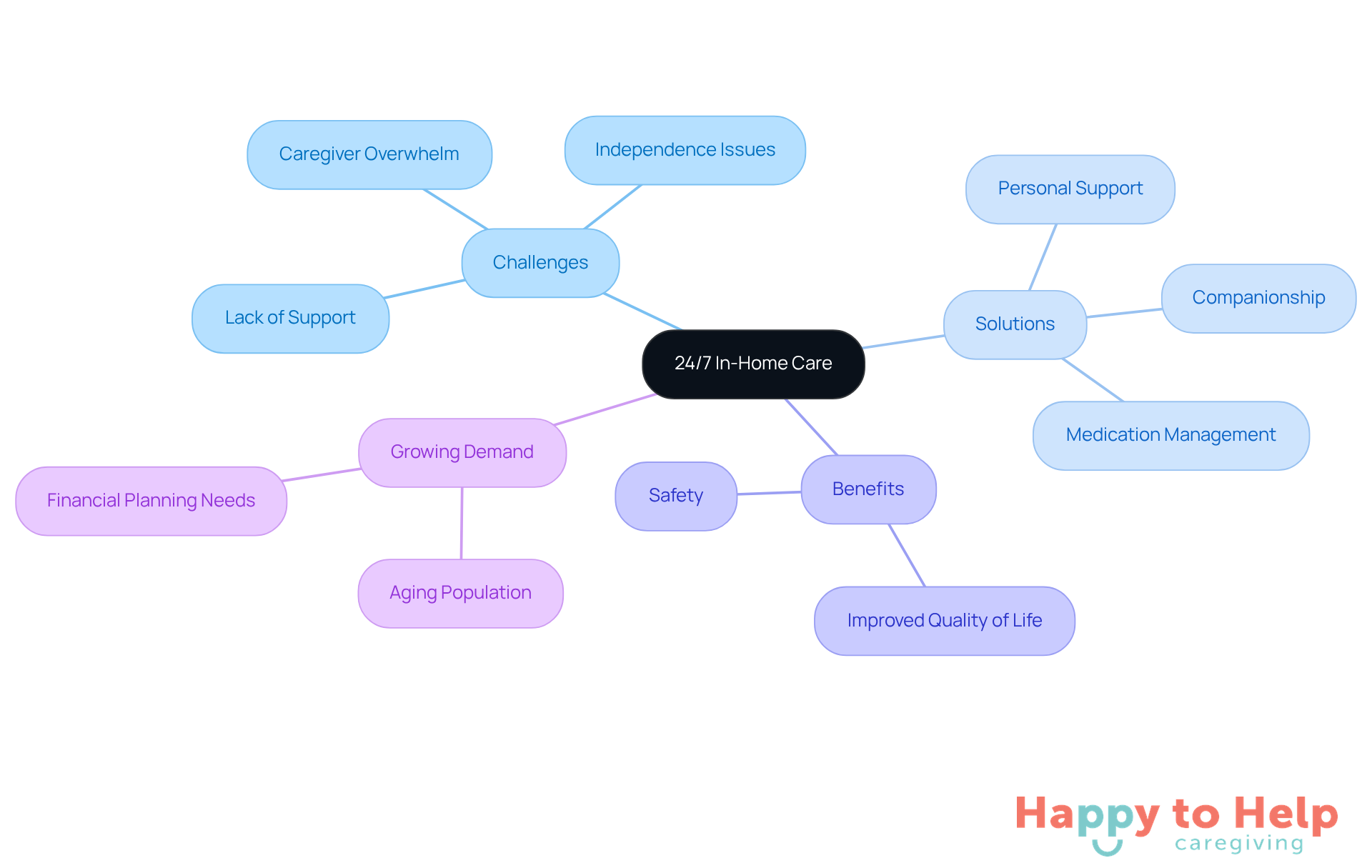
Round-the-clock residential assistance addresses a significant problem: the lack of consistent support for seniors, individuals with disabilities, and those recovering from illness or surgery. Without this support, many face challenges in managing daily activities and medical needs, which can lead to feelings of anxiety and decreased quality of life.
The implications of inadequate assistance are profound. Many individuals struggle with maintaining their independence, and caregivers often feel overwhelmed. This situation can negatively impact both the caregiver's and the client's well-being. For instance, knowing that someone is always available can alleviate anxiety and improve sleep quality, which is crucial for overall health.
The solution lies in comprehensive round-the-clock residential assistance. This service provides ongoing help tailored to the unique needs of each client, allowing them to receive personal support, companionship, medication management, and assistance with daily living activities in the comfort of their own homes. Caregivers are available at all hours, ensuring that clients can engage in activities they enjoy while prioritizing their safety and well-being.
As the elderly population continues to grow, with over 50 million Americans aged 65 and older, the demand for such services is increasing. Many seniors prefer to age in place rather than move to assisted living facilities. Furthermore, families should consider financial planning, as the anticipated national median cost of 24/7 in home care for 2025 is expected to range from $21,823 to $24,006.
In summary, round-the-clock residential assistance not only fosters a sense of safety and ease but also significantly enhances the quality of life for clients. By addressing the challenges faced by caregivers and providing practical solutions, this service plays a vital role in supporting individuals in their homes.
Examine Factors Influencing the Cost of 24/7 In-Home Care
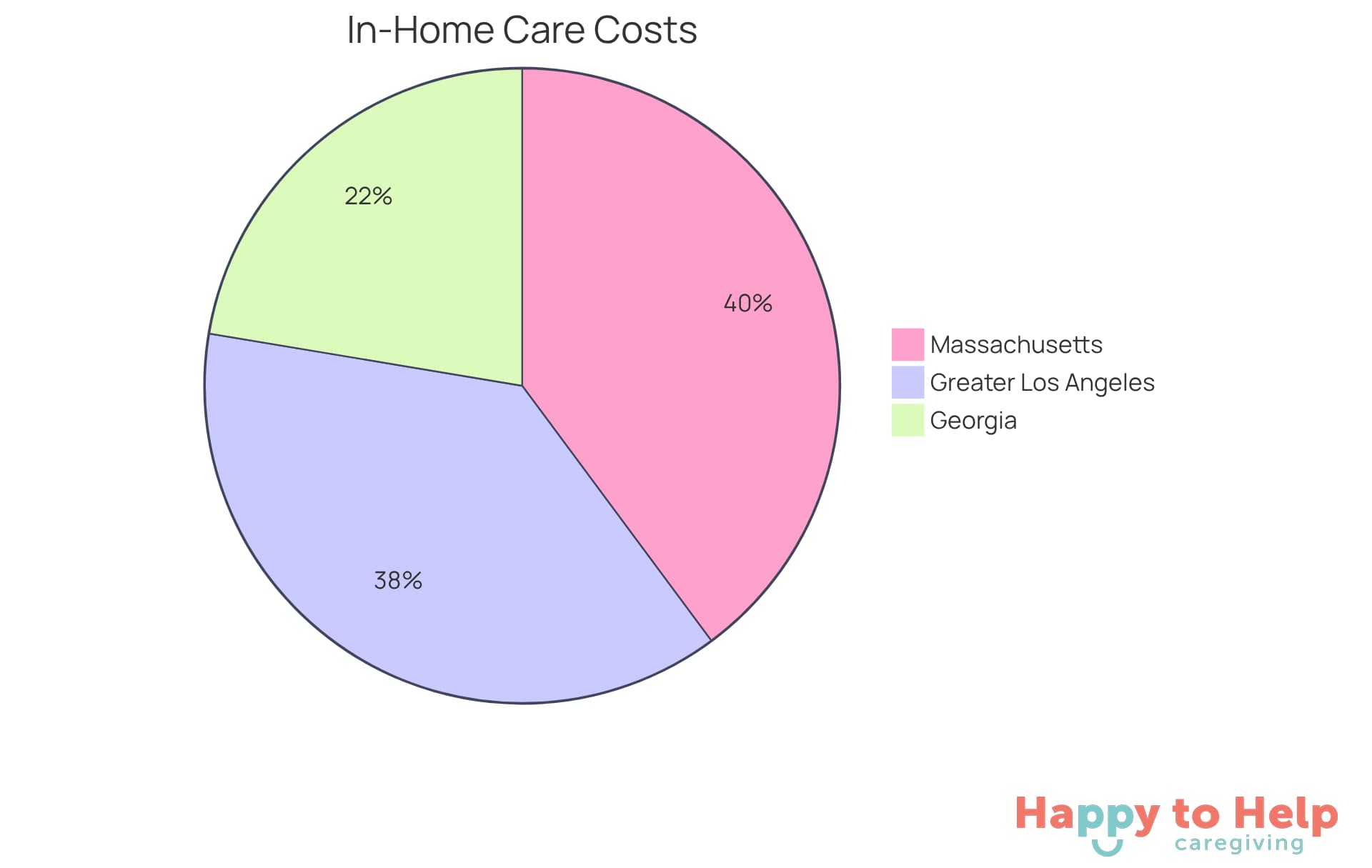
Families face a significant challenge due to the cost of 24/7 in home care, which is heavily influenced by geographic location, caregiver qualifications, and the specific level of support required. In urban areas, families often face higher rates due to increased demand and rising living expenses. For example, in the greater Los Angeles area, families can expect to pay around $27,030 each month for ongoing assistance. In contrast, costs in Georgia range from $14,000 to $18,000 monthly, reflecting the lower living expenses in that region. Massachusetts shows similar trends, with round-the-clock assistance costing approximately $27,000 to $30,000 per month, highlighting the geographic disparities in pricing.
Moreover, families requiring specialized assistance for complex medical needs, such as dementia, encounter even higher costs due to the necessity for trained caregivers. As Jeremy Clerc notes, the state average for round-the-clock assistance can vary significantly based on living expenses, with some regions charging up to $40 per hour. The type of agency also plays a role in pricing; agencies with higher operational costs may charge more than independent caregivers.
Understanding these factors is crucial for families as they navigate the financial landscape of the cost of 24/7 in home care. By being informed about the costs associated with different regions and types of care, families can make educated decisions that align with their needs and budget.
Compare Costs: 24/7 In-Home Care vs. Other Care Options
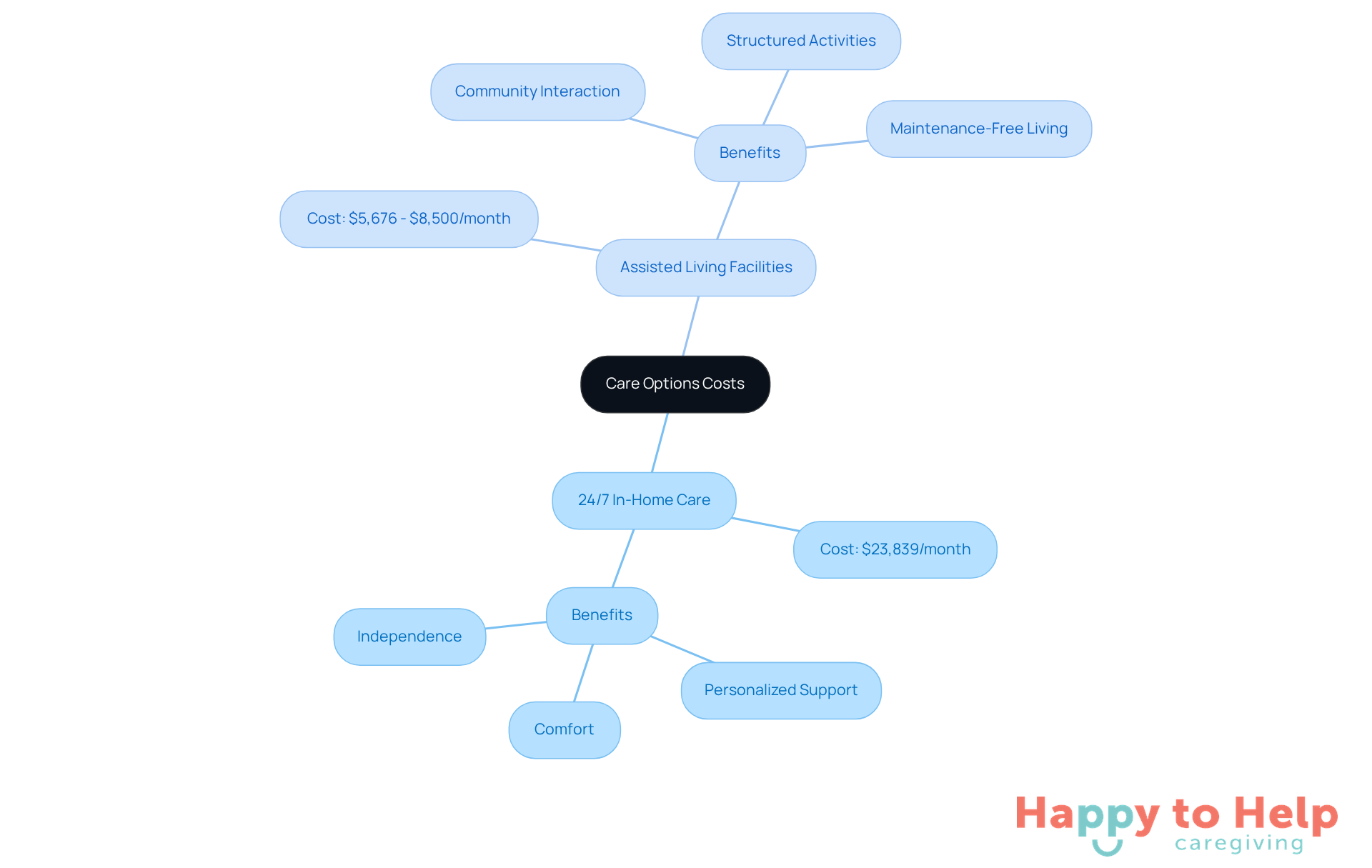
When considering support options, families often face a significant problem: the cost of 24/7 in home care. In 2025, the national median cost of 24/7 in home care is around $23,839 per month. In contrast, assisted living facilities typically charge between $5,676 and $8,500 each month. The cost of 24/7 in home care can be a daunting financial burden for many families.
However, the implications of these costs extend beyond mere numbers. Families frequently express that the comfort of receiving assistance at home, coupled with personalized support tailored to individual needs, outweighs the financial strain. For instance, one family noted that the peace of mind and emotional support provided by at-home caregivers significantly impacted their loved one's recovery during a challenging time.
Ultimately, families must weigh the cost of 24/7 in home care against the advantages of maintaining independence and comfort at home. Many discover that investing in tailored support leads to enhanced well-being and satisfaction. By thoughtfully evaluating their options, families can find a balance that prioritizes both care and financial stability.
Explore Financing Options for 24/7 In-Home Care
Families face significant challenges when it comes to managing the cost of 24/7 in home care. The cost of 24/7 in home care can be overwhelming, and without proper planning, many caregivers may struggle to provide the necessary support for their loved ones.
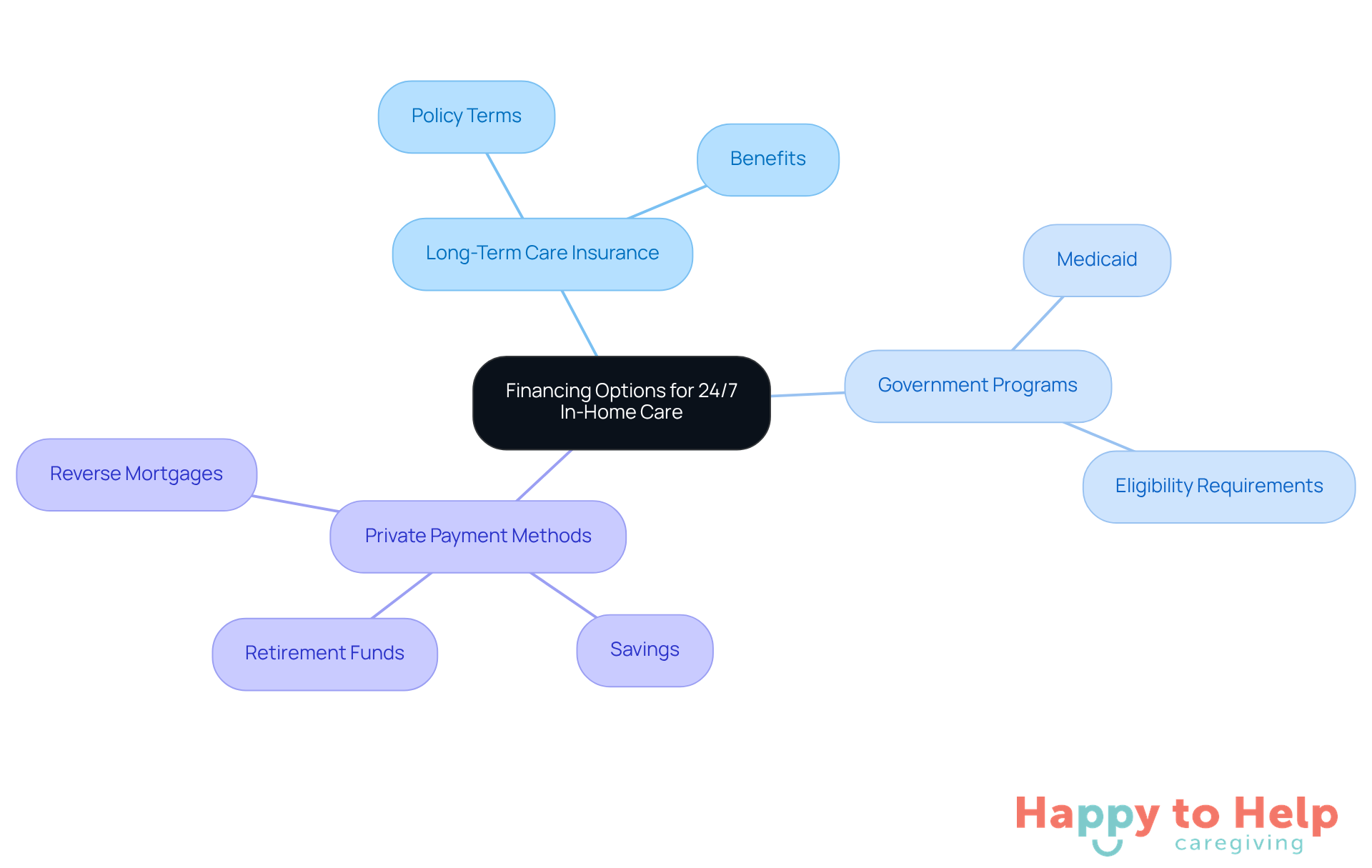
Long-term care insurance can be a valuable resource, as many policies are designed to cover a portion of at-home assistance costs. However, understanding the specific terms of these policies is crucial. Additionally, government programs like Medicaid offer essential support for eligible individuals, though navigating the eligibility requirements can be complex and daunting.
Some families opt to pay privately to cover the cost of 24/7 in home care, utilizing savings, retirement funds, or even reverse mortgages to manage these expenses. It's vital to comprehend the application procedures and qualification standards for these programs, as they can significantly impact the affordability of domestic assistance.
For instance, families who have successfully utilized long-term care insurance have been able to finance in-home services, allowing them to maintain their loved ones' autonomy while managing financial obligations effectively. Exploring these funding options thoroughly can help alleviate the financial burden and ensure that loved ones receive the necessary care in the comfort of their own homes.
Moving Forward with The Cost of 24/7 In-Home Care for
Understanding the financial landscape of 24/7 in-home care presents a significant challenge for families aiming to support their loved ones effectively. The costs associated with this type of care can be daunting, impacting not only the quality of life for seniors and individuals with disabilities but also placing a heavy burden on their caregivers. Families often grapple with the need for continuous assistance, which is crucial for fostering a sense of safety and independence, allowing their loved ones to thrive in the comfort of their own homes.
Several key factors influence the cost of in-home care, including:
- Geographic location
- Caregiver qualifications
- Specific needs of clients
Costs can vary significantly across regions, and the necessity for specialized care often drives prices higher. This complexity makes it essential for families to navigate the financial terrain carefully. Moreover, comparing 24/7 in-home care with other options, such as assisted living facilities, highlights the importance of weighing personal comfort and individualized support against financial implications.
To address these challenges, families can explore various financing options, such as:
- Long-term care insurance
- Government assistance
By taking proactive steps and staying informed about available resources, families can manage the costs associated with in-home care effectively. This understanding empowers them to make educated decisions that prioritize both well-being and peace of mind, ensuring their loved ones receive the necessary care while maintaining financial stability.
https://iframe.tely.ai/cta/eyJhcnRpY2xlX2lkIjogIjY5NDBhMjBiNGFiMmI4OGM4M2NiZjU4ZiIsICJjb21wYW55X2lkIjogIjY4ZWU1ZGNhNzMxNzYyNTU3ZjNjOTVjMSIsICJpbmRleCI6IG51bGwsICJ0eXBlIjogImFydGljbGUifQ==Frequently Asked Questions
What is 24/7 in-home care?
24/7 in-home care refers to round-the-clock residential assistance that provides continuous support for seniors, individuals with disabilities, and those recovering from illness or surgery, helping them manage daily activities and medical needs.
Why is 24/7 in-home care important?
It is important because it addresses the lack of consistent support for individuals who may struggle with maintaining independence, leading to reduced anxiety and improved quality of life for both clients and caregivers.
What services are included in 24/7 in-home care?
Services include personal support, companionship, medication management, and assistance with daily living activities, all tailored to the unique needs of each client.
How does 24/7 in-home care impact the well-being of clients and caregivers?
Knowing that assistance is always available can alleviate anxiety for clients, improve sleep quality, and enhance overall health, while also reducing feelings of overwhelm for caregivers.
What is the current trend in the elderly population regarding in-home care?
As the elderly population grows, with over 50 million Americans aged 65 and older, there is an increasing demand for in-home care services, as many seniors prefer to age in place rather than move to assisted living facilities.
What should families consider regarding the cost of 24/7 in-home care?
Families should consider financial planning, as the anticipated national median cost of 24/7 in-home care for 2025 is expected to range from $21,823 to $24,006.
How does 24/7 in-home care enhance the quality of life for clients?
It fosters a sense of safety and ease, allowing clients to engage in enjoyable activities while prioritizing their safety and well-being, thus significantly enhancing their overall quality of life.
List of Sources
- Define 24/7 In-Home Care: Understanding the Concept
- 24/7 In-Home Care Costs in 2025 - Assisted Living Magazine (https://assistedlivingmagazine.com/24-7-in-home-care-costs-in-2025)
- Amid National Caregiver Shortages, Electronic Caregiver Announces the Hybrid Home Care Model-A Scalable Solution to the Labor Crisis Threatening U.S. Aging and Chronic Care (https://fox40.com/business/press-releases/accesswire/1115691/amid-national-caregiver-shortages-electronic-caregiver-announces-the-hybrid-home-care-model-a-scalable-solution-to-the-labor-crisis-threatening-u-s-aging-and-chronic-care)
- The Benefits of 24-Hour Home Care for Seniors Living Alone (https://lifesathomecare.com/the-benefits-of-24-hour-home-care-for-seniors-living-alone)
- 24-Hour Home Care | BrightStar Care | BrightStar Care (https://brightstarcare.com/about-brightstar-care/resources/benefits-of-24-hour-home-care)
- Why 24/7 Senior Care Works: Safety, Comfort, and Constant Support - With A Little Help (https://withalittlehelp.com/24-7-senior-care-works)
- Examine Factors Influencing the Cost of 24/7 In-Home Care
- The business of caring for older Americans is in a deepening crisis (https://washingtonpost.com/business/2025/12/04/elder-care-home-health-shortage)
- 24/7 In-Home Care Costs in 2025 - Assisted Living Magazine (https://assistedlivingmagazine.com/24-7-in-home-care-costs-in-2025)
- Geography Matters: Location plays key role in long-term care cost (https://insurancenewsnet.com/innarticle/geography-matters-location-plays-key-role-in-long-term-care-cost)
- In-Home Nursing Care Cost (https://ultimatecareny.com/resources/in-home-nursing-care-cost)
- Compare Costs: 24/7 In-Home Care vs. Other Care Options
- 24/7 In-Home Care Costs in 2025 - Assisted Living Magazine (https://assistedlivingmagazine.com/24-7-in-home-care-costs-in-2025)
- Assisted Living vs In-Home Care Comparisons (https://seniorliving.org/compare/assisted-living-vs-home-care)
- How Much Does 24/7 Home Care Cost? (https://aplaceformom.com/caregiver-resources/articles/24-hour-in-home-care)
- Cost of Assisted Living vs. In-Home Care: Key Considerations (https://carescout.com/resources/cost-of-assisted-living-vs-in-home-care-key-considerations)
- What Is the Cost of Assisted Living vs. Home Care? - Cappella of Grand Junction (https://cappellagrandjunction.com/blog/what-is-the-cost-of-assisted-living-vs-home-care)
- Explore Financing Options for 24/7 In-Home Care
- 24/7 In-Home Care Costs in 2025 - Assisted Living Magazine (https://assistedlivingmagazine.com/24-7-in-home-care-costs-in-2025)
- Paying for 24-Hour Care | How Much Is It & How Do I Pay? (https://corewoodcare.com/news/paying-for-247-care)
- How to Pay for a Home Care Worker (https://aarp.org/caregiving/financial-legal/afford-a-homecare-worker)
- How to Finance Home Care Services - Home Matters (https://homematters.com/paying-for-home-care)
- Medicaid Changes 2025: HR1 Impact on Home Care Agencies (https://carevoyant.com/home-health-blog/medicaid-changes-2025-home-care-agencies)