
The Importance of Secure In-Home Care in Burlington, NC
Navigating in-home care can be overwhelming for families in Burlington, NC. The challenge lies in ensuring that loved ones receive the best support possible. With a variety of services available - from companionship to personal care - understanding these options is crucial for caregivers. They seek to maintain their loved ones' independence while managing their own responsibilities.
However, how can families effectively assess care needs, research agencies, and choose the right caregiver without feeling lost? This guide outlines essential steps to secure quality in-home care. By following these actionable solutions, families can make informed decisions that enhance the well-being of their loved ones.
Understand In-Home Care Services
Caring for a loved one can be overwhelming, especially when it comes to ensuring they receive the right support. Many caregivers face the challenge of balancing their responsibilities while trying to maintain their loved one's independence. Understanding the available in-home care in Burlington NC options can help alleviate some of this burden.
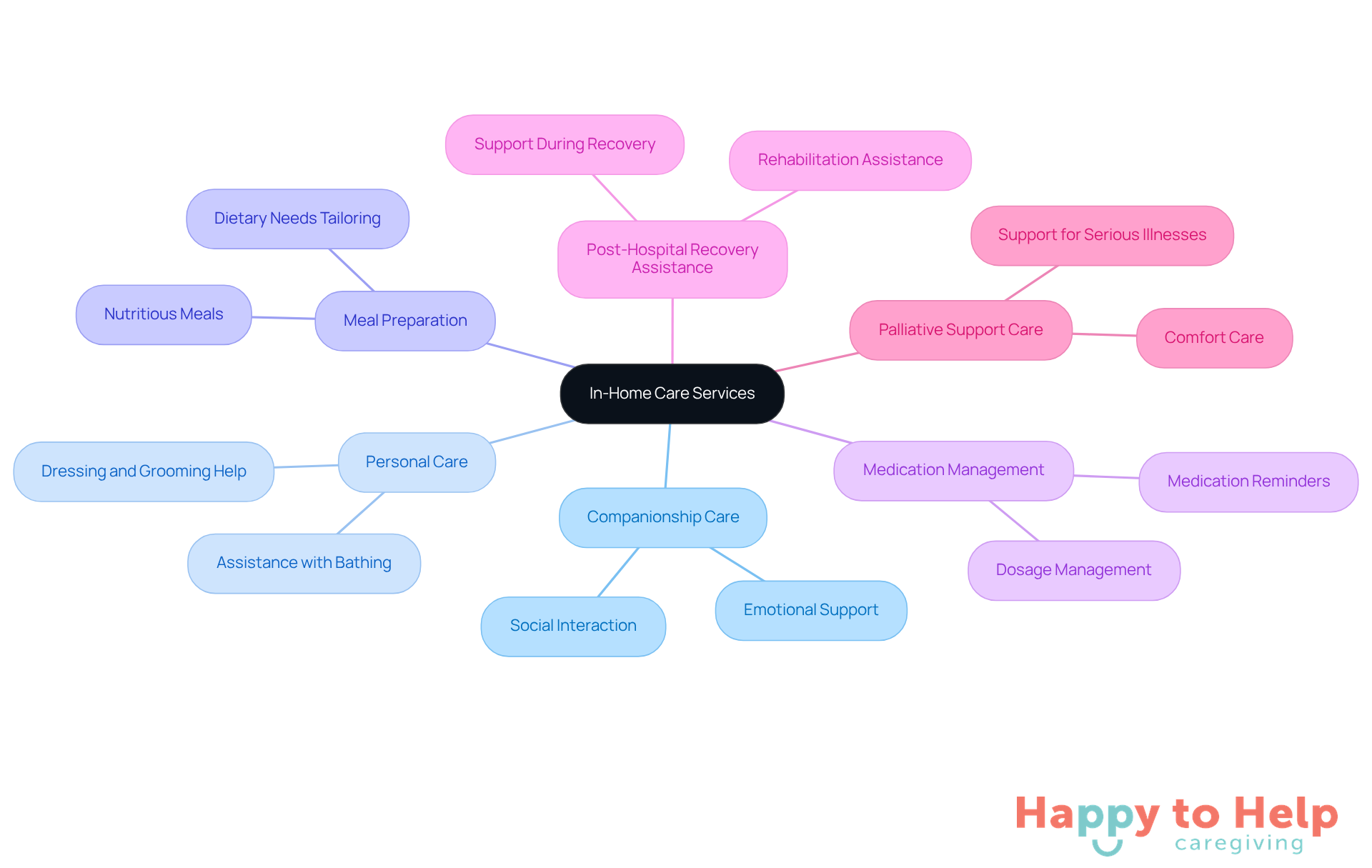
In-home care in Burlington NC includes a variety of assistance options designed to help individuals with their daily activities while promoting independence. Common services include:
- Companionship Care: Providing emotional support and social interaction to alleviate loneliness.
- Personal Care: Assistance with bathing, dressing, and grooming.
- Meal Preparation: Ensuring clients receive nutritious meals tailored to their dietary needs.
- Medication Management: Helping clients manage their medications effectively.
- Post-Hospital Recovery Assistance: Support during the recovery phase after a hospital stay.
- Palliative Support Care: Specialized care aimed at providing comfort for individuals with serious illnesses.
By comprehending these services, families can better recognize what their relatives may require, guaranteeing they choose the most suitable care options. This knowledge empowers caregivers to make informed decisions, ultimately enhancing the quality of life for both themselves and their loved ones.
Assess Your Loved One's Care Needs
Assessing your loved one's care needs can be challenging, especially when you want to ensure they receive the right support. Without a thorough evaluation, you may overlook critical areas that require attention, leading to inadequate care.
To tackle this issue, consider these actionable steps:
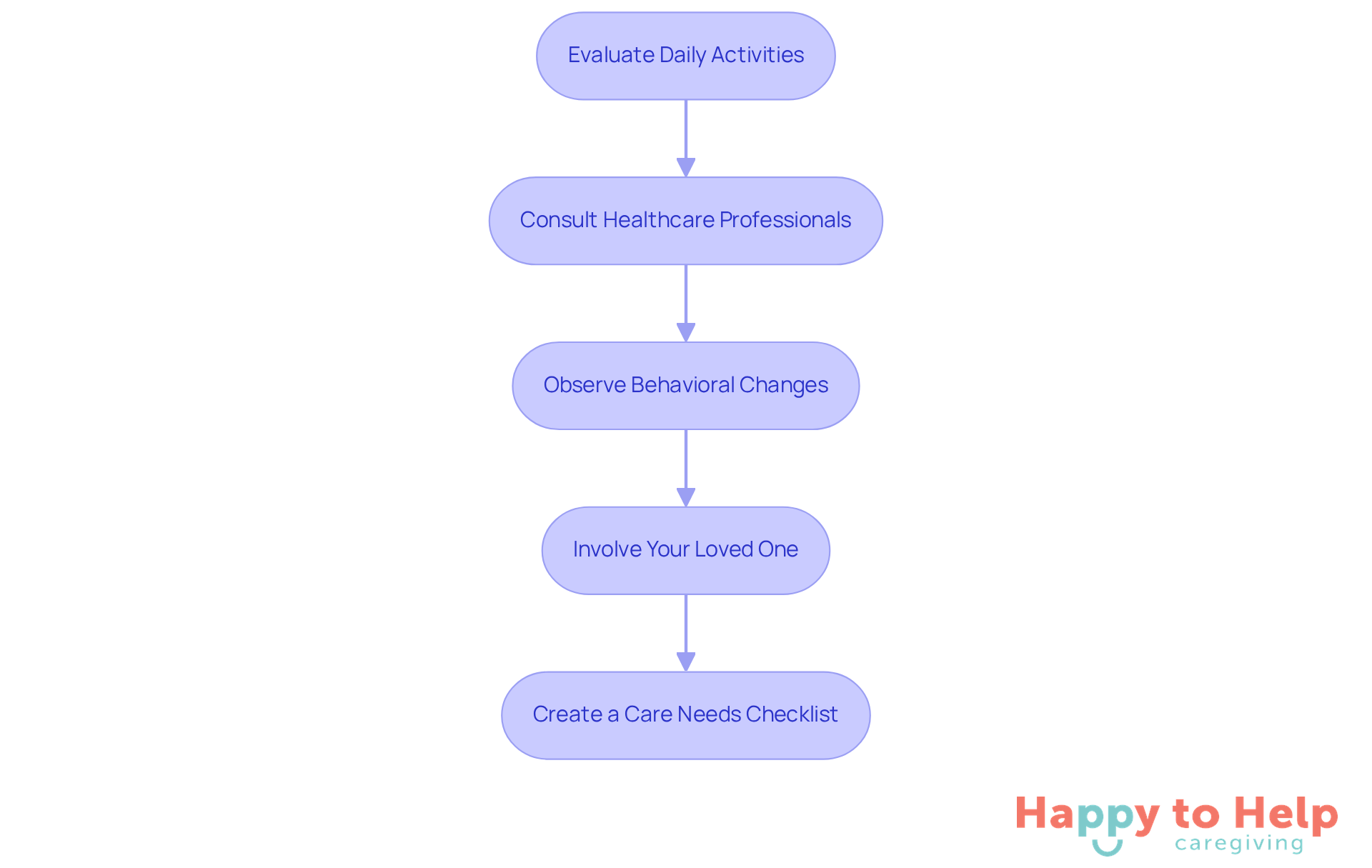
- Evaluate Daily Activities: Identify which daily tasks the individual struggles with, such as bathing, dressing, or meal preparation.
- Consult Healthcare Professionals: Speak with doctors or geriatric specialists to gain insights into your family member's health status and care requirements.
- Observe Behavioral Changes: Look for signs of cognitive decline or emotional distress, which may indicate a need for additional support.
- Involve Your Loved One: Discuss their preferences and concerns regarding care, ensuring they feel involved in the decision-making process.
- Create a Care Needs Checklist: Record particular needs and preferences to assist your search for appropriate in-home care in Burlington NC options.
By following these steps, you can gain a clearer understanding of the level of care required, facilitating a smoother transition to in-home support.
Research and Compare In-Home Care Agencies
Finding the right in-home care agency for your loved one can be a daunting task. With so many options available, how do you ensure you choose the best fit? Here’s a guide to help you navigate this important decision.
-
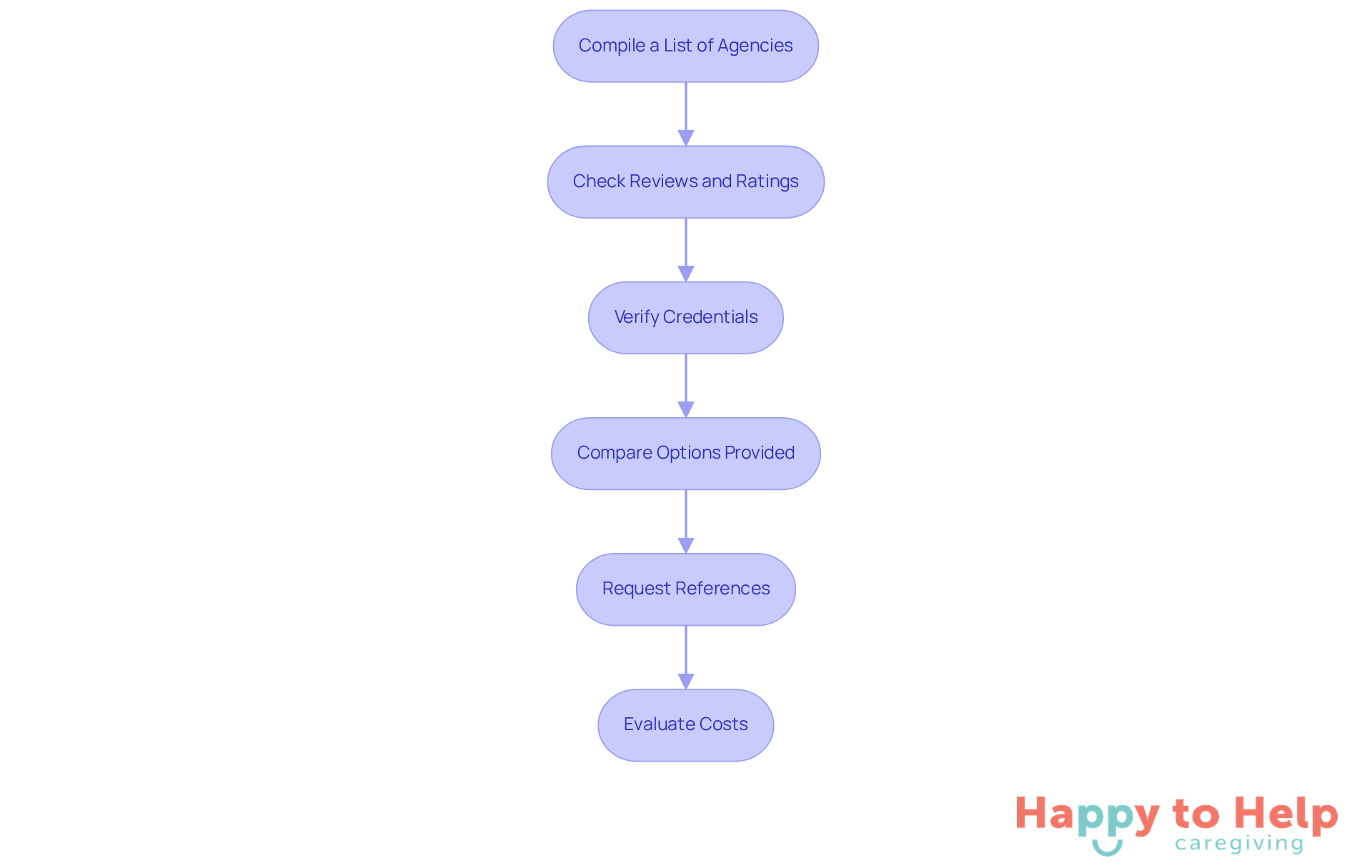
Compile a list of agencies that provide in-home care in Burlington, NC by gathering names of local organizations. This initial step sets the foundation for your research.
-
Check Reviews and Ratings: Online reviews on platforms like Yelp or Google can offer valuable insights into the experiences of other families. Did you know that 78 percent of patients would recommend their home health agency to friends and family? This statistic highlights a high level of satisfaction among users. Additionally, a recent assessment of patient satisfaction in 2022 revealed that 89% of patients were content with home healthcare offerings, underscoring the importance of reviewing feedback and ratings.
-
Verify Credentials: It’s crucial to confirm that the agencies are licensed and insured. Checking their accreditation status ensures they comply with industry standards, which is vital for your peace of mind.
-
Compare Options Provided: Take a close look at the specific services each agency offers to ensure they align with your loved one's needs. With around 15 million Americans receiving in-home care in Burlington, NC, understanding the range of offerings is essential. The home care industry is valued at $137.2 billion, reflecting its significance and growth potential.
-
Request References: Don’t hesitate to ask for references from current or past clients. This can provide insights into the agency's reliability and quality of care. Positive testimonials can highlight the compassionate approach of providers, which is crucial for family peace of mind. Keep in mind the challenges related to provider stability, as the median turnover rate for professional assistants reached 79.2 percent in 2023.
-
Evaluate Costs: Finally, compare pricing structures and clarify what is included in the fees to avoid unexpected expenses. For example, home care costs can average around $1,400 per month for 10 hours of care per week, making it essential to set clear financial expectations.
By conducting thorough research and comparing agencies, families can make informed choices that ensure their loved ones receive the best possible care.
Interview Potential Caregivers
Finding the right caregiver for your loved one can be a daunting task. The implications of this challenge are significant, as a poor match can lead to stress and discomfort for both the caregiver and the client. To help you navigate this process effectively, follow these essential steps:
-
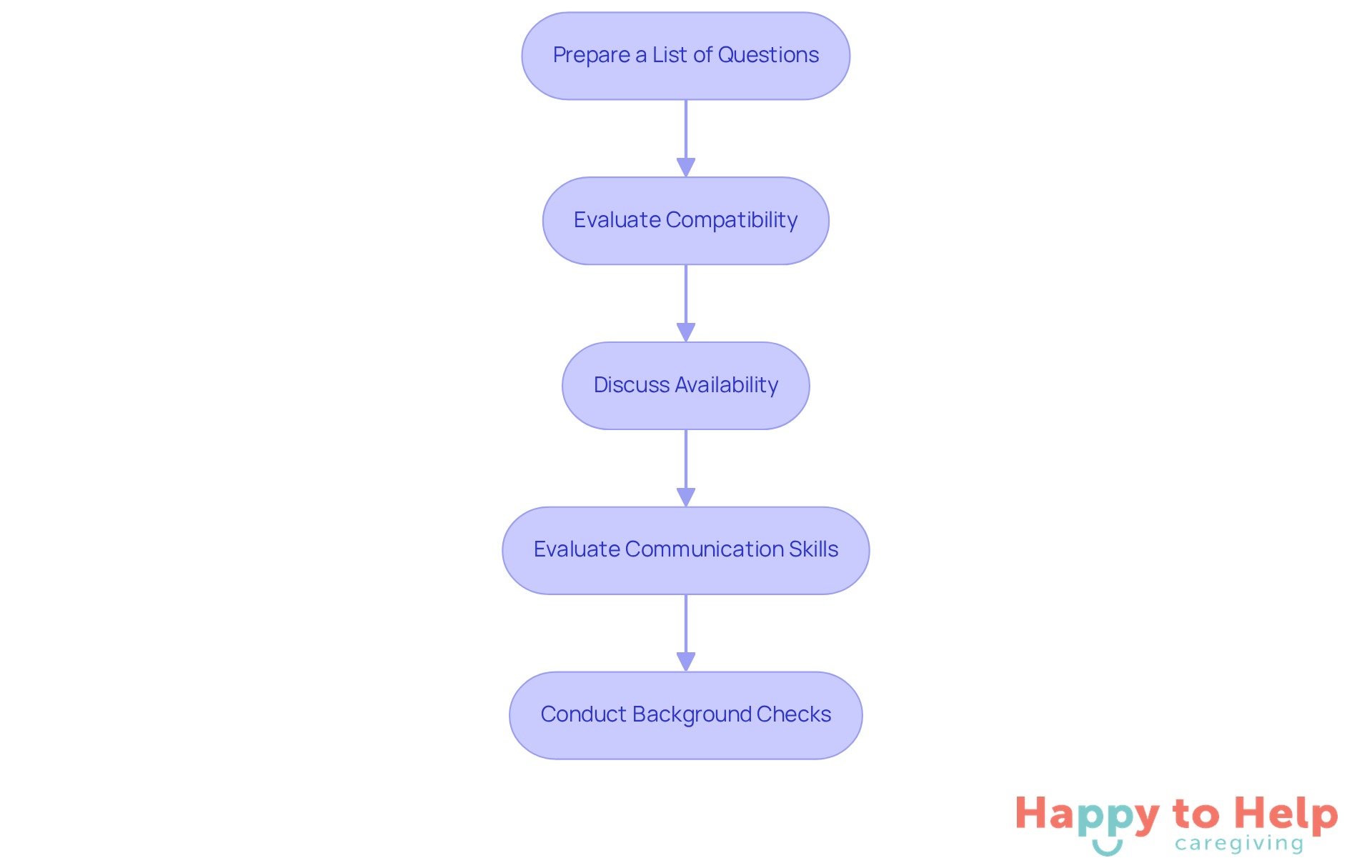
Prepare a List of Questions: Start by creating a comprehensive list of questions that address experience, qualifications, and caregiving philosophy. Key inquiries might include:
- What experience do you have with clients who have similar needs?
- How do you handle emergencies or challenging situations?
- Can you provide references from previous clients?
-
Evaluate Compatibility: During the interview, observe the provider's interaction with your family member. Look for signs of empathy, patience, and understanding-traits that are crucial for building a trusting relationship.
-
Discuss Availability: Confirm that the provider's schedule aligns with your loved one's needs, including flexibility for last-minute changes. This ensures continuity of support and minimizes stress for both parties.
-
Evaluate Communication Skills: Effective communication is vital in caregiving. Assess how well the provider listens and responds to inquiries, as clear communication fosters a supportive atmosphere.
-
Conduct Background Checks: Verify the individual's background and credentials to ensure they meet safety and quality standards. This step is essential for peace of mind, knowing that your loved one is in capable hands.
By following this thorough interview process, you not only find a qualified caregiver but also ensure a good match for your loved one, enhancing their overall well-being and comfort at home.
Review Contracts and Understand Costs
Understanding Contracts and Costs in Elder Care
Navigating contracts and costs can be a daunting task for caregivers, leading to confusion and potential pitfalls. Without a clear understanding, families may inadvertently agree to unfavorable terms that could impact their loved ones' care.
Steps to Ensure Clarity
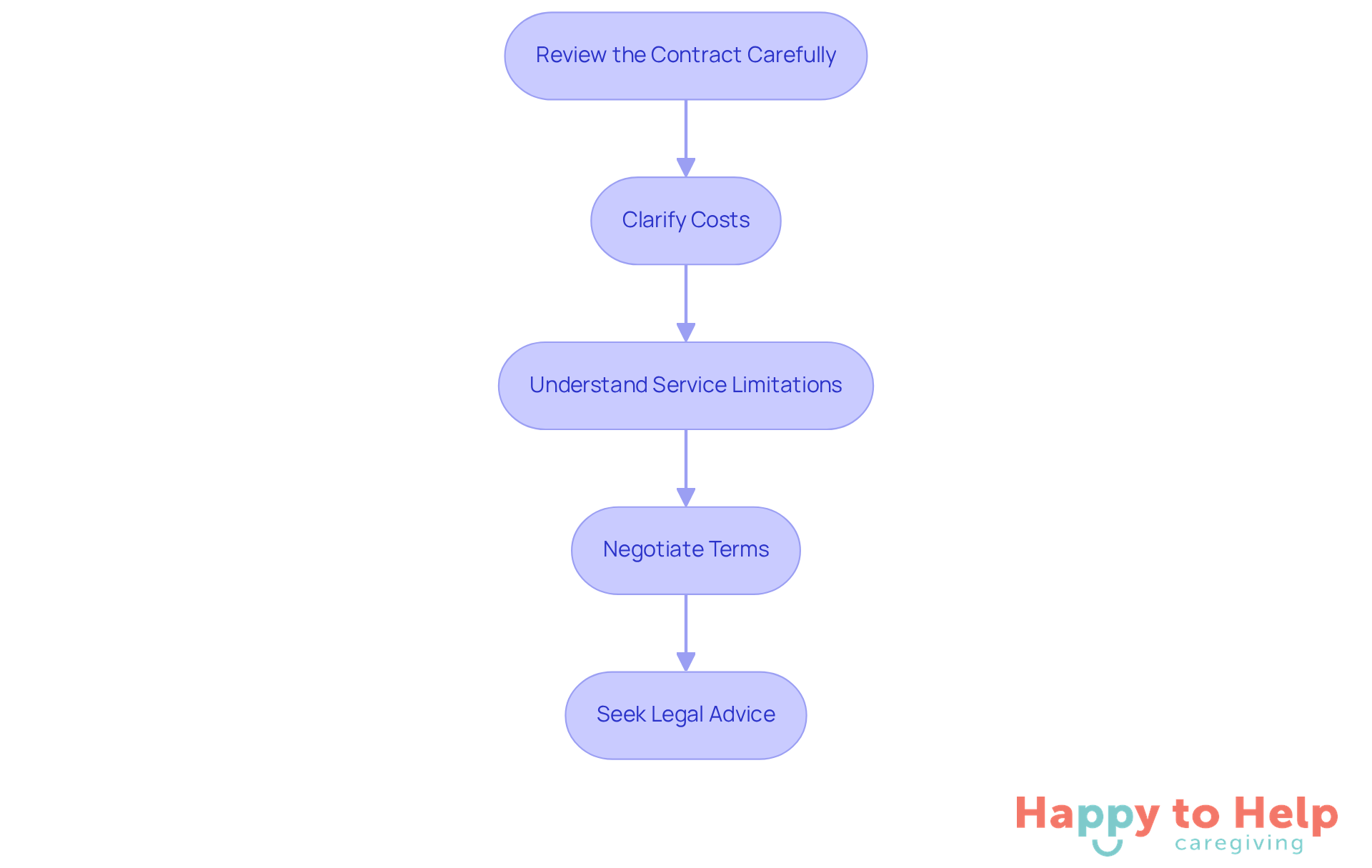
- Review the Contract Carefully: Ensure you comprehend all terms and conditions, including descriptions of offerings, payment terms, and cancellation policies.
- Clarify Costs: Request a detailed breakdown of costs, including hourly rates, additional fees, and payment schedules.
- Understand Service Limitations: Be aware of what services are included and any limitations or exclusions that may apply.
- Negotiate Terms: If necessary, discuss any unclear or unfavorable terms, and negotiate to reach a mutually agreeable arrangement.
- Seek Legal Advice: If you have concerns about the contract, consider consulting with a legal professional who specializes in elder care.
By following these steps, families can make informed decisions that protect their loved ones' interests.
Key Takeaways for Caregivers
Securing the right in-home care in Burlington, NC, presents a significant challenge for families. Without proper support, loved ones may struggle to maintain their independence, leading to increased stress for caregivers. This situation can be overwhelming, but there are effective steps to navigate the process.
To address this issue, caregivers should start by understanding the various in-home care services available. Assessing the specific needs of your loved one is crucial. Conduct thorough research on agencies, interview potential caregivers, and carefully review contracts and associated costs. Each of these steps is vital in creating a personalized care plan that enhances the quality of care.
As the demand for in-home care continues to rise, it’s essential for families to actively engage in this process. By prioritizing informed choices and fostering open communication, caregivers can ensure that their loved ones receive compassionate and competent care. This approach not only promotes comfort and dignity but also enhances the overall well-being of those they care for.
https://iframe.tely.ai/cta/eyJhcnRpY2xlX2lkIjogIjY5M2Y1MGE0NGM3OGNhYjkzOThjNmZhZiIsICJjb21wYW55X2lkIjogIjY4ZWU1ZGNhNzMxNzYyNTU3ZjNjOTVjMSIsICJpbmRleCI6IG51bGwsICJ0eXBlIjogImFydGljbGUifQ==Frequently Asked Questions
What are in-home care services available in Burlington, NC?
In-home care services in Burlington, NC include companionship care, personal care, meal preparation, medication management, post-hospital recovery assistance, and palliative support care.
What is companionship care?
Companionship care involves providing emotional support and social interaction to alleviate loneliness for individuals receiving care.
How does personal care assist individuals?
Personal care assists individuals with activities such as bathing, dressing, and grooming to help maintain their personal hygiene and dignity.
What does meal preparation entail in in-home care?
Meal preparation involves ensuring that clients receive nutritious meals tailored to their dietary needs.
What is medication management in the context of in-home care?
Medication management helps clients effectively manage their medications, ensuring they take the right doses at the right times.
When is post-hospital recovery assistance needed?
Post-hospital recovery assistance is needed during the recovery phase after a hospital stay, providing support to individuals as they regain their strength.
What is palliative support care?
Palliative support care is specialized care aimed at providing comfort for individuals with serious illnesses, focusing on quality of life.
How can families assess their loved one's care needs?
Families can assess their loved one's care needs by evaluating daily activities, consulting healthcare professionals, observing behavioral changes, involving the loved one in discussions, and creating a care needs checklist.
Why is it important to involve the loved one in care decisions?
Involving the loved one in care decisions ensures they feel included and respected, which can improve their overall satisfaction with the care they receive.
What is the benefit of creating a care needs checklist?
Creating a care needs checklist helps families record specific needs and preferences, assisting them in finding the most suitable in-home care options.
List of Sources
- Understand In-Home Care Services
- 10 Must-Know U.S. Home Care Industry Stats for 2025 - North American Community Hub (https://nchstats.com/us-home-care-industry-stats)
- Demand for Home Care Expected to Surge 22% by 2034 (https://respiratory-therapy.com/public-health/healthcare-policy/home-care/demand-home-care-expected-surge-22-2034)
- Home (https://homehealthcarenews.com)
- achc.org (https://achc.org/the-rise-of-hospital-level-in-home-healthcare-trends-benefits-and-the-future)
- Assess Your Loved One's Care Needs
- How to Assess if an Older Adult Needs Caregiving Help (https://aarp.org/caregiving/home-care/assessing-need-for-caregiver)
- Caregiving Crisis: 45% Increase in Americans Providing Care (https://aarp.org/caregiving/basics/caregiving-in-us-survey-2025)
- Brief geriatric assessments feasible to spot major needs, report says (https://mcknights.com/news/brief-geriatric-assessments-feasible-to-spot-major-needs-report-says)
- 11 Signs Your Aging Parent Needs Senior Care (https://health.usnews.com/senior-care/caregiving/articles/identifying-the-right-time-for-senior-care)
- 2025 Home Care Statistics: Trends & Insights To Know (https://premierhcinc.com/blog/home-care-statistics)
- Research and Compare In-Home Care Agencies
- Home Care Statistics In 2025: Key Insights In Home Care (https://sagapixel.com/marketing/home-care-statistics)
- Topic: Home care in the U.S. (https://statista.com/topics/4049/home-care-in-the-us?srsltid=AfmBOoo13AKjpZ4Ue6A98xBv9\_HAghBuS1ATQCzTKNsyqwR3lIJzR4ou)
- BURLINGTON'S OLDER ADULTS CAN NOW ENJOY TRANSFORMATIVE CARE THAT BRINGS BETTER HEALTH (https://prnewswire.com/news-releases/burlingtons-older-adults-can-now-enjoy-transformative-care-that-brings-better-health-301947491.html)
- 27 Eye-Opening Quotes from Home Care Clients (https://activatedinsights.com/articles/eye-opening-quotes-from-home-care-clients)
- Interview Potential Caregivers
- Home Health and Personal Care Aides (https://bls.gov/ooh/healthcare/home-health-aides-and-personal-care-aides.htm)
- Caregiver Statistics: Demographics (https://caregiver.org/resource/caregiver-statistics-demographics)
- Choosing the Right Senior Caregiver in San Antonio, TX (https://fox5sandiego.com/business/press-releases/ein-presswire/866933575/choosing-the-right-senior-caregiver-in-san-antonio-tx)
- How to Choose the Right In-Home Caregiver for Your Loved One (https://homeinstead.com/home-care/usa/tx/carrollton-coppell-irving/407/news-and-media/navigating-in-home-care-tips-for-choosing-the-right-caregiver-for-your-loved-one)
- Review Contracts and Understand Costs
- Are You a Family Caregiver? New Bill Seeks to Lower Costs (https://elderlawanswers.com/are-you-a-family-caregiver-new-bill-seeks-to-lower-costs-20143)
- The Importance of Understanding Home Care Contracts (https://h2hhc.com/blog/the-importance-of-understanding-home-care-contracts)
- Elder care costs are outpacing inflation. Americans want a lifeline. (https://nbcnews.com/politics/2024-election/elder-care-costs-are-outpacing-inflation-americans-want-lifeline-rcna172950)
- Understanding CCRC Contract Types: The Ultimate Guide 2026 (https://liveatwhitestone.org/news/ccrc-contract-types)
- Key considerations for your care contract (https://hcrlaw.com/news-and-insights/key-considerations-for-your-care-contract)