
10 Key Factors Influencing 24 Hour In Home Care Cost

For families in our service areas
For families in our service areas, this guide explains in-home care and how non-medical in-home caregiving can support care planning in East Idaho, Treasure Valley & Magic Valley, Northern Wasatch, North Central West Virginia, and Northeast Ohio.
The Importance of Factors Influencing 24 Hour In Home
Understanding the financial implications of 24-hour in-home care presents a significant challenge for families navigating the complex landscape of caregiving. The rising demand for personalized support has led to escalating costs, which can vary dramatically based on factors such as location, services required, and caregiver experience.
Families often face average monthly expenses ranging from $21,823 to over $30,000. This financial burden can leave them grappling with difficult choices that affect both their finances and the quality of care their loved ones receive.
So, what are the key factors influencing these costs? And how can families make informed decisions to ensure they receive the best possible support without breaking the bank?
To address these challenges, families should consider the following actionable tips:
- Research local rates: Understanding the average costs in your area can help set realistic expectations.
- Evaluate care needs: Assessing the specific services required can help tailor care to fit both needs and budget.
- Explore financial assistance options: Many organizations offer resources to help families manage costs.
By taking these steps, families can navigate the complexities of in-home care more effectively, ensuring their loved ones receive the necessary support while maintaining financial stability.
Happy to Help Caregiving: Personalized 24-Hour In-Home Care Services
Caregiving can be a challenging journey, often leaving caregivers feeling overwhelmed and unsupported. Many struggle to find adequate assistance that meets the unique needs of their loved ones, which can lead to stress and burnout.
Happy to Help Caregiving addresses this issue by offering tailored services while considering the 24 hour in home care cost. These services include:
- Companionship support
- Post-hospital recovery assistance
- Respite services
- Palliative support
By focusing on enhancing the quality of life for seniors and individuals with special needs, the agency ensures that clients receive compassionate care in the comfort of their own homes.
This customized approach not only fosters a sense of safety but also significantly affects the 24 hour in home care cost. Services are adapted to personal needs and desires, making it easier for families to manage their caregiving responsibilities effectively. With Happy to Help Caregiving, caregivers can find the support they need to provide the best care possible.
Average Monthly Cost of 24-Hour In-Home Care
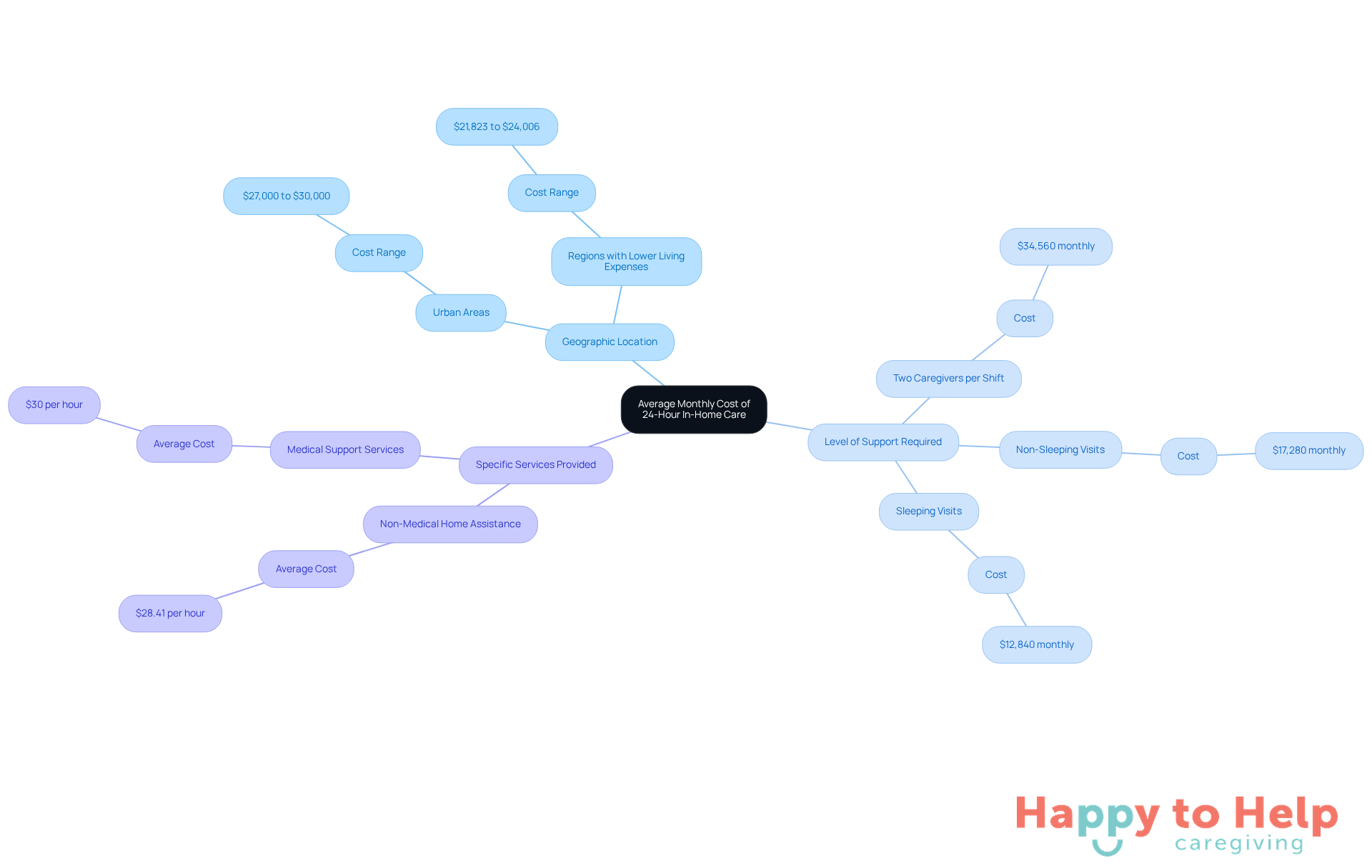
The 24 hour in home care cost can be a significant burden for families, typically ranging from $21,823 to $24,006 per month. This variation is influenced by factors such as geographic location, the level of support required, and the specific services provided. Urban areas often see higher expenses due to increased demand and living costs, with some locations reporting figures as high as $27,000 to $30,000 monthly.
In contrast, regions with lower living expenses may offer more affordable options. For example, the average cost for non-medical home assistance is projected at $28.41 per hour, translating to approximately $21,823 monthly. Understanding these averages is crucial for families as they plan for extensive support services, including the 24 hour in home care cost. It allows them to anticipate potential costs and make informed decisions regarding their loved ones' care needs.
As Dr. Ella Njike notes, "The geographical location significantly influences the cost of home health assistance." By being aware of these factors, caregivers can better navigate the financial landscape of in-home assistance.
Services Included in 24-Hour In-Home Care Costs
Problem: Families often face challenges in understanding the diverse needs of their loved ones requiring in-home assistance. Without a clear grasp of available services, they may struggle to ensure adequate support, leading to feelings of isolation for seniors.
Agitate: This lack of understanding can create anxiety for families, as they worry about their loved ones' well-being. Seniors may feel neglected or unsupported, which can negatively impact their emotional and physical health. It's crucial for families to recognize the importance of comprehensive care that addresses both physical and emotional wellness.
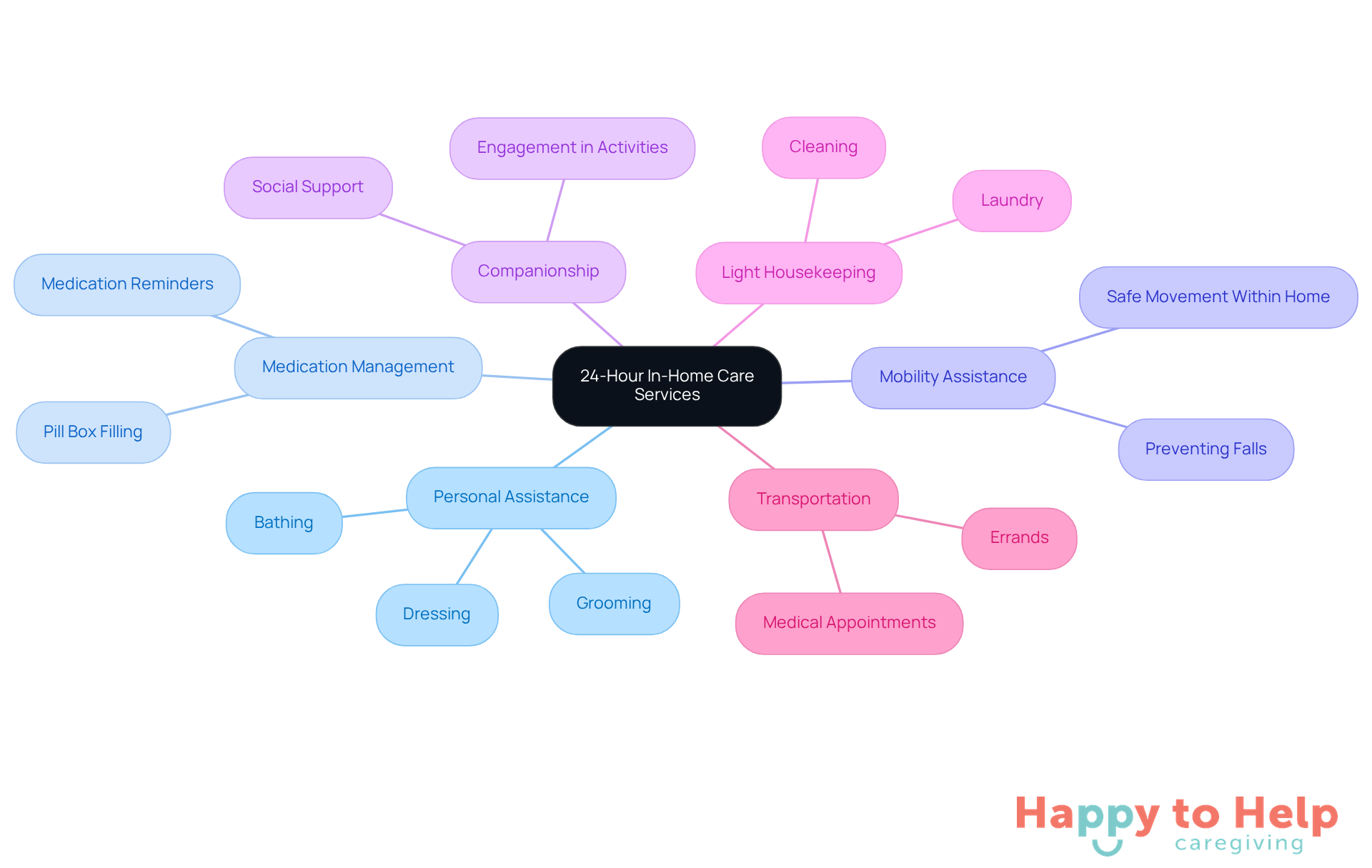
Solution: Round-the-clock in-home assistance offers a wide range of services tailored to meet these varied needs. Core offerings typically include:
- Personal assistance tasks such as bathing, dressing, and grooming.
- Essential medication management and meal preparation.
- Mobility assistance to ensure safe movement within the home.
- Companionship to alleviate feelings of isolation.
In addition, caregivers often engage in light housekeeping and provide transportation for errands or medical appointments, enhancing the overall quality of life for seniors. Understanding the full range of services included in a plan with a 24 hour in home care cost is essential for families. This knowledge not only aids in budgeting for the 24 hour in home care cost but also reassures them of the extensive support their loved ones will receive, fostering a sense of security in familiar surroundings. As caregiving experts emphasize, thorough support is vital for sustaining independence and improving the overall quality of life for seniors.
Comparison of 24-Hour In-Home Care with Other Care Options
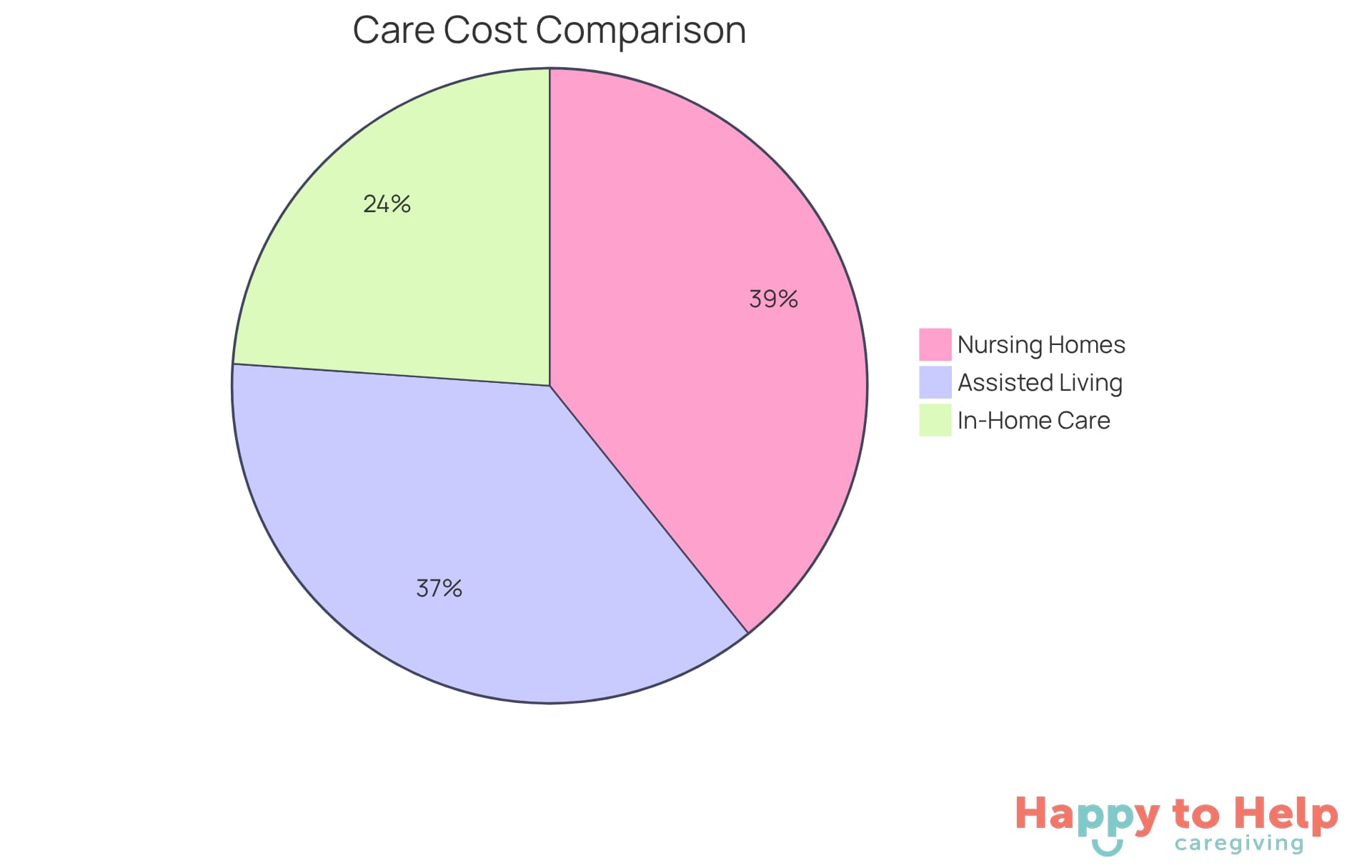
When families evaluate their options for round-the-clock care, they often face a significant problem: the high 24 hour in home care cost in comparison to assisted living and nursing facilities. Monthly fees at assisted living facilities can exceed $10,000, while nursing homes may charge over $10,646 for a private room. These expenses can create a financial burden for families, making it challenging to find suitable care for their loved ones.
The implications of these costs are profound. Families may feel pressured to choose less personalized care options due to financial constraints. This can lead to feelings of guilt and anxiety as they navigate the complexities of caregiving. However, there is a viable solution: in-home assistance. The average expense for home health assistance is projected to be around $6,483 monthly, reflecting the 24 hour in home care cost in 2025. This option not only allows seniors to remain in familiar environments but also provides customized support tailored to their individual needs.
In-home care fosters a sense of familiarity and comfort, enabling caregivers to offer personalized assistance that aligns with the preferences of the individual. Moreover, the emotional and psychological benefits of aging in place - such as improved well-being and reduced feelings of isolation - underscore the importance of at-home support as a practical alternative to institutional care.
Payment Options for 24-Hour In-Home Care
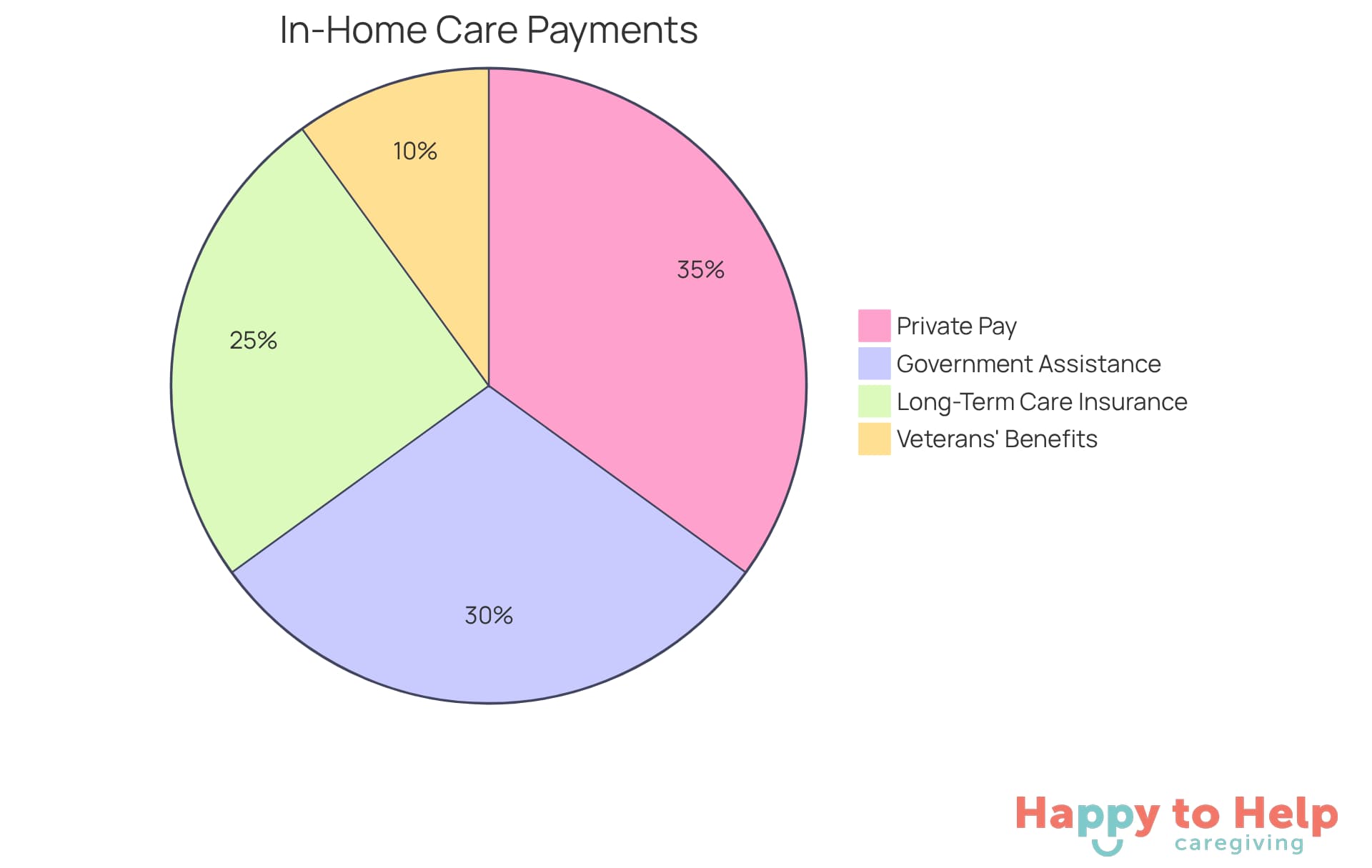
Navigating the 24 hour in home care cost for round-the-clock home support can be a daunting task for families. With various choices available, including private pay, long-term care insurance, and government assistance programs like Medicaid, the complexity can lead to confusion and stress. Families may also need to consider veterans' benefits if applicable, adding another layer to the decision-making process.
Understanding these options is crucial for effective planning. Families can benefit from a clear overview of their financial strategies to ensure their loved ones receive the necessary support. Here are some actionable solutions to consider:
- Private Pay: Direct payments for services can offer flexibility but may strain budgets.
- Long-Term Care Insurance: This can provide financial relief, but it’s essential to understand the policy details.
- Government Assistance: Programs like Medicaid can help, but eligibility requirements can be complex.
- Veterans' Benefits: If applicable, these can significantly aid in covering costs.
By understanding the 24 hour in home care cost and these payment options, families can make informed decisions that best suit their loved ones' support needs.
Cost Variations of 24-Hour In-Home Care by State
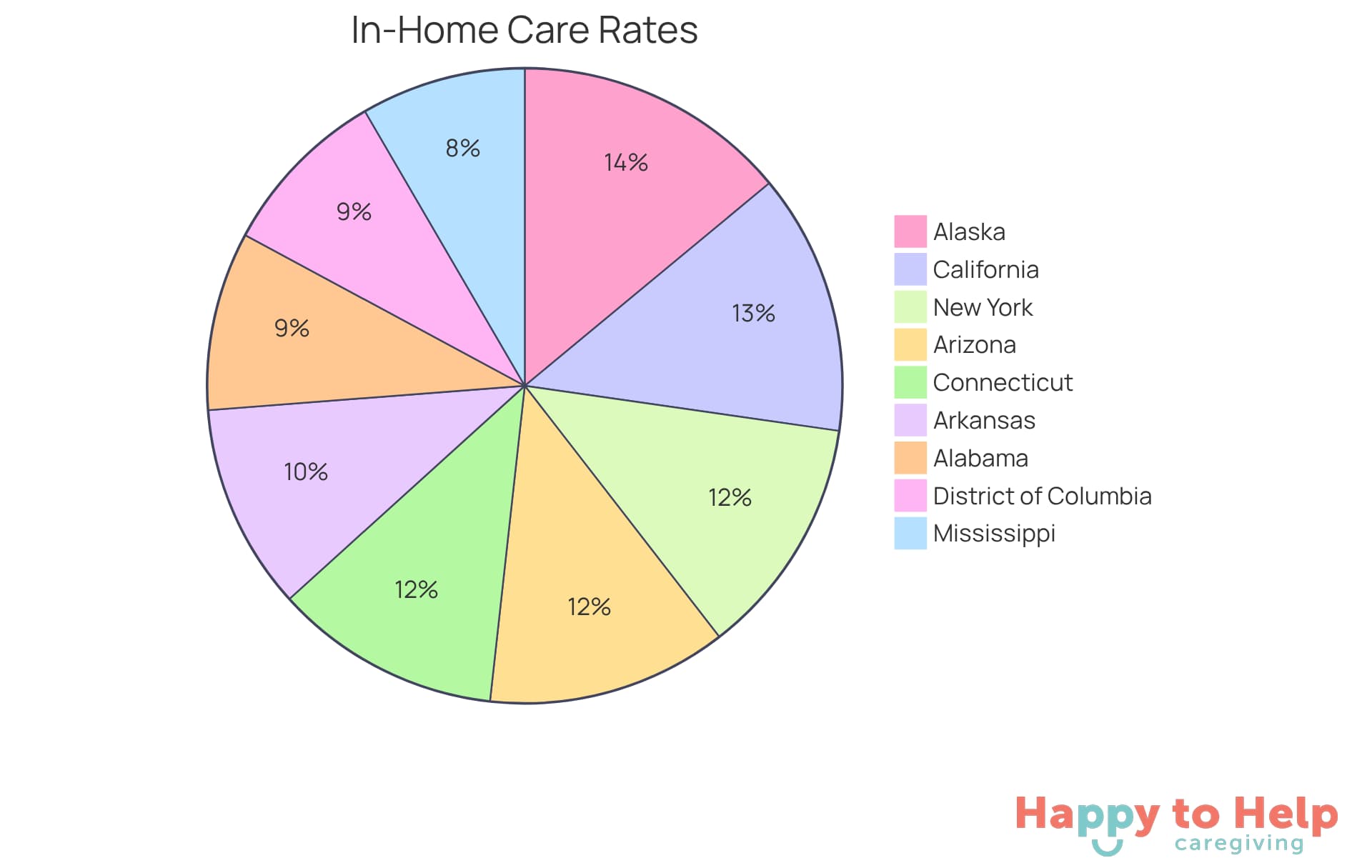
The 24 hour in home care cost varies widely across the United States, which presents a significant challenge for families seeking care. This variation is primarily influenced by local demand, living expenses, and regulatory factors. For example, in high-cost states like California and New York, hourly rates typically range from $25 to $35. In contrast, states with a lower cost of living, such as Mississippi and Arkansas, offer more affordable rates, averaging between $18 and $24 per hour. This disparity highlights the need for families to consider geographical factors when budgeting for care.
Local demand further complicates pricing. In metropolitan areas where the demand for caregivers is high, families may face elevated rates due to competition for limited resources. Conversely, rural regions often experience lower demand, leading to more competitive pricing. Understanding these dynamics is essential for families navigating the financial landscape of domestic support.
According to Dr. Ella Njike, CEO of Global One Home Care, 'The typical 24 hour in home care cost in the U.S. is $18,144 monthly, but it can vary from $15,000 to more than $25,000 each month, based on your location and the kind of assistance needed.' Additionally, Susanna Guzman notes that "you can anticipate a national median price of $33 per hour for nonmedical assistance in 2025; median state prices vary from $24 to $43 per hour." These insights underscore the critical role local factors play in determining service costs.
Insurance Coverage for 24-Hour In-Home Care
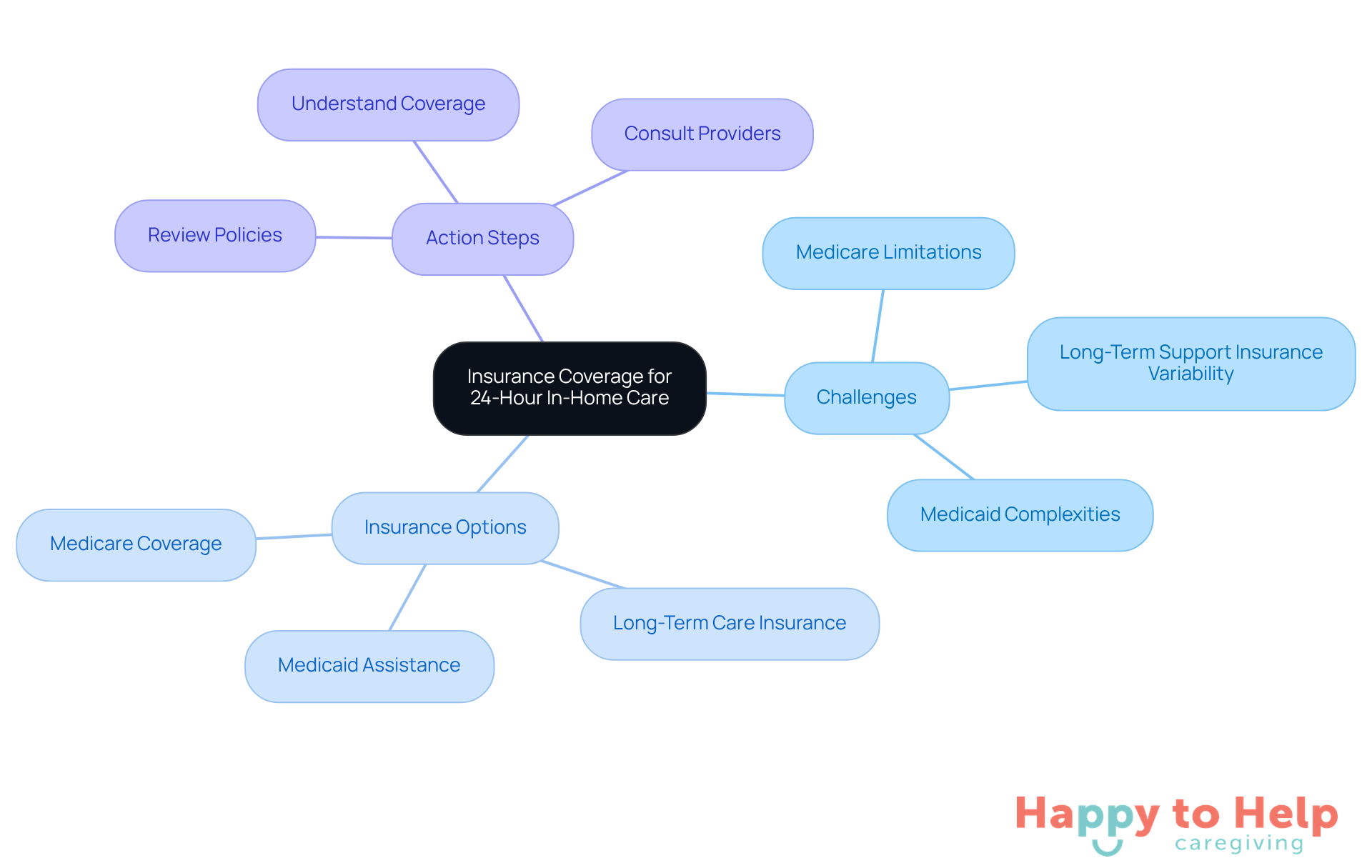
Navigating insurance coverage for the 24 hour in home care cost can be challenging for caregivers. The problem lies in the fact that Medicare typically does not cover non-medical home assistance, leaving many families uncertain about their options. This can lead to unexpected out-of-pocket expenses, adding stress to an already demanding situation.
To agitate this issue further, it's important to recognize that while some long-term support insurance plans may offer coverage for domestic services, the specifics can vary widely. Additionally, Medicaid may cover certain aspects of assistance, but eligibility requirements can complicate access. Caregivers often find themselves overwhelmed by the complexities of these policies, which can hinder their ability to provide the best care.
So, what can caregivers do? First, it's crucial to:
- Review insurance policies carefully.
- Understand what is covered and what isn't to help families plan better.
- Consult with insurance providers to clarify any uncertainties and reveal potential coverage options.
By taking these steps, caregivers can alleviate some of the financial burdens associated with the 24 hour in home care cost.
Additional Costs for Specialized Care in 24-Hour In-Home Care
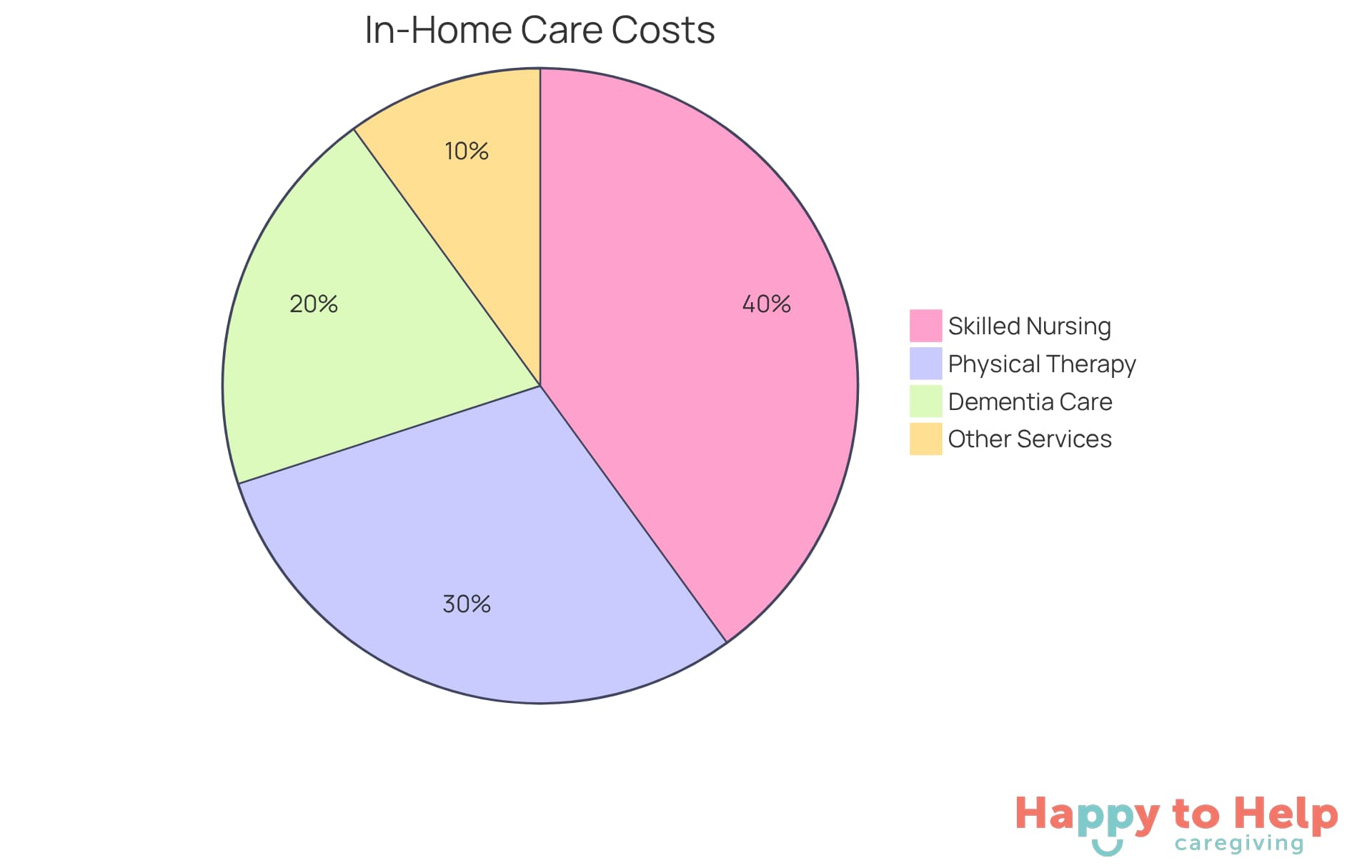
Families often encounter significant expenses related to the 24 hour in home care cost when seeking specialized assistance for around-the-clock support. This includes services like skilled nursing, physical therapy, or care for conditions such as dementia or Alzheimer's. These specialized services typically require caregivers with advanced training or certifications, leading to higher hourly rates.
The 24 hour in home care cost can present daunting financial implications. Families may find themselves unprepared for the increased costs associated with essential services such as the 24 hour in home care cost. Therefore, it’s crucial for families to engage in open discussions with their service providers. By clearly communicating their specific needs, families can ensure thorough planning and budgeting, ultimately leading to better care outcomes.
Impact of Caregiver Experience on 24-Hour In-Home Care Costs
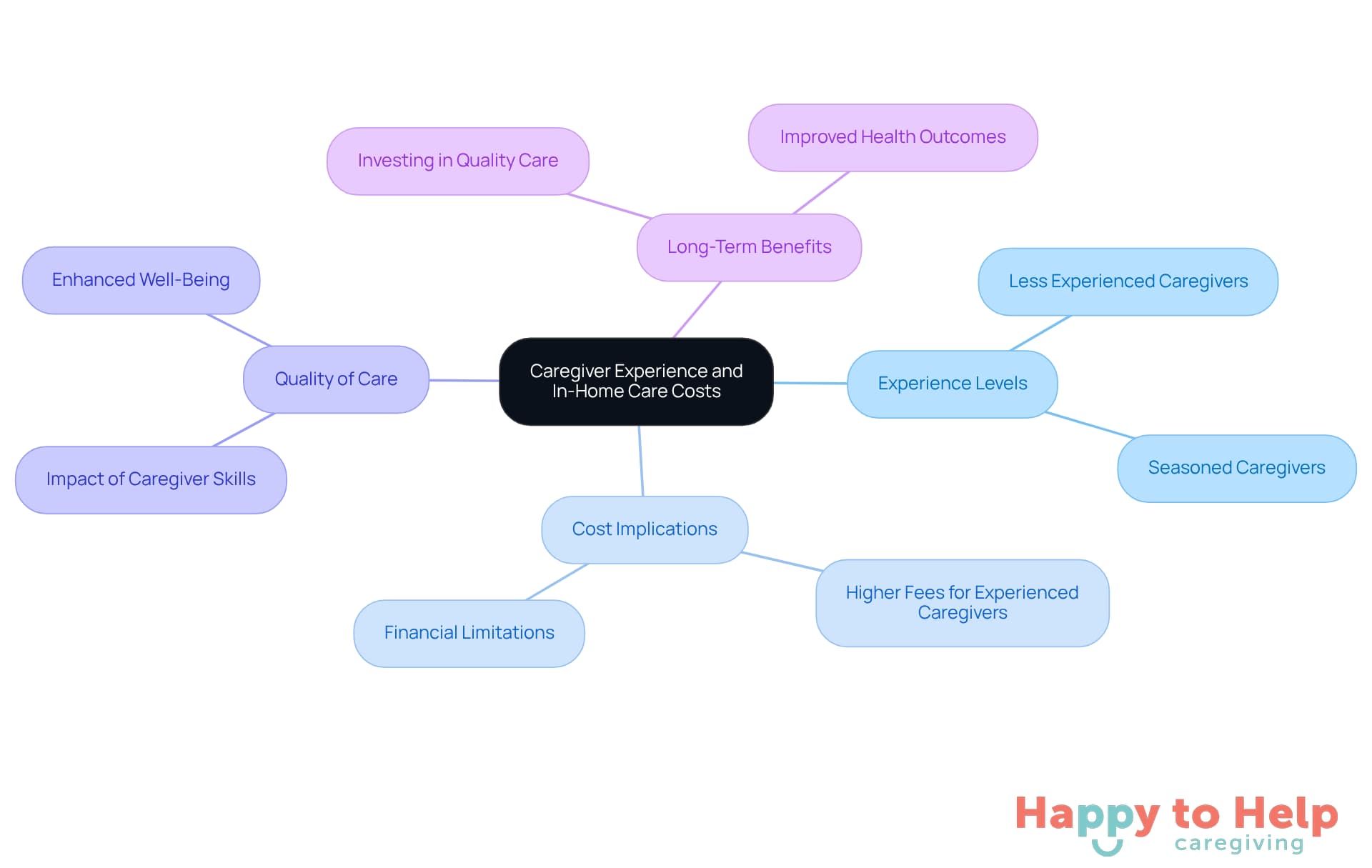
The experience level of caregivers presents a significant challenge for families when considering the 24 hour in home care cost. The varying levels of experience among caregivers can result in fluctuating 24 hour in home care costs that may not align with the quality of care provided. More seasoned caregivers, particularly those with specialized training or certifications, often charge higher fees. This reflects their expertise and ability to manage complex support requirements effectively.
Families must weigh the implications of hiring less experienced caregivers against their financial limitations. While it may be tempting to opt for lower-cost options, investing in high-quality support can lead to better outcomes for loved ones. Skilled caregivers not only provide essential assistance but also enhance the overall well-being of those they care for.
To navigate this decision, families should consider the long-term benefits of employing experienced caregivers. By prioritizing quality over cost, they can ensure that their loved ones receive the best possible care, ultimately leading to improved health and happiness.
Emotional and Physical Factors Influencing 24-Hour In-Home Care Costs
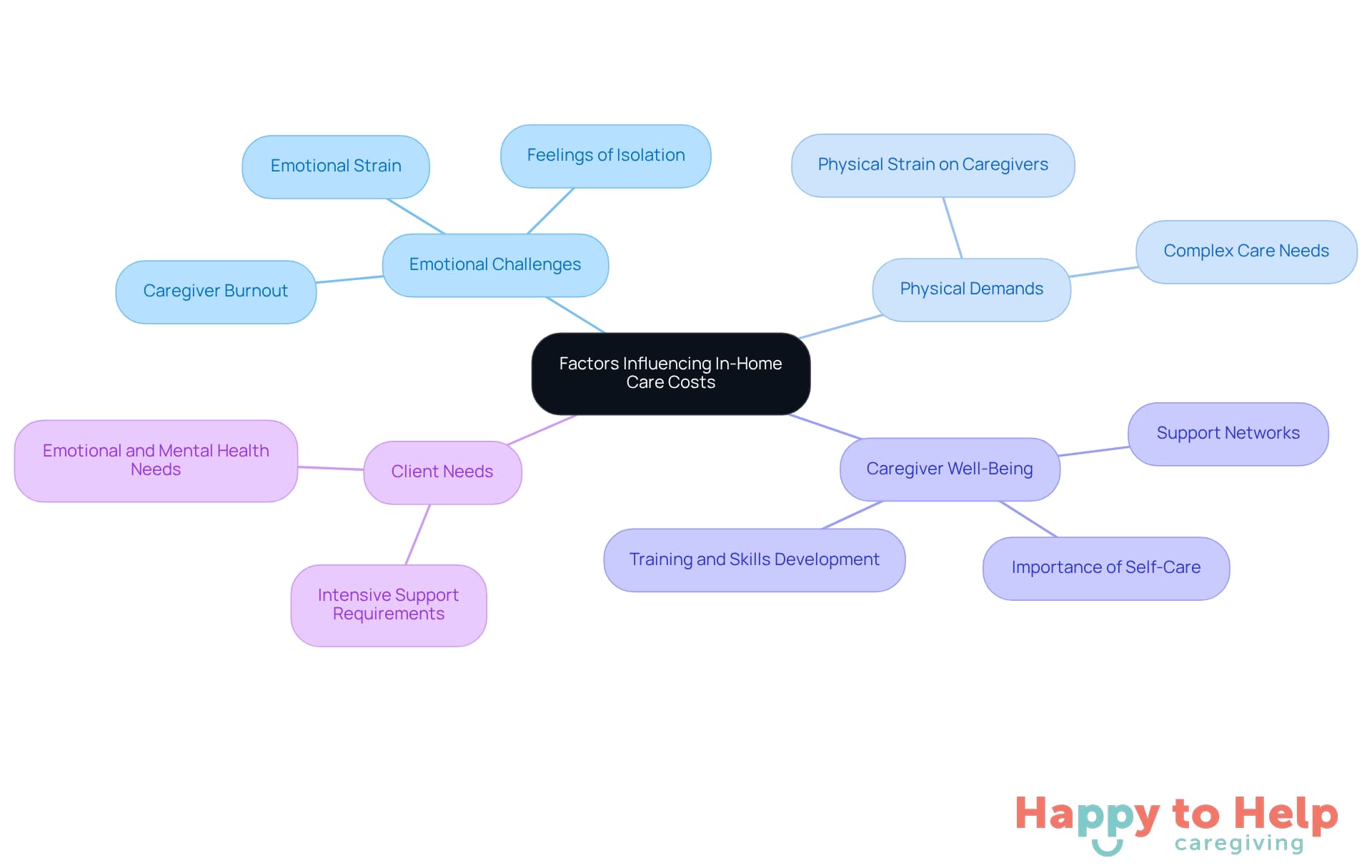
The emotional and physical challenges significantly influence the 24 hour in home care cost associated with assistance. Caregivers often face emotional strain and physical demands that can hinder their performance and the quality of care provided. This situation is further complicated when clients have complex emotional or physical needs, necessitating more intensive support, which ultimately drives up the 24 hour in home care cost.
Families must recognize these factors when assessing care options. Investing in caregiver well-being is crucial; it not only alleviates the strain on providers but also enhances the overall care experience. By prioritizing the health of caregivers, families can ensure a higher standard of assistance for their loved ones.
Key Takeaways for Caregivers
Understanding the various factors influencing the cost of 24-hour in-home care is crucial for families facing the challenges of caregiving. The problem lies in the complexity of these costs, which can vary significantly based on geographic location, the level of care required, and the specific services included. Families often find themselves overwhelmed by the financial implications of caregiving, which can lead to stress and uncertainty.
To address these concerns, it’s essential to consider several key elements. First, families should evaluate the average monthly expenses associated with in-home care. This includes not only the base rate but also potential additional costs for specialized services. Furthermore, understanding the influence of caregiver experience can help families make informed decisions that align with their financial and emotional needs.
Payment options and insurance coverage also play a vital role in managing costs. Families must explore available resources and financial assistance programs that can alleviate some of the financial burdens. By investing in quality support, families can ensure optimal care outcomes for their loved ones, ultimately enhancing their well-being.
Prioritizing comprehensive in-home care not only benefits seniors but also reduces stress for families. By taking the time to understand these key factors and exploring available options, families can secure the compassionate, personalized care their loved ones deserve. This approach fosters a nurturing environment that promotes both physical and emotional health.
https://iframe.tely.ai/cta/eyJhcnRpY2xlX2lkIjogIjY5MjNhMGFlMWRmODM1M2QyMjg0NTk1MCIsICJjb21wYW55X2lkIjogIjY4ZWU1ZGNhNzMxNzYyNTU3ZjNjOTVjMSIsICJpbmRleCI6IG51bGwsICJ0eXBlIjogImFydGljbGUifQ==Frequently Asked Questions
What services does Happy to Help Caregiving offer for in-home care?
Happy to Help Caregiving offers personalized 24-hour in-home care services including companionship support, post-hospital recovery assistance, respite services, and palliative support.
How does Happy to Help Caregiving ensure quality of life for clients?
The agency focuses on enhancing the quality of life for seniors and individuals with special needs by providing compassionate care tailored to their unique needs in the comfort of their own homes.
What is the average monthly cost of 24-hour in-home care?
The average monthly cost for 24-hour in-home care typically ranges from $21,823 to $24,006, but can be higher in urban areas, sometimes reaching $27,000 to $30,000.
What factors influence the cost of 24-hour in-home care?
The cost is influenced by geographic location, the level of support required, and the specific services provided. Urban areas generally have higher expenses due to increased demand and living costs.
What are some core services included in the 24-hour in-home care costs?
Core services typically include personal assistance with bathing, dressing, and grooming, medication management, meal preparation, mobility assistance, companionship, light housekeeping, and transportation for errands or medical appointments.
Why is it important for families to understand the services included in in-home care?
Understanding the services included in a 24-hour in-home care plan helps families budget for care costs and reassures them that their loved ones will receive comprehensive support, which is vital for maintaining independence and improving overall quality of life.
List of Sources
- Happy to Help Caregiving: Personalized 24-Hour In-Home Care Services
- Growing Trend of Private Pay Home Care for Elderly (https://regencyhcs.com/blog/growing-trend-of-private-pay-home-care-for-elderly)
- What’s Coming in the Future of Home Health Care? - Alora Health (https://alorahealth.com/blog-future-homecare-trends)
- Emerging Trends in Home Health (https://navenhealth.com/news/emerging-trends-in-home-health)
- New Report Reveals U.S. Family Caregivers Perform Equivalent of a Staggering $873.5 Billion Worth of Labor, Would Surpass Revenue of Top Global Companies | Otsuka US (https://otsuka-us.com/news/new-report-reveals-us-family-caregivers-perform-equivalent-staggering-8735-billion-worth-labor)
- Most Americans expect to experience a long-term care event, and nearly 3 in 4 want in-home care if it happens to them - according to Northwestern Mutual Planning & Progress Study (https://news.northwesternmutual.com/2025-10-07-Most-Americans-expect-to-experience-a-long-term-care-event,-and-nearly-3-in-4-want-in-home-care-if-it-happens-to-them-according-to-Northwestern-Mutual-Planning-Progress-Study)
- Average Monthly Cost of 24-Hour In-Home Care
- How Much Does 24/7 In-Home Care Cost? | The Senior List (https://theseniorlist.com/caregiving/24-7-in-home-care)
- How Much Does 24-Hour Home Care Cost in New Jersey? (https://h2hhc.com/blog/how-much-24-hour-home-care-cost-in-new-jersey)
- 24/7 In-Home Care Costs in 2025 - Assisted Living Magazine (https://assistedlivingmagazine.com/24-7-in-home-care-costs-in-2025)
- 24-hour In-home Care Cost In The US (2025)? - Home Care Agency | Global One Home Care Boston (https://globalonehomecare.com/24-7-in-home-care-cost)
- Services Included in 24-Hour In-Home Care Costs
- 9 Key Factors Influencing 24-Hour Home Health Care Cost | Best Care Nurses Registry (https://bestcare.net/9-key-factors-influencing-24-hour-home-health-care-cost)
- 24 Hour In-Home Care Cost (https://ultimatecareny.com/resources/24-hour-in-home-care-cost)
- How Much Does 24/7 Home Care Cost? (https://aplaceformom.com/caregiver-resources/articles/24-hour-in-home-care)
- Home Care Costs in 2025: A State-by-State Guide (https://aplaceformom.com/caregiver-resources/articles/in-home-care-costs)
- 24-Hour Home Care | BrightStar Care | BrightStar Care (https://brightstarcare.com/about-brightstar-care/resources/benefits-of-24-hour-home-care)
- Comparison of 24-Hour In-Home Care with Other Care Options
- 9 Key Factors Influencing 24-Hour Home Health Care Cost | Best Care Nurses Registry (https://bestcare.net/9-key-factors-influencing-24-hour-home-health-care-cost)
- Assisted Living vs. Home Care: What's the Difference? (https://health.usnews.com/best-assisted-living/articles/assisted-living-versus-senior-home-care)
- Most Americans expect to need long-term care in the future, and they don’t want that care in assisted living (https://mcknightsseniorliving.com/news/most-americans-expect-to-need-long-term-care-in-the-future-and-they-dont-want-that-care-in-assisted-living)
- The Cost of Dignity: A Guide to In-Home Care Costs and Happier Aging in 2025 | Nurse Next Door (https://nursenextdoor.com/blog/how-much-does-senior-home-care-cost)
- Cost of Home Care vs. Nursing Homes (https://aplaceformom.com/caregiver-resources/articles/home-care-vs-nursing-home-costs)
- Payment Options for 24-Hour In-Home Care
- How to Finance Home Care Services - Home Matters (https://homematters.com/paying-for-home-care)
- How to Pay for a Home Care Worker (https://aarp.org/caregiving/financial-legal/afford-a-homecare-worker)
- Paying for 24-Hour Care | How Much Is It & How Do I Pay? (https://corewoodcare.com/news/paying-for-247-care)
- Cost of 24-Hour Home Care: Financing Options & Strategies (https://interimhealthcare.com/services/home-care-services/24-hour-home-care/cost-of-24-hour-home-care)
- 10 Ways to Pay for In-Home Care in California | Families Choice Home Care (https://familieschoicehomecare.com/ways-to-pay-for-in-home-care-in-california)
- Cost Variations of 24-Hour In-Home Care by State
- How Much Does 24/7 In-Home Care Cost? | HomeCare.org (https://homecare.org/the-cost-of-24-7-in-home-care)
- Navigating Home Care Amidst the Tide of Rising Costs | Amada (https://amadaseniorcare.com/2024/03/navigating-home-care-amidst-the-tide-of-rising-costs)
- Home Care Costs in 2025: A State-by-State Guide (https://aplaceformom.com/caregiver-resources/articles/in-home-care-costs)
- 24-hour In-home Care Cost In The US (2025)? - Home Care Agency | Global One Home Care Boston (https://globalonehomecare.com/24-7-in-home-care-cost)
- Insurance Coverage for 24-Hour In-Home Care
- Medicaid cuts threaten home and community-based care (https://naco.org/news/medicaid-cuts-threaten-home-and-community-based-care)
- Medicare Rights Supports Expansion of Medicare Home Health to Allow Beneficiaries to Age in Place - Medicare Rights Center (https://medicarerights.org/medicare-watch/2024/10/10/medicare-rights-supports-expansion-of-medicare-home-health-to-allow-beneficiaries-to-age-in-place)
- Tracking the Medicaid Provisions in the 2025 Reconciliation Bill | KFF (https://kff.org/medicaid/tracking-the-medicaid-provisions-in-the-2025-budget-bill)
- 52 Eye-Opening Home Health Statistics: Insights for 2025 (https://boosthomehealth.com/home-health-statistics)
- NHE Fact Sheet | CMS (https://cms.gov/data-research/statistics-trends-and-reports/national-health-expenditure-data/nhe-fact-sheet)
- Additional Costs for Specialized Care in 24-Hour In-Home Care
- At Home Care Pricing: Essential Industry Statistics for 2025 - Assisting Hands Rockford (https://assistinghands.com/100/illinois/rockford/blog/at-home-care-pricing-essential-industry-statistics-for-2025)
- Why Skill-Based Billing Is Growing In Home Care – And Why Some Say No (https://homehealthcarenews.com/2025/09/why-skill-based-billing-is-growing-in-home-care-and-why-some-say-no)
- How Much Does 24/7 Home Care Cost? (https://aplaceformom.com/caregiver-resources/articles/24-hour-in-home-care)
- 24/7 In-Home Care Costs in 2025 - Assisted Living Magazine (https://assistedlivingmagazine.com/24-7-in-home-care-costs-in-2025)
- Impact of Caregiver Experience on 24-Hour In-Home Care Costs
- New Research Highlights Critical Role of Training in Caregiver Retention (https://careacademy.com/blog/role-of-training-in-caregiver-retention)
- Why Skill-Based Billing Is Growing In Home Care – And Why Some Say No (https://homehealthcarenews.com/2025/09/why-skill-based-billing-is-growing-in-home-care-and-why-some-say-no)
- Elder care costs are outpacing inflation. Americans want a lifeline. (https://nbcnews.com/politics/2024-election/elder-care-costs-are-outpacing-inflation-americans-want-lifeline-rcna172950)
- New Report Highlights Increasing Cost of Family Caregiving in the U.S. (https://press.aarp.org/2023-03-08-New-Report-Highlights-Increasing-Cost-of-Family-Caregiving-in-the-US)
- Current and Future Replacement and Opportunity Costs of Family Caregiving for Older Americans With and Without Dementia - PMC (https://pmc.ncbi.nlm.nih.gov/articles/PMC12257478)
- Emotional and Physical Factors Influencing 24-Hour In-Home Care Costs
- More Than 60% Say Caregiving Increased Their Level of Stress, AARP Report Finds (https://aarp.org/caregiving/medical/report-caregiver-mental-health)
- Caregiver Stress Syndrome Can Hinder Quality of Care (https://medcentral.com/geriatrics/caregiver-stress-syndrome-can-hinder-quality-of-care)
- New Report Reveals U.S. Family Caregivers Perform Equivalent of a Staggering $873.5 Billion Worth of Labor, Would Surpass Revenue of Top Global Companies | Otsuka US (https://otsuka-us.com/news/new-report-reveals-us-family-caregivers-perform-equivalent-staggering-8735-billion-worth-labor)
- Caregiver Statistics: Work and Caregiving (https://caregiver.org/resource/caregiver-statistics-work-and-caregiving)
- Crushing Strain: New Study Exposes How Caregiving Drains Families, Highlights Urgent Need for Long-Term Care Planning (https://ltcnews.com/articles/new-study-exposes-how-caregiving-drains-families-long-term-care-planning)