

For families in our service areas
For families in our service areas, this guide explains caregiving and how non-medical in-home caregiving can support care planning in East Idaho, Treasure Valley & Magic Valley, Northern Wasatch, North Central West Virginia, and Northeast Ohio.
Why Factors Influencing 24 Hour Live In Matters
Navigating the complexities of 24-hour live-in care costs can be a daunting challenge for families. The rising demand for personalized in-home assistance often leaves them grappling with difficult decisions regarding their loved ones' well-being. Understanding the various factors that influence these expenses is essential. Geographic location, caregiver qualifications, and other elements significantly shape the financial landscape of live-in care.
As costs continue to rise, families may encounter hidden fees that complicate their decision-making process. This intricate web of expenses can lead to confusion and frustration. So, how can families ensure they receive the best care without breaking the bank? By being informed and proactive, they can navigate these challenges effectively.
Happy to Help Caregiving: Personalized In-Home Care Services
Happy to Help Caregiving addresses a significant problem in the caregiving industry: the lack of personalized in-home assistance services tailored to the unique needs of each client. This gap can lead to inadequate support for seniors and individuals with special needs, ultimately affecting their quality of life and increasing overall treatment costs.
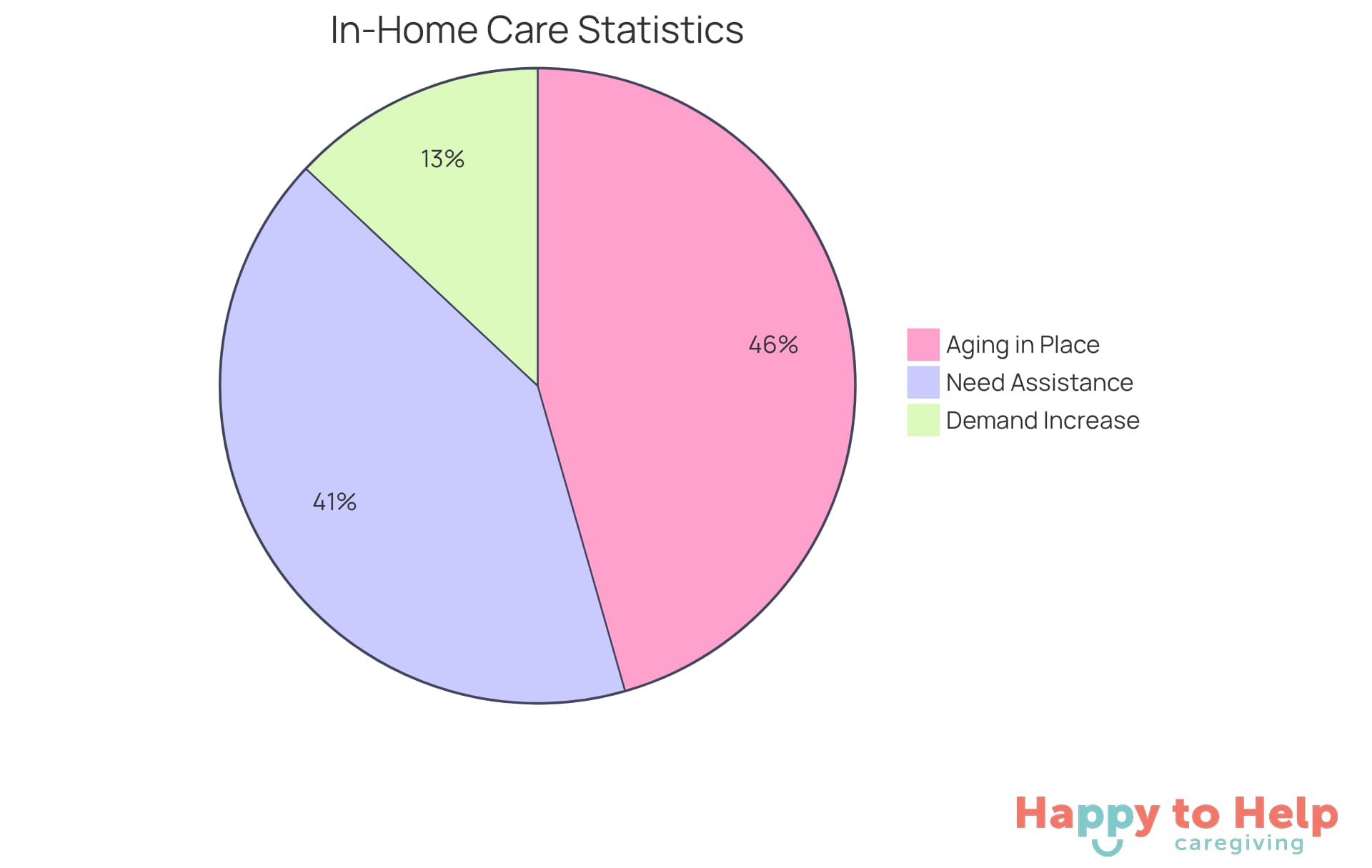
Research indicates that individualized support is crucial. For instance, a study found that seniors receiving personalized treatment plans reported higher satisfaction and better health outcomes. This not only enhances their well-being but can also reduce the need for more intensive and costly interventions. As the demand for home support services is projected to rise by 22% by 2034, agencies that offer tailored assistance are better positioned to meet the diverse needs of their clients while managing expenses effectively.
The focus on individualized support not only fosters a sense of security and comfort for clients but also reflects a broader trend towards consumer-driven elder assistance solutions. With 77% of adults over 50 preferring to age in place, the ability to provide personalized support is essential for ensuring both emotional well-being and financial sustainability in in-home assistance services. Furthermore, approximately 70% of Americans aged 65 and above are expected to require some form of assistance throughout their lives, making the role of technology in enhancing personalized support increasingly vital. Technology enables the creation of customized plans that address individual requirements, ensuring that care is both effective and efficient.
State Variations: How Location Affects 24-Hour Care Costs
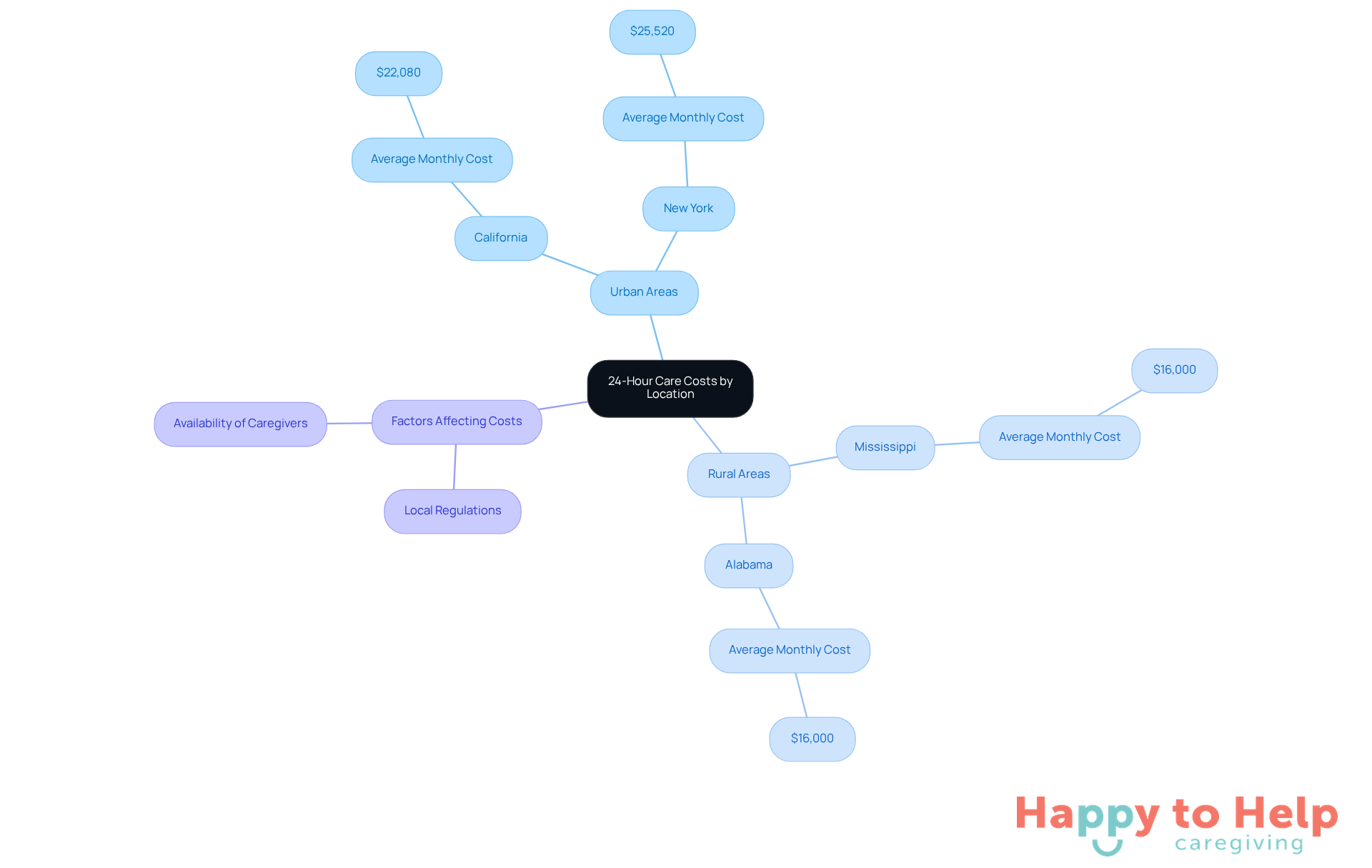
The 24 hour live in care cost poses a significant challenge for many families across the United States. Geographic location plays a crucial role in these costs, with city regions typically facing higher expenses due to increased demand and rising living prices. For example, in California, the average monthly cost for round-the-clock in-home assistance is about $22,080, while in New York, it can reach approximately $25,520. These figures highlight the elevated living expenses and competitive market for support providers in urban areas.
In contrast, rural areas often provide more affordable options. States like Mississippi and Alabama average around $16,000 per month for similar services, making them more accessible for families seeking care. However, local regulations also significantly impact care costs. For instance, Massachusetts has stringent requirements for caregivers, which can lead to higher prices due to the need for specialized training and certification.
Moreover, the availability of caregivers affects pricing. Regions with a shortage of qualified professionals may see inflated rates as agencies compete for limited resources. Households must thoroughly assess these factors when considering in-home support options. Understanding regional differences in caregiving expenses, including 24 hour live in care cost, can help families create a practical budget and make informed decisions about the level of support they need.
Additionally, rising costs driven by inflation and increased demand for assistance services are critical considerations. To mitigate these expenses, families can customize support plans to their specific needs and utilize community resources. This approach not only helps reduce costs but also ensures that families receive essential assistance without compromising quality.
Service Scope: What’s Included in 24-Hour Live-In Care?
Problem: Many families struggle to find adequate support for their loved ones, particularly when it comes to live-in care.
Agitate: This lack of understanding can lead to confusion about the services available, ultimately affecting the quality of care and the overall well-being of clients. Families may not realize that comprehensive live-in support encompasses a variety of essential services.
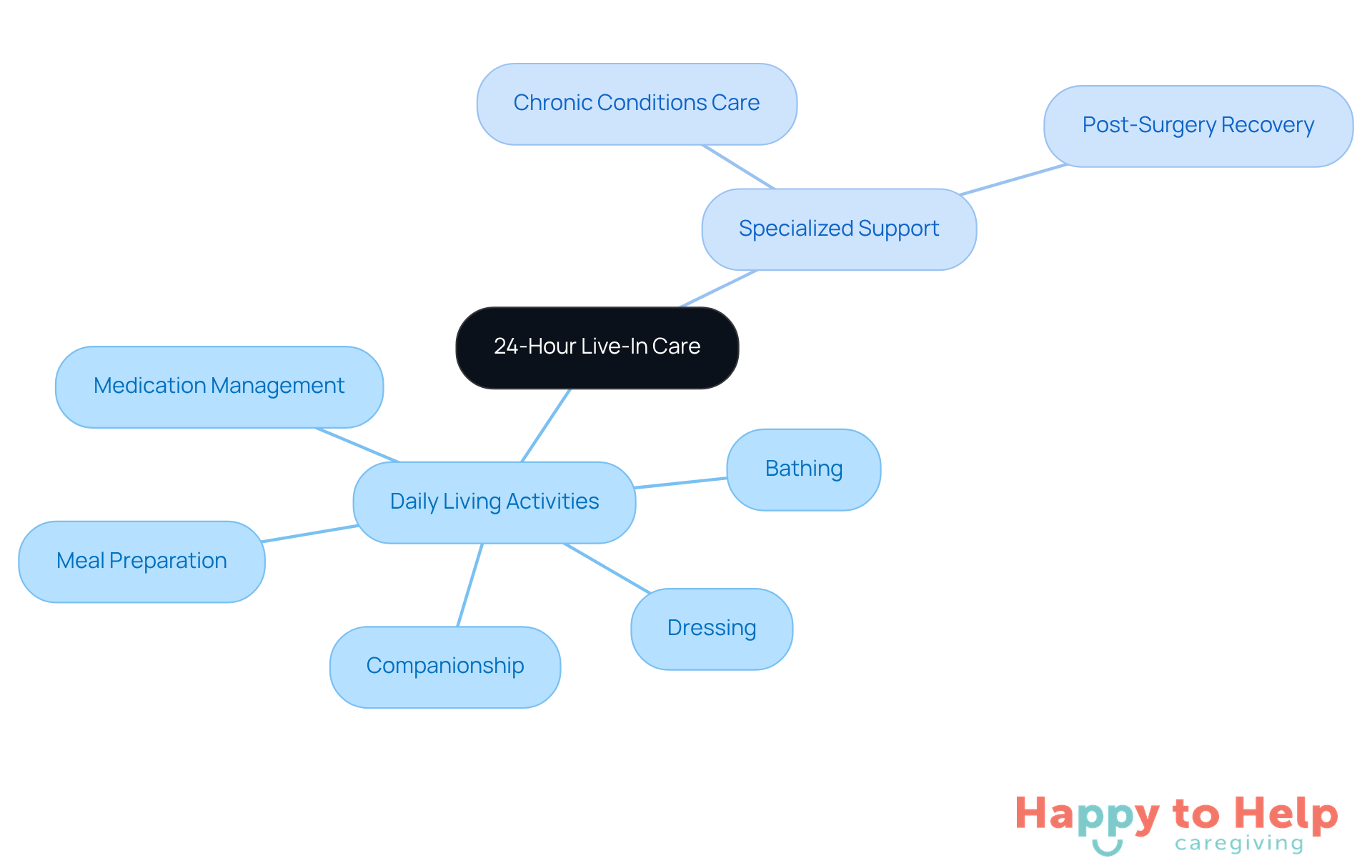
The solution for 24 hour live in care cost encompasses assistance with daily living activities such as:
- Bathing
- Dressing
- Meal preparation
- Medication management
- Companionship
Caregivers also provide specialized support for individuals with chronic conditions or those recovering from surgery. Understanding these services is crucial for families, as it directly influences both the quality of assistance their loved ones receive and the 24 hour live in care cost.
Payment Options: How to Finance 24-Hour Live-In Care
The 24 hour live in care cost presents a significant challenge for many families when financing assistance. The financial implications, including the 24 hour live in care cost, can be considerable, leading to stress and uncertainty about how to provide necessary support for loved ones.
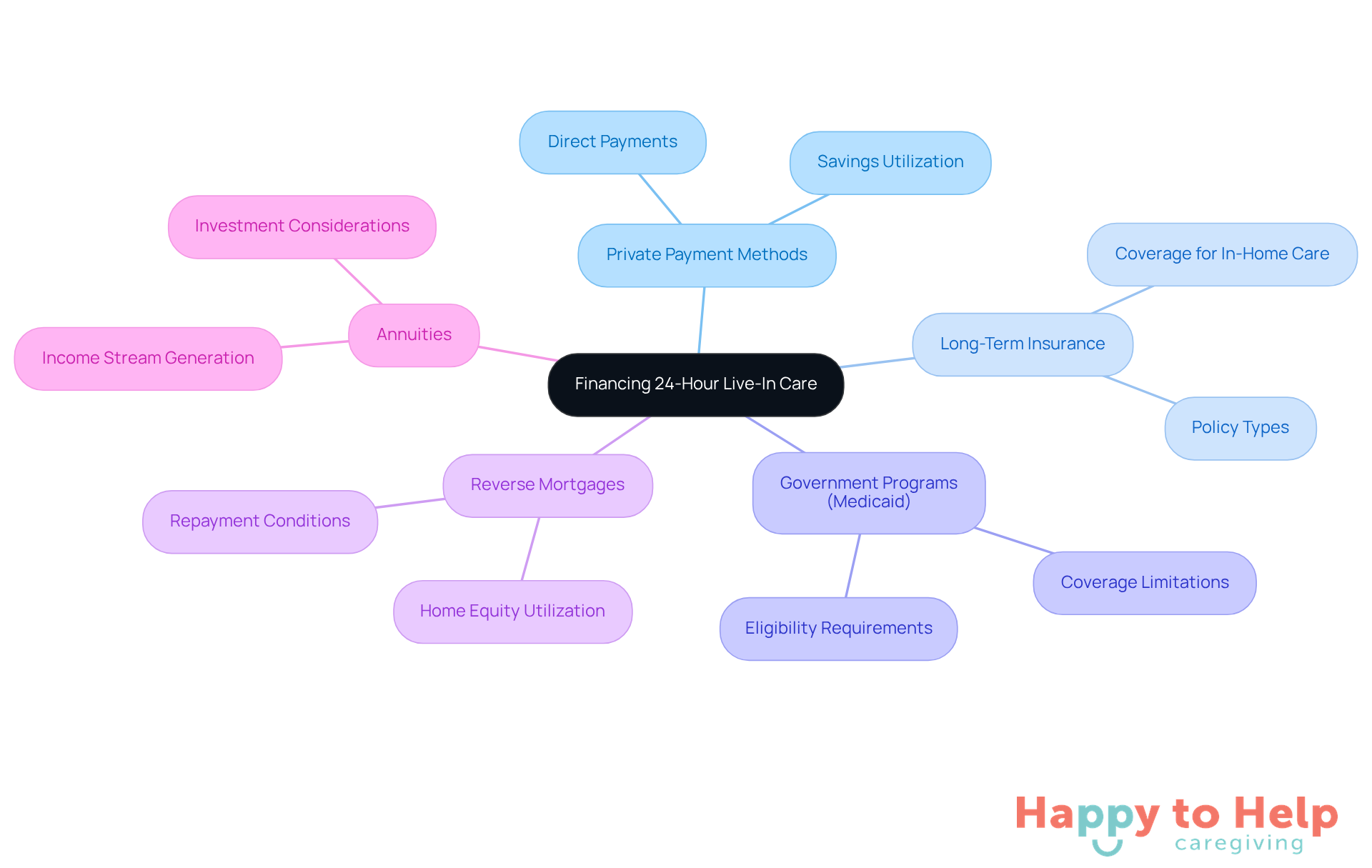
To address this issue, families can explore several financing options:
- Private payment methods
- Long-term insurance
- Government programs like Medicaid
- Reverse mortgages
- Annuities
Understanding these alternatives is crucial for effective planning. Discussing payment plans with service providers can lead to more manageable solutions tailored to individual financial circumstances. By taking these steps, caregivers can alleviate some of the financial burdens associated with live-in assistance.
Comparative Costs: Live-In Care vs. Assisted Living and Nursing Homes
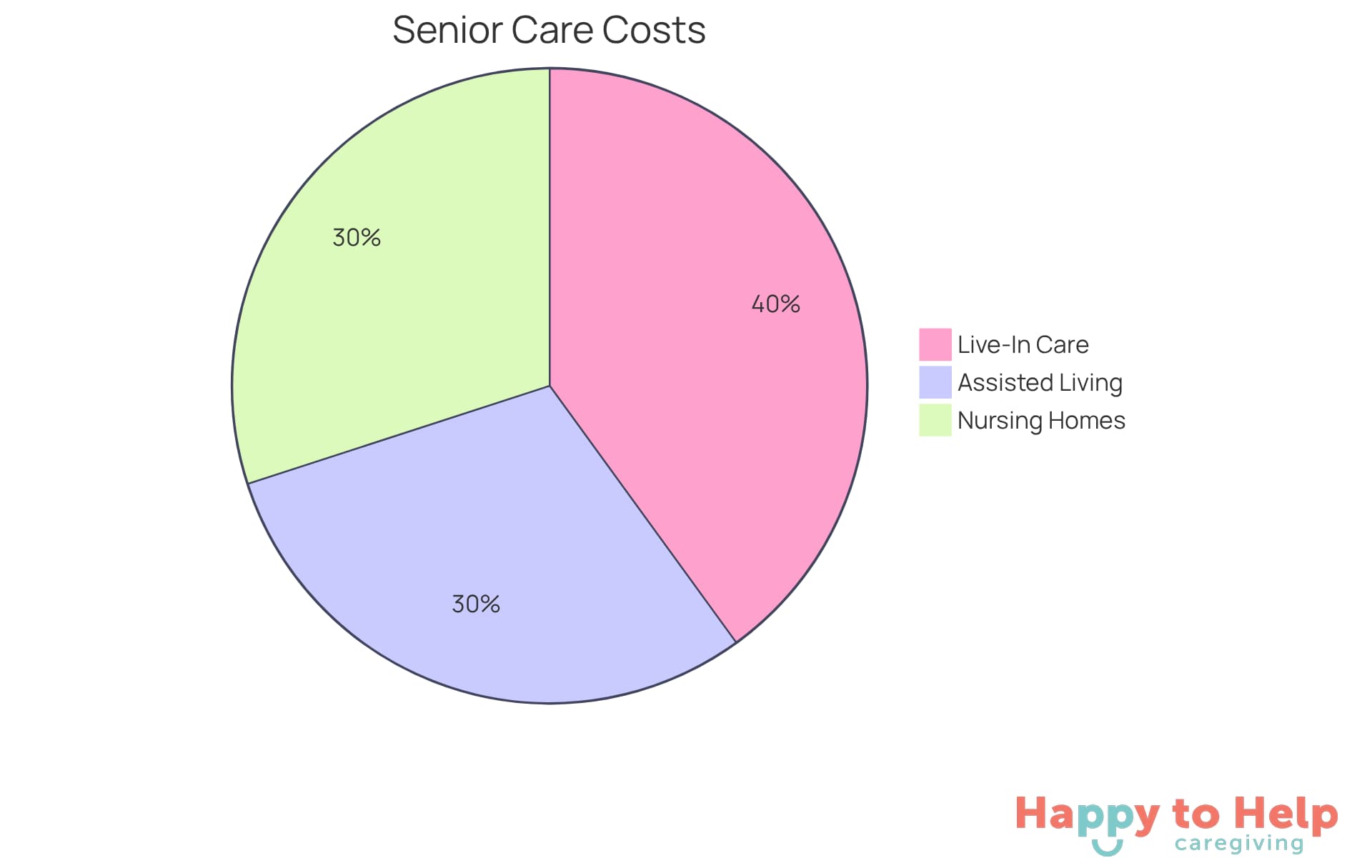
When families evaluate live-in assistance versus assisted living and nursing facilities, they often face a significant problem: the high costs, including the 24 hour live in care cost, associated with traditional care options. Assisted living establishments typically charge a fixed monthly rate that covers housing and meals, which can quickly add up. For families needing comprehensive help for their loved ones, these expenses can be overwhelming.
The implications of these costs can be serious. Families may find themselves struggling to afford the necessary care, leading to difficult decisions about their loved one's well-being. In contrast, the live-in support model provides a more flexible pricing structure, which is reflected in the 24 hour live in care cost, charging based on the level of assistance required. This can lead to reduced overall expenses, making it a viable solution for many families.
To navigate these options effectively, families should carefully assess their loved one's needs and preferences. By considering the 24 hour live in care cost, they may discover a more economical alternative that still provides the necessary care. Ultimately, understanding the financial implications of each option is crucial for making informed decisions.
Caregiver Expertise: How Qualifications Influence Cost
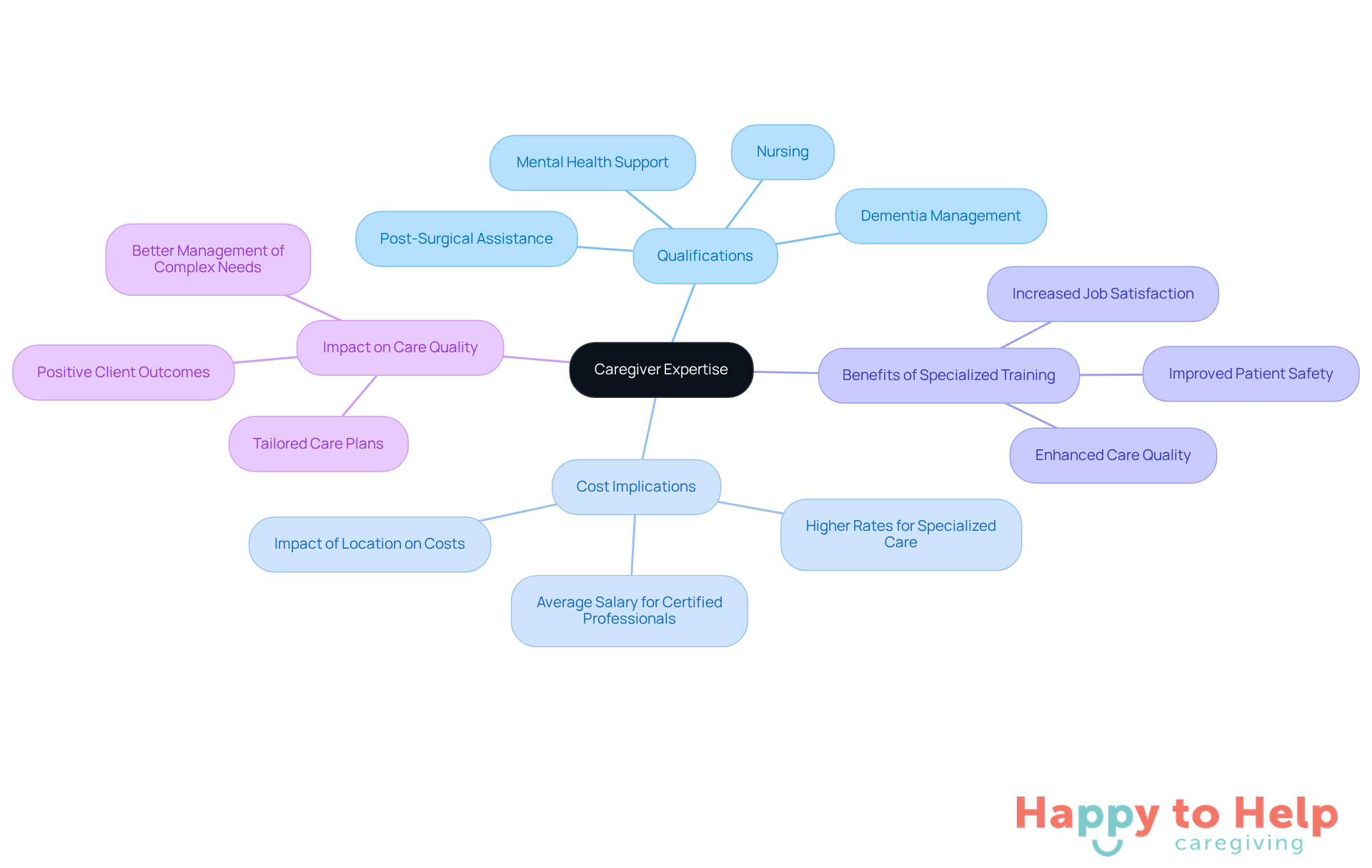
Determining the 24 hour live in care cost for live-in assistance can be challenging for families. The credentials and background of support staff play a crucial role in this decision. Providers with specialized training, such as certifications in dementia management or nursing, typically command higher rates due to their advanced skills and expertise.
For instance, individuals trained in dementia support can skillfully handle complex behaviors and improve the quality of life for clients, leading to enhanced overall care outcomes. Investing in a qualified provider not only ensures that specific needs are met but can also lower overall costs by reducing the risk of complications and hospitalizations.
Research indicates that specialized training significantly improves the effectiveness of care providers, enhancing patient safety and satisfaction. For example, those trained in post-surgical assistance or mental health support are better equipped to manage the unique challenges posed by their clients, promoting a more supportive atmosphere.
The average salary for certified professionals often exceeds that of non-certified counterparts, reflecting the added value of their expertise. Families should thoroughly evaluate the degree of skill needed for their loved one's particular requirements. This understanding is vital for efficient budgeting and ensuring quality assistance, particularly in relation to the 24 hour live in care cost.
By emphasizing caregiver qualifications, families can make informed choices that not only meet urgent support needs but also enhance long-term well-being.
Care Frequency: The Role of 24/7 Availability in Cost Determination
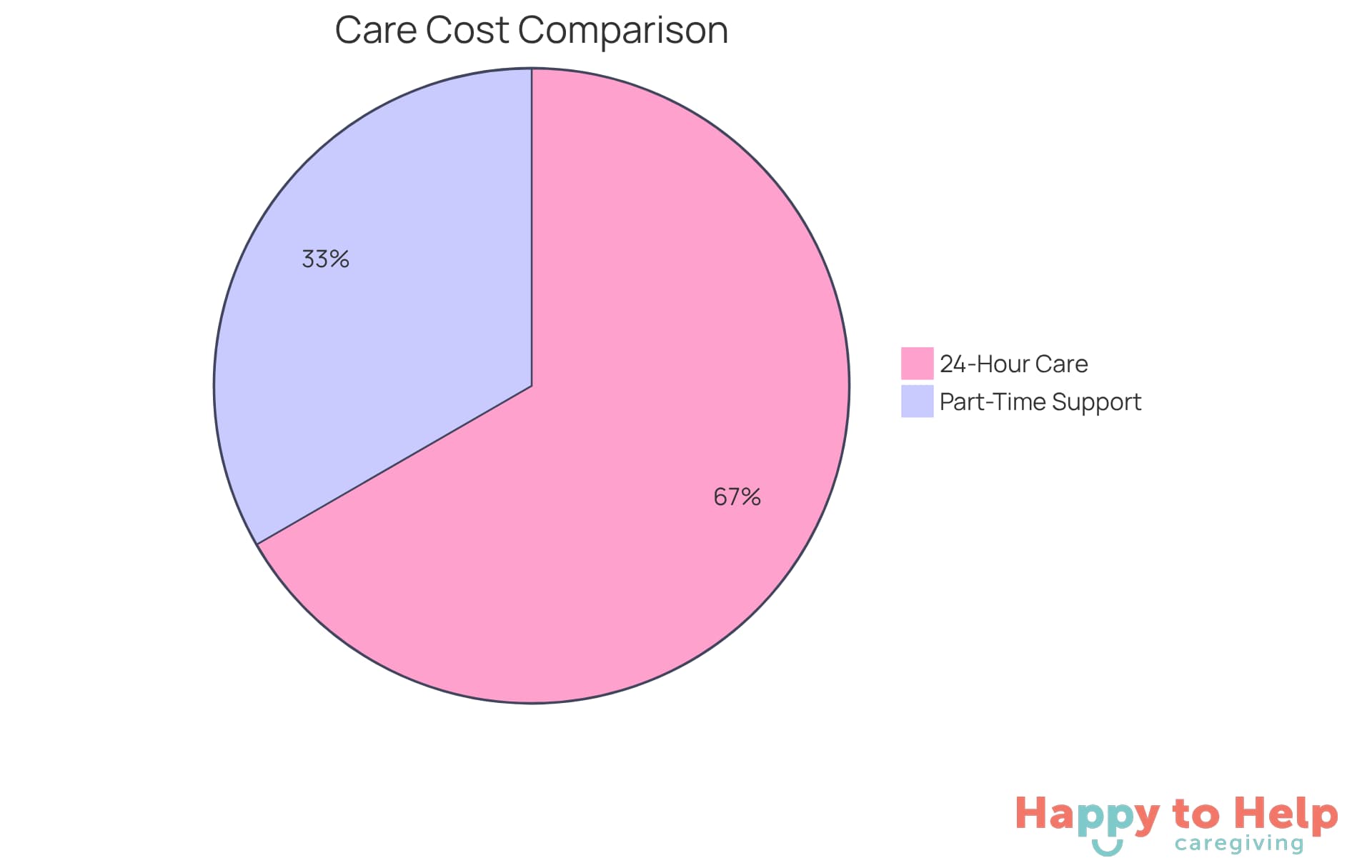
Problem: The frequency of assistance needed significantly impacts the cost of live-in support. Families seeking 24 hour live in care cost face higher expenses due to the continuous support required for individuals with complex needs or those needing constant supervision.
Agitate: In 2025, the national median cost for 24 hour live in care cost is projected to range from $21,823 to $24,006 monthly. This reflects the comprehensive nature of such services. As Jeremy Clerc, a senior support expert, notes, "The investment in ongoing assistance can lead to enhanced results for clients, making it a valuable consideration for households prioritizing their loved ones' well-being." Conversely, families needing only part-time support may discover more economical options, with costs significantly lower than full-time assistance. It's crucial to recognize that Medicare does not cover the 24 hour live in care cost, which can lead to unexpected expenses for families.
Solution: Long-term support insurance may help offset some of these costs, providing additional financial relief. Understanding the relationship between service frequency and expenses is vital for families to select the appropriate level of assistance while managing their finances effectively. Caregiving experts emphasize that the right level of support can greatly enhance both the quality of life for clients and the financial strategies for families.
Hidden Costs: Understanding Extra Charges in Live-In Care
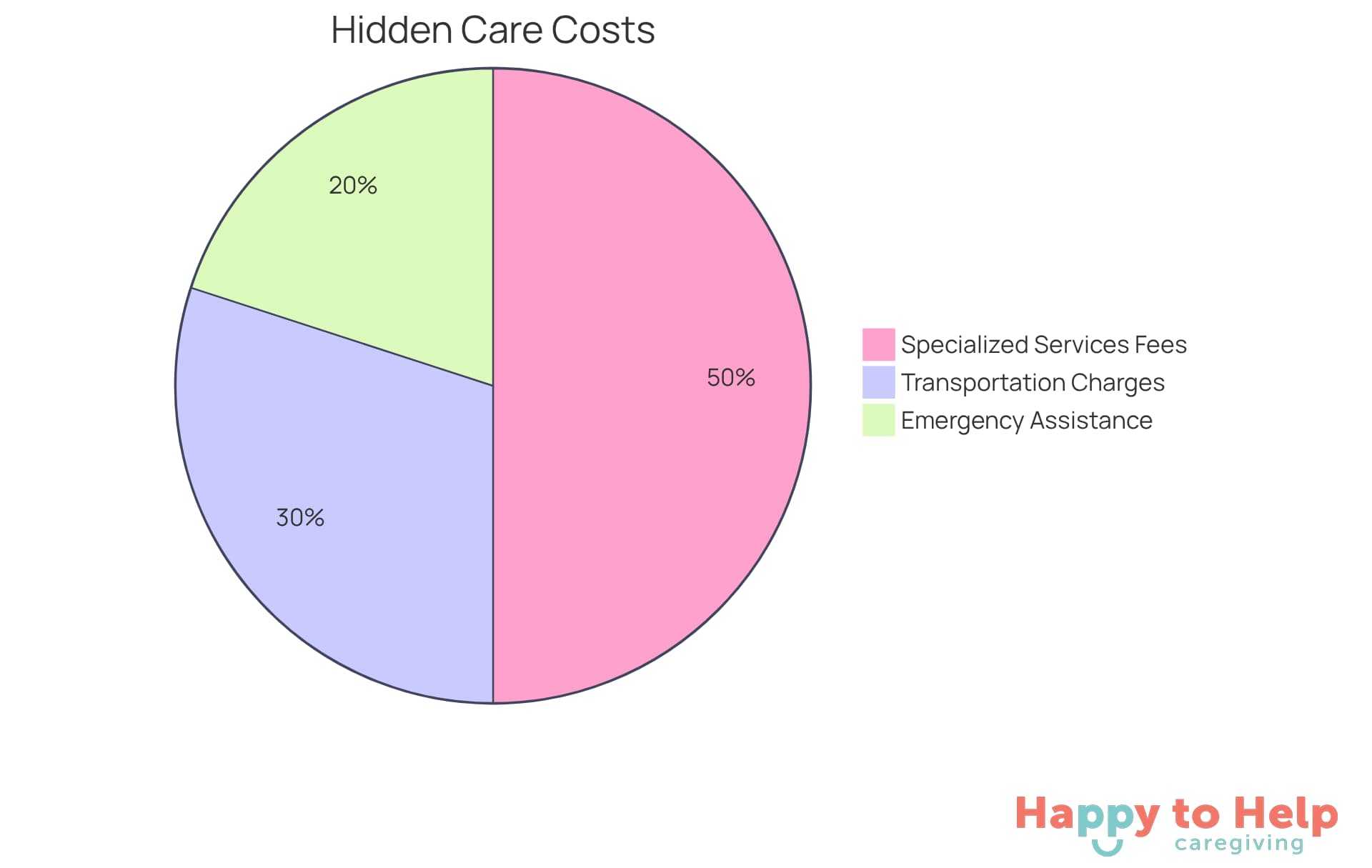
When planning finances for live-in assistance, households face a significant problem: potential concealed expenses that can greatly impact their financial strategy. These hidden costs may include:
- Extra fees for specialized services
- Transportation charges for outings
- Expenses related to emergency assistance
For instance, families often encounter unforeseen fees when specialized help is required for conditions like dementia, where continuous supervision is crucial. This can lead to increased total hours and expenses. In fact, statistics reveal that households can incur monthly costs exceeding $15,000 for ongoing support, with the 24 hour live-in care cost potentially reaching $290,000 annually. This highlights the urgent need for comprehensive financial planning.
To mitigate these surprises, it’s essential for households to discuss all potential expenses with their service provider upfront. This proactive approach not only aids in creating a more accurate budget but also ensures that families are fully prepared for the financial commitment of live-in support. Financial advisors emphasize that understanding these hidden costs is vital for effective budgeting, as households may spend an average of over $7,000 each year on out-of-pocket caregiving expenses. By recognizing and preparing for these additional costs, families can navigate the complexities of in-home assistance more effectively, maintaining financial stability while providing necessary support for their loved ones. Furthermore, developing a thorough budget that accounts for potential concealed expenses can enhance financial readiness.
Technology Integration: How Innovations Affect Care Costs
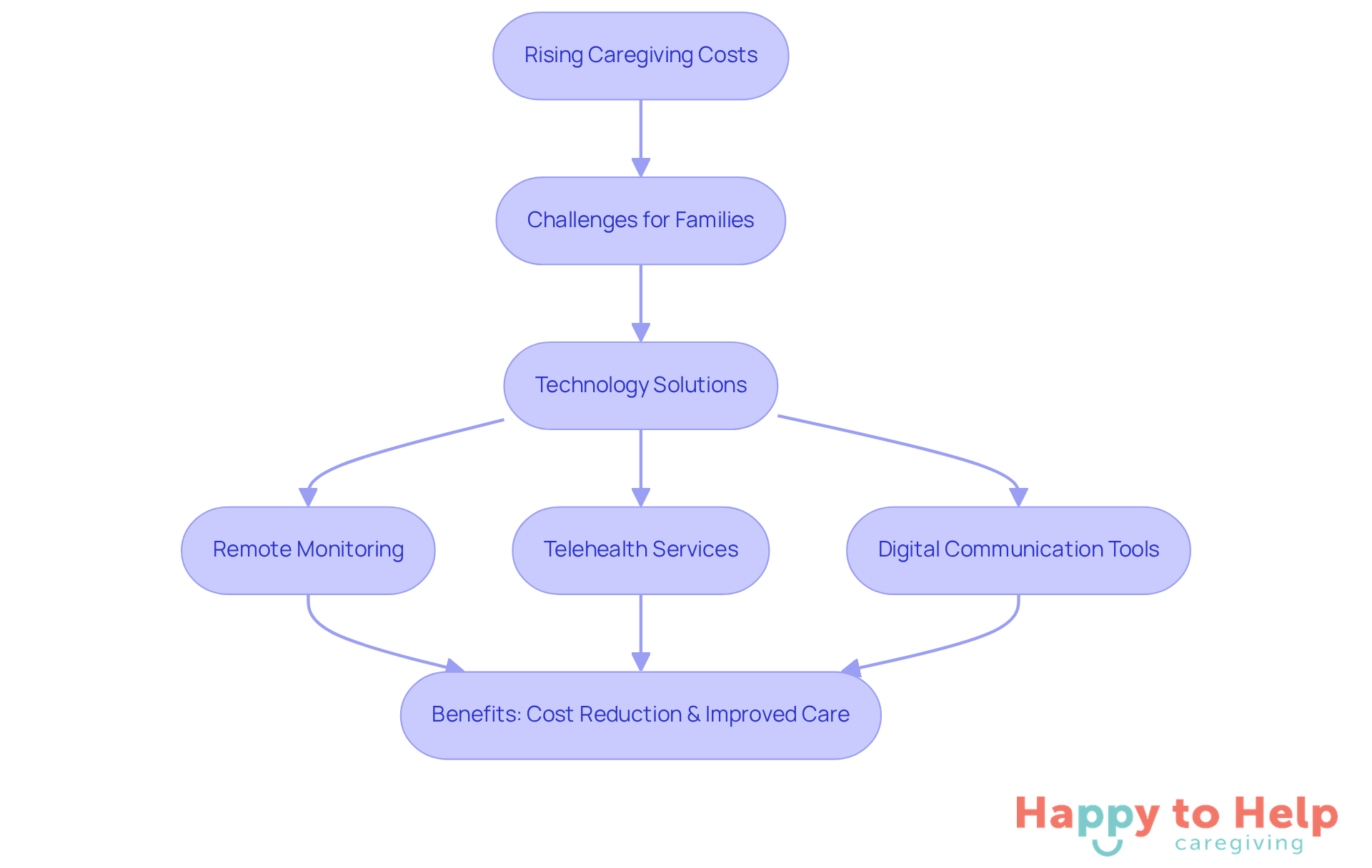
The rising costs of caregiving services pose a significant challenge for families, often leading to financial strain and reduced service quality. Caregivers face the dual pressure of managing expenses while ensuring their loved ones receive the best care possible. This situation can lead to increased reliance on emergency procedures and hospital stays, further escalating costs.
Fortunately, technology offers a viable solution. Innovations like remote monitoring systems, telehealth services, and digital communication tools not only enhance caregiver efficiency but also minimize the need for in-person visits. These advancements can significantly improve service delivery, resulting in cost reductions for households. For instance, studies indicate that health-related Internet usage among older adults can decrease informal assistance hours by nearly 28%, providing substantial financial relief.
As families evaluate support options for their loved ones, it's crucial to consider how technology can play a role in their caregiving plans. By integrating these tools, families can achieve both economic and health benefits. Moreover, case studies demonstrate that home health providers utilizing telehealth and remote monitoring have successfully improved patient outcomes while managing expenses effectively. This highlights the transformative potential of technology in caregiving dynamics.
Caregiver Well-Being: The Impact of Burnout on Live-In Care Costs
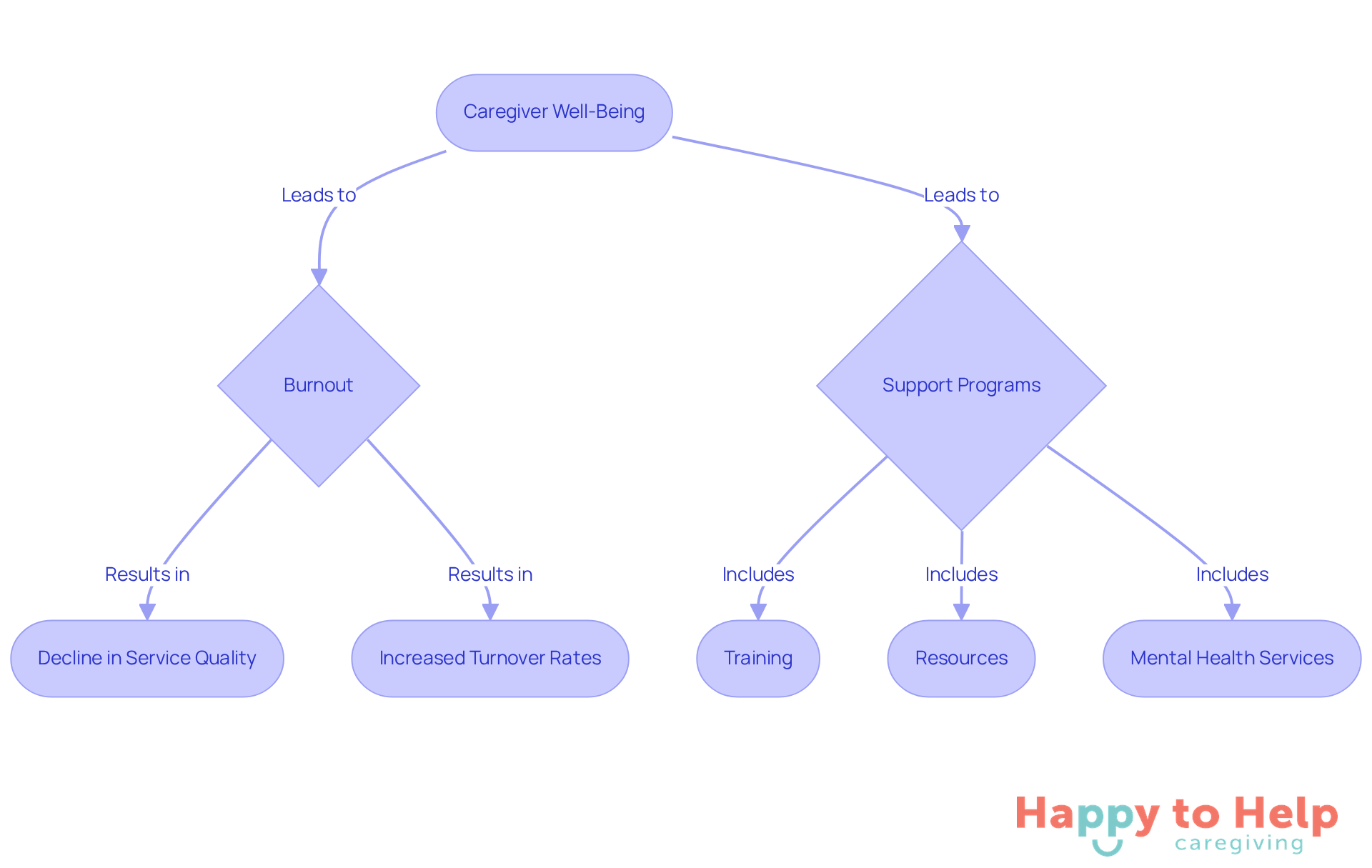
The health of caregivers plays a crucial role in determining the 24 hour live in care cost associated with live-in assistance. When caregivers experience burnout, the quality of service can decline sharply, leading to higher turnover rates and increased expenses for families. A report reveals that over half of adult supporters and those in the sandwich generation are at risk of burnout, which can result in emotional and physical exhaustion, ultimately affecting their caregiving abilities.
To address these challenges, it’s vital to support caregivers through comprehensive training, access to resources, and mental health services. Programs focused on caregiver well-being not only enhance the quality of care provided but also reduce turnover rates, which can be financially burdensome for households. For instance, the average family supporter spends around $7,200 annually out of pocket on caregiving costs, which emphasizes the financial strain and the significance of 24 hour live in care cost that can arise from inadequate support.
Mental health experts emphasize the importance of recognizing and addressing burnout among caregivers to maintain a healthy support environment. As specialists note, "Support programs, including peer support groups and respite assistance, have shown the ability to alleviate feelings of isolation and provide valuable coping strategies for caregivers." Case studies indicate that caregivers who receive adequate support report improved mental well-being and job satisfaction, leading to better outcomes for those they care for.
Ultimately, families should prioritize the well-being of their caregivers as a key component of their support strategy. Seeking specific forms of assistance, such as joining local support groups or utilizing respite services, can significantly improve the well-being of those who provide care. A happy and healthy caregiver is more likely to deliver consistent, high-quality care, resulting in better outcomes for their loved ones.
Your Path Forward
Understanding the factors that influence the cost of 24-hour live-in care is essential for families navigating the complexities of caregiving. Families often face the challenge of managing expenses while ensuring their loved ones receive the necessary support. This article highlights how personalized in-home care services, regional pricing variations, service scope, financing options, and caregiver qualifications all play a pivotal role in determining overall expenses.
- Geographic location significantly impacts care costs, with urban areas typically commanding higher rates due to demand and living expenses.
- The range of services included in live-in care can vary, affecting both quality and pricing.
- Families are encouraged to explore various payment methods and financing options to alleviate financial pressures while ensuring their loved ones receive the necessary support.
- Furthermore, the qualifications and well-being of caregivers are crucial, as they directly influence care quality and associated costs.
Ultimately, securing live-in care is not merely about managing expenses but also about enhancing the quality of life for those in need. Embracing personalized solutions, leveraging technology, and prioritizing caregiver well-being can lead to better outcomes for families. As the demand for in-home care continues to rise, understanding these factors will empower families to provide the best possible support for their loved ones while effectively managing costs.
https://iframe.tely.ai/cta/eyJhcnRpY2xlX2lkIjogIjY5MjI2NTAzYzVlZWQyYmRiNTU3YmViYSIsICJjb21wYW55X2lkIjogIjY4ZWU1ZGNhNzMxNzYyNTU3ZjNjOTVjMSIsICJpbmRleCI6IG51bGwsICJ0eXBlIjogImFydGljbGUifQ==Frequently Asked Questions
What is the main focus of Happy to Help Caregiving?
Happy to Help Caregiving focuses on providing personalized in-home assistance services tailored to the unique needs of each client, addressing the lack of individualized support in the caregiving industry.
Why is personalized support important for seniors and individuals with special needs?
Personalized support is crucial as it leads to higher satisfaction and better health outcomes, enhancing well-being and potentially reducing the need for more intensive and costly interventions.
What is the projected demand for home support services by 2034?
The demand for home support services is projected to rise by 22% by 2034.
How does aging in place relate to personalized support?
With 77% of adults over 50 preferring to age in place, providing personalized support is essential for ensuring emotional well-being and financial sustainability in in-home assistance services.
What role does technology play in personalized caregiving?
Technology enables the creation of customized care plans that address individual requirements, ensuring that care is both effective and efficient.
How does geographic location affect the cost of 24-hour live-in care?
Geographic location significantly affects 24-hour live-in care costs, with urban areas typically facing higher expenses due to increased demand and living prices, while rural areas often offer more affordable options.
What are some average costs for 24-hour live-in care in different states?
In California, the average monthly cost is about $22,080, while in New York, it can reach approximately $25,520. In contrast, Mississippi and Alabama average around $16,000 per month for similar services.
How do local regulations impact care costs?
Local regulations, such as stringent requirements for caregivers in states like Massachusetts, can lead to higher prices due to the need for specialized training and certification.
What factors should families consider when assessing in-home support options?
Families should consider geographic location, availability of caregivers, local regulations, rising costs, and the customization of support plans to create a practical budget and make informed decisions.
What services are included in 24-hour live-in care?
24-hour live-in care includes assistance with daily living activities such as bathing, dressing, meal preparation, medication management, and companionship, as well as specialized support for individuals with chronic conditions or those recovering from surgery.
List of Sources
- Happy to Help Caregiving: Personalized In-Home Care Services
- 2025 Home Care Statistics: Trends & Insights To Know (https://premierhcinc.com/blog/home-care-statistics)
- New Survey Reveals Americans Want More Personalized Care Insights from their Health Tech (https://prnewswire.com/news-releases/new-survey-reveals-americans-want-more-personalized-care-insights-from-their-health-tech-302578448.html)
- Growing Trend of Private Pay Home Care for Elderly (https://regencyhcs.com/blog/growing-trend-of-private-pay-home-care-for-elderly)
- State of home care in 2025 (https://mcknightshomecare.com/state-of-home-care-in-2025)
- Home Care Industry Trends to Watch in 2025 (https://firstlighthomecare.com/blog/home-care-industry-trends)
- State Variations: How Location Affects 24-Hour Care Costs
- 24/7 In-Home Care Costs in 2025 - Assisted Living Magazine (https://assistedlivingmagazine.com/24-7-in-home-care-costs-in-2025)
- Navigating Home Care Amidst the Tide of Rising Costs | Amada (https://amadaseniorcare.com/2024/03/navigating-home-care-amidst-the-tide-of-rising-costs)
- Average Cost of Long-Term Care by State + How to Plan (https://retireguide.com/guides/cost-of-long-term-care-by-state)
- 24-hour In-home Care Cost In The US (2025)? - Home Care Agency | Global One Home Care Boston (https://globalonehomecare.com/24-7-in-home-care-cost)
- Home Care Costs in 2025: A State-by-State Guide (https://aplaceformom.com/caregiver-resources/articles/in-home-care-costs)
- Service Scope: What’s Included in 24-Hour Live-In Care?
- How Much Does 24/7 In-Home Care Cost? | HomeCare.org (https://homecare.org/the-cost-of-24-7-in-home-care)
- How Much Does 24/7 Home Care Cost? (https://aplaceformom.com/caregiver-resources/articles/24-hour-in-home-care)
- 24 Hour In-Home Care Cost (https://ultimatecareny.com/resources/24-hour-in-home-care-cost)
- 20 Caregiver Quotes That Will Inspire You - MD Home Health (https://mdhomehealth.com/2018/06/10/20-caregiver-quotes-that-will-inspire-you)
- CaringBridge (https://caringbridge.org/resources/inspirational-quotes-on-caregiving)
- Payment Options: How to Finance 24-Hour Live-In Care
- Breaking Down the Cost of In-Home Care: What Families Need to Know (https://seniorlivingnearme.com/resources/breaking-down-the-cost-of-in-home-care-what-families-need-to-know)
- Most Americans expect to experience a long-term care event, and nearly 3 in 4 want in-home care if it happens to them - according to Northwestern Mutual Planning & Progress Study (https://news.northwesternmutual.com/2025-10-07-Most-Americans-expect-to-experience-a-long-term-care-event,-and-nearly-3-in-4-want-in-home-care-if-it-happens-to-them-according-to-Northwestern-Mutual-Planning-Progress-Study)
- The Affordability of Long-Term Care and Support Services: Findings from a KFF Survey | KFF (https://kff.org/health-costs/the-affordability-of-long-term-care-and-support-services)
- 24/7 In-Home Care Costs in 2025 - Assisted Living Magazine (https://assistedlivingmagazine.com/24-7-in-home-care-costs-in-2025)
- Comparative Costs: Live-In Care vs. Assisted Living and Nursing Homes
- The Cost of Assisted Living vs. In-Home Care: What to Consider (https://thehighpointresidence.com/blog/the-cost-of-assisted-living-vs-in-home-care-what-to-consider)
- Comparing the Cost of Senior Living vs. In-Home Care | Where You Live Matters (https://whereyoulivematters.org/resources/home-care-vs-senior-living)
- Cost of Long Term Care by State | Cost of Care Report | Carescout (https://carescout.com/cost-of-care)
- What Is the Cost of Assisted Living vs. Home Care? - Cappella of Grand Junction (https://cappellagrandjunction.com/blog/what-is-the-cost-of-assisted-living-vs-home-care)
- The Cost of Assisted Living vs In-Home Care (https://courtyardsl.com/resources/blog/cost-assisted-living-vs-in-home-care)
- Caregiver Expertise: How Qualifications Influence Cost
- Why Specialty-Specific Training Matters in Home Care (https://learn2care.us/blog/specialty-specific-training-in-home-care)
- Breaking Down the Cost of In-Home Care: What Families Need to Know (https://seniorlivingnearme.com/resources/breaking-down-the-cost-of-in-home-care-what-families-need-to-know)
- Enhancing Caregiver Skills Through Specialized Training (https://ltcnews.com/articles/enhancing-caregiver-skills-specialized-training)
- At Home Care Pricing: Essential Industry Statistics for 2025 - Assisting Hands Rockford (https://assistinghands.com/100/illinois/rockford/blog/at-home-care-pricing-essential-industry-statistics-for-2025)
- 24/7 In-Home Care Costs in 2025 - Assisted Living Magazine (https://assistedlivingmagazine.com/24-7-in-home-care-costs-in-2025)
- Care Frequency: The Role of 24/7 Availability in Cost Determination
- How Much Does 24/7 Home Care Cost? (https://aplaceformom.com/caregiver-resources/articles/24-hour-in-home-care)
- Paying for 24-Hour Care | How Much Is It & How Do I Pay? (https://corewoodcare.com/news/paying-for-247-care)
- How Much Does 24/7 In-Home Care Cost? (https://agingcare.com/articles/24-hour-in-home-care-cost-477984.htm)
- 24/7 In-Home Care Costs in 2025 - Assisted Living Magazine (https://assistedlivingmagazine.com/24-7-in-home-care-costs-in-2025)
- How Much Does 24-Hour Home Care Cost in New Jersey? (https://h2hhc.com/blog/how-much-24-hour-home-care-cost-in-new-jersey)
- Hidden Costs: Understanding Extra Charges in Live-In Care
- At Home Care Pricing: Essential Industry Statistics for 2025 - Assisting Hands Rockford (https://assistinghands.com/100/illinois/rockford/blog/at-home-care-pricing-essential-industry-statistics-for-2025)
- The Hidden Financial Burden of Caregiving | Parsons House (https://parsonshouseaustin.com/the-hidden-financial-burden-of-caregiving)
- Hidden Costs of Aging at Home | Longhorn Village (https://longhornvillage.com/blog/uncovering-the-hidden-costs-of-aging-at-home)
- 9 Inspiring Budgeting Quotes (and How You Can Use Them to Take Action NOW) - Atypical Finance (https://atypicalfinance.com/9-inspiring-budgeting-quotes-and-how-you-can-use-them-to-take-action-now)
- 14 Quotes From Our Favorite Money Saving Experts (https://chime.com/blog/quotes-from-money-saving-experts)
- Technology Integration: How Innovations Affect Care Costs
- 30 Quotes About the Future of Healthcare: Expert Takes (https://deliberatedirections.com/quotes-future-of-healthcare)
- 10 Insights from Healthcare Innovators: The Best Quotes from the ‘Leader to Leader’ Podcast in 2024 - Healthcare IT Leaders (https://healthcareitleaders.com/blog/insights-from-healthcare-innovators)
- How Technology will Transform Senior Care in 2025 (https://thecareconcierges.com/how-technology-will-transform-senior-care-in-2025)
- Impact of Older Adults’ Internet Use on Economic Burden of Informal Caregiving - Jeehoon Kim, Heesoo Joo, Sally A. Hageman, 2025 (https://journals.sagepub.com/doi/10.1177/07334648241311653)
- Home Care Providers Turn to Tech for More Flexible, Cost-Effective Models (https://homehealthcarenews.com/2025/02/home-care-providers-turn-to-tech-for-more-flexible-cost-effective-models)
- Caregiver Well-Being: The Impact of Burnout on Live-In Care Costs
- The Hidden Costs of Caregiver Burnout (And What to Do About It) - Emory Mills (https://emorymills.com/blogs/the-hidden-costs-of-caregiver-burnout)
- The Caregiving Landscape: Data & Insights on the Caregiver Experience in the U.S. (https://caregiveraction.org/caregiver-statistics)
- Caregiving Crisis: 45% Increase in Americans Providing Care (https://aarp.org/caregiving/basics/caregiving-in-us-survey-2025)
- 'I don't know where to start.' Parents and caregivers are burned out. Who's most at risk? (https://usatoday.com/story/money/2025/04/04/parents-caregivers-burnt-out-help/82695959007)
- As Family Caregiving Grows, So Does the Need for Reform - Medicare Rights Center (https://medicarerights.org/medicare-watch/2025/08/14/as-family-caregiving-grows-so-does-the-need-for-reform)