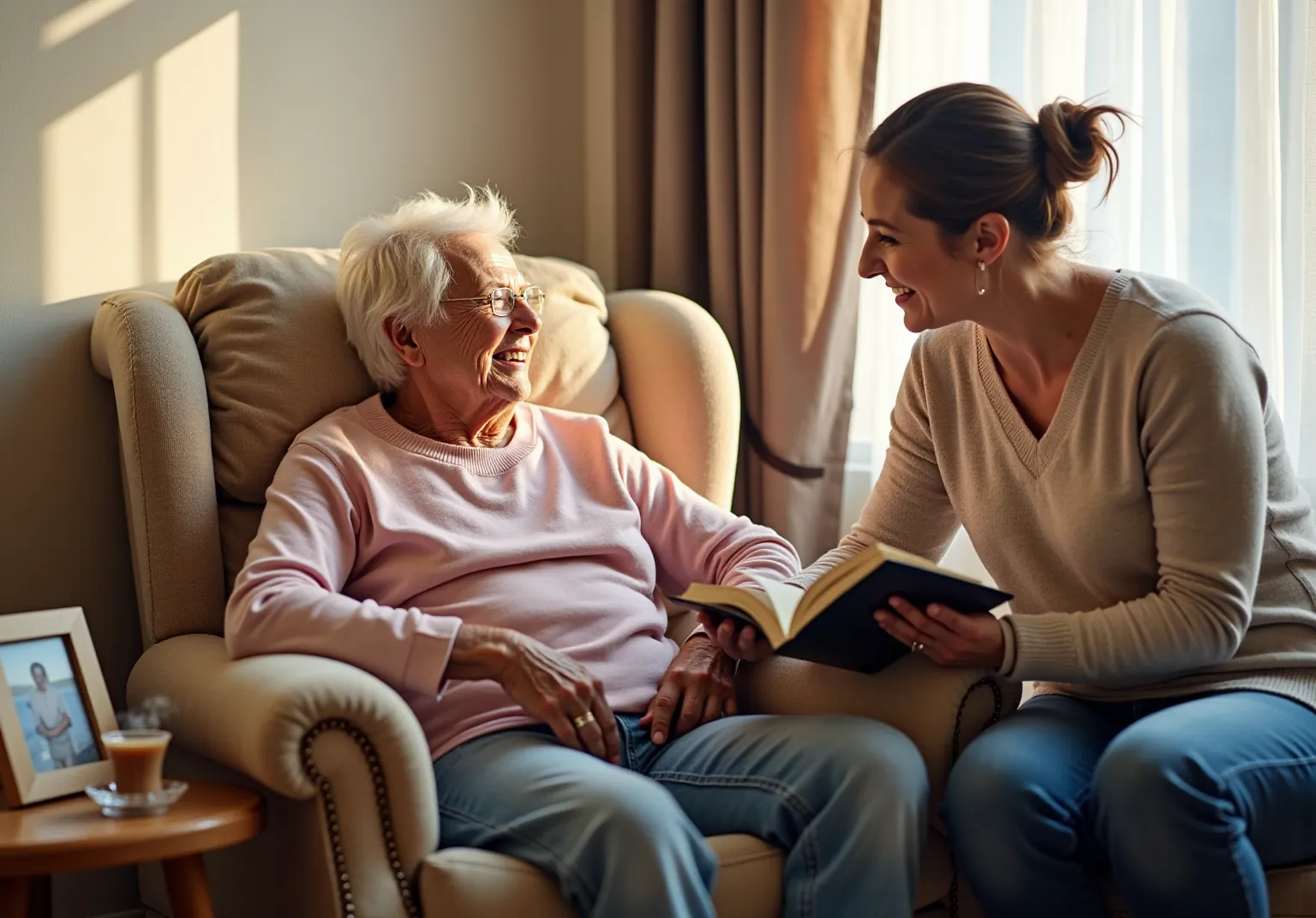
The Importance of Choose a Companionship Company
Loneliness among seniors is a pressing issue that profoundly impacts their mental and emotional well-being. Studies reveal that a significant portion of older adults frequently experience feelings of isolation, which can lead to serious health consequences.
The rise of companionship companies offers a promising solution. These services not only combat loneliness but also enhance the quality of life for elderly individuals. However, with so many options available, families may struggle to determine which companionship service will truly meet the unique needs of their loved ones.
To navigate this landscape, caregivers should consider the specific requirements of their elderly family members. Look for services that provide personalized companionship tailored to individual preferences and needs. Engaging with these companies can significantly improve the emotional health of seniors, fostering connections that alleviate feelings of isolation.
Happy to Help Caregiving: Personalized Companionship for Seniors
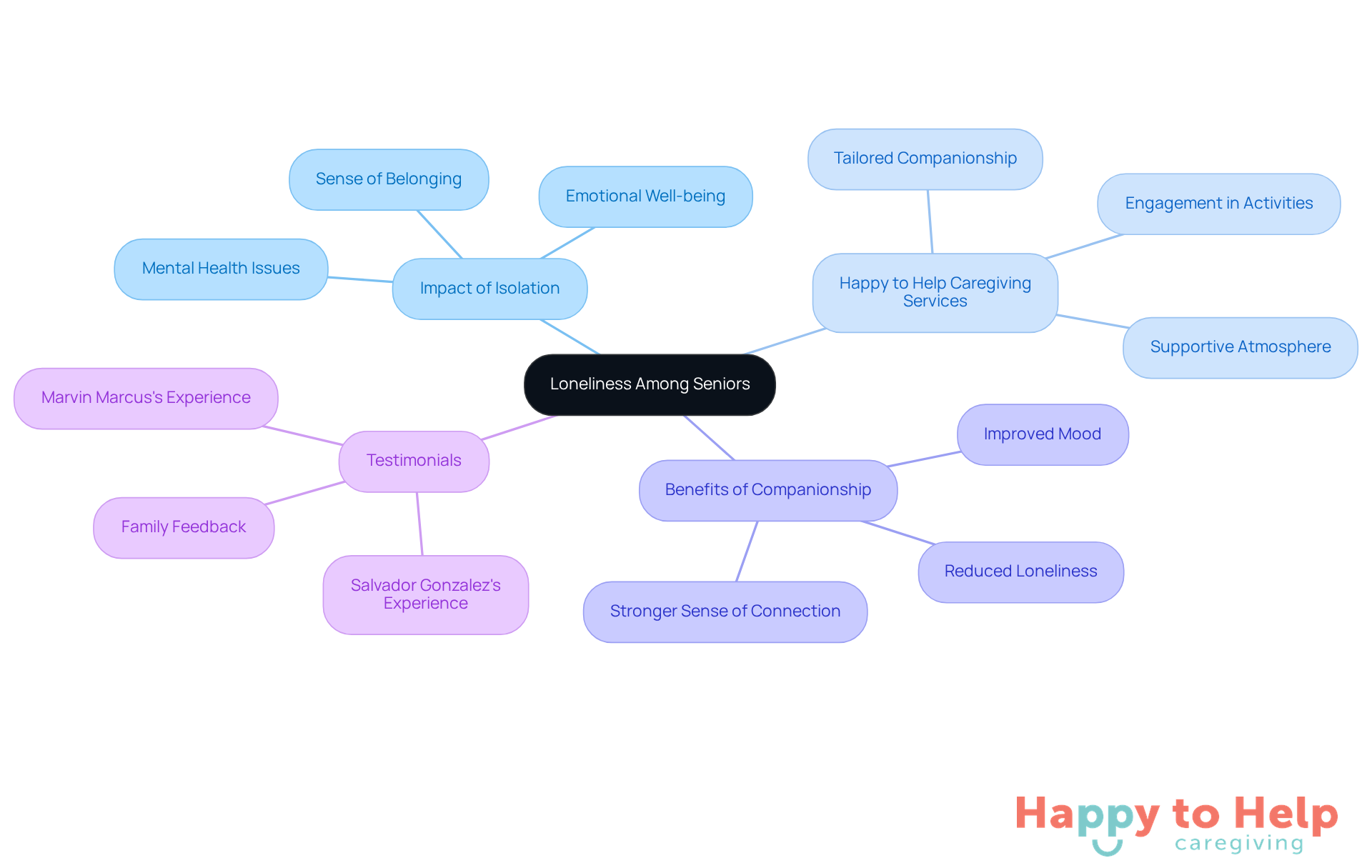
Isolation among elderly individuals is a significant issue, with studies indicating that one-third of U.S. adults aged 50 to 80 experience feelings of loneliness. This isolation can lead to detrimental effects on their mental and emotional well-being. Without proper companionship, older adults may struggle to maintain a sense of belonging and support in their daily lives.
Happy to Help Caregiving addresses this problem by providing tailored companionship services specifically designed for elderly individuals. Caregivers are trained to engage clients in meaningful activities, ensuring that each person receives the essential support and companionship needed to thrive in their own homes. This customized approach not only fosters a sense of belonging but also significantly enhances the overall well-being of older adults, making them feel valued and supported.
Research shows that older individuals who frequently receive companionship support report improved mood and a stronger sense of connection, which can effectively reduce feelings of loneliness. Programs like those offered by Happy to Help Caregiving exemplify how personalized care can lead to better health outcomes. Testimonials from families highlight the compassionate support their loved ones receive, reinforcing the positive impact of these services.
For example, Salvador Gonzalez, an 84-year-old resident, has formed a friendship with an AI companion, which has helped alleviate his feelings of loneliness. By emphasizing personal involvement, these services create a supportive atmosphere that allows older adults to maintain their autonomy while enjoying the comfort of home.
Emotional Support: Reducing Loneliness Through Companionship
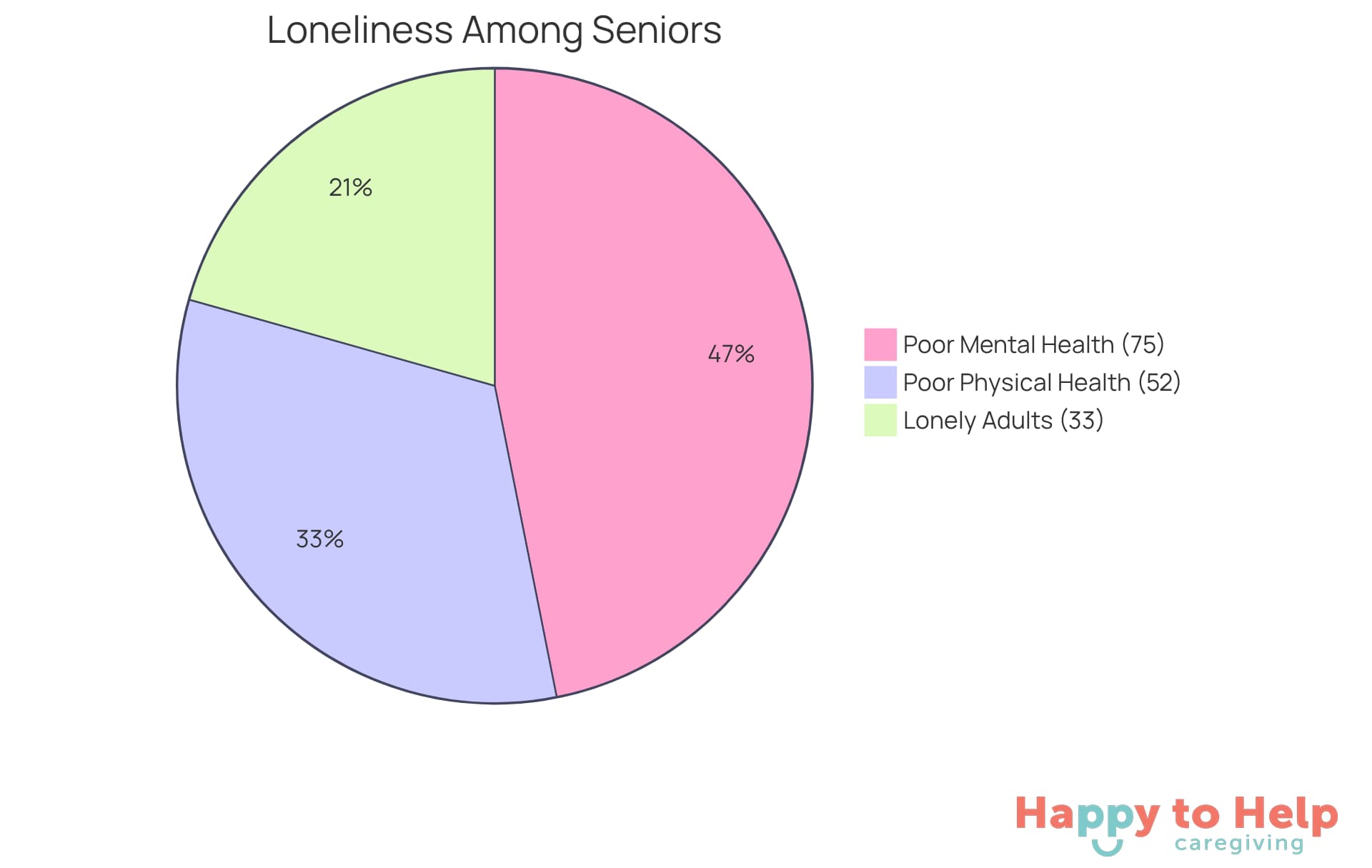
A companionship company serves as a crucial source of emotional support, significantly alleviating feelings of loneliness among elderly individuals. Loneliness is a pressing issue, with a national study revealing that 33% of older adults aged 50 to 80 felt lonely some of the time or often in 2024. This statistic underscores the ongoing challenge of loneliness in this demographic, particularly as 75% of older adults with fair or poor mental health reported feelings of loneliness.
The implications of loneliness are profound. Regular interactions with caregivers foster a sense of connection and belonging, which is essential for maintaining mental health. Research indicates that older adults who engage in social activities and receive consistent companionship company report significantly lower levels of depression and anxiety. In fact, 52% of older adults with fair or poor physical health also reported feeling lonely in 2024, highlighting the need for targeted companionship strategies.
To combat this issue, involving older adults in meaningful activities not only fights isolation but also enhances their overall mental well-being. Companionship company strategies that are personalized and tailored to the unique needs of older adults can ensure that the activities they participate in are both engaging and fruitful. By implementing these strategies, caregivers can provide vital support services that significantly improve the quality of life for the elderly.
Daily Living Assistance: Enhancing Independence with Companion Care
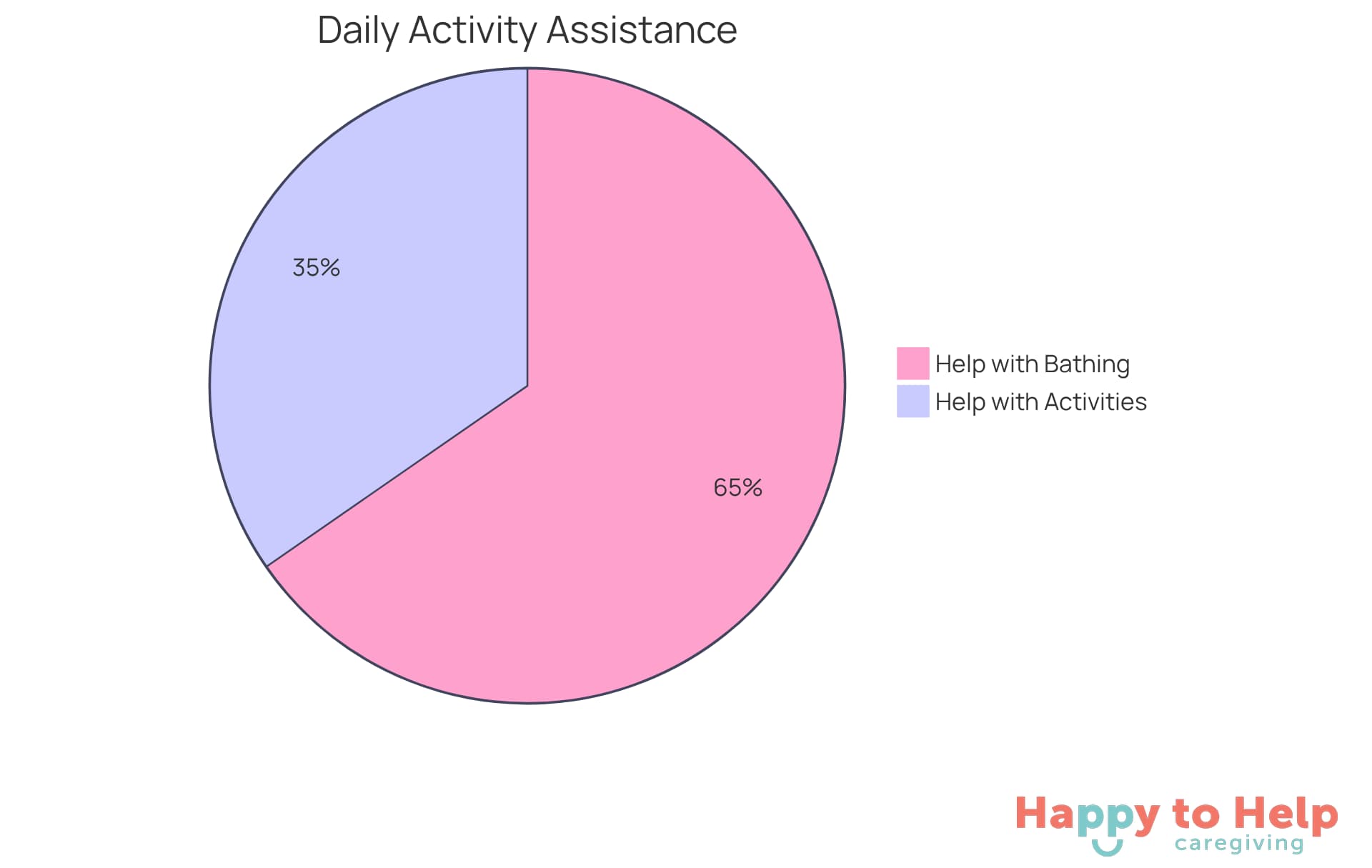
Companion care addresses a significant problem: many older adults struggle with daily living tasks. This challenge can lead to a loss of independence and increased safety risks. For instance, statistics show that:
- 44% of home support recipients need help with at least one daily activity.
- 83% specifically require assistance with bathing and showering.
By providing essential support, companion care enables older adults to maintain their independence and dignity. Caregivers play a crucial role in managing daily routines, which can greatly enhance the quality of life for these individuals. As one caregiver noted, "Offering daily living support is not merely about tasks; it's about enabling older adults to feel confident and appreciated in their own lives."
Moreover, engaging in regular activities with support providers not only combats loneliness but also fosters emotional stability, vital for overall health. Regular home safety inspections are also essential, ensuring that older adults' living environments remain secure and nurturing.
This comprehensive approach to companionship company enables older adults to thrive in familiar settings, reinforcing their independence and enhancing their overall well-being.
Tailored Care Plans: Customizing Companionship to Individual Needs
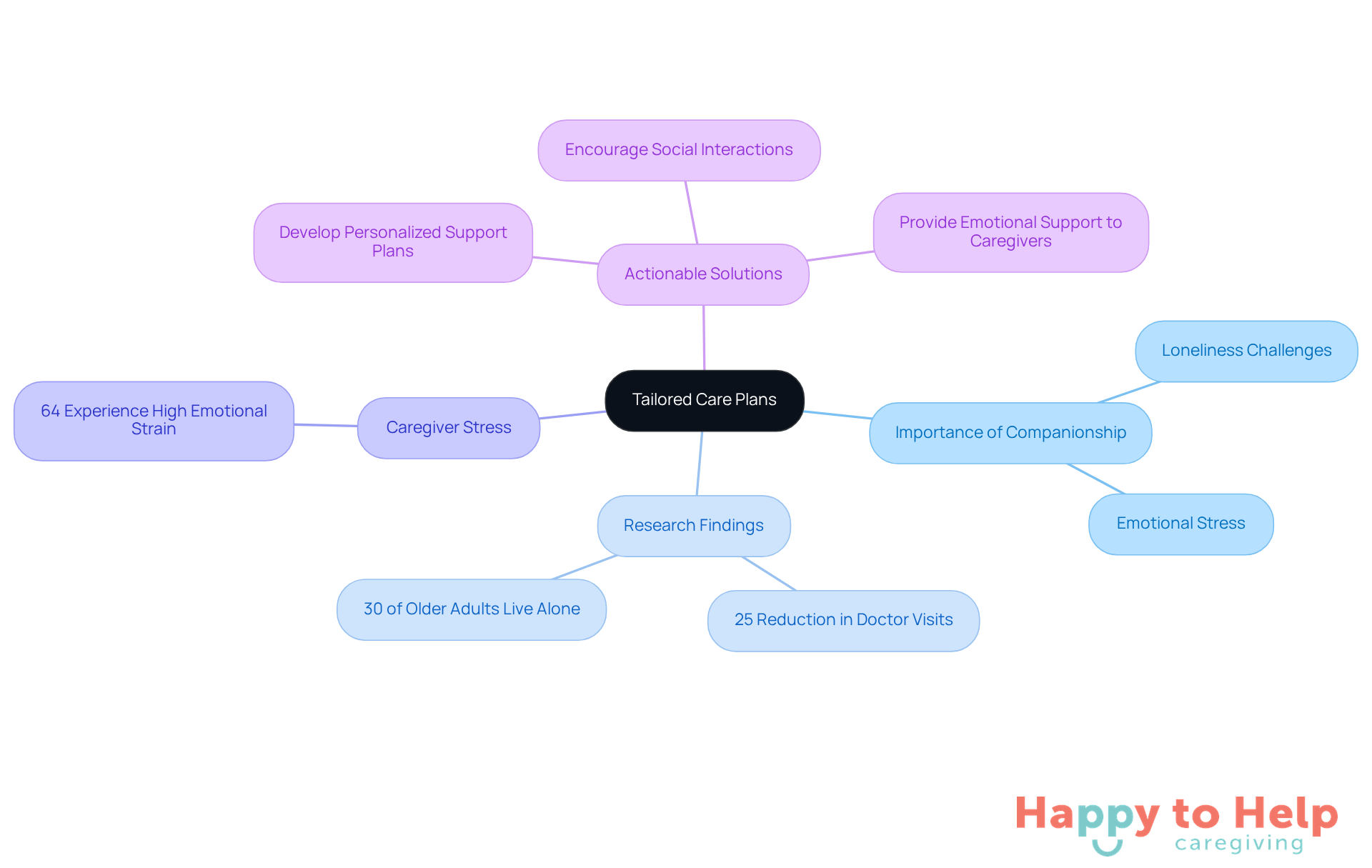
At Happy to Help Caregiving, loneliness and emotional stress are significant challenges faced by many elderly individuals and their caregivers. With almost 30% of older adults living alone, the need for companionship company care is more vital than ever. This type of care not only provides practical assistance but also fosters relational involvement that enhances daily life.
Research shows that personalized care plans can significantly improve the quality of life for seniors. Studies indicate that consistent companionship can lead to a 25% reduction in doctor visits and better mental health outcomes. By tailoring support plans to meet the unique needs and preferences of each elderly individual, caregivers can offer the most relevant assistance, whether it involves engaging clients in their favorite activities, promoting social interactions, or aiding with daily tasks.
As one provider noted, "In-home assistance adapts to each individual’s preferences and routines," underscoring the importance of personalization in creating a supportive environment. Furthermore, it's crucial to recognize that 64% of caregivers experience significant emotional stress. Therefore, ensuring that both elderly individuals and their caregivers receive the necessary support is essential.
To address these challenges, caregivers can implement the following actionable solutions:
- Develop personalized support plans that cater to the specific interests and routines of elderly clients.
- Encourage social interactions and participation in preferred activities to enhance mental well-being.
- Provide emotional support to caregivers to alleviate stress and improve their overall effectiveness.
By prioritizing personal needs and fostering deeper connections, support providers can significantly enhance mental and physical health outcomes for both seniors and their caregivers.
Social Engagement: Promoting Interaction and Mental Well-Being
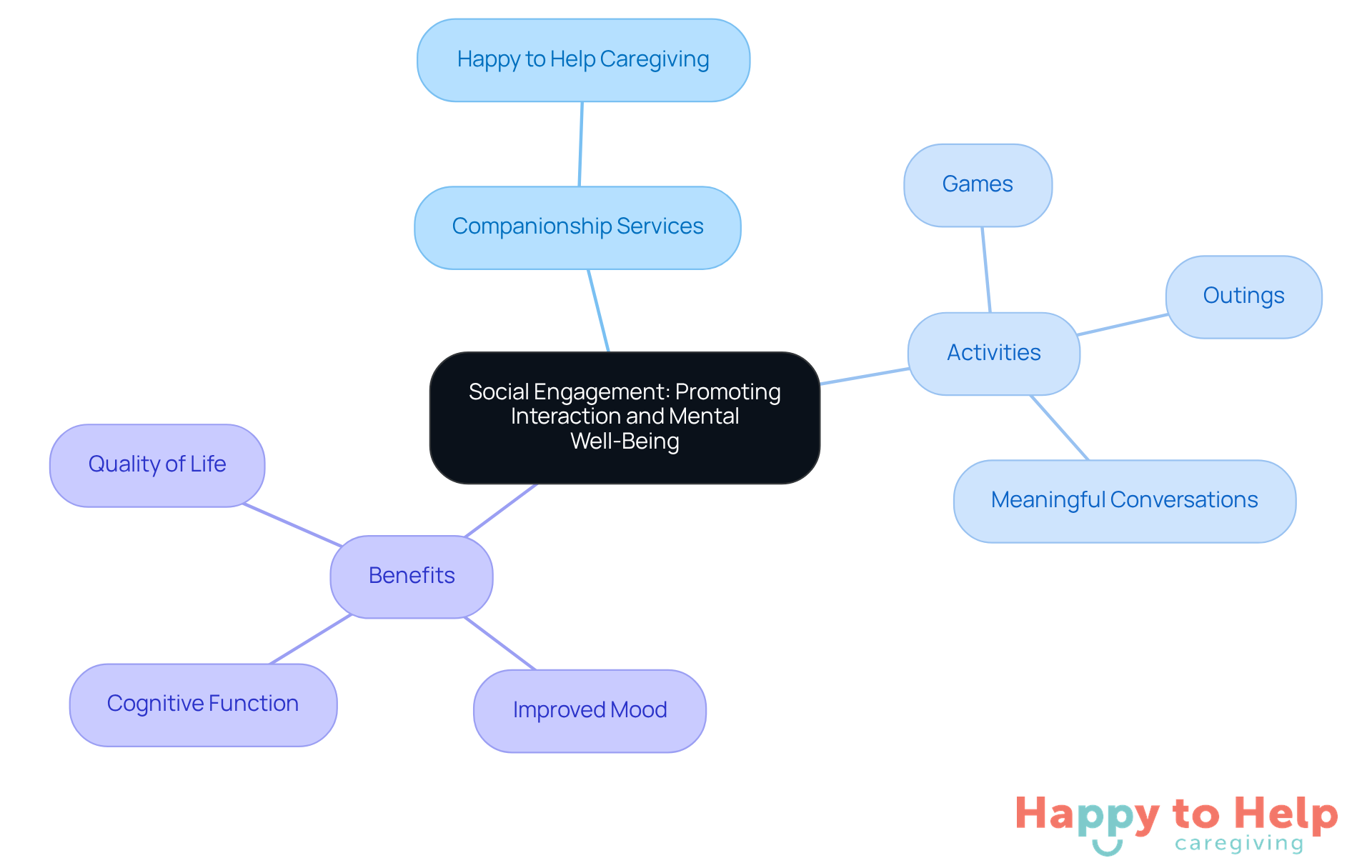
Companionship services address a significant problem: social isolation among older adults. This isolation can lead to serious mental health issues, including depression and anxiety. Research shows that lonely individuals are twice as likely to experience these challenges, highlighting the urgent need for effective solutions.
To combat this issue, caregivers at Happy to Help Caregiving facilitate various activities that promote social interaction. These include:
- Games
- Outings
- Meaningful conversations
Such engagements not only stimulate cognitive function but also significantly reduce feelings of loneliness. In fact, studies indicate that older adults who actively participate in social activities report improved mood and overall quality of life.
For example, the Baltimore Experience Corps Trial revealed that older adults who volunteered experienced notable improvements in both cognitive and physical health. By prioritizing social engagement, companionship company services contribute to a healthier, more active lifestyle, ultimately supporting seniors in thriving within their own homes.
In summary, fostering social interaction is essential for maintaining mental well-being in older adults. Caregivers can implement these strategies to enhance the quality of life for those they support.
Family Peace of Mind: Trusting Companionship Services for Loved Ones
Selecting a companionship company can be a daunting task for families. They often worry about whether their loved ones will receive the compassionate and trustworthy assistance they deserve. This concern is valid, as the quality of care directly impacts the well-being of the elderly.
Families need reassurance that the attendants are not only skilled but also genuinely care about their clients. This trust is crucial, as it fosters a sense of security for both the elderly and their families. Ongoing communication and strong connections between caregivers and clients are essential in building this trust.
Choosing a companionship company such as Happy to Help Caregiving can alleviate these concerns. By prioritizing compassionate care and establishing robust relationships, families can feel confident in the support being offered. This approach ensures that loved ones receive the attention and understanding they need, ultimately enhancing their quality of life.
Flexible Scheduling: Adapting Companion Care to Fit Lifestyle Needs
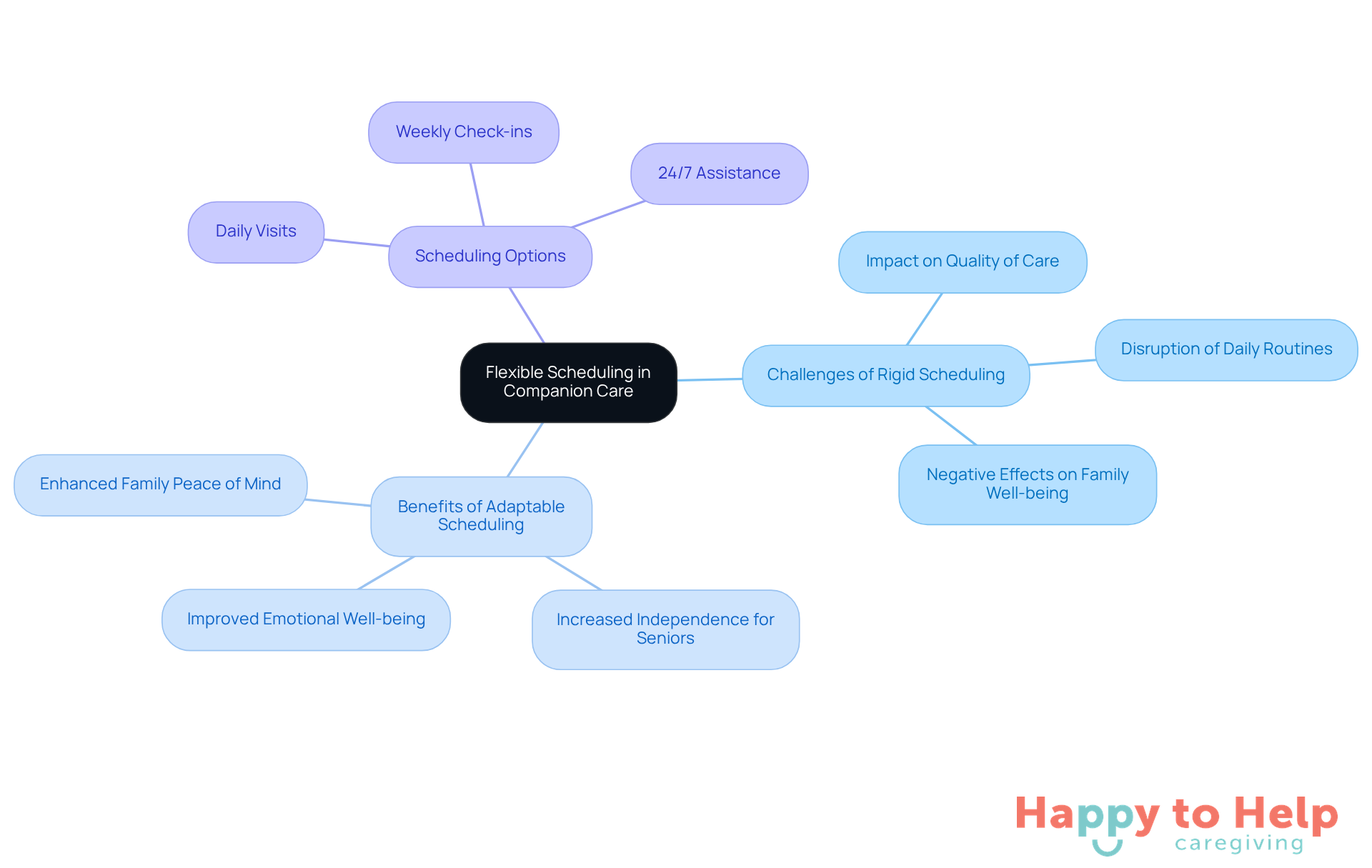
Caregivers often face the challenge of rigid scheduling that fails to accommodate the unique lifestyles of elderly individuals. This lack of flexibility can hinder the quality of care and disrupt the daily routines that are vital for seniors' happiness and comfort. As one caregiver noted, "No two families are the same, and neither are their support requirements," highlighting the need for tailored assistance solutions.
The implications of inflexible caregiving are significant. Families report that without a dependable support system, they struggle to relax, which can negatively impact their loved ones' well-being. Misty Delegato emphasizes this point: "Understanding that there’s a dependable support system available enables families to relax more." This underscores the importance of trustworthy assistance in caregiving.
A practical solution lies in offering adaptable scheduling options. Happy to Help Caregiving provides caregivers the ability to modify their availability for:
- Daily visits
- Weekly check-ins
- 24/7 assistance
This flexibility not only enhances the quality of care but also allows seniors to maintain their daily routines, which is crucial for their overall well-being. A case study reveals that older adults receiving adaptable assistance experience increased satisfaction and a greater sense of independence, with 85% reporting improved emotional well-being.
Moreover, flexible scheduling not only addresses immediate needs but also anticipates future ones, ensuring that care evolves alongside the changing circumstances of families. By implementing these adaptable solutions, caregivers can significantly uplift the quality of life for the seniors they support.
Expert Caregivers: Ensuring Quality and Compassion in Companionship
At Happy to Help Caregiving, the challenge of loneliness and isolation among seniors is significant. These feelings can greatly impact mental well-being, leading to a decline in overall health. Research shows that older adults who feel valued are more likely to engage in activities that promote their health and happiness.
To address this issue, support providers must not only be skilled professionals but also empathetic individuals dedicated to enhancing the lives of seniors. With an average of over a year of experience, caregivers possess a deep understanding of their clients' unique needs. This expertise allows them to deliver high-quality support that nurtures both physical and mental well-being, fostering an atmosphere that promotes independence and joy.
Compassionate care plays a vital role in elder support. It helps diminish feelings of loneliness and isolation, significantly influencing mental health. Continuous training for support providers enhances their ability to offer empathetic assistance, ensuring they are equipped to meet the evolving needs of their clients.
As an experienced care specialist notes, "Compassionate support nurtures strong, trusting connections between providers and residents, enhancing emotional well-being." This blend of experience and empathy not only improves the quality of companionship company services but also strengthens the bonds between support providers and elderly individuals, creating a more rewarding caregiving experience for everyone involved.
Technology Integration: Enhancing Communication in Companion Care
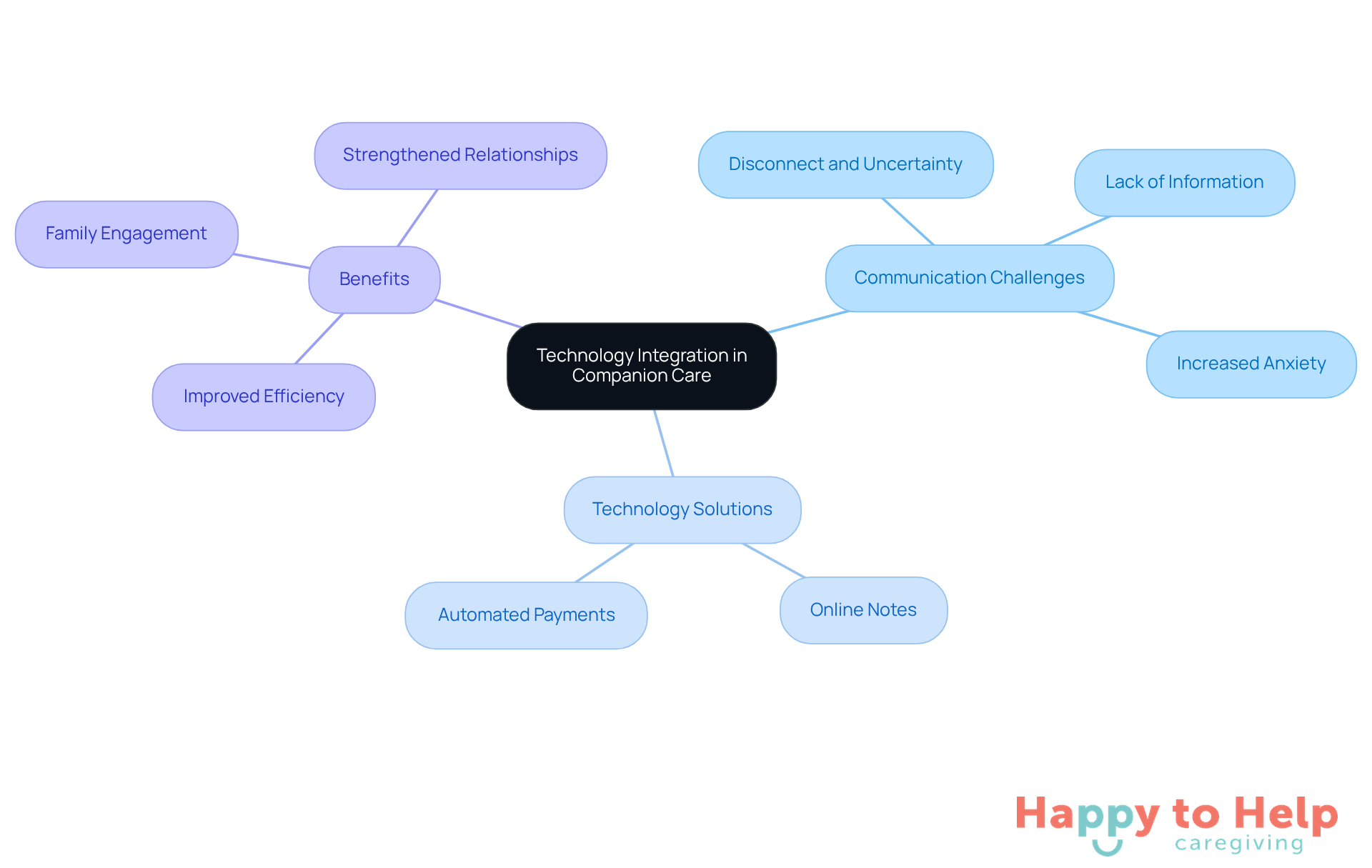
Communication challenges among caregivers, elderly individuals, and their families can lead to feelings of disconnect and uncertainty. Families often struggle to stay informed about their loved ones' care, which can heighten anxiety and diminish trust in the caregiving process.
To address these issues, Happy to Help Caregiving employs technology that enhances communication. Features like online notes for family members and automated payment options streamline the caregiving process. This ensures that families are always informed about their loved ones' care, fostering a sense of connection and transparency.
By integrating technology into caregiving, efficiency improves significantly. Families can stay engaged in their loved ones' lives, alleviating concerns and strengthening relationships. This approach not only addresses the communication gap but also empowers families to participate actively in the care of their elderly relatives.
Transformative Impact: How Companionship Services Change Senior Care
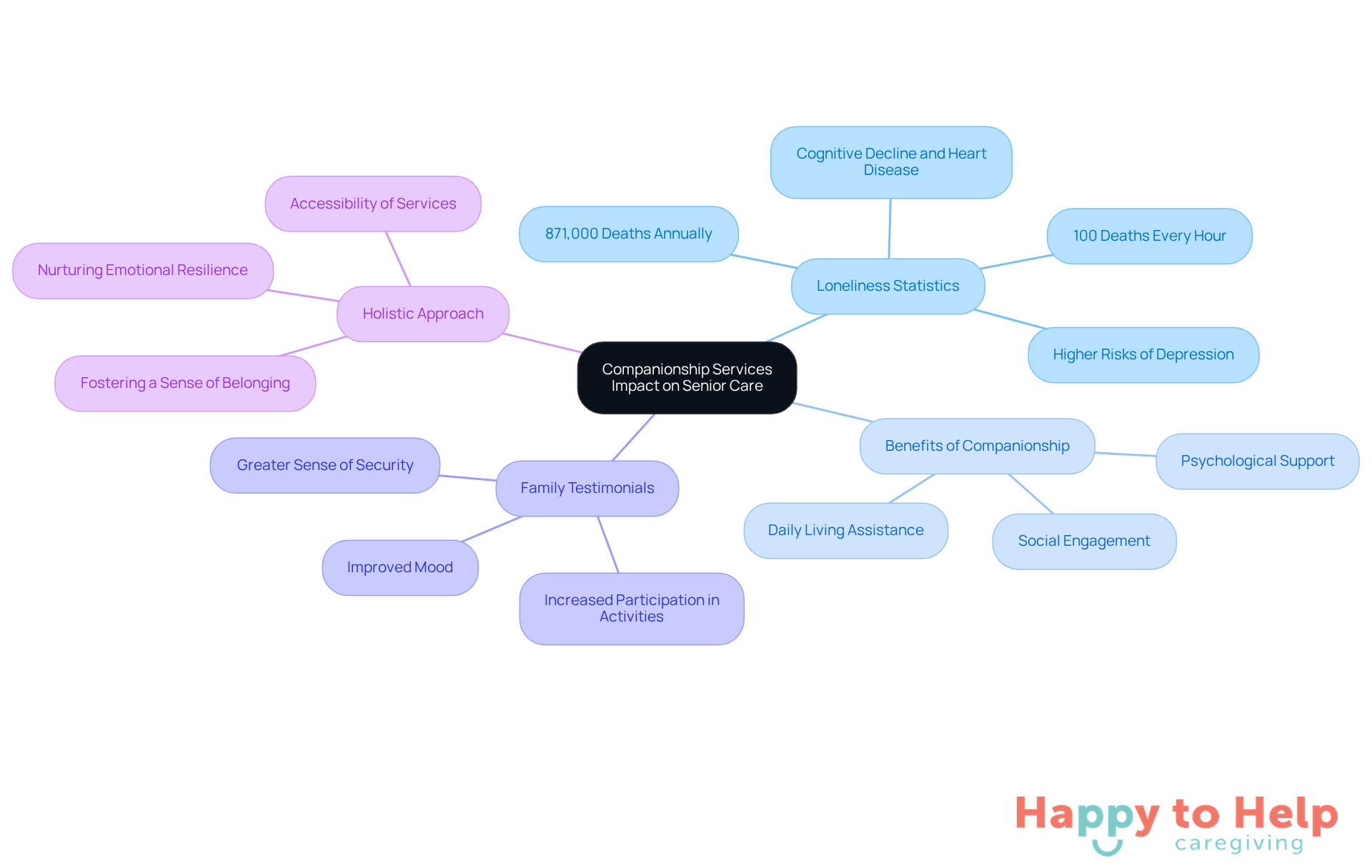
Loneliness among elderly individuals poses a significant problem, impacting their overall well-being and quality of life. Research shows that loneliness contributes to over 871,000 deaths annually and is linked to higher risks of depression, cognitive decline, and heart disease. This alarming reality underscores the urgent need for effective solutions to combat isolation in seniors.
Companionship company services emerge as a vital solution, providing psychological support, daily living assistance, and social engagement. These services not only help seniors maintain their independence and dignity but also promote long-term mental and psychological well-being. Families who opt for companionship services often report noticeable improvements in mood, increased participation in activities, and a greater sense of security for their loved ones.
Testimonials from families highlight the positive transformations they observe. Many express that their loved ones experience renewed joy and engagement in life. As one family member poignantly stated, "Loneliness is more than just feeling alone. It’s a deep sense of disconnection that can impact every part of a person’s well-being."
This holistic approach addresses immediate needs while fostering a supportive environment that nurtures emotional resilience and a sense of belonging. Moreover, the accessibility of companionship company services, which require minimal additional training for caregivers, makes it a practical option for families looking to enhance their loved ones' quality of life.
Making the Right Choice
Choosing a companionship company for seniors addresses a pressing issue: the loneliness and isolation many elderly individuals face. This problem can lead to significant emotional distress, affecting their overall quality of life.
Companionship services provide essential emotional support, helping seniors feel valued and connected in their daily lives. They offer personalized care plans tailored to individual needs, promote social engagement, and assist with daily living tasks. Each of these elements plays a crucial role in reducing feelings of loneliness and enhancing mental well-being among seniors.
Moreover, technology integration improves communication between caregivers, seniors, and their families, fostering a transparent and supportive care environment. This connection is vital for ensuring that seniors receive the compassionate assistance they deserve.
Ultimately, the impact of companionship services is transformative. By prioritizing emotional support and tailored care, families can uplift the spirits of their loved ones while gaining peace of mind. Investing in companionship for seniors is a meaningful step toward enhancing their quality of life and promoting a sense of belonging in their golden years.
https://iframe.tely.ai/cta/eyJhcnRpY2xlX2lkIjogIjY5MjI0ZjU0ZmViYTIxODdjZTM2NWI3MCIsICJjb21wYW55X2lkIjogIjY4ZWU1ZGNhNzMxNzYyNTU3ZjNjOTVjMSIsICJpbmRleCI6IG51bGwsICJ0eXBlIjogImFydGljbGUifQ==Frequently Asked Questions
What is the main issue that Happy to Help Caregiving addresses?
Happy to Help Caregiving addresses the significant issue of isolation among elderly individuals, where one-third of U.S. adults aged 50 to 80 experience feelings of loneliness, negatively impacting their mental and emotional well-being.
How does Happy to Help Caregiving provide companionship for seniors?
Happy to Help Caregiving provides tailored companionship services designed specifically for elderly individuals, where trained caregivers engage clients in meaningful activities to ensure they receive essential support and companionship at home.
What are the benefits of companionship for older adults?
Companionship helps improve mood, fosters a sense of connection, reduces feelings of loneliness, and enhances overall well-being, making older adults feel valued and supported.
What impact does loneliness have on older adults?
Loneliness can lead to detrimental effects on mental health, with 75% of older adults with fair or poor mental health reporting feelings of loneliness, which can increase depression and anxiety levels.
What strategies are effective in combating loneliness among seniors?
Involving older adults in meaningful activities and providing personalized companionship strategies can help combat loneliness and improve their overall mental well-being.
What kind of daily living assistance do caregivers provide?
Caregivers assist older adults with daily living tasks, such as bathing and showering, which helps maintain their independence and dignity while enhancing their quality of life.
How do companion care services enhance the independence of older adults?
Companion care services enable older adults to manage their daily routines with support, allowing them to feel confident and appreciated in their lives while maintaining their independence.
What additional measures do caregivers take to ensure the safety of older adults?
Caregivers conduct regular home safety inspections to ensure that older adults' living environments remain secure and nurturing, further enhancing their well-being.
List of Sources
- Happy to Help Caregiving: Personalized Companionship for Seniors
- How Companion Drivers Help Fight Senior Loneliness and Isolation | NorthPennNow (https://northpennnow.com/news/2025/nov/14/how-companion-drivers-help-fight-senior-loneliness-and-isolation)
- AI personal companions offers low-tech way to combat loneliness in senior living residents (https://mcknightsseniorliving.com/news/ai-personal-companions-offers-low-tech-way-to-combat-loneliness-in-senior-living-residents)
- Lonely Seniors Are Turning To AI Bots For Companionship (https://forbes.com/sites/rashishrivastava/2025/10/18/lonely-seniors-are-turning-to-ai-bots-for-companionship)
- Some Important Statistics and In-Home Companion Care (https://americareinfo.com/beach-cities/articles/in-home-companion-care-some-important-facts-on-aging-to-consider)
- Devoted Care Services Continues Prioritizing Senior Emotional Well-Being with Companion Care in Camarillo, CA (https://theglobeandmail.com/investing/markets/markets-news/GetNews/36085080/devoted-care-services-continues-prioritizing-senior-emotional-wellbeing-with-companion-care-in-camarillo-ca)
- Emotional Support: Reducing Loneliness Through Companionship
- AI companion helps Bronx senior living facility residents combat loneliness (https://cbsnews.com/newyork/news/ai-companionship-for-seniors-bronx)
- The Role of Companion Care in Reducing Depression Among Seniors (https://malamamaikai.com/role-of-companion-care-in-reducing-depression-among-seniors)
- Loneliness and isolation: Back to pre-pandemic levels, but still high, for older adults (https://ihpi.umich.edu/news-events/news/loneliness-and-isolation-back-pre-pandemic-levels-still-high-older-adults)
- 1 in 3 older adults still experience loneliness and isolation (https://michiganmedicine.org/health-lab/1-3-older-adults-still-experience-loneliness-and-isolation)
- Study explores effective strategies to combat loneliness in older adults | University of Hawaiʻi System News (https://hawaii.edu/news/2024/11/04/lonliness-in-older-adults)
- Daily Living Assistance: Enhancing Independence with Companion Care
- 2025 Home Care Statistics: Trends & Insights To Know (https://premierhcinc.com/blog/home-care-statistics)
- 10 Ways Home Care Can Promote Independence and Well-being | Walfinch (https://walfinch.com/news/10-ways-home-care-can-promote-independence-and-well-being)
- How Companion Care Supports Seniors Adjusting to Life Transitions (https://humancareny.com/blog/how-companion-care-supports-seniors-adjusting-to-life-transitions)
- 28 Senior Care Statistics: In-Home & Assisted Living | Shortlister (https://myshortlister.com/insights/senior-care-statistics)
- How Companion Care Services Improve Independence | Assistance Home Care (https://assistancehomecare.com/how-companion-care-services-improve-independence)
- Tailored Care Plans: Customizing Companionship to Individual Needs
- 10 Benefits of Companionship Carers for Seniors' Well-Being - Happy To Help (https://happytohelpcaregiving.com/10-benefits-of-companionship-carers-for-seniors-well-being)
- How Personalized Health Care Is Changing The Role Of Home Care Providers (https://homehealthcarenews.com/2024/03/how-personalized-health-care-is-changing-the-role-of-home-care-providers)
- What Can Personalized Home Care Offer to the Elderly - Affirmed Homecare (https://affirmedhomecare.com/news/what-can-personalized-home-care-offer-to-the-elderly)
- Developing Customized Care Plans for Seniors - New Wave Home Care (https://newwavehomecare.com/developing-customized-care-plans-for-seniors)
- Customized Care at Home: The Benefits of Personalized Care Plans - VNA Health Group (https://vnahg.org/customized-care-at-home-the-benefits-of-personalized-care-plans)
- Social Engagement: Promoting Interaction and Mental Well-Being
- The importance of connections: Ways to live a longer, healthier life | Harvard T.H. Chan School of Public Health (https://hsph.harvard.edu/news/the-importance-of-connections-ways-to-live-a-longer-healthier-life)
- Social isolation, loneliness in older people pose health risks (https://nia.nih.gov/news/social-isolation-loneliness-older-people-pose-health-risks)
- Social connection linked to improved health and reduced risk of early death (https://who.int/news/item/30-06-2025-social-connection-linked-to-improved-heath-and-reduced-risk-of-early-death)
- Older adults prioritize social activities, inclusiveness in massive survey assessing what matters most to them (https://mcknights.com/news/older-adults-prioritize-social-activities-inclusiveness-in-massive-survey-assessing-what-matters-most-to-them)
- New Studies Suggest Social Isolation Is a Risk Factor for Dementia in Older Adults, Point to Ways to Reduce Risk (https://hopkinsmedicine.org/news/newsroom/news-releases/2023/01/new-studies-suggest-social-isolation-is-a-risk-factor-for-dementia-in-older-adults-point-to-ways-to-reduce-risk)
- Family Peace of Mind: Trusting Companionship Services for Loved Ones
- Support for Family Caregivers Brings Peace of Mind (https://hiredhandshomecare.com/support-for-family-caregivers-brings-peace-of-mind)
- Caregiving in the US 2025 (https://aarp.org/pri/topics/ltss/family-caregiving/caregiving-in-the-us-2025)
- National Family Caregivers Month: November 2023 (https://census.gov/newsroom/stories/family-caregivers-month.html)
- Caregiver Statistics: Demographics (https://caregiver.org/resource/caregiver-statistics-demographics)
- When Care Becomes Comfort: Real Stories. Real Impact. - Cornerstone Caregiving (https://cornerstonecaregiving.com/blog/when-care-becomes-comfort-real-stories-real-impact)
- Flexible Scheduling: Adapting Companion Care to Fit Lifestyle Needs
- The Critical Role of Flexibility in Home Care Scheduling for Family Peace of Mind (https://relevar.com/the-critical-role-of-flexibility-in-home-care-scheduling-for-family-peace-of-mind)
- Exploring the Rising Demand for Flexible Work in Healthcare (https://healthecareers.com/career-resources/nurse-career/rising-demand-for-flexible-work-in-healthcare)
- Senior Living Operators Embrace More Flexible Scheduling Practices to Improve Staffing (https://seniorhousingnews.com/2024/08/06/senior-living-operators-embrace-more-flexible-scheduling-practices-to-improve-staffing)
- An Aging America Needs a Stronger Care Workforce - National Skills Coalition (https://nationalskillscoalition.org/blog/news/an-aging-america-needs-a-stronger-care-workforce)
- Embracing Flexible Scheduling Models in Aging Services: A Path Toward Workforce Stability (https://leadingage.org/embracing-flexible-scheduling-models-in-aging-services-a-path-toward-workforce-stability)
- Expert Caregivers: Ensuring Quality and Compassion in Companionship
- Caregiver Statistics: Demographics (https://caregiver.org/resource/caregiver-statistics-demographics)
- Executive Home Care Honors Family Caregivers During National Family Caregivers Month (https://wboy.com/business/press-releases/cision/20251117LA25356/executive-home-care-honors-family-caregivers-during-national-family-caregivers-month)
- The Importance of Compassionate Care: Enhancing Quality of Life for Seniors (https://bryanskilledhomecare.com/2024/07/31/the-importance-of-compassionate-care-for-seniors-i-bryan-skilled-home-care)
- The Caregiving Landscape: Data & Insights on the Caregiver Experience in the U.S. (https://caregiveraction.org/caregiver-statistics)
- The Critical Role of Care and Compassion in Senior Caregiving (https://seniorlifestyle.com/resources/blog/compassion-in-senior-care-careers)
- Technology Integration: Enhancing Communication in Companion Care
- Embracing Technology for Better Senior Communication (https://monarchseniorliving.com/blog/technology-for-senior-communication)
- Technology Use Among Older Adults and Their Caregivers: Cross-Sectional Survey Study - PMC (https://pmc.ncbi.nlm.nih.gov/articles/PMC11084119)
- Communication in Senior Care - Senior Living Guide (https://seniorlivingguide.com/revolutionizing-senior-care-communication-how-technology-is-bridging-the-gap-between-families-and-care-providers)
- Caregiver Statistics: Health, Technology, and Caregiving Resources (https://caregiver.org/resource/caregiver-statistics-health-technology-and-caregiving-resources)
- How Technology Enhances Communication in Senior Care (https://business.seminolebusiness.org/news/details/how-technology-enhances-communication-in-senior-care)
- Transformative Impact: How Companionship Services Change Senior Care
- Why Home Care Providers Are Increasingly Offering Companion Care Services for Seniors | Aaniie, formerly Smartcare Software (https://aaniie.com/news/why-home-care-providers-are-increasingly-offering-companion-care-services-for-seniors)
- How Companion Drivers Help Fight Senior Loneliness and Isolation | NorthPennNow (https://northpennnow.com/news/2025/nov/14/how-companion-drivers-help-fight-senior-loneliness-and-isolation)
- The Impact of Elderly Companion Services (https://h2hhc.com/blog/elderly-companion-services)
- Social connection linked to improved health and reduced risk of early death (https://who.int/news/item/30-06-2025-social-connection-linked-to-improved-heath-and-reduced-risk-of-early-death)