

For families in our service areas
For families in our service areas, this guide explains caregiving and how non-medical in-home caregiving can support care planning in East Idaho, Treasure Valley & Magic Valley, Northern Wasatch, North Central West Virginia, and Northeast Ohio.
Why Practices for Online Safety Matters
Navigating the digital landscape can be daunting for seniors, particularly as they face the complexities of online safety amid rising cyber threats. Alarming statistics show that a significant percentage of older adults experience cyber mistreatment and financial exploitation. This reality makes it crucial for seniors to understand how to protect themselves online.
So, what practical steps can they take to stay ahead of increasingly sophisticated scams and threats? This article explores essential best practices that empower seniors to enhance their cybersecurity awareness and safeguard their personal information.
Understand Basic Cyber Security Principles
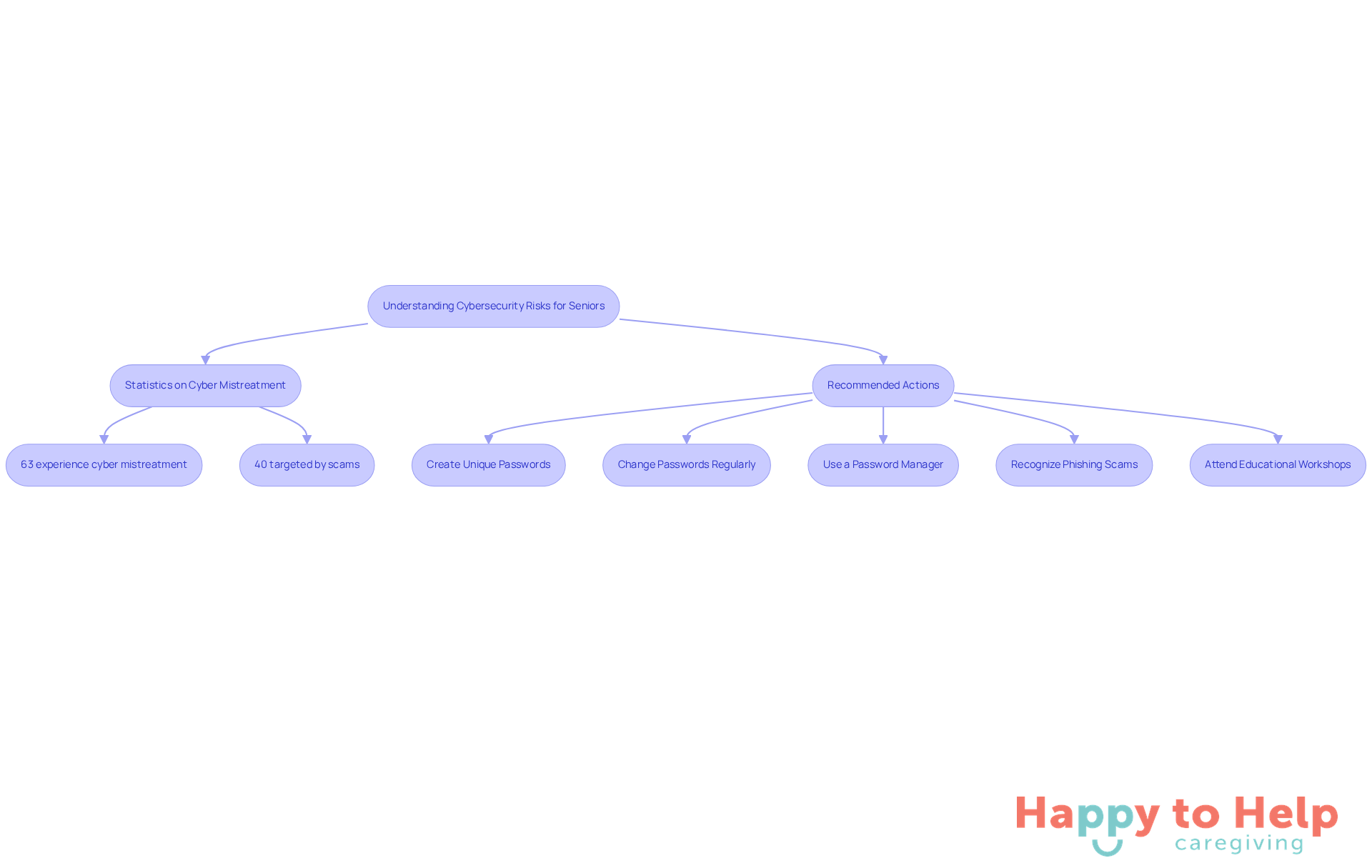
Fundamental cybersecurity principles pose a significant challenge for ensuring online safety for seniors. With studies revealing that 63% of individuals aged 50 and above experience some form of cyber mistreatment, the need for online safety for seniors is serious. Additionally, 40% of seniors report attempts to trick them into sharing private information or sending money, highlighting the urgent need for online safety for seniors.
To combat these risks, a strong password is essential. Seniors should be encouraged to:
- Create unique passwords for different accounts.
- Change them regularly.
Jacob Thomas notes, "The simplest method for older adults to safeguard themselves is by utilizing a password manager," which can help in creating and securely storing complex passwords.
Phishing scams, often disguised as legitimate emails or messages, aim to steal personal information. Awareness is crucial in recognizing these threats. Educational programs, such as community workshops and online tutorials, have proven effective in teaching older adults about online safety for seniors and how to establish robust access codes. Local community centers frequently host workshops that provide hands-on training in cybersecurity practices.
Moreover, keeping devices updated with the latest security patches and installing trusted antivirus software is vital to protect against vulnerabilities that cybercriminals exploit. By taking these proactive steps, older adults can significantly enhance their online safety for seniors and enjoy a more secure digital experience.
Implement Practical Strategies to Avoid Online Scams
It is crucial for seniors to adopt effective strategies for online safety for seniors, as online fraud poses a significant threat to them. Scammers often create a false sense of urgency, pressuring individuals to act quickly without due diligence. In fact, older individuals in the U.S. lost a staggering $4.8 billion to fraud in 2024, part of a larger trend where financial exploitation costs the elderly an estimated $27 billion each year.
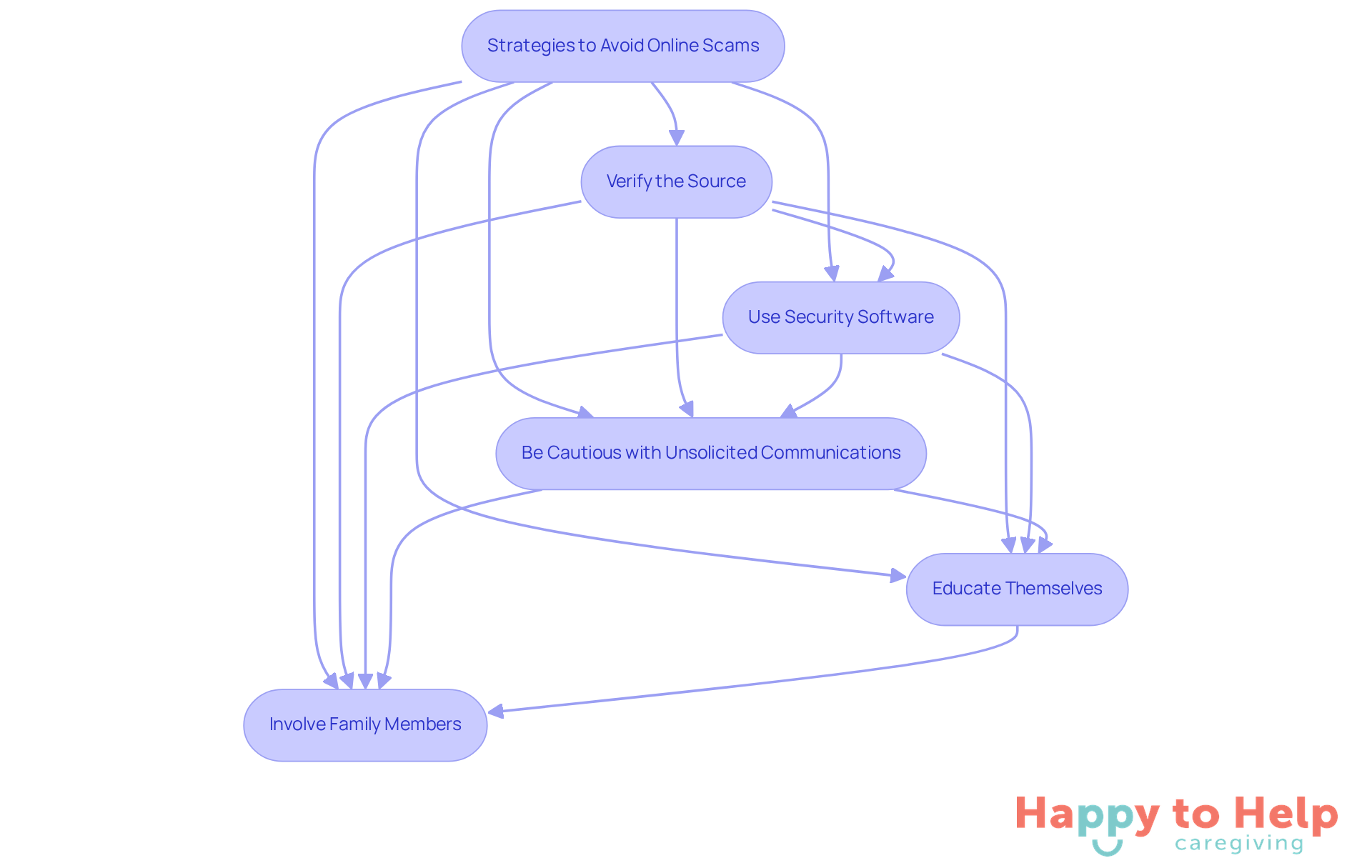
To combat this issue, seniors should implement the following strategies:
- Verify the Source: Always confirm the origin of emails or messages before clicking on links or sharing private information.
- Use Security Software: Utilize robust anti-virus and anti-malware protection to help detect and block potential threats.
- Be Cautious with Unsolicited Communications: Exercise caution with unsolicited phone calls or messages requesting personal information. Registering with the national Do Not Call Registry can help reduce unwanted telemarketing calls.
- Educate Themselves: Inform themselves about common frauds, such as lottery or prize scams, and recognize typical indicators of deceitful behavior.
- Involve Family Members: Encourage family members to assist in monitoring online activities and discussing any suspicious communications. Consulting trusted individuals before responding to suspicious requests can significantly reduce the risk of falling victim to scams.
By adopting these strategies, older adults can improve their online safety for seniors and protect their personal information.
Stay Informed About Evolving Cyber Threats
Older adults face significant challenges in navigating the evolving landscape of cyber threats. Statistics reveal that this demographic is frequently targeted, with over 300,000 phishing reports submitted in 2022 alone, resulting in a staggering loss of $4.8 billion to fraud in 2024. This alarming trend underscores the need for proactive measures to ensure online safety for seniors and safeguard their online presence.
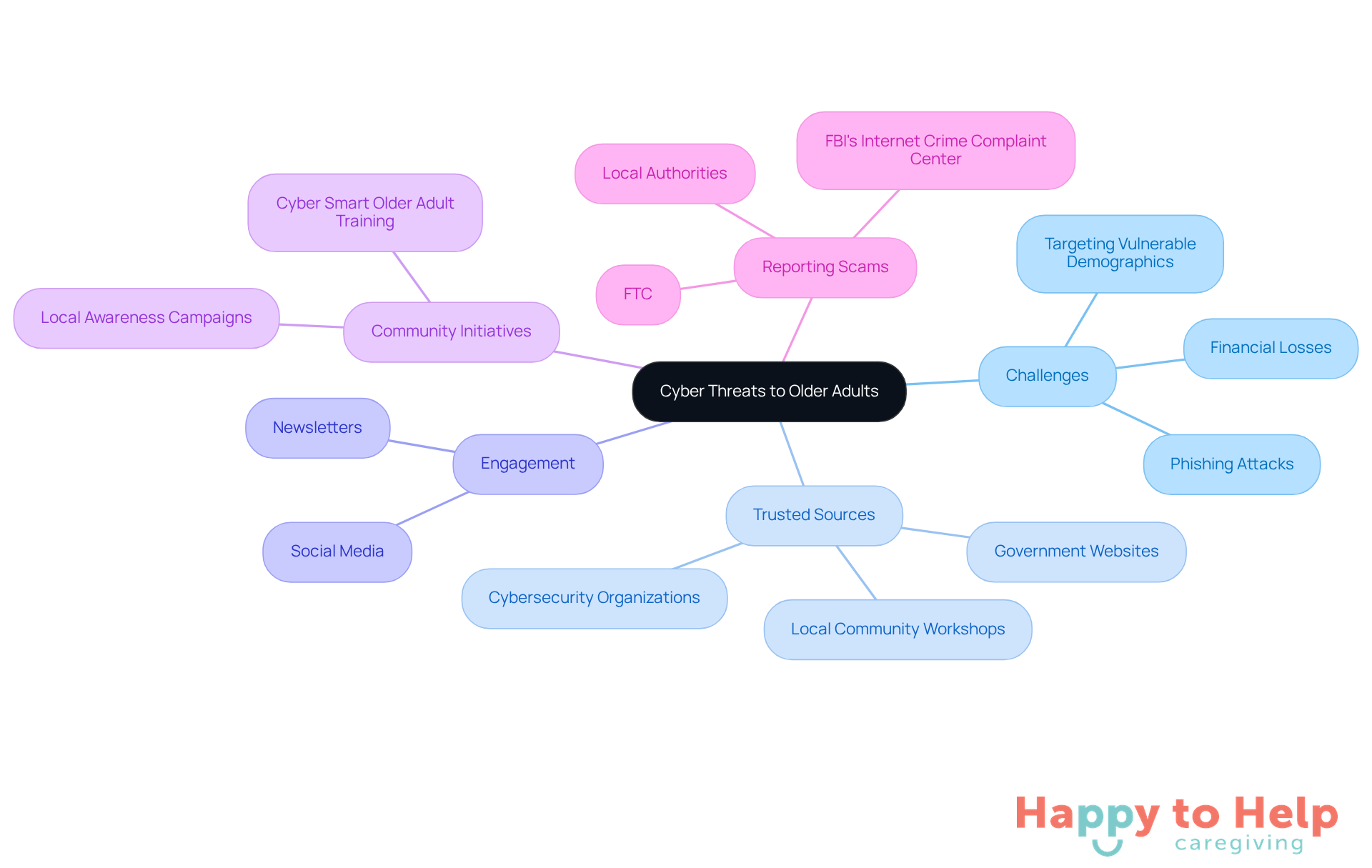
To combat these threats, older adults should seek information from trusted sources, including:
- Government websites
- Cybersecurity organizations
- Local community workshops
Engaging with newsletters and following relevant social media profiles can provide timely updates on new fraudulent activities and security practices. Additionally, fostering open conversations with family members about recent scams can create a supportive environment, encouraging seniors to share their concerns and experiences.
Community initiatives, such as the Cyber Smart Older Adult training program, play a crucial role in enhancing online safety for seniors and improving their digital literacy. These programs equip older individuals with the knowledge necessary for ensuring online safety for seniors by helping them recognize and respond to cyber threats effectively. Furthermore, seniors are encouraged to report scams to local authorities, contributing to broader community efforts against cybercrime. By taking these steps, older adults can adjust their online behaviors and remain vigilant against potential threats.
Taking the Next Steps
Ensuring online safety for seniors is a pressing issue in today’s digital world. Many older adults are increasingly vulnerable to cyber threats, which can lead to serious consequences, including identity theft and financial loss. This reality underscores the need for effective cybersecurity practices to protect personal information and enhance online experiences.
To address this challenge, it’s crucial to focus on three key practices that can significantly improve online safety for seniors:
- Understanding basic cybersecurity principles
- Implementing strategies to avoid online scams
- Staying informed about evolving cyber threats
Practical steps include:
- Creating strong passwords
- Verifying sources of communication
- Utilizing security software
- Engaging with educational resources
By adopting these strategies, seniors can greatly reduce their risk of falling victim to online fraud and cyber abuse.
Empowering seniors with knowledge and resources is essential in combating the growing threats they face online. Encouraging family involvement, participating in community workshops, and staying updated on current cyber threats can help foster a safer digital environment. By taking proactive steps, older adults can protect themselves and enjoy the benefits of technology without fear.
https://iframe.tely.ai/cta/eyJhcnRpY2xlX2lkIjogIjY5MjI0ZjhlOWEwZThiZmU5YWJhN2M5YSIsICJjb21wYW55X2lkIjogIjY4ZWU1ZGNhNzMxNzYyNTU3ZjNjOTVjMSIsICJpbmRleCI6IG51bGwsICJ0eXBlIjogImFydGljbGUifQ==Frequently Asked Questions
Why is online safety a significant concern for seniors?
Online safety is a significant concern for seniors because studies show that 63% of individuals aged 50 and above experience some form of cyber mistreatment, and 40% report attempts to trick them into sharing private information or sending money.
What are some basic cybersecurity principles that seniors should follow?
Seniors should create unique passwords for different accounts, change them regularly, and consider using a password manager to help create and securely store complex passwords.
What are phishing scams and how can seniors protect themselves from them?
Phishing scams are attempts to steal personal information, often disguised as legitimate emails or messages. Seniors can protect themselves by being aware of these threats and participating in educational programs that teach them how to recognize and avoid phishing attempts.
What resources are available for seniors to learn about online safety?
Community workshops and online tutorials are effective resources for teaching older adults about online safety. Local community centers frequently host workshops that provide hands-on training in cybersecurity practices.
How can seniors ensure their devices are secure?
Seniors can ensure their devices are secure by keeping them updated with the latest security patches and installing trusted antivirus software to protect against vulnerabilities that cybercriminals exploit.
What proactive steps can older adults take to enhance their online safety?
Older adults can enhance their online safety by creating strong, unique passwords, using password managers, being aware of phishing scams, participating in educational programs, and maintaining updated devices with antivirus software.
List of Sources
- Understand Basic Cyber Security Principles
- Weak Passwords Put Seniors at Risk: Here's How to Stay Safe (https://ltcnews.com/articles/weak-passwords-seniors-at-risk-how-to-stay-safe)
- Personal Cybersecurity Tips: How to Protect Your Online Life (https://ncoa.org/article/how-older-adults-can-improve-their-personal-cyber-security)
- Majority of Older Adults Experience Cyber Abuse in Their Lifetime | NORC at the University of Chicago (https://norc.org/research/library/majority-of-older-adults-experience-cyber-abuse-in-their-lifetim.html)
- Implement Practical Strategies to Avoid Online Scams
- Scams Targeting Older Adults | FDIC.gov (https://fdic.gov/consumer-resource-center/2025-07/scams-targeting-older-adults)
- Cybersecurity Awareness Month: Helping Older Adults Avoid Online Scams (https://about.fb.com/news/2025/10/cybersecurity-awareness-month-helping-older-adults-avoid-online-scams)
- $12.5 Billion Lost to Scams and Fraud in 2024, Older Adults Hit Hard (https://aarp.org/money/scams-fraud/older-adults-ftc-fraud-report)
- Senior Scam Statistics: 7 Key Facts to Know (https://californiamobility.com/senior-citizen-scams-statistics)
- Stay Informed About Evolving Cyber Threats
- Older Adults Being Targeted By the Rise of Cybercrime (https://cybersecurityasia.net/rise-cyber-crime-targeting-older-adults)
- 200 Inspirational Cybersecurity Quotes [2025] (https://digitaldefynd.com/IQ/inspirational-cybersecurity-quotes)
- Cybersecurity Awareness Month: Helping Older Adults Avoid Online Scams (https://about.fb.com/news/2025/10/cybersecurity-awareness-month-helping-older-adults-avoid-online-scams)
- Generative AI for cyber threat intelligence: applications, challenges, and analysis of real-world case studies (https://researchgate.net/publication/394790050\_Generative\_AI\_for\_cyber\_threat\_intelligence\_applications\_challenges\_and\_analysis\_of\_real-world\_case\_studies)
- Cybersecurity Awareness Month Quotes and Commentary from Industry Experts in 2025 (https://solutionsreview.com/cybersecurity-awareness-month-quotes-and-commentary-from-industry-experts-in-2025)