
For families in our service areas
For families in our service areas, this guide explains personal care and how non-medical in-home caregiving can support care planning in East Idaho, Treasure Valley & Magic Valley, Northern Wasatch, North Central West Virginia, and Northeast Ohio.
Why Find Personal Caregivers Near You Matters
Finding the right personal caregiver can feel like navigating a labyrinth of options and considerations. The growing demand for caregiving services presents a significant challenge: how do families assess personal care needs effectively while staying within budget? This dilemma often leads to stress and uncertainty, as balancing quality care with financial constraints is no small feat.
Families may wonder: what challenges arise when trying to ensure that their loved ones receive the best care possible? The implications of this struggle can be profound, affecting not only the well-being of the individual needing care but also the peace of mind of their family members.
This guide offers a clear path through the complexities of hiring personal caregivers. By understanding how to assess care needs, budget appropriately, and evaluate potential caregivers, families can make informed decisions that meet their loved ones' unique needs. Empower yourself with the knowledge to take confident steps toward securing the support you need.
Assess Your Care Needs and Budget
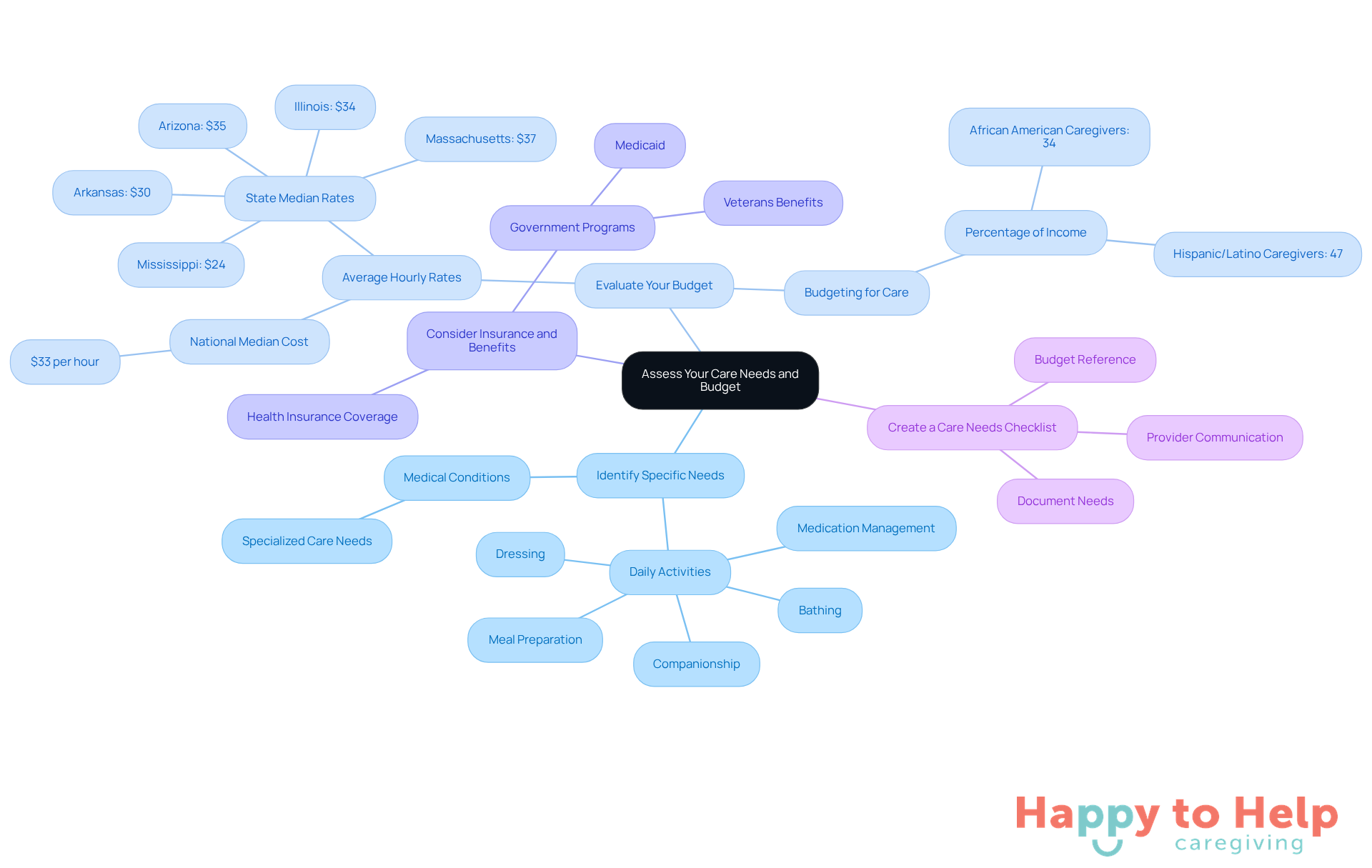
Identify Specific Needs: Caregiving can be challenging, especially when daily activities require assistance. Start by listing tasks such as bathing, dressing, meal preparation, medication management, and companionship. Don't forget to consider any medical conditions that may necessitate specialized care.
Evaluate Your Budget: Understanding your financial limits is crucial. Determine how much you can allocate for caregiving services. In your region, average expenses can range from $15 to $50 per hour, depending on the provider's experience and the complexity of care needed.
Consider Insurance and Benefits: It's essential to explore whether your health insurance or any government programs can help cover caregiving costs. This can significantly influence your budget and available options.
Create a Care Needs Checklist: To streamline your search, use a checklist to document your needs and budget. This tool will serve as a reference and help you communicate effectively with potential providers or personal caregivers near me.
Decide Between Direct Hire or Agency Services
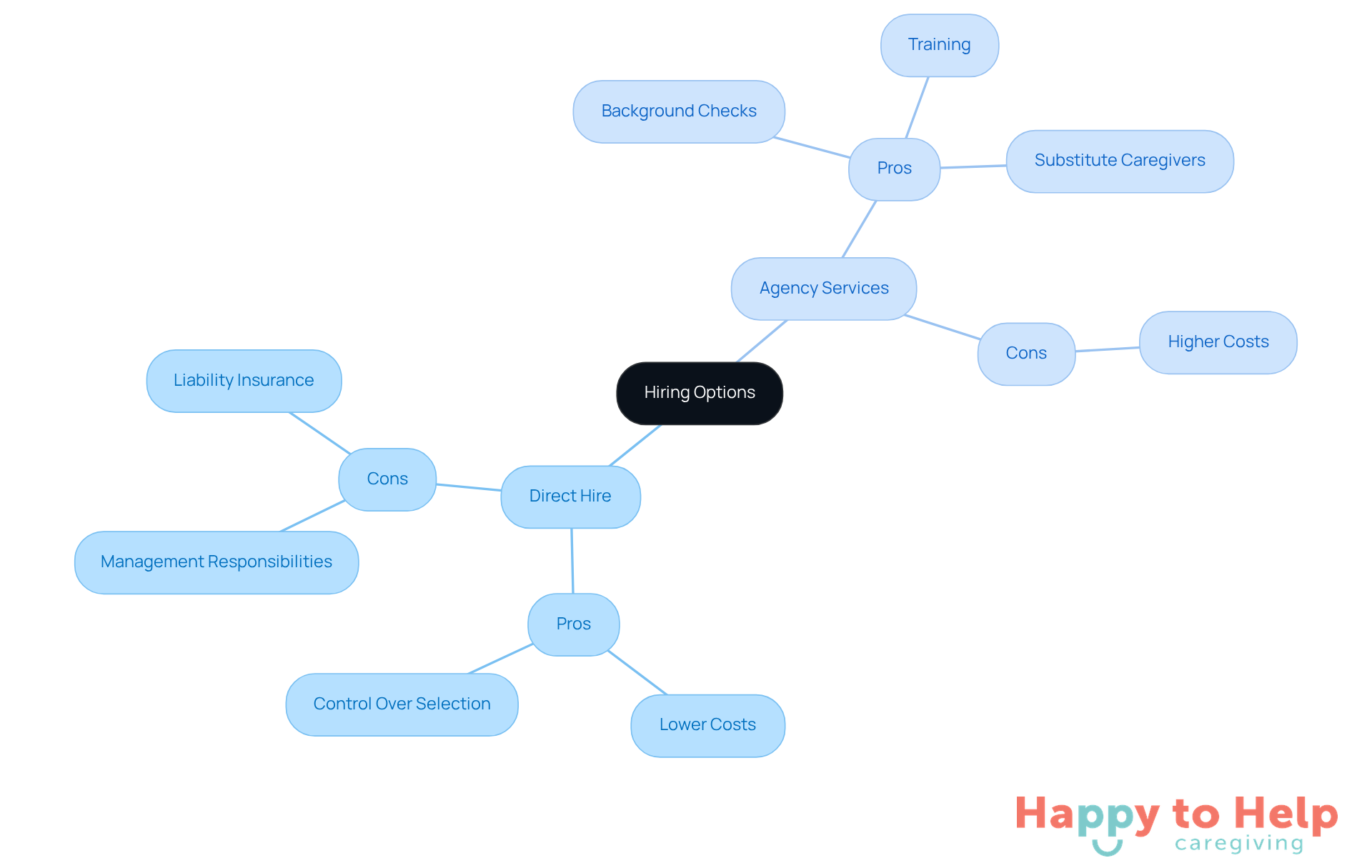
Understand the Differences: When you hire a support worker directly, you take on the role of employer. This means managing payroll, taxes, and ensuring compliance with labor laws. On the other hand, service providers supply support staff who are employees of their organization. This arrangement relieves you of administrative burdens and ensures adherence to legal standards.
Evaluate Pros and Cons:
- Direct Hire: This option often comes with lower costs and greater control over caregiver selection. However, it also involves significant management responsibilities, such as handling payroll and ensuring compliance with local labor laws. Families hiring independently must also manage liability insurance and other legal responsibilities, which can add to their stress.
- Service Providers: While generally more costly, service providers offer extensive services, including background checks, training, and liability coverage. This structure provides families with reassurance, knowing that caregivers are screened and capable of meeting their loved ones' needs. Additionally, organizations often provide substitute caregivers, ensuring uninterrupted support if the main provider is unavailable due to health issues or personal matters.
Consider Your Comfort Level: Assess your comfort with overseeing a caregiver directly versus relying on a service. If you want to minimize hassle and administrative tasks, choosing a service provider may be the better option. As industry specialists note, "Families also value the reassurance that comes from knowing an organization is responsible for payroll, scheduling, and training."
Research local options to find personal caregivers near me by investigating reputable caregiving organizations in your area. Compare their services, pricing, and client reviews. If you prefer direct hiring, seek recommendations from trusted sources to find personal caregivers near me who are qualified. Keep in mind that the average hourly rate for home caregiving through agencies is often higher due to overhead costs, so understanding the pricing structure is essential.
Interview and Evaluate Caregiver Candidates
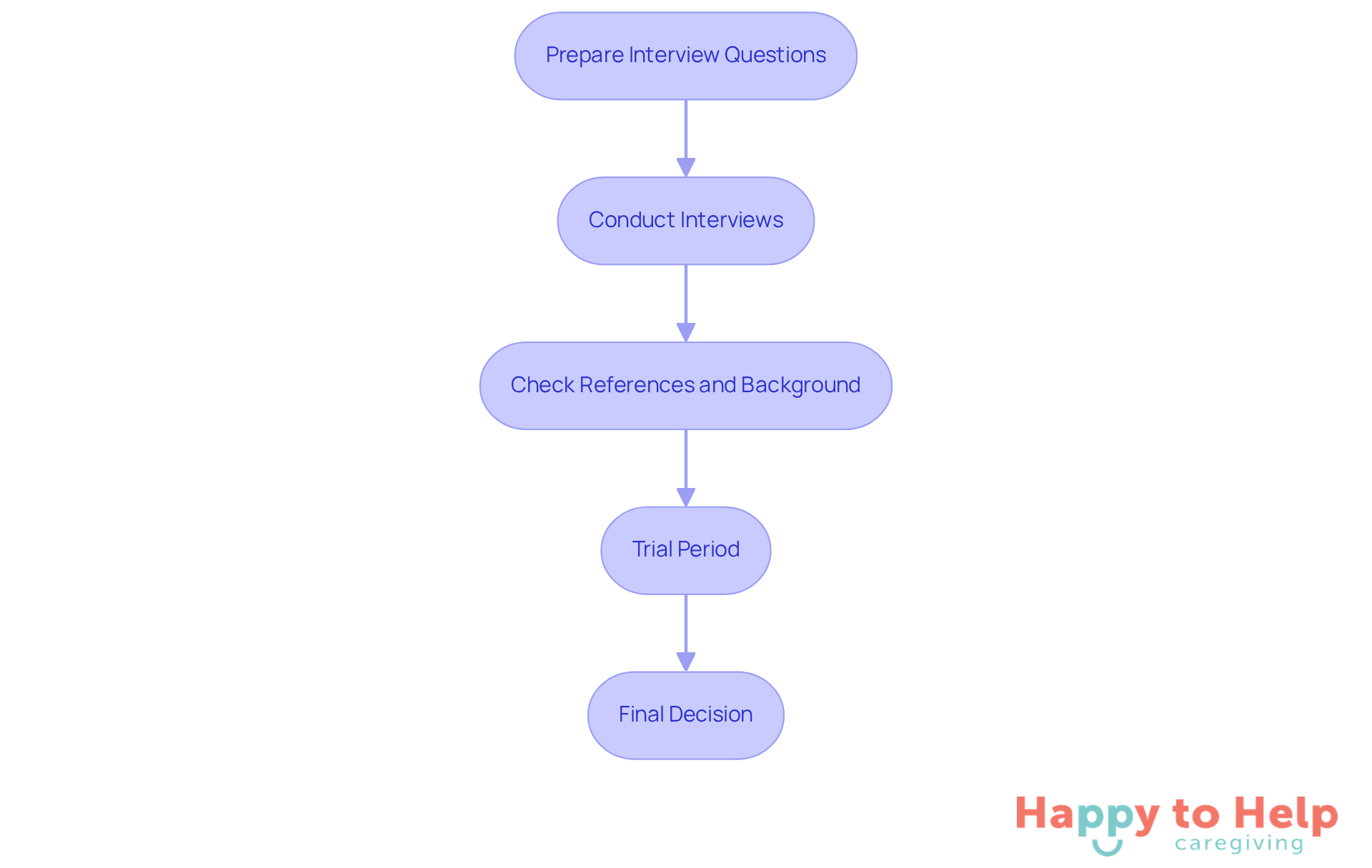
Prepare Interview Questions: Start by developing a list of questions that address experience, qualifications, and scenarios relevant to your loved one's needs. Consider asking:
- What experience do you have with [specific condition]?
- How do you handle emergencies?
- Can you provide references?
Conduct Interviews: Arrange meetings with potential support providers. Observe their communication skills, demeanor, and responses to your questions. Effective interviews for personal caregivers near me should include a variety of question types, especially open-ended ones, to gain a comprehensive view of each candidate.
Check References and Background: Always follow up with references provided by the caregiver. Conduct thorough background checks to ensure safety and reliability. These checks can reveal critical information about a candidate's history. For instance, elder financial exploitation costs older Americans between $2.6 billion and $36.5 billion each year, highlighting the need for careful screening. Additionally, about one in six people aged 60 and older experienced some form of abuse in 2023, according to the World Health Organization, emphasizing the importance of thorough evaluations. The demand for personal caregivers near me is projected to grow significantly, with the Bureau of Labor Statistics anticipating a 25% growth by 2031, making effective hiring practices more crucial than ever.
Trial Period: If possible, establish a trial phase to observe how the attendant interacts with your family member. This can provide valuable insight into their compatibility and caregiving style.
Develop a Comprehensive Care Plan
Problem: Caregivers often struggle with the complexities of managing a loved one's care, which can lead to feelings of overwhelm and uncertainty.
Agitate: Without a clear understanding of the individual's medical background and preferences, caregivers may find it challenging to create an effective care plan. This can result in unmet needs and increased stress for both the caregiver and the family member receiving care.
Solution:
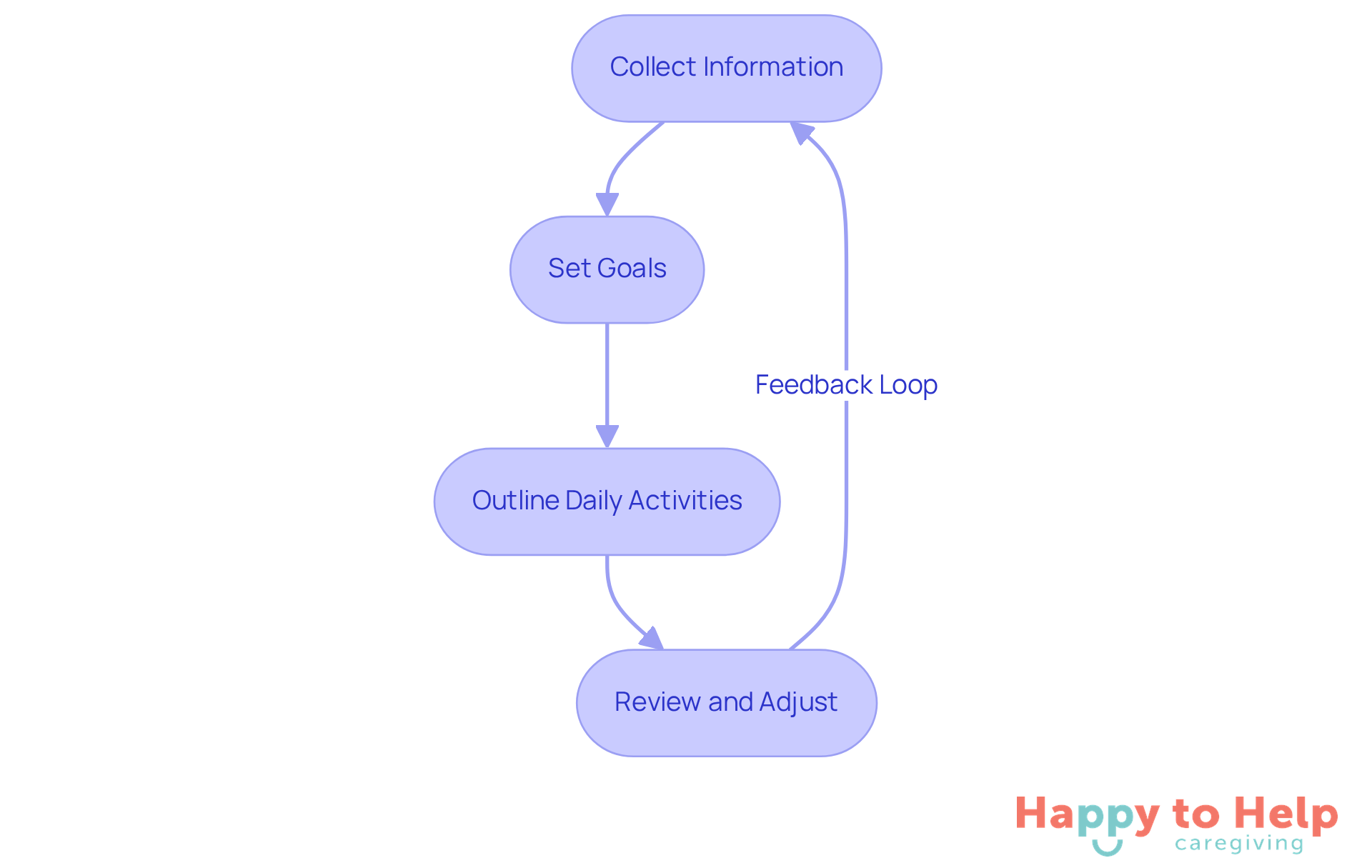
- Collect Information: Collaborate with the caregiver to gather essential details about your family member's medical history, daily habits, and personal preferences. This foundational step ensures that the care plan is tailored to their unique needs.
- Set Goals: Establish clear and achievable goals for the care plan, such as improving mobility, enhancing social interaction, or managing specific health conditions effectively. Research shows that setting defined goals significantly increases the likelihood of positive outcomes in caregiving.
- Outline Daily Activities: Develop a structured schedule that includes daily activities, medication management, and appointments. This schedule should align with your loved one's preferences and routines, promoting a sense of normalcy and comfort in their daily life.
- Review and Adjust: Regularly assess the care plan in collaboration with the caregiver and your loved one. This ongoing review process allows for necessary adjustments, ensuring that the plan remains relevant and effective in meeting evolving needs. Engaging in this dialogue fosters a supportive environment and enhances the overall caregiving experience.
Making the Right Choice
Finding the right personal caregiver can be a daunting challenge for families. The well-being of loved ones who require assistance hinges on this crucial decision. Without proper guidance, families may struggle to assess their care needs and budget, leading to choices that may not align with their situation.
This challenge can create stress and uncertainty. Families often face the dilemma of whether to hire directly or go through an agency, each option carrying its own set of pros and cons. Understanding these differences is essential for making informed decisions that fit both comfort levels and financial capabilities.
To tackle this issue effectively, families should prepare for the process of interviewing and evaluating caregiver candidates. Crafting targeted questions and checking references are vital steps in identifying caregivers who not only have the necessary skills but also connect with the needs of the family member in care. Furthermore, developing a comprehensive care plan tailored to the individual's unique requirements ensures that caregivers can provide the necessary support while promoting a sense of normalcy and comfort.
In conclusion, the journey to find personal caregivers involves careful consideration and planning. By assessing needs, budgeting wisely, and conducting thorough interviews, families can secure quality care that enhances the lives of their loved ones. Embracing this proactive approach alleviates stress and fosters a nurturing environment that supports both caregivers and those receiving care.
https://iframe.tely.ai/cta/eyJhcnRpY2xlX2lkIjogIjY5MjRmMjA1Y2Q1NjY3YWUxYjQzNTcwZSIsICJjb21wYW55X2lkIjogIjY4ZWU1ZGNhNzMxNzYyNTU3ZjNjOTVjMSIsICJpbmRleCI6IG51bGwsICJ0eXBlIjogImFydGljbGUifQ==Frequently Asked Questions
What should I do to assess my caregiving needs?
Start by listing specific tasks that require assistance, such as bathing, dressing, meal preparation, medication management, and companionship. Also, consider any medical conditions that may require specialized care.
How can I evaluate my budget for caregiving services?
Determine how much you can allocate for caregiving services by understanding your financial limits. Average expenses can range from $15 to $50 per hour, depending on the provider's experience and the complexity of care needed.
Are there any financial resources available to help cover caregiving costs?
Yes, it's essential to explore whether your health insurance or any government programs can assist with caregiving costs, as this can significantly impact your budget and available options.
What is a care needs checklist, and how can it help me?
A care needs checklist is a tool to document your specific caregiving needs and budget. It helps streamline your search for caregivers and serves as a reference to communicate effectively with potential providers.
List of Sources
- Assess Your Care Needs and Budget
- Elder care costs are outpacing inflation. Americans want a lifeline. (https://nbcnews.com/politics/2024-election/elder-care-costs-are-outpacing-inflation-americans-want-lifeline-rcna172950)
- Home Care Costs in 2025: A State-by-State Guide (https://aplaceformom.com/caregiver-resources/articles/in-home-care-costs)
- Understanding the Cost of Home Care for the Elderly: Key Insights - Happy To Help (https://happytohelpcaregiving.com/understanding-the-cost-of-home-care-for-the-elderly-key-insights)
- The Cost of In-Home Caregivers May Surprise You (https://health.usnews.com/senior-care/caregiving/articles/how-much-do-in-home-caregivers-cost)
- Caregiving in the US 2025 (https://aarp.org/pri/topics/ltss/family-caregiving/caregiving-in-the-us-2025)
- Decide Between Direct Hire or Agency Services
- Pros and Cons of Hiring an Agency vs Private Caregivers (https://tandem.care/post/https-tandem-care-hiring-agency-vs-private-caregiver)
- Hiring a Qualified Home Care Agency vs Hiring an Independent Caregiver: Which is Best for Your Loved One? (https://assistinghands.com/135/texas/nesanantonio/blog/hiring-a-qualified-home-care-agency-vs-hiring-an-independent-caregiver-which-is-best-for-your-loved-one)
- Choosing the Best Caregiver: Direct Hire vs. Agency – Making Informed Decisions for Your Loved One – WTPELF (https://wtpelf.com/choosing-the-best-caregiver-direct-hire-vs-agency-making-informed-decisions-for-your-loved-one)
- Hiring a Caregiver: Should You Employ One Yourself or Go Through an Agency? (https://mblawfirm.com/insights/elder-law/hiring-a-caregiver-should-you-employ-one-yourself-or-go-through-an-agency)
- Interview and Evaluate Caregiver Candidates
- Caregiver Hiring: Interview Strategies for Finding the Best-Fit Caregiver Candidates | Aaniie, formerly Smartcare Software (https://aaniie.com/news/caregiver-hiring-interview-strategies-for-finding-the-best-fit-caregiver-candidates)
- The Importance of Background Checks on In-Home Caregivers - Critical Research (https://criticalresearch.com/background-checks/importance-background-checks-home-care)
- The Case For Stronger Caregiver Vetting In Home Care (https://homehealthcarenews.com/2024/10/the-case-for-stronger-caregiver-vetting-in-home-care)
- Caregiver Recruitment Strategies That Work | Rellevate (https://rellevate.com/news/caregiver-recruitment-strategies)
- Background Check for Caregivers: The Ultimate Guide for 2025 - Sapphire Check (https://sapphirecheck.com/background-check-for-caregivers)
- Develop a Comprehensive Care Plan
- New Study Explores the Need for Expanded Long-Term Care Services to Support Aging-in-Place | Johns Hopkins Bloomberg School of Public Health (https://publichealth.jhu.edu/2025/new-study-explores-the-need-for-expanded-long-term-care-services-to-support-aging-in-place)
- Senior Care Plan: Comprehensive Guide on How to Start (https://aplaceathome.com/blog/senior-care-plan)
- 2025: The Year of Care Management Transformation (https://thoroughcare.net/blog/2025-year-care-management-transformation)
- The Future of Senior Care: What to Expect in 2025 and Beyond (https://arhomecare.com/the-future-of-senior-care-what-to-expect-in-2025-and-beyond)