
What You Need to Know About Steps for Choosing Elder Care in
Choosing the right elder care for a loved one is a significant decision that can greatly impact their quality of life. With nearly two-thirds of older adults requiring assistance with daily activities, families in Spring, Texas, face the challenge of evaluating various care options. This includes in-home assistance and nursing facilities, all while considering caregiver qualifications and financial implications.
The problem is clear: families must navigate a complex landscape of elder care options. This can lead to confusion and stress, making it difficult to ensure that their loved ones receive the best possible care. To make informed choices that truly meet their loved ones' needs and preferences, families need to understand the essential steps in this process.
So, how can families tackle this challenge?
- Start by assessing the specific needs of your loved one. Consider their daily activities, medical requirements, and personal preferences.
- Next, research various care options available in your area, comparing services, costs, and caregiver qualifications.
- Finally, engage in open discussions with your loved one about their preferences, ensuring that their voice is heard in the decision-making process.
Assess Individual Care Needs
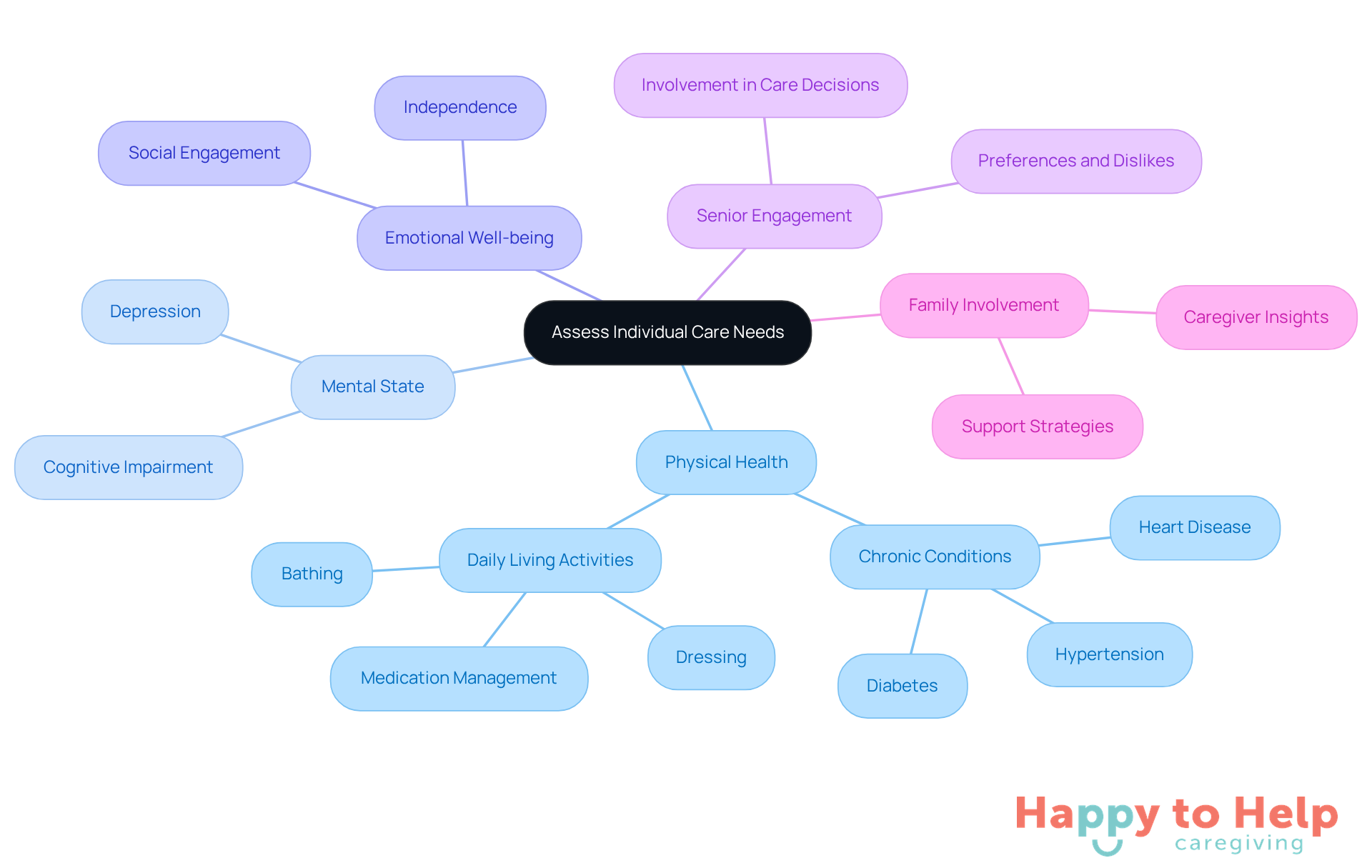
Assessing the physical health, mental state, and emotional well-being of seniors is crucial. Nearly two-thirds of older adults will require long-term assistance with daily activities like bathing and dressing. This highlights a significant problem: many seniors face challenges that can impact their quality of life.
Identifying specific daily living activities that require assistance - such as bathing, dressing, and medication management - is essential. Understanding these needs allows caregivers to create effective support strategies tailored to each individual.
Chronic conditions or disabilities can further complicate support requirements. Research indicates that older adults with multiple chronic illnesses often experience unmet healthcare needs, which can significantly affect their overall well-being.
Engaging seniors in discussions about their preferences and dislikes is vital for ensuring their comfort and satisfaction with the assistance they receive. This involvement fosters a sense of independence and respect for their choices.
Family members should also be included in the assessment process. Their insights can provide a more comprehensive understanding of the individual's needs and preferences, ultimately leading to improved care outcomes.
Explore Available Care Services
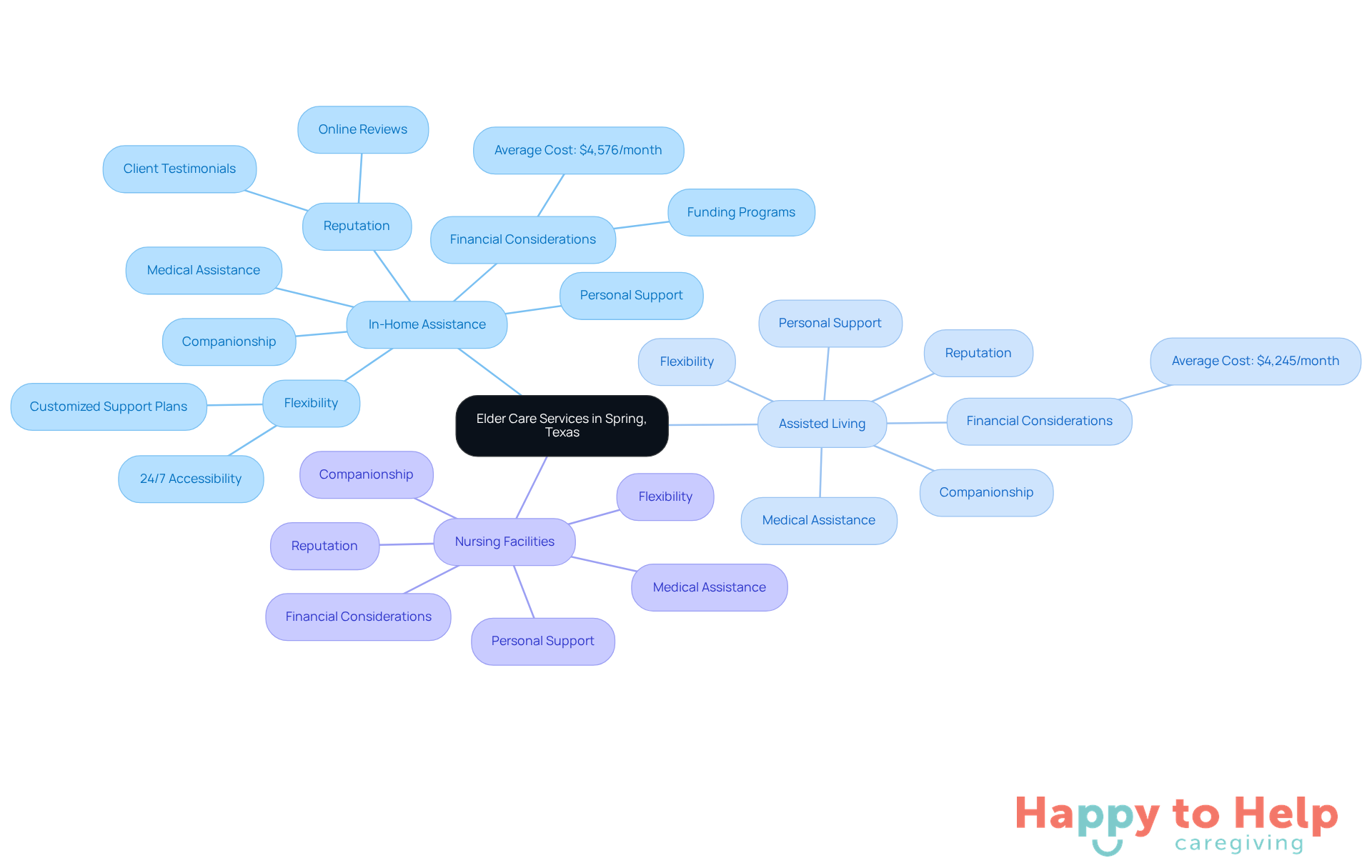
When evaluating elder care in Spring, Texas, families face a significant challenge: choosing the right option among in-home assistance, assisted living, and nursing facilities. Each service category offers distinct advantages tailored to the needs of seniors, making the decision process crucial for their well-being.
Start by assessing the specific services each agency provides. Look for essential offerings such as:
- Companionship
- Personal support
- Medical assistance
These are vital for maintaining the health and happiness of elderly individuals. For instance, Happy to Help Caregiving specializes in companionship support and post-hospital recovery assistance, ensuring seniors receive the necessary help during critical times.
Flexibility is another key factor to consider. Organizations that provide 24/7 accessibility and customized support plans can better address the diverse needs of seniors and their families. This adaptability is especially important for those requiring specialized care for conditions like dementia or for individuals recovering from surgery.
Reputation is crucial when selecting a service provider. Evaluating online reviews and testimonials can shed light on the experiences of other families. Positive feedback often indicates a provider's commitment to quality service and client satisfaction.
Financial considerations also play a significant role. In 2025, the average cost of home assistance in Spring is $4,576 per month, while assisted living is around $4,245. This financial aspect is vital for families considering elder care in Spring, Texas, as many seniors prefer to remain in their homes for greater independence.
Ultimately, a thorough investigation into available senior support services empowers families to make informed decisions that best meet their loved ones' needs.
Evaluate Caregiver Qualifications
Choosing a caregiver for elder care in Spring Texas can be a daunting task. The problem lies in ensuring that the caregiver is not only qualified but also capable of providing the necessary support. Without proper qualifications, the safety and well-being of seniors may be at risk.
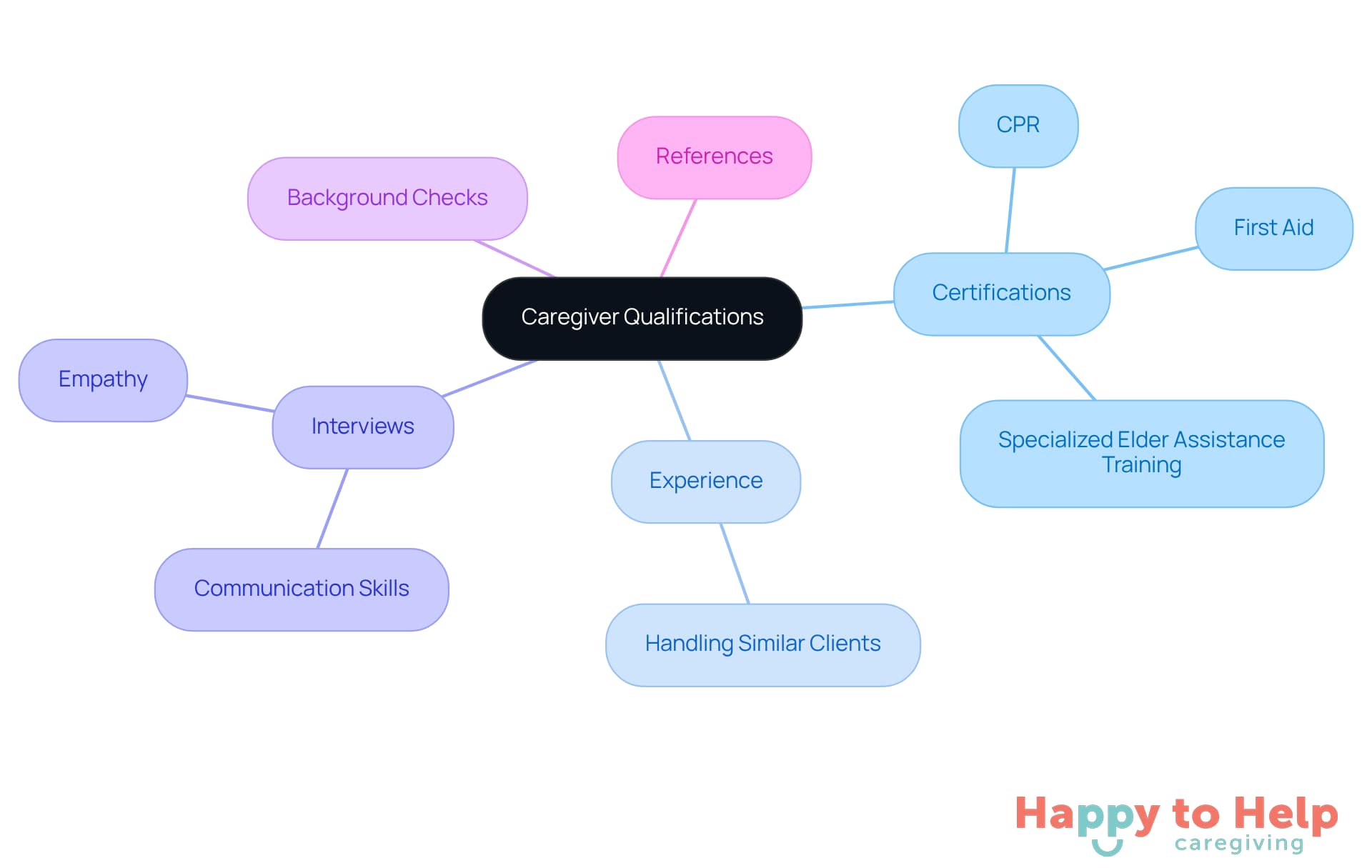
To address this issue, it’s essential to assess the caregiver’s qualifications comprehensively. Start by confirming their certifications and training, such as:
- CPR
- First aid
- Specialized elder assistance training
These credentials are vital for ensuring safety and effective support. Additionally, evaluating the caregiver's experience is crucial; those with a background in handling similar clients or conditions can significantly enhance the quality of care provided.
Interviews are a practical solution for assessing a caregiver's communication skills, empathy, and overall approach to caregiving. This personal interaction can reveal how well the caregiver connects with clients, which is essential for fostering a supportive environment. Furthermore, requesting background checks is necessary to guarantee safety and dependability, providing reassurance for families.
Lastly, asking for references from previous employers or clients can validate the caregiver's qualifications and performance. With nearly half of caregivers reporting substantial financial impacts from their duties, it’s vital to select someone who not only meets the required qualifications but also possesses the experience to manage the complexities of senior assistance effectively. In Texas, particularly in the context of elder care in Spring Texas, the average caregiver has about one year of experience, underscoring the importance of prioritizing experience in your decision-making process.
Understand Care Costs and Payment Options
Understanding the financial landscape of elder care in Spring, Texas, poses a significant challenge for families seeking the best options for their loved ones. With the average initial cost for senior assistance providers around $17.49 per hour and top rates nearing $26.51, families must navigate these expenses carefully. For assisted living facilities, the estimated median monthly cost is about $6,077, while nursing homes average $10,965 per month in 2025. These figures underscore the importance of thorough research into the costs associated with various elder assistance services.
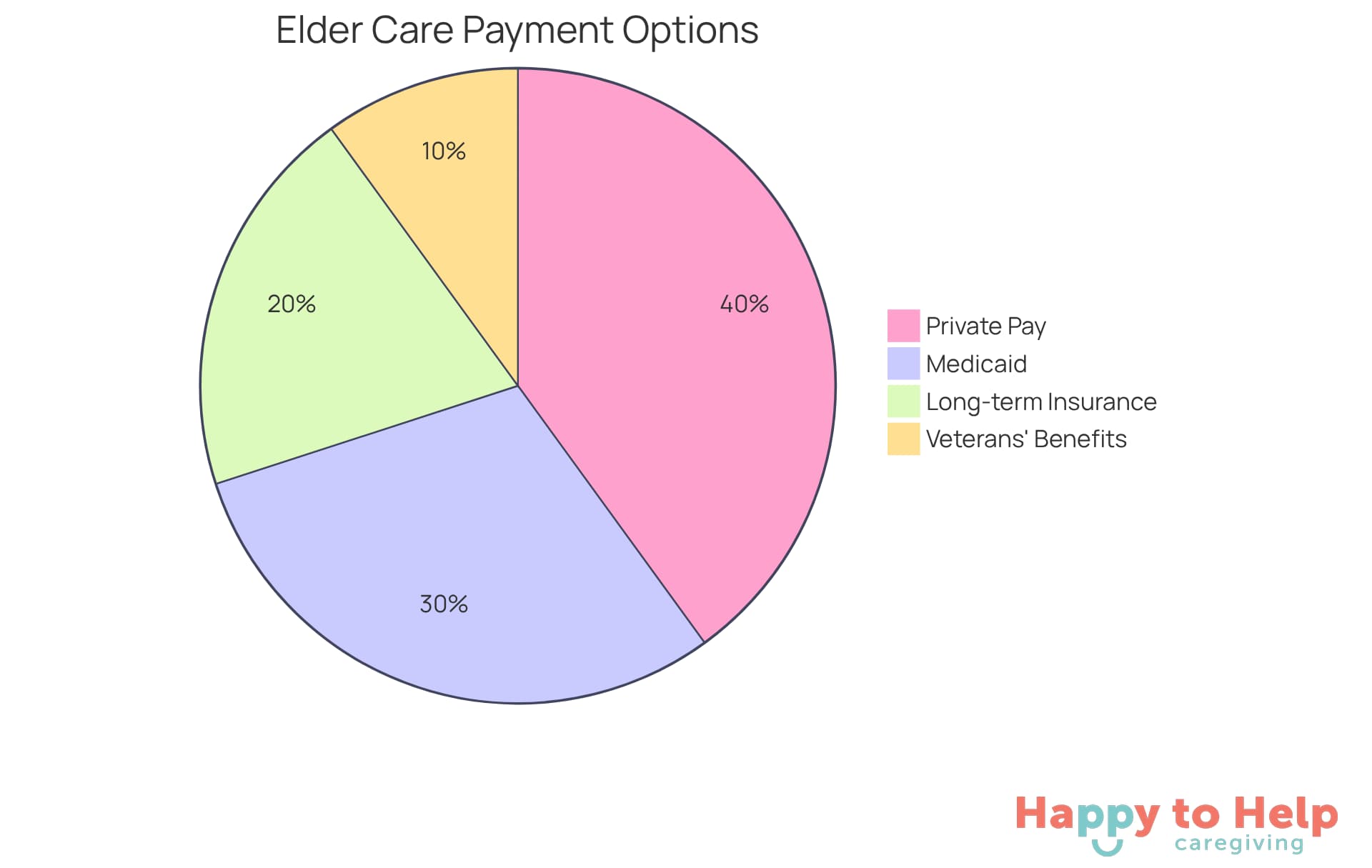
When considering payment options, families typically evaluate a mix of:
- Private pay
- Long-term insurance
- Medicaid
- Veterans' benefits
Private pay, which draws from retirement income, savings, or family contributions, offers the most flexibility in choosing a senior living community. Long-term support insurance can also be a viable option, covering assisted living and in-home services, although policies can vary widely.
Medicaid is crucial for funding elder assistance, with 62% of nursing home residents relying on its coverage. However, eligibility and benefits can differ by state, making it essential for families to understand their local Medicaid options. Additionally, veterans may qualify for Aid & Attendance benefits, which can provide up to $2,200 monthly to help with expenses.
Families should also be mindful of potential hidden costs related to senior assistance, such as transportation fees or additional services not included in the base rate. Creating a detailed budget that outlines expected expenses and identifies potential financial assistance options is a vital step in the planning process.
Consulting with financial advisors or senior support specialists can enhance financial planning strategies. These experts can provide insights on budgeting for senior support services and help families navigate the complexities of funding options, ensuring informed choices that align with their financial situations and support needs.
Check References and Reviews
When seeking a caregiver, it's crucial to ensure their reliability and quality of service. Failing to verify references can lead to dissatisfaction and potential safety concerns for your loved ones.
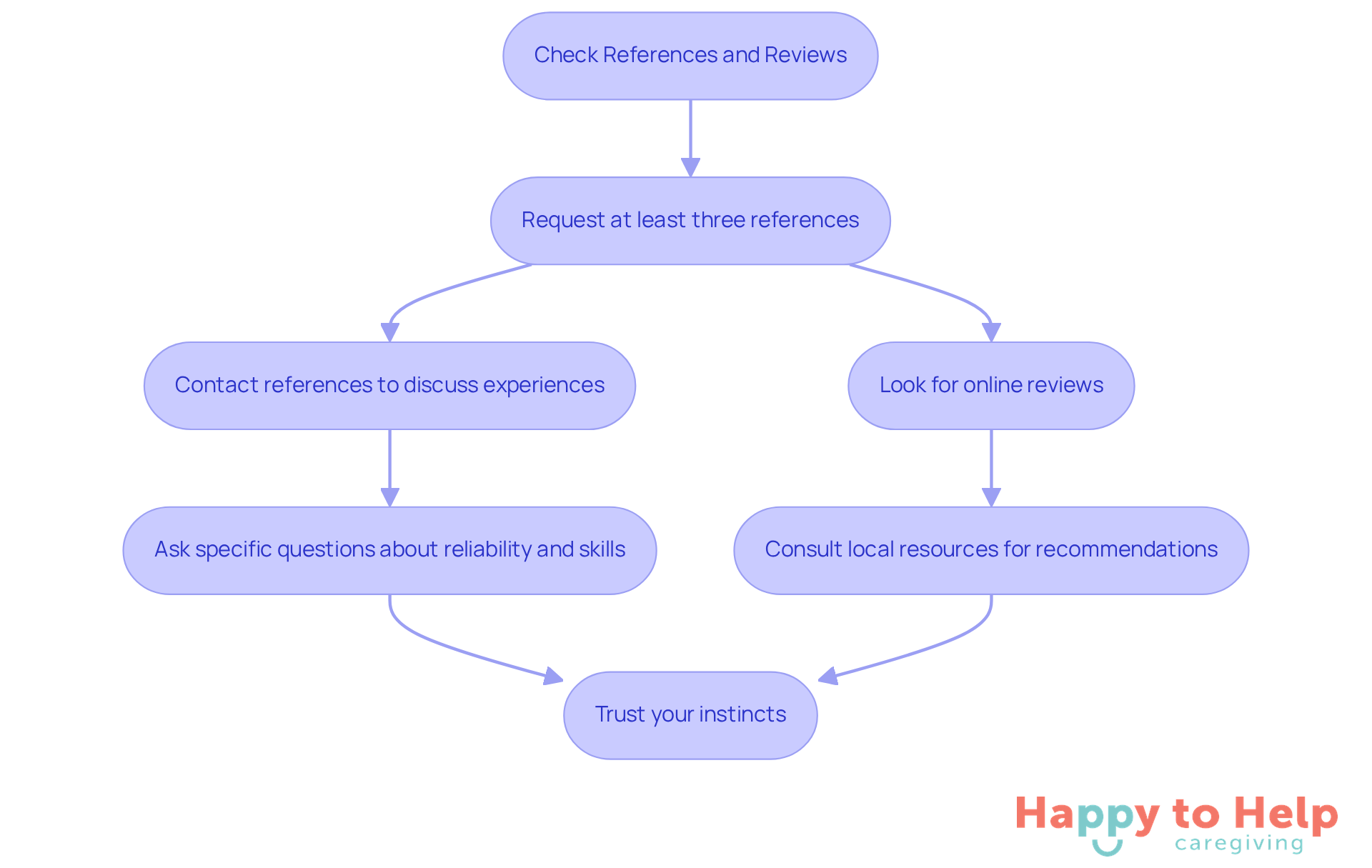
To address this, start by requesting at least three references from the caregiver or agency. Contact these references to discuss their experiences and gather insights about the caregiver's performance. Additionally, look for online reviews on reputable platforms to gauge overall satisfaction and service quality.
It's also important to ask specific questions regarding the caregiver's reliability, communication skills, and ability to handle emergencies. Consulting local resources or advocacy groups for elder care in Spring Texas can provide further insights and recommendations.
Finally, trust your instincts. If something feels off during the reference check, consider exploring other options to ensure the best care for your loved one.
Moving Forward with Steps for Choosing Elder Care in
Choosing elder care in Spring, Texas, presents a significant challenge for families. The decision requires careful consideration of various factors to ensure the well-being and happiness of seniors. Without a thorough assessment of individual care needs, families may struggle to find the right support strategies that respect their loved ones' preferences and dignity.
To navigate this complex landscape, families should evaluate available care services, assess caregiver qualifications, understand costs, and check references. Each of these steps is crucial in making informed decisions that align with the specific needs and circumstances of seniors. Identifying the right services and ensuring caregivers are qualified and trustworthy are essential components of a comprehensive care plan that enhances the quality of life for older adults.
Ultimately, selecting elder care is not just about meeting physical needs; it’s also about fostering independence, comfort, and emotional well-being. Families are encouraged to engage in open discussions, conduct thorough research, and seek professional guidance when necessary. By prioritizing these essential steps, they can confidently navigate the complexities of elder care, ensuring their loved ones receive the compassionate and competent support they deserve.
https://iframe.tely.ai/cta/eyJhcnRpY2xlX2lkIjogIjY5NDFmMzU4MTE4MTVjMDQxY2UzNWU2YSIsICJjb21wYW55X2lkIjogIjY4ZWU1ZGNhNzMxNzYyNTU3ZjNjOTVjMSIsICJpbmRleCI6IG51bGwsICJ0eXBlIjogImFydGljbGUifQ==Frequently Asked Questions
Why is assessing individual care needs important for seniors?
Assessing individual care needs is crucial because nearly two-thirds of older adults will require long-term assistance with daily activities like bathing and dressing. This assessment helps identify specific needs and allows caregivers to create effective support strategies tailored to each individual.
What specific daily living activities often require assistance for seniors?
Common daily living activities that may require assistance include bathing, dressing, and medication management.
How do chronic conditions affect the care needs of older adults?
Chronic conditions or disabilities can complicate support requirements, and research indicates that older adults with multiple chronic illnesses often experience unmet healthcare needs, significantly affecting their overall well-being.
Why is it important to engage seniors in discussions about their care preferences?
Engaging seniors in discussions about their preferences and dislikes is vital for ensuring their comfort and satisfaction with the assistance they receive, fostering a sense of independence and respect for their choices.
How can family members contribute to the assessment process for senior care?
Family members should be included in the assessment process as their insights can provide a more comprehensive understanding of the individual's needs and preferences, ultimately leading to improved care outcomes.
What are the main types of elder care services available in Spring, Texas?
The main types of elder care services available include in-home assistance, assisted living, and nursing facilities, each offering distinct advantages tailored to the needs of seniors.
What essential services should families look for when evaluating care agencies?
Families should look for essential services such as companionship, personal support, and medical assistance, which are vital for maintaining the health and happiness of elderly individuals.
Why is flexibility an important factor when choosing a care service provider?
Flexibility is important because organizations that provide 24/7 accessibility and customized support plans can better address the diverse needs of seniors and their families, especially for those requiring specialized care.
How can families assess the reputation of a care service provider?
Families can evaluate the reputation of a care service provider by looking at online reviews and testimonials, which can provide insight into the experiences of other families and indicate the provider's commitment to quality service.
What are the average costs of home assistance and assisted living in Spring, Texas?
In 2025, the average cost of home assistance in Spring is $4,576 per month, while assisted living is around $4,245 per month. Financial considerations are vital for families when choosing elder care options.
List of Sources
- Assess Individual Care Needs
- Comprehensive Geriatric Assessment: Addressing Unmet Healthcare Needs in Older Adults (https://mdpi.com/2227-9032/13/21/2715)
- WHO calls for urgent transformation of care and support systems for older people (https://who.int/news/item/01-10-2024-who-calls-for-urgent-transformation-of-care-and-support-systems-for-older-people)
- Increasing resident care needs, staffing challenges have senior living leaders turning to value-based care, AI (https://mcknightsseniorliving.com/news/increasing-resident-care-needs-staffing-challenges-have-senior-living-leaders-turning-to-value-based-care-ai)
- CDC: More than 20% of 85+ adults need ADL assistance (https://mcknightsseniorliving.com/news/cdc-more-than-20-of-85-adults-need-adl-assistance)
- Warning From Older Adults: Care for Aging in America Needs Urgent Rethinking (https://johnahartford.org/newsroom/view/warning-from-older-adults-care-for-aging-in-america-needs-urgent-rethinking)
- Explore Available Care Services
- Ready for Better Care? At Home Senior Caregivers Spring, TX | Friendly Faces Senior Care (https://friendlyfaces.com/at-home-senior-caregivers-spring-tx)
- The 10 Best Home Care Agencies for Seniors in Spring, TX for 2025 | Caring.com (https://caring.com/senior-care/in-home-care/texas/spring)
- 10 Essential In-Home Senior Care Services in Spring Texas - Happy To Help (https://happytohelpcaregiving.com/10-essential-in-home-senior-care-services-in-spring-texas)
- Memory & Dementia Care Facilities in Spring, Texas | US News (https://health.usnews.com/best-senior-living/memory-care/texas/spring)
- Evaluate Caregiver Qualifications
- Family caregivers prefer in-home care over senior living, new industry report finds (https://mcknightshomecare.com/news/family-caregivers-prefer-in-home-care-over-senior-living-new-industry-report-finds)
- Family Caregivers Share Both Positive And Challenging Experiences In New Study (https://hopkinsmedicine.org/news/articles/2022/10/family-caregivers-share-both-positive-and-challenging-experiences-in-new-study)
- New Report Reveals Crisis Point for America’s 63 million Family Caregivers (https://press.aarp.org/2025-07-24-New-Report-Reveals-Crisis-Point-for-Americas-63-million-Family-Caregivers)
- As Family Caregiving Grows, So Does the Need for Reform - Medicare Rights Center (https://medicarerights.org/medicare-watch/2025/08/14/as-family-caregiving-grows-so-does-the-need-for-reform)
- D-CARE study finds caregiver satisfaction higher with dementia care programs than usual care (https://uclahealth.org/news/release/d-care-study-finds-caregiver-satisfaction-higher-with)
- Understand Care Costs and Payment Options
- How much does senior care cost in Spring, TX? (https://care.com/cost/senior-care/spring-tx)
- How to Pay for Senior Living | VA, Medicaid, & More (https://onelifeseniorliving.com/blog/how-to-pay-for-senior-living-va-medicaid-and-private-pay-options)
- How to Pay for Senior Living with No Money in 2025 (https://seniorliving.org/care/cost/no-money)
- Long-Term Care Costs Getting Bigger in Texas: LTC Insurance Paying Big Benefits (https://ltcnews.com/articles/ltc-health-care-costs-getting-bigger-in-texas)
- VA.gov | Veterans Affairs (https://va.gov/geriatrics/pages/paying\_for\_long\_term\_care.asp)
- Check References and Reviews
- Navigating Senior Living Review and Referral Sites | HumanGood (https://humangood.org/resources/senior-living-blog/navigating-review-referral-sites-for-senior-living)
- 5 Ways Online Review Sites Can Help You Find Senior Care (https://alert-1.com/blog/elder-care-planning/5-ways-online-reviews-help-find-senior-care/2986?srsltid=AfmBOooJVYjZvj\_wulxD7JsjwK6zfVsEpR42oAL8Z-WPc1GaLlLUGNy6)
- 10 Essential Tips for Choosing a Sitter for Elderly Care - Happy To Help (https://happytohelpcaregiving.com/10-essential-tips-for-choosing-a-sitter-for-elderly-care)
- Be Aware of Facility Online Reviews | York Law Firm (https://yorklawfirm.com/blog/2024/06/be-aware-of-facility-online-reviews-2)
- How To Find Reviews & Ratings For Assisted Living Facilities (https://carepatrol.com/blog/how-to-find-verified-reviews-of-assisted-living-facilities)