

For families in our service areas
For families in our service areas, this guide explains caregiver support and how non-medical in-home caregiving can support care planning in East Idaho, Treasure Valley & Magic Valley, Northern Wasatch, North Central West Virginia, and Northeast Ohio.
Understanding Families Looking for a Live-In Caregiver
Caring for a loved one at home can be an overwhelming journey. Families often face the challenge of finding the right live-in caregiver who can provide essential support. This guide outlines five critical steps to help families find a qualified caregiver who not only meets their loved one's needs but also enhances their quality of life.
However, the process can be fraught with challenges. How can families navigate the complexities of hiring someone who will become an integral part of their household? Understanding these nuances will empower families to make informed decisions that lead to successful caregiving arrangements.
Understand the Role of a Live-In Caregiver
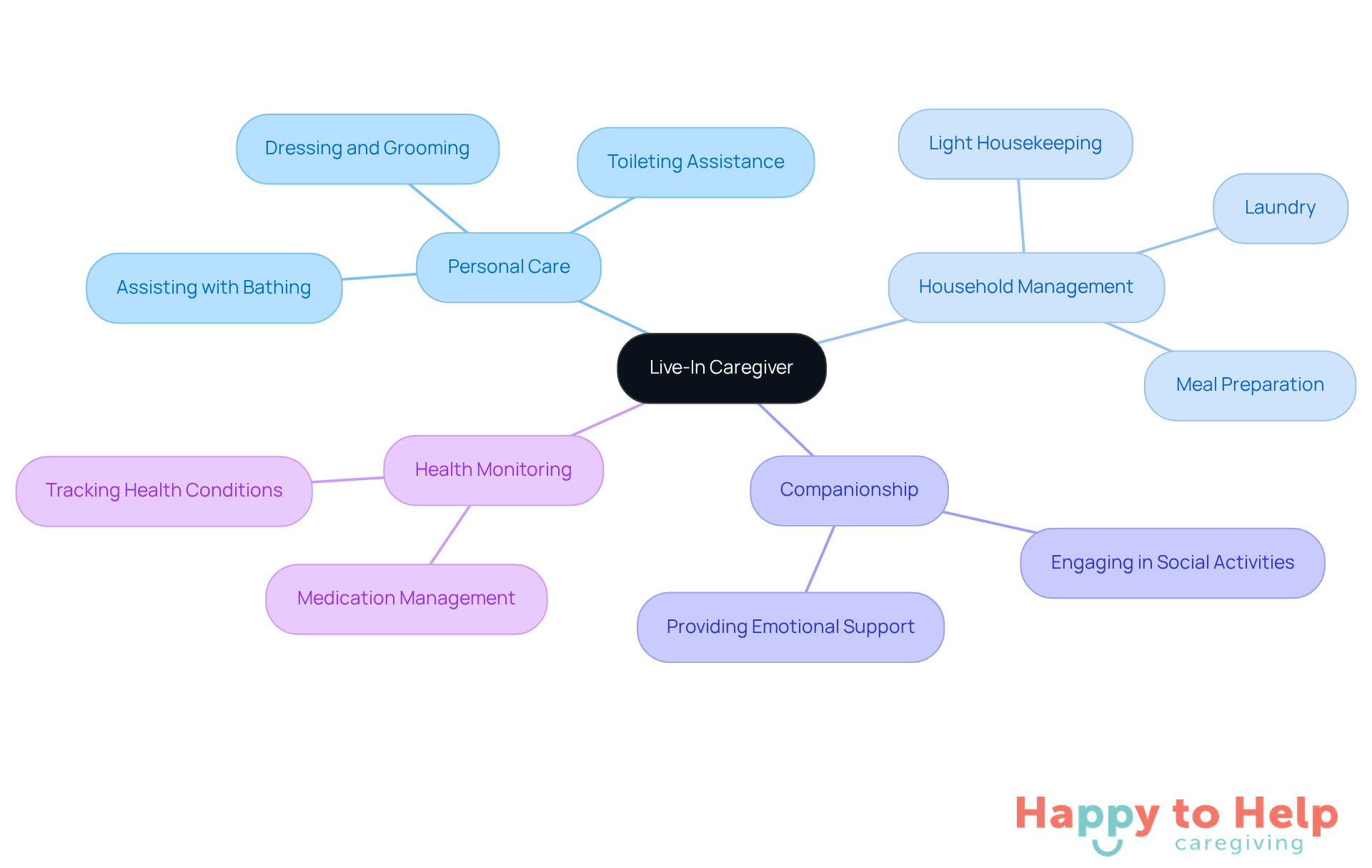
Caring for individuals at home can be a demanding task, particularly for families looking for a live-in caregiver who can provide comprehensive support. They assist with daily activities such as personal care, meal preparation, medication management, and companionship. However, the expectation for caregivers to be available around the clock can lead to feelings of overwhelm and stress.
Key Responsibilities of Live-In Caregivers:
- Personal Care: Assisting with bathing, dressing, grooming, and toileting.
- Household Management: Light housekeeping, laundry, and meal preparation.
- Companionship: Engaging in social activities and providing emotional support.
- Health Monitoring: Keeping track of medications and health conditions.
For families looking for a live-in caregiver, understanding these roles is crucial. It helps them recognize the specific needs of their loved ones and communicate these effectively during the hiring process. By clearly defining responsibilities, families can ensure that caregivers are well-prepared to meet the unique challenges of their roles.
Assess Your Care Needs and Preferences
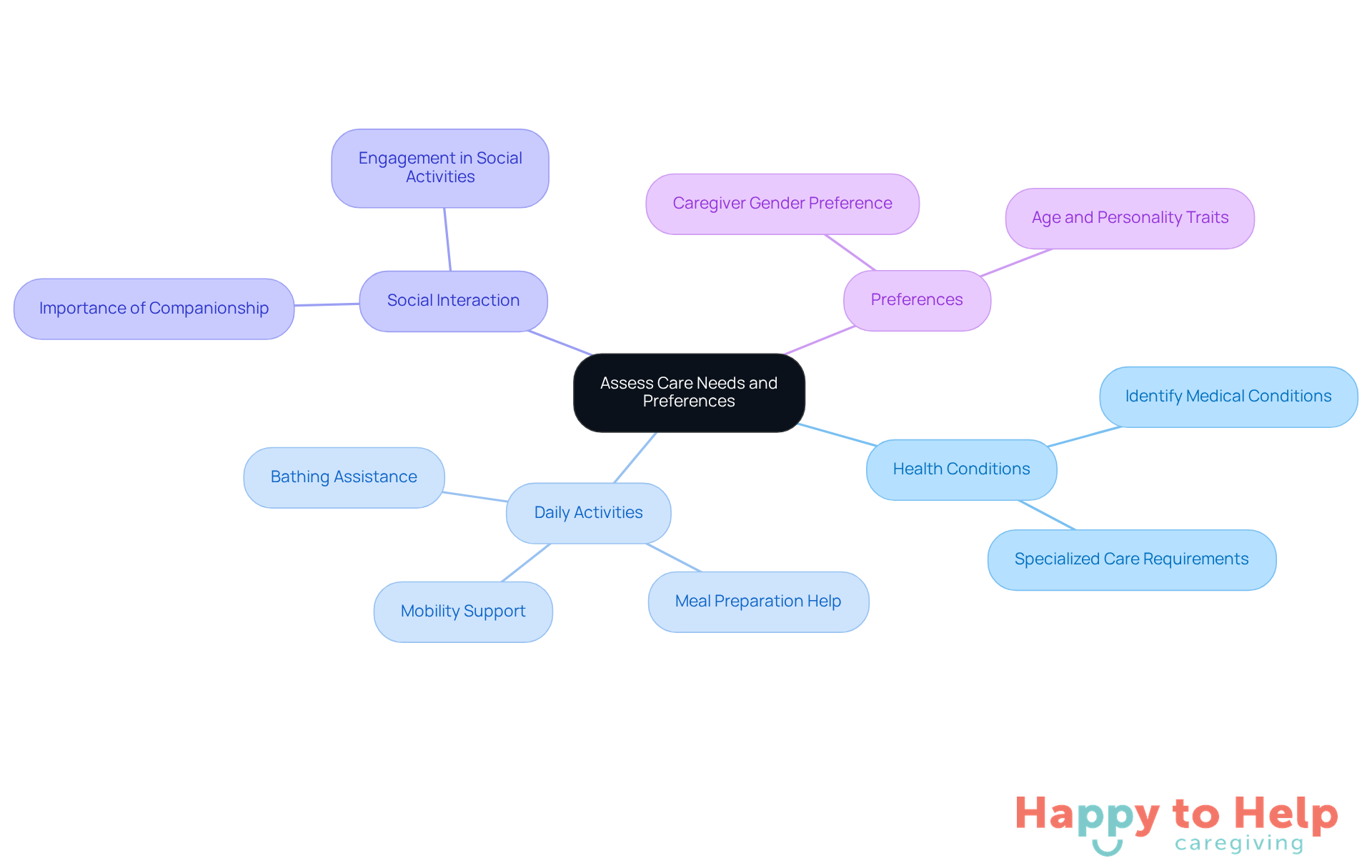
Assessing the specific needs of your loved one is crucial for effective caregiving. Without a clear understanding of these needs, caregivers may struggle to provide the appropriate support.
-
Health Conditions: Identify any medical conditions that require specialized care. This is essential, as neglecting health issues can lead to serious complications.
-
Daily Activities: Determine which daily tasks the individual struggles with, such as bathing or meal preparation. Recognizing these challenges helps in planning the necessary assistance.
-
Social Interaction: Assess the importance of companionship and social engagement for your loved one. Social isolation can significantly impact mental health, making this an important factor to consider.
-
Preferences: Discuss any preferences regarding the gender, age, or personality traits of the individual providing care. Matching these preferences can enhance the comfort and effectiveness of the caregiving relationship.
Making a comprehensive list of these needs will simplify the process when looking for a live in caregiver who can fulfill these requirements.
Search for Qualified Live-In Caregivers
Looking for a live in caregiver can be a daunting task when trying to find qualified individuals. Many families struggle with the challenge of ensuring their loved ones receive the best care possible. This issue not only affects the well-being of the elderly but also places a significant emotional burden on family members.
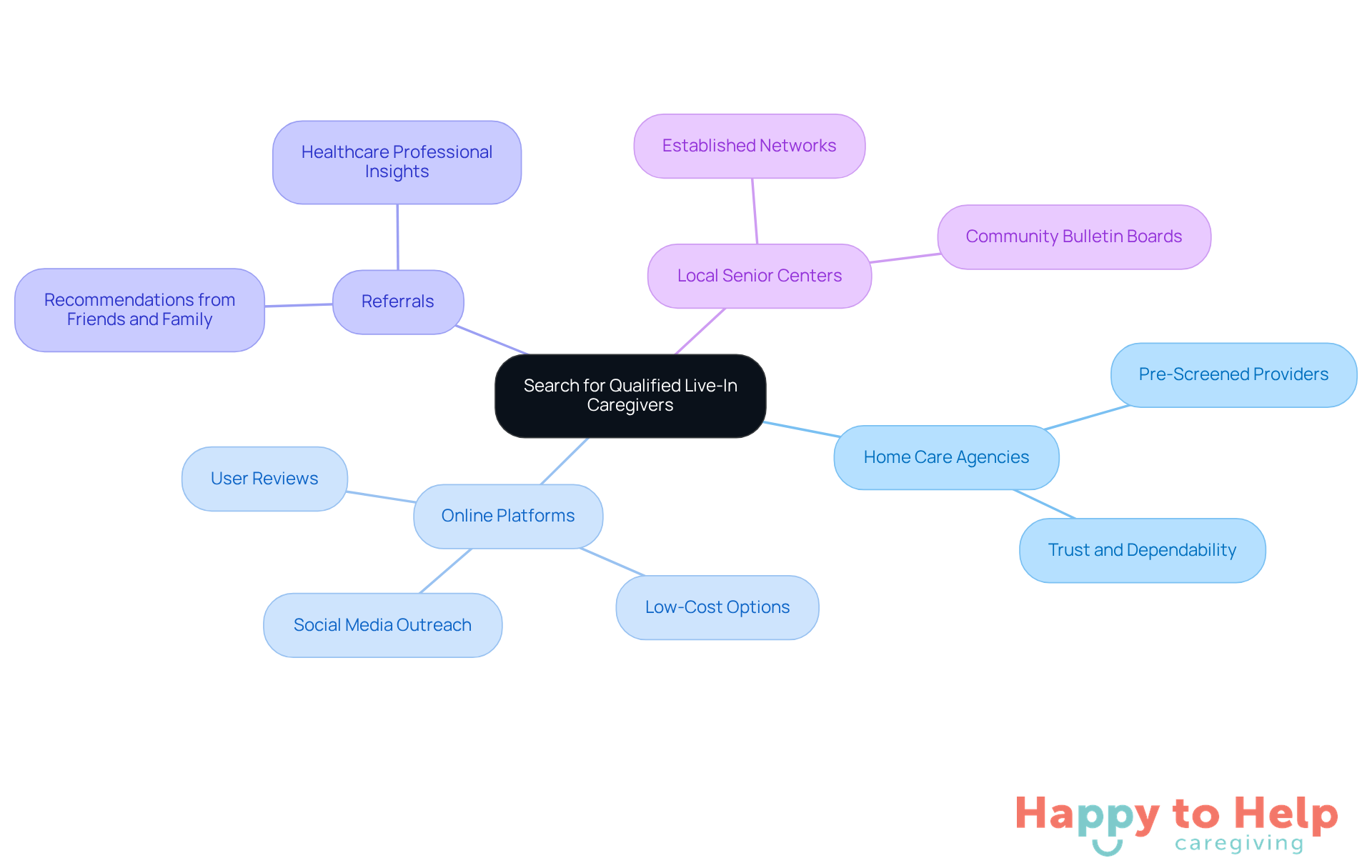
To tackle this problem, consider these effective strategies:
- Home Care Agencies: Reach out to local agencies that specialize in live-in care. These agencies typically maintain a list of pre-screened support providers ready for placement, ensuring a greater degree of trust and dependability.
- Online Platforms: Utilize websites like Care.com or local community boards to find independent support providers. These platforms often feature user reviews and ratings, which can help in assessing potential candidates. Additionally, social media platforms can deliver a high volume of candidates at a low cost, making them a valuable resource.
- Referrals: Seek recommendations from friends, family, or healthcare professionals. Personal referrals can lead to reliable helpers who have been vetted by someone you trust.
- Local Senior Centers: Many senior centers provide resources or can connect you with support providers in your area. They often have established networks that can facilitate your search. Community bulletin boards can also be an effective and often-overlooked method to find individuals who provide care.
As you search, it’s crucial to verify the qualifications and experience of potential candidates. Participating in comprehensive interviews and background checks will help ensure that you find a provider who aligns with your family member's specific needs and preferences. Remember, selecting the right assistant is crucial when looking for a live in caregiver for elderly family members, as it profoundly impacts their quality of life. The home health care sector is projected to reach a worth of $176.30 billion by 2032, highlighting the increasing demand for skilled support professionals.
Conduct Interviews and Background Checks
Finding the right caregiver for your family member can be a daunting task. The stakes are high, as inadequate vetting can lead to serious consequences, including potential abuse. According to the World Health Organization, one in six people aged 60 and older experienced some form of abuse in 2023, highlighting the critical need for thorough background checks and interviews.
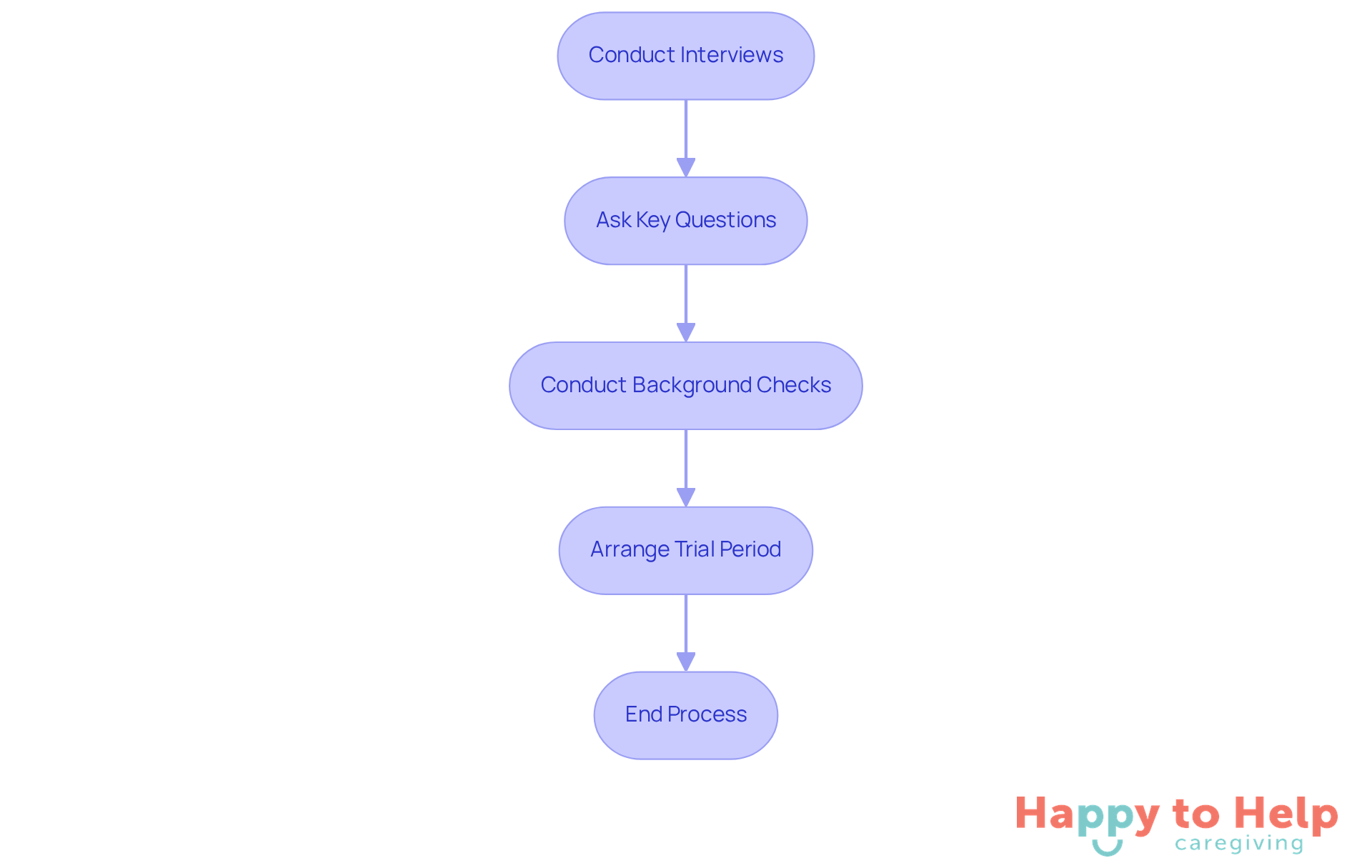
Interview Questions: Start by asking about the candidate's experience, caregiving philosophy, and emergency response strategies. Key questions to consider include:
- What experience do you have with specific health conditions?
- How do you handle difficult situations?
- Can you provide examples of how you've supported clients in the past?
Background Checks: Conducting comprehensive background checks is essential. Verify candidates' criminal history, previous employment, and references. This can be facilitated through agency services or reputable online platforms. A solid background check not only reveals a candidate's criminal history but also confirms their professional licensure and employment history, ensuring that you hire someone trustworthy. Many states have specific regulatory requirements for background checks on providers, which must be adhered to for compliance and safety.
Trial Period: If possible, arrange a trial period to observe how the provider interacts with your loved one. This allows you to assess their compatibility and caregiving style before making a long-term commitment. Regular monitoring and check-ins during this period are best practices that can help identify any concerns early on, ensuring a safe and supportive environment for your family member.
Finalize Hiring and Establish a Care Plan
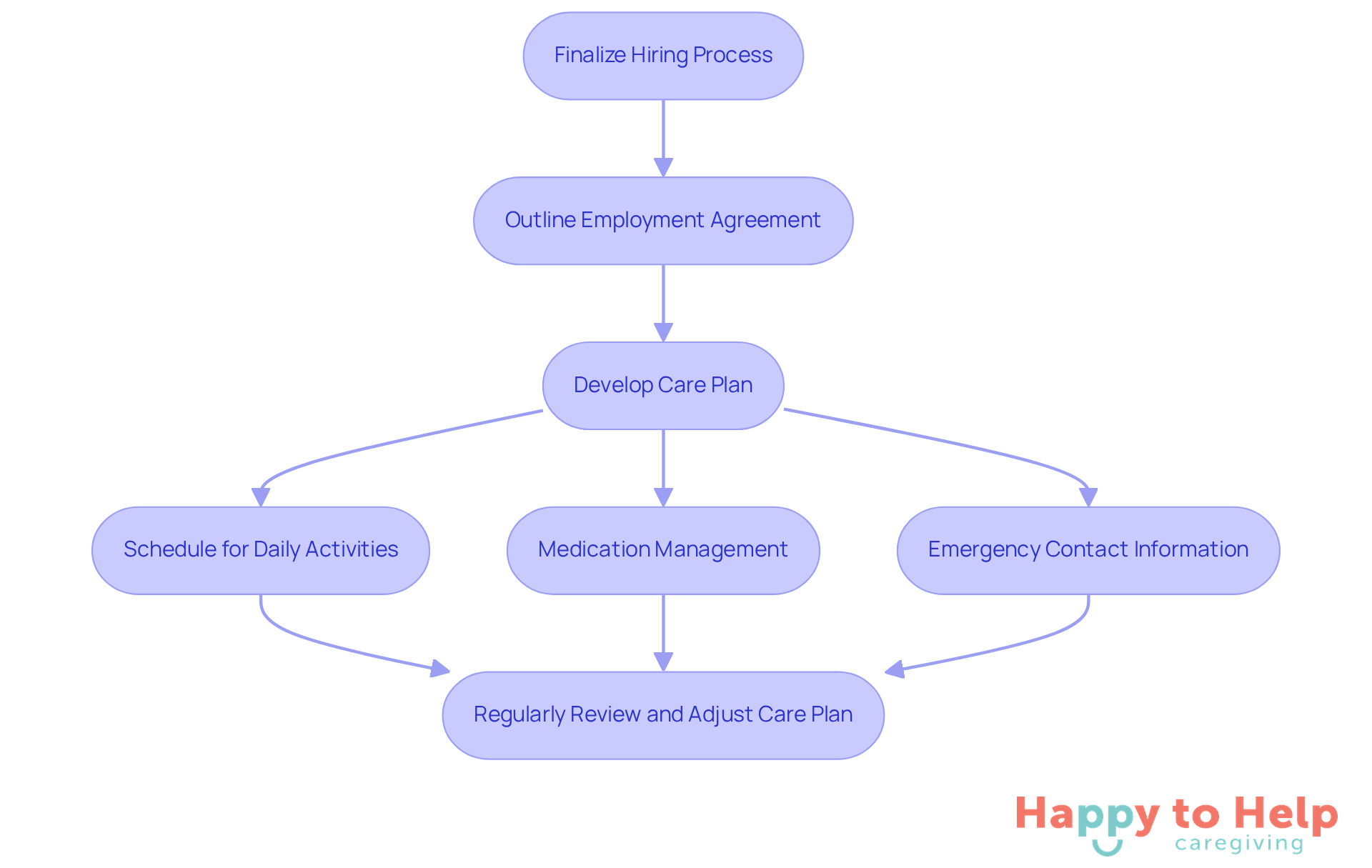
Selecting a caregiver is just the beginning; finalizing the hiring process is crucial for ensuring quality care. Without clear employment terms and a structured care plan, both caregivers and families may face misunderstandings and unmet needs.
Employment Agreement: Start by outlining the caregiver's responsibilities, work hours, and compensation. Documenting these details in a written agreement helps prevent future disputes and sets clear expectations.
Care Plan Development: Collaborate with the caregiver to create a comprehensive care plan. This plan should detail daily routines, medical requirements, and personal preferences. Key components to include are:
- Schedule for daily activities
- Medication management protocols
- Emergency contact information
Regularly reviewing and adjusting the care plan is essential to adapt to your loved one's evolving needs, ensuring that care remains effective and responsive.
Making the Right Choice
Finding a live-in caregiver can be a daunting challenge for families aiming to provide the best support for their loved ones. The implications of this decision are significant, as the right caregiver can greatly enhance the quality of life for elderly family members. However, the process requires careful consideration of the caregiver's role and the specific needs of the individual receiving care.
Families must recognize the vital responsibilities of live-in caregivers, which include personal care and companionship. These elements are crucial for fostering a nurturing environment. Evaluating the health conditions and daily activities of loved ones is essential to ensure a good match with a caregiver who can effectively address these challenges.
To streamline the search for qualified caregivers, families can utilize:
- home care agencies
- online platforms
- personal referrals
Conducting thorough interviews and background checks is vital for ensuring safety and compatibility. This step not only protects the individual receiving care but also helps establish trust between the caregiver and the family.
Ultimately, hiring a live-in caregiver is about more than just filling a position; it’s about creating a supportive atmosphere that prioritizes well-being. By following these steps and developing a structured care plan, families can promote dignity, respect, and emotional connection. Investing time in this process can lead to a more fulfilling caregiving experience for both the caregiver and the loved one, highlighting the profound impact that proper care can have on overall quality of life.
https://iframe.tely.ai/cta/eyJhcnRpY2xlX2lkIjogIjY5Mjc5NGY5NmFmMzU5NTU2OTU3ODdjZiIsICJjb21wYW55X2lkIjogIjY4ZWU1ZGNhNzMxNzYyNTU3ZjNjOTVjMSIsICJpbmRleCI6IG51bGwsICJ0eXBlIjogImFydGljbGUifQ==Frequently Asked Questions
What is the role of a live-in caregiver?
A live-in caregiver provides comprehensive support for individuals at home, assisting with daily activities such as personal care, meal preparation, medication management, and companionship.
What are the key responsibilities of live-in caregivers?
Key responsibilities include personal care (bathing, dressing, grooming, toileting), household management (light housekeeping, laundry, meal preparation), companionship (engaging in social activities and providing emotional support), and health monitoring (keeping track of medications and health conditions).
Why is it important for families to understand the roles of live-in caregivers?
Understanding the roles helps families recognize the specific needs of their loved ones and communicate these effectively during the hiring process, ensuring caregivers are well-prepared to meet the unique challenges of their roles.
How can families assess their care needs when looking for a caregiver?
Families should assess health conditions that require specialized care, daily activities the individual struggles with, the importance of social interaction, and any preferences regarding the caregiver's gender, age, or personality traits.
What factors should be considered regarding health conditions when assessing care needs?
It is essential to identify any medical conditions that require specialized care, as neglecting health issues can lead to serious complications.
Why is social interaction important in caregiving?
Social interaction is important because social isolation can significantly impact mental health, making companionship and social engagement crucial factors to consider in caregiving.
How can preferences influence the caregiving relationship?
Discussing preferences regarding the caregiver's gender, age, or personality traits can enhance the comfort and effectiveness of the caregiving relationship.
List of Sources
- Understand the Role of a Live-In Caregiver
- Families Prefer In-Home Care To Senior Living – Yet Struggle To Identify Needed Support (https://homehealthcarenews.com/2025/11/families-prefer-in-home-care-to-senior-living-yet-struggle-to-identify-needed-support)
- Why Senior Home Care is More Important Than Ever (https://homeinstead.com/home-care/usa/la/carencro/347/news-and-media/senior-home-care-is-more-important-than-ever)
- 10 Benefits of Live-In Dementia Care for Family Caregivers - Happy To Help (https://happytohelpcaregiving.com/10-benefits-of-live-in-dementia-care-for-family-caregivers)
- Caregiver Statistics: Demographics (https://caregiver.org/resource/caregiver-statistics-demographics)
- The Impact of Live-In Caregivers on the Quality of Life for Seniors (https://traditionshhs.com/the-impact-of-live-in-caregivers-on-the-quality-of-life-for-seniors)
- Assess Your Care Needs and Preferences
- Warning From Older Adults: Care for Aging in America Needs Urgent Rethinking (https://johnahartford.org/newsroom/view/warning-from-older-adults-care-for-aging-in-america-needs-urgent-rethinking)
- Families Prefer In-Home Care To Senior Living – Yet Struggle To Identify Needed Support (https://homehealthcarenews.com/2025/11/families-prefer-in-home-care-to-senior-living-yet-struggle-to-identify-needed-support)
- Older adults prioritize social activities, inclusiveness in massive survey assessing what matters most to them (https://mcknights.com/news/older-adults-prioritize-social-activities-inclusiveness-in-massive-survey-assessing-what-matters-most-to-them)
- Elderly Care Statistics (https://rosewood-nursing.com/post/elderly-care-statistics)
- Caregiving in the US 2025 (https://aarp.org/pri/topics/ltss/family-caregiving/caregiving-in-the-us-2025)
- Search for Qualified Live-In Caregivers
- 7 Best Places to Find Caregivers for Home Care | Aaniie, formerly Smartcare Software (https://aaniie.com/news/7-best-places-to-find-caregivers-for-home-care)
- 52 Eye-Opening Home Health Statistics: Insights for 2025 (https://boosthomehealth.com/home-health-statistics)
- In-Home Care for Seniors - Caregiving News and Tips (https://aarp.org/caregiving/home-care)
- How to Find a Live-In Caregiver for Elderly Loved Ones - Happy To Help (https://happytohelpcaregiving.com/how-to-find-a-live-in-caregiver-for-elderly-loved-ones)
- FastStats (https://cdc.gov/nchs/fastats/home-health-care.htm)
- Conduct Interviews and Background Checks
- DISA | Caregiver Screening for Safe Home Healthcare (https://disa.com/news/caregiver-background-check-best-practices)
- The Case For Stronger Caregiver Vetting In Home Care (https://homehealthcarenews.com/2024/10/the-case-for-stronger-caregiver-vetting-in-home-care)
- The Importance of Proper Caregiver Background Checks - Private Eyes Background Checks (https://privateeyesbackgroundchecks.com/the-importance-of-proper-caregiver-background-checks)
- The Importance of Background Checks in Homecare Hiring | Gotham Companies (https://gothamcompanies.com/2024/08/21/the-importance-of-comprehensive-background-checks-in-homecare-hiring)
- Why Thorough Background Checks Matter for Companionship Care (https://southerncaliforniacaregiving.com/why-thorough-background-checks-matter-for-companionship-care)
- Finalize Hiring and Establish a Care Plan
- Building a lifeline for family caregivers across the US (https://news.mit.edu/2025/ianacare-builds-lifeline-for-family-caregivers-across-us-0811)
- Importance of Personalized Senior Home Care in Burlington NC (https://wisdomseniorcare.com/the-importance-of-personalized-care-plans-for-seniors)
- Caregivers: the invisible backbone of dementia care (https://publichealth.gmu.edu/news/2025-11/caregivers-invisible-backbone-dementia-care)
- Honoring America’s Family Caregivers, the Unseen Workforce Behind Our Health System - Medicare Rights Center (https://medicarerights.org/medicare-watch/2025/11/25/honoring-americas-family-caregivers-the-unseen-workforce-behind-our-health-system)