
For families in our service areas
For families in our service areas, this guide explains companion care and how non-medical in-home caregiving can support care planning in East Idaho, Treasure Valley & Magic Valley, Northern Wasatch, North Central West Virginia, and Northeast Ohio.
The Importance of Hire a Companion
Companion care has become a crucial solution to address the widespread loneliness and isolation experienced by seniors. Studies show that a staggering 42% of elderly individuals in care facilities report feeling severely lonely. This alarming statistic highlights the urgent need for companions who not only assist with daily tasks but also promote meaningful social interactions that enhance emotional well-being.
However, finding the right caregiver can be challenging. Families often wonder: how can they ensure they select a companion who truly meets their loved one's unique needs? This guide provides a comprehensive, step-by-step approach to hiring a companion, empowering families to make informed decisions that enrich the lives of their cherished ones.
Understand the Importance of Companion Care
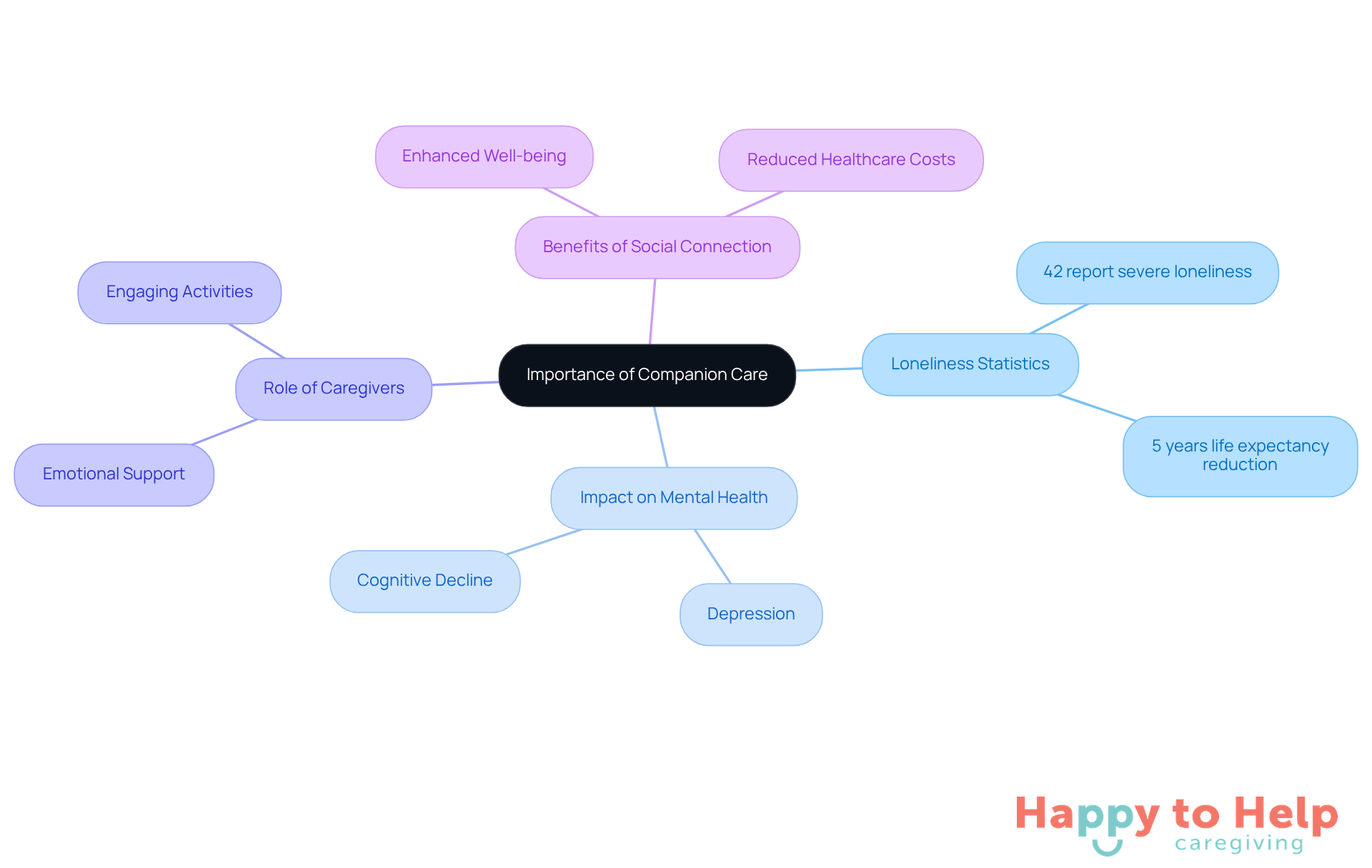
Companion care addresses a significant problem: the loneliness and social isolation faced by seniors and individuals with special needs. Research shows that 42% of seniors in care facilities report severe loneliness, which can lead to serious mental health issues, including depression and cognitive decline. Chronic loneliness not only diminishes life expectancy by five years but also increases the risk of premature death by 26%.
This pervasive issue highlights the need for effective solutions. By providing emotional support and engaging in meaningful activities, caregivers can foster a sense of belonging and security, which is vital for maintaining mental well-being. Companion care goes beyond assisting with daily tasks; it encourages essential social interactions that support cognitive function and emotional health.
Families should recognize that when they hire a companion, it enriches their loved one's life, reducing the risks associated with isolation and enhancing overall happiness. As Dr. Vivek Murthy, co-chair of the WHO Commission on Social Connection, points out, tackling loneliness is a defining challenge of our time. Initiatives like the WHO's 'Knot Alone' campaign underscore the importance of social connection for better health.
Investing in supportive care is not just beneficial; it is crucial for the well-being of those we care about.
Evaluate Your Needs and Criteria for Hiring
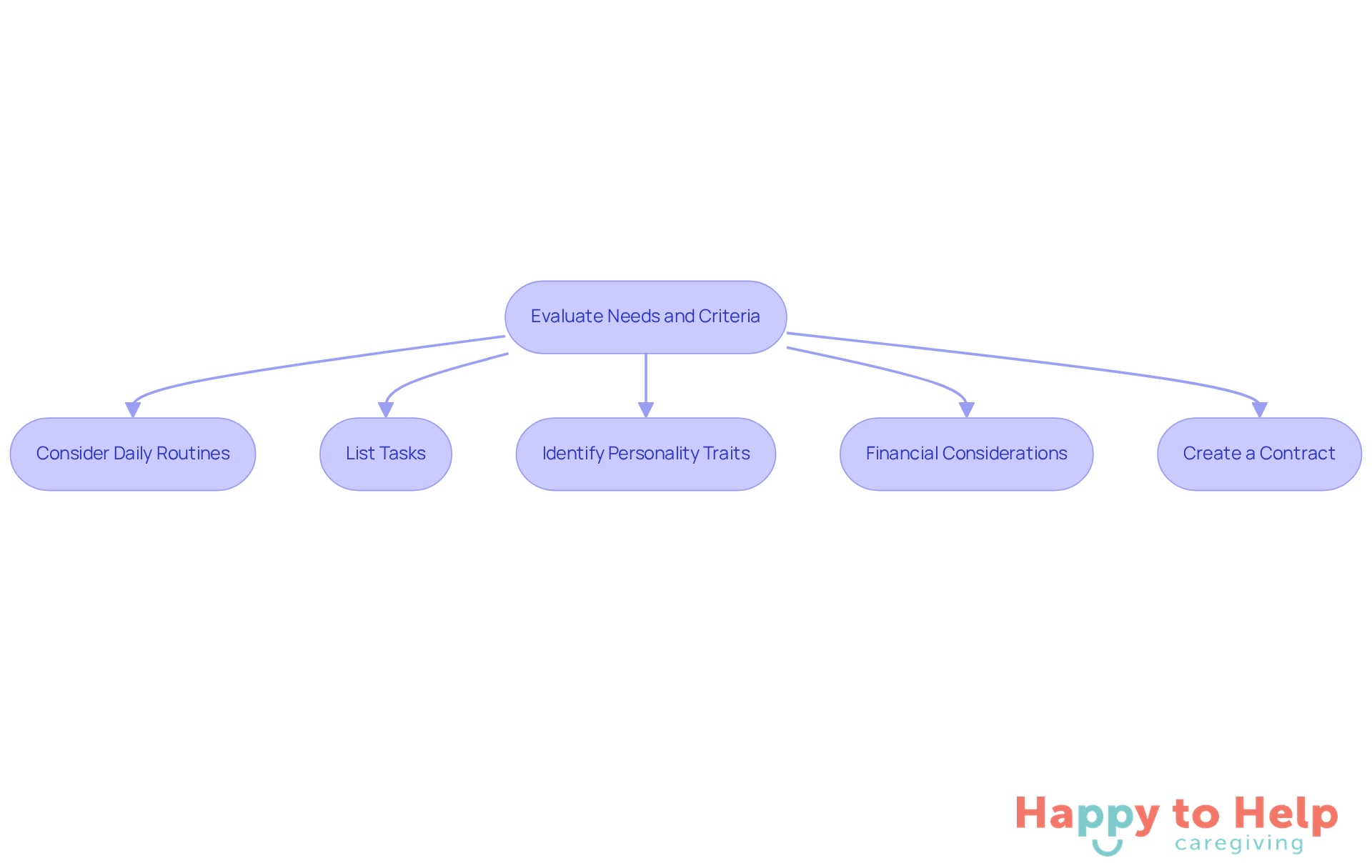
Finding the right partner for caregiving can be challenging. Before starting this search, it’s crucial to evaluate your loved one’s specific needs. Consider their daily routines, social preferences, and any medical conditions that may require special attention. For example, seniors often thrive on structured daily activities, so understanding their typical schedule can help identify the right support.
Create a detailed list of tasks you anticipate the aide will assist with, such as:
- Meal preparation
- Transportation
- Providing companionship during social activities
Additionally, think about the personality traits that would best complement your significant other’s temperament. If they tend to be more introverted, a quieter, more reserved partner may be a better fit.
This thoughtful evaluation serves as a valuable guide throughout the process to hire a companion who aligns with your loved one’s lifestyle and emotional needs. Personalized care plans can also be developed based on these insights, addressing specific requirements such as dietary restrictions or preferred activities. This ultimately enhances the quality of care and companionship.
Financial considerations are also important. Agency rates average around $30 per hour, while independent providers may offer cost savings. Conducting background checks for private aides is essential to ensure safety and reliability.
Lastly, creating a contract for those providing care that outlines responsibilities and expectations can prevent misunderstandings and enhance the caregiving experience.
Explore Options for Finding Companions
Finding the right partner for your loved one can be a daunting task. Many families face the challenge of locating trustworthy caregiving support, which can lead to stress and uncertainty. With nearly 63 million caregivers in the U.S., the need for reliable assistance is more pressing than ever.
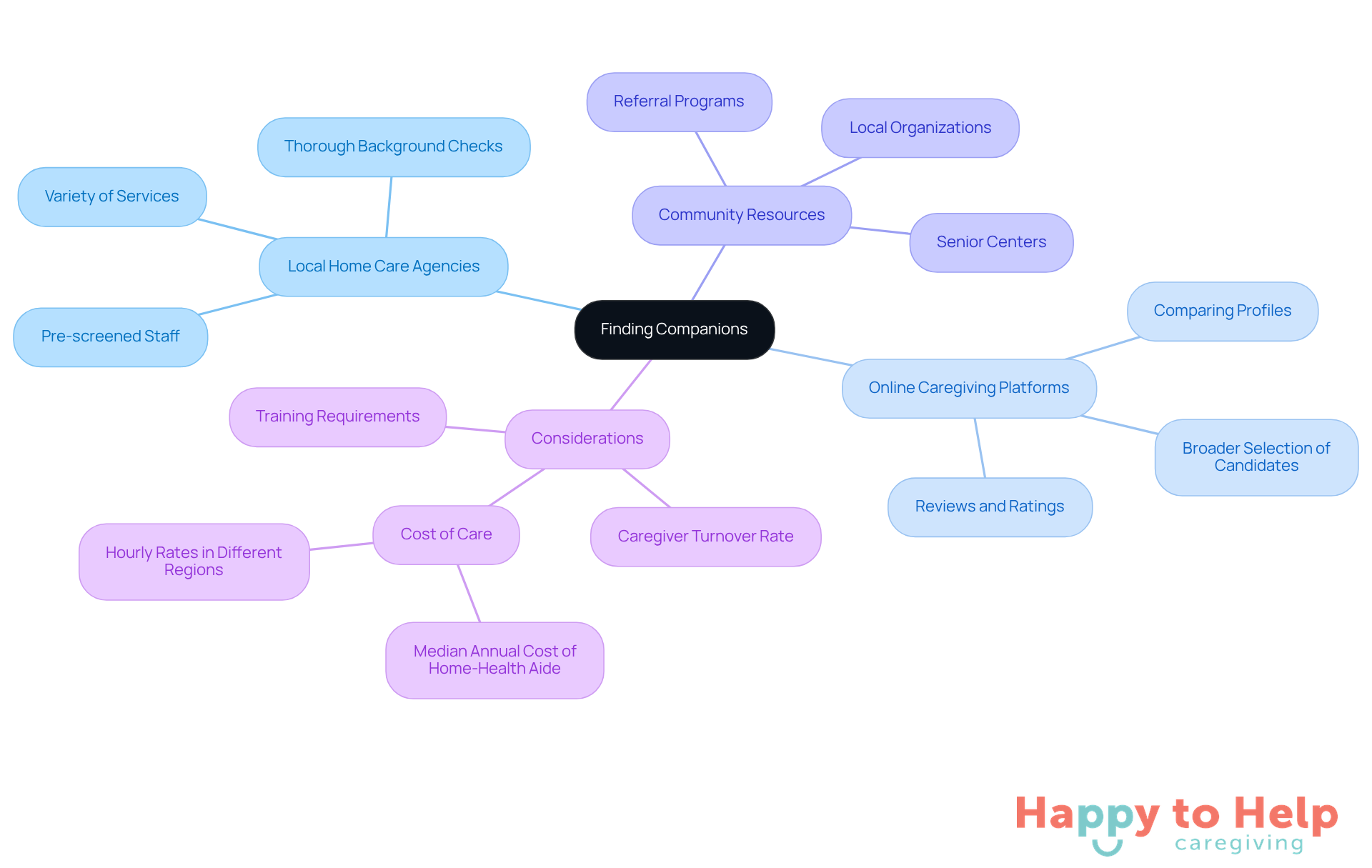
Local home care agencies serve as a solid starting point. These agencies typically provide pre-screened support staff who have undergone thorough background checks, ensuring peace of mind. They offer a variety of services, allowing you to find a provider whose qualifications align with your loved one's specific needs. Additionally, seeking recommendations from friends, family, or healthcare professionals can lead to trustworthy candidates who have been vetted through personal experiences.
Online caregiving platforms have also gained traction, providing a broader selection of candidates. Families can compare profiles, reviews, and rates, making it easier to find suitable support. This is particularly beneficial in urban areas where the availability of providers may be limited. Community resources, such as senior centers and local organizations, often have programs designed to assist families in hiring a companion, creating a valuable link to trusted services.
It's essential to check reviews and testimonials for any potential provider or agency. Statistics show that the median annual cost of a home-health aide reached $77,792 in 2024, highlighting the financial considerations families must take into account. By interacting with local resources and utilizing online platforms, you can simplify the process to hire a companion, ensuring that your loved one receives the attention and companionship they deserve.
Conduct Interviews and Assess Compatibility
Finding the right caregiver when you want to hire a companion can be a daunting task. With the increasing demand for caregiving services, especially as the elderly population in the U.S. is projected to triple by 2060, it’s crucial to hire a companion and make informed hiring decisions. The challenge lies not only in identifying potential partners but also in ensuring that when you hire a companion, they are a good fit for your loved one.
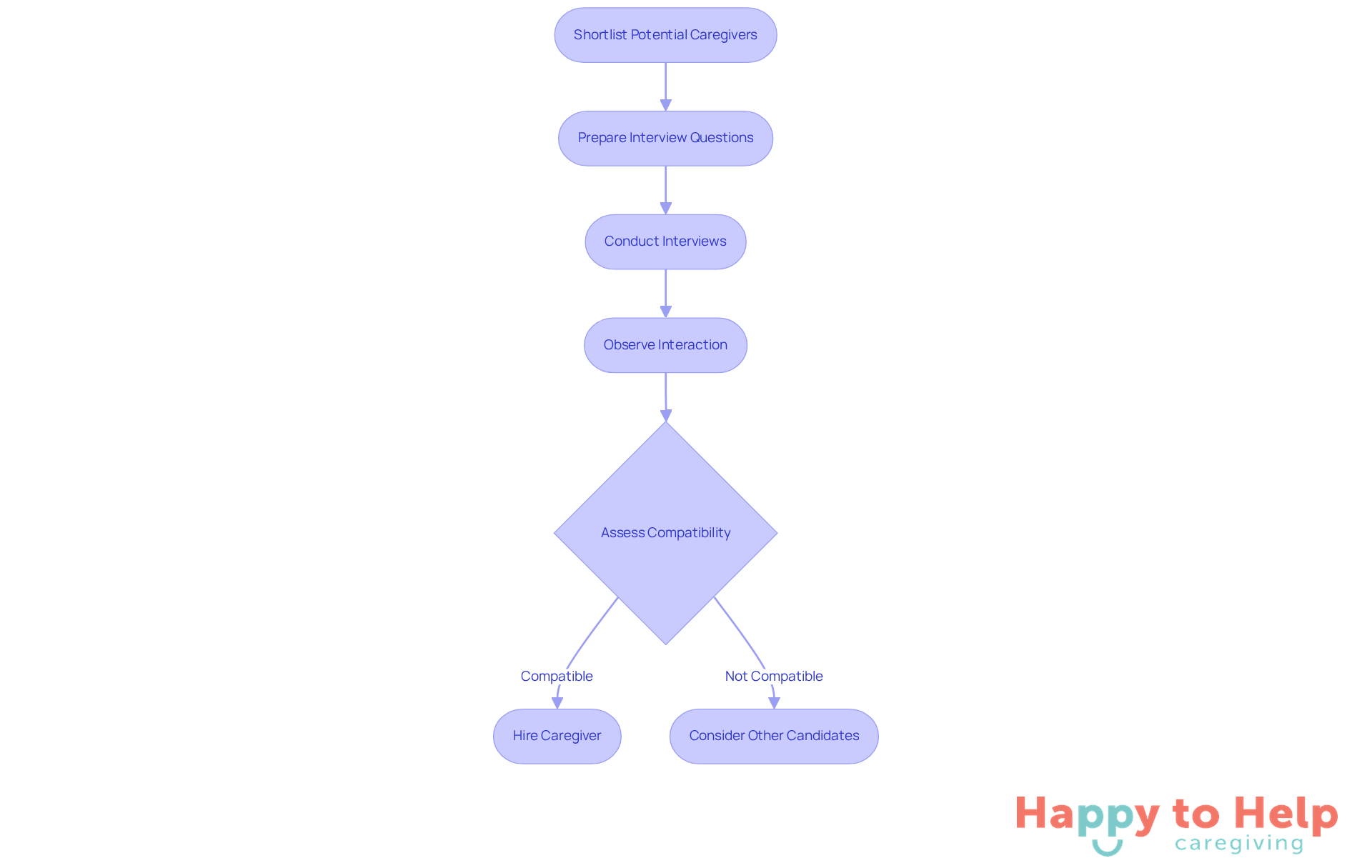
Once you have a shortlist of possible partners, it’s time to hire a companion and conduct interviews. Prepare a set of questions that cover their experience, approach to caregiving, and how they handle specific situations. Observe their demeanor and communication style, as effective communication is essential for establishing rapport with your dear one. Organize for the potential partner to meet your loved one in a comfortable environment to observe their interaction. Compatibility is key; ensure that when you hire a companion, they can engage your loved one in conversation and activities they enjoy.
- Trust your instincts - if something feels off, consider other candidates.
- Additionally, inquire about their CPR certification, as this is an important qualification for those providing care.
- Understanding the provider's communication preferences is also essential to ensure a good match.
Effective communication styles, such as active listening and empathy, can significantly enhance the caregiver-client relationship, fostering a sense of trust and comfort. Think about posing inquiries that uncover the caregiver's method for emotional support and adaptability, ensuring they align with your family member's needs and preferences. By taking these steps, you can navigate the caregiving landscape more effectively and hire a companion to provide the right support for your loved one.
Finalize Your Choice and Establish Care Guidelines
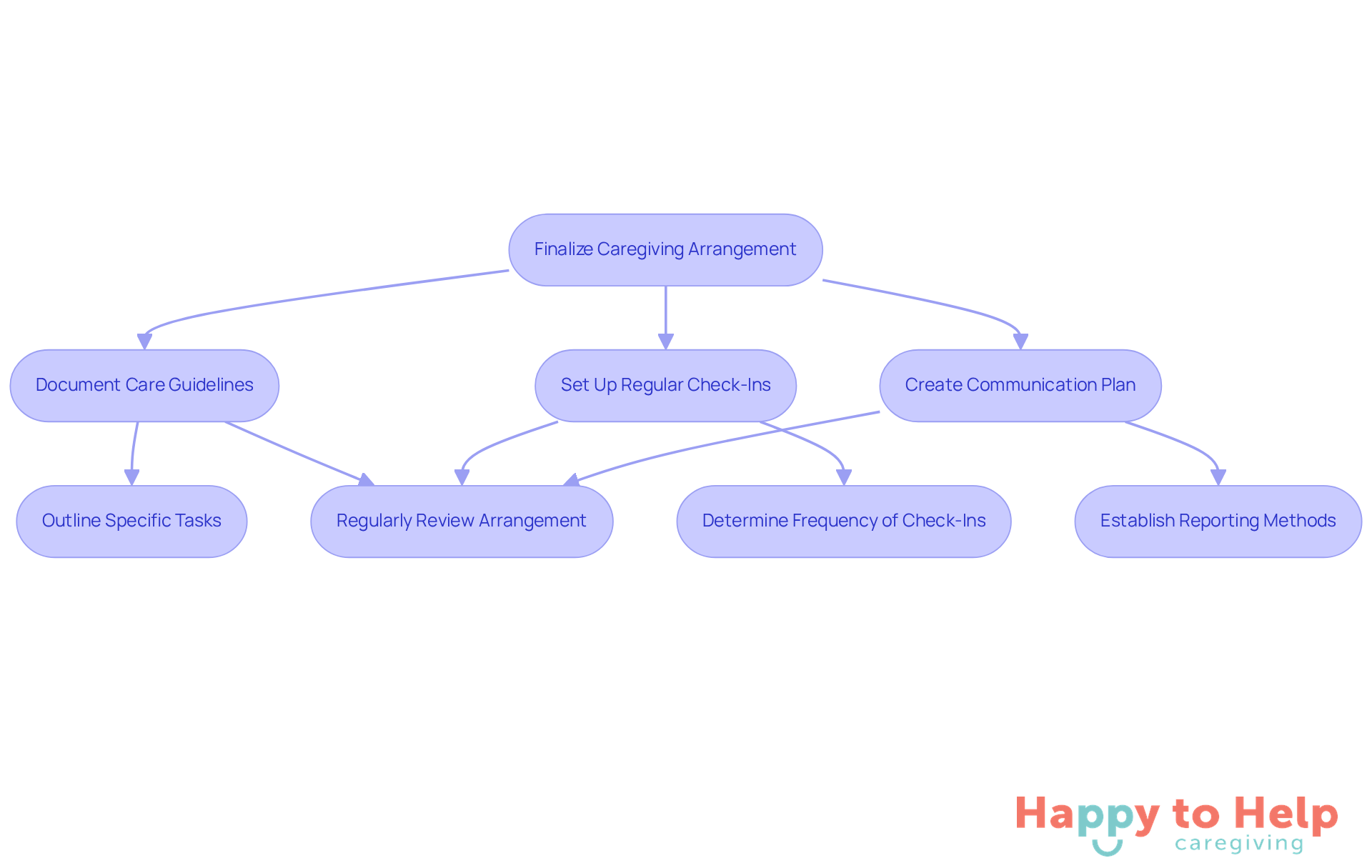
Choosing a partner for caregiving is just the beginning. The real challenge lies in finalizing the arrangement by discussing and documenting care guidelines. Caregivers often face the problem of unclear expectations, which can lead to misunderstandings and stress. It's essential to outline specific tasks the assistant will manage, the schedule, and any preferences your loved one may have.
This agreement should also include communication protocols. How often will the family check in? How should the companion report any concerns? Establishing these guidelines from the outset helps prevent confusion and ensures a smoother caregiving experience. Regularly reviewing the arrangement allows for adjustments as your loved one’s needs evolve.
Consider this: 63 million Americans are currently family support providers. This statistic highlights the emotional and physical toll caregiving can impose. Many caregivers face significant challenges, including the need for compensation for their work. Therefore, establishing clear and supportive caregiver arrangements is crucial.
To support caregivers effectively, here are some actionable tips:
- Document care guidelines clearly.
- Set up regular check-ins with family members.
- Create a communication plan for reporting concerns.
By addressing these issues proactively, caregivers can create a more manageable and supportive environment for both themselves and their loved ones.
Taking the Next Steps
Companion care addresses a critical problem: loneliness among seniors and individuals with special needs. This issue not only affects their emotional well-being but also poses significant health risks. By investing in a companion, families provide essential support for daily activities while fostering emotional connections that can greatly enhance mental health. Recognizing the importance of social interaction is vital in combating loneliness, making the decision to hire a companion both meaningful and impactful.
To ensure the best fit for your loved one, several key steps should be followed when hiring a companion:
- Start by evaluating specific needs and exploring various options for finding caregivers.
- Conduct thorough interviews and establish clear care guidelines.
Each of these steps contributes to a comprehensive approach that prioritizes safety, compatibility, and effective communication, ultimately leading to a more fulfilling caregiving experience.
The significance of companion care cannot be overstated. Taking proactive measures to secure the right support for loved ones enriches their lives and alleviates the emotional burden on families. By prioritizing companionship and connection, families can combat the pervasive issue of loneliness, ensuring their loved ones receive the care, attention, and joy they deserve. Following these steps can lead to a positive transformation in the lives of both caregivers and those they support.
https://iframe.tely.ai/cta/eyJhcnRpY2xlX2lkIjogIjY5MjdhNWNhMDE4NTMyOWI1NWI5ODQ4YyIsICJjb21wYW55X2lkIjogIjY4ZWU1ZGNhNzMxNzYyNTU3ZjNjOTVjMSIsICJpbmRleCI6IG51bGwsICJ0eXBlIjogImFydGljbGUifQ==Frequently Asked Questions
What is companion care and why is it important?
Companion care addresses loneliness and social isolation faced by seniors and individuals with special needs. It provides emotional support and engages individuals in meaningful activities, which are vital for maintaining mental well-being and reducing risks associated with isolation.
What are the effects of loneliness on seniors?
Research shows that 42% of seniors in care facilities report severe loneliness, which can lead to serious mental health issues, including depression and cognitive decline. Chronic loneliness can diminish life expectancy by five years and increase the risk of premature death by 26%.
How can hiring a companion benefit a loved one?
Hiring a companion enriches a loved one's life by providing emotional support and promoting social interactions, which can enhance overall happiness and reduce the risks associated with isolation.
What should families consider when hiring a companion?
Families should evaluate their loved one’s specific needs, including daily routines, social preferences, and any medical conditions. It's also important to consider the personality traits that would best complement their loved one’s temperament.
What tasks might a companion assist with?
A companion may assist with tasks such as meal preparation, transportation, and providing companionship during social activities.
How can families ensure they find the right caregiver?
Families should create a detailed list of tasks and specific requirements, such as dietary restrictions or preferred activities, to guide the search for a suitable companion. Personalized care plans can be developed based on these insights.
What are the financial considerations when hiring a companion?
Agency rates for companion care average around $30 per hour, while independent providers may offer cost savings. It's also important to conduct background checks for private aides to ensure safety and reliability.
What steps can be taken to enhance the caregiving experience?
Creating a contract that outlines responsibilities and expectations for caregivers can prevent misunderstandings and enhance the overall caregiving experience.
List of Sources
- Understand the Importance of Companion Care
- The Silent Epidemic of Senior Loneliness (https://honorcare.com/news/silent-epidemic-of-senior-loneliness)
- Loneliness among seniors: Isolation can lead to serious mental health issues (https://click2houston.com/news/local/2025/04/22/loneliness-among-seniors-isolation-can-lead-to-serious-mental-health-issues)
- Families Prefer In-Home Care To Senior Living – Yet Struggle To Identify Needed Support (https://homehealthcarenews.com/2025/11/families-prefer-in-home-care-to-senior-living-yet-struggle-to-identify-needed-support)
- Social connection linked to improved health and reduced risk of early death (https://who.int/news/item/30-06-2025-social-connection-linked-to-improved-heath-and-reduced-risk-of-early-death)
- Older adults find support through health care companions (https://news-medical.net/news/20250924/Older-adults-find-support-through-health-care-companions.aspx)
- Evaluate Your Needs and Criteria for Hiring
- Five Essential Tips for Hiring a Paid Caregiver (https://thecaregiversjourney.org/32-five-essential-tips-for-hiring-a-paid-caregiver)
- How to Hire In-Home Caregivers: 5 Essential Steps for Families - Happy To Help (https://happytohelpcaregiving.com/how-to-hire-in-home-caregivers-5-essential-steps-for-families)
- Companion Care for Older Adults: What to Consider? - UDS Foundation (https://udservices.org/companion-care-for-older-adults-what-to-consider)
- Six Tips for Choosing Companion Care Services for Seniors (https://ltcnews.com/articles/six-tips-for-choosing-companion-care-services-for-seniors)
- Explore Options for Finding Companions
- New report aims to identify ways to support aging New Yorkers and their caregivers (https://abc7ny.com/post/state-older-new-yorkers-report-aims-find-ways-support-aging-residents-caregivers/17283170)
- The 8 Highest-Rated Companion Care Agencies for Aging at Home - (https://wecareonlineclasses.com/the-8-highest-rated-companion-care-agencies-for-aging-at-home)
- How to Find a Live-In Caregiver for Elderly Loved Ones - Happy To Help (https://happytohelpcaregiving.com/how-to-find-a-live-in-caregiver-for-elderly-loved-ones)
- Building a lifeline for family caregivers across the US (https://news.mit.edu/2025/ianacare-builds-lifeline-for-family-caregivers-across-us-0811)
- 37 Home-Based Care Companies Earn A Spot On Inc. 5000 List (https://homehealthcarenews.com/2025/08/36-home-based-care-companies-earn-a-spot-on-inc-5000-list)
- Conduct Interviews and Assess Compatibility
- Questions You Should Ask a Caregiver | Village Caregiving (https://villagecaregiving.com/blog/questions-to-ask-a-caregiver)
- Caregiver Interview Success Guide | Sunlight Senior Care (https://sunlightseniorcare.com/caregiver-interview-success-guide)
- 76 Best Caregiver Interview Questions for Agency Owners | CareAcademy (https://careacademy.com/blog/caregiver-interview-questions)
- Top 10 Caregiver Interview Questions: What Employers Really Want to Hear in 2025 - The Interview Guys (https://blog.theinterviewguys.com/caregiver-interview-questions)
- Caregiver Interview Questions You NEED For Better Recruitment (https://rellevate.com/news/caregiver-interview-questions-you-need)
- Finalize Your Choice and Establish Care Guidelines
- DOL Proposes Rule to Reinstate Companionship & Live-in Exemptions from Minimum Wage and Overtime for Third-Party Employers | Littler (https://littler.com/news-analysis/asap/dol-proposes-rule-reinstate-companionship-live-exemptions-minimum-wage-and)
- As Family Caregiving Grows, So Does the Need for Reform - Medicare Rights Center (https://medicarerights.org/medicare-watch/2025/08/14/as-family-caregiving-grows-so-does-the-need-for-reform)
- Caregiving in the US 2025 (https://aarp.org/pri/topics/ltss/family-caregiving/caregiving-in-the-us-2025)
- American Health Care Association Releases 2025 Policy Priorities For A Better Way (https://ahcancal.org/News-and-Communications/Press-Releases/Pages/AHCA-Releases-2025-Policy-Priorities-For-A-Better-Way.aspx)
- Family Caregivers Deserve Recognition — Medicare Is Starting to Listen (https://commonwealthfund.org/blog/2025/family-caregivers-deserve-recognition-medicare-starting-to-listen)