When a Hospital Changes Inpatient Status to Observation
Reviewed by Tyree Powell, Marketing on .
For families in Brigham City
For families in Brigham City, Northern Wasatch: use the resources and practical steps in this guide to plan wanted nonmedical help. Confirm individual requirements and current availability with the responsible provider.
An inpatient-to-observation change differs from skilled-service termination. For Original Medicare, ask the hospital about current status, when it changed and the applicable Medicare Change of Status Notice. Ask about a missing notice promptly.
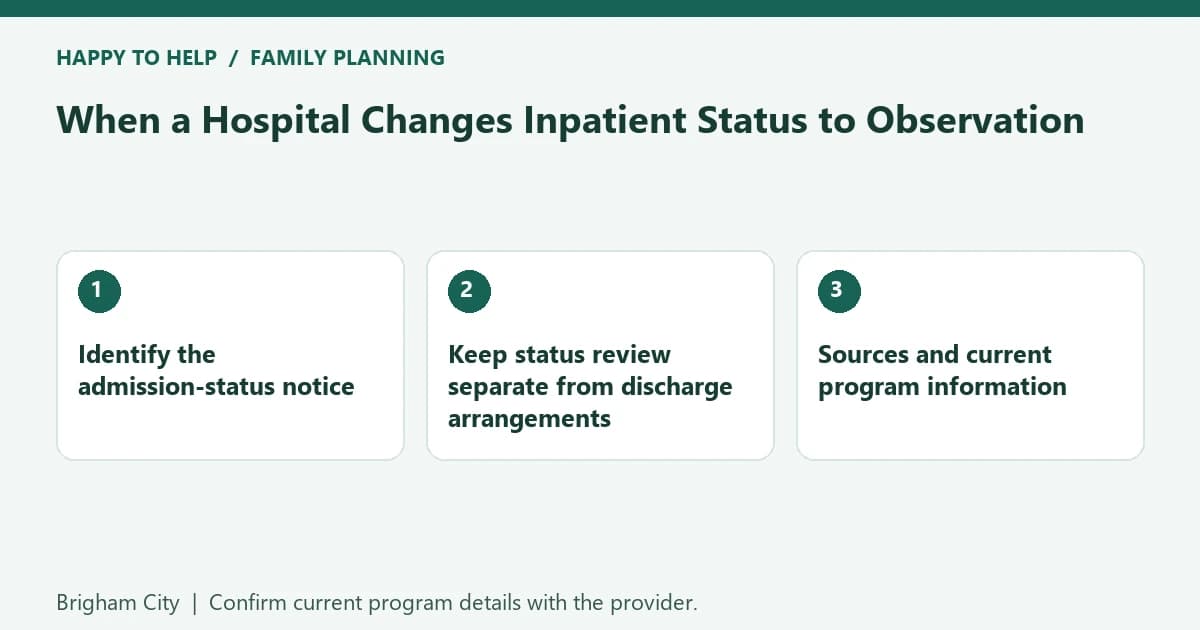
Identify the admission-status notice
Use the actual notice for BFCC-QIO instructions and timing; do not infer a deadline or apply the same process to Medicare Advantage. Utah counseling can help explain information without deciding an appeal. Separately confirm clinical needs and accepted discharge support. A review request does not establish payment, continued admission or home-care coverage.
Keep status review separate from discharge arrangements
The Original Medicare change-of-status route concerns a particular hospital classification decision. A notice ending skilled services answers a different question. Ask the hospital and BFCC-QIO route to explain which notice the person has and the steps applicable to it. Do not infer that asking about observation status pauses every discharge process or guarantees a later skilled-nursing benefit. Meanwhile, ask the clinical and discharge team which services the person needs, which have accepted them and what the actual home-help gaps are. Keep the two conversations documented without merging their outcomes.
For ordinary help at home, explore care in Brigham City and contact the Northern Wasatch team. Describe the tasks the person wants help with and the arrangements already confirmed. Ask about the actual service scope and availability before relying on a care schedule.