

For families in our service areas
For families in our service areas, this guide explains caregiver support and how non-medical in-home caregiving can support care planning in East Idaho, Treasure Valley & Magic Valley, Northern Wasatch, North Central West Virginia, and Northeast Ohio.
Why Caregiver Staffing Agencies vs. Matters
Navigating the complex world of caregiving options can be daunting for families seeking support for their loved ones. Families face a significant problem: the rise of caregiver staffing agencies and the availability of independent caregivers creates a crucial decision that impacts both the quality of care and financial considerations.
This challenge can lead to confusion and stress, as families weigh the reliability of agency-provided care against the personalized touch of independent providers. Understanding the essential differences between these two approaches is vital. Each option presents its own benefits and challenges, making it crucial for families to consider their unique needs and circumstances.
In this article, we will explore these differences in detail, offering insights and actionable solutions to help families make informed decisions about caregiving. By examining the pros and cons of each option, we aim to empower families to choose the best path forward for their loved ones.
Understanding Caregiver Staffing Agencies and Independent Caregivers
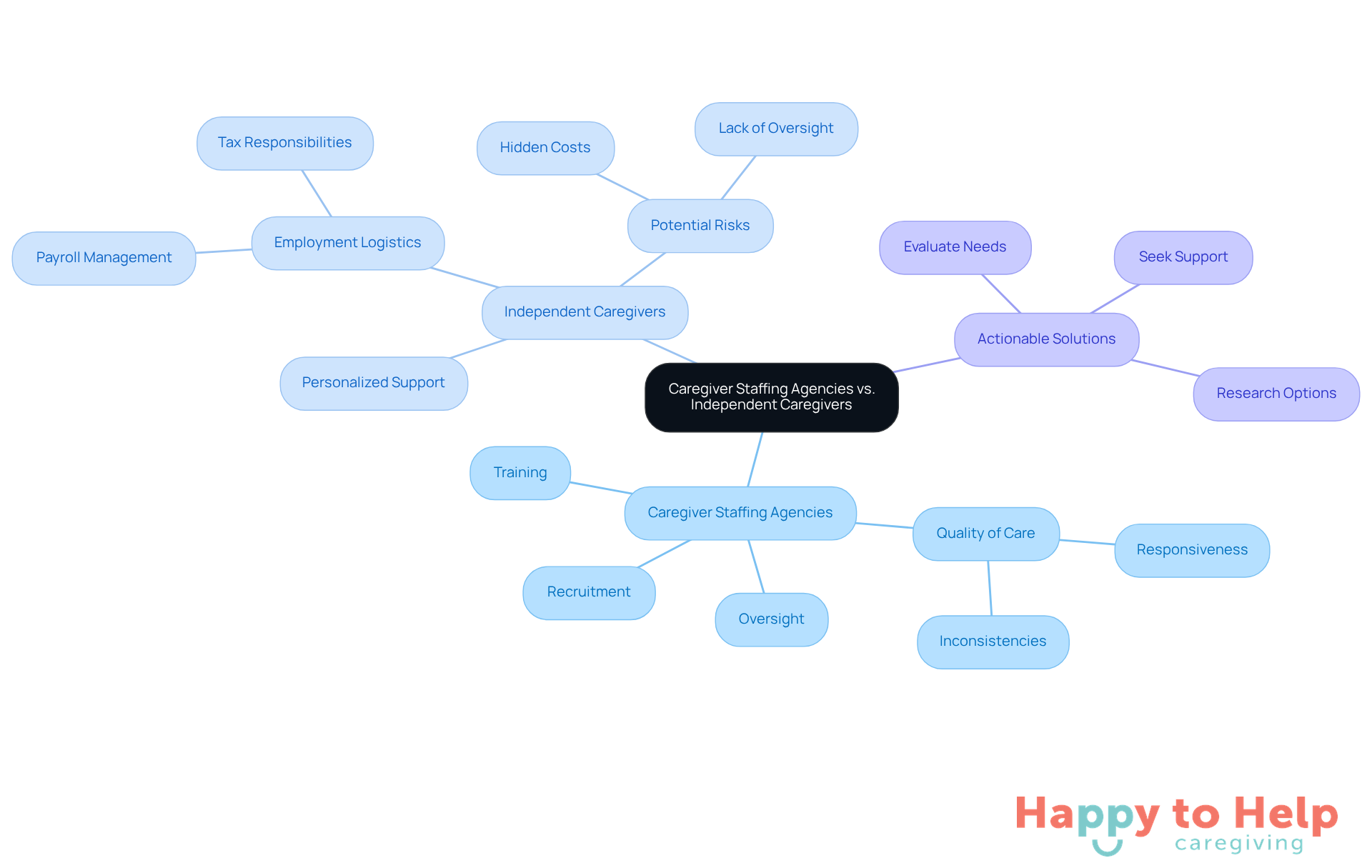
Caregiver staffing agencies encounter a significant challenge in providing adequate support to clients. These caregiver staffing agencies hire attendants and allocate them based on specific requirements, managing the recruitment, training, and oversight of support workers. However, the implications of this model can lead to inconsistencies in care quality and responsiveness to individual needs.
In contrast, self-sufficient providers, who are self-employed individuals, offer their services directly to clients without organizational supervision. While this can lead to more personalized support, it places the burden of employment logistics-like payroll and taxes-on the households. This distinction highlights the varying levels of support, training, and administrative responsibilities involved in caregiving.
To navigate these challenges, caregivers should consider the following actionable solutions:
- Evaluate Needs: Assess the specific care requirements of the individual to determine the best type of provider.
- Research Options: Look into both staffing organizations and independent providers to understand their offerings and limitations.
- Seek Support: Utilize resources and networks to help manage employment logistics if choosing an independent provider.
By understanding these dynamics, caregivers can make informed decisions that enhance the quality of care while ensuring compliance with necessary regulations.
Pros and Cons of Caregiver Staffing Agencies vs. Independent Caregivers
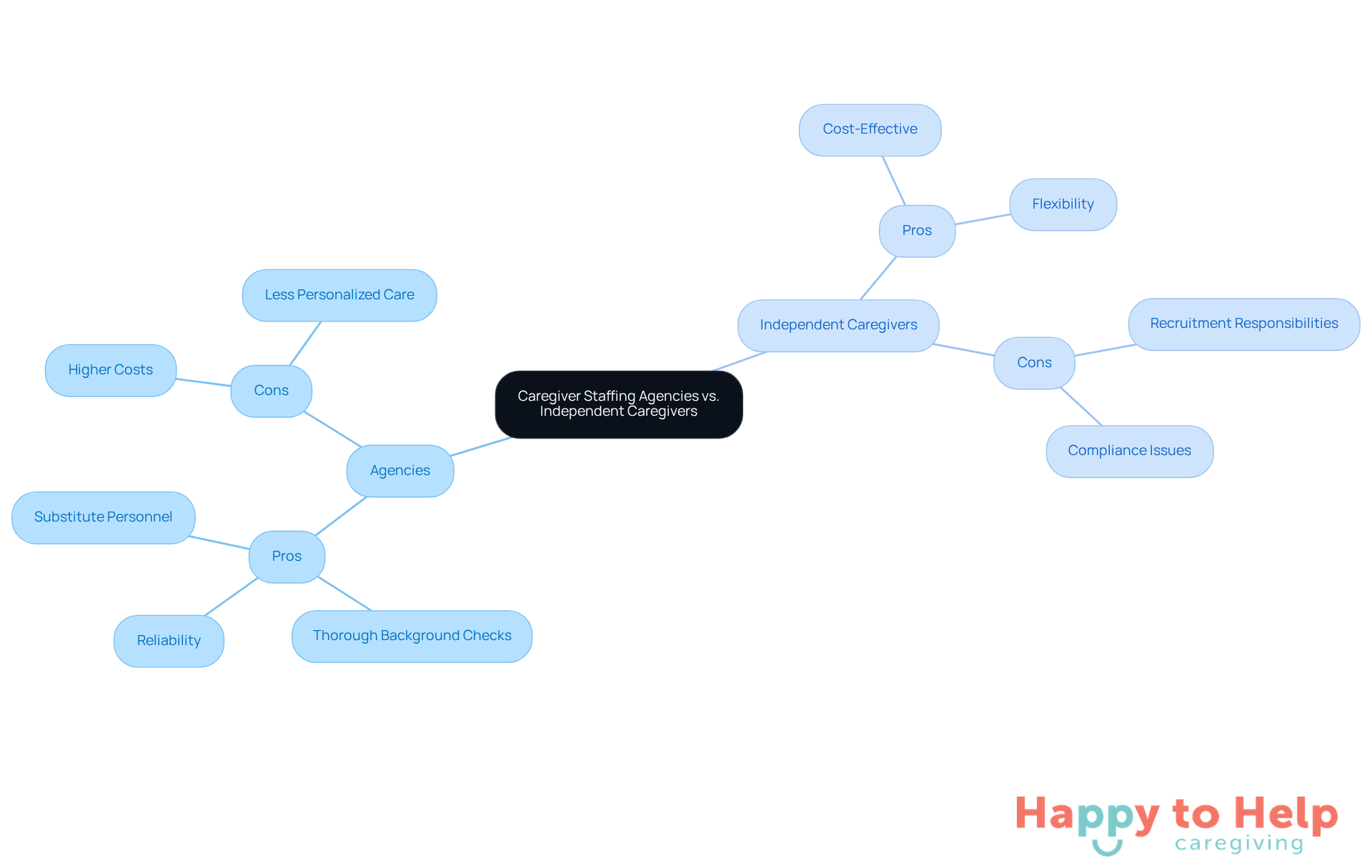
When it comes to caregiver staffing agencies for support providers, households face a significant challenge: how to choose between the assistance provided by agencies and self-employed caregivers. While caregiver staffing agencies provide benefits like:
- Reliability
- Thorough background checks
- Substitute personnel for illness or absence
These advantages come at a cost. Families often find that agency services are pricier due to overhead, and the care provided may be less personalized compared to hiring independent providers.
In contrast, self-employed caregivers can be a more cost-effective solution. In 2025, the national median hourly rate for agency-based in-home assistance reached $33, while self-employed providers typically charge between $20 and $25 per hour. This cost difference can be appealing for families looking to manage their budgets effectively, potentially saving 20% to 30% on hourly expenses by opting for private aides.
However, hiring self-employed support workers brings its own set of responsibilities. Households must handle:
- Recruitment
- Schedule management
- Qualification verification
This can be burdensome, especially for those already stretched thin. Additionally, self-employed caregivers may not have the same level of formal education or support networks that agencies provide, potentially affecting the quality of care. Families also need to navigate compliance with state and federal employment laws, adding another layer of complexity.
Ultimately, the decision between caregiver staffing agencies and solo providers depends on balancing costs, reliability, and the administrative workload families are willing to undertake. Households must weigh the peace of mind and structured support offered by agencies against the savings and flexibility that come with hiring independent caregivers.
Evaluating Suitability: Matching Care Options to Family Needs
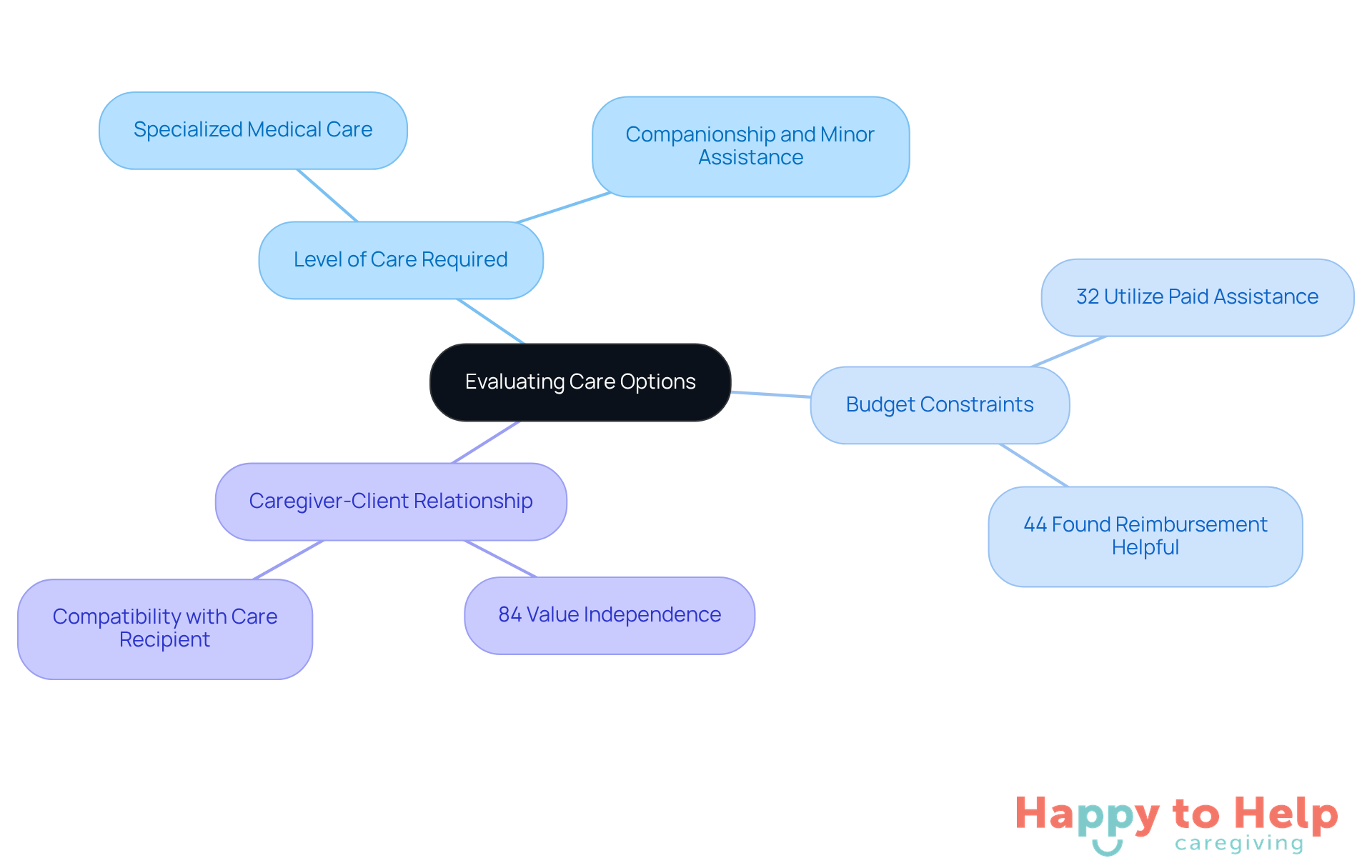
Choosing the right caregiving option can be challenging. Individuals must consider several factors, including:
- The level of care required
- Budget constraints
- The desired caregiver-client relationship
For instance, households needing specialized medical care may benefit more from an organization that provides skilled professionals with medical supervision. Conversely, those seeking companionship and minor assistance might find that a self-sufficient provider offers the personal touch they desire.
Budget considerations are crucial, as financial limitations significantly influence decisions. Statistics reveal that only 32% of America's 63 million family supporters utilize paid assistance, often due to these constraints. Families should evaluate their financial situation and explore options like direct payments or reimbursement for out-of-pocket expenses, which 44% of supporters found helpful. Additionally, 84% of respondents value their loved one's independence, underscoring the importance of the caregiver-client relationship in decision-making.
Experts emphasize the need to assess provider suitability based on specific needs. Factors such as experience, training, and compatibility with the care recipient can greatly affect the quality of care. The growing trend of the 'sandwich generation'-those caring for both aging parents and children-adds complexity to the caregiving landscape. Ultimately, the choice between staffing services for support providers and independent helpers should align with the household's unique circumstances and preferences, ensuring that the selected option promotes the well-being and independence of their loved ones.
Ensuring Quality Care: Support and Communication in Caregiver Options
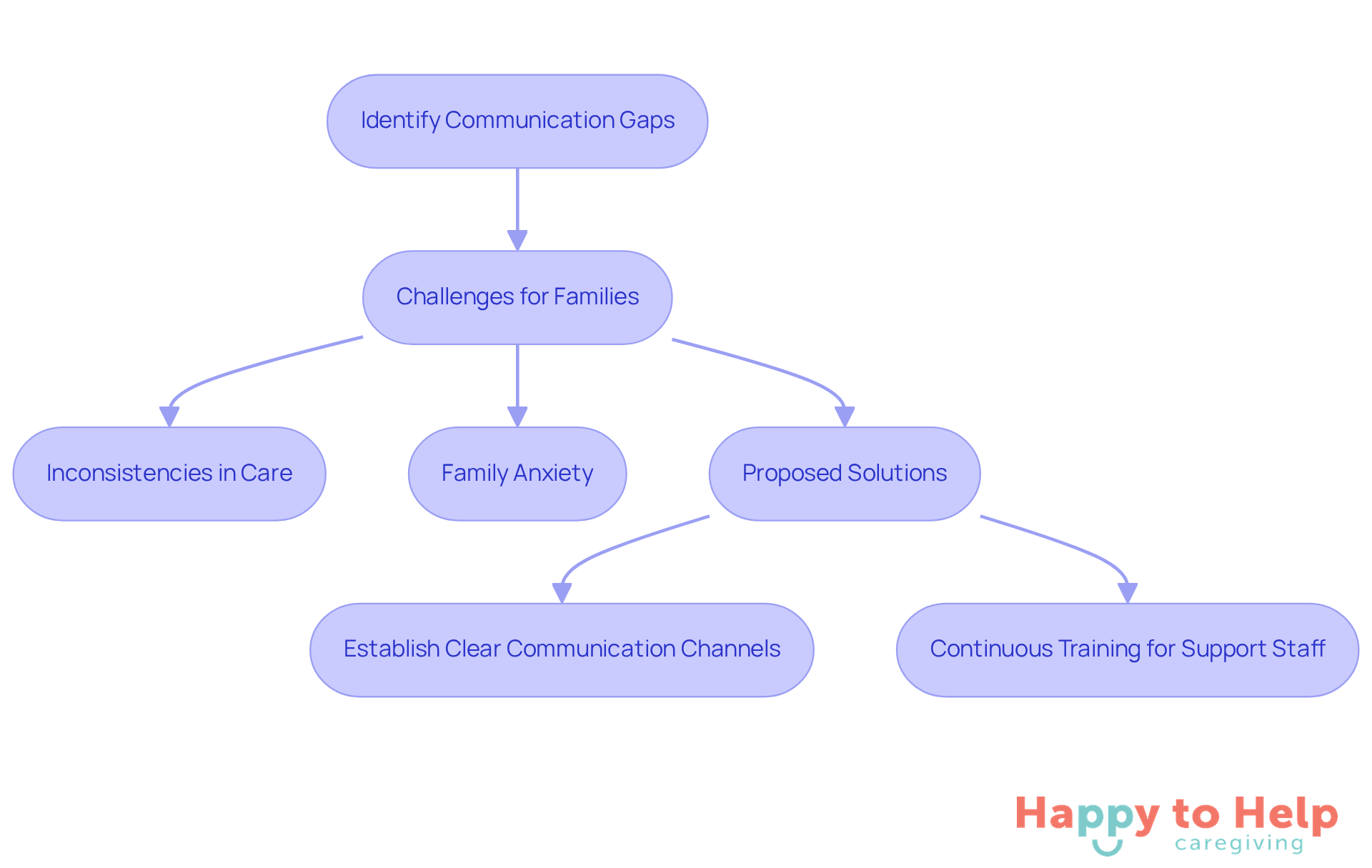
Quality assistance often hinges on effective communication and support between providers and families. The problem arises when there are gaps in communication, particularly with self-reliant caregivers. While these providers may foster a personal connection, the lack of organized communication can lead to inconsistencies in care, leaving families feeling uncertain about their loved one's well-being.
This issue can be agitating for families who want to ensure their loved ones receive the best possible care. Caregiver staffing agencies typically have established protocols that keep families informed about their loved one's care, which can alleviate some of these concerns. However, without such systems in place, families may struggle to get the information they need, leading to anxiety and frustration.
The solution lies in establishing clear communication channels from the outset. Families hiring independent caregivers should set expectations regarding updates and check-ins. This proactive approach can help ensure that care remains consistent and responsive to their loved one's needs. Additionally, continuous training for support staff at caregiver staffing agencies can further enhance the quality of service provided, bridging any potential gaps in care.
Taking the Next Steps
Choosing between caregiver staffing agencies and independent caregivers presents a significant challenge for families seeking quality care. This decision impacts not only the level of care received but also the overall experience for loved ones. Understanding the essential differences between these two options is crucial for making an informed choice.
Caregiver staffing agencies offer reliability and structured support, which can be appealing. However, they often come with higher costs and may provide less individualized attention. On the other hand, independent caregivers can deliver personalized care and foster closer relationships, but families must manage logistics and compliance, which can be overwhelming.
To navigate this decision effectively, families should align their care options with specific needs, budgetary constraints, and desired caregiver relationships. By thoughtfully weighing these considerations, families can select the best path for their loved ones' well-being. Evaluating unique circumstances and exploring both options will empower families to make informed choices that enhance care quality while promoting the independence and dignity of those they care for.
https://iframe.tely.ai/cta/eyJhcnRpY2xlX2lkIjogIjY5Mjc5NTE4NmFmMzU5NTU2OTU3ODdkZCIsICJjb21wYW55X2lkIjogIjY4ZWU1ZGNhNzMxNzYyNTU3ZjNjOTVjMSIsICJpbmRleCI6IG51bGwsICJ0eXBlIjogImFydGljbGUifQ==Frequently Asked Questions
What is the primary role of caregiver staffing agencies?
Caregiver staffing agencies hire attendants and allocate them based on specific client requirements, managing the recruitment, training, and oversight of support workers.
What are some challenges faced by caregiver staffing agencies?
Caregiver staffing agencies may encounter inconsistencies in care quality and responsiveness to individual needs due to their organizational structure.
How do independent caregivers differ from staffing agencies?
Independent caregivers are self-employed individuals who provide their services directly to clients without organizational supervision, offering more personalized support but placing the burden of employment logistics on the households.
What are some logistical responsibilities associated with hiring independent caregivers?
Households hiring independent caregivers are responsible for employment logistics such as payroll and taxes.
What should caregivers do to navigate the challenges of choosing a care provider?
Caregivers should evaluate the specific care needs of the individual, research both staffing organizations and independent providers, and seek support to manage employment logistics if choosing an independent provider.
Why is it important for caregivers to understand the dynamics between staffing agencies and independent caregivers?
Understanding these dynamics helps caregivers make informed decisions that enhance the quality of care while ensuring compliance with necessary regulations.
List of Sources
- Understanding Caregiver Staffing Agencies and Independent Caregivers
- Home Care Industry Trends to Watch in 2025 (https://firstlighthomecare.com/blog/home-care-industry-trends)
- How to Hire In-Home Caregivers: 5 Essential Steps for Families - Happy To Help (https://happytohelpcaregiving.com/how-to-hire-in-home-caregivers-5-essential-steps-for-families)
- Risks of Hiring a Private Caregiver vs. Benefits of an Accredited Home Care Agency (https://brightstarcare.com/locations/las-vegas-w/about-us/blog/dangers-of-hiring-privately-and-the-benefits-of-hiring-a-caregiver-from-an-actual-accredited-agency)
- Leaders Weigh In On Trends Shaping The Home Health Workforce (https://homehealthcarenews.com/2025/02/leaders-weigh-in-on-trends-shaping-the-home-health-workforce)
- Caregiver Statistics: Work and Caregiving (https://caregiver.org/resource/caregiver-statistics-work-and-caregiving)
- Pros and Cons of Caregiver Staffing Agencies vs. Independent Caregivers
- Home Care Agencies vs. Independent Caregivers | Pros & Cons (https://payingforseniorcare.com/homecare/agency-or-independent-caregiver)
- Independent Home Care vs. Home Care Agency (https://aplaceformom.com/caregiver-resources/articles/hiring-private-caregivers)
- Independent Private Caregiver vs. Home Care Agency: Which Is More Cost-Effective for Families? (https://clarahomecare.com/articles/independent-private-caregiver-vs-home-care-agency-which-is-more-cost-effective-for-families)
- Which is Better: An Independent Caregiver or Home Care Agency? | myLifeSite (https://mylifesite.net/blog/post/independent-caregiver-home-care-agency)
- Choosing a Caregiver: Independent Caregiver vs an Agency Caregiver (https://coastfamilyhomecare.com/choosing-a-caregiver-hiring-an-independent-caregiver-vs-an-agency-caregiver)
- Evaluating Suitability: Matching Care Options to Family Needs
- Families Prefer In-Home Care To Senior Living – Yet Struggle To Identify Needed Support (https://homehealthcarenews.com/2025/11/families-prefer-in-home-care-to-senior-living-yet-struggle-to-identify-needed-support)
- The senior population is booming. Caregiving is struggling to keep up (https://cnbc.com/2025/11/21/senior-caregiving-labor.html)
- Honoring America’s Family Caregivers, the Unseen Workforce Behind Our Health System - Medicare Rights Center (https://medicarerights.org/medicare-watch/2025/11/25/honoring-americas-family-caregivers-the-unseen-workforce-behind-our-health-system)
- Caregiving Crisis: Nearly 1 in 4 US adults serve as caregivers for relatives with complex needs (https://investigatetv.com/2025/11/04/caregiving-crisis-nearly-1-4-us-adults-serve-caregivers-relatives-with-complex-needs)
- Caregiving in the US 2025: A Comprehensive Overview (https://retirementlivingsourcebook.com/proagingnews/caregiving-in-the-us-2025-a-comprehensive-overview)
- Ensuring Quality Care: Support and Communication in Caregiver Options
- Independent Home Care vs. Home Care Agency (https://aplaceformom.com/caregiver-resources/articles/hiring-private-caregivers)
- Which is Better: An Independent Caregiver or Home Care Agency? | myLifeSite (https://mylifesite.net/blog/post/independent-caregiver-home-care-agency)
- Communication Breakdowns Take Toll on Family Caregivers, Especially for Older Adults with Chronic Illness (https://ltcnews.com/articles/communication-breakdowns-toll-family-caregivers-older-adults-chronic-illness)
- Why Communication Between Assisted Care Staff & Families Is Essential for Seniors' Wellbeing (https://elisonmaplewood.com/blog/why-clear-communication-between-assisted-living-staff-and-families-is-essential-for-resident-wellbeing)
- Caregiver training: Evidence of its effectiveness for cognitive and functional improvement in older adults - PMC (https://pmc.ncbi.nlm.nih.gov/articles/PMC10078788)