
Understanding Caregiver Job Agencies: Support for Family

For families in our service areas
For families in our service areas, this guide explains caregiver support and how non-medical in-home caregiving can support care planning in East Idaho, Treasure Valley & Magic Valley, Northern Wasatch, North Central West Virginia & Southwestern Pennsylvania, and Northeast Ohio.
What You Need to Know About Caregiver Job Agencies: Support
As the population ages, the demand for in-home care is surging, leading families to seek support from caregiver job agencies. This growing reliance highlights a significant problem: families often feel overwhelmed by the stress of finding and managing in-home assistance. Navigating the complexities of caregiver recruitment can be daunting, leaving many unsure of where to turn for help.
Caregiver job agencies play a vital role in addressing this issue. They not only connect families with qualified caregivers but also provide essential support that eases the burden of recruitment. By streamlining the process, these agencies enhance the caregiving experience for families, ensuring that both caregivers and those they serve can thrive. Understanding the profound impact of these organizations reveals their importance in promoting the well-being of everyone involved.
Defining Caregiver Job Agencies
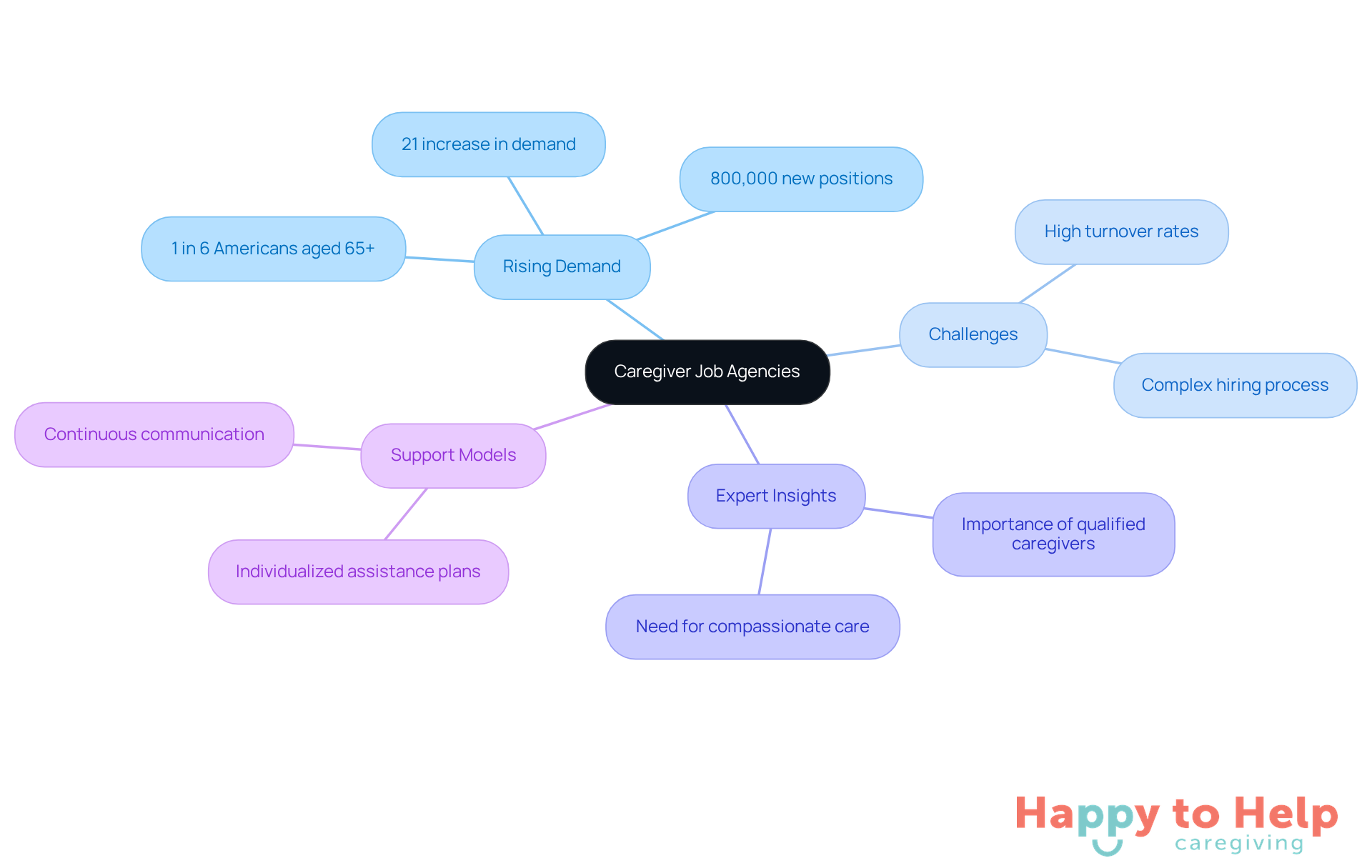
Care support organizations play a crucial role in connecting families in need of assistance with skilled providers. However, as the demand for caregiver services rises, families face significant challenges in finding suitable support. In 2025, it is projected that 1 in 6 Americans will be aged 65 and older, which will lead to a greater reliance on caregiver job agencies. This growing need is compounded by the anticipated 21% increase in demand for home health and personal assistance aides through 2033, resulting in over 800,000 new positions.
The implications of this trend are profound. Families often struggle to navigate the complexities of hiring qualified caregivers, which can lead to stress and uncertainty. High turnover rates in the sector, estimated at 60-65% annually, further complicate the situation, affecting the quality of services delivered. Expert insights emphasize that support worker recruitment firms are essential for improving clients' quality of life, ensuring that providers are not only qualified but also compassionate and attentive to the unique needs of those they assist.
To address these challenges, effective models of support worker job organizations focus on:
- Individualized assistance plans
- Continuous communication between families and support workers
As Robert Espinoza points out, despite their significance, direct support roles continue to be undervalued, underscoring the necessity for enhanced job quality and support for caregivers. By prioritizing these solutions, families can reduce the strain of caregiving and ensure their loved ones receive the appropriate assistance in a timely manner.
The Role of Caregiver Job Agencies in Family Caregiving
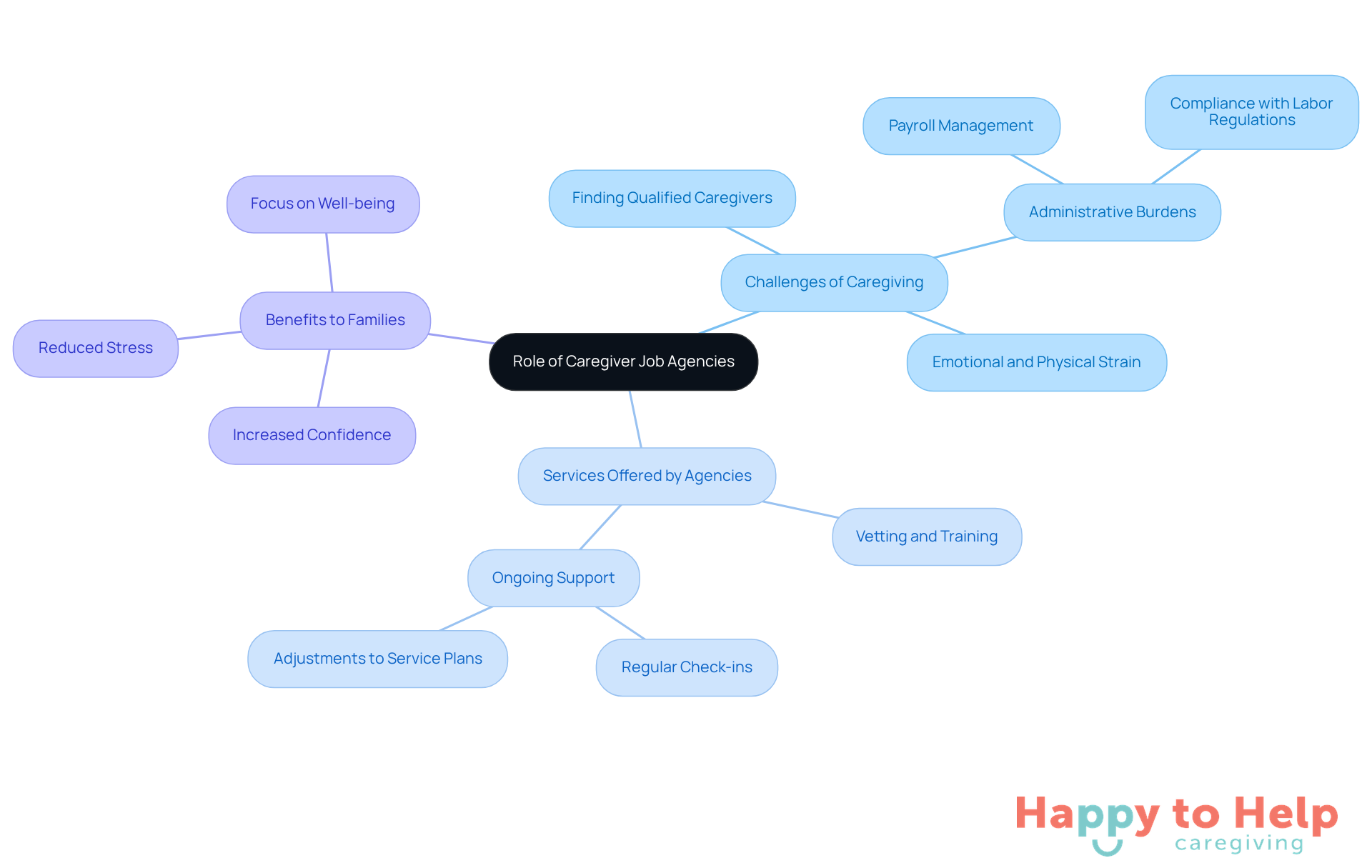
Caregiving can be a complex and overwhelming responsibility for families. Many households struggle with the challenges of finding and managing qualified caregivers, which can lead to stress and uncertainty about their loved ones' well-being.
This situation is particularly concerning given that nearly 63 million Americans provided continuous assistance for an adult or child with intricate medical conditions last year. The rise in caregiving duties highlights the need for effective support systems. Families often feel the weight of administrative tasks, such as payroll and compliance with labor regulations, which can detract from their ability to focus on their loved ones.
Caregiver job agencies act as essential allies in this landscape. They streamline the hiring and management of caregivers, ensuring that each caregiver is thoroughly vetted and trained to meet specific client needs. This meticulous matching process not only enhances the quality of assistance but also instills confidence in families, allowing them to concentrate on their own well-being while knowing their loved ones are in capable hands.
Agencies typically offer continuous oversight and support, including regular check-ins and adjustments to service plans. This ongoing assistance further strengthens the quality of care provided. Families utilizing these services report a greater sense of reassurance, knowing their relatives receive skilled and compassionate support tailored to their unique needs.
In summary, caregiver job agencies help reduce the administrative burdens related to caregiving, enabling families to concentrate on what truly matters - the well-being of their loved ones. Testimonials from families often highlight the comfort and confidence they gain from partnering with these organizations, underscoring their essential role in the caregiving field.
The Evolution of Caregiver Job Agencies
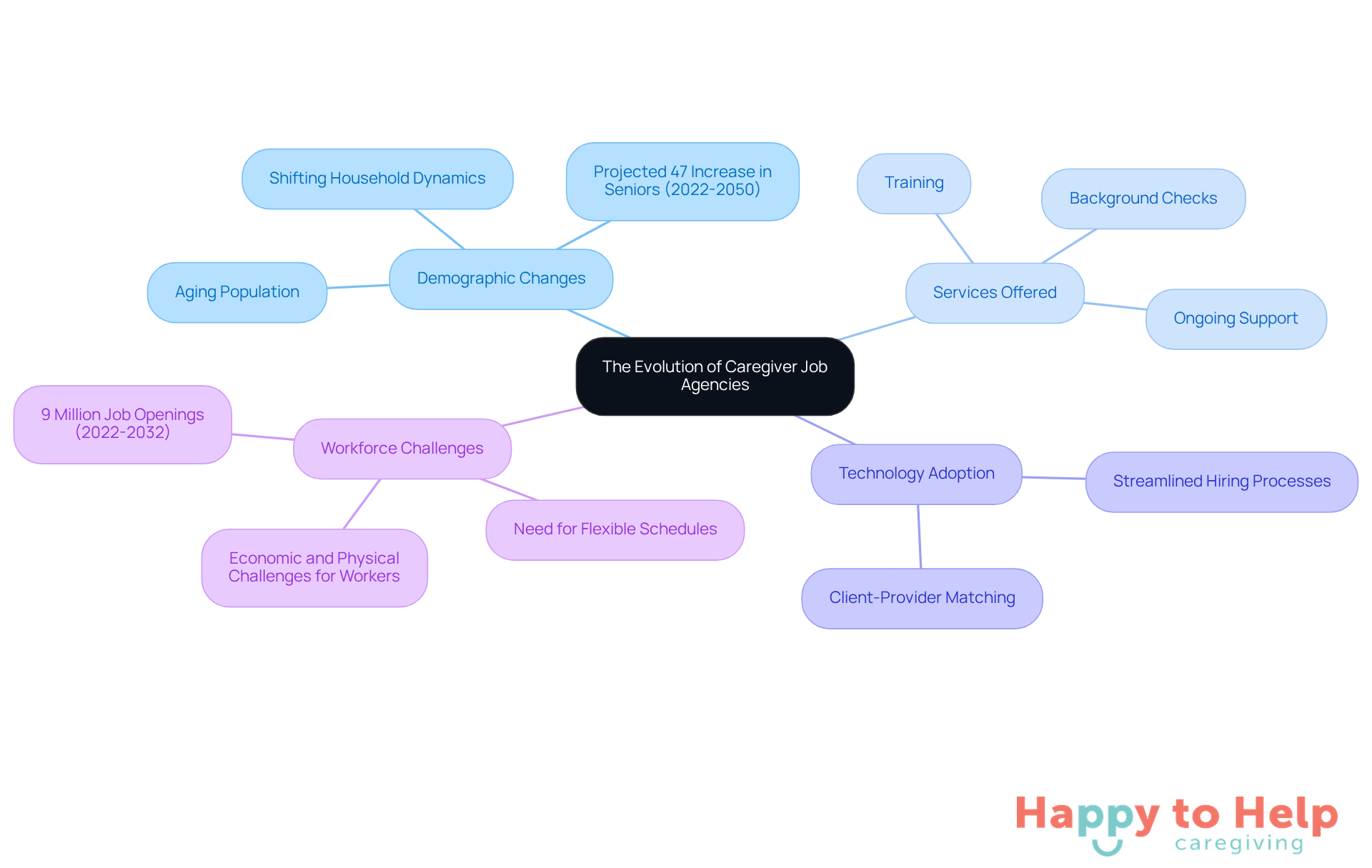
The growing need for at-home assistance services is a pressing issue, driven by an aging demographic and shifting household dynamics. Initially, caregiving relied heavily on informal support from relatives or friends. However, as the demand for professional assistance became more apparent, caregiver job agencies emerged to provide structured services. These include:
- Training for caregivers
- Thorough background checks
- Ongoing support
This transformation is crucial, especially with the anticipated 47% increase in the U.S. population aged 65 and older from 2022 to 2050. Such demographic shifts heighten the demand for direct support services, underscoring the essential role of caregiver job agencies in addressing evolving household needs. Furthermore, nearly 9 million direct support job openings are expected between 2022 and 2032, highlighting the urgent need to address workforce shortages in the caregiving sector.
To tackle these challenges, caregiver job agencies have adopted technology to streamline hiring processes and improve client-provider matching. This ensures that families have access to a diverse pool of qualified caregivers. As noted by the National Skills Coalition, implementing protections against age discrimination and providing accommodations for age-related needs are vital for fostering inclusion within this workforce. By addressing these issues, we can enhance the effectiveness of at-home assistance services and better support families in managing their caregiving needs.
Key Features and Services of Caregiver Job Agencies
Caregiver job agencies provide solutions to significant challenges faced by families seeking in-home care. Many families struggle with finding qualified caregivers via caregiver job agencies, which can lead to inadequate support for their loved ones.
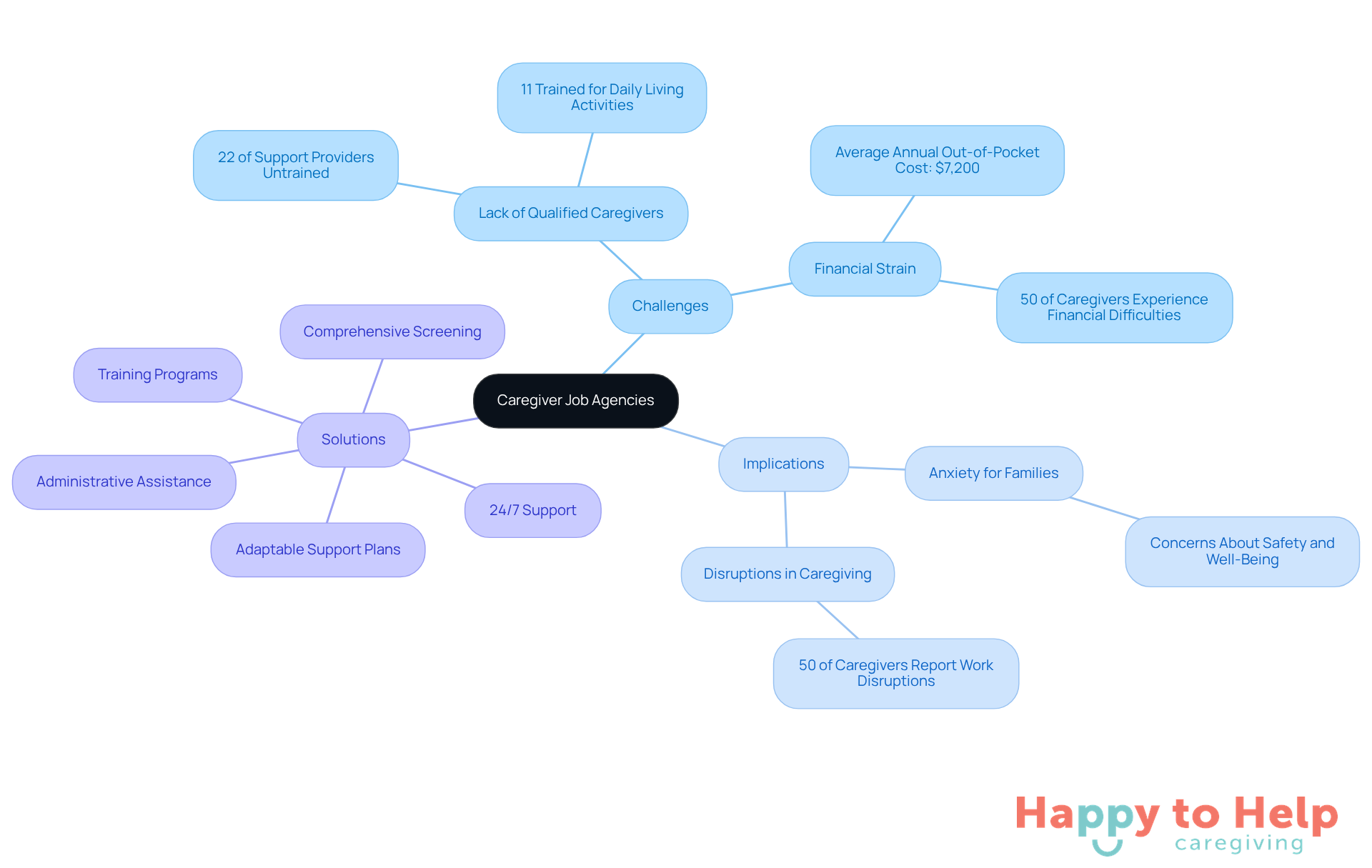
Problem: A staggering 22% of support providers report they have not received training for medical or nursing duties, and only 11% have training for activities of daily living. The quality of care provided can be compromised by this lack of qualified staff from caregiver job agencies.
Agitate: The implications are serious. Families may feel anxious about the safety and well-being of their loved ones, especially when 50% of employed caregivers report disruptions in their work due to caregiving responsibilities. This can lead to stress and financial strain, with nearly 50% of caregivers experiencing financial difficulties, including an average annual out-of-pocket cost of $7,200 for caregiving-related expenses.
Solution: Caregiver employment services offer several key features to alleviate these issues:
-
Comprehensive Screening: Agencies conduct thorough background checks and interviews to ensure caregivers have the necessary qualifications and experience. This is crucial for maintaining high standards of care.
-
Training Programs: Many agencies provide ongoing training in essential skills like first aid and CPR. This continuous education is vital, given the low percentage of caregivers receiving adequate training.
-
Adaptable Support Plans: Agencies collaborate with families to create customized support strategies that cater to specific needs and schedules. This flexibility is essential for caregivers balancing work and caregiving duties.
-
24/7 Support: Continuous assistance is available, ensuring families can access help whenever needed. This is particularly important for those managing multiple responsibilities.
-
Administrative Assistance: Agencies often handle payroll and compliance with labor laws, relieving families of these burdens. This support is invaluable, especially for those facing financial strain.
These features not only enhance the quality of care but also provide peace of mind for families navigating the complexities of caregiving.
Examples of Assistance Provided by Caregiver Job Agencies
Caregiver employment organizations play a vital role in addressing the specific needs of households, particularly in the face of significant challenges faced by caregivers. Many families struggle with the emotional and physical demands of caregiving, leading to feelings of isolation and stress.
-
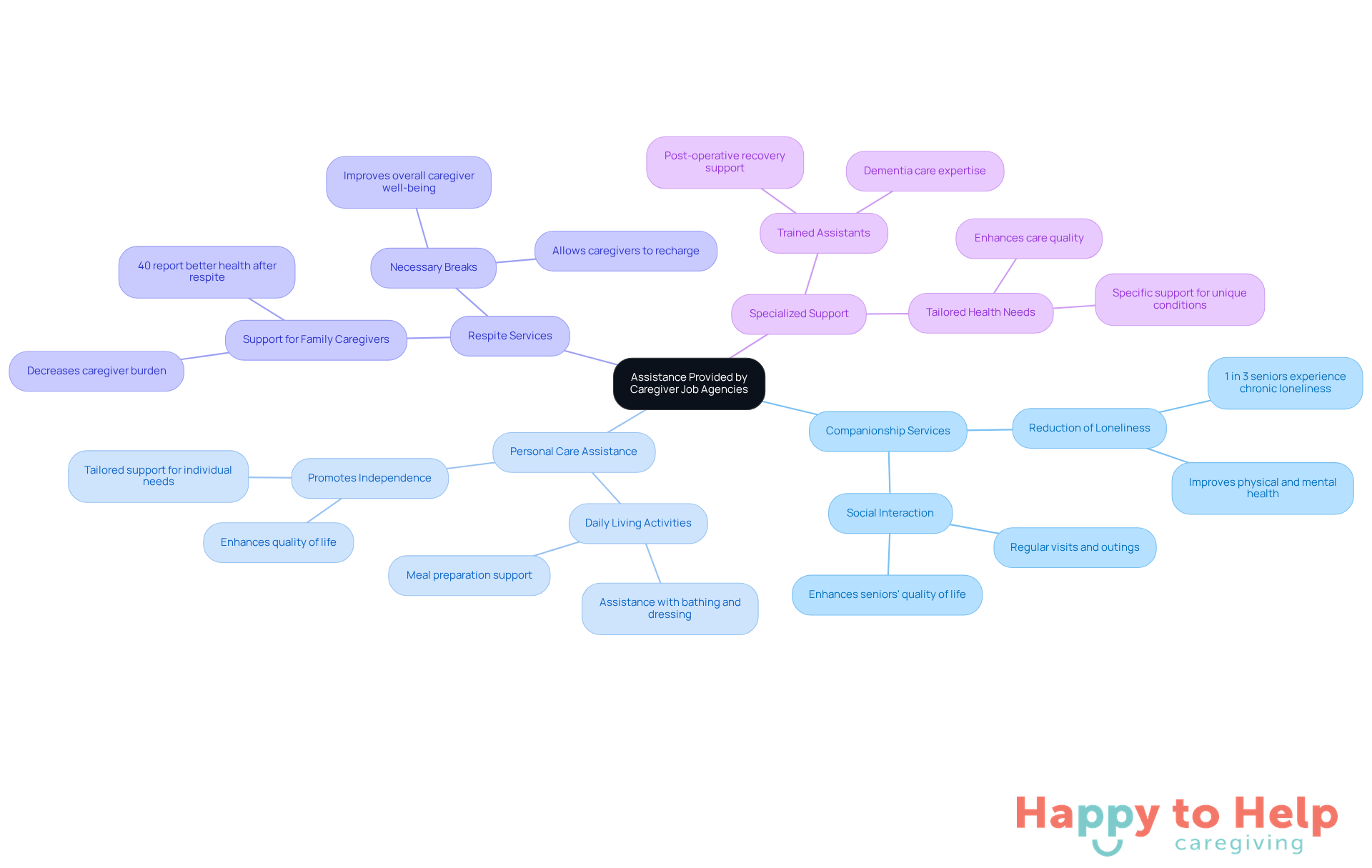
Companionship Services: One major issue is the loneliness experienced by seniors. Caregivers provide essential companionship, which can significantly reduce feelings of isolation. Studies show that nearly one in three seniors suffers from chronic loneliness, adversely affecting their health and well-being (University of Michigan’s National Poll on Healthy Aging).
-
Personal Care Assistance: Another challenge is the daily living activities that many seniors find difficult to manage alone. Agencies expertly match support providers with clients needing help with tasks like bathing, dressing, and meal preparation. This personalized assistance not only enhances seniors' quality of life but also promotes their independence.
-
Respite Services: Family caregivers often face overwhelming pressure, making respite services crucial. These services allow caregivers to take necessary breaks, which research indicates can lead to improved health and reduced stress. In fact, 40% of those receiving respite support report a better health rating after obtaining such assistance (Senior Companion Caregiver Study).
-
Specialized Support: Additionally, some organizations offer specialized assistants trained in areas like dementia care or post-operative recovery. This targeted training ensures clients receive the appropriate support tailored to their unique health needs.
These services highlight the essential role that caregiver job agencies play in enhancing the quality of life for both clients and their families. By facilitating smoother transitions to in-home care, these agencies help alleviate the pressures of caregiving, allowing families to feel more confident and supported during challenging times.
Key Takeaways for Caregivers
The significance of caregiver job agencies is profound, serving as essential resources for families facing the complexities of caregiving. Families often struggle with high turnover rates among caregivers, inadequate training, and the emotional toll of caregiving responsibilities. These challenges can lead to increased stress and uncertainty in managing care for loved ones.
Caregiver job agencies address these pressing issues by implementing thorough vetting processes and providing ongoing training for caregivers. They also develop tailored support plans that cater to the unique needs of each family. By partnering with these agencies, families can experience enhanced peace of mind, improved quality of care, and the ability to focus on their loved ones rather than administrative burdens.
As the aging population grows and the reliance on caregiving services increases, recognizing the value of caregiver job agencies becomes crucial. Families can ensure their loved ones receive compassionate and competent care while safeguarding their own well-being by seeking support from these organizations. Embracing the services offered by caregiver job agencies enriches the lives of those receiving care and empowers families to navigate the caregiving journey with greater confidence and assurance.
https://iframe.tely.ai/cta/eyJhcnRpY2xlX2lkIjogIjY5NDBhMjMxNmYzZjk5NzYxYTM2ZTNlMiIsICJjb21wYW55X2lkIjogIjY4ZWU1ZGNhNzMxNzYyNTU3ZjNjOTVjMSIsICJpbmRleCI6IG51bGwsICJ0eXBlIjogImFydGljbGUifQ==Frequently Asked Questions
What is the role of caregiver job agencies?
Caregiver job agencies connect families in need of assistance with skilled providers, streamlining the hiring and management of caregivers, ensuring they are thoroughly vetted and trained to meet specific client needs.
Why is there an increasing demand for caregiver services?
The demand for caregiver services is rising due to demographic changes, with projections indicating that by 2025, 1 in 6 Americans will be aged 65 and older, leading to a greater reliance on caregiver job agencies. Additionally, a 21% increase in demand for home health and personal assistance aides is expected through 2033.
What challenges do families face when hiring caregivers?
Families often struggle with the complexities of hiring qualified caregivers, which can lead to stress and uncertainty. High turnover rates in the sector, estimated at 60-65% annually, further complicate the situation and affect the quality of services delivered.
How do caregiver job agencies support families?
Caregiver job agencies provide individualized assistance plans, continuous communication between families and support workers, and ongoing oversight and support, including regular check-ins and adjustments to service plans.
What are the benefits of using caregiver job agencies?
Families report a greater sense of reassurance and confidence when using caregiver job agencies, as these organizations help reduce administrative burdens and ensure their loved ones receive skilled and compassionate support tailored to their unique needs.
How many Americans provided continuous assistance for someone with medical conditions last year?
Nearly 63 million Americans provided continuous assistance for an adult or child with intricate medical conditions last year.
What is the significance of enhancing job quality for caregivers?
Enhancing job quality for caregivers is crucial as direct support roles are often undervalued. Improved job conditions can lead to better recruitment and retention of compassionate and attentive caregivers, ultimately benefiting families and their loved ones.
List of Sources
- Defining Caregiver Job Agencies
- Hiring in Home Care: Stats, Trends, and Solutions Every Agency Needs to Know (https://businessdraft.com/blog/posts/post-df7f5acb-284e-4bb2-a51d-ebfe846ef504)
- A Better Solution Home Care (https://abs.care/Home-Care-Staffing-Shortages-How-They-Impact-Home-Care-Services)
- Home Health and Personal Care Aides (https://bls.gov/ooh/healthcare/home-health-aides-and-personal-care-aides.htm)
- An Aging America Needs a Stronger Care Workforce - National Skills Coalition (https://nationalskillscoalition.org/blog/news/an-aging-america-needs-a-stronger-care-workforce)
- 10 Must-Know U.S. Home Care Industry Stats for 2025 - North American Community Hub (https://nchstats.com/us-home-care-industry-stats)
- The Role of Caregiver Job Agencies in Family Caregiving
- New Report Reveals Crisis Point for America’s 63 million Family Caregivers (https://press.aarp.org/2025-07-24-New-Report-Reveals-Crisis-Point-for-Americas-63-million-Family-Caregivers)
- Caregiver Statistics: Work and Caregiving (https://caregiver.org/resource/caregiver-statistics-work-and-caregiving)
- As Family Caregiving Grows, So Does the Need for Reform - Medicare Rights Center (https://medicarerights.org/medicare-watch/2025/08/14/as-family-caregiving-grows-so-does-the-need-for-reform)
- National Alliance for Caregiving: Caregiving in the US 2025 Report (https://johnahartford.org/resources/view/national-alliance-for-caregiving-caregiving-in-the-us-2025-report)
- Family caregivers need support from their employers, experts say (https://mcknightsseniorliving.com/news/family-caregivers-need-support-from-their-employers-experts-say)
- The Evolution of Caregiver Job Agencies
- The business of caring for older Americans is in a deepening crisis (https://washingtonpost.com/business/2025/12/04/elder-care-home-health-shortage)
- An Aging America Needs a Stronger Care Workforce - National Skills Coalition (https://nationalskillscoalition.org/blog/news/an-aging-america-needs-a-stronger-care-workforce)
- Amid National Caregiver Shortages, Electronic Caregiver Announces the Hybrid Home Care Model-A Scalable Solution to the Labor Crisis Threatening U.S. Aging and Chronic Care (https://fox59.com/business/press-releases/accesswire/1115691/amid-national-caregiver-shortages-electronic-caregiver-announces-the-hybrid-home-care-model-a-scalable-solution-to-the-labor-crisis-threatening-u-s-aging-and-chronic-care)
- The senior population is booming. Caregiving is struggling to keep up (https://cnbc.com/2025/11/21/senior-caregiving-labor.html)
- The Evolution Of Caregiver-Client Matching In Home Care (https://homehealthcarenews.com/2023/08/the-evolution-of-caregiver-client-matching-in-home-care)
- Key Features and Services of Caregiver Job Agencies
- Caregiver Statistics: Work and Caregiving (https://caregiver.org/resource/caregiver-statistics-work-and-caregiving)
- Caregiving Statistics US 2025: Insights for Family Caregivers (https://zencaregiving.org/caregiving-statistics-us-2025)
- Amid National Caregiver Shortages, Electronic Caregiver Announces the Hybrid Home Care Model-A Scalable Solution to the Labor Crisis Threatening U.S. Aging and Chronic Care (https://finance.yahoo.com/news/amid-national-caregiver-shortages-electronic-231500858.html)
- 25+ Inspirational Quotes for Caregivers (https://caringseniorservice.com/blog/quotes-for-caregiver-inspiration)
- Examples of Assistance Provided by Caregiver Job Agencies
- Family Caregiver Annual Report and Statistics | SeniorLiving.org (https://seniorliving.org/research/family-caregiver-report-statistics)
- Why Home Care Providers Are Increasingly Offering Companion Care Services for Seniors | Aaniie, formerly Smartcare Software (https://aaniie.com/news/why-home-care-providers-are-increasingly-offering-companion-care-services-for-seniors)
- Caregiving Crisis: 45% Increase in Americans Providing Care (https://aarp.org/caregiving/basics/caregiving-in-us-survey-2025)
- Respite Facts and Talking Points | ARCH National Respite Network & Resource Center (https://archrespite.org/policy/respite-facts-and-talking-points)
- Home-Based Care Companies Improve Outcomes By Training Family Caregivers (https://homehealthcarenews.com/2025/10/home-based-care-companies-improve-outcomes-by-training-family-caregivers)