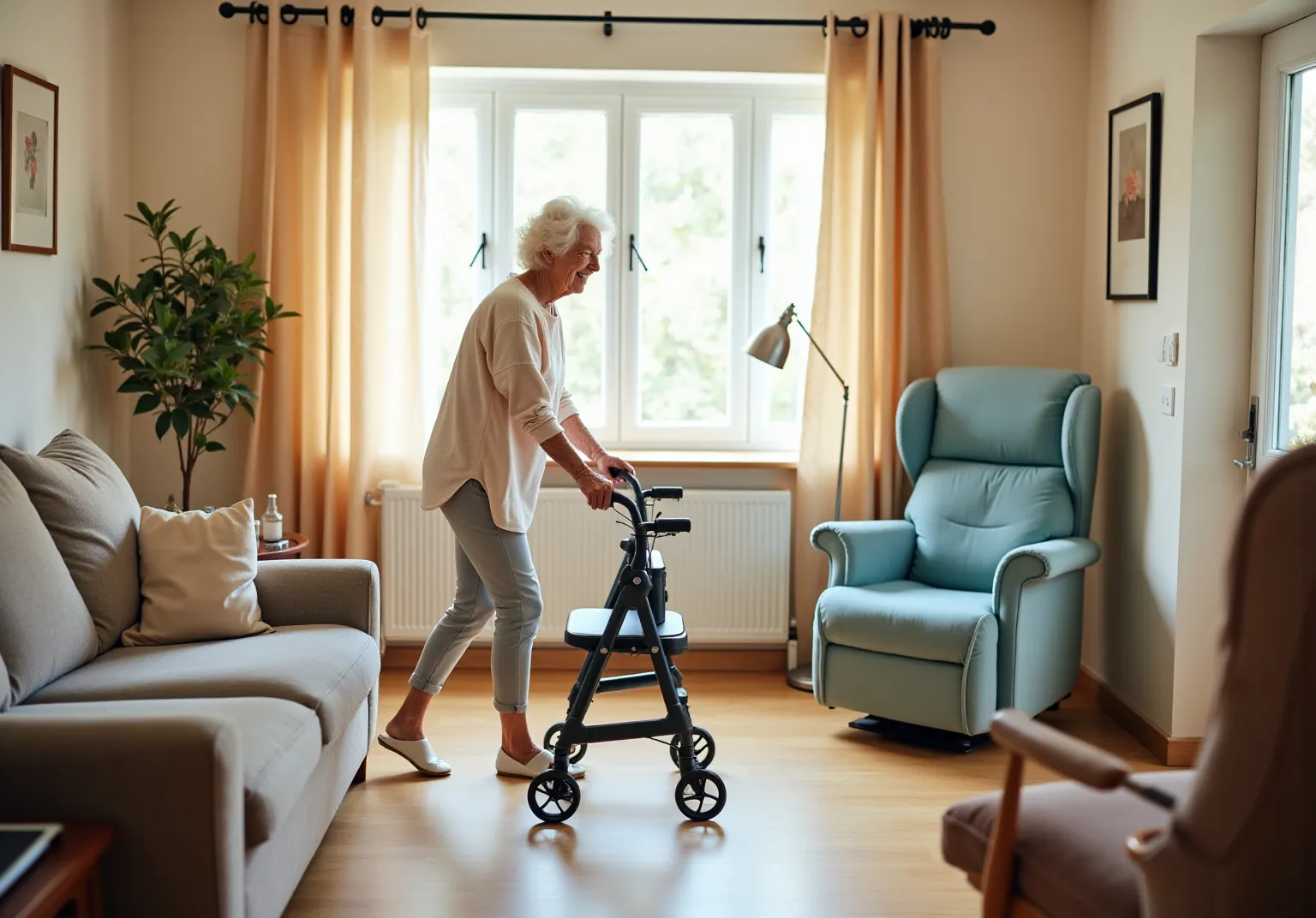
What You Need to Know About Comparing Home Equipment for Elderly:
The growing population of seniors presents a significant challenge: how to enhance their independence and safety at home. With around 24.1% of older adults in the U.S. relying on assistive devices, the selection of the right equipment is crucial. Caregivers often face a daunting array of options, each with its own advantages and challenges.
This situation can be overwhelming. Caregivers must navigate through numerous devices, weighing their features against the unique needs of elderly individuals. The stakes are high; the right choice can significantly improve the quality of life for seniors, while the wrong one may hinder their independence.
So, what factors should caregivers consider? First, it's essential to assess the specific needs of the elderly individual. Understanding their daily routines, mobility levels, and personal preferences can guide the selection process. Additionally, caregivers should look for devices that are user-friendly and adaptable to changing needs.
In conclusion, while the challenge of selecting assistive devices is significant, it is not insurmountable. By focusing on the unique needs of seniors and considering practical solutions, caregivers can enhance the safety and independence of the elderly in their care.
Understanding Assistive Devices for the Elderly
Assistive tools and home equipment for elderly individuals address a significant problem: the need for improved independence and safety in daily tasks. Many older adults struggle with mobility and communication, which can lead to decreased quality of life and increased fall hazards.
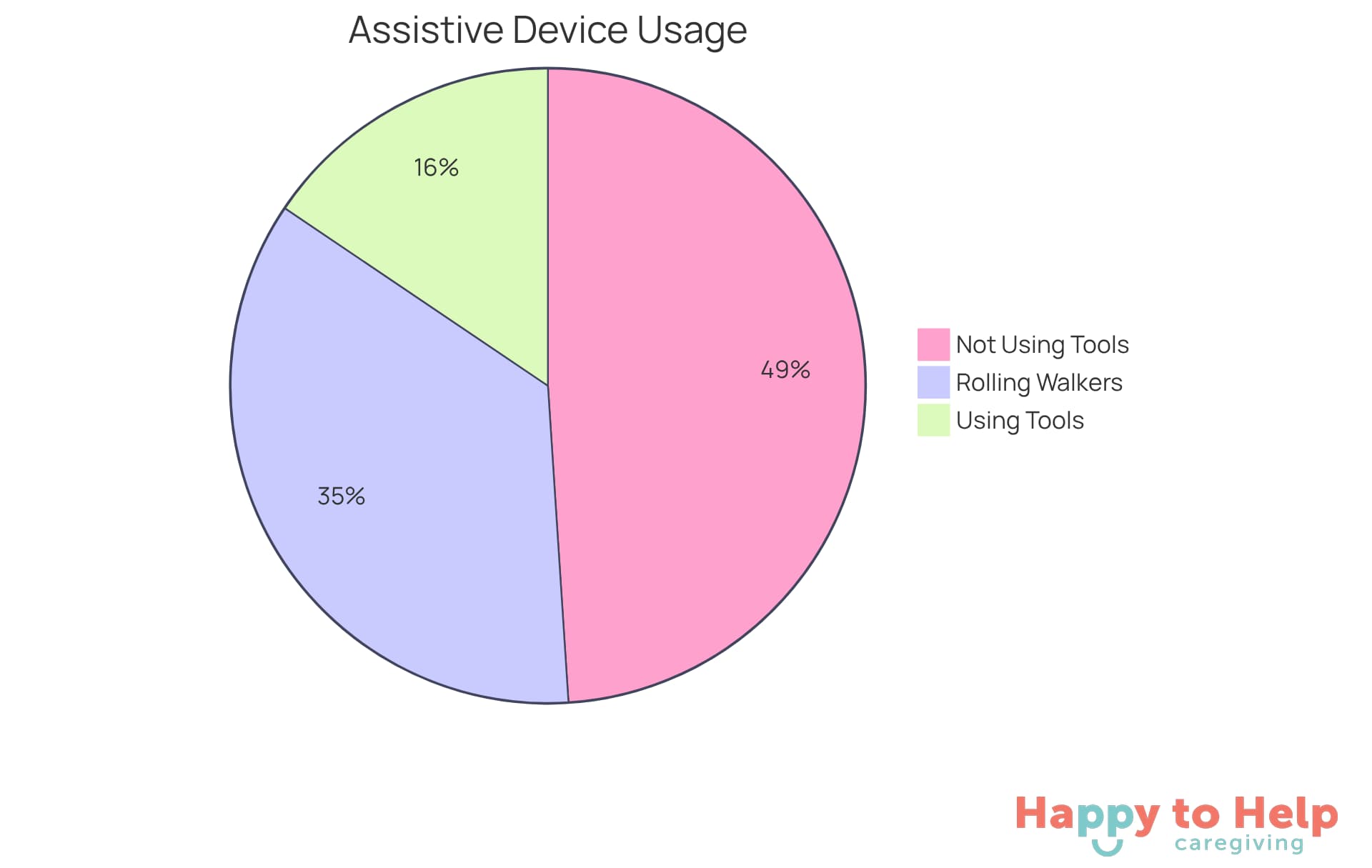
Statistics reveal that approximately 24.1% of senior citizens in the U.S. utilize assistive tools, a figure that has risen from just 6.2% at the start of the millennium to stabilize at 25.0% by 2015. This upward trend highlights the growing recognition of the importance of assistive technology in elderly care. Innovations like the HIPbeacon - the world’s first implanted hip mobility sensor - showcase how technology can enhance seniors' lives through real-time health monitoring and personalized care.
Geriatric care specialists emphasize that the right home equipment for elderly individuals can significantly enhance their functional capabilities. For instance, a well-fitted power wheelchair allows users to engage more fully in community life. Many individuals report enhanced independence and social interaction after using such equipment. Additionally, smart technologies, including automated medication dispensers and voice-activated assistants, are transforming homes into safer environments for seniors.
Real-world examples illustrate the profound impact of supportive tools. Rolling walkers, which captured over 55% of the walker market share in 2023, not only enhance mobility but also instill confidence in users, reducing the fear of falling. Similarly, lift chairs play a crucial role in facilitating safe transitions in and out of seated positions, thereby preventing falls and hospital readmissions.
In summary, understanding the functionality and benefits of assistive tools is vital for caregivers and families. By selecting the appropriate home equipment for elderly individuals, they can significantly enhance their loved ones' quality of life, promoting independence and safety in daily routines.
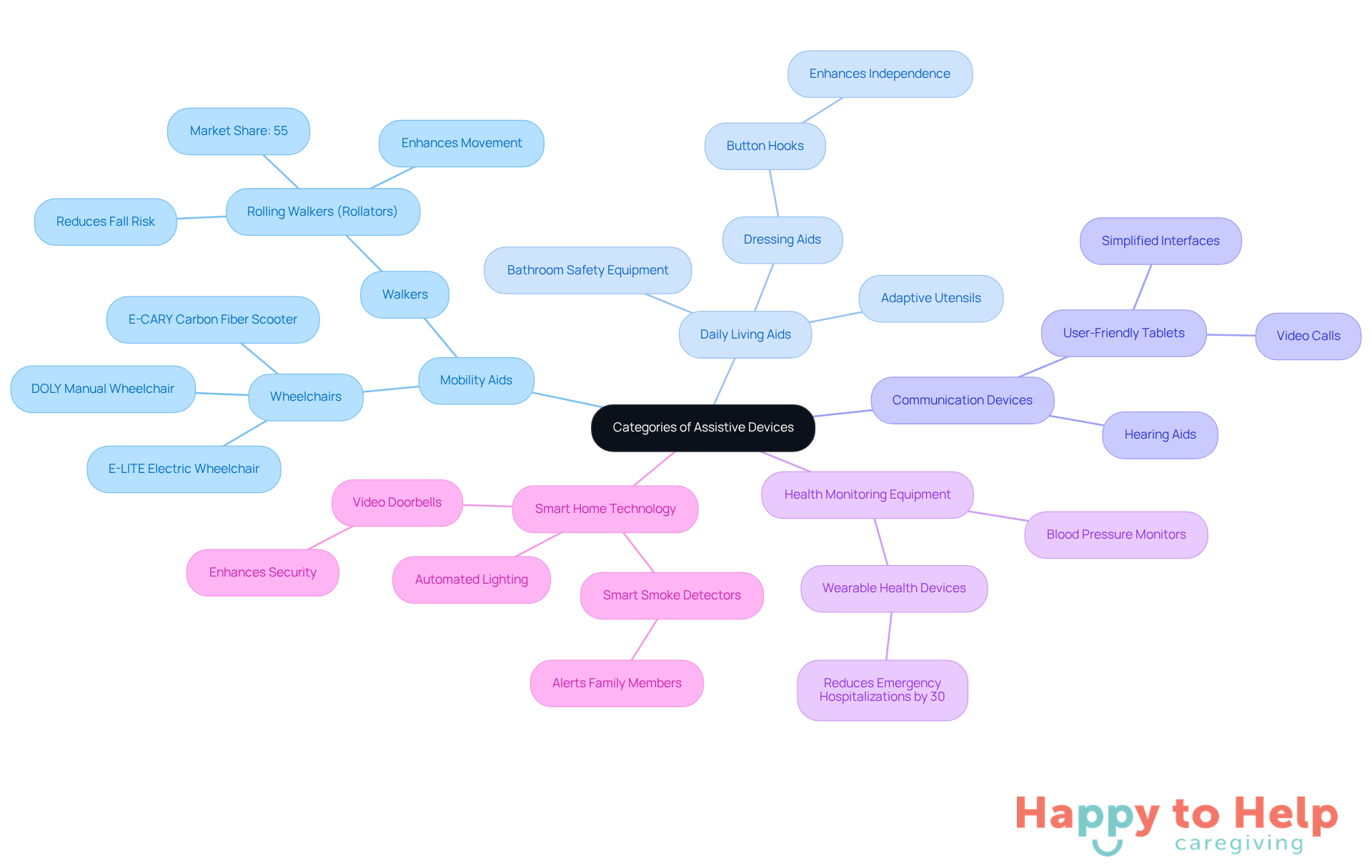
Categories of Assistive Devices: Mobility, Daily Living, and More
Problem: Caregivers often struggle to ensure the independence and safety of seniors in their care. This challenge can lead to feelings of helplessness for both caregivers and seniors alike.
Agitate: The implications of inadequate support can be significant. Seniors may face increased risks of falls, difficulty in performing daily tasks, and a decline in their overall quality of life. For instance, without proper mobility aids, navigating their environment can become daunting, leading to isolation and frustration.
Solution: Fortunately, assistive devices can greatly enhance the independence and safety of seniors. Here are several essential types:
-
Mobility Aids: This category includes walkers, canes, wheelchairs, and scooters, crucial for helping individuals navigate their environments safely. Notably, rolling walkers, or rollators, have captured over 55% of the walker market share in 2023, reflecting a growing preference among older adults. Studies show that these devices significantly enhance movement and reduce fall risk, making them vital aids for seniors.
-
Daily Living Aids: Tools like adaptive utensils, dressing aids, and bathroom safety equipment empower seniors to perform everyday tasks with greater ease. For example, button hooks can greatly improve the quality of life for older adults facing mobility challenges by enabling them to dress independently.
-
Communication Devices: This category includes hearing aids and speech-generating devices that facilitate better interaction. User-friendly tablets designed for older adults, featuring simplified interfaces, allow for easy video calls and photo sharing, helping maintain connections with family and friends.
-
Health Monitoring Equipment: Devices such as blood pressure monitors and glucose meters are essential for seniors managing chronic health conditions. Advanced health monitoring wearables can track vital metrics and have been shown to reduce emergency hospitalizations by 30% through early detection of health issues, according to a 2024 study published in Nature Digital Medicine.
-
Smart Home Technology: Innovations like automated lighting and security systems enhance safety and convenience at home. Smart smoke and carbon monoxide detectors alert users and family members immediately upon detecting threats, significantly improving home safety.
By understanding these categories, caregivers can select tools that best address the specific needs of their elderly loved ones, ensuring a supportive and secure living environment.
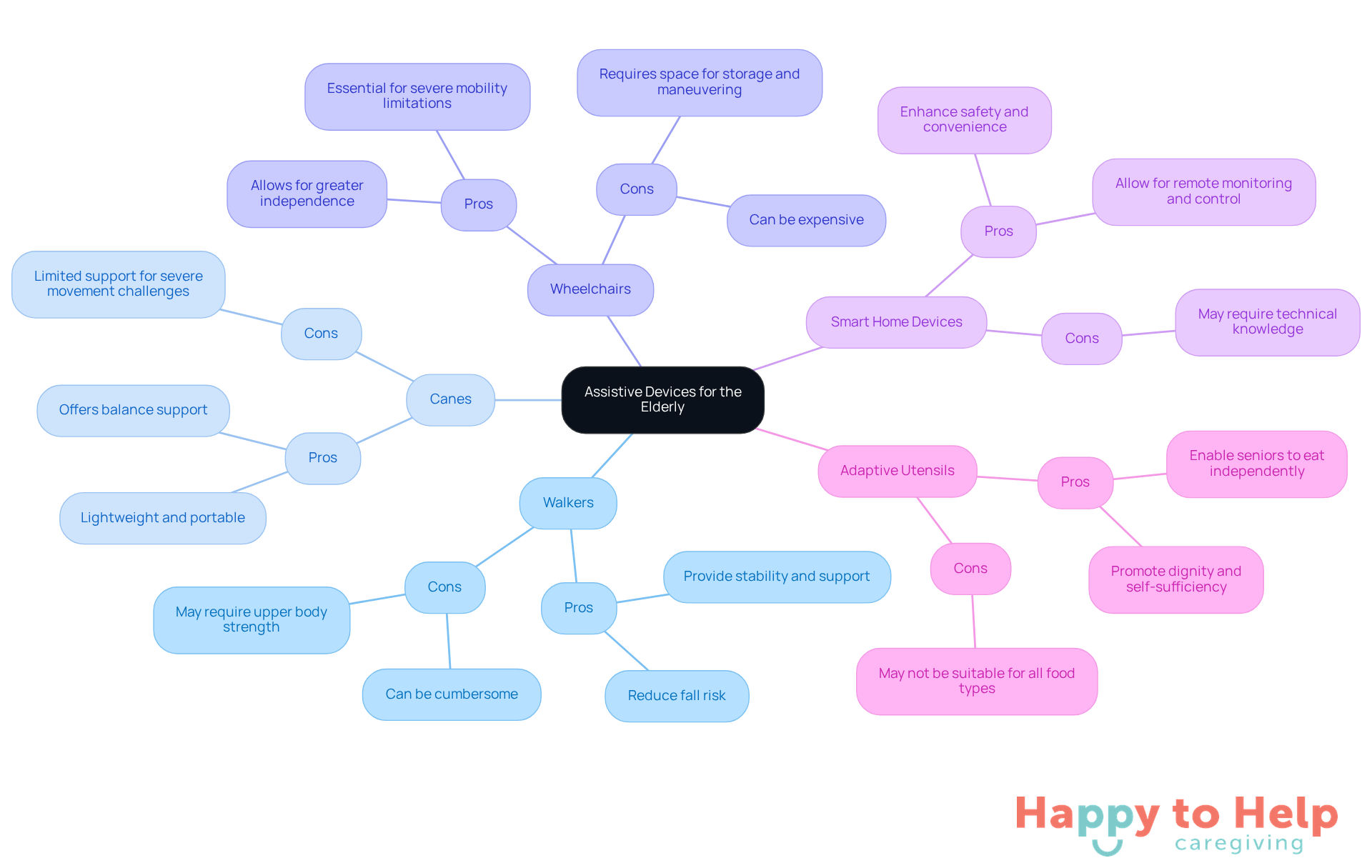
Evaluating Pros and Cons of Top Assistive Devices
When it comes to home equipment for elderly, caregivers often face the challenge of selecting the right assistive devices to enhance safety and independence for their loved ones. The variety of options available can be overwhelming, and understanding the pros and cons of each device is crucial.
Walkers:
- Pros: Provide stability and support, reducing fall risk.
- Cons: Can be cumbersome and may require upper body strength to maneuver.
Canes:
- Pros: Lightweight and portable, offering balance support.
- Cons: Limited support for those with considerable movement challenges.
Wheelchairs:
- Pros: Essential for individuals with severe mobility limitations, allowing for greater independence.
- Cons: Can be expensive and require space for storage and maneuvering.
Smart Home Devices:
- Pros: Enhance safety and convenience, allowing for remote monitoring and control.
- Cons: May require technical knowledge to set up and use effectively.
Adaptive Utensils:
- Pros: Enable seniors to eat independently, promoting dignity and self-sufficiency.
- Cons: May not be suitable for all types of food or dining situations.
By assessing these factors, families can make informed decisions regarding home equipment for elderly that improve safety and autonomy while considering the user's comfort and preferences.
Choosing the Right Assistive Device: Key Considerations
When selecting an assistive device for an elderly individual, caregivers face several challenges that require careful consideration.
Problem: The difficulties encountered by elderly individuals can vary widely, including movement restrictions, cognitive function issues, and challenges with daily living tasks. These problems can significantly impact their independence and quality of life.
Agitate: Without the right support, elderly individuals may struggle with mobility, leading to increased risks of falls and injuries. In fact, older adults utilizing home equipment for elderly are 50% less likely to fall, highlighting the critical need for appropriate assistive devices. Moreover, 85% of senior citizens have at least one long-term health issue that could affect their functional abilities, making it essential to choose the right tools.
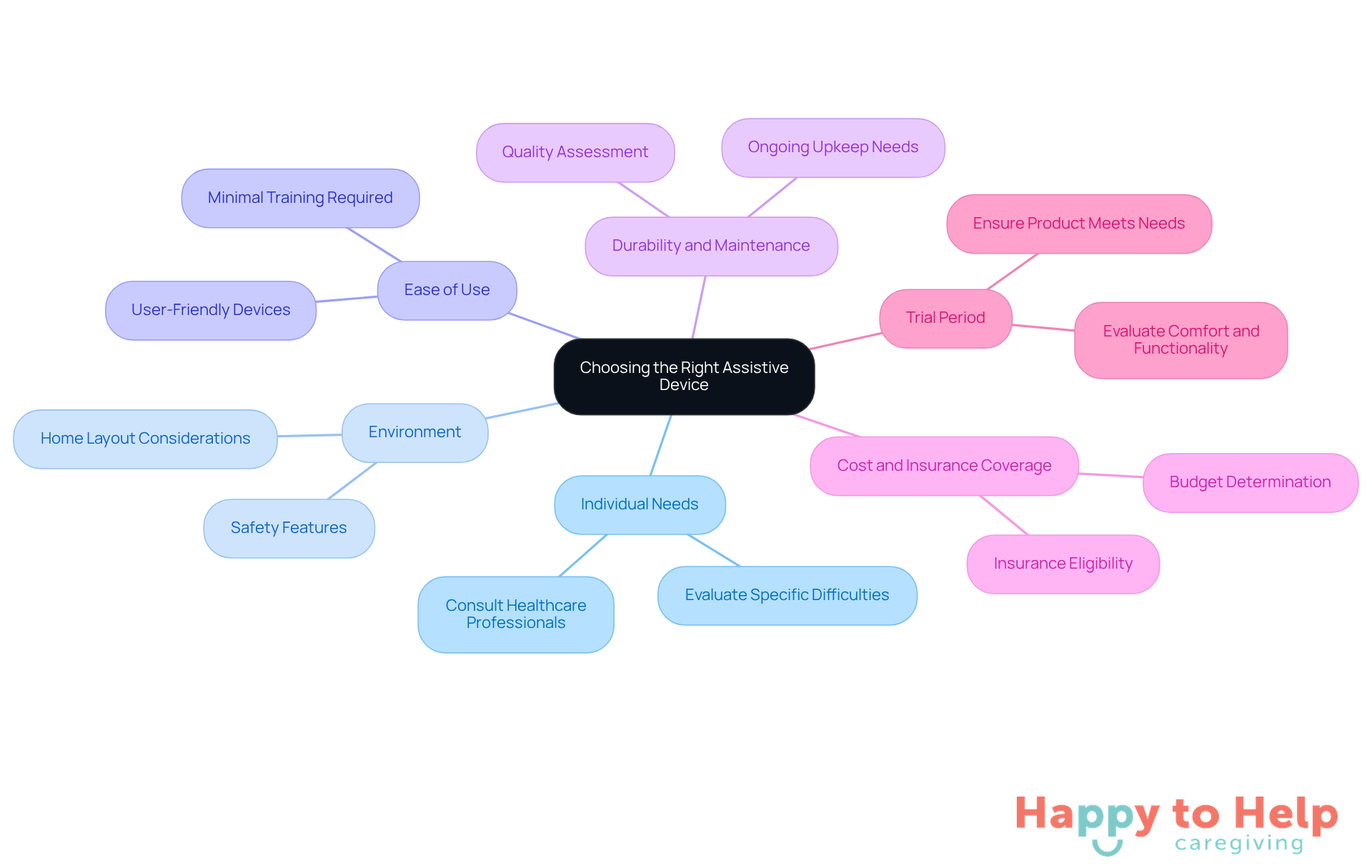
Solution: Here are key considerations for selecting the right assistive device:
-
Individual Needs: Evaluate the specific difficulties faced by the elderly individual. A thorough assessment can help tailor solutions effectively. Consulting healthcare professionals can provide valuable insights into any medical conditions affecting mobility and overall health.
-
Environment: Consider the home layout to ensure the selected home equipment for elderly fits comfortably and allows for safe maneuverability. For instance, wider doorways may be necessary for wheelchairs or walkers, while stair lifts require adequate installation space.
-
Ease of Use: Opt for devices that are user-friendly and require minimal training. Lightweight walkers or simple canes can enhance mobility without overwhelming the user.
-
Durability and Maintenance: Assess the quality of the equipment and its ongoing upkeep needs. High-quality equipment not only lasts longer but also enhances safety and reliability, minimizing the risk of falls or injuries.
-
Cost and Insurance Coverage: Determine the budget for the equipment and check if insurance will cover any expenses. Many mobility aids are classified as durable medical equipment and may be eligible for coverage under Medicare or other insurance plans.
-
Trial Period: If feasible, evaluate the equipment before making a final decision. A trial period allows the user to assess comfort and functionality, ensuring the product meets their needs effectively.
By carefully considering these factors, families can select home equipment for elderly that enhances their loved ones' independence and quality of life, ultimately fostering a safer and more fulfilling living environment.
Making the Right Choice
The significance of assistive devices in promoting the independence and safety of elderly individuals is paramount. Seniors often encounter unique challenges that can hinder their daily activities, impacting their overall quality of life. By recognizing these challenges, caregivers can make informed decisions that greatly enhance their loved ones' well-being.
The growing use of assistive technology highlights the diverse range of devices available - from mobility aids to smart home solutions. Selecting the right equipment is crucial; it not only minimizes the risk of falls and injuries but also fosters autonomy and social engagement among seniors. Caregivers must consider these factors carefully to ensure they choose tools that truly meet the needs of their loved ones.
Integrating assistive devices into the daily routines of elderly individuals is essential for creating a supportive and secure living environment. Caregivers are encouraged to stay updated on the latest innovations and assess the specific requirements of their loved ones. By prioritizing the right home equipment, families can empower seniors to thrive in their golden years, turning challenges into opportunities for a fulfilling life.
https://iframe.tely.ai/cta/eyJhcnRpY2xlX2lkIjogIjY5MjRmMWQzZWM0Y2FiOGU3NGVjMDBjNyIsICJjb21wYW55X2lkIjogIjY4ZWU1ZGNhNzMxNzYyNTU3ZjNjOTVjMSIsICJpbmRleCI6IG51bGwsICJ0eXBlIjogImFydGljbGUifQ==Frequently Asked Questions
What are assistive devices for the elderly?
Assistive devices are tools and home equipment designed to improve independence and safety for elderly individuals in their daily tasks.
Why are assistive devices important for older adults?
Many older adults struggle with mobility and communication, which can lead to decreased quality of life and increased fall hazards. Assistive devices help address these issues.
What percentage of senior citizens in the U.S. use assistive tools?
Approximately 24.1% of senior citizens in the U.S. utilize assistive tools, a number that has increased from 6.2% at the beginning of the millennium.
How has the use of assistive technology changed over time?
The use of assistive technology has risen significantly, stabilizing at around 25.0% by 2015, indicating a growing recognition of its importance in elderly care.
Can you provide an example of an innovative assistive device?
The HIPbeacon is an example of an innovative assistive device; it is the world’s first implanted hip mobility sensor that enhances seniors' lives through real-time health monitoring and personalized care.
How do power wheelchairs benefit elderly individuals?
Well-fitted power wheelchairs enhance functional capabilities, allowing users to engage more fully in community life, leading to increased independence and social interaction.
What role do smart technologies play in elderly care?
Smart technologies, such as automated medication dispensers and voice-activated assistants, help transform homes into safer environments for seniors.
What impact do rolling walkers have on elderly users?
Rolling walkers, which captured over 55% of the walker market share in 2023, enhance mobility and instill confidence in users, thereby reducing the fear of falling.
How do lift chairs assist elderly individuals?
Lift chairs facilitate safe transitions in and out of seated positions, helping to prevent falls and reduce hospital readmissions.
Why is it important for caregivers and families to understand assistive tools?
Understanding the functionality and benefits of assistive tools is vital for caregivers and families to select appropriate home equipment, significantly enhancing the quality of life for elderly individuals and promoting their independence and safety.
List of Sources
- Understanding Assistive Devices for the Elderly
- Innovative New Technology Helps Seniors Age in Place (https://ucdavis.edu/health/news/innovative-new-technology-helps-seniors-age-place)
- 10 Essential Assistive Devices for Elderly Caregivers - Happy To Help (https://happytohelpcaregiving.com/10-essential-assistive-devices-for-elderly-caregivers)
- Incidence and dynamics of mobility device use among community-dwelling older adults in the United States - PMC (https://pmc.ncbi.nlm.nih.gov/articles/PMC12288708)
- Mobility Assistive Device Use in Older Adults (https://aafp.org/pubs/afp/issues/2021/0615/p737.html)
- AgeTech: Shaping a New Era in Assistive Technology for the Elderly (https://wipo.int/en/web/global-health/w/news/2024/news\_0009)
- Categories of Assistive Devices: Mobility, Daily Living, and More
- Top 5 Cutting-Edge Equipment for Seniors in 2025 - INTCO Medical (https://intcowheelchair.com/news/top-5-cutting-edge-equipment-for-seniors-in-2025)
- 10 Essential Assistive Devices for Elderly Caregivers - Happy To Help (https://happytohelpcaregiving.com/10-essential-assistive-devices-for-elderly-caregivers)
- Assistive Technology Devices: Helping Seniors Age In Place » Online Graduate Programs in Innovative Aging Studies » College of Medicine » University of Florida (https://online.aging.ufl.edu/2025/03/19/assistive-technology-devices-helping-seniors-age-in-place)
- New Lightweight Mobility Devices Cater to Active Elderly - INTCO Medical (https://intcowheelchair.com/news/new-lightweight-mobility-devices-cater-to-active-elderly)
- U.S. Assistive Technologies for Older Adults Market Analysis Report 2025: Emerging Opportunities in Smart Home Devices, Medical Alerts, Mobility Aids, and Home Modifications (https://globenewswire.com/news-release/2025/09/22/3153701/28124/en/U-S-Assistive-Technologies-for-Older-Adults-Market-Analysis-Report-2025-Emerging-Opportunities-in-Smart-Home-Devices-Medical-Alerts-Mobility-Aids-and-Home-Modifications.html)
- Evaluating Pros and Cons of Top Assistive Devices
- Mobility Device Use Among Older Adults and Incidence of Falls and Worry About Falling: Findings From the 2011–2012 National Health and Aging Trends Study - PMC (https://pmc.ncbi.nlm.nih.gov/articles/PMC4439269)
- Facts About Falls (https://cdc.gov/falls/data-research/facts-stats)
- Friend or Foe? Study Examines Seniors' Increasing Use of Walking Aids | UVM News | The University of Vermont (https://uvm.edu/uvmnews/news/friend-or-foe-study-examines-seniors-increasing-use-walking-aids)
- Are older people putting themselves at risk when using their walking frames? - BMC Geriatrics (https://bmcgeriatr.biomedcentral.com/articles/10.1186/s12877-020-1450-2)
- Choosing the Right Assistive Device: Key Considerations
- Choosing the Right Mobility Aid for Seniors: A Comprehensive Guide | Home Care agency in New York (https://angelcareny.com/choosing-the-right-mobility-aid-for-seniors-a-comprehensive-guide)
- Mobility Assistive Device Use in Older Adults (https://aafp.org/pubs/afp/issues/2021/0615/p737.html)
- 4 Essential Steps for Choosing Home Aids for Elderly Care - Happy To Help (https://happytohelpcaregiving.com/4-essential-steps-for-choosing-home-aids-for-elderly-care)