Comparing Living Aids for Seniors: Find the Best Fit for Care

For families in our service areas
For families in our service areas, this guide explains caregiving and how non-medical in-home caregiving can support care planning in East Idaho, Treasure Valley & Magic Valley, Northern Wasatch, North Central West Virginia & Southwestern Pennsylvania, and Northeast Ohio.
What You Need to Know About Comparing Living Aids
Understanding the right living aids for seniors is crucial. Many elderly individuals often feel that their independence is slipping away, which can be disheartening. These essential tools, from mobility devices to kitchen aids, not only enhance safety but also empower seniors to maintain their quality of life.
However, with so many options available, caregivers face a daunting task. How can they navigate the myriad of choices to find the best fit for their loved ones? This article delves into various categories of living aids, comparing their features and benefits. By doing so, we aim to help caregivers make informed decisions that promote autonomy and well-being for seniors.
Understanding Daily Living Aids for Seniors
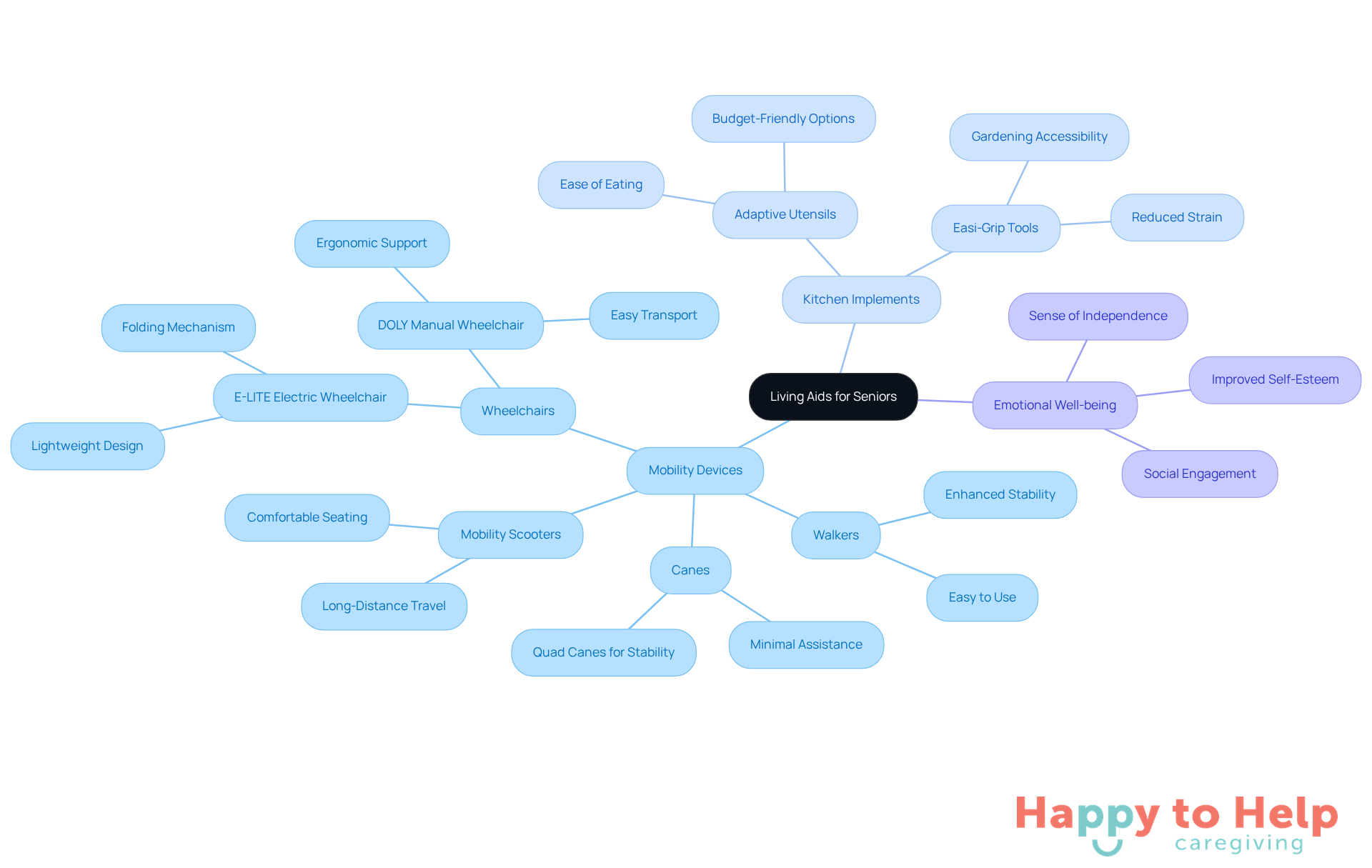
Living aids for seniors provide a significant solution for elderly individuals struggling with daily tasks. These tools, which are living aids for seniors, range from mobility devices like walkers and canes to kitchen implements that simplify cooking and eating, addressing a critical problem: the loss of independence among seniors.
When elderly individuals face challenges in performing everyday activities, it can lead to decreased safety and a diminished quality of life. This situation not only affects their physical well-being but also impacts their emotional health and self-esteem. Caregivers play a vital role in supporting their loved ones during these times.
To enhance independence and safety, caregivers should consider various living aids for seniors as daily tools. These living aids for seniors are designed to empower them, allowing them to maintain their autonomy at home. By understanding the different types of assistance available, caregivers can make informed decisions that significantly improve the quality of life for their loved ones.
Incorporating these tools into daily routines can foster a sense of independence, ultimately benefiting emotional well-being. By prioritizing the use of living aids for seniors, caregivers can help them navigate their daily lives with greater ease and confidence.
Categories of Daily Living Aids
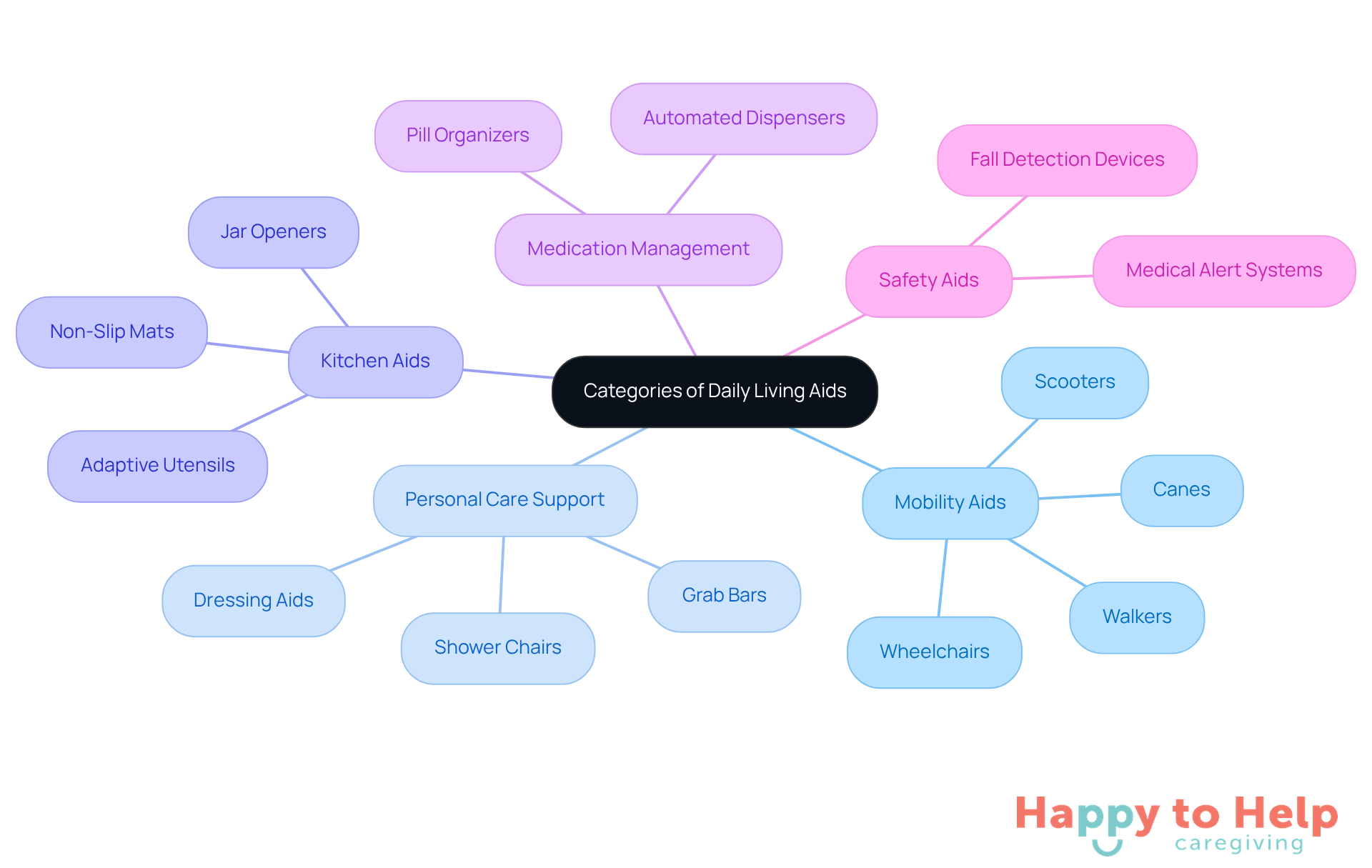
Daily living aids can be categorized into several essential areas that significantly enhance the quality of life for seniors:
-
Mobility Aids: Seniors often face mobility challenges, which can lead to falls and decreased independence. This category encompasses walkers, canes, wheelchairs, and scooters, all designed to facilitate safe and confident movement. Recent advancements in assistive devices, such as lightweight walkers with adjustable handle heights and built-in storage, enable seniors to explore their surroundings more effortlessly, lowering the risk of falls. According to the CDC, over 36 million elderly individuals report falls annually, underscoring the critical role of mobility devices in improving safety.
-
Personal Care Support: Hygiene and dressing tasks can become increasingly difficult for older adults. Tools such as grab bars, shower chairs, and dressing aids play a crucial role in promoting self-sufficiency while enhancing safety in everyday activities. As Taylor Rees points out, living aids for seniors are essential in assisting older adults with their daily living activities, significantly improving their safety and self-sufficiency.
-
Kitchen Aids: Cooking and eating can pose challenges for seniors, impacting their culinary independence. Adaptive utensils, jar openers, and non-slip mats are designed to simplify these tasks, making meal preparation and dining more accessible and enjoyable.
-
Medication Management: Managing medications can be overwhelming, especially for those with chronic conditions. Pill organizers and automated dispensers are vital for ensuring adherence to medication schedules. These aids help prevent missed doses and promote better health outcomes.
-
Safety Aids: The fear of emergencies can weigh heavily on seniors and their families. Medical alert systems and fall detection devices provide essential peace of mind, enabling quick responses in emergencies and fostering a sense of security and independence. The economic consequences of falls among older adults surpass $19 billion each year, emphasizing the financial ramifications of not utilizing suitable support.
Understanding these classifications enables caregivers to choose the most appropriate living aids for seniors that are tailored to personal needs and living circumstances, ultimately improving the well-being and independence of older adults. Additionally, the price of a stairlift varies from $2,000 to $15,000 depending on the complexity of the staircase, which is an important consideration for families looking to invest in safety solutions. This reflects a cultural shift in elderly care towards empowered living, where adaptive equipment is viewed as vital for maintaining independence.
Choosing the Right Living Aids for Individual Needs
Selecting appropriate living aids for seniors can be a daunting task for caregivers. The challenge lies in evaluating various factors that directly impact the elderly person's safety and independence.
-
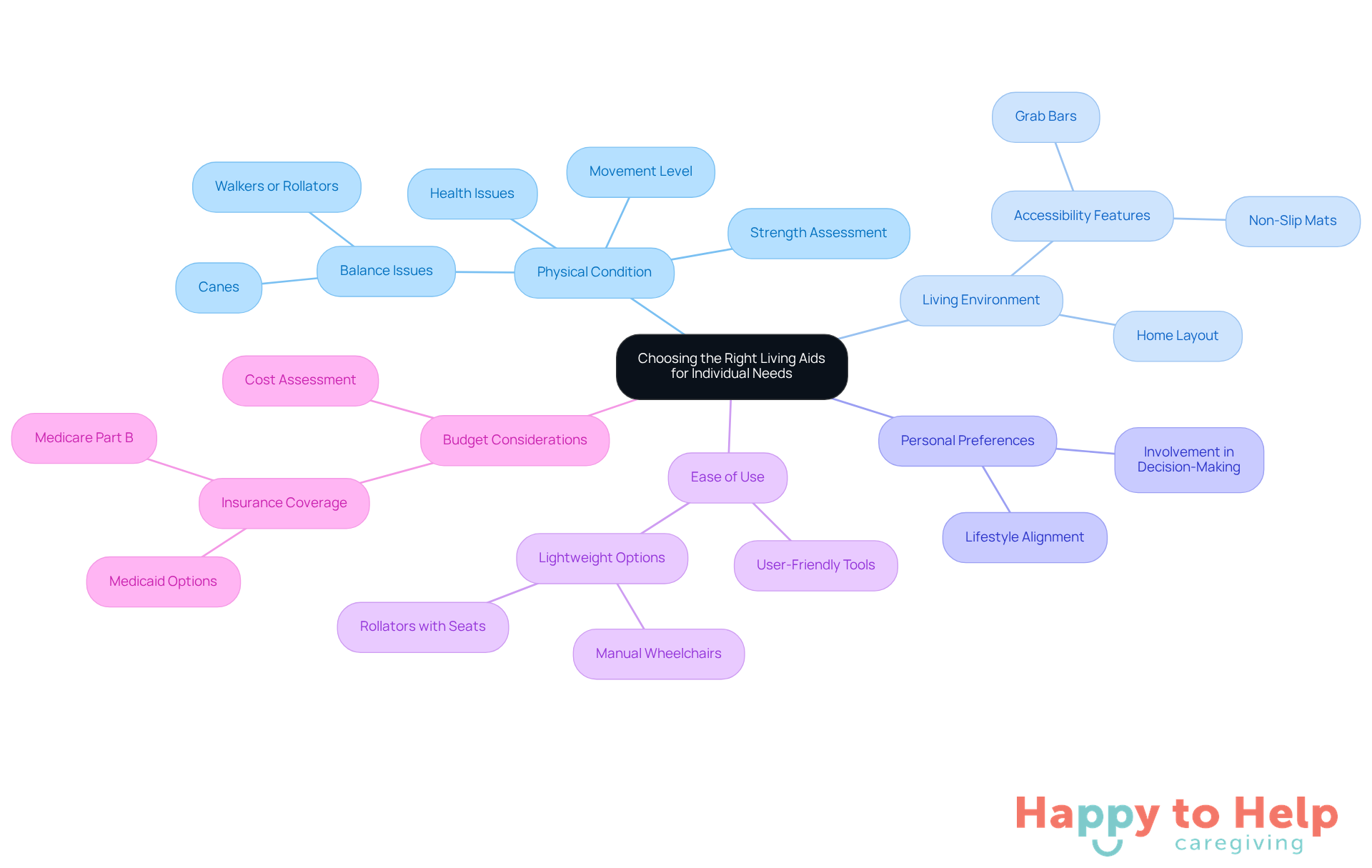
Physical Condition: Start by assessing the senior's level of movement, strength, and any health issues that may affect their ability to use specific assistance tools. For instance, older adults with significant balance issues may benefit from walkers or rollators, while those with moderate stability can often manage with canes.
-
Living Environment: Next, analyze the home layout, including stairs, narrow hallways, and bathroom accessibility. This evaluation helps identify which living aids for seniors will effectively enhance safety and mobility within the home. Grab bars and non-slip mats, for example, can significantly improve safety in bathrooms.
-
Personal Preferences: It's crucial to involve the senior in the decision-making process. This ensures that the selected tools align with their preferences and lifestyle, promoting a sense of independence and increasing the likelihood of consistent use.
-
Ease of Use: Opt for tools that are user-friendly and require minimal effort to operate. Lightweight manual wheelchairs or rollators with integrated seats can reduce frustration and encourage independence, allowing older adults to navigate their surroundings with confidence.
-
Budget Considerations: Finally, assess the costs of these resources and explore options for financial assistance or insurance coverage. Medicare Part B may cover durable medical equipment like walkers and wheelchairs if prescribed by a physician, making these devices more accessible to older adults in need.
By thoughtfully evaluating these elements, caregivers can choose living aids for seniors that not only meet the physical requirements of older adults but also enhance their overall quality of life, promoting independence and well-being.
Comparative Analysis of Top Living Aids
In this comparative analysis, we will examine several top products, focusing on living aids for seniors, their features, benefits, and suitability. Caregivers often face challenges in selecting the right living aids for seniors, which can significantly impact the quality of life for them.
Walkers vs. Rollators:
- Walkers: These devices provide stability and support but require more effort to lift, making them best suited for individuals with moderate mobility issues. They are often preferred for indoor use, where stability is paramount. Studies indicate that walkers can improve walking stability by 45% compared to traditional walkers, significantly reducing fall risk.
- Rollators: Equipped with wheels, rollators are easier to maneuver and ideal for older adults who need support but can walk independently. They often come with additional features such as seats and storage, enhancing their usability during outings.
Canes vs. Quad Canes:
- Canes: Lightweight and portable, canes are suitable for those with minor balance issues. They provide a straightforward solution for improving stability while walking, making them a favored option among older adults.
- Quad Canes: These provide a broader base for stability, making them better for individuals with significant balance concerns. Studies indicate that quad canes can improve walking stability by 45% compared to traditional canes, significantly reducing fall risk.
Wheelchairs vs. Mobility Scooters:
- Wheelchairs: Offering excellent support for those who cannot walk at all, wheelchairs come in both manual and powered options. They are essential for individuals needing full-time support for movement.
- Mobility Scooters: Perfect for older adults who can walk brief distances but require support for extended journeys, mobility scooters offer a comfortable and effective mode of transportation, enabling users to sustain autonomy.
Adaptive Utensils vs. Standard Utensils:
- Adaptive Utensils: Designed for easier gripping and control, these utensils are beneficial for seniors with arthritis or limited hand strength. They enhance the dining experience by encouraging self-sufficiency during meals.
- Standard Utensils: While functional, standard utensils may not provide the same level of comfort and ease for those with dexterity issues, potentially leading to frustration during mealtime.
This analysis helps caregivers understand the strengths and weaknesses of each living aid for seniors, enabling them to select the most appropriate options for their loved ones. By considering the specific needs and mobility challenges of seniors, caregivers can enhance their quality of life and promote greater independence through the use of living aids for seniors.

Taking the Next Steps
Living aids for seniors address a significant problem: many elderly individuals struggle with daily tasks, which can diminish their independence and quality of life. This challenge not only affects their ability to perform everyday activities but also impacts their emotional and physical well-being.
To tackle this issue, caregivers must recognize the importance of integrating living aids into seniors' routines. These tools can help seniors regain confidence and maintain autonomy, which is essential for their overall health. The article examined various categories of living aids, such as:
- Mobility devices
- Personal care support
- Kitchen aids
- Medication management tools
- Safety aids
Each category offers unique contributions to enhancing safety and self-sufficiency.
Caregivers are encouraged to carefully consider individual needs, physical conditions, and living environments when selecting these aids. By doing so, they can ensure that the tools chosen truly support the senior's lifestyle and preferences.
Ultimately, the thoughtful selection and use of living aids can significantly improve the lives of seniors, promoting not only their safety but also their emotional health. As the demand for effective solutions grows, it is crucial for caregivers to stay informed about the best living aids for seniors in 2025 and beyond. This knowledge empowers caregivers to help their loved ones navigate daily life with dignity and confidence, fostering a culture of independence and well-being among the elderly population.
https://iframe.tely.ai/cta/eyJhcnRpY2xlX2lkIjogIjY5MmZiYWE0MzY3MGE5NjZjYjZkMDRkNSIsICJjb21wYW55X2lkIjogIjY4ZWU1ZGNhNzMxNzYyNTU3ZjNjOTVjMSIsICJpbmRleCI6IG51bGwsICJ0eXBlIjogImFydGljbGUifQ==Frequently Asked Questions
What are daily living aids for seniors?
Daily living aids for seniors are tools designed to assist elderly individuals in performing everyday tasks, helping them maintain their independence and improve their quality of life.
What types of living aids are available for seniors?
Living aids for seniors include mobility devices like walkers and canes, as well as kitchen implements that simplify cooking and eating.
How do living aids for seniors impact safety and quality of life?
These aids address challenges seniors face in daily activities, which can lead to decreased safety and a diminished quality of life, affecting both physical and emotional well-being.
What role do caregivers play in the use of living aids for seniors?
Caregivers support elderly individuals by considering and incorporating various living aids into their daily routines, enhancing safety and independence.
How can living aids foster a sense of independence in seniors?
By using living aids, seniors can navigate their daily lives with greater ease and confidence, which helps promote their emotional well-being and autonomy at home.
Why is it important for caregivers to understand the different types of living aids?
Understanding the various living aids available allows caregivers to make informed decisions that can significantly improve the quality of life for their loved ones.
List of Sources
- Understanding Daily Living Aids for Seniors
- Aids evolve to help seniors get around - Park Record (https://parkrecord.com/2025/08/27/aids-evolve-to-help-seniors-get-around)
- 5 Innovative Products Improving Quality of Life for Seniors - INTCO Medical (https://intcowheelchair.com/news/5-innovative-products-improving-quality-of-life-for-seniors)
- Essential mobility aids for elderly comfort (https://whio.com/contributor/essential-mobility/C2S5ZATUAA3UJPTF3FDVLZTRUI)
- 10 Essential Elderly Assistive Devices for Daily Living Support - Happy To Help (https://happytohelpcaregiving.com/10-essential-elderly-assistive-devices-for-daily-living-support)
- Comfort Keepers of Pitman, NJ Shares the Benefits of Mobility Aids for Seniors (https://fox5sandiego.com/business/press-releases/ein-presswire/866931728/comfort-keepers-of-pitman-nj-shares-the-benefits-of-mobility-aids-for-seniors)
- Categories of Daily Living Aids
- Adaptive Equipment for Seniors Comfort Safety & Independence (https://dmeofamericainc.com/blogs/news/adaptive-equipment-for-seniors-comfort-safety-independence?srsltid=AfmBOoolADcBV4S1p2jq-BYvLFotXJ2W-a_bZy7Rj2I8k0bSTIueI68t)
- Breaking News: Fall 2025 Brings a New Era of Lightweight Walkers and Rollators for Seniors (https://cbs42.com/business/press-releases/ein-presswire/850373373/breaking-news-fall-2025-brings-a-new-era-of-lightweight-walkers-and-rollators-for-seniors)
- 10 Essential Senior Living Aids for Family Caregivers - Happy To Help (https://happytohelpcaregiving.com/10-essential-senior-living-aids-for-family-caregivers)
- RCIL AT Tuesday Spotlight: Walkers as Essential Mobility Aids for Safe, Independent Living | RCIL (https://rcil.com/news/at-tuesday-is-back-spotlight-on-walkersempowering-mobility-independence-and-everyday-living)
- Choosing the Right Living Aids for Individual Needs
- Choosing the Right Mobility Aids for Senior Independence (https://afcsnc.com/choosing-the-right-mobility-aids-for-senior-independence)
- Breaking News: Fall 2025 Brings a New Era of Lightweight Walkers and Rollators for Seniors (https://cbs42.com/business/press-releases/ein-presswire/850373373/breaking-news-fall-2025-brings-a-new-era-of-lightweight-walkers-and-rollators-for-seniors)
- From Canes to Power Chairs: How to Choose the Right Mobility Aid for Older Family Members (https://ltcnews.com/articles/cranes-to-power-chairs-choose-right-mobility-aid-older-family-members)
- Best Mobility Aids for Seniors: How to Choose the Right One | Home Care agency in New York (https://angelcareny.com/best-mobility-aids-for-seniors-how-to-choose-the-right-one)
- Factors to Consider when Choosing Mobility Aid for Seniors (https://medicaltechoutlook.com/news/factors-to-consider-when-choosing-mobility-aid-for-seniors-nwid-2573.html)
- Comparative Analysis of Top Living Aids
- Top 5 Cutting-Edge Equipment for Seniors in 2025 - INTCO Medical (https://intcowheelchair.com/news/top-5-cutting-edge-equipment-for-seniors-in-2025)
- Senior Mobility Aid Devices Market Size, Global Trends 2025-2034 (https://gminsights.com/industry-analysis/senior-mobility-aid-devices-market)
- Help & Support Center | The Future of Aging at Home: How 2025 is Revolutionizing Homecare Medical Equipment, Mobility Aids for Seniors, and Patient Care Solutions (https://medmobilityhomecare.tawk.help/article/the-future-of-aging-at-home-how-2025-is-revolutionizing-homecare-medical-equipment-mobility-aids-for-seniors)
- 7 Must-Have Assistive Devices for Elderly Parents in 2025 (https://arhomecare.com/7-must-have-assistive-devices-for-elderly-parents-in-2025)