Comparing Low Vision Products for Seniors: A Caregiver's Guide

For families in our service areas
For families in our service areas, this guide explains caregiver support and how non-medical in-home caregiving can support care planning in East Idaho, Treasure Valley & Magic Valley, Northern Wasatch, North Central West Virginia, and Northeast Ohio.
What You Need to Know About Comparing Low Vision Products
Limited vision profoundly impacts seniors, often robbing them of their independence and diminishing their quality of life. This issue poses a significant challenge for caregivers who strive to support their clients effectively. Understanding the range of low vision products available is essential for caregivers aiming to restore autonomy and enhance daily living.
With numerous options - from simple magnifiers to advanced electronic devices - caregivers may find it overwhelming to navigate this landscape. How can they choose the best aids for their elderly clients? This article explores various low vision solutions, providing insights and guidance to empower caregivers in making informed decisions. By equipping themselves with knowledge, caregivers can transform the lives of seniors facing visual impairments.
Understanding Low Vision Products for Seniors
Low sight aids are specialized tools designed to assist individuals with partial sight in their daily activities. The problem is that limited eyesight can significantly impact older adults' autonomy and quality of life. Caregivers must understand the available options to help their clients effectively.
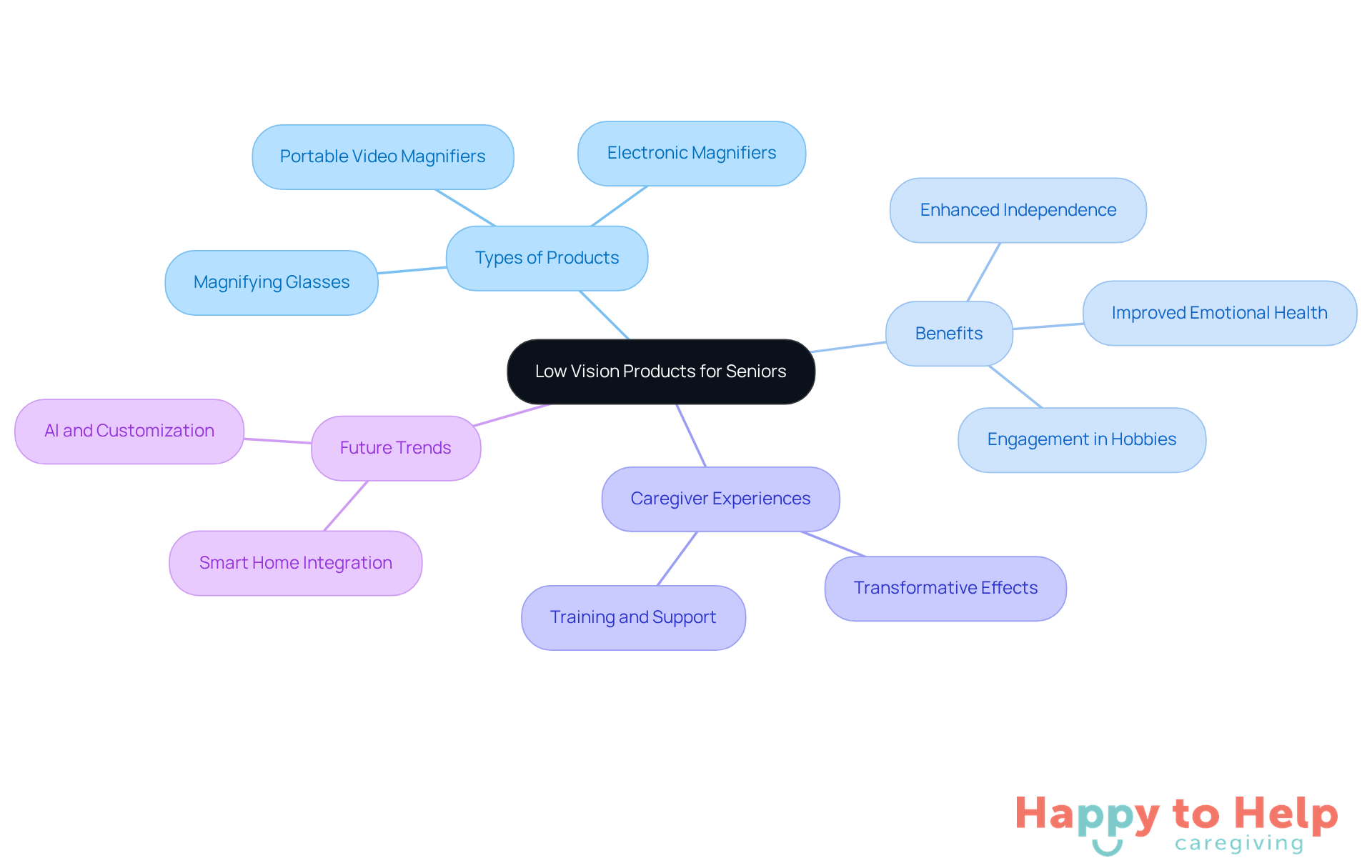
These tools range from basic magnifying glasses to advanced electronic devices that enhance visual abilities. Low vision products for seniors empower older adults to read, navigate their surroundings, and engage in hobbies, which fosters independence and well-being. For example, electronic magnifiers can enlarge text up to 75 times its original size, enabling seniors to manage daily tasks like reading medication labels or enjoying a favorite book. Additionally, portable video magnifiers enhance daily activities by enlarging text and images on a display, making them invaluable for maintaining independence.
Caregivers have witnessed the transformative effects of these tools. One caregiver noted, "With the Mezzo Focus, my client can finally enjoy reading without straining her eyes. It has truly changed her life." This sentiment is echoed in various case studies, which demonstrate that customized low sight devices not only improve visual ability but also enhance emotional health by reducing feelings of isolation and dependence.
As we approach 2025, the significance of low vision aids continues to rise. The integration of smart home technology and voice-activated tools further supports older adults in managing their daily lives independently. By understanding and utilizing low vision products for seniors, caregivers can greatly enhance the quality of life for seniors with visual impairments, ensuring they remain engaged and connected to their communities.
Exploring Types of Low Vision Aids
Low vision presents significant challenges for caregivers, impacting their ability to provide effective support. Without the right tools, individuals with low vision may struggle with daily tasks, leading to frustration and decreased independence.
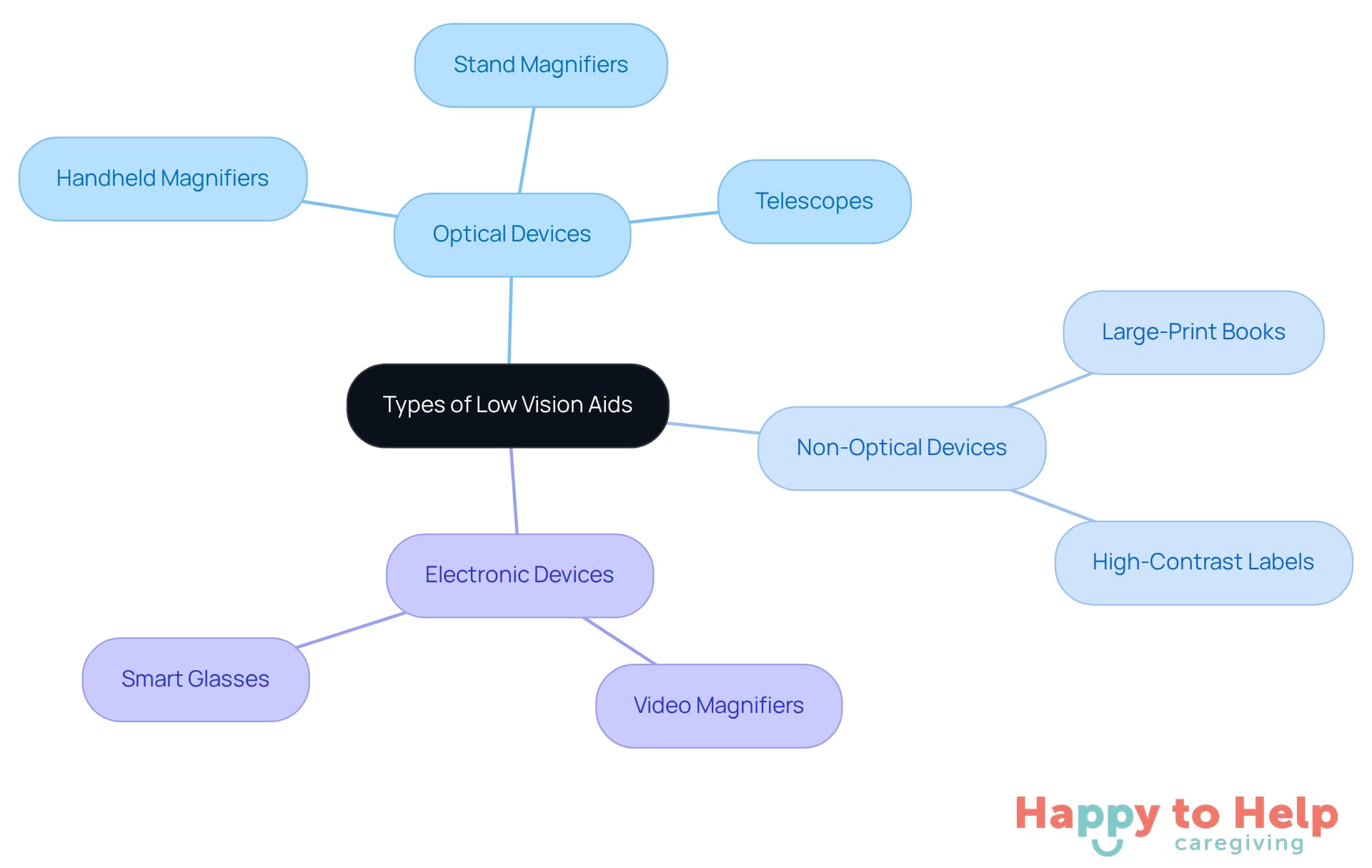
To address these challenges, caregivers can utilize a variety of low vision products for seniors, which can be broadly categorized into three types:
- Optical devices
- Non-optical devices
- Electronic devices
Optical tools include handheld magnifiers, stand magnifiers, and telescopes, all designed to improve visual clarity through magnification. On the other hand, non-optical aids, such as large-print books and high-contrast labels, enhance accessibility without the need for magnification.
Additionally, electronic gadgets like video magnifiers and smart glasses offer advanced functionalities, including adjustable magnification and contrast enhancement. Each type of aid serves different needs, making it crucial for caregivers to assess the specific requirements of their clients. By understanding and implementing low vision products for seniors, caregivers can significantly improve the quality of life for those with low vision.
Choosing the Right Low Vision Aid: Tips and Considerations
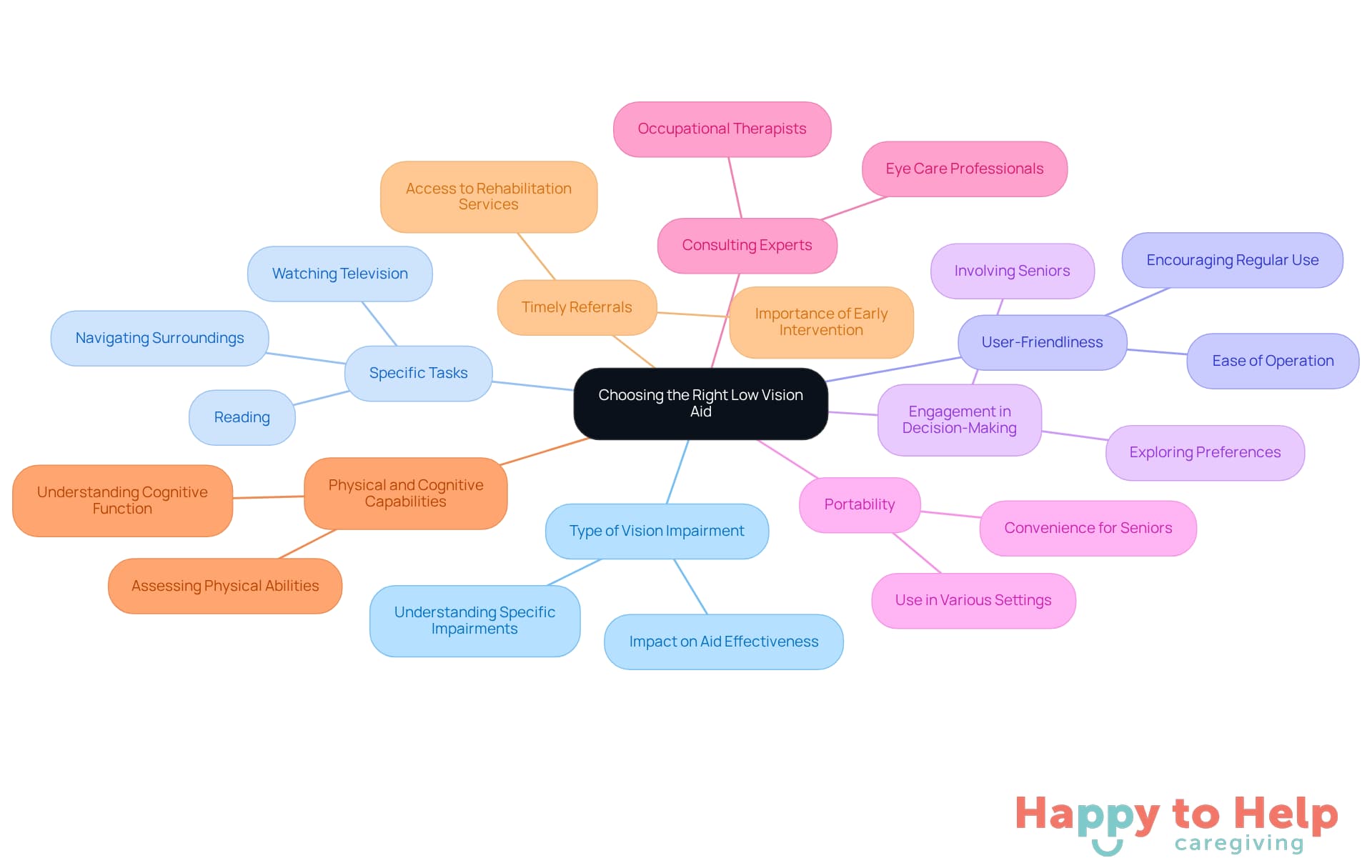
Choosing the right low vision products for seniors is a challenge for caregivers, as it requires careful consideration of several important factors. Understanding the type of vision impairment is crucial; it directly impacts how effective the aid will be. Caregivers must also assess the specific tasks the elderly individual wants to accomplish, such as reading, watching television, or navigating their surroundings, with the help of low vision products for seniors. User-friendliness is key; low vision products for seniors should be easy to operate in order to encourage regular use.
Engaging older adults in the decision-making process is essential. Their comfort and preferences should guide the selection, ensuring that the aid fits seamlessly into their daily activities and lifestyle. For instance, a caregiver might work closely with an elderly individual to explore different low vision products for seniors, including magnifiers or electronic tools, allowing the individual to express their preferences based on personal experience.
Portability is another significant consideration, especially for older adults who may need their assistive devices in various settings, whether at home or during outings. Consulting with an eye care expert can provide valuable insights into the most suitable options, as they can recommend tools tailored to the individual's specific needs.
Occupational therapists emphasize that caregivers should also consider the elder's physical capabilities and cognitive function when selecting low vision products for seniors. This comprehensive approach ensures that the chosen low vision products for seniors not only enhance vision but also support the elderly's overall independence and quality of life. Furthermore, timely referrals for eye rehabilitation are crucial, as they can significantly improve outcomes for elderly individuals experiencing sight loss. Statistics show that about 27.8% of adults aged 71 and older have visual impairment, highlighting the necessity for prompt intervention. Caregivers should also be mindful of the challenges in recommending assistive technology due to diverse patient needs and the lack of scientific validation for many products. As occupational therapists often advise, understanding these factors can greatly enhance the selection process.
Integrating Technology: Electronic Low Vision Devices
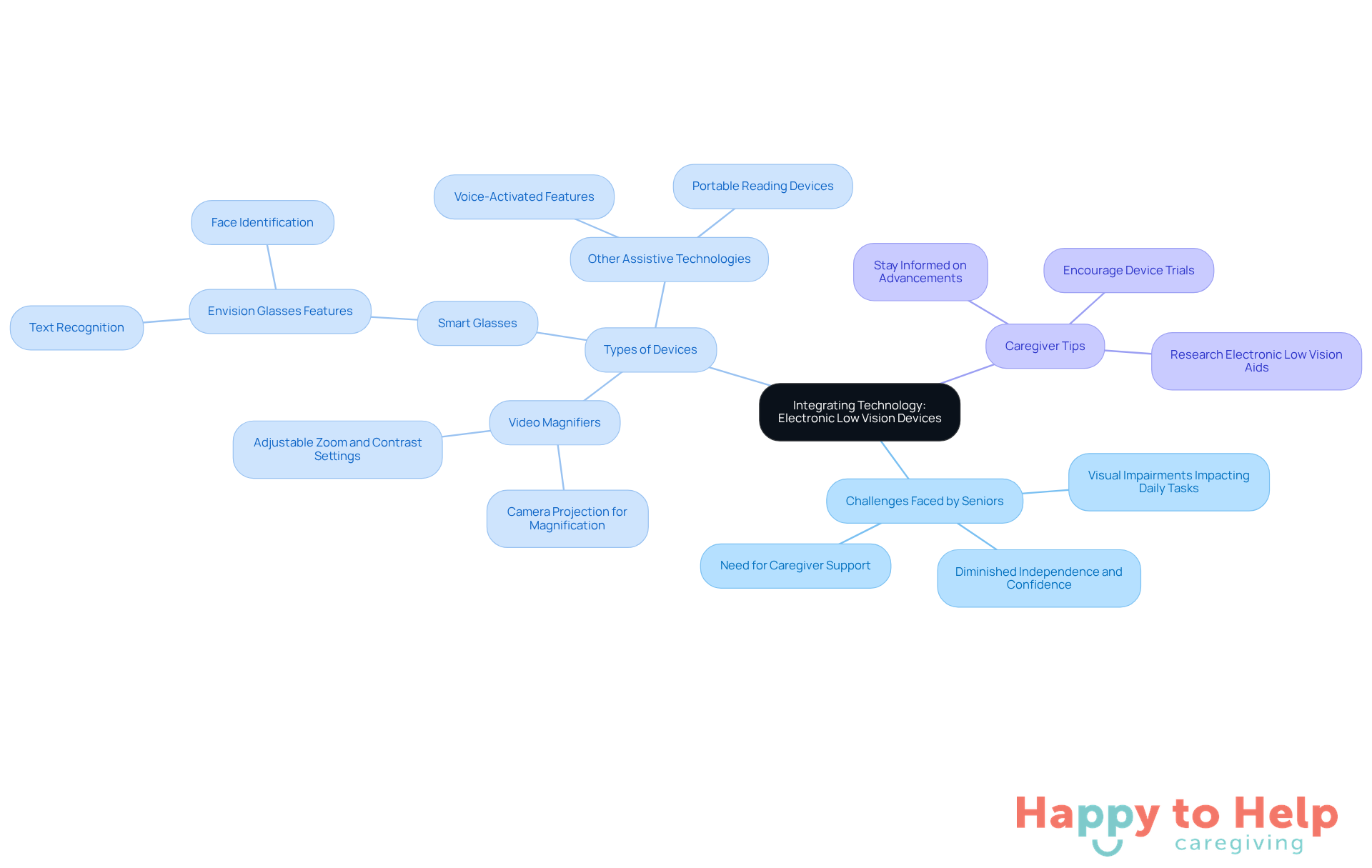
Older individuals often face significant challenges in interacting with their environment due to visual impairments. This can lead to difficulties in performing daily tasks, which may diminish their independence and confidence. Caregivers need to recognize these challenges to better support their loved ones.
Fortunately, low vision products for seniors, particularly electronic tools, have emerged as effective solutions. Video magnifiers, for example, use a camera to project magnified images onto a screen, allowing older adults to read medication labels or enjoy books with adjustable zoom and contrast settings. Smart glasses, like Envision Glasses, enhance contrast and provide functionalities such as text recognition and face identification, facilitating social interactions and improving daily activities.
Statistics show a growing adoption of these technologies among elderly users, with many reporting increased confidence in managing daily tasks. Developers emphasize that these devices not only address visual impairments but also promote a sense of autonomy. As one expert noted, voice-activated features enable older adults to perform tasks without straining their eyes, significantly enhancing their quality of life.
Caregivers should actively explore these technologies. Here are some actionable tips:
- Research various electronic low vision aids to find the best fit for specific visual needs.
- Encourage seniors to try out devices that seamlessly integrate into their daily routines.
- Stay informed about new advancements in low vision technology to provide ongoing support.
By understanding the benefits of low vision products for seniors, caregivers can help older adults regain independence and improve their overall well-being.
Moving Forward with Comparing Low Vision Products
Low vision products for seniors present a significant challenge for caregivers aiming to enhance the independence and quality of life for older adults with visual impairments. These caregivers often struggle to find effective solutions that cater to the specific needs of their clients, which can lead to frustration and diminished emotional well-being.
Understanding the variety of low vision aids available - from optical to electronic devices - can empower caregivers to make informed choices. By equipping themselves with knowledge about these specialized tools, caregivers can significantly improve their clients' daily experiences. The importance of user-friendliness and portability cannot be overstated, as these factors ensure that the aids fit seamlessly into seniors' lifestyles. Engaging seniors in the selection process also fosters a sense of autonomy and ownership over their care.
Moreover, the integration of technology continues to advance the capabilities of low vision products, offering innovative solutions that enhance visual clarity. Caregivers are encouraged to actively explore these tools, which represent a pathway to greater independence for seniors. By prioritizing the selection of appropriate low vision products, caregivers not only enhance the lives of those they support but also contribute to a more inclusive and connected community for seniors.
In conclusion, low vision aids are not just functional items; they are essential tools that can transform the lives of older adults facing visual challenges. By understanding the available options and implementing them effectively, caregivers can create an environment where seniors can thrive despite their impairments.
https://iframe.tely.ai/cta/eyJhcnRpY2xlX2lkIjogIjY5NDFmMzQ1MTE4MTVjMDQxY2UzNWU0ZiIsICJjb21wYW55X2lkIjogIjY4ZWU1ZGNhNzMxNzYyNTU3ZjNjOTVjMSIsICJpbmRleCI6IG51bGwsICJ0eXBlIjogImFydGljbGUifQ==Frequently Asked Questions
What are low vision products for seniors?
Low vision products are specialized tools designed to assist individuals with partial sight in their daily activities, helping to improve their autonomy and quality of life.
How do low vision aids benefit older adults?
These aids empower older adults to read, navigate their surroundings, and engage in hobbies, which fosters independence and well-being.
What types of low vision products are available?
Low vision products range from basic magnifying glasses to advanced electronic devices, such as electronic magnifiers and portable video magnifiers.
How effective are electronic magnifiers for seniors?
Electronic magnifiers can enlarge text up to 75 times its original size, enabling seniors to manage daily tasks like reading medication labels or enjoying books.
Can you provide an example of a low vision product and its impact?
The Mezzo Focus is an example of a low vision product that allows users to read without straining their eyes, significantly improving their quality of life.
What emotional benefits do low vision aids provide?
Customized low sight devices not only improve visual ability but also enhance emotional health by reducing feelings of isolation and dependence.
How is the significance of low vision aids expected to change in the future?
As we approach 2025, the significance of low vision aids is expected to rise, especially with the integration of smart home technology and voice-activated tools that support independent living for older adults.
What role do caregivers play in the use of low vision products?
Caregivers must understand the available low vision options to help their clients effectively, enhancing the quality of life for seniors with visual impairments.
List of Sources
- Understanding Low Vision Products for Seniors
- Assistive Technology for Seniors with Low Vision: Essential Daily Living Solutions That Restore Independence - New England Low Vision (https://nelowvision.com/assistive-technology-for-seniors-with-low-vision-essential-daily-living-solutions-that-restore-independence?srsltid=AfmBOopZxLZgwRELS23Ctj8oVmX0lj3x9uOoVPJIjRQjQkNYwNerxrsY)
- High-tech solutions for low vision (https://aoa.org/news/clinical-eye-care/diseases-and-conditions/high-tech-solutions-for-low-vision)
- Low Vision Aids Proven in Research to Make a Difference in People’s Lives After Vision Loss (https://opticalimages.com/low-vision-aids-proven-in-research-to-make-a-difference-in-peoples-lives-after-vision-loss)
- 10 Essential Aids for Visually Impaired Seniors to Enhance Daily Living - Happy To Help (https://happytohelpcaregiving.com/10-essential-aids-for-visually-impaired-seniors-to-enhance-daily-living)
- Empowering older adults with central vision loss through technology (https://mcknightsseniorliving.com/home/columns/marketplace-columns/empowering-older-adults-with-central-vision-loss-through-technology)
- Exploring Types of Low Vision Aids
- High-tech solutions for low vision (https://aoa.org/news/clinical-eye-care/diseases-and-conditions/high-tech-solutions-for-low-vision)
- The Best Low Vision Technologies in 2025 - Relf EyeCare (https://relfeyecare.com/the-best-low-vision-technologies-in-2025-reading-navigation-social-eye-condition-aids)
- 2025’s Most Innovative Vision Aids: How Snow Pad Transforms Life for Macular Degeneration & Low Vision Users Low vision life - Zoomax USA (https://zoomaxusa.com/2025-best-vision-aids-how-snow-pad-helps-macular-degeneration-low-vision-users?srsltid=AfmBOorm3kXEmPrfxm2f0sDjXTcAMrHg8puv27id7jX4ktuTXofcsTGH)
- Head-Mounted Laser Projector May Outperform Other Low Vision Aids (https://reviewofoptometry.com/article/headmounted-laser-projector-may-outperform-other-low-vision-aids)
- Innovative Low Vision Aids: Enhancing Everyday Life (https://allaboutvision.com/conditions/blindness-low-vision/new-tech-low-vision-aids)
- Choosing the Right Low Vision Aid: Tips and Considerations
- Study: More than a quarter of older Americans have visual impairment | Ophthalmology Times - Clinical Insights for Eye Specialists (https://ophthalmologytimes.com/view/study-more-than-a-quarter-of-older-americans-have-visual-impairment)
- High-tech solutions for low vision (https://aoa.org/news/clinical-eye-care/diseases-and-conditions/high-tech-solutions-for-low-vision)
- Recommendations on Assistive Technology for Patients with Low Vision - 2025 (https://aao.org/education/clinical-statement/recommendations-on-assistive-technology-patients-w)
- Older Adults with Low Vision: Characteristics and How to Help (https://ncoa.org/article/understanding-older-adults-with-vision-loss-and-how-to-help)
- Exciting New Tech for People With Low-Vision, Blindness (https://aarp.org/health/conditions-treatments/low-vision-technology)
- Integrating Technology: Electronic Low Vision Devices
- Assistive Technology for Seniors with Low Vision: Essential Daily Living Solutions That Restore Independence - New England Low Vision (https://nelowvision.com/assistive-technology-for-seniors-with-low-vision-essential-daily-living-solutions-that-restore-independence?srsltid=AfmBOoopNC5oQ5JgtJ3akEFt4fb2lIpuKIOdvUjRWBgWt\_6NXQxeVbMH)
- High-tech solutions for low vision (https://aoa.org/news/clinical-eye-care/diseases-and-conditions/high-tech-solutions-for-low-vision)
- The Best Low Vision Technologies in 2025 - Relf EyeCare (https://relfeyecare.com/the-best-low-vision-technologies-in-2025-reading-navigation-social-eye-condition-aids)
- High-Tech for People With Low Vision (https://aao.org/eyenet/article/technology-devices-for-low-vision-blindness)
- High Tech for Low Vision: How Technology Is Changing the World for People with Vision Loss - Lighthouse Guild (https://lighthouseguild.org/news/high-tech-for-low-vision-how-technology-is-changing-the-world-for-people-with-vision-loss)