Comparing Tracking Devices for Seniors: Find the Best Fit

For families in our service areas
For families in our service areas, this guide explains caregiving and how non-medical in-home caregiving can support care planning in East Idaho, Treasure Valley & Magic Valley, Northern Wasatch, North Central West Virginia, and Northeast Ohio.
What You Need to Know About Comparing Tracking Devices
As the population of seniors continues to grow, the need for effective solutions to ensure their safety becomes increasingly urgent. Caregivers face the challenge of finding ways to keep their loved ones safe while allowing them to maintain independence. Tracking devices have emerged as a valuable tool in this regard, offering not just peace of mind but also a means for older adults to stay connected and secure.
However, with so many options available, families may feel overwhelmed. How can they determine which device best meets the unique needs of their loved ones? By exploring the criteria for evaluating these devices, caregivers can navigate the landscape of choices that significantly impact the quality of care and security for seniors. This approach not only aids in decision-making but also ensures that seniors receive the support they need.
Understanding the Need for Tracking Devices in Senior Care
As seniors age, they often face significant challenges related to mobility, memory, and overall health. These issues can create a heavy emotional burden for families, especially when caring for loved ones with conditions like dementia or Alzheimer's. The uncertainty surrounding their safety can be distressing, leaving caregivers feeling anxious and overwhelmed.
Tracking devices for seniors are emerging as a vital solution to these challenges. They provide real-time location information, enabling caregivers to monitor their loved ones' positions and respond swiftly in emergencies. This technology not only enhances safety but also promotes a sense of independence for older adults, allowing them to engage in daily activities without constant supervision.
The emotional reassurance these systems offer to families is invaluable. Knowing they can locate their loved ones at any time brings peace of mind, alleviating some of the stress associated with caregiving. By implementing tracking devices for seniors, caregivers can ensure the safety and well-being of elderly individuals while fostering their independence.

Criteria for Evaluating Senior Tracking Devices
When it comes to ensuring the safety of seniors, caregivers face a significant challenge: finding reliable tracking devices that can provide peace of mind. Without accurate tracking, timely responses in emergencies can be compromised, putting seniors at risk.
To address this issue, several key criteria should be considered when evaluating tracking devices:
-
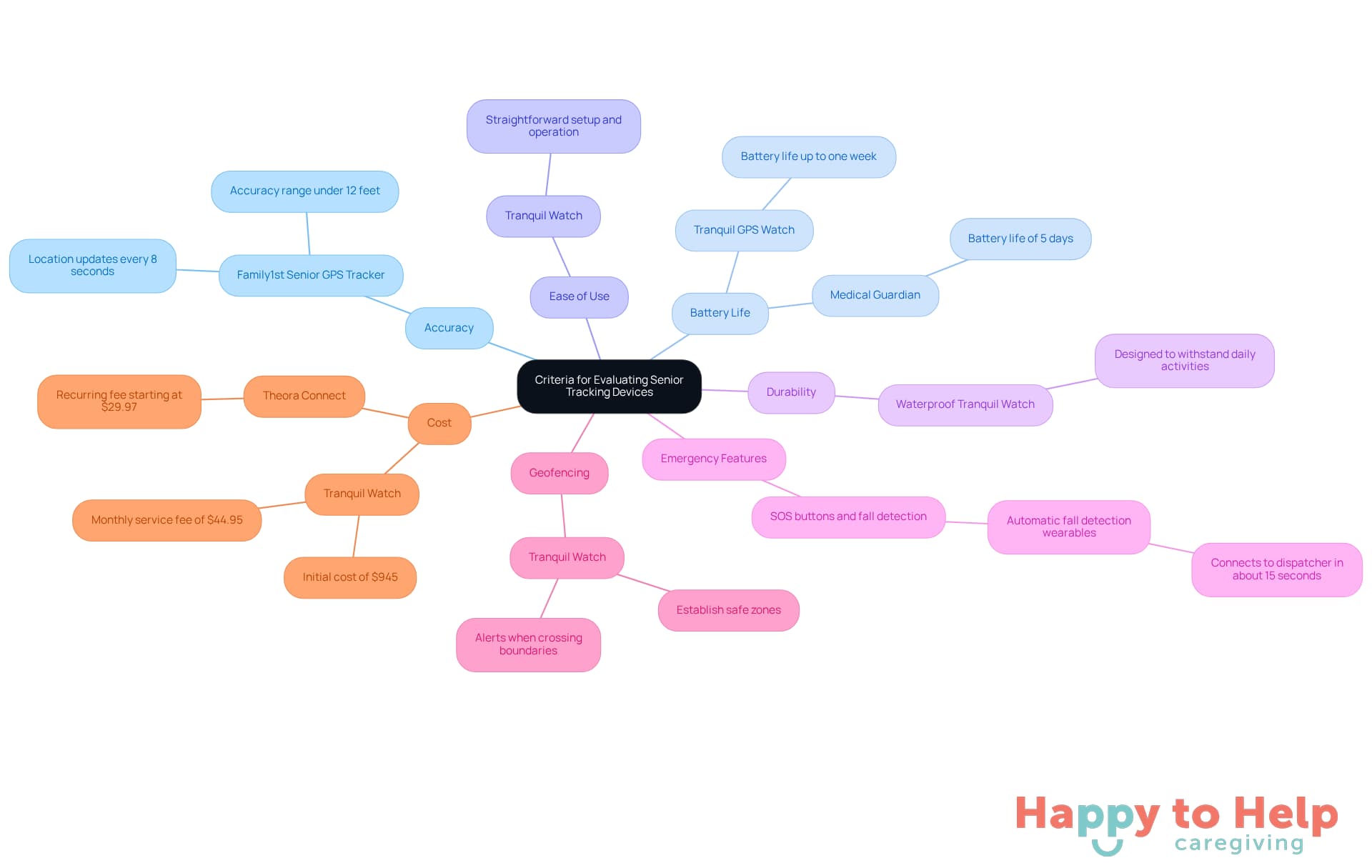
Accuracy: The device must provide precise location tracking to ensure timely responses in emergencies. Devices like the Family1st Senior GPS Tracker offer location updates every 8 seconds with an accuracy range under 12 feet, making them reliable for real-time monitoring.
-
Battery Life: Long-lasting battery life is crucial for continuous monitoring without frequent recharging. For instance, the Tranquil GPS Watch boasts a battery life of up to one week, allowing for extended use without interruption.
-
Ease of Use: Devices should be user-friendly, particularly for older individuals who may not be tech-savvy. The Tranquil Watch is designed for straightforward setup and operation, ensuring that seniors can use it without confusion.
-
Durability: The item should endure daily wear and tear, especially if worn as a bracelet or pendant. Numerous gadgets, like the waterproof Tranquil Watch, are designed to withstand daily activities, improving their practicality.
-
Emergency Features: Look for devices equipped with SOS buttons or fall detection capabilities that notify guardians promptly. Automatic fall detection wearables can significantly reduce response times, ensuring help arrives quickly when needed.
-
Geofencing: This feature enables guardians to establish safe zones and receive alerts if the senior roams beyond these areas. Devices with geofencing capabilities provide an added layer of security, helping to prevent wandering incidents.
-
Cost: Consider both the initial purchase price and any ongoing subscription fees for service. For instance, although the Tranquil Watch has a greater initial expense of $945 and a monthly service charge of $44.95, its extensive features may warrant the expenditure for families looking for dependable monitoring options.
By thoughtfully evaluating these standards, caregivers can choose the most appropriate tool to improve the safety and autonomy of their elderly relatives.
Comparative Analysis of Leading Tracking Devices for Seniors
Wandering is a significant concern for caregivers of seniors, especially those with dementia. In fact, over 60% of dementia patients are likely to wander at some point, which can lead to dangerous situations. This highlights the urgent need for reliable tracking devices for seniors that can provide peace of mind for families.
To address this issue, here’s a comparative analysis of three leading tracking devices for seniors:
-
Family1st Senior GPS Tracker:
- Accuracy: High accuracy with real-time tracking.
- Battery Life: Up to 30 days on a single charge.
- Emergency Features: SOS button for immediate alerts.
- Cost: Approximately $204.99 with no monthly subscription fees, making it a cost-effective choice for families.
- User Feedback: Highly rated for ease of use and reliability, making it a top choice for families seeking dependable monitoring solutions.
-
Jiobit Smart Tag:
- Accuracy: Excellent tracking capabilities utilizing GPS, Wi-Fi, and Bluetooth technologies.
- Battery Life: Lasts between 7 to 10 days per charge.
- Emergency Features: Geofencing alerts to notify caregivers when the wearer exits designated areas.
- Cost: Priced around $79, with a subscription fee for enhanced features.
- User Feedback: Commended for its compact design and versatility, making it suitable for active older adults. It also has a water resistance rating of IP65, adding to its durability.
-
AngelSense GPS Tracker:
- Accuracy: Very accurate, specifically designed for individuals with special needs.
- Battery Life: Approximately 24 hours, requiring daily charging, which is important for potential users to consider.
- Emergency Features: Two-way voice communication and SOS alerts for immediate assistance.
- Cost: Higher initial cost due to advanced features, with a notable activation fee.
- User Feedback: Valued for its comprehensive safety features, though some users find its bulkier design less appealing for everyday wear.
These tracking devices for seniors provide practical solutions for caregivers aiming to enhance the safety of their loved ones. By investing in reliable tracking technology, families can ensure that they are prepared for any situation.

Recommendations Based on Individual Needs and Preferences
Selecting the right tracking devices for seniors can be a daunting task for caregivers, especially given the diverse needs of older adults. The challenge lies in ensuring safety while promoting independence, which is crucial for their quality of life.
For Active Seniors: The Family1st Senior GPS Tracker is an excellent choice. With its impressive battery life and lightweight design, it allows seniors to move freely without compromising their safety. This device is perfect for those who want to maintain an active lifestyle.
For Seniors with Dementia: The AngelSense GPS Tracker stands out due to its advanced features, such as two-way communication and real-time alerts. These capabilities significantly enhance safety, enabling caregivers to monitor their loved ones effectively and respond promptly to any concerns.
For Tech-Savvy Seniors: The Jiobit Smart Tag combines technology with user-friendliness. Its compact design and reliable monitoring features cater to seniors who are comfortable with gadgets, making it a great option for those who appreciate modern technology.
For Budget-Conscious Families: The Family1st option strikes a commendable balance between affordability and functionality. It ensures that essential features are not sacrificed for cost, making it ideal for families looking to provide safety without financial strain.
For Compact Needs: The iTraq Nano is the world’s tiniest all-in-one locator, offering global monitoring capabilities and an SOS button. This makes it an excellent choice for those seeking a discreet option.
For Convenient Solutions: The PocketFinder Smart Tracker is designed to be compact and user-friendly, featuring an SOS button for emergencies. This meets the needs of guardians seeking dependable monitoring options.
A recent study revealed that 91% of participants felt GPS trackers significantly improved their daily activities and independence. This underscores the importance of selecting the right device. Experts emphasize that tracking devices for seniors can significantly improve the quality of life for older adults, especially those with dementia, by offering reassurance to both the individual and their caregivers.
Moreover, the significance of alerts in GPS tracking cannot be overstated; they are vital for ensuring the safety of older adults. Comfort and wearability are also crucial, as they encourage consistent use among seniors, especially those with dementia, ultimately alleviating caregiver anxiety.

Your Path Forward
As seniors face the challenges of aging, caregivers often grapple with anxiety about their loved ones' safety. This concern can significantly impact both the caregiver's peace of mind and the senior's independence. Tracking devices emerge as essential tools that not only enhance safety but also promote a sense of freedom for older adults.
When selecting tracking devices, caregivers should consider several critical factors:
- Accuracy
- Battery life
- Ease of use
- Durability
- Emergency features
- Geofencing capabilities
- Cost
A comparative analysis of leading tracking devices reveals options tailored to various needs, from active seniors to those with dementia. Each device offers unique features designed to provide reliable monitoring, ensuring caregivers can respond promptly in emergencies.
The significance of tracking devices for seniors is profound. They alleviate caregiver anxiety while enhancing the quality of life for older adults by fostering independence and safety. Caregivers are encouraged to assess individual needs and preferences carefully; the right device can make a substantial difference in the daily lives of seniors and their families. Investing in reliable tracking technology is a proactive step toward securing the well-being of loved ones, allowing them to thrive in their golden years.
https://iframe.tely.ai/cta/eyJhcnRpY2xlX2lkIjogIjY5MjNhMGQxNmIzYzAyYTIxMjhhY2RmYiIsICJjb21wYW55X2lkIjogIjY4ZWU1ZGNhNzMxNzYyNTU3ZjNjOTVjMSIsICJpbmRleCI6IG51bGwsICJ0eXBlIjogImFydGljbGUifQ==Frequently Asked Questions
Why are tracking devices important in senior care?
Tracking devices are important in senior care because they provide real-time location information, helping caregivers monitor their loved ones' positions and respond quickly in emergencies. This technology enhances safety and promotes independence for older adults.
What challenges do seniors face that tracking devices can help address?
Seniors often face challenges related to mobility, memory, and overall health, which can create emotional burdens for families. Conditions like dementia or Alzheimer's can increase uncertainty regarding their safety, making tracking devices a valuable solution.
How do tracking devices benefit caregivers emotionally?
Tracking devices offer emotional reassurance to caregivers by allowing them to locate their loved ones at any time. This peace of mind alleviates some of the stress associated with caregiving.
Can tracking devices help seniors maintain their independence?
Yes, tracking devices can help seniors maintain their independence by allowing them to engage in daily activities without constant supervision, while still ensuring their safety.
What is the overall impact of implementing tracking devices for seniors?
Implementing tracking devices for seniors enhances their safety and well-being, provides emotional support to families, and fosters a sense of independence for elderly individuals.
List of Sources
- Understanding the Need for Tracking Devices in Senior Care
- Is GPS Tracking For Seniors Worth It? The Pros & Cons (https://trualta.com/resources/blog/is-gps-tracking-for-seniors-worth-it-the-pros-cons)
- Alzheimer's Disease Facts and Figures (https://alz.org/alzheimers-dementia/facts-figures)
- ADI - Dementia statistics (https://alzint.org/about/dementia-facts-figures/dementia-statistics)
- 2024 Alzheimer's disease facts and figures - PubMed (https://pubmed.ncbi.nlm.nih.gov/38689398)
- 52+ Senior Health Statistics, Facts & Trends (https://humancareny.com/blog/52-senior-health-statistics-facts-trends)
- Criteria for Evaluating Senior Tracking Devices
- 4 Best GPS Trackers for Dementia Patients (2025 Review) | SafeWise (https://safewise.com/best-gps-trackers-dementia-patients)
- Best GPS Tracker for Seniors - Elderly Tracking Device (https://caringvillage.com/product-review/top-10-products-track-elderly-location)
- (PDF) Effects of Tracking Technology on Daily Life of Persons With Dementia: Three Experimental Single-Case Studies (https://researchgate.net/publication/261923008\_Effects\_of\_Tracking\_Technology\_on\_Daily\_Life\_of\_Persons\_With\_Dementia\_Three\_Experimental\_Single-Case\_Studies)
- Senior Care Wearables: Fall Detection & Monitoring Stats (https://patentpc.com/blog/senior-care-wearables-fall-detection-monitoring-stats)
- 11 Best GPS Trackers for Dementia Patients In 2025 (https://family1st.io/best-gps-trackers-for-dementia-patients)
- Comparative Analysis of Leading Tracking Devices for Seniors
- 4 Best GPS Trackers for Dementia Patients (2025 Review) | SafeWise (https://safewise.com/best-gps-trackers-dementia-patients)
- 5 GPS Trackers for Seniors Without Monthly Subscriptions | SeniorLiving.com (https://seniorliving.com/article/5-gps-trackers-seniors-without-monthly-subscriptions)
- 5 Best GPS Trackers For Dementia Patients In 2025 (https://gpstracker247.com/blogs/gps-trackers/best-gps-trackers-for-dementia-patients)
- Recommendations Based on Individual Needs and Preferences
- GPS Trackers for Dementia Patients | OurParents (https://ourparents.com/products-for-seniors/location-devices-dementia)
- 5 Best GPS Trackers For Dementia Patients In 2025 (https://gpstracker247.com/blogs/gps-trackers/best-gps-trackers-for-dementia-patients)
- Best Tracking Device for Dementia Patients - Caring.com (https://caring.com/resources/tracking-devices-for-dementia-patients)
- Medical Alert Systems: 2023-2024 Research and Statistics (https://theseniorlist.com/research/medical-alert-device-consumer-usage-study)
- Implementing global positioning system trackers for people with dementia who are at risk of wandering - PMC (https://pmc.ncbi.nlm.nih.gov/articles/PMC11290024)