Plan Support for Both a Living Liver Donor and Recipient
Reviewed by Tyree Powell, Marketing on .
For families in East Cleveland
For families in East Cleveland, Northeast Ohio: use the resources and practical steps in this guide to plan wanted nonmedical help. Confirm individual requirements and current availability with the responsible provider.
A living donor may need their own support while the recipient also recovers. With each adult's separate permission, bring the intended helper arrangement to their actual transplant coordinators. Preserve the donor's independent advocacy and voluntary choice.
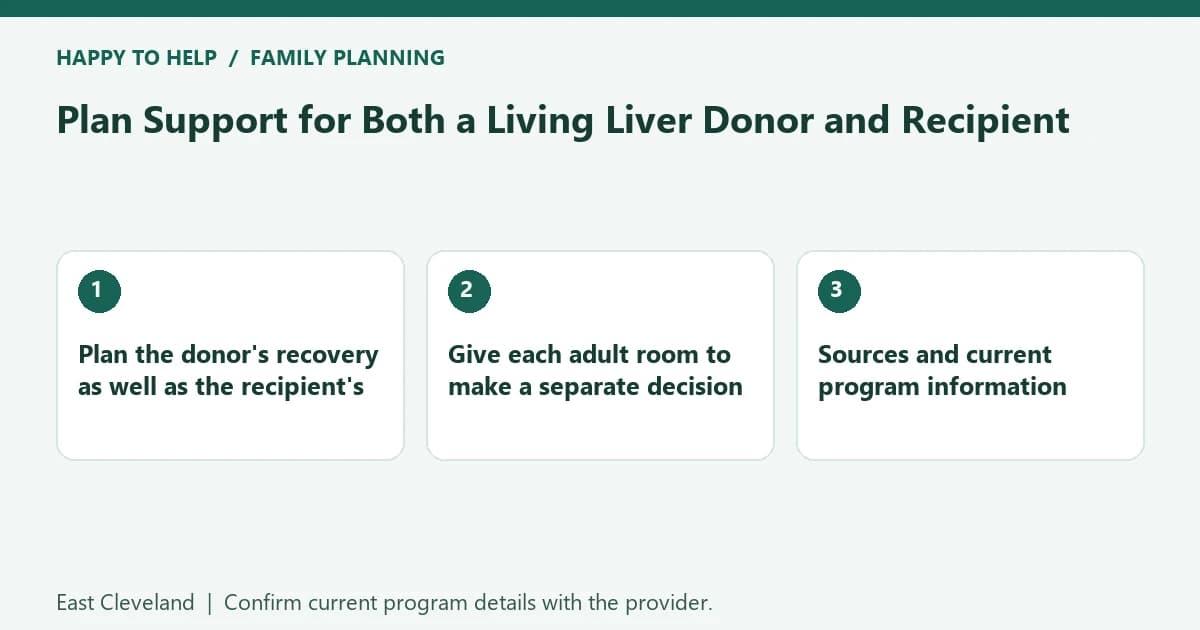
Plan the donor's recovery as well as the recipient's
Ask what each person needs and which helpers are accepted for participation. Do not count on the recovering donor to supply the recipient's assistance. No universal shared-helper rule or required number of caregivers is established here. Confirm individual schedules and ordinary home support with the teams and willing helpers. Keep clinical decisions and private information separate unless each adult authorizes appropriate sharing.
Give each adult room to make a separate decision
The donor's voluntary evaluation and independent advocacy should remain distinct from the recipient's hopes and support needs. Ask each team how a chosen helper may participate and what information may be shared. A helper who knows both adults should not assume access to both records or accept duties one adult has not requested. Walk through the actual recovery periods to see whether one person's support depends on the other being available. If it does, bring that gap back to the teams before relying on the arrangement.
For ordinary help at home, explore care in East Cleveland and contact the Northeast Ohio team. Describe the tasks the person wants help with and the arrangements already confirmed. Ask about the actual service scope and availability before relying on a care schedule.