

For families in our service areas
For families in our service areas, this guide explains home care and how non-medical in-home caregiving can support care planning in East Idaho, Treasure Valley & Magic Valley, Northern Wasatch, North Central West Virginia, and Northeast Ohio.
What You Need to Know About How Much Does 24/7 Home Care Cost? Key
Around-the-clock home care services have become a crucial support system for many families, addressing the increasing need for assistance among seniors and individuals with disabilities. Nearly 70% of older adults require some form of in-home support, highlighting a significant problem that families must navigate. This growing demand not only emphasizes the importance of 24/7 care but also brings to light the financial implications involved.
Families often find themselves grappling with the complexities of costs associated with these essential services. How can they ensure their loved ones receive the care they deserve while managing these expenses? This article aims to explore the factors influencing home care pricing, examine various payment options, and compare costs with alternative care solutions. By providing these insights, we hope to empower families to make informed decisions about the care of their loved ones.
Understand 24/7 Home Care Services
Around-the-clock home assistance addresses a significant problem: many individuals require help with daily tasks due to age, illness, or disability. This need can lead to feelings of isolation and stress for both the individuals and their families. Understanding the implications of this situation is crucial, as around 70% of seniors need some form of in-home assistance, highlighting the growing demand for personalized support.
The services provided by caregivers offer practical solutions to these challenges:
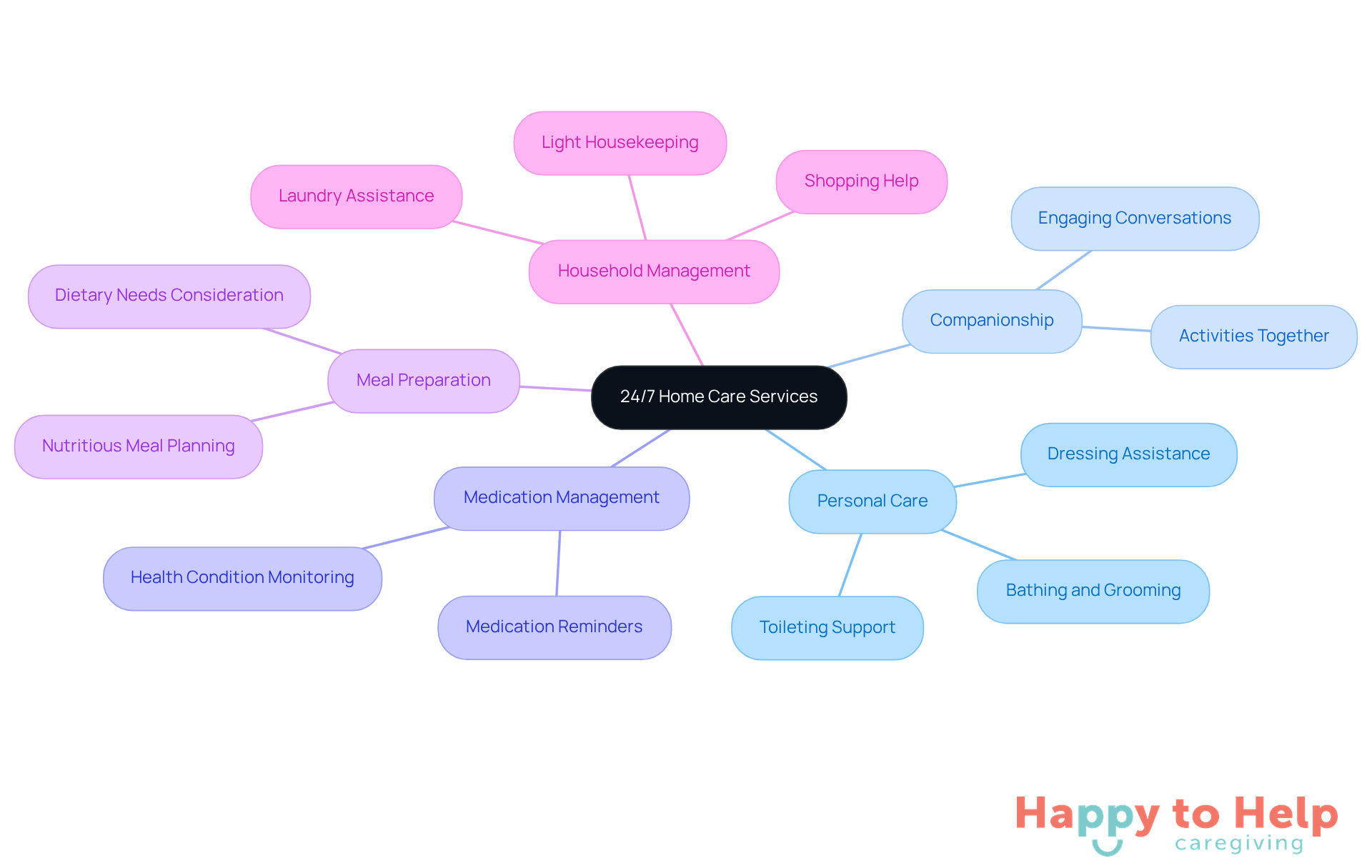
- Personal Care: Caregivers assist with bathing, dressing, grooming, and toileting, ensuring clients maintain their dignity and hygiene.
- Companionship: Engaging clients in conversation and activities helps alleviate feelings of loneliness, fostering emotional well-being.
- Medication Management: Caregivers ensure that clients take their medications as prescribed, which is crucial for managing health conditions effectively.
- Meal Preparation: Preparing nutritious meals tailored to dietary needs supports overall health and wellness.
- Household Management: Light housekeeping, laundry, and shopping assistance help maintain a clean and organized living environment.
Families often find that round-the-clock assistance not only enhances the quality of life for their loved ones but also provides peace of mind. Caregivers frequently express the rewarding nature of their work, noting that personal connections with clients enrich their lives. By comprehending these offerings, families can better assess their loved ones' needs and understand how much does 24/7 home care cost for obtaining such assistance.
Identify Factors Affecting Home Care Costs
Several factors significantly influence the cost of 24/7 home care services, presenting challenges for families seeking assistance:
-
Problem: Rising Costs
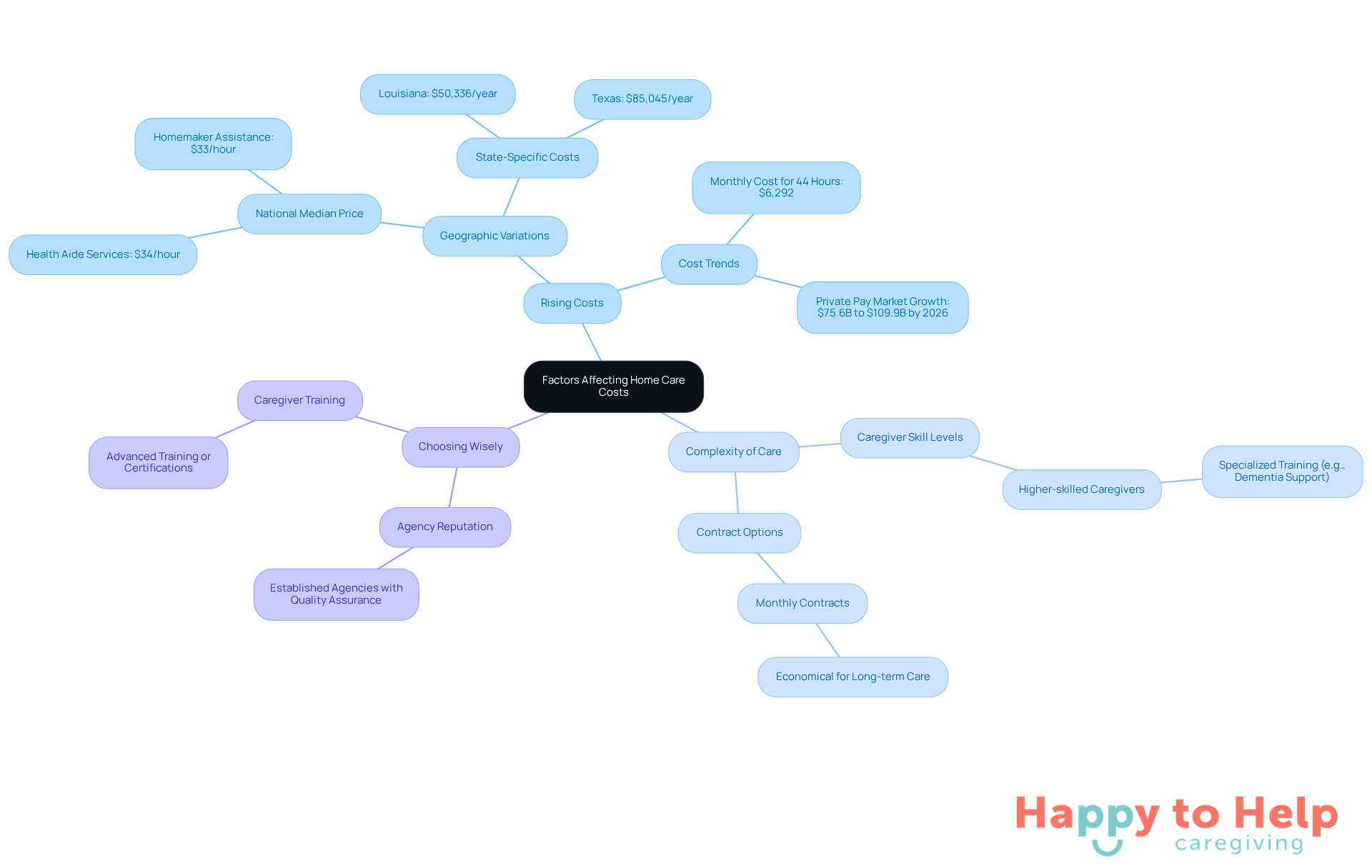
Home care costs can vary dramatically based on geographic location. City regions frequently experience elevated prices due to rising living expenses and demand for amenities. For instance, the national median price for health aide services is roughly $34 per hour, while homemaker assistance averages about $33 per hour. In contrast, states like Louisiana offer more budget-friendly options, with home assistance expenses averaging $50,336 annually. -
Agitate: Complexity of Care
The level of care required also impacts expenses. Higher-skilled caregivers, especially those trained in specialized fields like dementia support, typically charge more. This is evident in the increasing costs of assistance, with the typical monthly charge for 44 hours of support hitting approximately $6,292 in 2024. Additionally, the duration of assistance needed can further escalate overall expenses. Many families find it more economical to enter monthly contracts, which can provide a clearer financial picture and help manage costs over time. -
Solution: Choosing Wisely
Families should consider the reputation of the agency they choose. Established agencies with a strong track record may charge higher fees, reflecting their commitment to quality assurance and caregiver training. Families often prioritize these agencies for the peace of mind they offer. Moreover, caregivers with advanced training or certifications can command higher hourly rates. The demand for skilled caregivers is increasing, with many families willing to invest in their loved ones' assistance to ensure they receive the best support possible.
By understanding these factors, families can better estimate how much does 24/7 home care cost and explore suitable alternatives for in-home assistance. This ensures informed choices that align with their financial capabilities and support needs. Furthermore, it's essential to acknowledge that the private payment residential assistance market is expected to expand from $75.6 billion in 2021 to $109.9 billion by 2026, signifying a rising demand for these offerings. Roughly 63% of domestic assistance is funded privately, emphasizing the financial factors families must consider when planning for at-home expenses.
Explore Payment Options for Home Care
When families consider how much does 24/7 home care cost, they often encounter a significant challenge: funding. Understanding the various payment options available can be overwhelming, yet it’s crucial for making informed decisions.
Payment Options for Home Care:
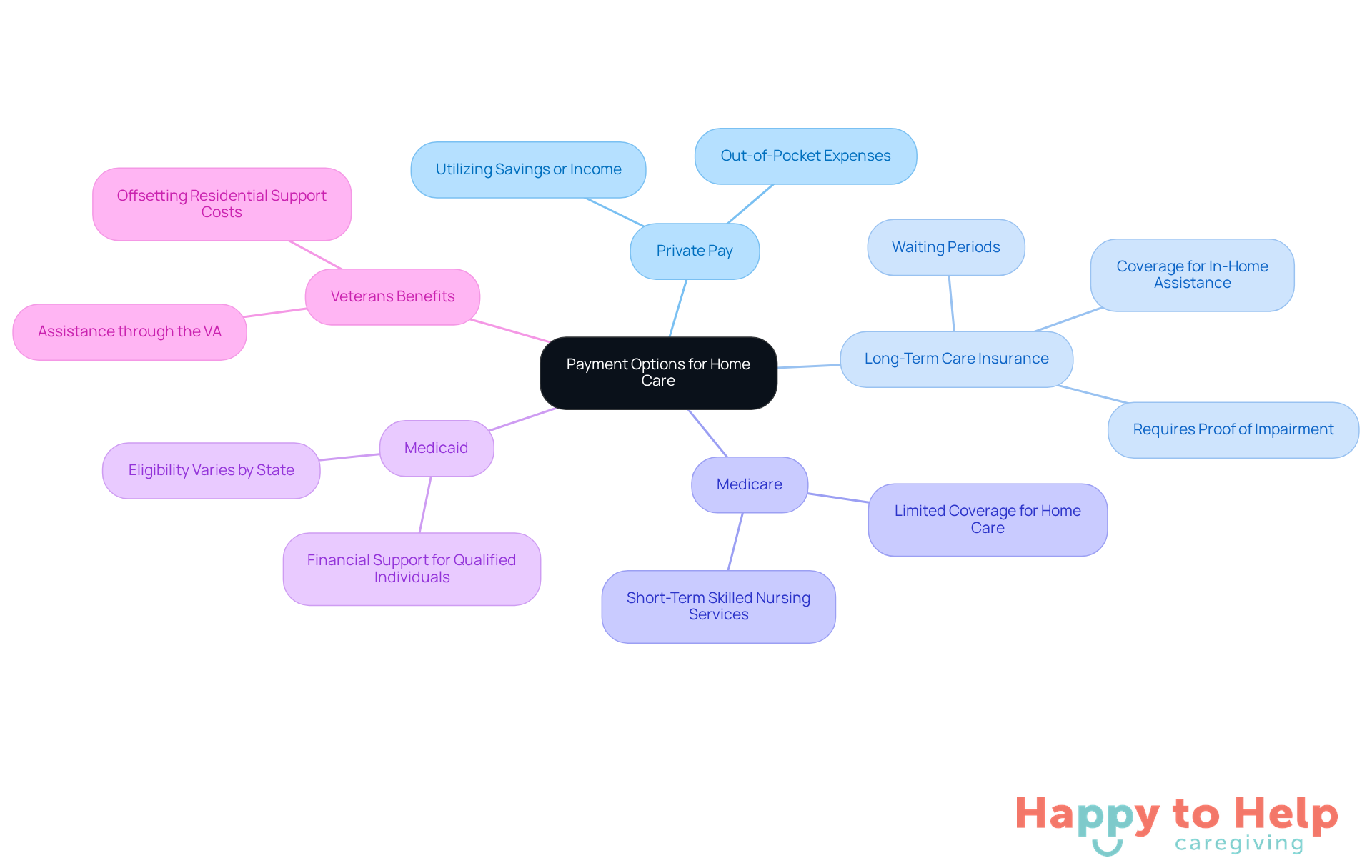
- Private Pay: Many families opt to pay out-of-pocket for home care services, utilizing savings or income to manage costs.
- Long-Term Care Insurance: Depending on the plan, these policies may cover some or all expenses related to in-home assistance. However, it's essential to note that many long-term support insurance policies require proof of functional impairment or cognitive decline, as assessed by a healthcare professional, to qualify for coverage.
- Medicare: While Medicare typically does not cover long-term residential assistance, it may provide coverage for short-term skilled nursing services under specific circumstances. This limitation is vital for families to understand.
- Medicaid: For those who qualify, Medicaid can offer financial support for domestic services, though eligibility varies by state.
- Veterans Benefits: Veterans may access additional assistance through the VA, which can help offset residential support costs.
By comprehending these options, families can navigate the complexities of funding support for home care, including learning how much does 24/7 home care cost, more effectively.
Compare Costs with Other Care Options
When families evaluate how much does 24/7 home care cost, they face a significant challenge: the high expenses associated with various care options.
-
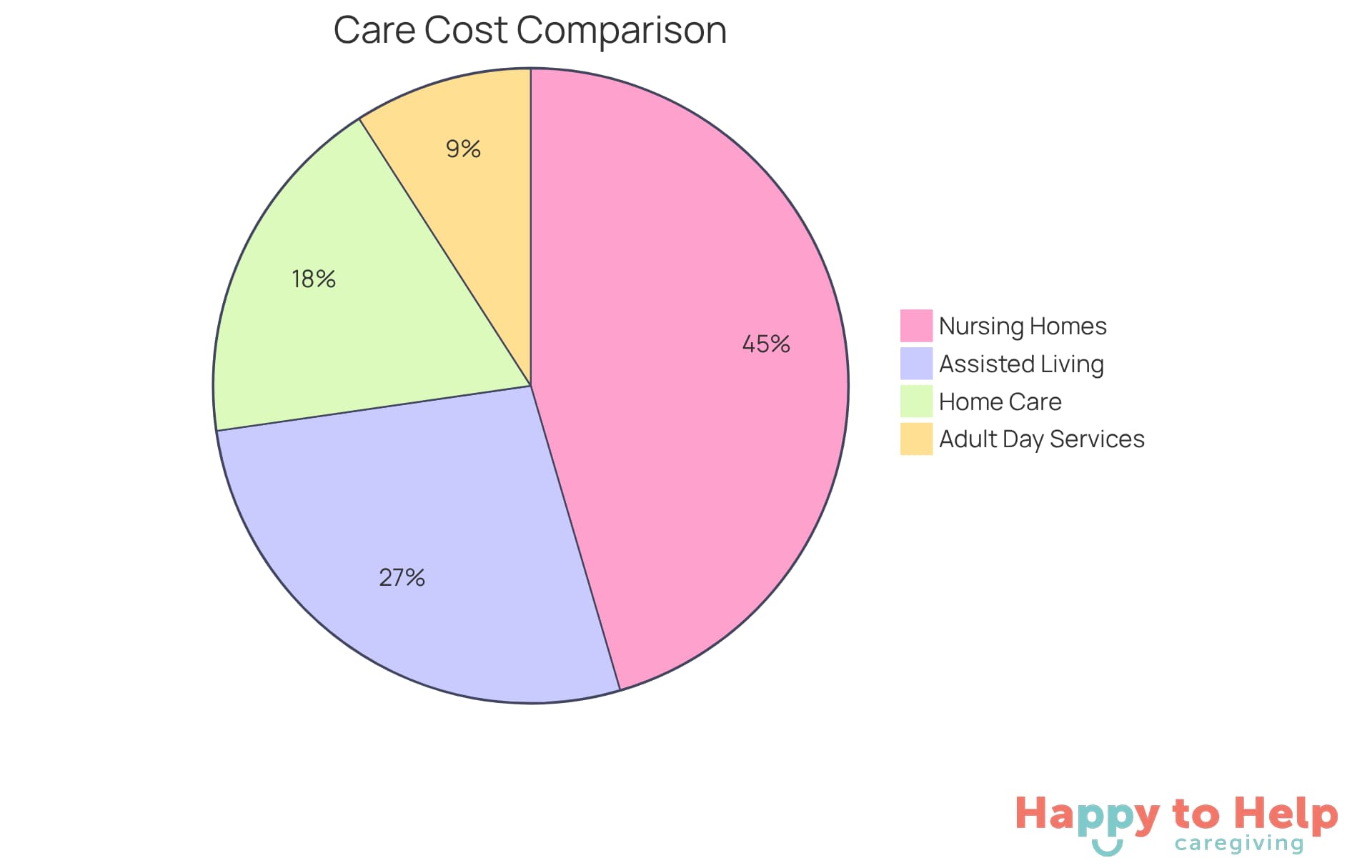
Nursing Homes present a daunting financial burden. The average monthly cost for a semi-private room is around $9,277, while a private room is projected to reach $10,965 per month by 2025. This stark contrast highlights the financial strain nursing facilities impose compared to home assistance, leading many to ask how much does 24/7 home care cost, as it often emerges as a more budget-friendly alternative for families seeking personalized support in a comfortable environment.
-
Assisted Living Facilities also come with considerable costs, typically ranging from $3,000 to $6,000 monthly, depending on the level of care and amenities. This can accumulate to an average annual expense of about $73,548. Families must carefully assess their financial capabilities. Some assisted living communities do accept Medicaid waivers, offering potential financial relief for those in need.
-
For those requiring part-time support, Adult Day Services can be a viable option, costing between $1,500 and $3,000 monthly. This choice may be more economical for families who do not need full-time assistance but still require help during the day.
By comparing these options, families can gain a clearer understanding of how much does 24/7 home care cost, allowing them to select the most suitable care solution that aligns with their loved one's needs and their budget.
Moving Forward with How Much Does 24/7 Home Care Cost? Key
Understanding the complexities surrounding 24/7 home care is essential for families seeking support for their loved ones. Families often face the challenge of navigating various services, costs, and payment options, which can be overwhelming. Recognizing these elements is crucial for making informed decisions about the care their loved ones require, ensuring both quality support and financial feasibility.
Caregiver services play a significant role in enhancing the quality of life for individuals needing assistance. However, costs can vary widely due to factors such as geographic location and the complexity of care. This variability can create confusion for families trying to find the best options. By exploring payment avenues like private pay, long-term care insurance, and government assistance programs, families can approach funding with a clearer understanding of their choices.
The significance of 24/7 home care extends beyond financial considerations; it encompasses the emotional and physical well-being of individuals in need. Families should weigh the benefits of personalized in-home assistance against alternative care options. Investing in quality care can lead to improved outcomes for their loved ones.
To secure the best possible support tailored to their unique needs, families are encouraged to take proactive steps. Understanding the costs and services available is key to ensuring that they find the right care solution.
https://iframe.tely.ai/cta/eyJhcnRpY2xlX2lkIjogIjY5MjY2NjI2Nzk5YjlmZWFhM2ZhMGUxMiIsICJjb21wYW55X2lkIjogIjY4ZWU1ZGNhNzMxNzYyNTU3ZjNjOTVjMSIsICJpbmRleCI6IG51bGwsICJ0eXBlIjogImFydGljbGUifQ==Frequently Asked Questions
What is 24/7 home care services?
24/7 home care services provide around-the-clock assistance to individuals who require help with daily tasks due to age, illness, or disability.
Why is there a growing demand for home care services?
Around 70% of seniors need some form of in-home assistance, highlighting the increasing need for personalized support to address feelings of isolation and stress for both individuals and their families.
What types of services do caregivers provide in 24/7 home care?
Caregivers provide several services, including personal care (bathing, dressing, grooming, toileting), companionship, medication management, meal preparation, and household management (light housekeeping, laundry, shopping assistance).
How do caregivers help with personal care?
Caregivers assist clients with bathing, dressing, grooming, and toileting, ensuring that they maintain their dignity and hygiene.
In what ways do caregivers provide companionship?
Caregivers engage clients in conversation and activities to help alleviate feelings of loneliness and foster emotional well-being.
What role do caregivers play in medication management?
Caregivers ensure that clients take their medications as prescribed, which is crucial for effectively managing health conditions.
How do caregivers assist with meal preparation?
Caregivers prepare nutritious meals tailored to clients' dietary needs, supporting their overall health and wellness.
What household management tasks do caregivers handle?
Caregivers assist with light housekeeping, laundry, and shopping to help maintain a clean and organized living environment.
What benefits do families gain from 24/7 home care services?
Families find that round-the-clock assistance enhances the quality of life for their loved ones and provides peace of mind regarding their care.
How do caregivers feel about their work?
Caregivers often express that their work is rewarding and that personal connections with clients enrich their lives.
List of Sources
- Understand 24/7 Home Care Services
- New York's Highest Court Upholds "13 Hour Rule" for Home Health Aides Working 24-Hour Shifts (https://bsk.com/news-events-videos/new-york39s-highest-court-upholds-quot13-hour-rulequot-for-home-health-aides-working-24-hour-shifts)
- How Much Does 24/7 In-Home Care Cost? | The Senior List (https://theseniorlist.com/caregiving/24-7-in-home-care)
- Governor Hochul Announces 24 Community-based Partners for Plan to Strengthen Home Care Services for New Yorkers (https://governor.ny.gov/news/governor-hochul-announces-24-community-based-partners-plan-strengthen-home-care-services-new)
- Medicare Guidance Simplified | Chapter (https://askchapter.org/magazine/senior-health-wellness/home/how-much-does-24-7-in-home-care-cost)
- Home Care Aides Fight to End 24-Hour Shifts: ‘This Work Is Killing Them’ (Published 2024) (https://nytimes.com/2024/03/07/nyregion/home-care-aides-city-council-bill-end-24-hour-shifts.html)
- Identify Factors Affecting Home Care Costs
- Geography Matters: Location plays key role in long-term care cost (https://insurancenewsnet.com/innarticle/geography-matters-location-plays-key-role-in-long-term-care-cost)
- Growing Trend of Private Pay Home Care for Elderly (https://regencyhcs.com/blog/growing-trend-of-private-pay-home-care-for-elderly)
- Cost of Long Term Care by State | Cost of Care Report | Carescout (https://carescout.com/cost-of-care)
- Home Care Costs in 2025: A State-by-State Guide (https://aplaceformom.com/caregiver-resources/articles/in-home-care-costs)
- 24/7 In-Home Care Costs in 2025 - Assisted Living Magazine (https://assistedlivingmagazine.com/24-7-in-home-care-costs-in-2025)
- Explore Payment Options for Home Care
- Does long-term care insurance cover in-home care? (https://cbsnews.com/news/does-long-term-care-insurance-cover-in-home-care)
- Bipartisan Home Health Legislation Introduced to Protect Medicare Beneficiaries and Lower Medicare Costs (https://allianceforcareathome.org/bipartisan-home-health-legislation-introduced-to-protect-medicare-beneficiaries-and-lower-medicare-costs)
- Payment Rates for Medicaid Home Care: States’ Responses to Workforce Challenges | KFF (https://kff.org/medicaid/payment-rates-for-medicaid-home-care-states-responses-to-workforce-challenges)
- Compare Costs with Other Care Options
- Cost of Home Care vs. Nursing Homes (https://aplaceformom.com/caregiver-resources/articles/home-care-vs-nursing-home-costs)
- Nursing Home Costs in 2025 by State and Type of Care (https://seniorliving.org/nursing-homes/costs)
- Understanding the Cost and Value of Home Care in 2025 (https://assistinghands.com/135/texas/nesanantonio/blog/understanding-the-cost-and-value-of-home-care-in-2025)
- Assisted Living Costs: A Guide to Expenses and Payment Options (https://health.usnews.com/best-senior-living/assisted-living/articles/assisted-living-costs)
- Assisted Living Resident Fees Up 10% as Inflation Keeps Costs High (https://seniorhousingnews.com/2025/03/04/assisted-living-resident-fees-up-10-as-inflation-keeps-costs-high)