

For families in our service areas
For families in our service areas, this guide explains companion care and how non-medical in-home caregiving can support care planning in East Idaho, Treasure Valley & Magic Valley, Northern Wasatch, North Central West Virginia, and Northeast Ohio.
Understanding Find the Right Companion for Your
Finding the right companion for an elderly loved one is a deeply important decision. It can truly affect their quality of life. With nearly one-third of seniors facing social isolation, the need for companionship becomes even clearer. It’s not just about support; it’s about enhancing emotional and mental well-being.
But how can families navigate the many companion care services available? It’s a daunting task, and the stress can feel overwhelming. Families want the best for their loved ones, and that desire can amplify feelings of worry and uncertainty.
This article explores essential strategies to help families:
- Identify their loved ones' needs
- Examine hiring options
- Evaluate potential caregivers
We aim to guide you toward making informed choices that foster connection and care. Remember, you’re not alone in this journey. Together, we can find the right support that brings comfort and companionship.
Understand Companion Care Services
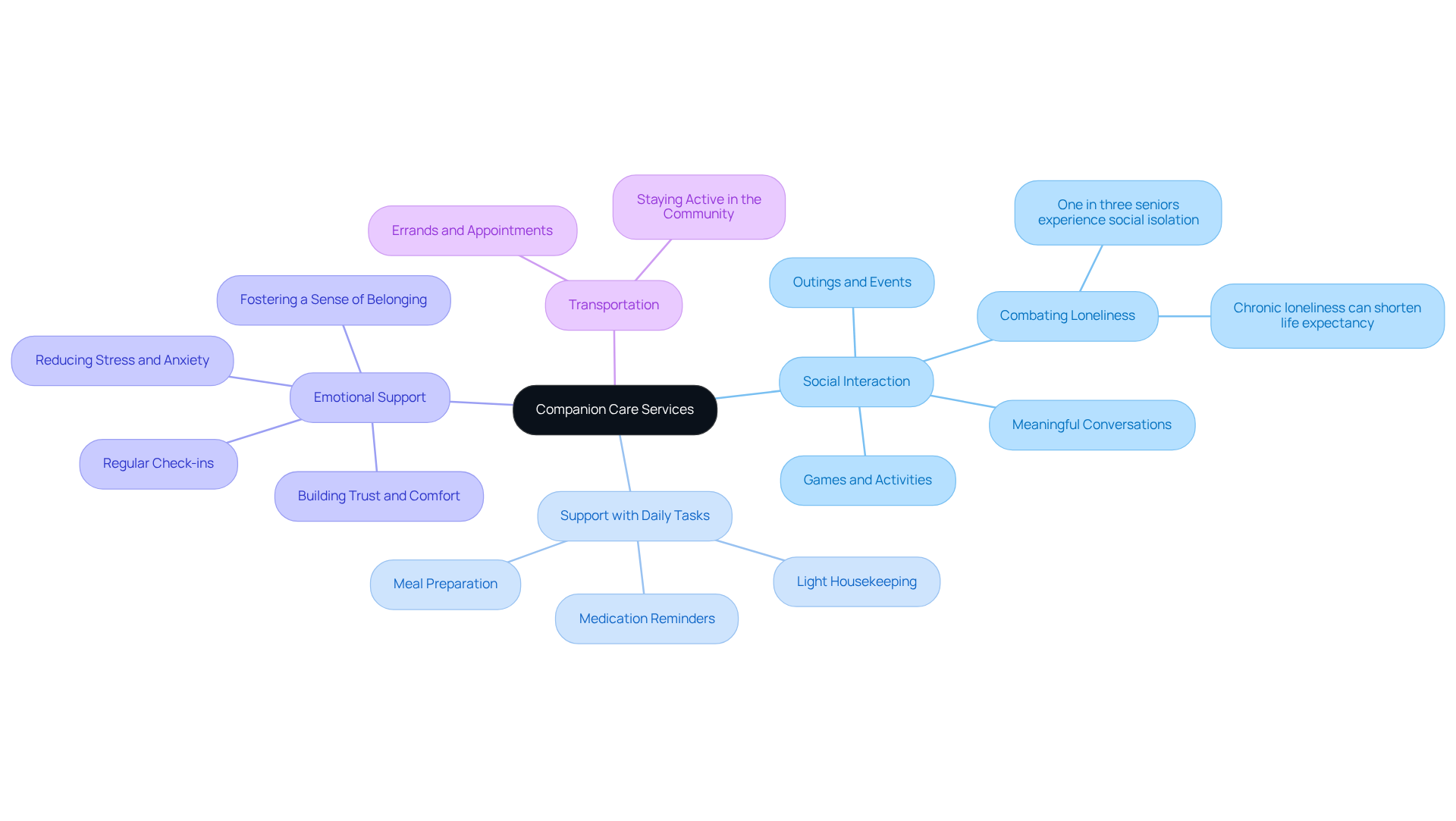
Companion care services offer vital non-medical assistance to those who need companion for elderly individuals, significantly enhancing their quality of life. These services touch on several key areas that truly matter:
- Social Interaction: Engaging in meaningful conversations, playing games, or simply accompanying seniors on outings can help ease feelings of loneliness. It’s heartbreaking to know that about one-third of older adults, who need a companion for elderly support, face social isolation, which can lead to serious mental health challenges like depression and anxiety. Chronic loneliness can even shorten life expectancy more than obesity or smoking, underscoring the need for companionship for elderly individuals to address this issue.
- Support with Daily Tasks: Caregivers step in to help with essential activities such as meal preparation, light housekeeping, and medication reminders. This support allows older adults to maintain their independence while receiving the assistance they need.
- Emotional Support: Companionship and understanding are crucial for enhancing mental well-being. Geriatric specialists highlight that regular emotional support fosters a sense of belonging and community, which is vital for the mental health of older adults. As one expert beautifully stated, "Utilizing elder support services like this enables them to feel part of a community once more."
- Transportation: Caregivers also assist older adults with errands or appointments, ensuring they stay active and connected to their community.
Understanding these services helps families recognize the specific assistance their loved ones may require, paving the way for a more tailored and effective support approach. The benefits of companionship highlight the need for a companion for elderly individuals, as they go beyond mere assistance and play a crucial role in enhancing seniors' emotional well-being and overall quality of life.
Moreover, families should consider the financial aspect, as the national median cost for companion assistance services is around $33 per hour in 2025, with rates typically ranging from $20 to $35 per hour. Additionally, some costs associated with companion assistance might be tax-deductible, providing extra financial relief for families.
Assess Your Loved One's Needs
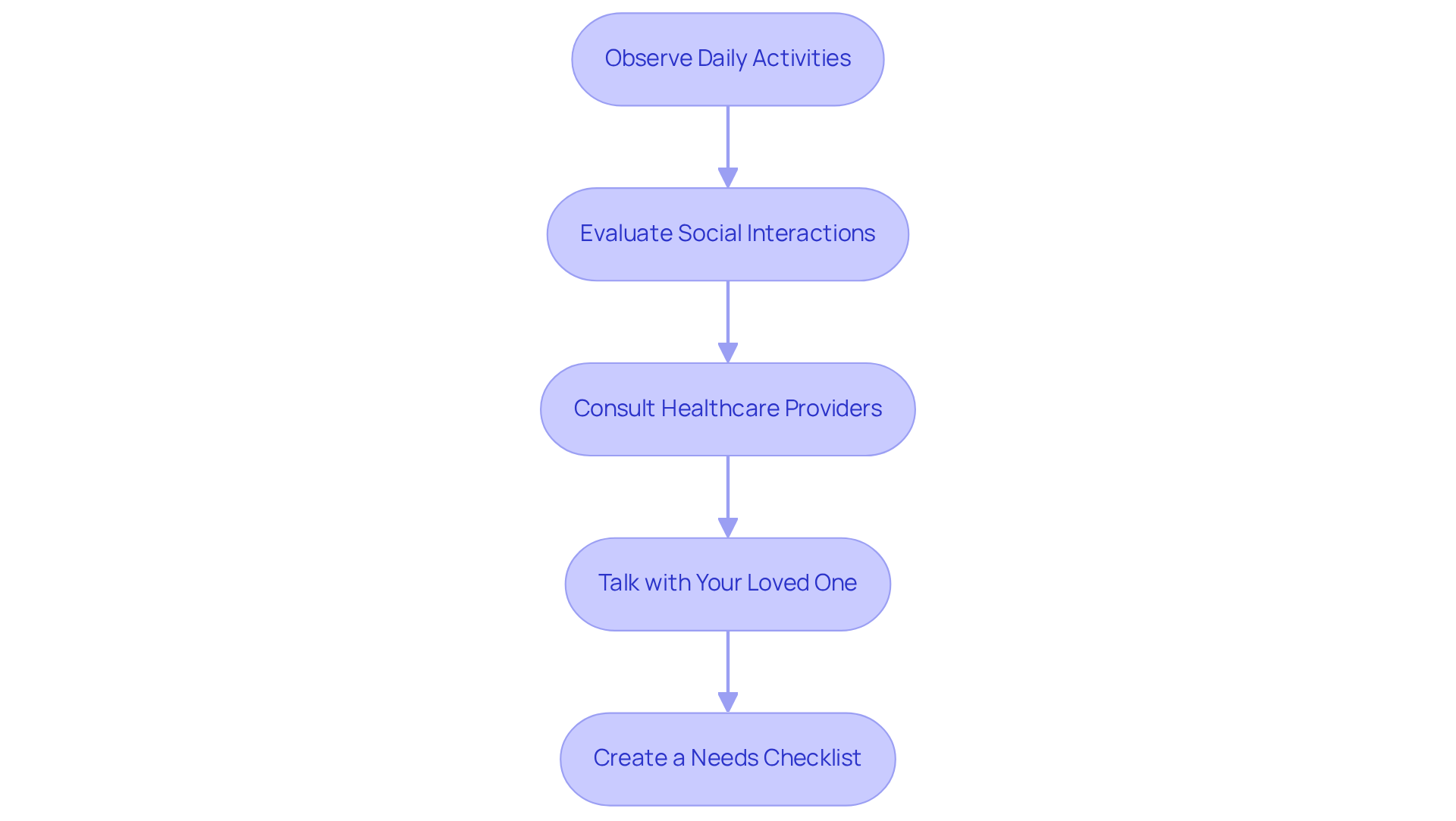
To effectively assess your loved one's needs, consider these caring steps:
-
Observe Daily Activities: Take a moment to notice how your loved one manages daily tasks. Are they having difficulty with cooking, cleaning, or personal hygiene? Changes in these areas can signal a need for extra support. As Steve Barlam wisely notes, "So often, relatives go beyond the times that are optimal to initiate care due to the discomfort of addressing the difficult issues at hand."
-
Evaluate Social Interactions: Think about how often they connect with friends or family. Increased isolation can be a significant indicator of declining mental health. Studies show that social withdrawal is linked to cognitive decline and depression in seniors. Sherri Snelling highlights that social withdrawal could be an early sign of Alzheimer’s or mild cognitive decline.
-
Consult Healthcare Providers: Reach out to doctors or geriatric specialists who can offer insights into any medical conditions affecting their daily living. Regular check-ups can help identify issues early, allowing for timely interventions that can make a real difference.
-
Talk with Your Loved One: Have an open and heartfelt conversation about their feelings and preferences regarding companionship and support. This dialogue can empower them, helping to maintain their sense of control over their treatment decisions, especially for those who may need a companion for elderly.
-
Create a Needs Checklist: Document specific needs, preferences, and routines to guide the selection of an appropriate provider. This checklist can serve as a valuable tool, ensuring that the chosen companion aligns with your loved one's lifestyle and requirements.
Additionally, stay vigilant for signs of potential abuse, such as unexplained bruises or withdrawal from social activities, as these may indicate neglect or exploitation. This thorough assessment will help ensure that the companion support selected is well-suited to enhance your loved one's quality of life, particularly for those who need companion for elderly, addressing both their physical and emotional needs.
Explore Hiring Options for Companion Care
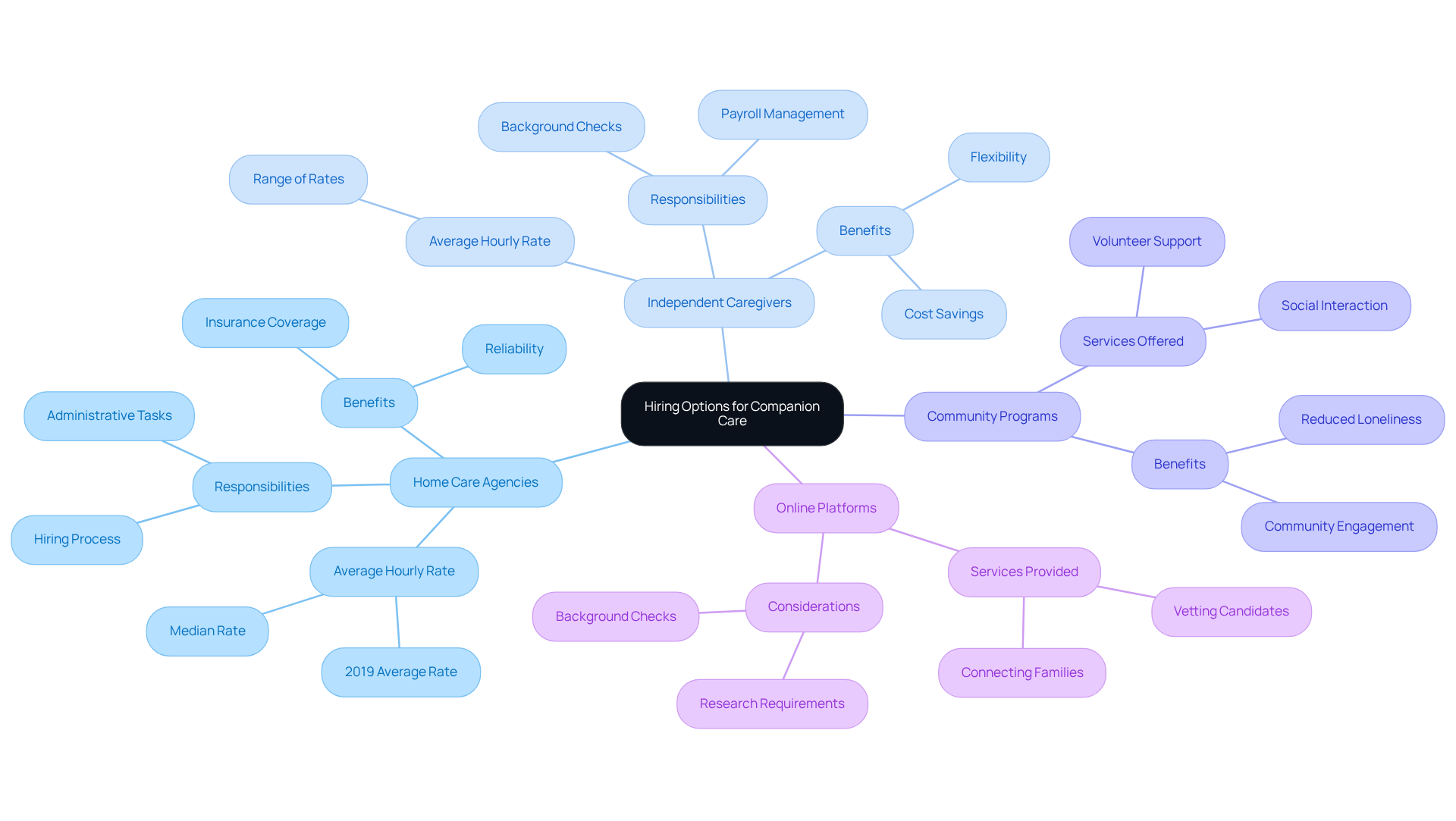
When it comes to companion care, families often find that they need a companion for elderly individuals, navigating a sea of options, each with its own set of emotional challenges. It’s important to consider what feels right for you and your loved ones.
-
Home Care Agencies can be a comforting choice. These agencies provide trained caregivers who have undergone standardized training and background checks, ensuring a level of reliability and professionalism that can ease your mind. They take care of administrative tasks like payroll and insurance, which can be a huge relief for families. With a median hourly rate of about $30, these agencies offer comprehensive services and ensure that assistance visits are covered, so you won’t be left without support if a caregiver is unavailable.
-
On the other hand, Independent Caregivers might appeal to those looking for a more cost-effective solution. With average hourly rates ranging from $15 to $17, hiring directly can save money. However, this option comes with the responsibility of conducting thorough background checks and verifying references. While it offers flexibility in scheduling, it also requires more oversight from families. It’s essential to consider whether you’re comfortable managing these tasks, as it can significantly impact your experience. Plus, be aware of potential legal risks, including the possibility of incurring legal fees if a caregiver makes accusations against you.
-
Community Programs can also be a wonderful resource. Local elder centers and non-profit organizations often provide volunteer services for those who need companion for elderly, helping to alleviate feelings of loneliness, which affect one in three seniors. These programs not only foster social interaction but also encourage community engagement, creating a sense of belonging.
-
Lastly, Online Platforms like Care.com connect families with a variety of providers. While this can open up many options, it’s crucial to vet candidates carefully to ensure they meet the necessary qualifications and experience. Take the time to conduct thorough research and ask questions about the provider’s background to make an informed decision.
Each of these options has its unique advantages and challenges. As you reflect on your priorities-financial considerations, desired flexibility, and the specific support needs of your loved ones-know that you’re not alone in this journey. It’s okay to seek help and take the time to find the right fit for your family.
Evaluate and Interview Potential Caregivers
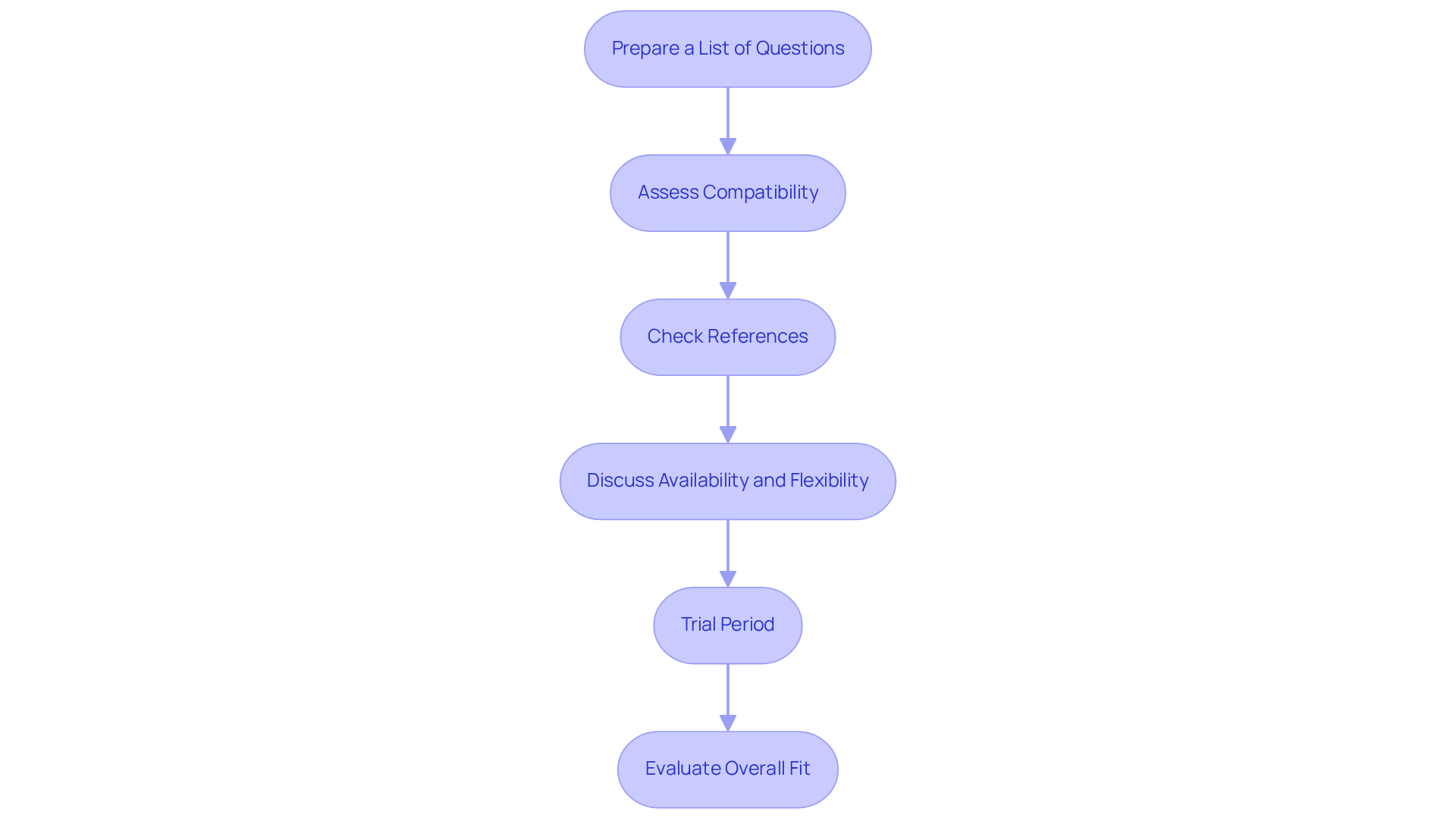
Evaluating and interviewing potential caregivers can be a daunting task, but if you need a companion for the elderly, the right approach can help you find someone who truly understands your loved one's needs. Here are some steps to help you through this process:
-
Prepare a List of Questions: Start by asking about their experience, training, and caregiving philosophy. Essential questions might include:
- What experience do you have with elderly care?
- How do you handle emergencies or challenging situations?
- Can you provide references from previous clients?
-
Assess Compatibility: Pay attention to how the caregiver interacts with your loved one. Look for signs of empathy, patience, and effective communication. Support professionals often emphasize that compatibility is key; caregivers who can connect with seniors, particularly those who need companion for elderly, tend to provide better assistance. Remember, effective interaction between caregivers and families is crucial for a smooth support experience.
-
Check References: Don’t hesitate to reach out to former employers or families. Gathering insights about the caregiver's reliability and quality of care can be invaluable. Their past experiences can reveal how well they adapt to different personalities and needs.
-
Discuss Availability and Flexibility: It’s important to ensure that the caregiver's schedule aligns with your loved one's needs. Discuss specific times when assistance may be required. Flexibility is vital; caregivers who can adjust their schedules often meet clients' needs more effectively.
-
Trial Period: If possible, arrange a trial phase to see how well the caregiver and your loved one connect. This real-world interaction allows both parties to assess compatibility, which is essential for building trust and comfort.
This thorough evaluation process not only helps ensure that the caregiver is qualified but also addresses the need companion for elderly, ensuring they are a good fit for your loved one's personality and specific needs. Studies have shown that the compatibility of caregivers significantly influences the quality of support and the overall well-being of seniors. Additionally, caregivers should keep detailed documentation of care activities, which is crucial for effective communication and care management.
Key Takeaways for Caregivers
Finding the right companion for an elderly loved one is so important for their well-being and happiness. Companion care services do more than just help with daily tasks; they provide emotional support and social interaction, which can truly enhance a senior's quality of life. Understanding the profound impact of companionship can empower families to make informed choices that prioritize their loved ones' emotional and physical needs.
Throughout this article, we’ve discussed key points, like:
- Assessing your loved one's specific needs
- Exploring various hiring options
- Evaluating potential caregivers
Observing daily activities, consulting healthcare providers, and having open conversations with the elderly individual are essential steps in grasping their requirements. Different care options - home care agencies, independent caregivers, community programs, and online platforms - each come with unique benefits and considerations that families should carefully weigh. Moreover, a thorough evaluation process for potential caregivers is crucial to ensure compatibility and trust, which are vital for successful caregiving.
Ultimately, finding the right companion for an elderly loved one goes beyond just meeting physical needs; it’s about fostering connection, enhancing independence, and combating loneliness. Families are encouraged to take the time to explore all available resources and options, ensuring their loved ones receive the care and companionship they truly deserve. By prioritizing these aspects, families can significantly improve the quality of life for seniors, making a meaningful difference in their daily experiences.
https://iframe.tely.ai/cta/eyJhcnRpY2xlX2lkIjogIjY5MWU1YWNiYzBkNDJlMTUwMDY1YWNkNyIsICJjb21wYW55X2lkIjogIjY4ZWU1ZGNhNzMxNzYyNTU3ZjNjOTVjMSIsICJpbmRleCI6IG51bGwsICJ0eXBlIjogImFydGljbGUifQ==Frequently Asked Questions
What are companion care services?
Companion care services provide vital non-medical assistance to elderly individuals, enhancing their quality of life through social interaction, support with daily tasks, emotional support, and transportation.
How do companion care services address social isolation in the elderly?
These services promote meaningful conversations, games, and outings, helping to alleviate feelings of loneliness, which affects about one-third of older adults and can lead to serious mental health issues like depression and anxiety.
What daily tasks can caregivers assist with?
Caregivers can help with essential activities such as meal preparation, light housekeeping, and medication reminders, allowing older adults to maintain their independence while receiving necessary assistance.
Why is emotional support important for elderly individuals?
Emotional support fosters a sense of belonging and community, which is crucial for the mental health of older adults, enhancing their overall well-being.
How do caregivers assist with transportation for elderly individuals?
Caregivers help older adults with errands and appointments, ensuring they remain active and connected to their community.
What is the average cost of companion care services?
The national median cost for companion assistance services is around $33 per hour in 2025, with rates typically ranging from $20 to $35 per hour.
Are there any financial benefits associated with companion care services?
Some costs related to companion assistance may be tax-deductible, providing additional financial relief for families.