Master VA Aid and Attendance Eligibility: A Caregiver's Guide

For families in our service areas
For families in our service areas, this guide explains va aid and attendance and how non-medical in-home caregiving can support care planning in East Idaho, Treasure Valley & Magic Valley, Northern Wasatch, North Central West Virginia, and Northeast Ohio.
Why Master VA Aid and Attendance Matters
Navigating the complexities of VA Aid and Attendance benefits presents a significant challenge for caregivers of former military personnel. This program is designed to provide essential financial support for veterans who need assistance with daily living. However, the intricate eligibility criteria and convoluted application process can leave caregivers feeling overwhelmed and uncertain.
The implications of these challenges are profound. Caregivers often struggle to advocate effectively for their loved ones, which can hinder veterans from receiving the support they desperately need to maintain their independence and quality of life. So, how can caregivers overcome these obstacles?
This guide offers practical strategies to help caregivers navigate the VA Aid and Attendance benefits process. By understanding the nuances of eligibility and application, caregivers can better advocate for their loved ones and ensure they receive the benefits they deserve.
Define VA Aid and Attendance Benefits
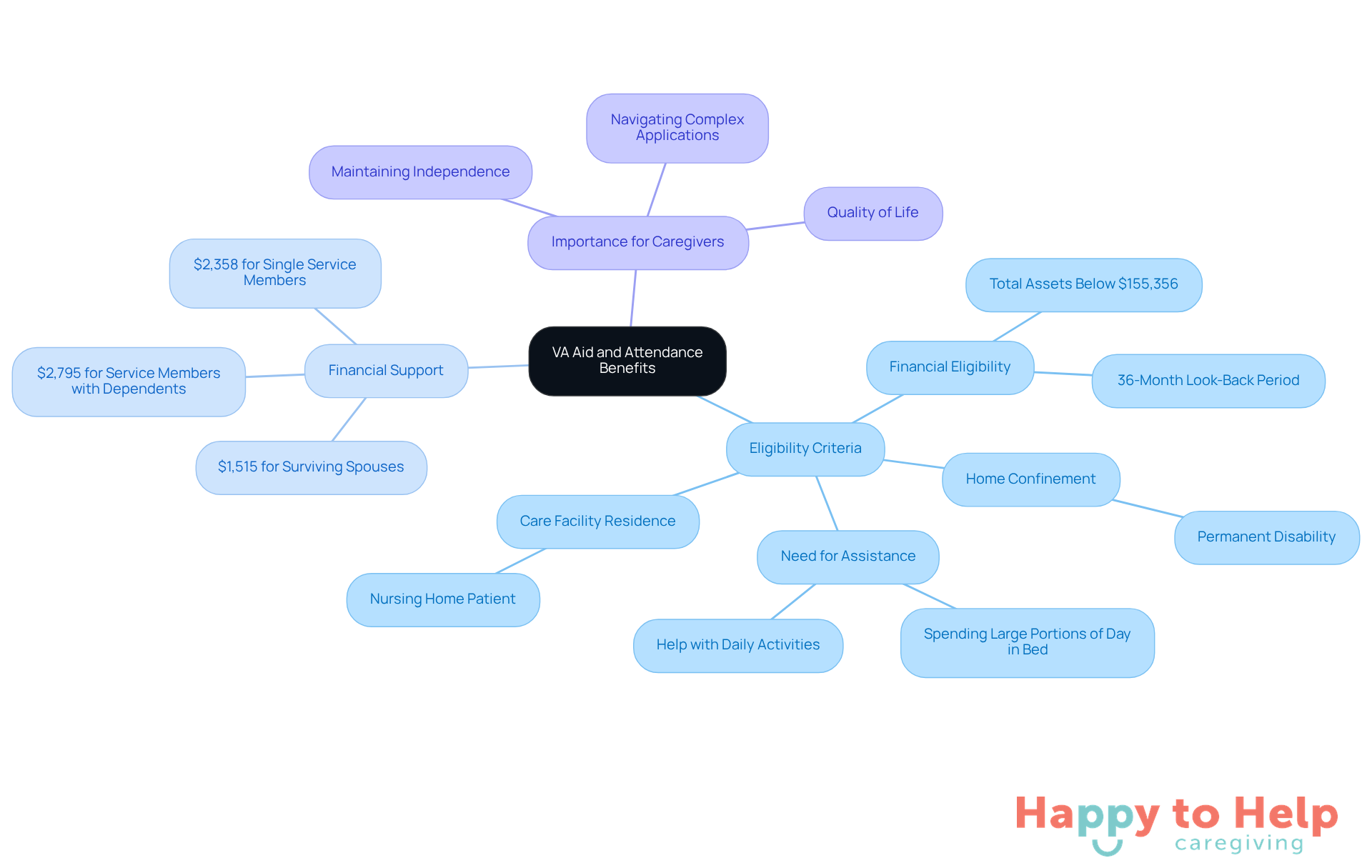
The VA Aid and Attendance eligibility provides crucial financial support for former military personnel and their surviving spouses who require assistance with daily living tasks. These benefits enhance the basic VA pension, specifically designed to help cover costs related to in-home care, assisted living, or nursing home care.
As of 2025, monthly payments range from $1,515 for surviving spouses to $2,795 for service members with dependents, and $2,358 for single service members. However, to achieve VA Aid and Attendance eligibility, former service members must demonstrate a need for help with daily tasks, be confined to their home due to a lasting disability, or reside in a care facility. Additionally, VA Aid and Attendance eligibility requires that financial eligibility mandates total assets and annual income to be below $155,356, along with a 36-month look-back period for asset transfers.
This financial aid is essential for caregivers, as it enables former service members to maintain their independence and quality of life while receiving necessary support. Recent updates to these benefits reflect a commitment to addressing the evolving needs of older service members, ensuring they have access to the resources required for a dignified living experience.
Understanding the nuances of these benefits, including the application process, is vital for caregivers. By effectively advocating for and assisting those in their care, caregivers can help navigate the complexities of these financial resources.
Outline Eligibility Requirements for Aid and Attendance
To qualify for VA Aid and Attendance benefits, applicants face several essential criteria that can be challenging to navigate:
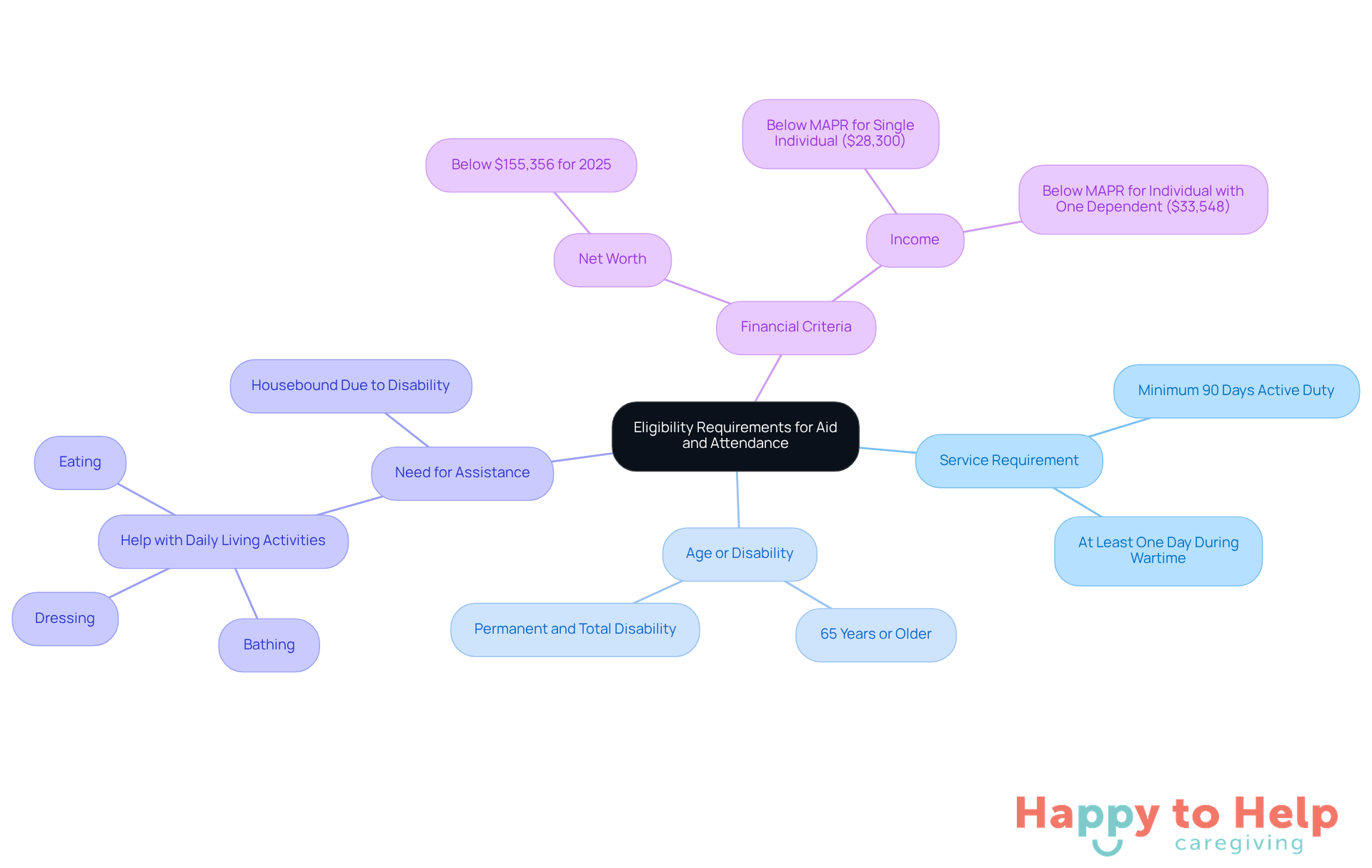
- Service Requirement: The former service member must have served a minimum of 90 days of active duty, with at least one day during a wartime period.
- Age or Disability: Applicants must be 65 years or older or have a permanent and total disability.
- Need for Assistance: The former service member must require help with daily living activities, such as bathing, dressing, or eating, or be housebound due to a disability.
- Financial Criteria: The individual's net worth must be below $155,356 for 2025, which allows more individuals to qualify for benefits, and their income must fall below the Maximum Annual Pension Rate (MAPR), set at $28,300 annually for a single individual and $33,548 for an individual with one dependent.
Understanding these requirements is crucial for caregivers assessing eligibility and preparing for the application process. Recent updates show that a significant percentage of veterans now meet these criteria, highlighting the ongoing need for financial support among aging veterans.
Navigating these requirements can be complex, but there is help available. VA-accredited advisors can guide families through the process, ensuring that they understand each step and can effectively advocate for the benefits their loved ones deserve.
Explain the Application Process for Aid and Attendance
Applying for VA Aid and Attendance benefits can be a daunting task for caregivers, often filled with complexities that can lead to confusion and delays. Without a clear understanding of the necessary steps, caregivers may struggle to secure the assistance their loved ones need.
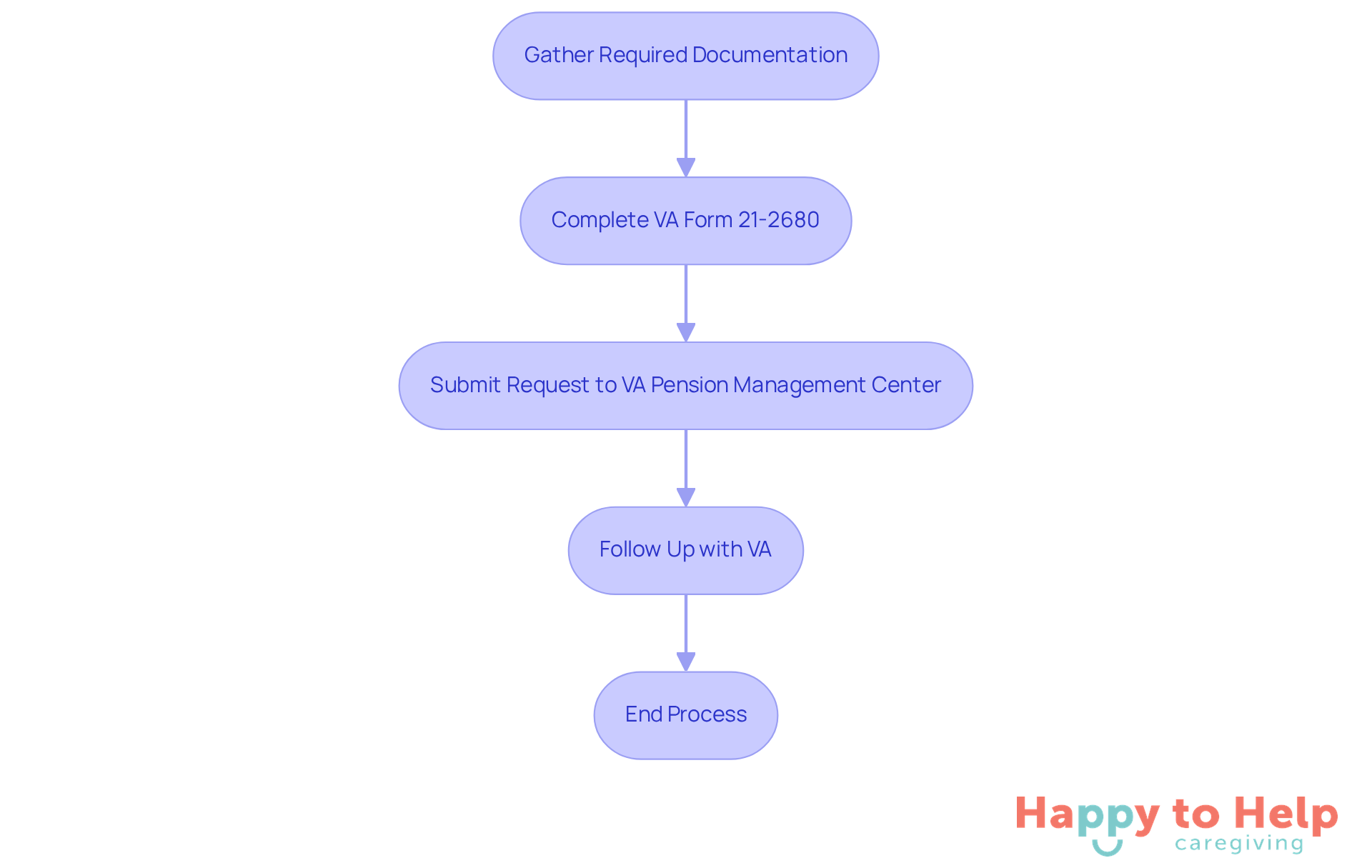
To navigate this process effectively, caregivers must first gather required documentation. This includes crucial documents such as:
- Proof of military service (DD-214)
- Medical records confirming the need for assistance
- Financial statements detailing income and assets
These documents are vital for establishing eligibility. As noted by AVCC, "When you utilize our assistance with the Aid & Attendance benefit’s submission process, you can feel more assured that your request will be accepted."
Next, it's essential to complete VA Form 21-2680. This form, titled 'Examination for Housebound Status or Permanent Need for Regular Aid and Attendance,' must be filled out by a physician. It serves to verify the applicant's need for assistance with daily living activities, a key requirement for eligibility.
Once all forms and supporting documents are prepared, caregivers should submit the request. Mail the completed request to the appropriate VA Pension Management Center based on the applicant's state. Ensuring that all paperwork is accurate and complete can help prevent delays in processing. The VA typically takes between 12 to 18 months to review requests, making timely submission crucial.
After submission, caregivers must follow up with the VA to verify the status of the request. This proactive approach enables support providers to respond swiftly to any requests for further information, which can significantly influence the approval timeline.
Understanding these steps is crucial for caregivers, as it not only streamlines the application process for VA Aid and Attendance eligibility but also increases the chances of obtaining prompt assistance, thereby alleviating financial pressures related to caregiving. Additionally, caregivers should be aware that the net worth limit for VA Aid and Attendance eligibility as of 2025 is $159,240, an important financial criterion to consider.
Identify Common Challenges in the Application Process
Caregivers often face significant challenges when applying for VA aid and attendance eligibility, which complicates the process of securing necessary support for their loved ones. Here are some key issues:
-
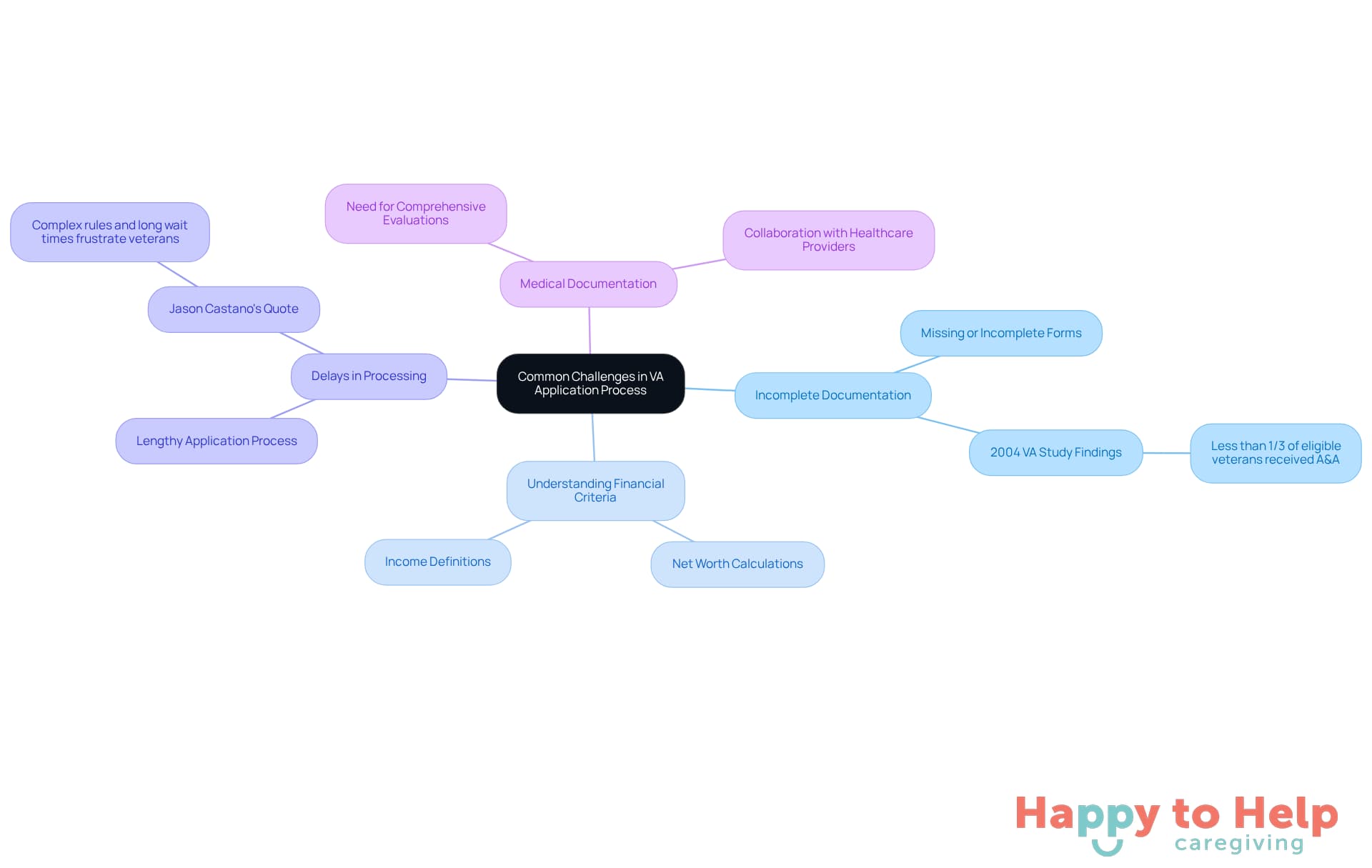
Incomplete Documentation: A primary reason for rejection is missing or incomplete documentation. A 2004 VA study estimated that less than 1/3 of Veterans who received a pension and were potentially eligible for VA aid and attendance eligibility actually received it. Caregivers must ensure that all required forms are accurately filled out and that all necessary documents are included. This emphasizes the significance of thoroughness in the submission process.
-
Understanding Financial Criteria: Many caregivers struggle with the financial eligibility requirements, particularly regarding net worth calculations. It's crucial to have a clear comprehension of what defines income and assets to avoid pitfalls in the process.
-
Delays in Processing: The VA procedure can be lengthy, often extending over several months. Caregivers should be prepared for potential delays and maintain proactive communication with the VA to stay updated on their application status. As Jason Castano, Esq. noted, "Complex rules, extensive paperwork, and long wait times leave many veterans frustrated and discouraged."
-
Medical Documentation: It is crucial that medical documentation clearly supports the need for assistance. Caregivers should collaborate closely with healthcare providers to obtain comprehensive evaluations that substantiate their claims.
To navigate these challenges effectively, caregivers can take several actionable steps. For instance, one provider reported overcoming initial documentation issues by meticulously organizing all required paperwork and seeking guidance from a legal advocate specializing in VA claims. By being aware of these common challenges, caregivers can better advocate for their loved ones and enhance their chances of a successful application.
Making the Right Choice
Navigating the VA Aid and Attendance benefits poses a significant challenge for caregivers supporting veterans and their surviving spouses. This financial assistance is crucial for alleviating the burdens of daily living tasks, allowing those who have served their country to receive the care they need. Without a clear understanding of eligibility requirements and the application process, caregivers may struggle to effectively advocate for their loved ones.
The key criteria for eligibility include:
- Service requirements
- Financial thresholds
- The need for assistance with daily activities
Caregivers must be aware of these factors to avoid common pitfalls that can lead to delays or denials. Accurate documentation and proactive communication with the VA are essential steps in the application process. By being informed, caregivers can significantly enhance their chances of securing the benefits that veterans deserve.
The significance of VA Aid and Attendance benefits cannot be overstated. They provide vital support that enables veterans to maintain independence while receiving necessary care. Caregivers are encouraged to take action by:
- Familiarizing themselves with the application process
- Seeking assistance when needed
- Remaining diligent in their efforts
By doing so, they can ensure that veterans receive the financial support they need to live with dignity and comfort.
https://iframe.tely.ai/cta/eyJhcnRpY2xlX2lkIjogIjY5NDBhMjBhMjI1ZjA3N2M1ZmMwYmYyOCIsICJjb21wYW55X2lkIjogIjY4ZWU1ZGNhNzMxNzYyNTU3ZjNjOTVjMSIsICJpbmRleCI6IG51bGwsICJ0eXBlIjogImFydGljbGUifQ==Frequently Asked Questions
What are VA Aid and Attendance Benefits?
VA Aid and Attendance Benefits provide financial support for former military personnel and their surviving spouses who need assistance with daily living tasks. These benefits enhance the basic VA pension to help cover costs related to in-home care, assisted living, or nursing home care.
What are the monthly payment amounts for VA Aid and Attendance Benefits as of 2025?
As of 2025, monthly payments range from $1,515 for surviving spouses to $2,795 for service members with dependents, and $2,358 for single service members.
What are the eligibility requirements for VA Aid and Attendance Benefits?
To be eligible for VA Aid and Attendance Benefits, former service members must demonstrate a need for help with daily tasks, be confined to their home due to a lasting disability, or reside in a care facility. Additionally, total assets and annual income must be below $155,356, and there is a 36-month look-back period for asset transfers.
How do VA Aid and Attendance Benefits assist caregivers?
These benefits are essential for caregivers as they enable former service members to maintain their independence and quality of life while receiving necessary support.
Why is it important to understand the application process for VA Aid and Attendance Benefits?
Understanding the application process is vital for caregivers so they can effectively advocate for and assist those in their care, helping them navigate the complexities of these financial resources.
List of Sources
- Define VA Aid and Attendance Benefits
- VA Benefits 2025: What Every Veteran Family Should Know | Operation Family Fund (https://operationfamilyfund.org/va-benefits-2025-update-what-every-veteran-family-should-know)
- New 2025 Updates to Veterans Benefits for Assisted Living (https://floridaseniorconsulting.com/updated-veterans-aid-and-attendance-benefits-for-assisted-living)
- 2025 Aid and Attendance Fact Sheet - Cona Elder Law (https://conaelderlaw.com/practice/veterans-benefits/2018-aid-and-attendance-fact-sheet)
- VA Aid and Attendance benefits and Housebound allowance | Veterans Affairs (https://va.gov/pension/aid-attendance-housebound)
- Outline Eligibility Requirements for Aid and Attendance
- New 2025 Updates to Veterans Benefits for Assisted Living (https://floridaseniorconsulting.com/updated-veterans-aid-and-attendance-benefits-for-assisted-living)
- VA Aid & Attendance Benefits [2025 Rates] | Mesothelioma Guide (https://mesotheliomaguide.com/veterans/va-benefits/va-aid-attendance-benefits)
- VA extends caregiver support program eligibility for “legacy” Veterans, caregivers (https://news.va.gov/press-room/va-extends-caregiver-support-program-eligibility-for-legacy-veterans-caregivers)
- Current pension rates for Veterans | Veterans Affairs (https://va.gov/pension/veterans-pension-rates)
- Explain the Application Process for Aid and Attendance
- VA eliminates Veteran family health care backlog (https://news.va.gov/press-room/va-eliminates-veteran-family-health-care-backlog)
- How Long Does the Aid & Attendance Application Process Take? (https://avcchomecare.com/aid-attendance-application-process-length)
- Navigating Veterans Benefits: Your Guide to Aid and Attendance Options (https://mortonelderlaw.com/top-veterans-benefits-aid-and-attendance-eligibility-and-details)
- Understanding Aid and Attendance Eligibility for Veterans' Benefits - Happy To Help (https://happytohelpcaregiving.com/understanding-aid-and-attendance-eligibility-for-veterans-benefits)
- What to Know About Applying for the VA Aid & Attendance Benefit | The Herrick House (https://theherrickhouse.org/news-stories/all-news-stories/stories/2025/01/apply-va-aid-attendance-benefit)
- Identify Common Challenges in the Application Process
- Top 8 Obstacles to Collecting VA Benefits - Veterans Disability Info (https://veteransdisabilityinfo.com/blog/top-8-obstacles-to-collecting-va-benefits)
- Inequities in access to VA’S aid and attendance enhanced pension benefit to help Veterans pay for long‐term care - PMC (https://pmc.ncbi.nlm.nih.gov/articles/PMC8143693)
- Legion urges reduction of overdevelopment of VA claims, improvements in timeliness, accuracy (https://legion.org/information-center/news/veterans-benefits/2025/april/legion-urges-reduction-of-overdevelopment-of-va-claims-improvements-in-timeliness-accuracy)
- VA Outperforms Wait Times Compared to Community Care – Publication Brief (https://hsrd.research.va.gov/research/citations/pubbriefs/articles.cfm?RecordID=1183)
- Why VA Claims Are Still Slow in 2025—and What You Can Do About It - VA Disability Claim Assistance - Warrior Allegiance (https://warriorallegiance.com/why-va-claims-are-still-slow-in-2025-and-what-you-can-do-about-it)