Before Graduation: Map a Mentor Young Adult's Support Teams
Reviewed by Tyree Powell, Marketing on .
For families in Mentor
For families in Mentor, Northeast Ohio: use the resources and practical steps in this guide to plan wanted nonmedical help. Confirm individual requirements and current availability with the responsible provider.
With the young adult involved, identify the school, family, vocational, DD and transport contacts that actually participate. Lake County's Transition SSA materials support school collaboration and adult-service links for eligible students, but a contact list is not a funded adult plan.
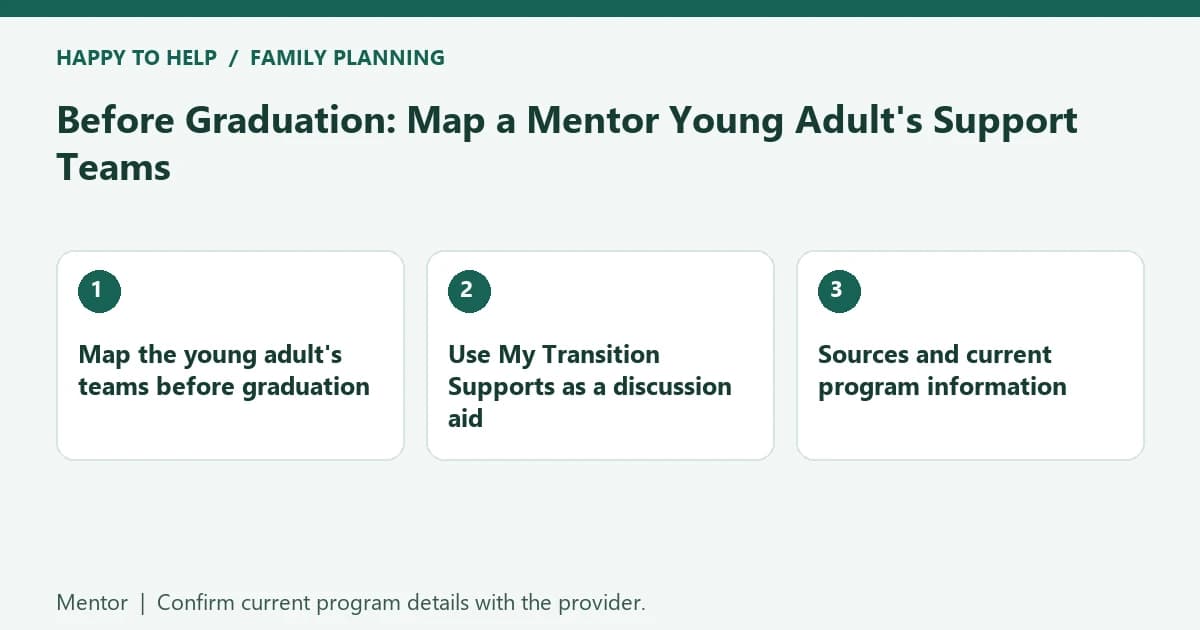
Map the young adult's teams before graduation
Use the current transition information to discuss anticipated graduation and each team's responsibilities. Ask which tasks end with school, which continue and which require another decision. Confirm actual provider and transport arrangements rather than assuming school support follows the student home. Preserve the young adult's goals and chosen involvement, and revisit the map as plans change. A referral does not reserve every service on the list.
Use My Transition Supports as a discussion aid
Lake County's current materials describe Transition SSA collaboration for eligible students ages fourteen through twenty-two. The My Transition Supports form includes anticipated graduation and contacts across family, school, vocational supports, OOD, the DD board and transportation. Use it to ask each actual team what it has committed to and what decision remains pending. Completing the planning form is not an IEP amendment, consent or waiver entitlement. The young adult should be able to see which supports are real, which are proposed and whom they want involved as the transition develops.
For ordinary help at home, explore care in Mentor and contact the Northeast Ohio team. Describe the tasks the person wants help with and the arrangements already confirmed. Ask about the actual service scope and availability before relying on a care schedule.