Supporting an Adult’s Everyday Choices When Safety Worries Arise
Reviewed by Tyree Powell, Marketing on .
For families in Ogden
For families in Ogden, Northern Wasatch: use the resources and practical steps in this guide to plan wanted nonmedical help. Confirm individual requirements and current availability with the responsible provider.
Ask what the activity means to the adult and which help they want before compiling restrictions. Utah's person-centered tools can support discussion without turning ordinary choices into an application.
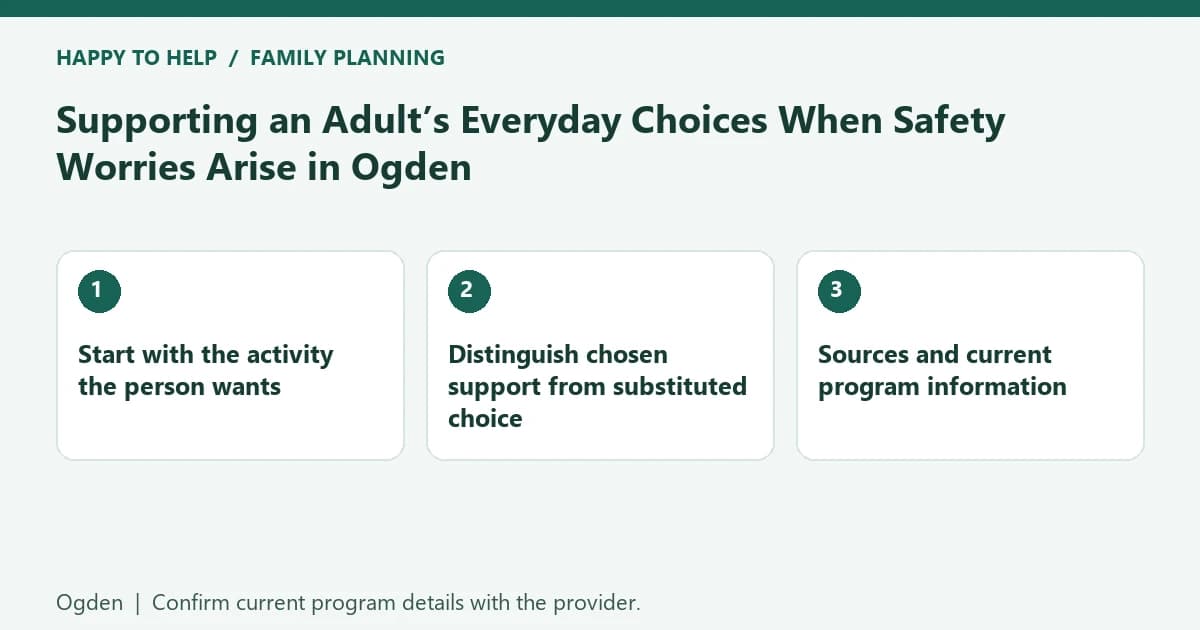
Start with the activity the person wants
Explore information needed for the decision, welcomed assistance and places supporters could step back. Someone may want help understanding or following through without surrendering the decision. Take specialized concerns to qualified people rather than equating diagnosis with incapacity. Agree realistic support and revisit the experience. Meaningful participation includes addressing actual concerns, without promising every choice is risk-free.
Distinguish chosen support from substituted choice
The linked decision-support tools distinguish choices the person wants to make without added assistance, with selected help or with another person involved. Wanting help matters alongside ability. For a specific activity, ask whether the adult wants information, help communicating a decision or assistance following through. Support could come from trusted people, technology, community resources or paid services, but only actual accepted arrangements should enter the plan. A risk conversation should not erase the activity's value or convert a worksheet into a capacity finding.
For ordinary help at home, explore care in Ogden and contact the Northern Wasatch team. Describe the tasks the person wants help with and the arrangements already confirmed. Ask about the actual service scope and availability before relying on a care schedule.