Understanding Hourly Rates for Elderly Home Care Services

For families in our service areas
For families in our service areas, this guide explains home care and how non-medical in-home caregiving can support care planning in East Idaho, Treasure Valley & Magic Valley, Northern Wasatch, North Central West Virginia, and Northeast Ohio.
Understanding Hourly Rates for Elderly Home Care
Understanding the complexities of elderly home care services is increasingly vital as our population ages. Nearly half of seniors require assistance with daily activities, creating a significant demand for effective and affordable support systems. This situation poses a challenge for families trying to ensure their loved ones receive the best care without incurring overwhelming costs.
As families navigate this intricate landscape, they face the pressing question: how can they secure quality care while managing expenses? The financial implications can be daunting, but there are actionable steps caregivers can take to find the right balance. By exploring hourly rates for elderly home care, families can gain insight into what they might expect to pay and the factors that influence these costs.
To help families make informed decisions, it’s essential to understand the nuances of care options available. By doing so, they can ensure their loved ones receive the necessary support without breaking the bank.
Defining Elderly Home Care: Services and Support
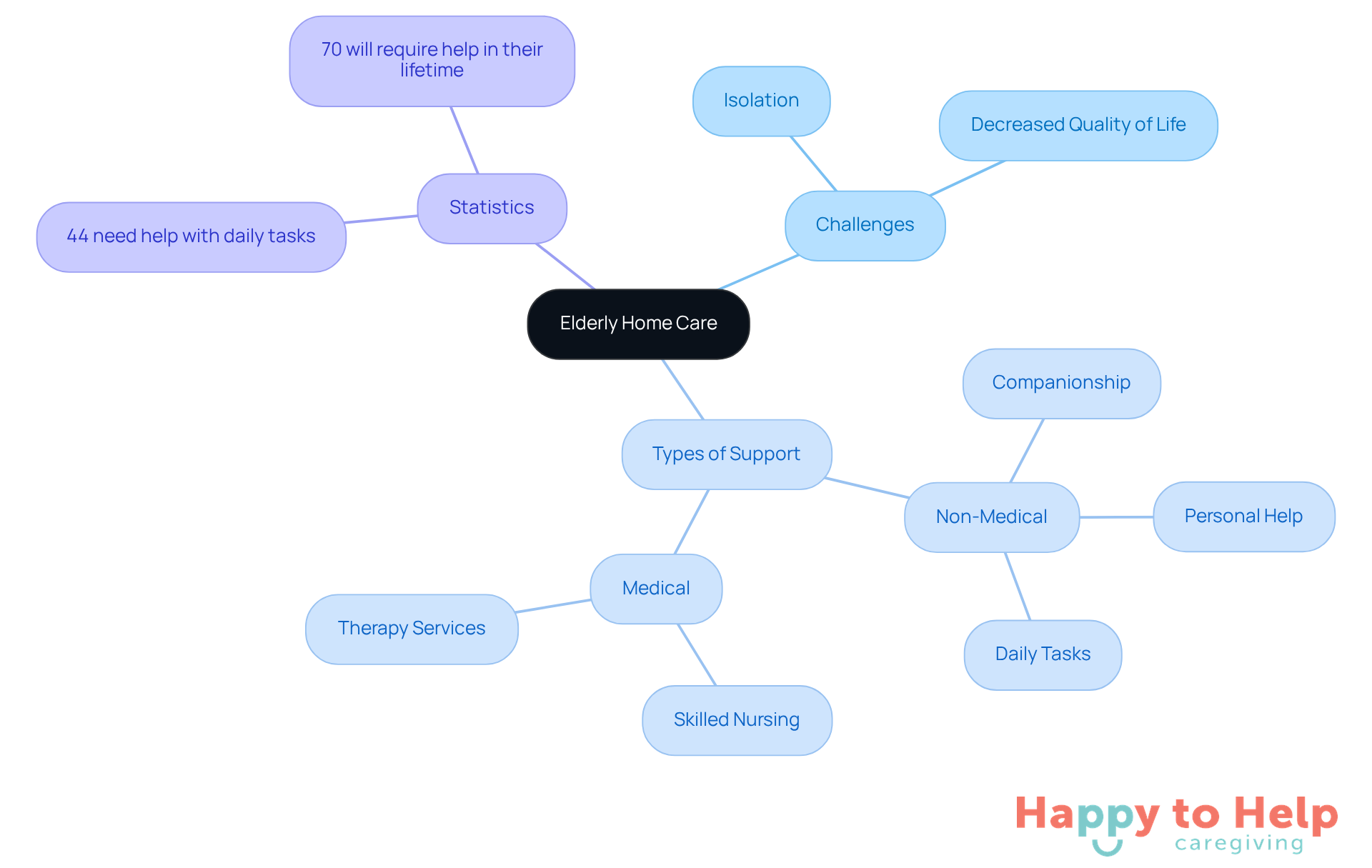
Elderly individuals often face significant challenges as they strive to maintain their independence. Many require assistance with daily activities, which can lead to feelings of isolation and decreased quality of life. Statistics reveal that around 44% of seniors receiving domestic support need help with at least one daily task, with 83% specifically struggling with bathing and showering. This highlights a pressing problem: the need for effective support systems that cater to the unique needs of the elderly.
The implications of inadequate support are profound. Without proper assistance, seniors may experience not only physical difficulties but also emotional distress, exacerbating feelings of loneliness. This is where understanding the hourly rate for elderly home care becomes crucial. By providing tailored support, caregivers can help seniors age gracefully in the comfort of their own homes.
Fortunately, there are various solutions available. Elderly home assistance can be categorized into two main types: non-medical and medical support, which can affect the hourly rate for elderly home care. Non-medical assistance includes:
- Companionship
- Personal help
- Aid with daily tasks like meal preparation and medication reminders
On the other hand, medical support encompasses:
- Skilled nursing
- Therapy services tailored to individual health needs
Effective programs that integrate both types of support have shown considerable benefits. Research indicates that such comprehensive assistance improves overall health outcomes and enhances the quality of life for seniors. Geriatric support experts emphasize the importance of at-home assistance, allowing seniors to remain in their residences while receiving essential help.
As the elderly population continues to grow, the demand for support options, including the hourly rate for elderly home care, is expected to rise significantly. Projections suggest that by 2025, there will be a considerable increase in the need for caregiver assistance, with approximately 70% of seniors requiring some form of help during their lifetime. This underscores the importance of home support services and the necessity for families to understand the full range of available options.
Hourly Rates for Elderly Home Care: A State-by-State Overview
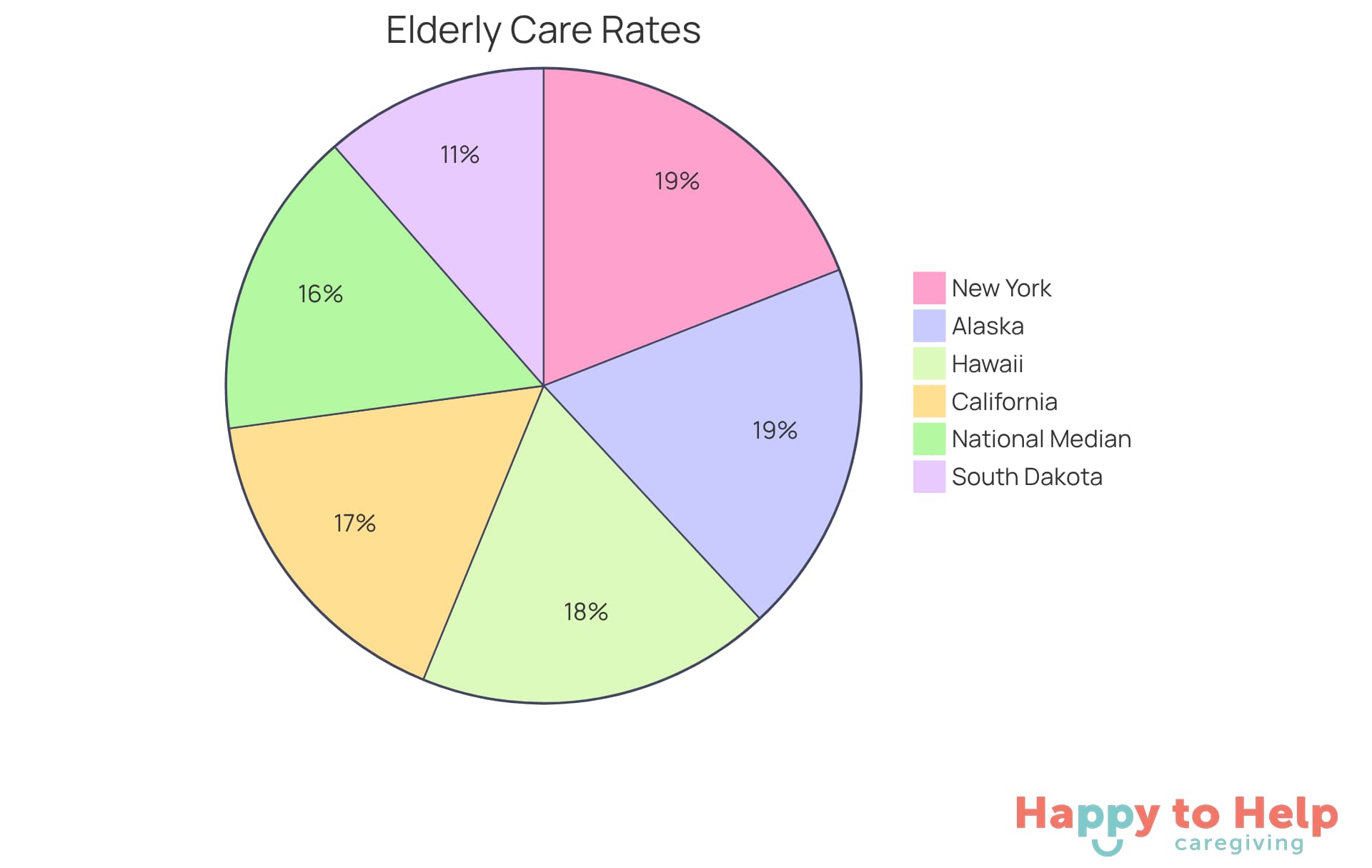
In 2025, families face a significant challenge: the national median hourly rate for elderly home care is around $33, with state rates ranging from $24 to $43. This variation can create confusion, especially when states like California report a median hourly rate for elderly home care of about $35, while others, like South Dakota, may offer lower hourly rates for elderly home care. Urban areas, particularly New York and California, often see even higher costs due to increased demand and living expenses.
The implications of these rising costs are profound. Families managing the financial aspects of care for their loved ones must be aware that expenses for 40-hour weekly assistance are projected to soar from approximately $6,620 per month in 2025 to over $10,000 by 2040. This highlights the long-term financial consequences that families will face.
To navigate this complex landscape, families can utilize resources such as state-by-state manuals. These tools can assist in evaluating expenses and making informed decisions about the type of assistance required. Additionally, factors like caregiver qualifications, the complexity of support needed, and local demand significantly influence the hourly rate for elderly home care, further complicating the financial environment of in-home assistance. By understanding these elements, families can better prepare for the future.
Key Factors Affecting Elderly Home Care Costs
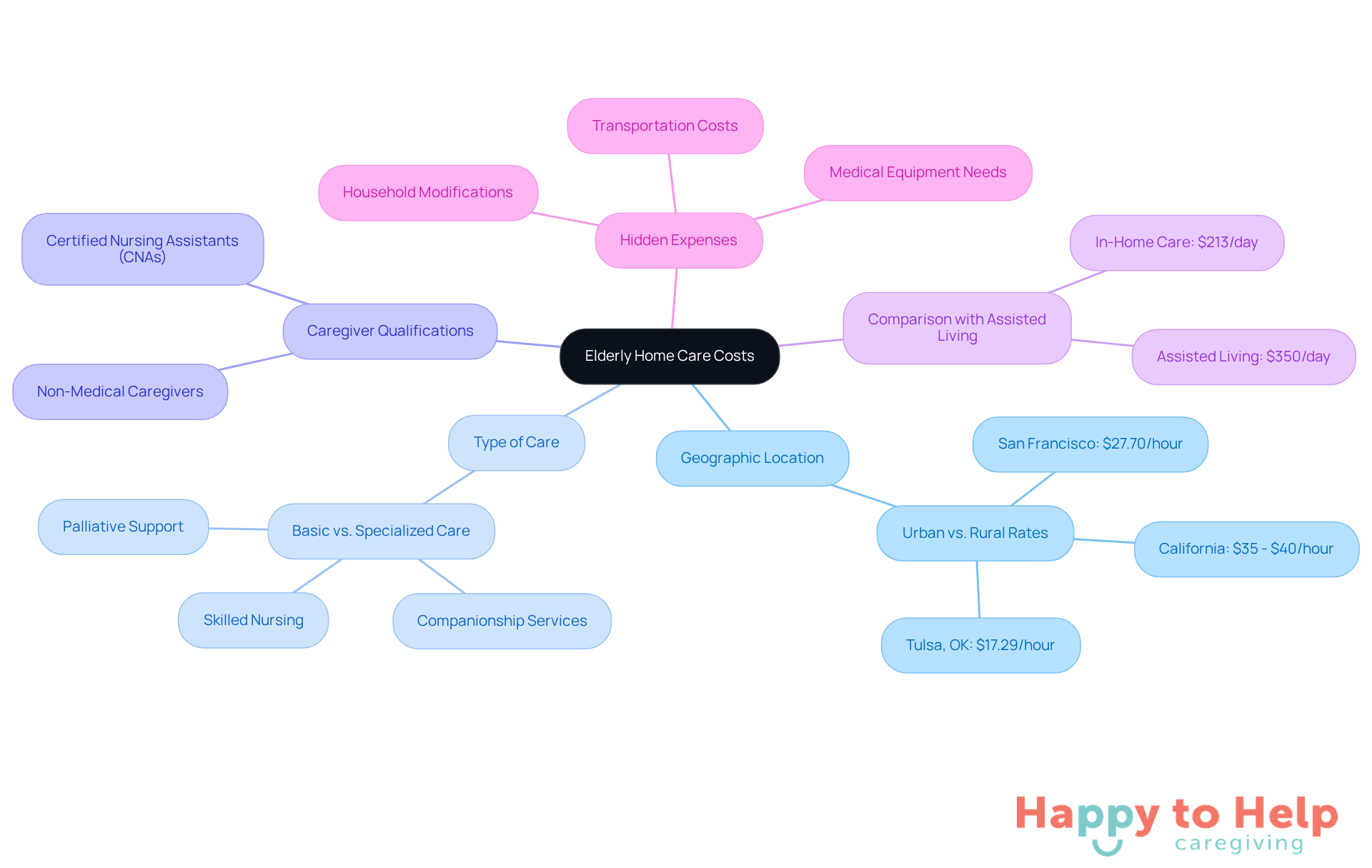
The hourly rate for elderly home care presents a significant challenge for families due to the expense of senior home support services. Geographic location plays a crucial role, with urban areas typically facing higher rates due to increased demand and a greater cost of living. For instance, in California, the median hourly wage for non-medical in-home assistance is about $35 in 2025, while rates can soar to $40 per hour in major cities like Los Angeles and San Francisco. In contrast, rural regions may offer more affordable options, with rates as low as $17.29 per hour in places like Tulsa, Oklahoma.
The type of care required also impacts pricing. Basic companionship services generally cost less than specialized assistance, such as skilled nursing or palliative support, which often demand higher fees due to the advanced qualifications needed. Caregiver qualifications are essential in determining rates; for example, certified nursing assistants (CNAs) typically charge more than non-medical caregivers because of their specialized training and expertise.
Understanding these geographic and qualification-based pricing variations is vital for families preparing for in-home assistance, particularly the hourly rate for elderly home care. As one specialist emphasizes, "It is preferable to obtain accurate estimates from various agencies depending on the assistance required and evaluate them for improved planning." Families should also explore financial assistance options, such as Medicare and Medicaid, which may cover certain services. This approach enables families to make informed choices that align with their financial capabilities while ensuring their loved ones receive the appropriate level of support.
Moreover, it's important to note that residential assistance is usually less expensive than assisted living, with daily costs of $213 for health aides compared to $350 for nursing facilities. Families should remain vigilant about potential hidden expenses related to in-home support, such as household modifications and medical equipment needs, to ensure comprehensive financial planning.
The Importance of Personalized Care Plans
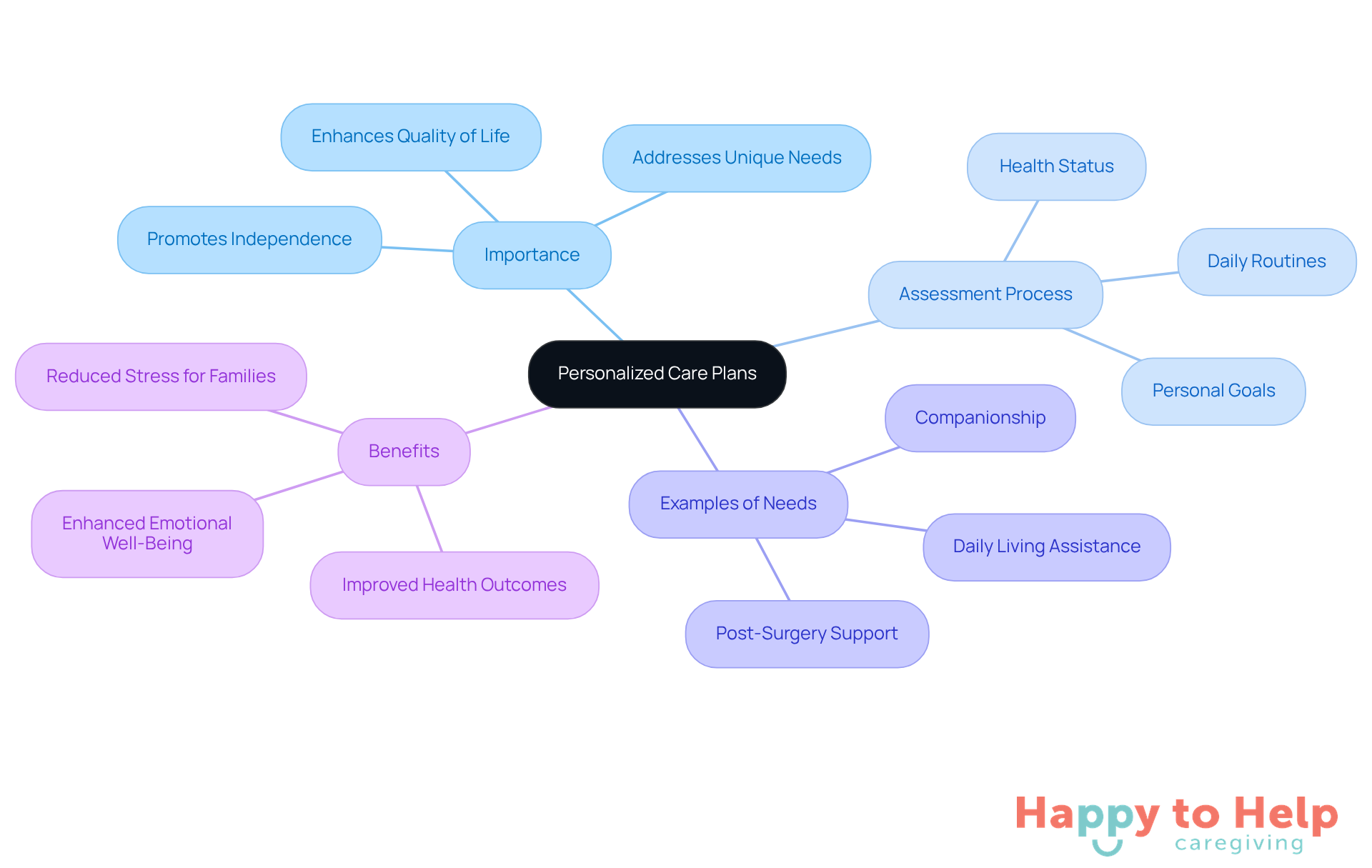
Customized support plans address a significant problem in senior home assistance: the risk of services not meeting the unique needs of each client. Without these tailored plans, seniors may not receive the appropriate care, leading to feelings of insecurity and discomfort.
These plans are crafted through thorough assessments that take into account an individual's health status, daily routines, and personal goals. For example, a senior recovering from surgery might need more intensive support initially, while another individual may primarily seek companionship and help with daily activities.
By focusing on personalized care, agencies like Happy to Help Caregiving provide a solution that fosters a sense of security and comfort. This approach not only enhances the quality of life for clients but also ensures that caregivers can deliver the most effective support possible.
Taking the Next Steps
Understanding the complexities surrounding hourly rates for elderly home care services is essential for families seeking to provide the best support for their loved ones. The critical need for effective home care solutions is underscored as the elderly population continues to grow, highlighting the importance of both medical and non-medical assistance tailored to individual needs. By grasping the nuances of hourly rates and the factors that influence them, families can make informed decisions that greatly impact the quality of care received.
Problem: Significant variations in hourly rates across different states can create confusion for families. Geographic location, caregiver qualifications, and the type of care required all play a role in these discrepancies. With the national median hourly rate projected to rise, families must consider not only immediate costs but also the long-term financial implications of in-home support.
Agitate: This complexity can lead to families feeling overwhelmed and uncertain about how to best support their loved ones. Without a clear understanding of the costs involved, families may struggle to find the right balance between quality care and affordability.
Solution: Personalized care plans emerge as a vital component, ensuring that services are specifically designed to meet the unique needs of each senior, ultimately enhancing their quality of life. As the demand for elderly home care services escalates, proactive planning becomes crucial. Families should explore all available resources, including state-by-state comparisons and financial assistance options, to navigate the complexities of this evolving landscape. By prioritizing understanding and preparation, families can ensure their loved ones receive the compassionate and effective care they deserve, allowing seniors to age gracefully in the comfort of their homes.
https://iframe.tely.ai/cta/eyJhcnRpY2xlX2lkIjogIjY5Mjc5NTFmMjI0NDc2YzA3YjhmODlkMSIsICJjb21wYW55X2lkIjogIjY4ZWU1ZGNhNzMxNzYyNTU3ZjNjOTVjMSIsICJpbmRleCI6IG51bGwsICJ0eXBlIjogImFydGljbGUifQ==Frequently Asked Questions
What challenges do elderly individuals face in maintaining their independence?
Elderly individuals often face challenges such as the need for assistance with daily activities, which can lead to feelings of isolation and decreased quality of life.
What percentage of seniors receiving domestic support need help with daily tasks?
Approximately 44% of seniors receiving domestic support need help with at least one daily task.
What specific daily task do 83% of seniors struggle with?
About 83% of seniors struggle with bathing and showering.
What are the two main types of elderly home care support?
The two main types of elderly home care support are non-medical assistance and medical support.
What services are included in non-medical assistance?
Non-medical assistance includes companionship, personal help, and aid with daily tasks such as meal preparation and medication reminders.
What does medical support encompass in elderly home care?
Medical support encompasses skilled nursing and therapy services tailored to individual health needs.
How do comprehensive support programs benefit seniors?
Comprehensive support programs that integrate both non-medical and medical assistance improve overall health outcomes and enhance the quality of life for seniors.
What is the projected need for caregiver assistance by 2025?
By 2025, it is projected that approximately 70% of seniors will require some form of caregiver assistance during their lifetime.
Why is understanding the hourly rate for elderly home care important?
Understanding the hourly rate for elderly home care is crucial for families to make informed decisions about the support options available for their elderly loved ones.
List of Sources
- Defining Elderly Home Care: Services and Support
- New Study Explores the Need for Expanded Long-Term Care Services to Support Aging-in-Place | Johns Hopkins Bloomberg School of Public Health (https://publichealth.jhu.edu/2025/new-study-explores-the-need-for-expanded-long-term-care-services-to-support-aging-in-place)
- The senior population is booming. Caregiving is struggling to keep up (https://cnbc.com/2025/11/21/senior-caregiving-labor.html)
- Home Care Industry Trends to Watch in 2025 (https://firstlighthomecare.com/blog/home-care-industry-trends)
- 2025 Home Care Statistics: Trends & Insights To Know (https://premierhcinc.com/blog/home-care-statistics)
- Hourly Rates for Elderly Home Care: A State-by-State Overview
- Cost of In-Home Care in California (2025) + 11 Ways to Pay (https://lovinghomecareinc.com/blog/cost-of-in-home-care-california)
- Home Care Costs in 2025: A State-by-State Guide (https://aplaceformom.com/caregiver-resources/articles/in-home-care-costs)
- Understanding the Cost of Home Care for the Elderly: Key Insights - Happy To Help (https://happytohelpcaregiving.com/understanding-the-cost-of-home-care-for-the-elderly-key-insights)
- How Much Does In-Home Care Cost in 2025? A State-by-State Guide - Elder Answers (https://elder-answers.com/how-does-in-home-care-cost-in-2025)
- Key Factors Affecting Elderly Home Care Costs
- Cost of In-Home Care in California (2025) + 11 Ways to Pay (https://lovinghomecareinc.com/blog/cost-of-in-home-care-california)
- 24/7 In-Home Care Costs in 2025 - Assisted Living Magazine (https://assistedlivingmagazine.com/24-7-in-home-care-costs-in-2025)
- Cost of In-Home Care for Elderly in California 2025 (https://findinghomecare.net/cost-of-in-home-care-for-elderly-in-california)
- How Much Do In-Home Caregivers Cost? - WTOP News (https://wtop.com/news/2025/11/how-much-do-in-home-caregivers-cost)
- Home Care Cost (https://ltsschoices.aarp.org/scorecard-report/2023/dimensions-and-indicators/home-care-cost)
- The Importance of Personalized Care Plans
- The Importance of Personalized Care Plans when Aging in Place (https://kendalathome.org/blog/the-importance-of-personalized-care-plans-when-aging-in-place)
- Why Senior Home Care is More Important Than Ever (https://homeinstead.com/home-care/usa/la/carencro/347/news-and-media/senior-home-care-is-more-important-than-ever)
- Importance of Personalized Senior Home Care in Burlington NC (https://wisdomseniorcare.com/the-importance-of-personalized-care-plans-for-seniors)
- Benefits of Personalized Care Plans in Nursing Homes (https://havenhealthaz.com/blog/benefits-of-personalized-care-plans-in-nursing-homes)
- The Importance of Personalized Care Plans in Memory Care (https://bucknerparkwayplace.org/news-blog/the-importance-of-personalized-care-plans-in-memory-care)