
For families in our service areas
For families in our service areas, this guide explains caregiving and how non-medical in-home caregiving can support care planning in East Idaho, Treasure Valley & Magic Valley, Northern Wasatch, North Central West Virginia, and Northeast Ohio.
Understanding Nighttime Hallucinations in Elderly:
Nighttime hallucinations in the elderly present a significant challenge, particularly for those with dementia. These unsettling experiences can deeply affect not only the individuals experiencing them but also their caregivers. Understanding this phenomenon is crucial, as it can lead to increased anxiety and stress for both parties.
Caregivers often find themselves navigating the complexities of these sensory distortions, raising concerns about the comfort and safety of their loved ones. How can they effectively manage these situations? This article will explore the intricacies of nighttime hallucinations, providing insights and practical strategies that empower caregivers to offer compassionate and informed support.
Define Nighttime Hallucinations in the Elderly
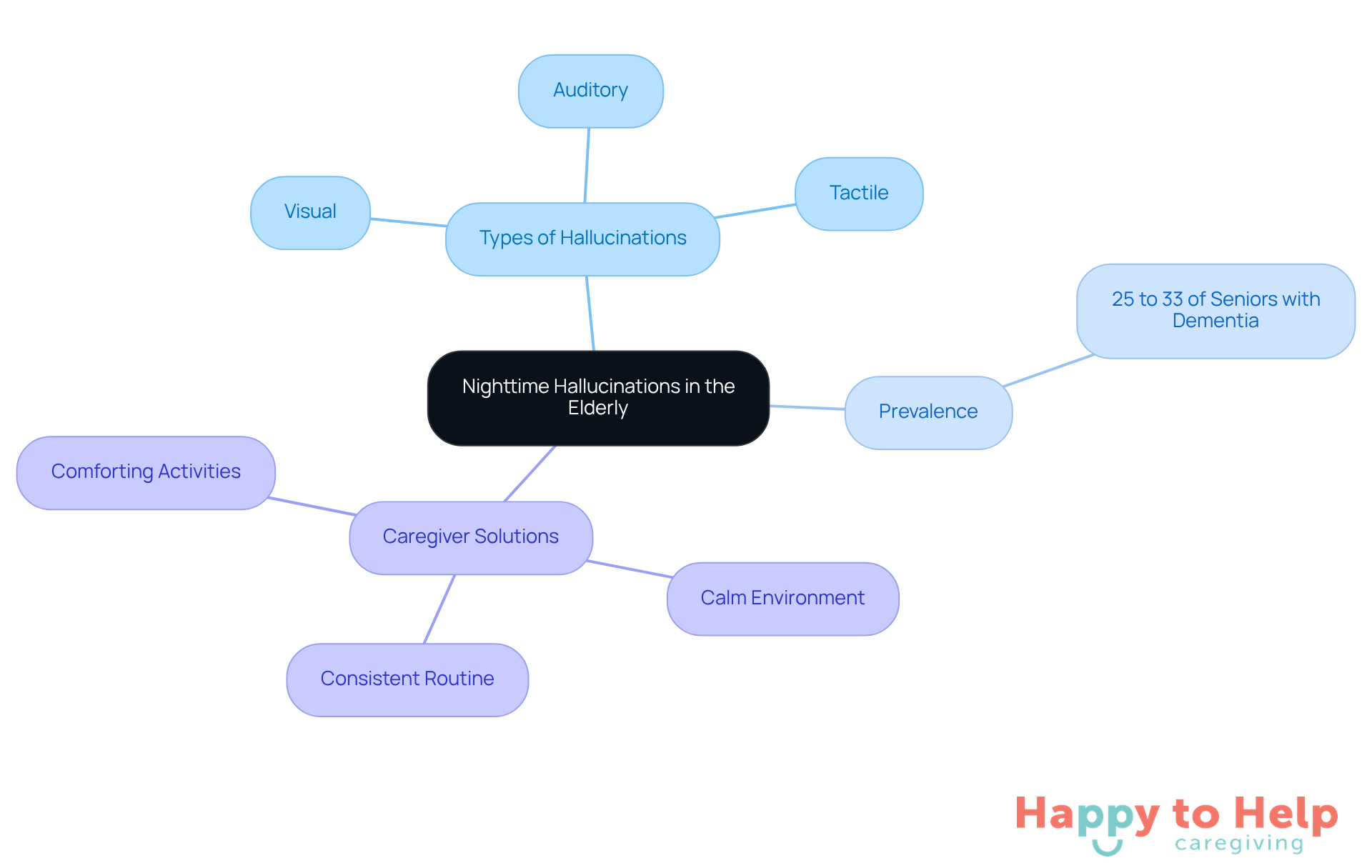
Nighttime hallucinations in elderly individuals present a significant challenge for caregivers. These sensory perceptions, which can include visual, auditory, or tactile sensations, often do not align with external stimuli. For instance, individuals may perceive shadows, hear non-existent voices, or feel sensations that aren't there. Such experiences can lead to confusion and anxiety, not just for the affected individuals but also for their caregivers.
Research shows that approximately 25% to 33% of seniors with dementia experience nighttime hallucinations, which are unsettling sensory perceptions. This highlights the prevalence of nighttime hallucinations in elderly populations, making it crucial for caregivers to understand and address these issues. Recognizing the potential link between these perceptions and suicidal actions underscores the need for vigilance and support.
To alleviate anxiety and reduce the frequency of these episodes, caregivers can implement several practical solutions:
- Creating a calm environment
- Maintaining a consistent nighttime routine
- Engaging in comforting activities, such as listening to soothing music or reminiscing about pleasant memories
Additionally, consulting healthcare professionals is vital for assessing health and ruling out underlying conditions that may contribute to false perceptions. By adopting a compassionate approach and fostering community ties, caregivers can significantly enhance the quality of life for individuals facing nighttime illusions.
Explore Causes of Nighttime Hallucinations
Nighttime hallucinations in elderly individuals present a significant challenge for caregivers, stemming from various causes that require careful attention.
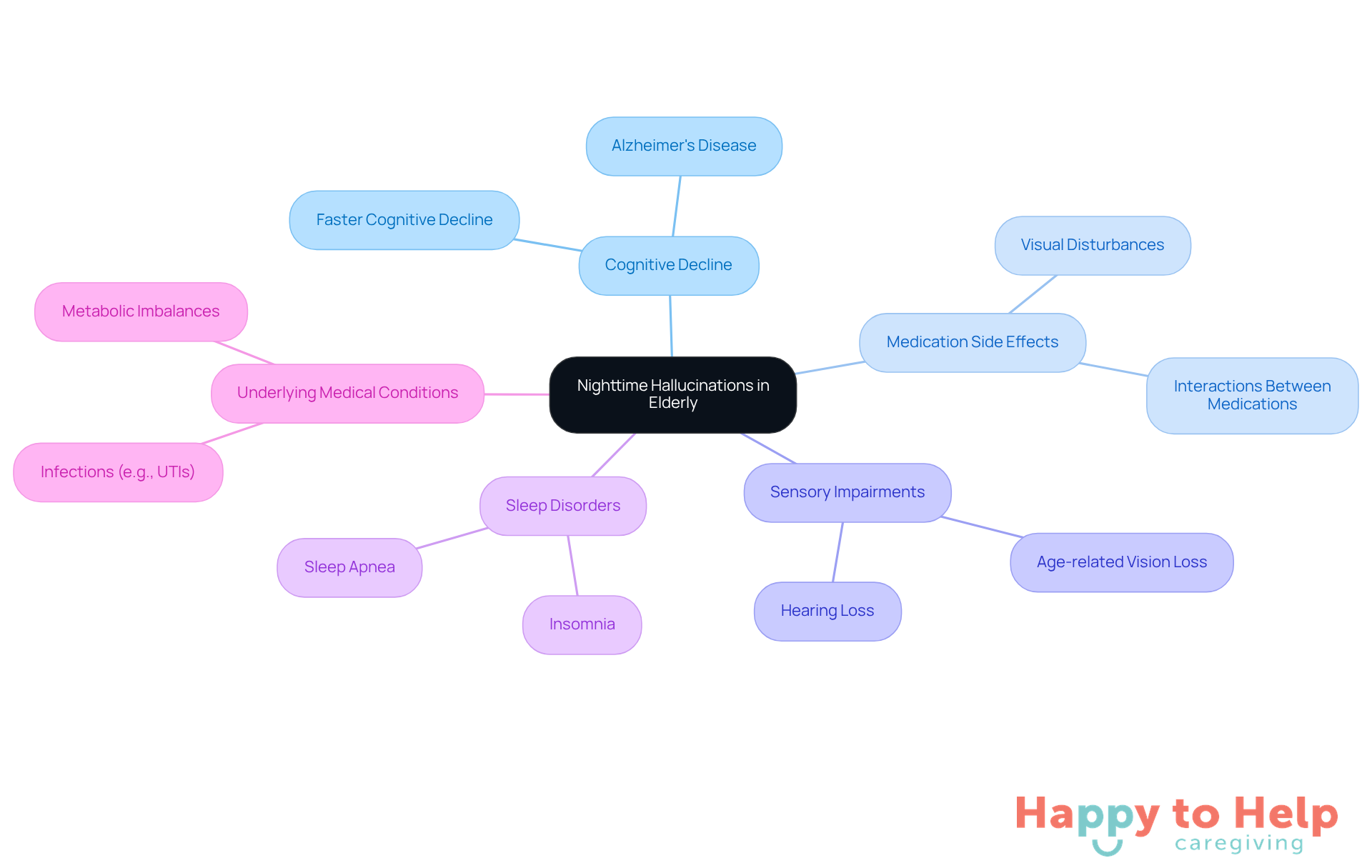
Problem: Cognitive decline, particularly from conditions like Alzheimer's disease and other forms of dementia, is closely linked to hallucinations. Research shows that one in three individuals with Alzheimer's experiences nighttime hallucinations in elderly, which can indicate a faster cognitive decline and increased morbidity. Those experiencing delusions often face a more rapid decline in cognition, highlighting the urgency of addressing these symptoms.
Agitate: Medication side effects also play a crucial role. Many medications, especially those affecting the central nervous system, can trigger visual disturbances. Changes in dosage or interactions between medications may lead to unexpected sensory experiences. This makes it essential for caregivers to regularly review prescriptions with healthcare providers.
Sensory impairments due to age-related vision and hearing loss can further distort perceptions, leading to misinterpretations that manifest as false perceptions. For example, shadows might be seen as figures, or distant sounds may be misheard, contributing to confusion and distress.
Sleep disorders, such as sleep apnea or insomnia, can heighten the risk of nighttime hallucinations in elderly people, especially during the transitions between sleep and wakefulness. These disturbances can create disorienting experiences for the elderly, including nighttime hallucinations in elderly, which complicate their cognitive challenges.
Additionally, underlying medical conditions, like infections or metabolic imbalances, can trigger sudden changes in perception. Addressing these health issues is vital for alleviating both physical and mental suffering, thereby reducing the frequency of false perceptions.
Solution: Understanding these factors is essential for caregivers. It enables them to implement effective strategies to manage and mitigate the impact of distorted perceptions on their loved ones' quality of life. Caregivers should maintain a calm demeanor and provide reassurance to help alleviate anxiety associated with these situations.
Identify Symptoms of Nighttime Hallucinations
Nighttime hallucinations in elderly individuals present significant challenges for caregivers. These symptoms can manifest in various ways, such as nighttime hallucinations in elderly individuals, leading to confusion and distress for those affected.
-
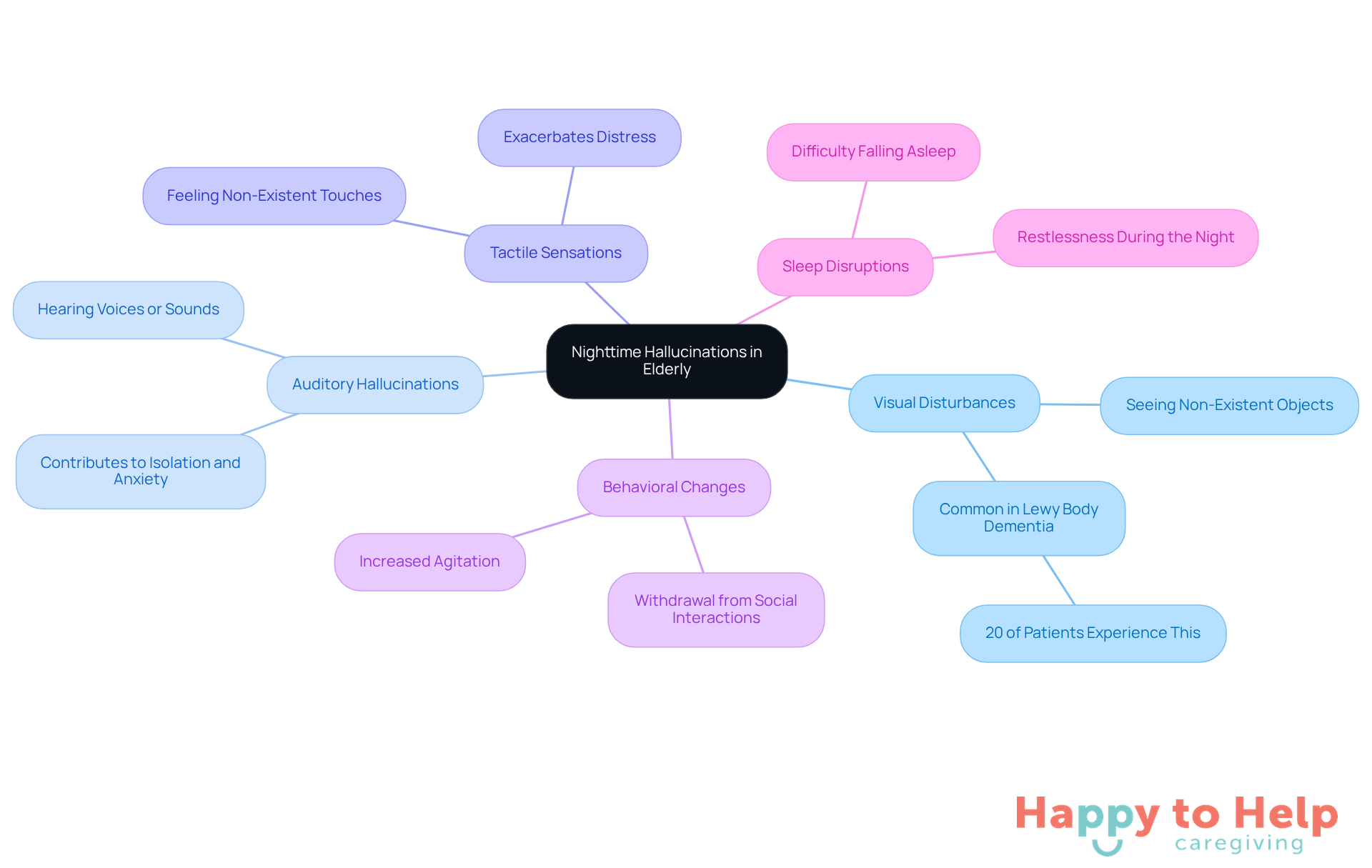
Visual Disturbances: Individuals may see objects, people, or animals that aren't there. This is particularly common in conditions like Lewy body dementia, where about 20% of patients experience nighttime hallucinations in elderly individuals.
-
Auditory Hallucinations: Hearing sounds or voices that others do not perceive can be alarming, contributing to feelings of isolation and anxiety.
-
Tactile Sensations: Some may report feeling touches or movements that aren't occurring, which can further exacerbate their distress.
-
Behavioral Changes: Increased agitation, confusion, or anxiety during the night are significant indicators of hallucinations. These changes can lead to withdrawal from social interactions or increased irritability, often necessitating extra support from caregivers.
-
Sleep Disruptions: Difficulty falling or staying asleep, often accompanied by restlessness, is common. Caregivers should monitor for nighttime hallucinations in elderly closely, as they may indicate underlying issues such as dehydration or medication side effects.
Identifying these symptoms is crucial for caregivers. By providing suitable reassurance and support, they can help ensure that older individuals feel safe and understood during these challenging episodes.
Implement Management Strategies for Caregivers
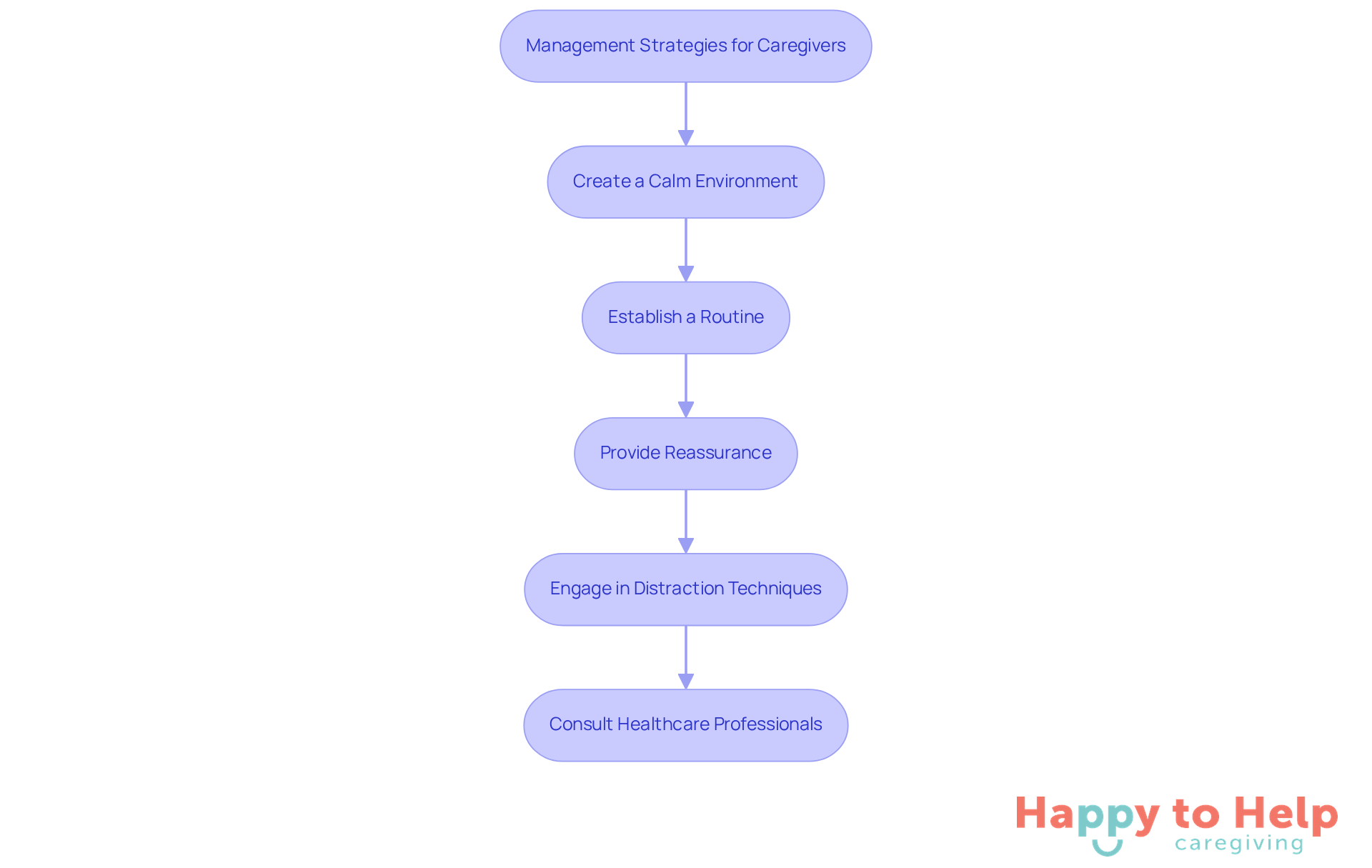
Caregivers can face significant challenges due to nighttime hallucinations in elderly individuals. Nighttime hallucinations in elderly can lead to confusion, anxiety, and distress, making it crucial for caregivers to implement effective strategies to manage these situations.
-
Create a Calm Environment: A well-lit living space free from shadows can help reduce visual hallucinations. Warm lighting fosters a comforting atmosphere, which can alleviate confusion and anxiety.
-
Establish a Routine: Consistent sleep schedules promote better sleep quality and minimize disorientation. A predictable routine significantly decreases the chances of nighttime hallucinations in elderly.
-
Provide Reassurance: It's essential to calmly reassure individuals experiencing altered perceptions. Validate their feelings without disputing their views. As noted by Home Instead, "Reassure them that you're there to protect and support them without dismissing their current state." This approach builds trust and comfort, helping to alleviate distress.
-
Engage in Distraction Techniques: Redirecting attention to enjoyable activities, such as listening to music or engaging in light conversation, can effectively shift focus away from illusions and provide comfort.
-
Consult Healthcare Professionals: Regular communication with healthcare providers is vital. Reviewing medications and assessing any underlying health issues can help address sensory distortions. Open dialogue with medical professionals is crucial for identifying potential causes and adjusting care strategies. It is important to remember that nighttime hallucinations in elderly individuals are more common in the later stages of dementia, making professional guidance essential.
By implementing these strategies, caregivers can enhance the well-being of their loved ones while effectively navigating the complexities of nighttime hallucinations in elderly individuals.
Key Takeaways for Caregivers
Nighttime hallucinations in elderly individuals present a significant challenge for caregivers, impacting the quality of life for those affected. These episodes, characterized by sensory perceptions without external stimuli, can lead to confusion and distress. It's crucial for caregivers to approach these situations with both knowledge and compassion.
The prevalence of nighttime hallucinations is particularly notable among seniors with dementia. Recognizing the causes, symptoms, and effective management strategies is essential. Factors such as cognitive decline, medication side effects, sensory impairments, and sleep disorders contribute to these unsettling experiences. Caregivers can implement practical solutions to alleviate anxiety and confusion, including:
- Creating a calm environment
- Establishing consistent routines
- Providing reassurance
Addressing nighttime hallucinations is not merely about symptom management; it’s about fostering a supportive environment that promotes dignity and comfort. Engaging with healthcare professionals and adopting a proactive approach can significantly enhance the well-being of elderly individuals facing these challenges. By prioritizing awareness and compassionate care, caregivers can profoundly impact the lives of those they support, ensuring their loved ones feel safe and valued during these difficult moments.
https://iframe.tely.ai/cta/eyJhcnRpY2xlX2lkIjogIjY5M2Y1MGIyMmI4ODNiM2YwNWZiOTk4OSIsICJjb21wYW55X2lkIjogIjY4ZWU1ZGNhNzMxNzYyNTU3ZjNjOTVjMSIsICJpbmRleCI6IG51bGwsICJ0eXBlIjogImFydGljbGUifQ==Frequently Asked Questions
What are nighttime hallucinations in the elderly?
Nighttime hallucinations in elderly individuals are sensory perceptions that do not align with external stimuli, which can include visual, auditory, or tactile sensations. Examples include seeing shadows, hearing non-existent voices, or feeling sensations that aren't actually there.
How common are nighttime hallucinations among seniors with dementia?
Research shows that approximately 25% to 33% of seniors with dementia experience nighttime hallucinations.
What impact do nighttime hallucinations have on elderly individuals and their caregivers?
Nighttime hallucinations can lead to confusion and anxiety for both the affected individuals and their caregivers, creating significant challenges in caregiving.
What are some practical solutions caregivers can implement to alleviate anxiety related to nighttime hallucinations?
Caregivers can create a calm environment, maintain a consistent nighttime routine, and engage in comforting activities, such as listening to soothing music or reminiscing about pleasant memories.
Why is it important for caregivers to consult healthcare professionals regarding nighttime hallucinations?
Consulting healthcare professionals is vital for assessing health and ruling out underlying conditions that may contribute to false perceptions, ensuring proper care and support for the elderly individuals.
How can caregivers enhance the quality of life for individuals experiencing nighttime hallucinations?
By adopting a compassionate approach and fostering community ties, caregivers can significantly enhance the quality of life for individuals facing nighttime illusions.
List of Sources
- Define Nighttime Hallucinations in the Elderly
- The American Mental Wellness Association » Hallucinations In The Elderly: Causes, Symptoms and Treatment | Guest Post by Kate Mallord (https://americanmentalwellness.org/hallucinations-in-the-elderly-causes-symptoms-and-treatment-guest-post-by-kate-mallord)
- What Causes Hallucinations in Seniors? | Juniper Senior Living (https://junipercommunities.com/what-causes-hallucinations-in-seniors)
- Understanding Elderly Hallucinations at Night: Causes and Care Strategies - Happy To Help (https://happytohelpcaregiving.com/understanding-elderly-hallucinations-at-night-causes-and-care-strategies)
- Understanding Nighttime Hallucinations in the Elderly: A Caregiver's Guide - Happy To Help (https://happytohelpcaregiving.com/understanding-nighttime-hallucinations-in-the-elderly-a-caregivers-guide)
- Hallucinations And Dementia: What Caregivers Need To Know - NCCDP (https://nccdp.org/hallucinations-and-dementia-what-caregivers-need-to-know)
- Explore Causes of Nighttime Hallucinations
- Understanding Elderly Hallucinations at Night: Causes and Care Strategies - Happy To Help (https://happytohelpcaregiving.com/understanding-elderly-hallucinations-at-night-causes-and-care-strategies)
- In Alzheimer’s, Hallucinations Signal Faster Cognitive Decline - Charter Research (https://charterresearch.com/news/hallucinations-signal)
- What Causes Hallucinations in Seniors? | Juniper Senior Living (https://junipercommunities.com/what-causes-hallucinations-in-seniors)
- Study Sheds Light on Syndrome Causing Harmless Hallucinations among the Elderly (https://healthcare.utah.edu/moran/news/2018/10/study-sheds-light-syndrome-causing-harmless-hallucinations-among-elderly)
- Identify Symptoms of Nighttime Hallucinations
- Lewy body dementia - Symptoms and causes (https://mayoclinic.org/diseases-conditions/lewy-body-dementia/symptoms-causes/syc-20352025)
- Hallucinations and dementia (https://alzheimers.org.uk/about-dementia/stages-and-symptoms/hallucinations)
- Sundown Syndrome: Causes, Treatment & Symptoms (https://my.clevelandclinic.org/health/articles/22840-sundown-syndrome)
- The American Mental Wellness Association » Hallucinations In The Elderly: Causes, Symptoms and Treatment | Guest Post by Kate Mallord (https://americanmentalwellness.org/hallucinations-in-the-elderly-causes-symptoms-and-treatment-guest-post-by-kate-mallord)
- Sundowning and dementia (https://alzheimers.org.uk/about-dementia/stages-and-symptoms/dementia-symptoms/sundowning)
- Implement Management Strategies for Caregivers
- Managing Dementia Hallucinations: How To Keep Your Loved One Relaxed (https://homeinstead.com/home-care/usa/az/glendale/882/news-and-media/managing-dementia-hallucinations-how-to-keep-your-loved-one-relaxed)
- Coping with hallucinations in a person with dementia (https://dementiauk.org/news/coping-with-hallucinations-in-a-person-with-dementia)
- Understanding Elderly Hallucinations at Night: Causes and Care Strategies - Happy To Help (https://happytohelpcaregiving.com/understanding-elderly-hallucinations-at-night-causes-and-care-strategies)
- Strategies To Cope With Hallucinations & Delusions In Alzheimer’s & Dementia (https://alzra.org/blog/strategies-to-cope-with-hallucinations-delusions-in-alzheimers-dementia)
- How to Deal With Hallucinations in the Elderly - Senior Services of America (https://seniorservicesofamerica.com/blog/how-to-deal-with-hallucinations-in-the-elderly)