Understanding Sudden Onset of Confusion and Hallucinations
For families in our service areas
For families in our service areas, this guide explains caregiving and how non-medical in-home caregiving can support care planning in East Idaho, Treasure Valley & Magic Valley, Northern Wasatch, North Central West Virginia, and Northeast Ohio.
Understanding Sudden Onset of Confusion and
The sudden onset of confusion and hallucinations in elderly individuals presents a significant challenge for caregivers and loved ones. This distressing phenomenon can leave them grappling with uncertainty and fear, as these episodes may arise from various underlying health issues. Recognizing the symptoms early is crucial for effective intervention.
Caregivers often find themselves navigating a complex landscape filled with emotional turmoil. The implications of these episodes can be profound, affecting not only the individual experiencing them but also their family and friends. How can caregivers ensure the well-being of their loved ones amidst such challenges?
This article explores the complexities of confusion and hallucinations in the elderly, offering insights into their causes and symptoms. It also provides practical strategies for management, aiming to empower caregivers with the knowledge they need to deliver compassionate and informed care.
Define Confusion and Hallucinations in the Elderly
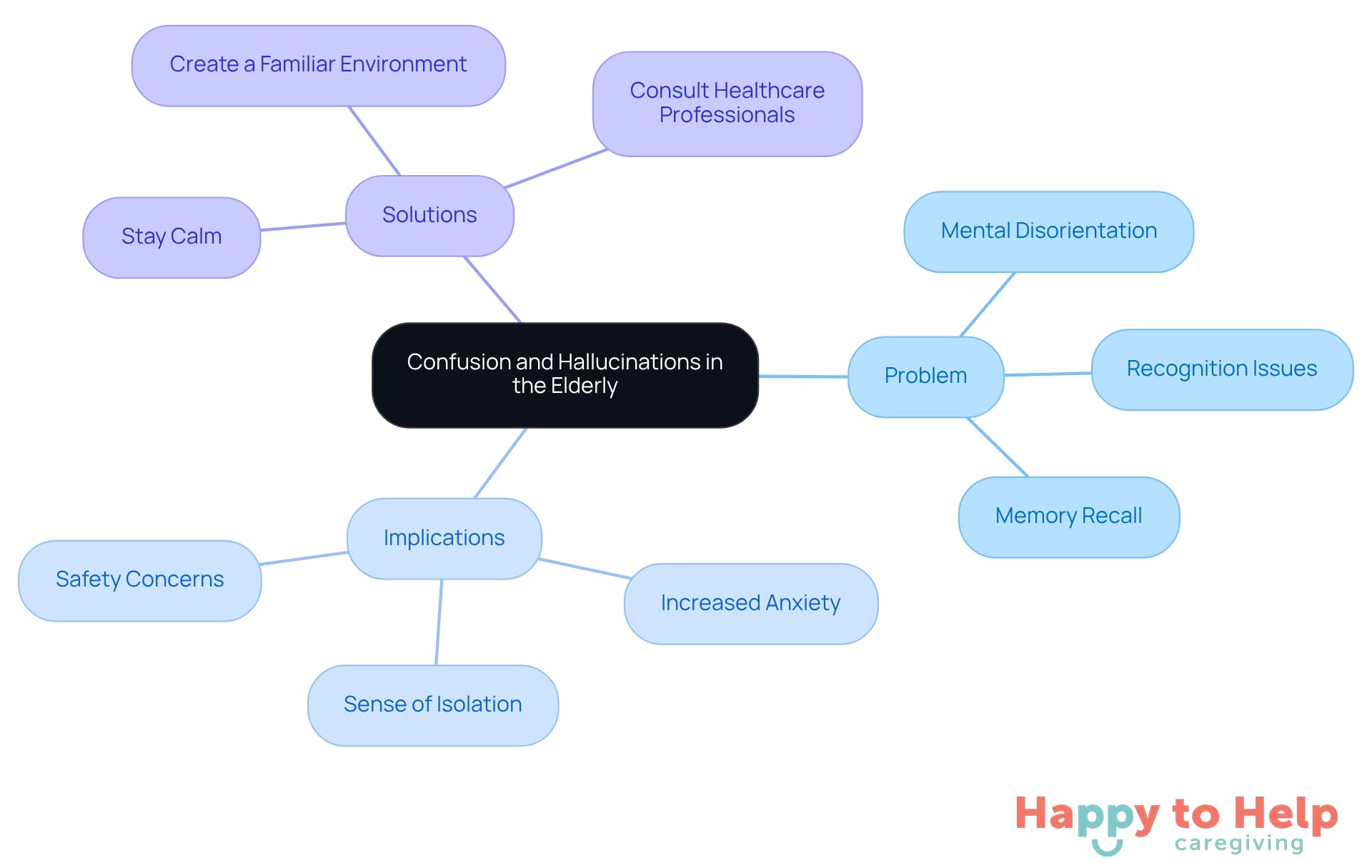
The problem of mental disorientation often arises from the sudden onset of confusion and hallucinations in elderly individuals. Individuals may struggle to understand their surroundings, recognize familiar people, or recall recent events. This confusion can be distressing for both the elderly and their caregivers.
Agitate: The implications of confusion are serious. It can lead to increased anxiety, a sense of isolation, and even safety concerns. Additionally, the sudden onset of confusion and hallucinations in elderly individuals may occur, where they perceive things that aren't present, such as seeing or hearing nonexistent objects or voices. Various underlying health problems, including delirium, cognitive decline, or medication side effects, can lead to the sudden onset of confusion and hallucinations in elderly individuals.
Solution: Recognizing these symptoms early is crucial for effective intervention and care. Caregivers should be vigilant and look for signs indicating the sudden onset of confusion and hallucinations in elderly. Here are some actionable tips:
- Stay Calm: Approach the individual with patience and understanding.
- Create a Familiar Environment: Surround them with familiar objects and people to reduce disorientation.
- Consult Healthcare Professionals: Seek advice from doctors to address any underlying health issues.
By implementing these strategies, caregivers can provide better support and improve the quality of life for those experiencing confusion.
Identify Types of Confusion and Hallucinations
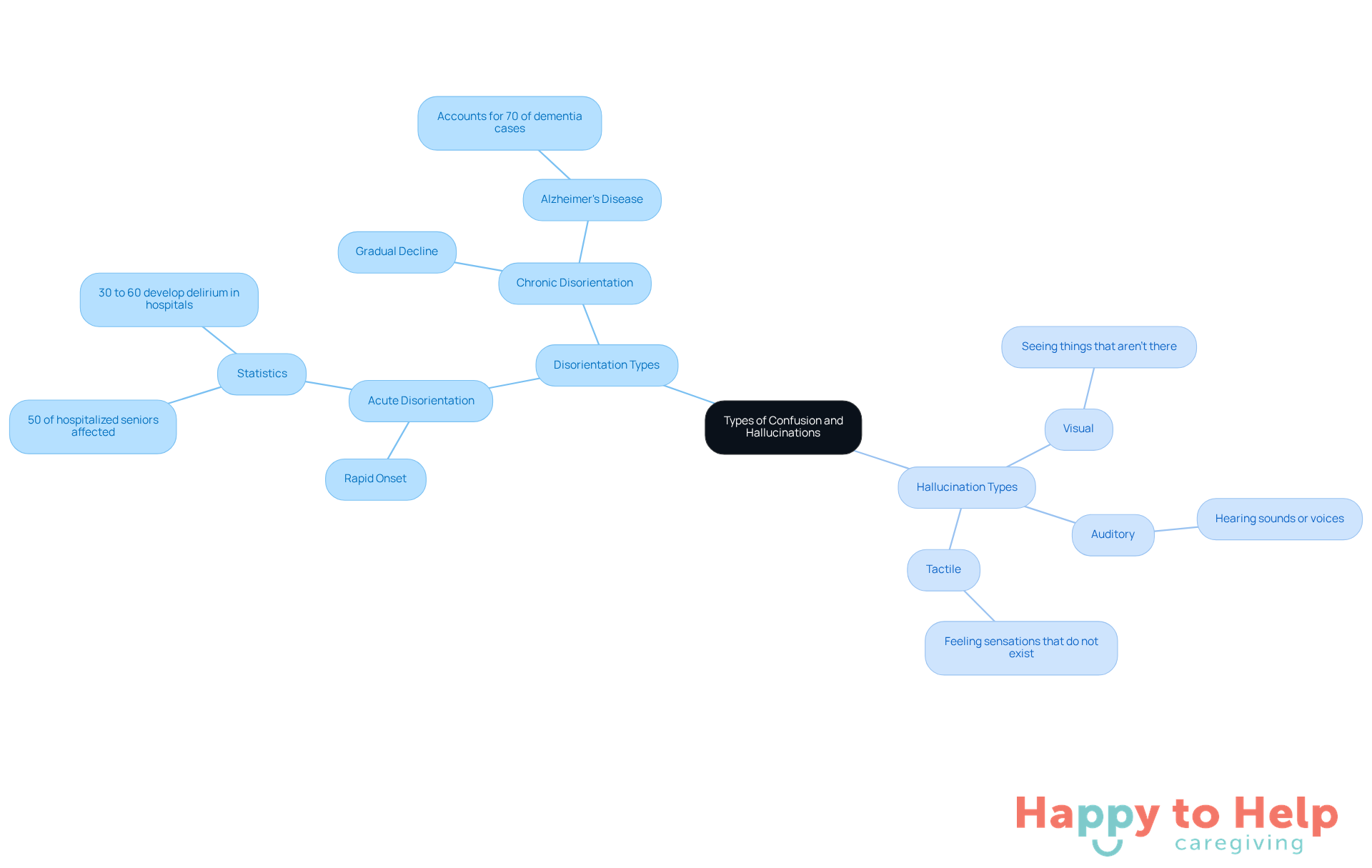
The sudden onset of confusion and hallucinations in elderly individuals presents a significant challenge, primarily classified into three types:
- Acute disorientation (delirium)
- Chronic disorientation (cognitive decline)
- Transient disorientation, often triggered by medication changes.
Acute disorientation can develop rapidly, leading to a sudden onset of confusion and hallucinations in elderly, with symptoms appearing within hours or days, affecting up to 50% of hospitalized seniors. Alarmingly, 30% to 60% of individuals over age 65 experience a sudden onset of confusion and hallucinations in elderly during hospitalization. In contrast, chronic disorientation develops gradually, impacting roughly 70% of cognitive decline cases, including Alzheimer's disease, which accounts for about 70% of these instances.
The sudden onset of confusion and hallucinations in elderly individuals often includes various types of hallucinations, which can be categorized into three main types:
- Visual (seeing things that aren't there)
- Auditory (hearing sounds or voices)
- Tactile (feeling sensations that do not exist).
Research indicates that perceptual disturbances are particularly prevalent in the later stages of cognitive decline, where changes in brain gray matter disrupt sensory processing. Unfortunately, medications, including antipsychotics, may not effectively reduce hallucinations in individuals with dementia. Caregivers must remain vigilant in observing these symptoms, as they can significantly impact the individual's well-being and safety. Delirium can be distressing for both the affected individual and their caregivers.
Understanding the differences between acute and chronic disorientation is crucial for caregivers. Acute disorientation is characterized by a sudden onset of confusion and hallucinations in elderly individuals, along with fluctuating symptoms, while chronic disorientation shows a steady decline over time. Recognizing these distinctions allows caregivers to respond appropriately and seek timely medical intervention, which is essential for improving outcomes and ensuring the comfort of their loved ones. If hallucinations worsen or lead to behavioral changes, consulting healthcare professionals becomes imperative.
Recognize Symptoms and Causes of Confusion and Hallucinations
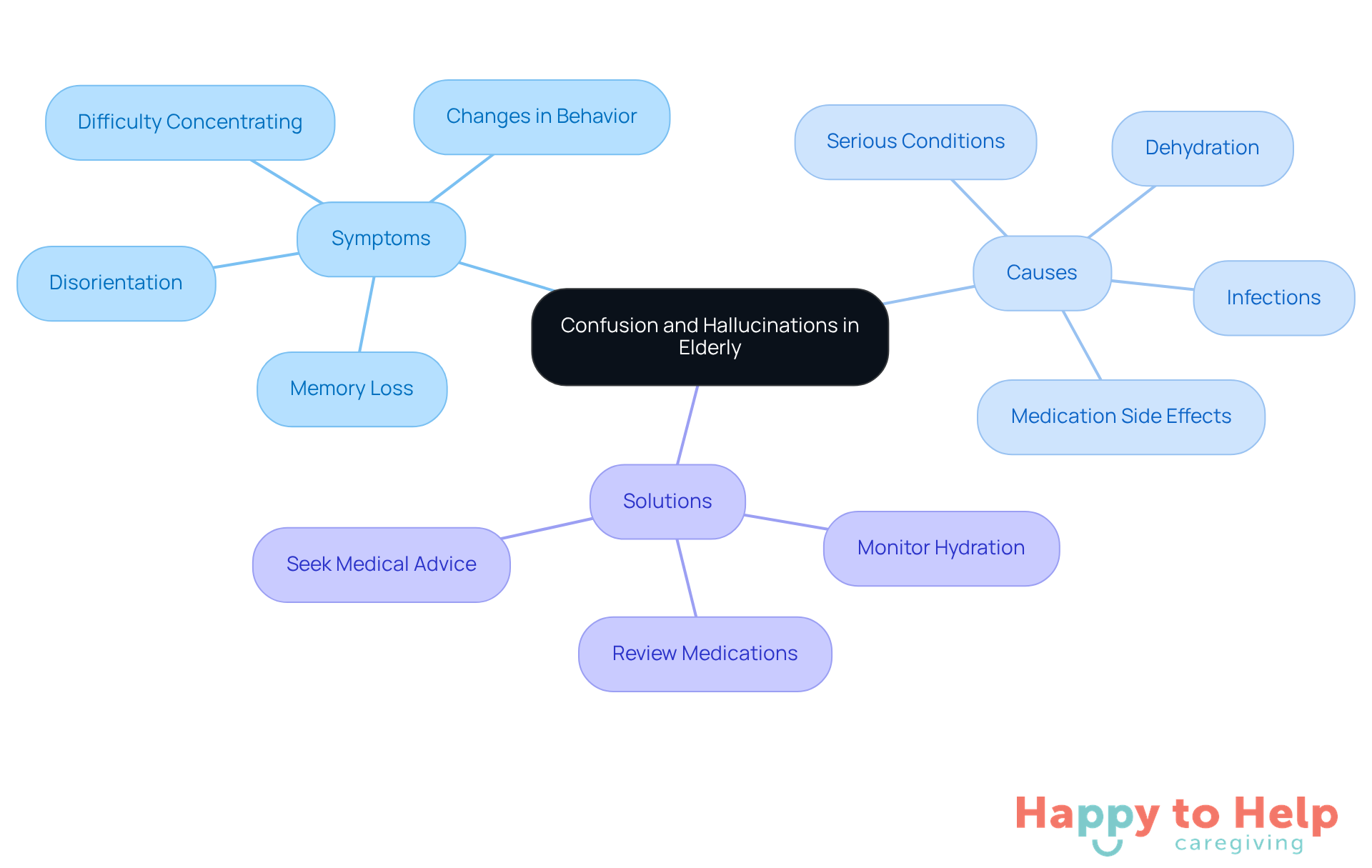
Bewilderment in individuals can pose significant challenges for caregivers. Typical signs associated with the sudden onset of confusion and hallucinations in elderly include disorientation, difficulty concentrating, memory loss, and changes in behavior. These symptoms can lead to increased stress for both the caregiver and the individual, complicating daily interactions and care routines.
The sudden onset of confusion and hallucinations in elderly individuals may also involve symptoms such as seeing or hearing things that aren’t there, feeling sensations on the skin, or experiencing altered perceptions of reality. Understanding these signs is crucial, as they can stem from various causes, including infections like UTIs, dehydration, medication side effects, or more serious conditions such as strokes, dementia, or even a sudden onset of confusion and hallucinations in elderly.
Identifying these symptoms early is key. Caregivers can take proactive steps to manage these challenges effectively. Here are some practical solutions:
- Monitor hydration: Ensure the individual drinks enough fluids to prevent dehydration.
- Review medications: Consult with healthcare providers about potential side effects of current medications.
- Seek medical advice: If symptoms persist, it’s essential to consult a healthcare professional for further evaluation.
By recognizing the signs of bewilderment and implementing these strategies, caregivers can improve the quality of care and support for their loved ones.
Implement Strategies for Managing Confusion and Hallucinations
The problem arises when there is a sudden onset of confusion and hallucinations in elderly individuals, which can significantly impact their well-being. Research indicates that up to one-third of older adults in hospitals may experience a sudden onset of confusion and hallucinations in elderly, highlighting the necessity for effective caregiving strategies.
The distress caused by the sudden onset of confusion and hallucinations in elderly can affect both the individual and their caregivers. It’s crucial to recognize that these false perceptions can lead to a sudden onset of confusion and hallucinations in elderly, which are not just simple misunderstandings; they can create a challenging environment that affects the quality of care.
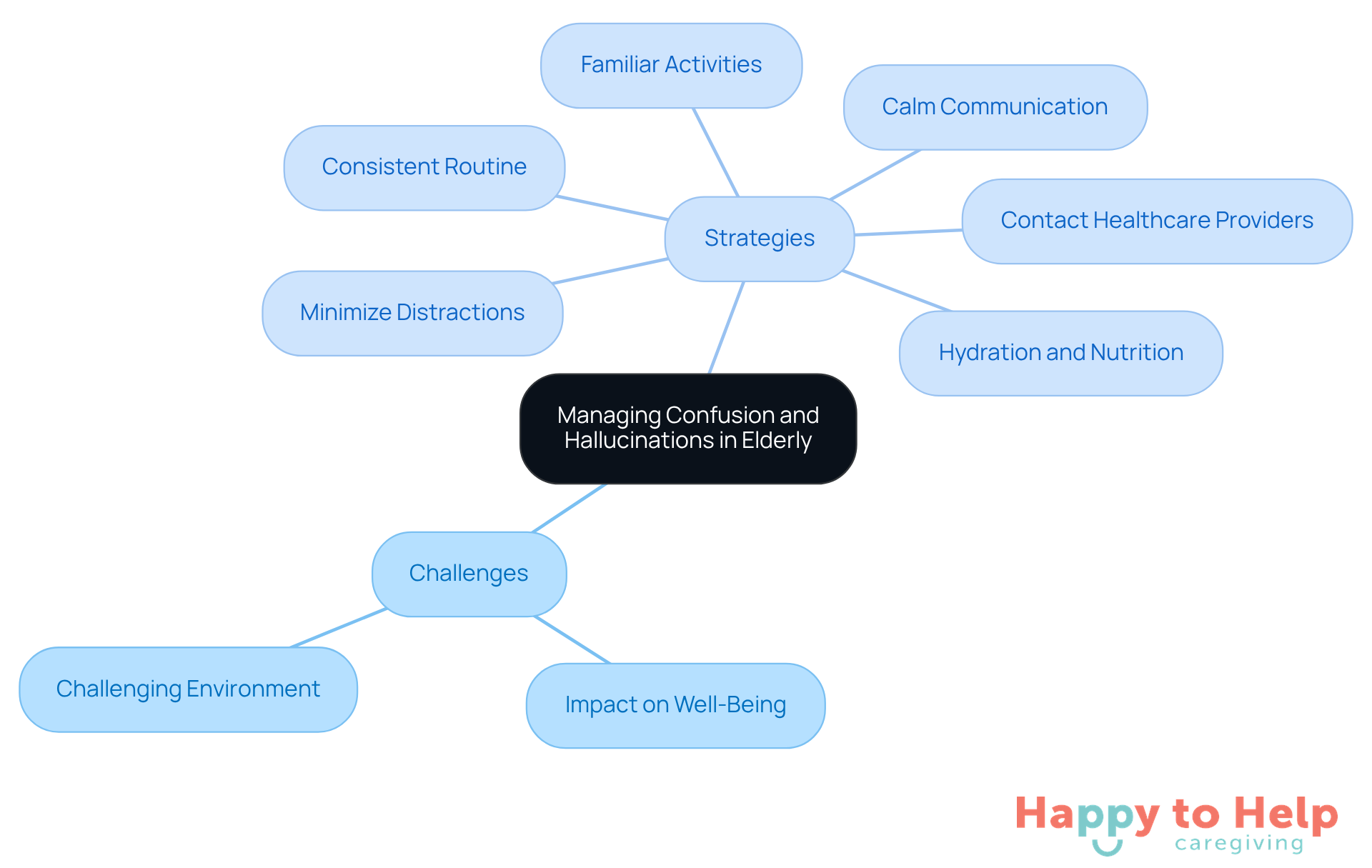
Solution: To address these challenges, caregivers should prioritize creating a calm and organized atmosphere. Here are some actionable strategies:
- Establish a consistent daily routine.
- Minimize noise and distractions.
- Ensure hydration and nutrition needs are met.
Involving the elderly person in familiar activities can anchor them in reality, providing comfort and reassurance. When false perceptions arise, it’s essential to remain calm and validate their feelings. Gently redirecting their attention without disputing the hallucination helps maintain a supportive atmosphere.
Clear and straightforward communication is vital, as it can greatly reduce uncertainty and promote a sense of security. Dr. Roxanne Weiss emphasizes that being in a familiar environment is beneficial for patients who have experienced a sudden onset of confusion and hallucinations in elderly. Caregivers should also be vigilant and contact healthcare providers if there is a sudden onset of confusion and hallucinations in elderly individuals, ensuring comprehensive support for them.
Consult Healthcare Professionals for Persistent Symptoms
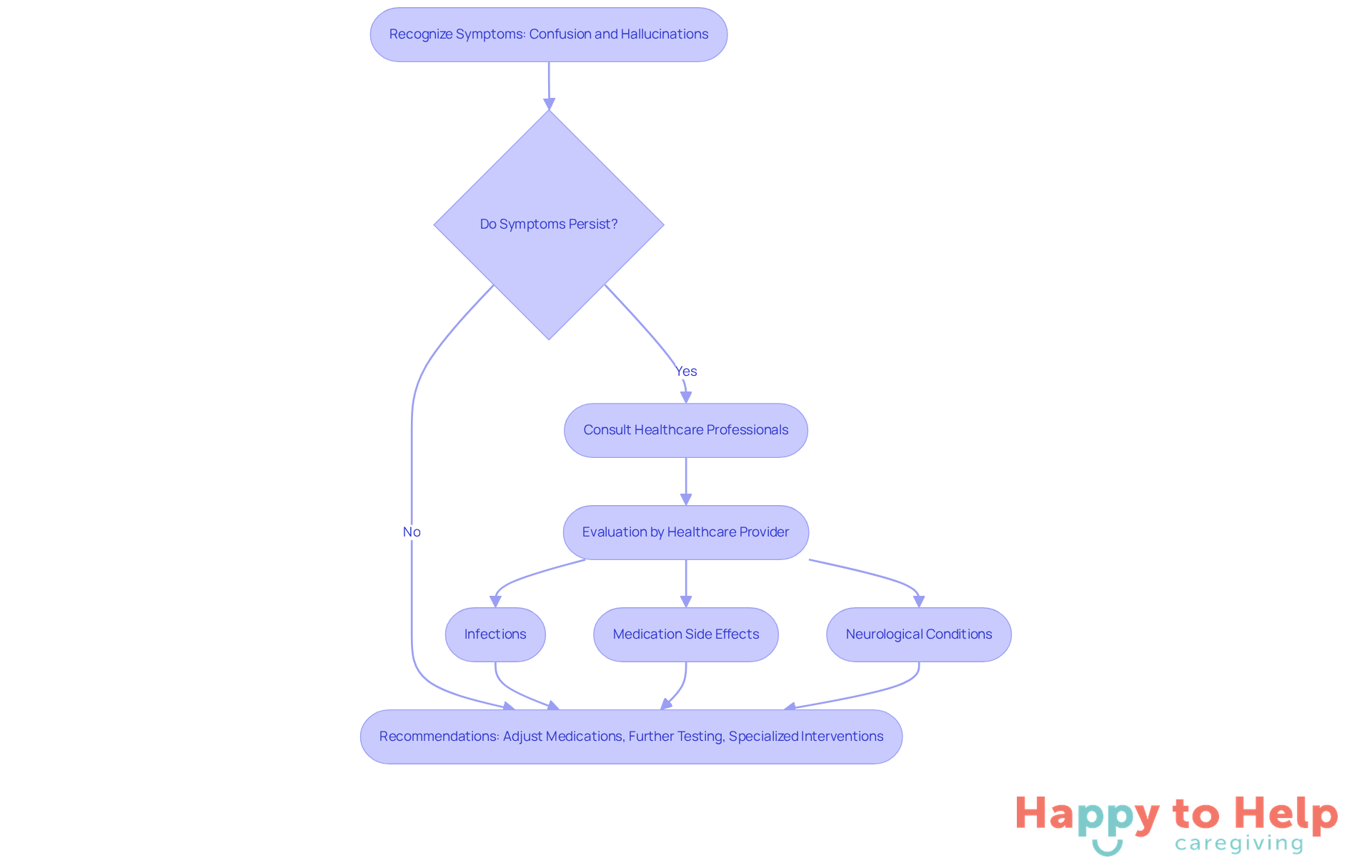
The sudden onset of confusion and hallucinations in elderly patients can be alarming for both them and their caregivers. If these symptoms, particularly the sudden onset of confusion and hallucinations in elderly, persist, it’s crucial to consult healthcare professionals. Ignoring the signs of the sudden onset of confusion and hallucinations in elderly can lead to worsening conditions, making it essential to seek help promptly.
A thorough evaluation by a healthcare provider can uncover underlying causes related to the sudden onset of confusion and hallucinations in elderly, such as:
- Infections
- Medication side effects
- Neurological conditions
Understanding these factors is vital, as they can significantly impact the well-being of patients experiencing sudden onset of confusion and hallucinations in elderly individuals.
To address these symptoms effectively, healthcare providers may recommend adjustments to medications, further testing, or specialized interventions. Caregivers play a key role in this process. By keeping detailed records of symptoms and any changes in behavior, they can provide valuable information to medical professionals, ensuring that their loved ones receive the best possible care.
Making the Right Choice
Understanding the sudden onset of confusion and hallucinations in elderly individuals presents a significant challenge for caregivers. This issue can lead to severe distress, affecting not only those experiencing these symptoms but also their caregivers. Recognizing the signs early is crucial, as it allows for the implementation of appropriate strategies that can greatly enhance the quality of life for everyone involved.
Caregivers must distinguish between acute and chronic disorientation and identify the various types of confusion and hallucinations. This understanding is vital for effective monitoring and support. By fostering a supportive environment and seeking medical advice when necessary, caregivers can navigate this complex situation more effectively. Being proactive and informed empowers caregivers to manage these challenges with greater confidence.
Ultimately, the importance of addressing sudden confusion and hallucinations in the elderly cannot be overstated. Caregivers should remain vigilant, implement effective management strategies, and consult healthcare professionals when symptoms persist. This approach not only improves the well-being of elderly individuals but also creates a more compassionate caregiving experience.
https://iframe.tely.ai/cta/eyJhcnRpY2xlX2lkIjogIjY5MmY5MThkY2E4MDg5MWIwMmZiMDBhZiIsICJjb21wYW55X2lkIjogIjY4ZWU1ZGNhNzMxNzYyNTU3ZjNjOTVjMSIsICJpbmRleCI6IG51bGwsICJ0eXBlIjogImFydGljbGUifQ==Frequently Asked Questions
What is confusion and hallucination in the elderly?
Confusion and hallucinations in the elderly refer to a sudden inability to understand their surroundings, recognize familiar people, or recall recent events. Hallucinations involve perceiving things that aren't present, such as seeing or hearing nonexistent objects or voices.
What are the implications of confusion in elderly individuals?
Confusion can lead to increased anxiety, a sense of isolation, and safety concerns for the elderly and their caregivers.
What are the common causes of sudden confusion and hallucinations in elderly individuals?
Various underlying health problems can cause sudden confusion and hallucinations, including delirium, cognitive decline, or medication side effects.
How can caregivers support elderly individuals experiencing confusion and hallucinations?
Caregivers can support individuals by staying calm, creating a familiar environment, and consulting healthcare professionals to address any underlying health issues.
What are the types of confusion and hallucinations that can occur in the elderly?
Confusion and hallucinations in the elderly are primarily classified into three types: acute disorientation (delirium), chronic disorientation (cognitive decline), and transient disorientation, often triggered by medication changes.
What is acute disorientation, and how does it manifest?
Acute disorientation, or delirium, develops rapidly, with symptoms appearing within hours or days. It affects up to 50% of hospitalized seniors and can lead to confusion and hallucinations.
How does chronic disorientation differ from acute disorientation?
Chronic disorientation develops gradually over time, impacting roughly 70% of cognitive decline cases, including Alzheimer's disease, whereas acute disorientation has a sudden onset with fluctuating symptoms.
What types of hallucinations are common in elderly individuals?
Common types of hallucinations in elderly individuals include visual (seeing things that aren't there), auditory (hearing sounds or voices), and tactile (feeling sensations that do not exist).
Why is it important for caregivers to recognize the differences between acute and chronic disorientation?
Understanding the differences allows caregivers to respond appropriately and seek timely medical intervention, which is essential for improving outcomes and ensuring the comfort of their loved ones.
When should caregivers consult healthcare professionals regarding hallucinations?
Caregivers should consult healthcare professionals if hallucinations worsen or lead to behavioral changes in the elderly individual.
List of Sources
- Define Confusion and Hallucinations in the Elderly
- Hallucinations and dementia: Recognizing them and support tips (https://medicalnewstoday.com/articles/hallucinations-and-dementia)
- Delirium vs. Dementia (https://health.usnews.com/senior-care/articles/delirium-vs-dementia)
- Clearing the Confusion Around Delirium | SSM Health Rehabilitation Hospital (https://ssm-rehab.com/news-and-events/news/clearing-the-confusion-around-delirium)
- Understanding Elderly Hallucinations at Night: Causes and Care Strategies - Happy To Help (https://happytohelpcaregiving.com/understanding-elderly-hallucinations-at-night-causes-and-care-strategies)
- Hospital stays can leave elderly patients confused, disoriented (https://uclahealth.org/news/article/hospital-stays-can-leave-elderly-patients-confused-disoriented)
- Identify Types of Confusion and Hallucinations
- Delirium, Dementia, and the Brain (https://hms.harvard.edu/news-events/publications-archive/brain/delirium-dementia-brain)
- What Is Delirium? (https://my.clevelandclinic.org/health/diseases/15252-delirium)
- Hallucinations and dementia: Recognizing them and support tips (https://medicalnewstoday.com/articles/hallucinations-and-dementia)
- Delirium vs. Dementia (https://health.usnews.com/senior-care/articles/delirium-vs-dementia)
- Clearing the Confusion Around Delirium | SSM Health Rehabilitation Hospital (https://ssm-rehab.com/news-and-events/news/clearing-the-confusion-around-delirium)
- Implement Strategies for Managing Confusion and Hallucinations
- Preventing Delirium at Home and in the Hospital (https://healthcare.utah.edu/healthfeed/2025/05/preventing-delirium-home-and-hospital)
- Caring for Someone With Delirium (https://mskcc.org/cancer-care/patient-education/delirium)
- Managing Delirium in Long-Term Care: A Challenge (https://bioengineer.org/managing-delirium-in-long-term-care-a-challenge)
- Hospitals Must Better Identify And Manage Delirium In Seniors (https://forbes.com/sites/howardgleckman/2025/08/06/hospitals-must-better-identify-and-manage-delirium-in-seniors)
- Clearer Conversations, Better Care: New Guide Highlights Best Practices for Communicating with Older Adults (https://geron.org/News-Events/GSA-News/Press-Room/Press-Releases/clearer-conversations-better-care-new-guide-highlights-best-practices-for-communicating-with-older-adults)
- Consult Healthcare Professionals for Persistent Symptoms
- Delirium in the United States: Results From the 2023 Cross-Sectional World Delirium Awareness Day Prevalence Study (https://sciencedirect.com/science/article/pii/S2667296024000673)
- Hallucinations and dementia: Recognizing them and support tips (https://medicalnewstoday.com/articles/hallucinations-and-dementia)
- The American Mental Wellness Association » Hallucinations In The Elderly: Causes, Symptoms and Treatment | Guest Post by Kate Mallord (https://americanmentalwellness.org/hallucinations-in-the-elderly-causes-symptoms-and-treatment-guest-post-by-kate-mallord)
- How to Handle Hallucinations in the Elderly: A Caregiver's Guide - Happy To Help (https://happytohelpcaregiving.com/how-to-handle-hallucinations-in-the-elderly-a-caregivers-guide)
- Hallucinations | Alzheimer's Association (https://alz.org/help-support/caregiving/stages-behaviors/hallucinations)