

For families in our service areas
For families in our service areas, this guide explains veteran home care and how non-medical in-home caregiving can support care planning in East Idaho, Treasure Valley & Magic Valley, Northern Wasatch, North Central West Virginia, and Northeast Ohio.
The Importance of Unlock Veterans Senior Care Benefits: A
Navigating the complex landscape of veterans' senior care benefits can be a daunting task for families seeking support for their aging loved ones. Many veterans remain unaware of the vital resources available to them, which could significantly enhance their quality of life. This lack of awareness can lead to missed opportunities for essential care and support.
To address this issue, families must understand the various programs that exist. By doing so, they can ensure they are maximizing these benefits to secure the best possible care for their loved ones. This article delves into the essential benefits available to veterans, offering a comprehensive guide to help families unlock these opportunities.
Explore Veterans Benefits for Senior Care
Veterans face significant challenges in accessing the veterans senior care services they need. Many former service members may not fully understand the range of benefits available to them, which can impact their quality of life as they age. This lack of awareness can lead to missed opportunities for support that could enhance their daily living.
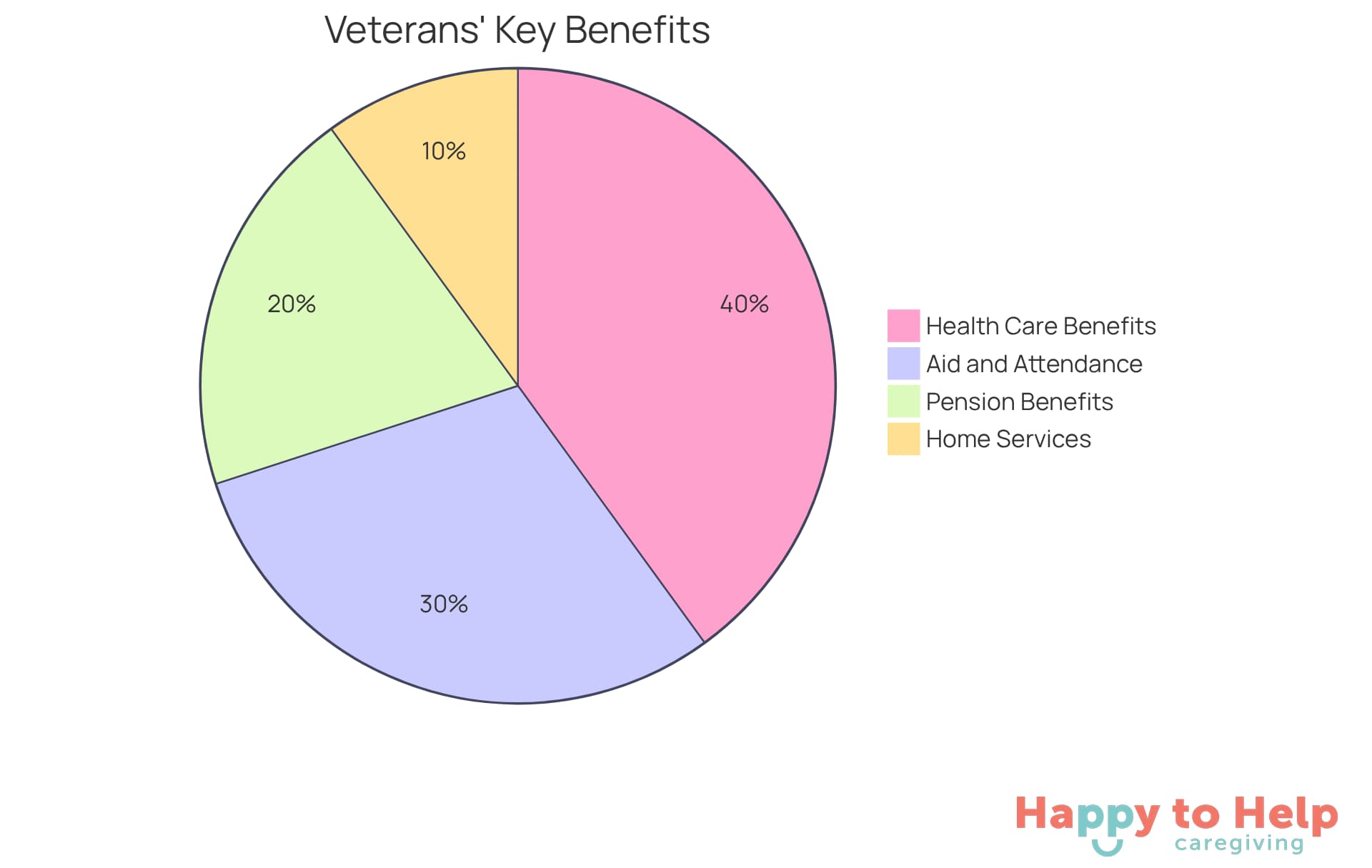
To address this issue, it’s crucial to recognize the key benefits that veterans can access:
- Health Care Benefits: Veterans can tap into comprehensive health care services through the VA, which includes preventive care, inpatient services, and specialized treatments.
- Aid and Attendance: This program provides financial support for veterans who require help with daily activities like bathing, dressing, and meal preparation. For 2025, the Aid and Attendance pension rates are set at $28,300 annually for individual service members, which breaks down to about $2,358 per month.
- Pension Benefits: Low-income veterans may qualify for pension benefits that assist with the costs of veterans senior care or in-home care. For example, the Basic Veterans Pension for an individual without a spouse or dependent child is $17,440 annually or $1,453 monthly.
- Home and Community-Based Services: These services allow veterans to receive care in their homes or communities, promoting independence and comfort.
Understanding these benefits is the first step in ensuring that veterans receive the care they deserve. It’s important to note that Aid and Attendance assistance and Housebound support cannot be received at the same time. Additionally, families should be aware of the 36-month look-back period imposed by the VA, which can affect eligibility for assistance.
As the older adult population continues to grow, the demand for veterans senior care services is projected to increase by over 50% by 2040. This underscores the importance for families to familiarize themselves with the available resources and support systems.
Understand Types of Veterans Benefits Available
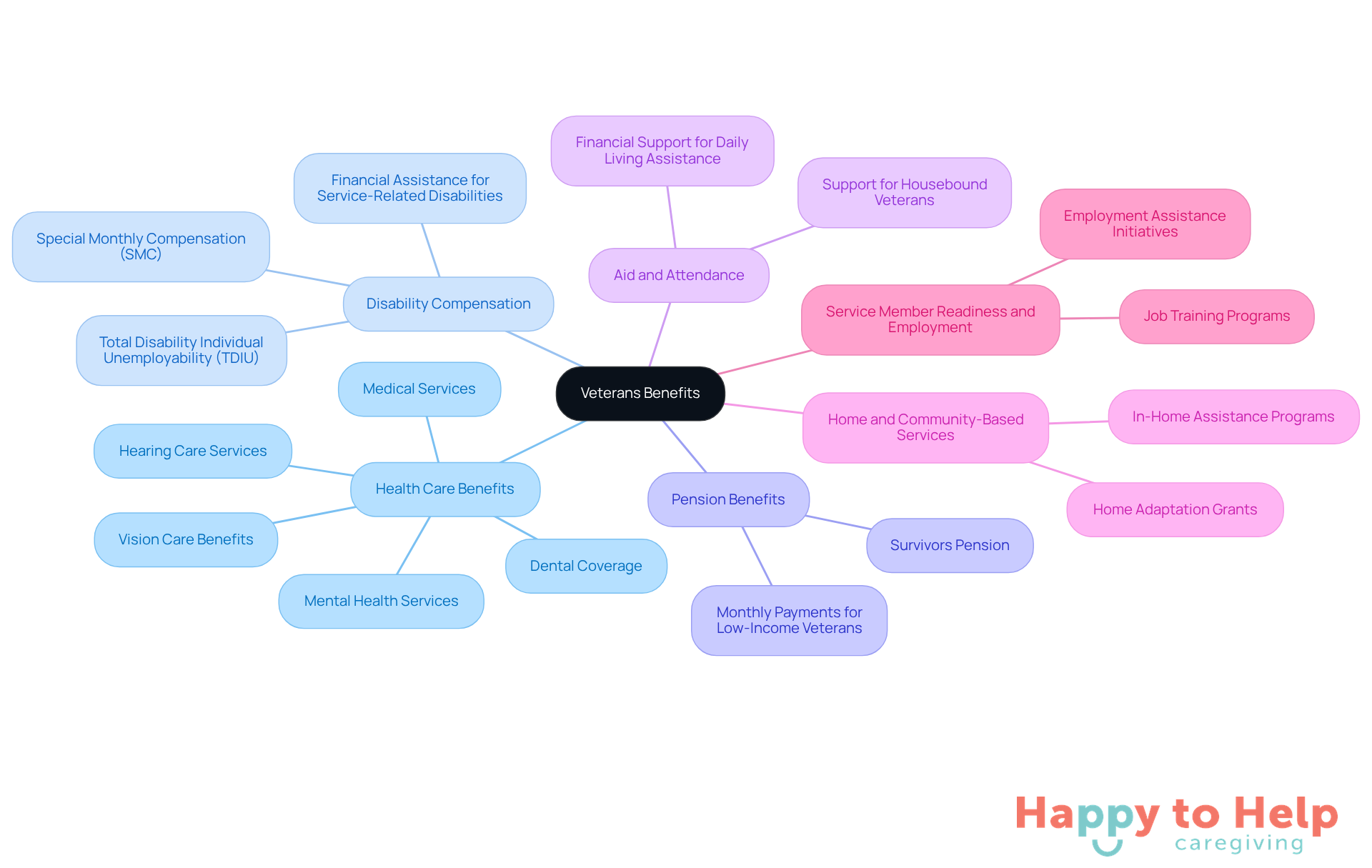
Veterans face numerous challenges that can impact their quality of life. Fortunately, a variety of benefits are available to address these specific needs and enhance their well-being. Here’s a closer look at some of the key benefits:
- Health Care Benefits: Veterans have access to a wide range of medical services, including hospital admissions, outpatient care, and mental health services. This ensures they receive the necessary medical attention.
- Disability Compensation: Financial assistance is available for those with service-related disabilities, helping to cover living costs and improve financial stability.
- Pension Benefits: Monthly payments are provided for low-income service members, which can be crucial for those needing long-term care solutions.
- Aid and Attendance: This program offers additional financial support for veterans who require help with daily living tasks, allowing them to maintain a degree of independence.
- Home and Community-Based Services: These programs facilitate in-home assistance and care, enabling veterans to remain in familiar environments while receiving the necessary support.
- Service Member Readiness and Employment: This initiative focuses on helping veterans prepare for, find, and sustain suitable employment, indirectly supporting their overall care needs.
Each of these benefits plays a vital role in improving the lives of veterans and their families, providing essential support that promotes independence and well-being in veterans senior care.
Navigate the Application Process for Veterans Benefits
Applying for veterans senior care benefits can be a daunting task for many families. The process involves several steps that, if not followed correctly, can lead to delays and frustration. Caregivers in veterans senior care often find themselves overwhelmed by the requirements and paperwork involved.
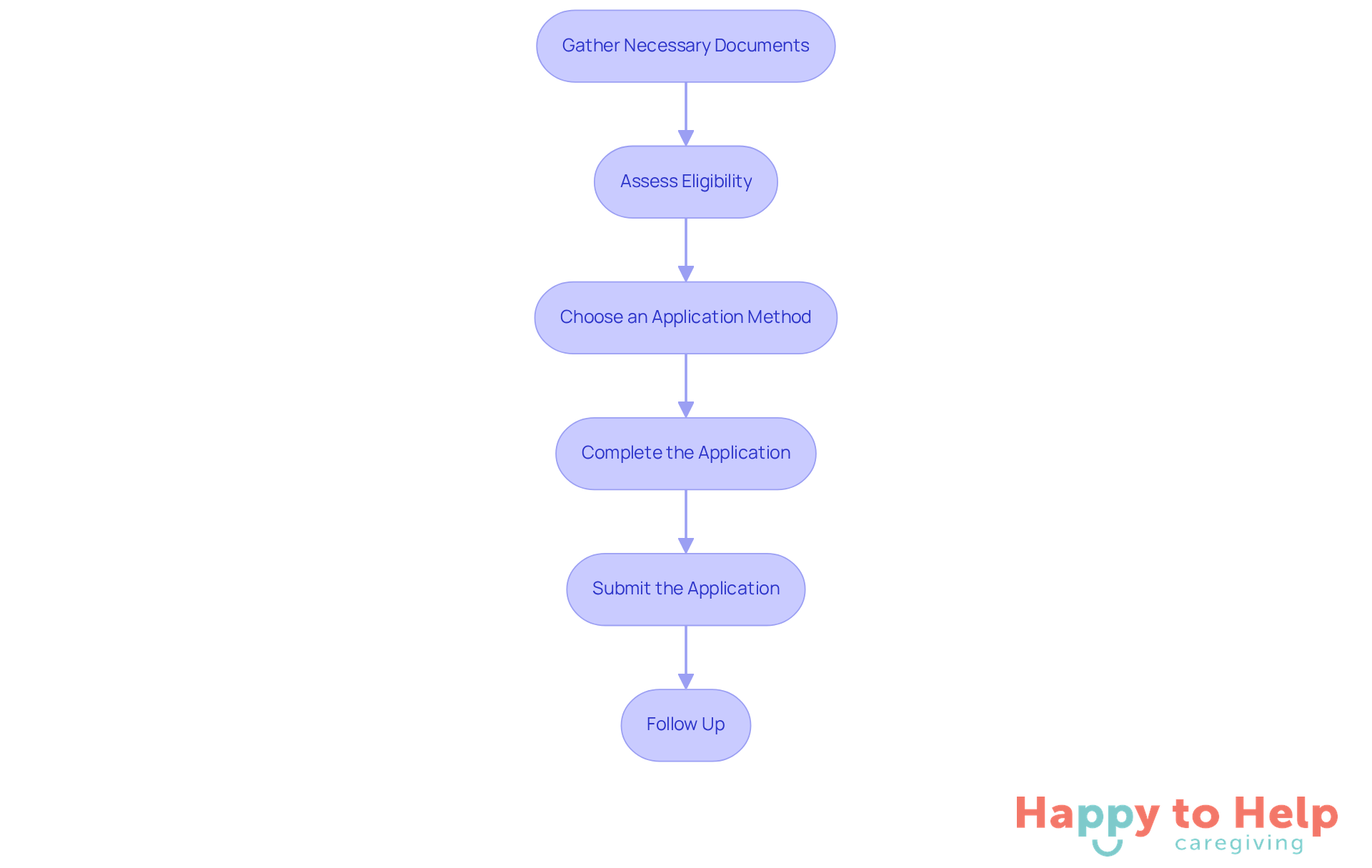
To help navigate this complex process, here are the essential steps to follow:
- Gather Necessary Documents: Collect essential documents such as discharge papers (DD-214), medical records, and financial information.
- Assess Eligibility: Examine the qualification requirements for each type of assistance to ensure that the service member qualifies.
- Choose an Application Method: Applications can be submitted online, by mail, or in person at a VA regional office. Each method has its own requirements and processing times.
- Complete the Application: Fill out the appropriate forms accurately, ensuring all required information is included to avoid delays.
- Submit the Application: Send the completed application to the correct VA office, keeping copies for your records.
- Follow Up: After submission, monitor the application status and be prepared to provide additional information if requested.
By following these steps, families can effectively navigate the application process and obtain the assistance their loved ones require.
Maximize Veterans Benefits for Long-Term Care
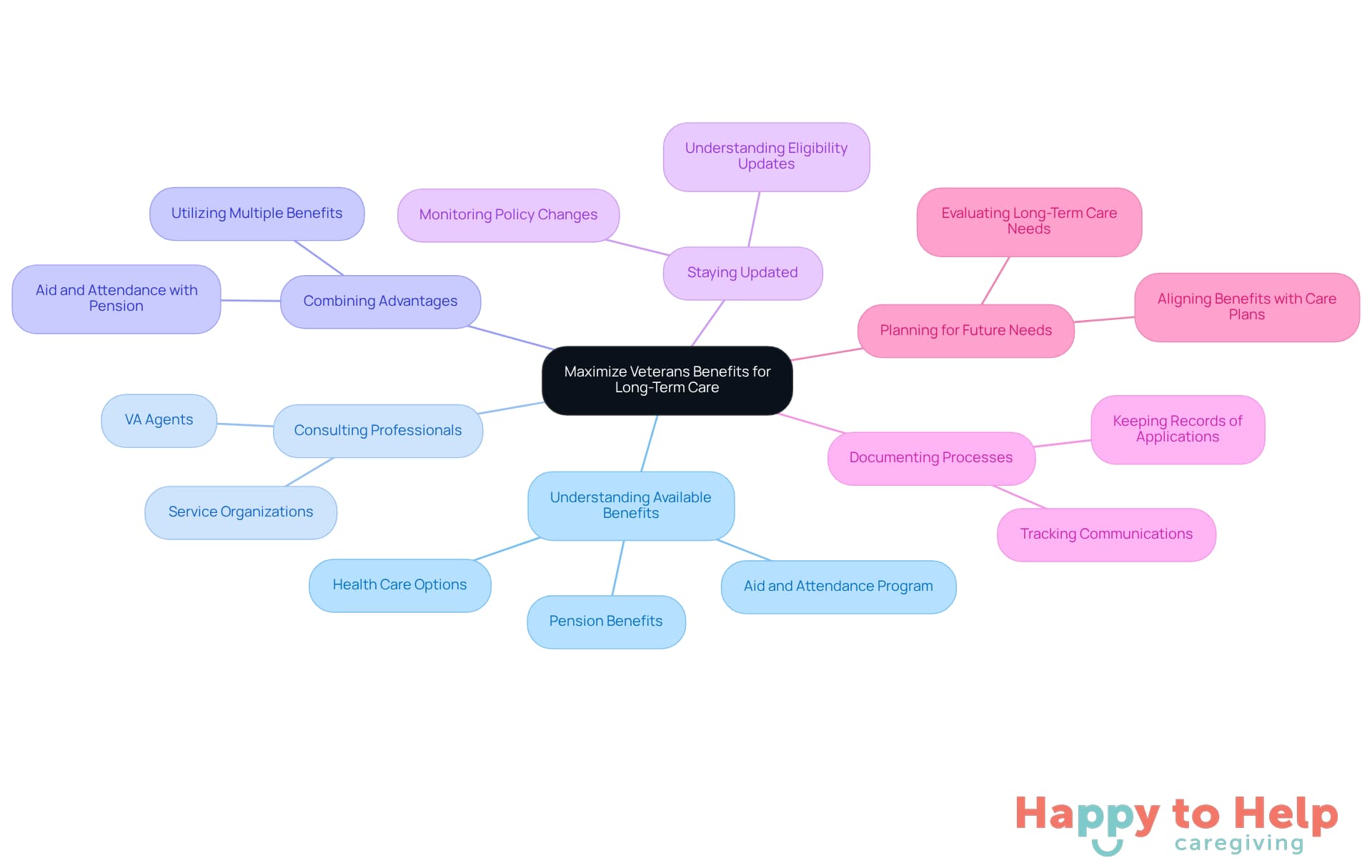
Families face several challenges to maximize veterans senior care benefits for long-term care. Understanding the full range of available advantages is crucial. Veterans may qualify for various perks, including health care, pensions, and the Aid and Attendance program, which provides additional financial assistance for those needing help with daily activities.
Consulting with a VA agent or a service organization for former military personnel can offer tailored support and professional guidance. As noted, "Veterans studying in these expensive markets can expect housing allowances that better reflect actual rental prices."
Combining advantages is another effective strategy. Families should explore the possibility of merging various benefits, such as utilizing Aid and Attendance alongside pension allowances, to cover care costs more comprehensively.
Staying updated on modifications is essential. Regularly informing oneself about any changes to military personnel's advantages is vital, as policies and eligibility standards can shift, especially with major updates anticipated in 2025. For instance, individuals with disability ratings of 10% or higher now enjoy complete exemption from funding fees, expanding from the previous 10% threshold.
Documenting everything is key. Keeping meticulous records of all communications and submissions related to assistance applications can streamline future processes and ensure that all necessary information is readily available.
Finally, planning for future requirements is crucial. Families should evaluate the long-term care needs of the service member and plan accordingly, ensuring that veterans senior care benefits align with those needs to provide ongoing assistance.
By implementing these strategies, families can secure the comprehensive support veterans senior care requires for effective long-term care.
Moving Forward with Unlock Veterans Senior Care Benefits: A
Understanding the array of veterans senior care benefits is essential for families seeking to ensure their loved ones receive the support they deserve. The problem lies in the complexity of these benefits, which can overwhelm caregivers. By recognizing the various programs available, including health care, Aid and Attendance, and pension benefits, families can take proactive steps to enhance the quality of life for aging veterans.
The implications of not understanding these benefits are significant. Families may miss out on crucial support that could improve their loved ones' lives. This comprehensive guide highlights the importance of awareness and accessibility in navigating the complex landscape of veterans benefits. Key points include:
- Understanding eligibility requirements
- The application process
- Strategies to maximize benefits
To tackle these challenges, families should gather necessary documents and explore potential combinations of benefits. Each step is crucial in securing the necessary assistance. The projected increase in demand for veterans senior care services further underscores the urgency for families to familiarize themselves with these resources.
Ultimately, empowering veterans and their families involves not just awareness but action. By actively engaging with the available benefits and staying informed about policy changes, families can ensure that their loved ones receive the comprehensive care they need. The journey to access veterans senior care benefits is not only about utilizing resources but also about honoring the sacrifices made by those who served. Taking these steps can lead to a more dignified and fulfilling life for veterans as they age.
https://iframe.tely.ai/cta/eyJhcnRpY2xlX2lkIjogIjY5M2Y1MDlhNGM3OGNhYjkzOThjNmZhYyIsICJjb21wYW55X2lkIjogIjY4ZWU1ZGNhNzMxNzYyNTU3ZjNjOTVjMSIsICJpbmRleCI6IG51bGwsICJ0eXBlIjogImFydGljbGUifQ==Frequently Asked Questions
What challenges do veterans face in accessing senior care services?
Veterans often struggle with understanding the range of benefits available to them, which can impact their quality of life as they age and lead to missed opportunities for support.
What are the key benefits available to veterans for senior care?
Key benefits include health care services through the VA, financial support through the Aid and Attendance program, pension benefits for low-income veterans, and home and community-based services that promote independence.
What health care benefits can veterans access?
Veterans can access comprehensive health care services through the VA, including preventive care, inpatient services, and specialized treatments.
What is the Aid and Attendance program and what financial support does it provide?
The Aid and Attendance program offers financial support for veterans who need help with daily activities such as bathing, dressing, and meal preparation. For 2025, the pension rate is set at $28,300 annually or about $2,358 monthly for individual service members.
What are the pension benefits available for low-income veterans?
Low-income veterans may qualify for pension benefits that assist with the costs of senior care or in-home care. For an individual without a spouse or dependent child, the Basic Veterans Pension is $17,440 annually or $1,453 monthly.
What are home and community-based services?
Home and community-based services allow veterans to receive care in their homes or communities, promoting their independence and comfort.
Can veterans receive Aid and Attendance and Housebound support at the same time?
No, veterans cannot receive Aid and Attendance assistance and Housebound support simultaneously.
What is the 36-month look-back period imposed by the VA?
The 36-month look-back period is a requirement that can affect eligibility for assistance, as it examines the financial history of veterans seeking benefits.
Why is it important for families to understand veterans' senior care resources?
As the older adult population grows, the demand for veterans senior care services is projected to increase significantly, making it essential for families to familiarize themselves with available resources and support systems.
List of Sources
- Explore Veterans Benefits for Senior Care
- 10 Essential VA Elder Care Benefits Every Family Caregiver Should Know - Happy To Help (https://happytohelpcaregiving.com/10-essential-va-elder-care-benefits-every-family-caregiver-should-know)
- VA Aid and Attendance benefits and Housebound allowance | Veterans Affairs (https://va.gov/pension/aid-attendance-housebound)
- VA Aid & Attendance Pension: 2026 Benefits & Eligibility Criteria (https://medicaidplanningassistance.org/va-pension-aid-and-attendance)
- Aid and Attendance Pension Benefit for Veterans | VeteranAid.org (https://veteranaid.org)
- Understand Types of Veterans Benefits Available
- What Veterans Need to Know About 2025 VA Disability Changes - Tucker Disability Law (https://tuckerdisability.com/blog/va-disability/what-veterans-need-to-know-about-2025-va-disability-changes)
- The 2025 Benefits List for Veterans and Dependents | Hill & Ponton, P.A. (https://hillandponton.com/additional-benefits-for-100-percent-disabled-veterans)
- VA Benefits 2025: What Every Veteran Family Should Know | Operation Family Fund (https://operationfamilyfund.org/va-benefits-2025-update-what-every-veteran-family-should-know)
- Military Veteran Benefits Info, News & Resources (https://military.com/benefits/veteran-benefits)
- Spread the word: The 2025 Veterans Benefits Guide is now available (https://myarmybenefits.us.army.mil/News/Spread-the-word-The-2025-Veterans-Benefits-Guide-is-now-available)
- Navigate the Application Process for Veterans Benefits
- VA eliminates Veteran family health care backlog (https://news.va.gov/press-room/va-eliminates-veteran-family-health-care-backlog)
- VA Processes 1 Million Claims Faster Than Ever: What This Means for Your Disability Application (https://vetsguardian.com/blog/va-disability-claims-processing-2025)
- VA Benefits 2025: What Every Veteran Family Should Know | Operation Family Fund (https://operationfamilyfund.org/va-benefits-2025-update-what-every-veteran-family-should-know)
- 2025 VA benefits guide now available (https://legion.org/information-center/news/veterans-benefits/2025/january/2025-va-benefits-guide-now-available)
- VA reduces backlog of Veterans waiting for VA benefits by 57% (https://news.va.gov/press-room/va-reduces-backlog-of-veterans-waiting-for-va-benefits-by-57)
- Maximize Veterans Benefits for Long-Term Care
- VA Benefits 2025: What Every Veteran Family Should Know | Operation Family Fund (https://operationfamilyfund.org/va-benefits-2025-update-what-every-veteran-family-should-know)
- Congress looks to ease veterans' use of health care outside the VA (https://npr.org/sections/shots-health-news/2025/08/07/nx-s1-5494748/veterans-affairs-health-care-congress)
- New 2025 Updates to Veterans Benefits for Assisted Living (https://floridaseniorconsulting.com/updated-veterans-aid-and-attendance-benefits-for-assisted-living)
- VA Health Care: Veterans' Use of Long-Term Care Is Increasing, and VA Faces Challenges in Meeting the Demand (https://gao.gov/products/gao-20-284)